
REVIEW · SCHINDLER'S FACTORY TOURS
Jewish Quarter Tour by Golf Cart and Schindler’s Museum in Krakow
Krakow’s past comes into focus here. This three-hour outing pairs an easy ride through Kazimierz and Podgórze with a visit to Oskar Schindler’s Factory, giving you both street-level context and a serious museum experience. I like the mix of history and transport: you cover more ground than on foot, then slow down inside one of Krakow’s most important museums.
I also like the clear contrast between the two parts. The golf cart uses an audio guide, while the museum visit has a live guide, with Helen receiving especially strong praise for her work at the factory. The main drawback is practical: the tour finishes at the museum, and you must arrange your own way onward.
In This Review
- Key points to know before booking
- Why this tour works as a history lesson
- Kazimierz by golf cart: start with the old Jewish district
- Szeroka Street and Kazimierz’s synagogue quarter
- Plac Nowy: a square with food, markets, and memory
- Crossing into Podgórze and the market square
- The remaining ghetto wall and a difficult history
- Plac Zgody and the deportation point
- Inside Oskar Schindler’s Enamel Factory
- Why the live guide makes a difference
- Price, timing, and what you receive
- Meeting point, walking, and the end of the tour
- Who should book this Krakow tour?
- Should you book it?
- FAQ
- How long does the tour last?
- What districts does the golf-cart portion visit?
- Does the tour visit Szeroka Street?
- Is museum admission included?
- Is there a guide at the museum?
- Where does the tour begin?
- Where does the tour end?
- Is transportation back to the hotel included?
- How far in advance should I book?
Key points to know before booking
- Two districts, two chapters of Krakow’s Jewish story: See Kazimierz, once an independent Jewish center, and Podgórze, where the Nazi-era ghetto was created.
- Szeroka Street is the central stop: This historic street once had four synagogues and remains a key place for understanding Jewish Kazimierz.
- The golf cart saves time and energy: You ride between important locations rather than walking the entire route, though part of the museum visit is on foot.
- Schindler’s Factory is the strongest section: The museum uses an interactive exhibition to explain wartime Krakow through the daily lives of ordinary people.
- A live museum guide adds depth: Helen is singled out for especially strong guiding at the factory.
- The finish matters: The tour ends at Lipowa 4, not back at your hotel or the original meeting point.
Why this tour works as a history lesson
Krakow’s Jewish story is spread across more than one neighborhood. Kazimierz was the center of Jewish life for centuries, while Podgórze became the site of the Krakow Ghetto during the Nazi occupation. Seeing both areas in one outing helps you understand the change from a living community to a place marked by persecution and forced removal.
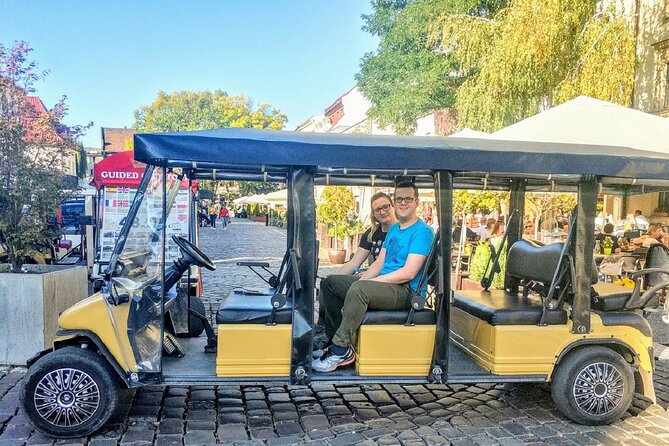
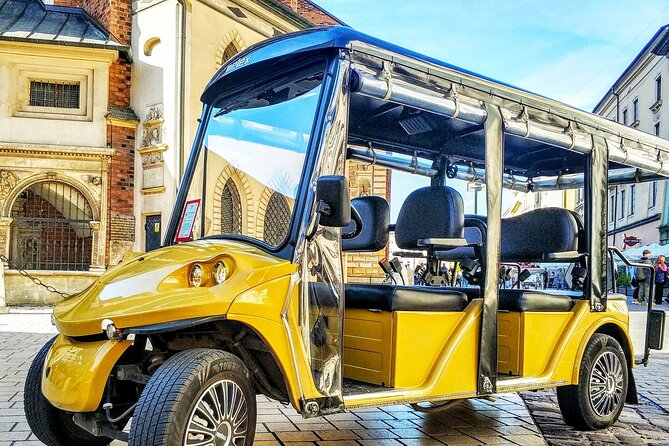
The golf cart is useful for this purpose. You are not locked into one small square or a single museum room. You move through streets, markets, religious sites, and memorial locations while an audio guide explains what you are seeing. That format gives you a broad first look at the districts before the more detailed museum visit.
The experience is also limited to a maximum of 24 people. That is not a private tour, but it is a more manageable group than a large coach excursion. You should still expect other people to join and should arrive on time at the meeting point on Mikołaja Zyblikiewicza 2.
More Golf Cart Tours in Kraków
- Krakow: City Sightseeing Tour by Electric Golf Cart
★ 4.5 · 3,264 reviews - Krakow: City Sightseeing Tour Eco Electric Buggy Golf Cart
★ 4.7 · 3,143 reviews - Krakow: Extended City Sightseeing Tour – Eco Buggy Golf Cart
★ 4.7 · 794 reviews
Kazimierz by golf cart: start with the old Jewish district
Kazimierz was once an independent city south of Wawel. For centuries, it served as the main center of Jewish life in Krakow. Today, it is one of the city’s most popular areas, but the tour aims to point you toward the older layers beneath the cafés and tourist traffic.
The golf cart gives you a quick way to get your bearings. You can look around without the effort of covering every street on foot, and the audio guide fills in the background as you ride. This is helpful early in a Krakow visit, especially if you want an introduction before returning to the district on your own.
You should think of this section as an overview rather than a long, quiet walking tour. The cart keeps the group moving, and the audio format may feel less personal than having a guide beside you for every minute. Still, it makes sense for a three-hour schedule that must include both neighborhoods and the museum.
Szeroka Street and Kazimierz’s synagogue quarter
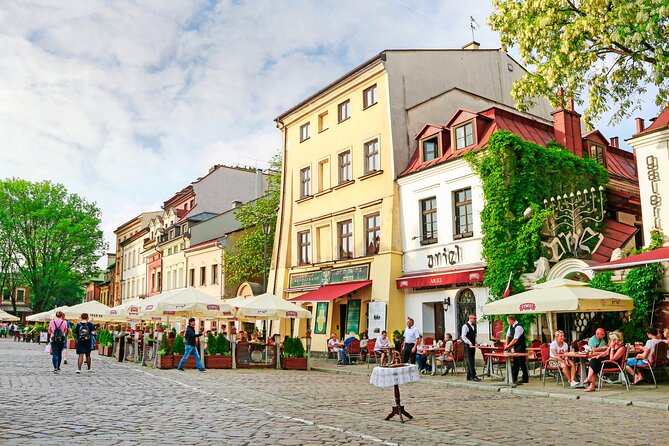
Szeroka Street is the main historical stop in Kazimierz. Four synagogues once stood here, an unusual concentration that shows how important this street was to Jewish life in Krakow and across Europe.
The street also remains connected to Jewish culture today. It has hosted the final concert of the Jewish Culture Festival, linking the area’s past with its present use as a cultural meeting place. You get a stronger sense of place here than from a quick drive past an attractive old building.
One of the oldest synagogues in Poland is preserved along Szeroka Street. The tour identifies the synagogue as an important religious site and explains its place in the story of Kazimierz. Depending on the exact stopping arrangements, you may mainly view it from outside rather than spend a long time inside, so do not expect this outing to function as a full synagogue tour.
The route is particularly valuable if you are unsure how to read Krakow’s Jewish quarter. A street can look like a restaurant district at first glance. The commentary helps you recognize why its layout and buildings matter.
Plac Nowy: a square with food, markets, and memory
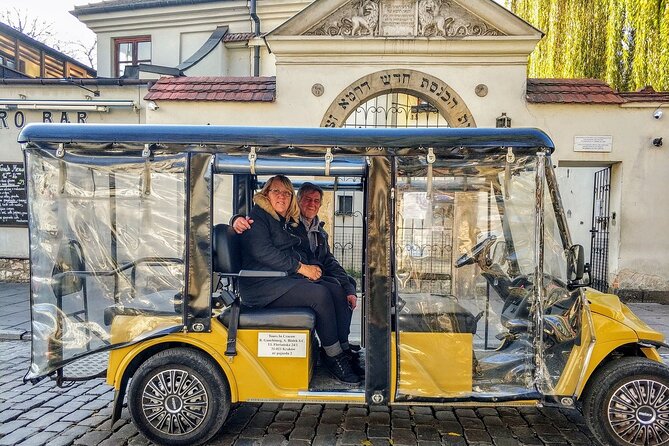
Plac Nowy was once called Plac Żydowski, or Jewish Square. Its current life is more informal. The square is known for cafés, pubs, festivals, produce stalls, antiques, and a Sunday clothing market.
A circular pavilion built in 1900 once held small grocery and butcher shops, along with a fast-food bar. Today, it is associated with Krakow’s famous casseroles, a local snack that gives the square a taste of everyday city life as well as a historical identity.
This is one of the tour’s more relaxed stops. It shows that Kazimierz is not only a memorial district. It is also a place where people meet, eat, shop, and spend warm evenings outdoors. I like that balance, because it prevents the neighborhood from being presented as a collection of solemn sites alone.
The tradeoff is that Plac Nowy can be lively and crowded, especially in good weather. A golf cart stop may provide only a short look, but the location is easy to revisit later. If you enjoy markets and casual food, note the square as a place to return after the tour.
More Museums in Kraków
- Auschwitz-Birkenau Museum and Memorial Guided Tour from Krakow
★ 4.5 · 1,510 reviews - Krakow: Rynek Underground Museum Guided Tour
★ 4.6 · 1,122 reviews - Krakow Schindler’s Factory Museum Guided Tour in English
★ 4.5 · 650 reviews - Krakow: Auschwitz Birkenau Museum Guided Tour with Pickup
★ 3.6 · 544 reviews
Crossing into Podgórze and the market square
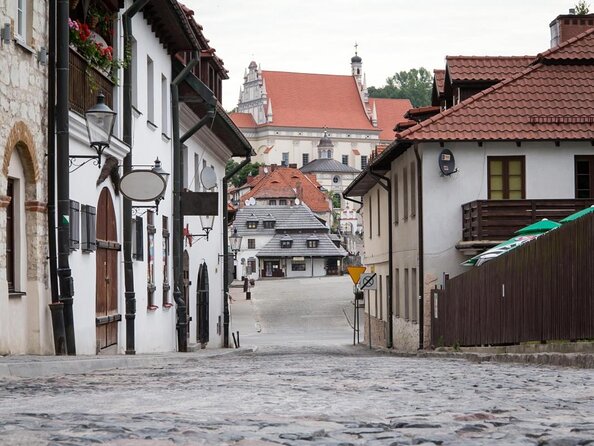
The second district, Podgórze, tells a harder story. The parish church of St. Joseph dominates Podgórze Market Square, a central point in the district. Podgórze was incorporated into Krakow only in the twentieth century, which helps explain why it has a separate identity from Kazimierz.
The church gives the square a clear landmark and a sense of place before the tour moves toward the former ghetto sites. The route does not treat Podgórze as just an extension of Kazimierz. It presents the district as a separate part of Krakow with its own civic and religious center.
This change in setting is important. In Kazimierz, the emphasis is on Jewish community life, religious buildings, streets, and cultural memory. In Podgórze, the focus turns to the Nazi occupation and the violence that reshaped the district.
The remaining ghetto wall and a difficult history
A small fragment of the original wall around the former Krakow Ghetto remains in Podgórze. A plaque records the fate of the people who were confined there.
It is a modest physical remnant, but that is part of its power. You are not looking at a large preserved complex. You are seeing a fragment in an ordinary urban setting, with a plaque that asks you to connect the remaining bricks to the people whose lives were controlled and destroyed.
The audio commentary is especially useful at a stop like this. Without context, a short wall fragment can be easy to miss. With explanation, it becomes part of the larger route through Podgórze and the Nazi occupation.
You should be prepared for a shift in tone. This is not a light sightseeing ride once the group reaches the former ghetto locations. The tour deals with deportation, loss, and the destruction of a community, so it suits visitors who want historical context rather than only picturesque streets.
Plac Zgody and the deportation point
The former Plac Zgody, now associated with the name Umschlagplatz, was where Jewish residents had to gather before deportation under the Nazi occupation. It was located inside the Podgórze district, which had been turned into the Krakow Ghetto in 1941.
This stop gives the museum visit a stronger foundation. You first see the neighborhood connected to the events, then enter Schindler’s Factory to examine the occupation in greater detail. That sequence is one of the best reasons to choose this combined tour instead of visiting the museum alone.
The site is difficult, and the short format cannot explain every part of the ghetto’s story. Still, it places the facts in the actual streets where they unfolded. I find that more useful than hearing dates and names without knowing where they belong.
Inside Oskar Schindler’s Enamel Factory
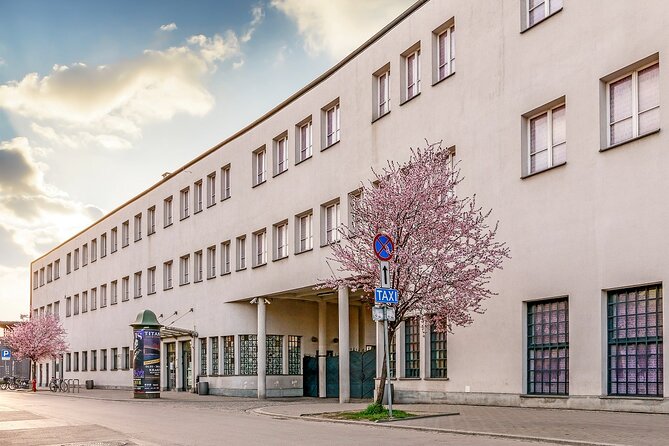
The second part lasts about 1 hour and 30 minutes and includes admission to the museum. Its official name is Fabryka Emalia Oskara Schindlera, and it occupies the former administration building of Deutsche Emailwarenfabrik.
The museum examines World War II through its effect on ordinary people in multicultural Krakow. That focus matters. Instead of presenting the occupation only through military events and political leaders, the exhibition looks at how daily life changed for people living under Nazi rule.
You will also learn about Oskar Schindler, the factory owner made famous by Steven Spielberg’s Oscar-winning film. Schindler saved many of his employees from certain death, and the museum connects his personal story with the wider history of Krakow during the occupation.
One powerful feature is the preserved office associated with Schindler. The building also contains a symbolic ark of survivors made from thousands of pots, recalling the enamel goods produced by workers during the war. It is a visual reminder that the factory was a workplace tied to real people, not simply a film location.
The exhibition is interactive and modern in presentation. That can make a complicated period easier to follow, especially if you are visiting with older children or adults who prefer objects, displays, and reconstructed settings to a long lecture.
Why the live guide makes a difference
The golf cart portion relies on an audio guide. That keeps the ride organized and allows you to hear information while moving between districts, but it cannot respond to your questions or adjust its pace.
At Schindler’s Factory, a live guide leads the visit. That change in format is welcome because the museum covers painful and complicated material. A good guide can explain the connection between the factory, Schindler, the ghetto, and the wider occupation without leaving you to piece everything together alone.
Helen is specifically praised for her guiding at the factory. If she is leading your visit, you may benefit from the same strong personal commentary. The available feedback also points to several guides handling the historical material professionally and explaining it clearly, though names were not recorded for all of them.
The museum section is the most highly praised part of the experience. I would book this tour mainly for the combination of a live museum guide and the district tour that comes first. The golf cart is useful, but the factory visit is where the outing gains its greatest depth.
Price, timing, and what you receive
At $71.77 per person, this is not the cheapest way to see Kazimierz or Schindler’s Factory. You are paying for a combined experience: golf-cart transportation, an audio guide, a live guide at the museum, and the museum admission ticket.
The value is strongest if you want structure. You do not need to plan how to connect Kazimierz, Podgórze, and the factory yourself, and you receive historical commentary along the way. The three-hour duration also fits neatly into a morning or afternoon without taking over your entire day.
The price is less compelling if you prefer to explore at your own pace. Independent visitors can spend longer at Szeroka Street, Plac Nowy, or the ghetto memorial sites. The golf cart will keep to a set schedule, and the museum section has its own group timing.
This tour is booked an average of 73 days in advance, which suggests that you should reserve early if your Krakow dates are fixed. Confirmation is provided at booking, and free cancellation is available if you cancel at least 24 hours before the start time.
Meeting point, walking, and the end of the tour
The tour begins at Mikołaja Zyblikiewicza 2 in central Krakow. It ends at Lipowa 4, the address of Schindler’s Factory. You do not return to the starting point, and transport back to your hotel is not provided.
Plan your next activity from the museum rather than from the original meeting point. This is easy to handle if you are staying nearby or want to continue exploring Podgórze, but it matters if you have luggage, a timed reservation, or a long trip across the city afterward.
The ride itself reduces walking between districts, but the museum visit includes walking and requires a moderate level of physical fitness. The experience is near public transportation, though the tour does not include a hotel transfer.
Arrive early. This is a group outing with a specified start time, and late arrival could mean missing the golf cart departure. The group can include up to 24 people, so punctuality helps the whole visit run properly.
Who should book this Krakow tour?
I would recommend it to first-time visitors who want a clear introduction to Krakow’s Jewish districts and the Nazi occupation. It is also a good fit if you want the museum included but do not want to arrange the route between Kazimierz, Podgórze, and Lipowa Street on your own.
History-focused visitors will get the most from it. The route covers Jewish community life, religious sites, markets, the ghetto wall, the deportation point, and Schindler’s factory in one compact program.
Families with older children may also appreciate the golf cart and interactive museum format. The subject is serious, so parents should decide if the material suits their children.
I would hesitate only if you want a slow, personal walking tour or a private guide. The audio commentary in the cart is less flexible, and the museum is shared with other participants. You should also skip it if ending at the museum creates a transport problem for your plans.
Should you book it?
Book this tour if you want efficient coverage with strong museum guidance. Its best feature is the way the two parts support each other: Kazimierz and Podgórze provide the physical setting, while Schindler’s Factory explains the occupation and its effect on real lives.
The golf cart is convenient rather than luxurious, and the route moves quickly. But with admission included, a live guide at the museum, and a maximum group size of 24, the $71.77 price can be fair for a visitor who values context and organization.
Keep your afternoon open after the visit, arrange your own return from Lipowa 4, and arrive at Mikołaja Zyblikiewicza 2 on time. If those details suit your plans, this is a focused and meaningful way to begin understanding Krakow’s Jewish quarters and wartime past.
FAQ
How long does the tour last?
The experience lasts approximately three hours. The museum portion takes about 1 hour and 30 minutes.
What districts does the golf-cart portion visit?
The golf cart travels through Kazimierz and Podgórze. Kazimierz was a historic center of Jewish life, while Podgórze was the site of the Krakow Ghetto during World War II.
Does the tour visit Szeroka Street?
Yes. Szeroka Street is included as a key stop in Kazimierz and is described as the historic heart of the district.
Is museum admission included?
Yes. The entrance ticket to Oskar Schindler’s Enamel Factory is included in the tour price.
Is there a guide at the museum?
Yes. The museum portion is led by a live guide. The golf-cart section uses an audio guide.
Where does the tour begin?
The meeting point is Mikołaja Zyblikiewicza 2, 31-029 Kraków, Poland.
Where does the tour end?
The tour ends at Lipowa 4, 32-051 Kraków, Poland, at Schindler’s Factory Museum.
Is transportation back to the hotel included?
No. The tour ends at the museum, and you must arrange your own transportation afterward.
How far in advance should I book?
The experience is booked an average of 73 days in advance. Confirmation is provided at the time of booking, so reserving early is sensible if your dates are fixed.
More Jewish Heritage Tours in Krakow
- Krakow: Schindler’s Factory & Ghetto Guided Tour
★ 4.7 · 1,694 reviews - Krakow: Jewish Quarter and Former Ghetto Tour
★ 4.9 · 1,441 reviews - Krakow: Bike Tour of Old Town, Jewish Quarter and the Ghetto
★ 4.9 · 1,155 reviews - Krakow: Kazimierz Jewish Quarter Walking Tour
★ 4.8 · 571 reviews
More Schindler Factory Tours
- Krakow: Oskar Schindler’s Factory Entry Ticket & Guided Tour
★ 4.2 · 3,793 reviews - Krakow: Schindler’s Factory Tour with Entrance Ticket
★ 4.5 · 3,182 reviews - Krakow: Schindler’s Factory Skip-the-Line Ticket
★ 4.4 · 3,105 reviews - Krakow: Schindler’s Factory Tour with Entrance Ticket
★ 4.6 · 1,737 reviews
Just added in Krakow
- Auschwitz-Birkenau – Skip the Line Tickets★ 3.5 · 29 reviews
- Auschwitz-Birkenau: Fast-Track Ticket & Guided Tour No Transfers★ 3.5 · 17 reviews
- Zakopane & Sleigh Ride with Bonfire – Group Tour from Kraków★ 5.0 · 2 reviews
- Sleigh Ride & Bonfire in Zakopane with Funicular – Private Trip★ 5.0 · 48 reviews
- Thermal Baths & Zakopane – Private Trip from Krakow★ 5.0 · 1 review
- Zakopane & Gubalowka Funicular – Private Winter Tour from Krakow★ 5.0 · 10 reviews
- Divine Mercy Sanctuary – Private Tour from Krakow★ 5.0 · 4 reviews
- stag dog chase Krakow prank★ 5.0 · 4 reviews