
REVIEW · SCHINDLER'S FACTORY TOURS
Jewish Quarter Kazimierz and Schindler’s Factory Guided Tour
History here is written on the streets. This 3.5-hour Krakow tour links the old Jewish district of Kazimierz with the Schindler Factory Museum, giving you a clear path from centuries of Jewish life to the Nazi occupation. I like the thoughtful route through Szeroka Street, with its synagogues and cemetery, and I like having fast-track museum entry included. The main consideration is that the museum is not the original factory floor, and the guided visit can feel rushed if you want time to study every display.
The strongest part of the experience is usually the guide. Guides such as Helena, Margaret, Magda, Dominika, Janna, and Barbara have been praised for clear English, strong local knowledge, and personal stories that make the past feel close. I would book this if you want structure and explanation, but I would not expect a quiet, small-group experience at the museum, where the group may grow to 15 to 25 people.
In This Review
- Key points to know before booking
- Why this Kazimierz and Schindler tour works
- Szeroka Street and the Jewish heart of Kazimierz
- From prewar community to wartime persecution
- What Schindler’s Factory Museum really is
- Why a guide helps inside the museum
- Price, timing, and practical value
- Who will get the most from this experience?
- Should you book the Kazimierz and Schindler tour?
- FAQ
- How long does the tour last?
- Where does the tour start?
- Where does the tour end?
- Is the tour offered in English?
- Is admission to Schindler’s Factory Museum included?
- Do I visit the original factory production floor?
- How large can the group be?
- Do I need to arrive early?
- Can I cancel for a full refund?
Key points to know before booking
- Kazimierz begins on Szeroka Street: See the Old Synagogue, Remuh Synagogue and Cemetery, Kupa Synagogue, and Tempel Synagogue in the historic heart of Krakow’s Jewish district.
- The museum is about Krakow under occupation: Schindler is central to the story, but the exhibits cover the wider experience of the city and its Jewish population during World War II.
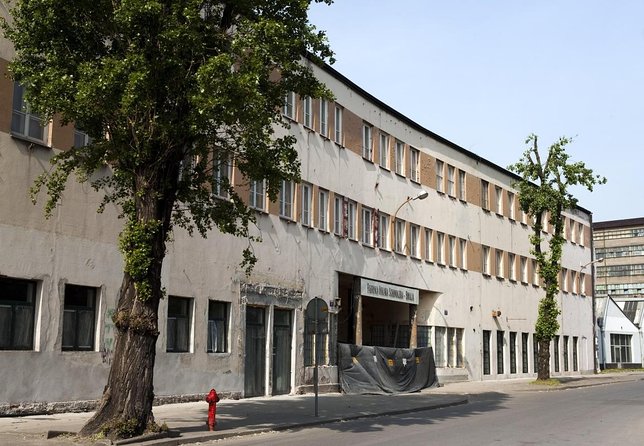
- The original production floor is not part of the visit: The museum occupies the former factory’s administrative building, and original factory equipment is no longer displayed there.
- A guide adds context: The best guides explain religious customs, prewar life, ghetto history, film locations, and the choices behind Spielberg’s use of Kazimierz.
- Allow for a serious, emotional visit: Nazi objects, reconstructed streets, personal belongings, and accounts of deportation create a sobering museum experience.
- Plan carefully around timing: Arrive at least 10 minutes early, wear good shoes, and remember that late arrivals cannot join once the group has entered.
Why this Kazimierz and Schindler tour works
Krakow’s Jewish story is not confined to a museum case. It is visible in street layouts, synagogues, old townhouses, cemeteries, memorials, restaurants, and the spaces where ordinary life once unfolded. This tour gives you a guide to those clues before taking you into a museum that explains how Nazi rule destroyed that world.
The combination is useful because the two parts answer different questions. Kazimierz shows you what Jewish life looked like before the war and how the district is remembered today. Schindler’s Factory Museum shows what happened to Krakow after the German invasion in 1939, including persecution, forced labor, deportation, and survival.
The tour is offered in English, and the guide stays with the group for both main sections. That matters in Kazimierz, where a building can look like an attractive old facade unless someone explains its religious or social role. It also matters in the museum, where the displays tell a large story and it is easy to lose the thread without help.
The overall rating is 4.7 from 78 ratings, with 92 percent recommending the experience. That points to a dependable tour, though the museum portion produces the most mixed reactions because different people want different things from it.
More Schindler Factory tours:
- Krakow: Oskar Schindler’s Factory Entry Ticket & Guided Tour
★ 4.2 · 3,793 reviews - Krakow: Schindler’s Factory Tour with Entrance Ticket
★ 4.5 · 3,182 reviews - Krakow: Schindler’s Factory Skip-the-Line Ticket
★ 4.4 · 3,105 reviews
Szeroka Street and the Jewish heart of Kazimierz
The walking portion begins at Szeroka 24, in front of the Old Synagogue. This is the right place to start. Szeroka Street was the historic center of Jewish Kazimierz, and its surviving buildings give you a sense of how religious and daily life were organized in the district.
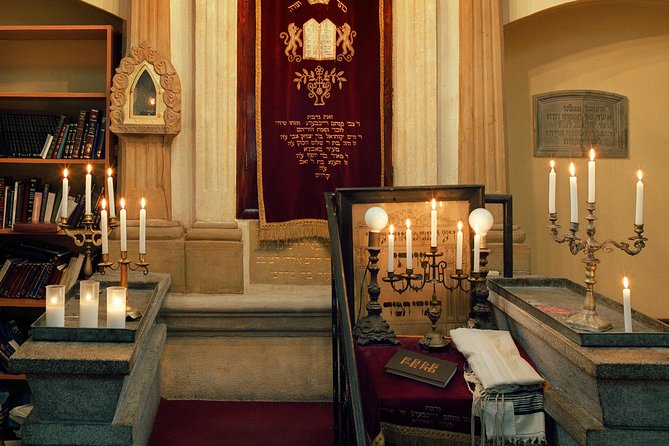
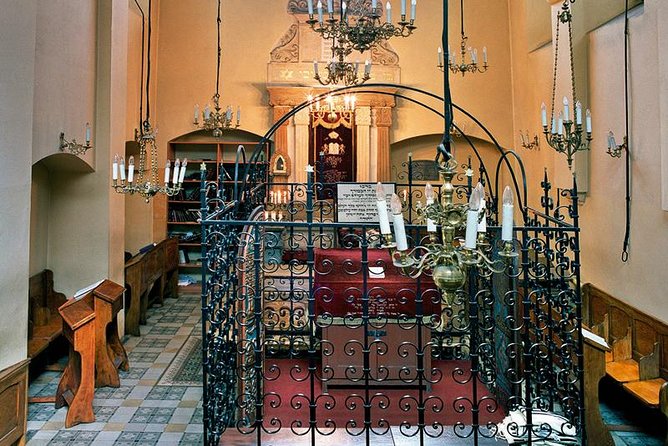
You will pass townhouses and synagogues dating from the 16th to the 18th centuries. The Old Synagogue is the oldest preserved synagogue in Poland and now operates as a museum of Jewish history. Even if you do not enter it on this tour, seeing it from the street helps establish the importance of the area.
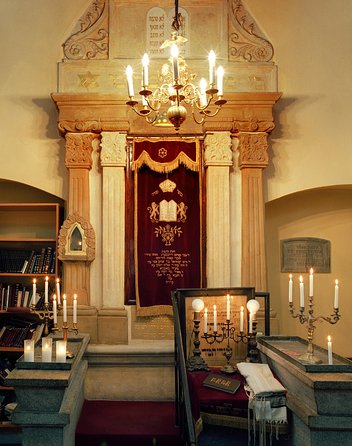
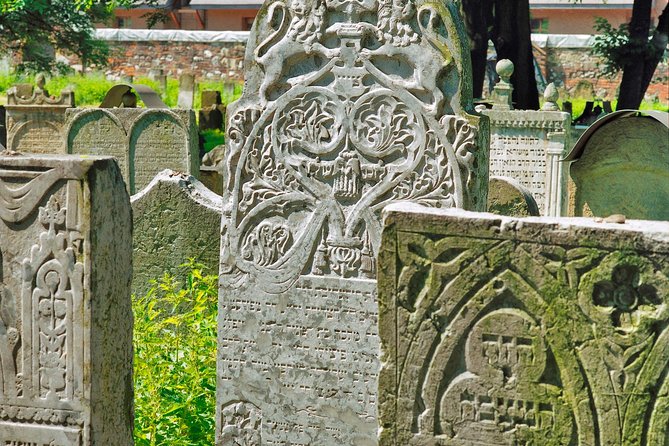
The route continues past the Remuh Synagogue and Cemetery. Remuh, also known as Rabbi Moses Isserles, taught in Kazimierz in the 16th century and remains one of the best-known religious figures connected with the district. The cemetery is one of the country’s important Jewish religious sites, and the guide explains its place in the community’s story.
You also pass Kupa Synagogue, which once served poorer residents, and Tempel Synagogue, now an active center of Jewish cultural life. These stops show that Kazimierz was not one uniform community. Different synagogues served different groups, and the guide can help you understand those distinctions without turning the walk into a list of dates and names.
I especially like this part for first-time visitors to Krakow. The pace is generally easy, and the walking gives you a physical sense of the district before you tackle the harder material at the museum. Guides have used photographs to show how places looked in the past, and some have pointed out film locations connected with Schindler’s List.
There is also a useful correction to a common movie assumption. Spielberg filmed many scenes in and around Kazimierz because the district retained an old-world appearance, but the film’s Jewish ghetto was located in Podgorze, across the river. The tour explains why Kazimierz was chosen to represent parts of that setting, while also separating film decisions from the actual geography.
From prewar community to wartime persecution
The walk is not simply a sightseeing circuit. Its purpose is to explain the Jewish community’s role in Krakow before World War II, then show how German occupation changed life with frightening speed.
You hear how Jewish residents were forced from their homes and herded into the ghetto in Podgorze. The tour may include wartime traces such as part of the ghetto wall and buildings connected with that period. The exact route and timing can shift, so do not expect every departure to follow the same minute-by-minute path.
This section works best when your guide connects places to people. Several guides have been praised for repeating key facts in clear English, which can help younger visitors follow the story. Other guides have added family memories or accounts connected with the rescue of Jews in Poland. Those personal links can make the walk more affecting, though the quality naturally depends on the individual guide assigned that day.
The subject is painful, and the tour does not soften it. You will hear about displacement, deportation, and the destruction of a community. Yet the focus is not only on suffering. It also covers religious traditions, ordinary life, cultural survival, and the acts of courage that helped some people live through the occupation.
Expect roughly 90 minutes for Kazimierz. That is enough for an informed overview, not enough for a full study of every synagogue or museum. If you want to enter each religious building or spend time in the Jewish cemetery, plan a separate visit.
What Schindler’s Factory Museum really is
The name can create the wrong picture. You do not tour a working enamelware factory or walk through a preserved production floor filled with original machinery.
The museum is in the former administrative building associated with Oskar Schindler’s enamelware operation at Lipowa 4. The original factory next door was taken over by the state and now functions as an art museum. The museum itself no longer contains the factory’s original production equipment, and only limited physical traces, including one pot and Schindler’s administrative office, remain according to the information provided for the tour.
That is not a reason to skip it. It is simply important to arrive with the right expectation. The main attraction is the exhibition Krakow under Nazi Occupation 1939 to 1945, not an industrial heritage display.
Inside, reconstructed streets, photographs, documents, personal objects, and wartime material lead you through the occupation. The museum looks at the fear and uncertainty faced by Krakow’s residents, the treatment of Jewish people, forced labor, and the machinery of Nazi rule. Schindler’s role appears within this wider account.
Schindler employed Jewish workers and used his position and resources to protect them from deportation. More than 1,000 men and women survived through his efforts. The people he saved are often called Schindlerjuden, and their accounts help keep the story focused on human lives rather than on one famous name.
This broader approach is one of the museum’s strengths. If you want only a biography of Schindler, you may find the exhibition light on him. If you want to understand Krakow during the war, the museum offers a much fuller picture.
More Jewish heritage tours in Krakow:
- Krakow: Schindler’s Factory & Ghetto Guided Tour
★ 4.7 · 1,694 reviews - Krakow: Jewish Quarter and Former Ghetto Tour
★ 4.9 · 1,441 reviews - Krakow: Bike Tour of Old Town, Jewish Quarter and the Ghetto
★ 4.9 · 1,155 reviews - Krakow: Kazimierz Jewish Quarter Walking Tour
★ 4.8 · 571 reviews
Why a guide helps inside the museum
The museum is well designed, but it asks a lot of you. The narrow passageways and staged rooms create an immersive route through the occupation, and the number of photographs, documents, and objects can be overwhelming on a first visit.
A good guide keeps the story moving and explains why particular displays matter. Guides have been praised for making the exhibits clear, answering detailed questions, and bringing the stories of Schindler’s workers into focus. Some visitors have preferred to explore independently because the museum contains enough material for half a day.
That is the central tradeoff. The guided museum section lasts about 90 minutes, while the museum itself can reward several hours. You gain fast-track entry and a clear narrative, but you lose the freedom to pause whenever you wish.
I would choose the guided option if this is your first visit or if you want help connecting the displays to the walk through Kazimierz. I would prefer an unguided visit if I had already studied the subject and wanted to read every panel at my own speed.
The museum can also feel crowded. The walking group may be small at the start, sometimes only a handful of people, then grow when other participants join for the factory visit. The official maximum is 25 people. That is manageable, but it is not the same as a private tour, and some people find it hard to stay close to the guide in the tighter rooms.
Price, timing, and practical value
At $71.20 per person, this is not the cheapest way to see Kazimierz. The price includes the walking tour, a licensed professional guide, and fast-track admission to Schindler’s Factory Museum. Food and drinks are not included.
I think the price makes sense if you value a connected lesson rather than two separate stops. You get historical explanation in the streets, help with the complicated transition from prewar life to occupation, and admission support at one of Krakow’s busiest museums.
The value is weaker if you mainly want to wander Kazimierz or spend a long afternoon reading museum displays. You can see much of the district on your own, and the 90-minute museum visit may feel too short for a person who likes to examine every object.
The tour lasts about three and a half hours. One section is roughly 90 minutes in Kazimierz, followed by about 90 minutes in the museum, with time between locations. The tour ends in central Krakow at or near Lipowa 4, rather than returning you to the original starting point.
Exact start times can change because of museum scheduling. Your preferred time is a request, not a guarantee. The museum issues personalized tickets, so you must provide the full names of everyone booking. Missing names can lead to denied entry.
Arrive at least 10 minutes early at Szeroka 24. Once the group has entered, late arrivals cannot be admitted and tickets are non-refundable. Wear comfortable shoes, check the forecast, and dress for conditions. The tour runs in rain or other weather, and much of the experience is on foot.
Who will get the most from this experience?
I would recommend this tour to first-time visitors who want a serious introduction to Krakow’s Jewish quarter and World War II history. It also suits families with older children, especially when the guide explains difficult facts in repeated, clear steps.
It is a good fit if you prefer listening to a story while walking rather than reading a guidebook on your own. The English-language guides have generally been praised for clear speech, friendly manner, and strong command of the subject. Names such as Margaret, Magda, Helena, Dominika, Janna, Barbara, and Filipe have been associated with especially warm and effective guiding.
I would be more cautious if you dislike group tours, need a private pace, or want a detailed visit to every synagogue. The museum portion may also disappoint if you expect original machinery or a tour of the factory where enamelware was produced.
The subject matter is heavy. Nazi symbols and regalia appear in the museum, along with documents and objects tied to persecution. That material is historically important but can be deeply unsettling. Give yourself some quiet time after the visit rather than scheduling a carefree activity immediately afterward.
Should you book the Kazimierz and Schindler tour?
Book it if you want the two places connected by a single, well-organized story. The walk through Szeroka Street, the synagogues, the Remuh Cemetery, the ghetto history, and the museum’s wartime exhibits fit together well. A strong guide can turn familiar names and movie scenes into a clearer understanding of Krakow’s past.
Do not book it expecting a preserved factory tour. You are visiting a World War II museum in the former administrative part of Schindler’s operation. That distinction is the most important buying tip.
For most first-time visitors, I think the guided format is worth the $71.20 because it saves time at the museum and gives meaning to places you might otherwise pass without noticing. If you already know the history and want to read at length, book the museum separately and spend extra time in Kazimierz on your own.
Free cancellation is available up to 24 hours before the start time. After that point, refunds and changes are not accepted.
FAQ
How long does the tour last?
The experience lasts approximately 3 hours and 30 minutes. About 1 hour and 30 minutes is allocated to Kazimierz, followed by about 1 hour and 30 minutes at Schindler’s Factory Museum, with time between the two locations.
Where does the tour start?
The meeting point is Szeroka 24, 31-053 Krakow, Poland, in the Kazimierz Jewish Quarter.
Where does the tour end?
The tour concludes in central Krakow at Lipowa 4, 32-051 Krakow, Poland.
Is the tour offered in English?
Yes. The tour is offered in English, and each group tour is conducted in one selected language.
Is admission to Schindler’s Factory Museum included?
Yes. Museum admission and fast-track entry are included in the tour price.
Do I visit the original factory production floor?
No. The experience visits the museum in the former administrative building. It is not a tour of a working factory and does not include the original production equipment.
How large can the group be?
The maximum group size is 25 people. The group may be smaller during the Kazimierz walk and larger at the museum portion.
Do I need to arrive early?
Yes. You should arrive at least 10 minutes before the scheduled start. Late arrivals cannot be accommodated after the group enters, and the ticket will not be refunded.
Can I cancel for a full refund?
Yes, if you cancel at least 24 hours before the experience begins. Cancellations or changes made less than 24 hours before the start time are not accepted.
Just added in Krakow
- Auschwitz-Birkenau – Skip the Line Tickets★ 3.5 · 29 reviews
- Auschwitz-Birkenau: Fast-Track Ticket & Guided Tour No Transfers★ 3.5 · 17 reviews
- Zakopane & Sleigh Ride with Bonfire – Group Tour from Kraków★ 5.0 · 2 reviews
- Sleigh Ride & Bonfire in Zakopane with Funicular – Private Trip★ 5.0 · 48 reviews
- Thermal Baths & Zakopane – Private Trip from Krakow★ 5.0 · 1 review
- Zakopane & Gubalowka Funicular – Private Winter Tour from Krakow★ 5.0 · 10 reviews
- stag dog chase Krakow prank★ 5.0 · 4 reviews
- Divine Mercy Sanctuary – Private Tour from Krakow★ 5.0 · 4 reviews