
REVIEW · AUSCHWITZ-BIRKENAU MEMORIAL TOURS
Guided Tour to Auschwitz-Birkenau from Warsaw
Arrive early, leave changed. This full-day trip links Warsaw, Kraków, and Auschwitz-Birkenau in one demanding but meaningful outing, with train travel from Warsaw and a guided visit to both sections of the former camp. I like the expert local guidance at Auschwitz and the chance to spend several hours in Kraków before returning to Warsaw. The main drawback is the schedule: a 5:30 am start and a return around 11:00 pm make this a very long day.
I also like the small maximum group size of 15 people and the clear meeting point at Warsaw Central Railway Station. You should be ready for a lot of walking, standing, rough ground, and some waiting between connections. This is not a gentle sightseeing day, but it can be a practical choice if you are based in Warsaw and have limited time in Poland.
In This Review
- Key points to know before booking
- Why this day trip makes sense from Warsaw
- The 5:30 am start at Warsaw Central
- Finding the Kraków meeting point
- Auschwitz I: the first two hours
- Auschwitz II-Birkenau: scale and silence
- Three hours in Kraków after the memorial
- The return to Warsaw and the late-night problem
- Guides, drivers, and the quality of the day
- Is $167 a fair price?
- Who should book this experience?
- Should you book the Warsaw to Auschwitz tour?
- FAQ
- Where does the tour begin?
- How long is the full experience?
- Is transportation from Warsaw to Kraków included?
- How do I meet the group in Kraków?
- How much time is spent at Auschwitz I and Birkenau?
- Is Kraków included in the day?
- How many people can join the tour?
Key points to know before booking
- 5:30 am departure from Warsaw: You begin at Warsaw Central Railway Station and spend about two and a half hours on the train to Kraków.
- Both Auschwitz sites are included: The visit covers Auschwitz I, with roughly two hours inside, and Auschwitz II-Birkenau, with about one hour.
- A short walk connects you with the Kraków pickup: The meeting point is about seven minutes from the station, and you receive a map and directions.
- Three hours in Kraków: You have time for the Old Town, the main square, and a meal before the evening train.
- Small group, but mixed transport: The group can reach 15 people, with trains between Warsaw and Kraków and a bus or van between Kraków and Auschwitz.
- Expect a 15-hour day: The return journey can be tiring, and train arrangements may require close attention, especially if Warsaw station changes.
Why this day trip makes sense from Warsaw
Auschwitz-Birkenau is about 70 kilometers from Kraków, so visiting from Warsaw requires careful planning. You are not simply joining a bus outside your hotel and riding straight to the memorial. The day combines a train to Kraków, a local transfer to the museum, guided visits at two separate camp sites, free time in Kraków, and a return train to Warsaw.
That sounds complicated because it is. Yet the arrangement saves you from building the whole day yourself. The tour price is listed at $167 per person, and the train tickets and transfers are described as part of the package. Admission to the Auschwitz-Birkenau Museum and Memorial is also included.
The value depends on what you want. If you are comfortable buying train tickets, arranging an Auschwitz visit, finding the bus connection, and managing the return trip, you may spend less by booking each piece separately. One critical review calculated that the train cost about $40 and the local Auschwitz tour about $43 when booked independently. That comparison is worth considering.
I see the real value here as coordination rather than luxury. You pay for a set schedule, admission, a guide, Kraków transport, and help at the key handoff points. Several parts of the day involve different companies or meeting locations, so having instructions and a coordinator can be useful. It is not the cheapest route, but it can reduce the stress of fitting Auschwitz into a Warsaw stay.
More Auschwitz-Birkenau memorial tours:
- Warsaw: Tour to Krakow and Auschwitz by Train with Pickup
★ 4.6 · 603 reviews - From Warsaw: Guided Tour to Auschwitz-Birkenau and Krakow
★ 4.4 · 363 reviews - From Warsaw Auschwitz and Krakow one day tour by train with pick up and drop off
★ 4.5 · 267 reviews
The 5:30 am start at Warsaw Central
Your day begins at Warsaw Central Railway Station, at Al. Jerozolimskie 54. The scheduled start is 5:30 am, so you need to reach the station on your own. This is an important detail: the standard arrangement does not include pickup from your Warsaw hotel or a greeting on the train platform.
The early train ride to Kraków takes about two hours and 30 minutes. You should eat before leaving. The day is long, and the Auschwitz visit does not offer a relaxed lunch break. Free time in Kraków comes later, after the memorial visit, so a solid breakfast is the sensible move.
The train portion is relatively easy once you are at the station, but you must follow the instructions carefully. One positive feature is the advance communication. Coordinators have used WhatsApp to send updates, and several participants found the directions clear and the connections easy to follow.
Still, this is not a fully escorted journey from Warsaw. You may need to make your own way through Warsaw Central and board the train yourself. Give yourself enough time to find the correct platform, particularly at such an early hour.
Finding the Kraków meeting point
When you reach Kraków, a representative is meant to meet you at or near the station. The local meeting point is about a seven-minute walk from the station entrance. You receive a map and detailed directions, which should make the short transfer manageable.
This handoff is one of the areas where attention matters most. A few people have had trouble locating the pickup or waited for a coordinator. One person was told by phone to walk from the station to the meeting point after the pickup was not immediately visible. Another had a short wait in the rain after a communication error.
I would keep your phone charged, turn on mobile data if available, and have the meeting instructions open before the train arrives. Look for the representative rather than assuming a bus will pull directly to the platform. That small bit of preparation can prevent the most frustrating part of the day.
The drive from Kraków to Auschwitz takes about 90 minutes. Depending on group size, the vehicle may feel snug. One person found a van tight for nine people, while another praised the driver and appreciated rest stops. The standard group limit is 15, which keeps the tour smaller than many large coach outings, but vehicle comfort can vary.
Auschwitz I: the first two hours
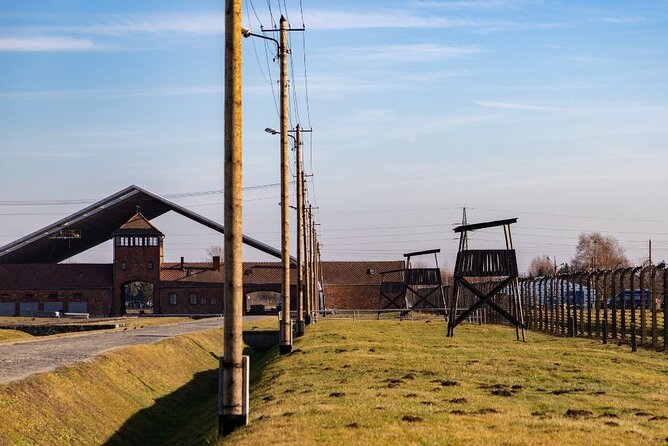
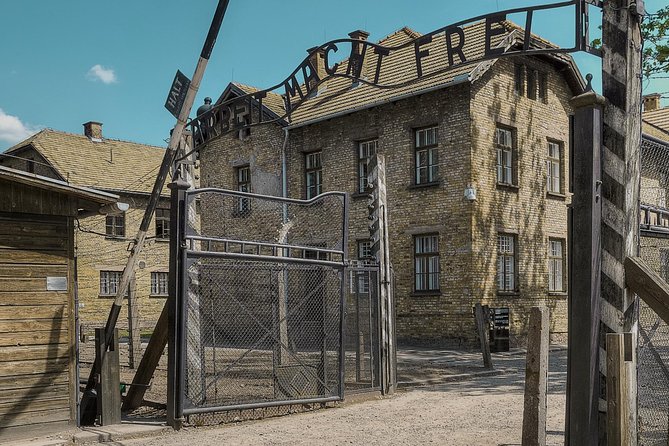
The first part of the memorial visit is Auschwitz I, the older and more compact camp site. It is associated mainly with political prisoners and contains preserved buildings, watchtowers, barracks, and museum exhibitions.
You visit with a local guide, usually as part of a timed walking group. The best guides bring clear facts and an appropriate tone, which matters greatly here. Barbara was praised for speaking with feeling while remaining informed. Enrique was singled out for patient, detailed explanations and for answering many questions. Other experiences were less strong, with a guide repeating points or moving too quickly.
The subject calls for a guide who knows when to explain and when to allow silence. Much of the power of Auschwitz I comes from the preserved objects and rooms. You may see displays that are difficult to process, including personal belongings connected to the people imprisoned and murdered there. The visit is educational, but it is also physically and emotionally heavy.
The planned time is about two hours. That may sound generous, but it can pass quickly because Auschwitz I has several exhibitions and buildings. One person wished for more time in the first section and did not reach every display. If you prefer quiet reflection or want to read every panel, a fixed group tour may feel rushed.
You should also expect standing and walking on firm paths and uneven surfaces. The pace may be manageable for most people, but this is not a seated museum visit. Heat can make the experience harder. A summer visit in scorching weather was described as stuffy and rushed, while rain created its own discomfort.
A few more in Warsaw
- Warsaw: Chopin Concert in the Old Town
★ 4.8 · 2,287 reviews - Warsaw: Traditional Galar Cruise on The Vistula River
★ 4.6 · 1,640 reviews - Warsaw: Old Town Highlights Walking Tour in English
★ 4.7 · 1,516 reviews - Warsaw Concert: Chopin – Painted by Candlelights with Wine
★ 4.8 · 1,442 reviews
Auschwitz II-Birkenau: scale and silence
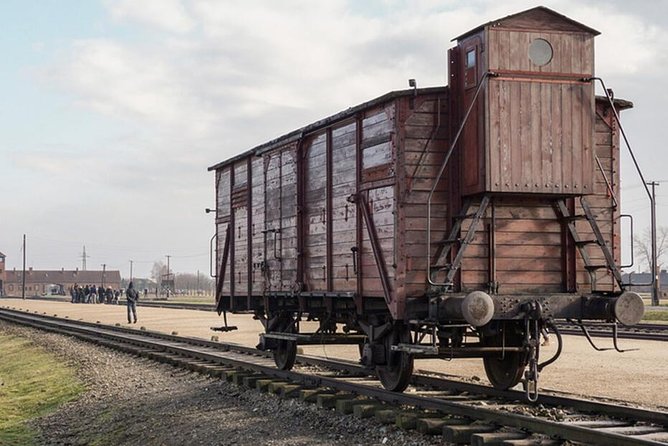
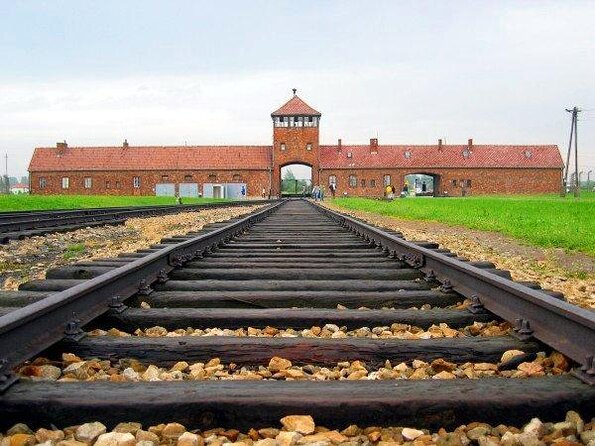
After Auschwitz I, the group continues to Auschwitz II-Birkenau, the much larger site. This section was used predominantly for Jewish and Roma prisoners. Its wide grounds, railway line, barracks, watchtowers, and remains of crematorium buildings convey the scale of the killing operation in a way that smaller indoor exhibits cannot.
The planned visit lasts about an hour. That gives you an important view of Birkenau, but it also adds to the day’s physical strain. By this point, you may already have spent two hours walking and standing at Auschwitz I, followed by the transfer between sites.
The open setting changes the experience. At Auschwitz I, you move through buildings and exhibitions. At Birkenau, the distance between structures and the sheer size of the grounds become part of what you are trying to understand. The guide provides the historical framework, but you also need moments to take in the place quietly.
The tour is not designed as independent wandering. You stay with the guided group, and time is limited. One person wished for more personal reflection, while another found the guide’s approach deeply moving. If you want to explore at your own pace, check the available tour format before booking. This experience is structured and informative, not a free-roaming visit.
Wear shoes suited to walking and rough ground. Bring water, and dress for the weather. The site can be hot, cold, or wet depending on the season, and there is little point pretending a 15-hour day will feel effortless.
Three hours in Kraków after the memorial
After the Auschwitz visit, the bus returns you to Kraków. You then have about three hours before the evening train to Warsaw. This is not filler time. It gives you a chance to sit down, eat, and see a little of one of Poland’s most appealing cities.
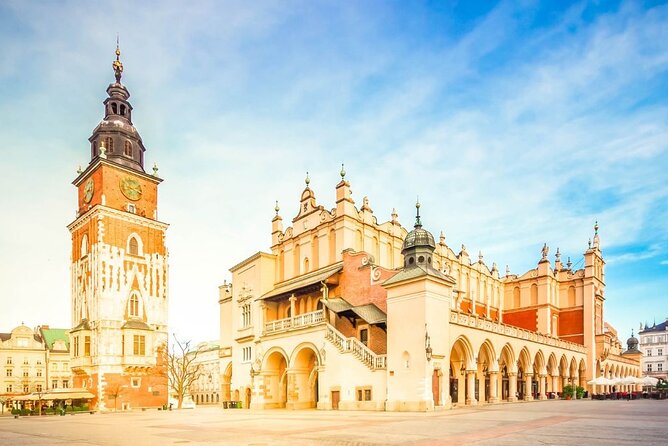
The natural target is Kraków’s Old Town and its enormous medieval market square. You can walk around the square, take a meal, and enjoy a change of mood after the solemn memorial. The contrast is useful. Auschwitz requires attention and respect, while Kraków offers streets, cafés, and ordinary city life.
Do not plan an ambitious Kraków sightseeing program. Three hours is enough for a meal and a compact walk, but not enough for a full city tour. Keep an eye on the clock and allow time to reach the railway station. If you have never been to Kraków, this free period may leave you wishing for a longer stay. That is not a flaw in Kraków. It is simply the cost of fitting two major destinations into one day.
The break also explains part of the late return. One person found the wait for the evening train too long and would have preferred an earlier departure. The schedule is built to allow Kraków time, but you may feel ready for bed well before the train leaves.
The return to Warsaw and the late-night problem
The train back to Warsaw takes another two hours and 30 minutes. With the early start, the museum visit, several hours on the road, and the return journey, you can expect to arrive around 11:00 pm.
Pay close attention to the final Warsaw station. Railway construction has caused the return train to use a different station from the one used in the morning. That can be confusing late at night, especially after a wet and tiring day. The advertised end point is back at the meeting point, but station arrangements can change because of rail work.
This is the tour’s clearest practical weakness. The morning meeting point is easy to identify, but the late return may not put you in exactly the same place. Confirm the arrival station before you leave Kraków and make sure you know how you will continue from there.
The tour does not include a Warsaw transfer as part of the standard service. Private transfers may be available as an extra, but that is separate from the listed package. If you are staying far from Warsaw Central, factor in the cost and effort of reaching the station before dawn and getting back to your accommodation at night.
Guides, drivers, and the quality of the day
The strongest part of the experience is usually the Auschwitz guide. Several guides have been praised for clear explanations, sensitivity, and a respectful tone. Barbara and Enrique received especially warm comments, and the guide quality can make a major difference at a place where context is essential.
The broader organization also receives plenty of praise. Coordinators have kept in touch by WhatsApp, drivers have arrived on time, and the train and bus connections have worked well for many people. The small group cap helps the day feel less unwieldy than a large coach tour.
The weak points are mostly logistical. Pickup communication has occasionally failed, and some people have waited at the wrong spot or struggled to identify the coordinator. One driver was criticized for using a phone while driving, and another vehicle was described as dirty and cramped. These are not the usual focus of the experience, but they are fair reasons to keep expectations practical rather than luxurious.
You are booking a useful transport-and-guidance package, not a premium private tour. The group size, vehicle, driver, and guide can influence how polished the day feels.
Is $167 a fair price?
At $167 per person, the price is reasonable if you value convenience and do not want to coordinate several separate bookings. You receive the train arrangement from Warsaw to Kraków and back, the Kraków to Auschwitz transfer, the return transfer, admission to the memorial, and guided visits to both camp sections.
The price is less attractive if you are comfortable organizing independently. Booking the train and a Kraków-based Auschwitz tour separately may cost less, though you would take responsibility for timing, directions, meeting points, and any missed connection.
Group discounts may improve the value for families or small parties. The maximum group size is 15, which is a useful middle ground: smaller than a mass-market tour, but not intimate in the way a private car and guide would be.
I would not choose this trip based on price alone. Choose it because you want one organized day from Warsaw and accept the early start, late finish, and structured museum visit. If saving money matters most, compare the separate costs before paying.
Who should book this experience?
This trip suits you if Warsaw is your base and you have only one open day for Auschwitz-Birkenau. It is also a good fit if you want a guide at the memorial and prefer not to arrange the Kraków transfer yourself.
It may work well for a first visit to Poland because you see two important places in one day. You get the memorial, a glimpse of Kraków, and train travel between the major cities without changing hotels.
I would hesitate to recommend it to anyone with limited stamina, mobility concerns, or a strong dislike of early mornings and late-night transport. The walking includes uneven ground, and the timetable leaves little room for recovery. You may also prefer a separate overnight stay in Kraków if you want more time at Auschwitz or a fuller visit to the city.
The emotional side matters too. Auschwitz-Birkenau is confronting. You should not treat it as just another day trip between tourist sights. The Kraków break helps, but the day remains serious and tiring from beginning to end.
Should you book the Warsaw to Auschwitz tour?
Book this tour if you want an efficient, guided visit from Warsaw and are willing to trade comfort for convenience. The best features are the informed Auschwitz guides, included museum admission, planned transfers, and useful free time in Kraków.
I would book only after confirming the train times, pickup instructions, and final Warsaw station. Eat a large breakfast, carry water, charge your phone, wear supportive shoes, and leave room in your schedule for delays.
If you want the lowest possible price or several quiet hours at the memorial, arrange the trip independently or stay in Kraków. If you want a single organized framework for a difficult but important day, this tour can be worth the $167.
FAQ
Where does the tour begin?
The tour begins at Warsaw Central Railway Station, Al. Jerozolimskie 54, at 5:30 am.
How long is the full experience?
The experience lasts approximately 15 hours, with a return to Warsaw at about 11:00 pm.
Is transportation from Warsaw to Kraków included?
The tour includes the arranged train journey from Warsaw to Kraków and the return train journey. You must make your own way to Warsaw Central Railway Station.
How do I meet the group in Kraków?
The Kraków meeting point is about a seven-minute walk from the railway station. You receive a map and clear directions, and a representative is scheduled to meet you there.
How much time is spent at Auschwitz I and Birkenau?
You spend about two hours at Auschwitz I and about one hour at Auschwitz II-Birkenau.
Is Kraków included in the day?
Yes. After the Auschwitz visit, you have about three hours of free time in Kraków before returning to Warsaw.
How many people can join the tour?
The activity has a maximum of 15 participants. Group discounts are available.
Just added in Warsaw
- World War II Warsaw Old Town, Military Cemetery Walking Tour★ 4.7 · 3 reviews
- Wroclaw Small-Group Tour with Lunch from Warsaw★ 5.0 · 2 reviews
- Warsaw: Wolf’s Lair & Swieta Lipka Small-Group Tour + Lunch★ 5.0 · 3 reviews
- Wilanów Palace: 2-Hour Guided Tour with Entrance Tickets★ 4.8 · 8 reviews
- Warsaw Zoo Skip-the-Line Entry Ticket with Private Transport★ 4.8 · 3 reviews
- Warsaw: Private Vodka Tasting Night with Snacks and Pickup★ 5.0 · 7 reviews
- Warsaw Private Wilanow Palace & Garden Tour★ 4.6 · 30 reviews
- Warsaw Wolf’s Lair with St. Lipka and Mamerki Private Guided★ 4.2 · 3 reviews