
REVIEW · AUSCHWITZ-BIRKENAU MEMORIAL TOURS
Warsaw: Tour to Krakow and Auschwitz by Train with Pickup
This is Poland’s longest, most meaningful day trip. From Warsaw, you reach Auschwitz-Birkenau by train, shared vehicle, and a guided visit, then spend three hours in Krakow’s beautiful old center. I like the careful door-to-door planning, and I like that Krakow is included rather than treating Auschwitz as the entire day. The trade-off is simple: 17 hours is a very long day, with an early pickup and a late return.
The day works especially well if you have limited time in Poland. Your Warsaw driver gets you to the train, helps with check-in, and meets you again at the end. In between, you have an English-speaking driver in Krakow, a 3.5-hour guided visit to both camp sites, and free time for Krakow’s Main Market Square.
This is not a relaxed sightseeing outing. Auschwitz-Birkenau is emotionally heavy, the walking can be tiring, and Krakow gets only three hours. Still, the arrangement removes much of the stress from a complicated independent trip, which is why the experience earns a strong 4.6 rating from 603 reviews.
In This Review
- Key points to know before booking
- Why this Warsaw day trip works
- The train from Warsaw to Krakow
- Auschwitz: a guided visit with proper context
- Birkenau and the scale of the crime
- The 1.5-hour transfer to Krakow
- Three hours in Krakow’s Old Town
- The return train and hotel drop-off
- Is $174 good value?
- Who should book this experience?
- Should you book the Warsaw to Auschwitz and Krakow tour?
- FAQ
- How long does the Warsaw to Auschwitz and Krakow tour last?
- Is hotel pickup and drop-off included?
- What transport is included?
- How long is the guided Auschwitz-Birkenau visit?
- How much free time is available in Krakow?
- What identification do I need?
- Can I bring luggage or book this tour with a wheelchair?
Key points to know before booking
- The day starts early and ends late: Pickup may be around 6 a.m., with return to your Warsaw hotel close to 11 p.m.
- Auschwitz and Birkenau receive the serious attention they deserve: The guided group visit lasts about 3.5 hours and covers both sections.
- Krakow is a useful second act: You get three hours for the Old Town, Main Market Square, and a meal.
- The train makes the long distance manageable: Round-trip second-class intercity tickets and station transfers are included.
- Names must match your identification: Auschwitz requires each participant’s full name and contact details, and entry can be refused if the booking name differs from your ID.
- Pack light and wear good shoes: Large bags are not allowed, and this is not a good choice for wheelchair users or people with limited mobility.
Why this Warsaw day trip works
Auschwitz is about 70 kilometers west of Krakow, while Warsaw is much farther away. Trying to combine both by public transport in one day means juggling trains, local connections, museum entry times, and the return journey. This tour turns that puzzle into a chain of handoffs.
A private vehicle collects you at your Warsaw accommodation. The English-speaking driver takes you to the station and helps with check-in before waiting until you are on the train. At Krakow station, another English-speaking driver meets you and takes you by shared transport toward Auschwitz.
That personal assistance matters. The day involves several changes, and the most praised part of the service is the organization. Drivers are described as punctual, polite, calm, and helpful. Maciej is singled out for his friendly manner and strong English, while other accounts praise Michael, Agnes, and Marciej for making the transfers easy to follow.
You are not simply dropped at a station with a vague instruction to find your next connection. Someone is assigned to each important stage. For a first visit to Poland, or for a solo visitor who does not want to work out the transport alone, that is a real benefit.
The exact pickup time depends on your hotel and the train schedule, and it is confirmed the day before. Be ready in the lobby 10 minutes early. Drivers wait only five minutes after the scheduled pickup, so this is one morning when the snooze button is a poor travel companion.
More Auschwitz-Birkenau memorial tours:
- From Warsaw: Guided Tour to Auschwitz-Birkenau and Krakow
★ 4.4 · 363 reviews - From Warsaw Auschwitz and Krakow one day tour by train with pick up and drop off
★ 4.5 · 267 reviews - From Warsaw: Auschwitz-Birkenau Tour by Car
★ 4.5 · 215 reviews
The train from Warsaw to Krakow
The included rail tickets are second class on an express intercity train. The train is the sensible backbone of the journey. You avoid a long road transfer from Warsaw and can settle in for part of the morning before the busy sightseeing begins.
The train times can change, so the schedule supplied at booking should not be treated as permanent. One reported itinerary left Warsaw at about 6:40 a.m. and reached Krakow around 9 a.m. The early start is what allows the visit to fit in without cutting Auschwitz or Krakow even shorter.
One useful detail is the possibility of a faster train upgrade after booking. It is not part of the basic package, but it may make the rail portion more comfortable or convenient if the option is offered for your date. Ask about the cost and exact benefit before agreeing to it.
Keep your train needs simple. You receive assistance at the station, but you should still carry your passport or identity card and pay attention to your platform and boarding instructions. Your return train leaves Krakow at about 8:30 p.m., followed by a platform pickup and a transfer back to your Warsaw hotel.
Auschwitz: a guided visit with proper context
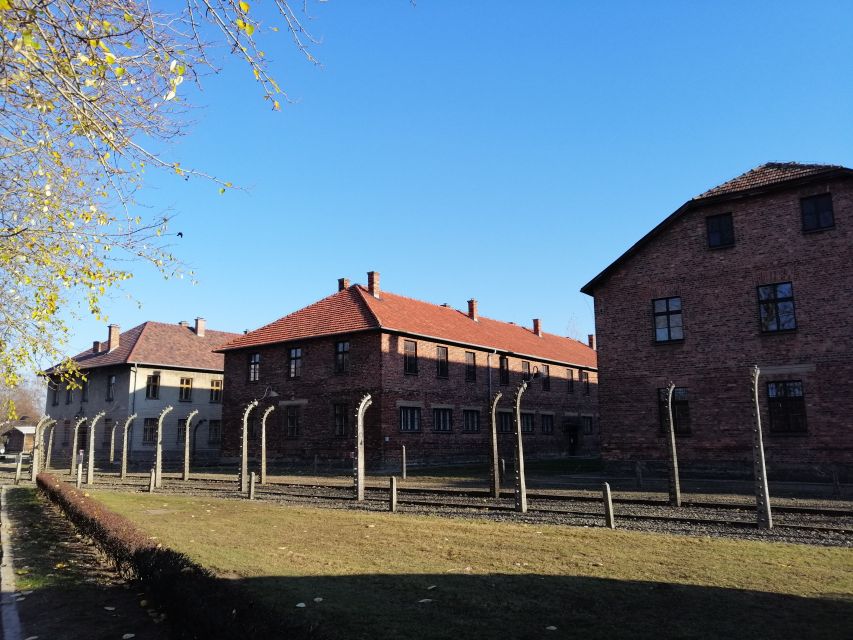
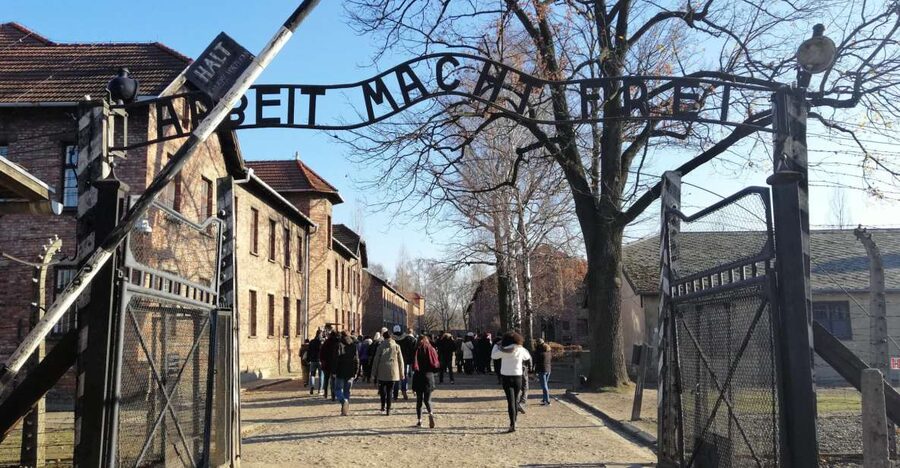
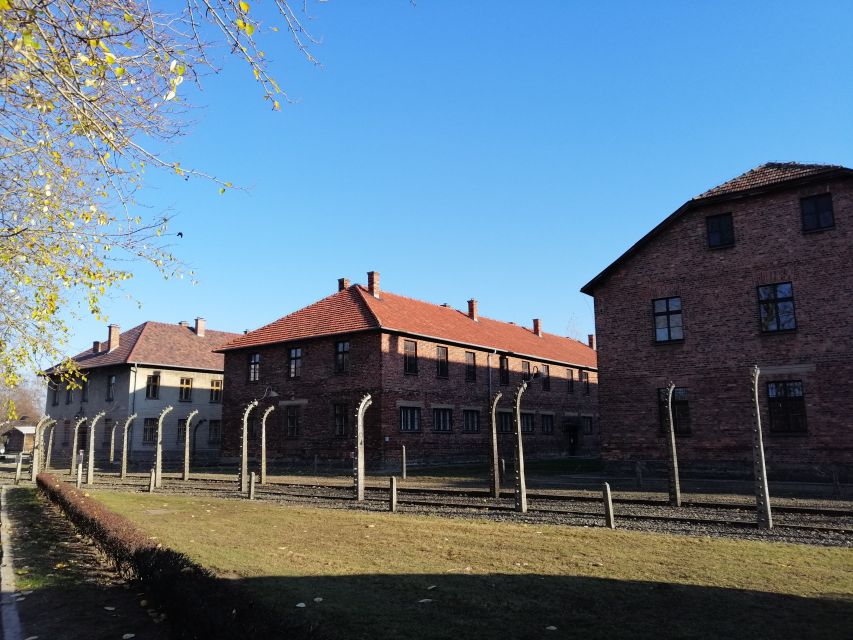
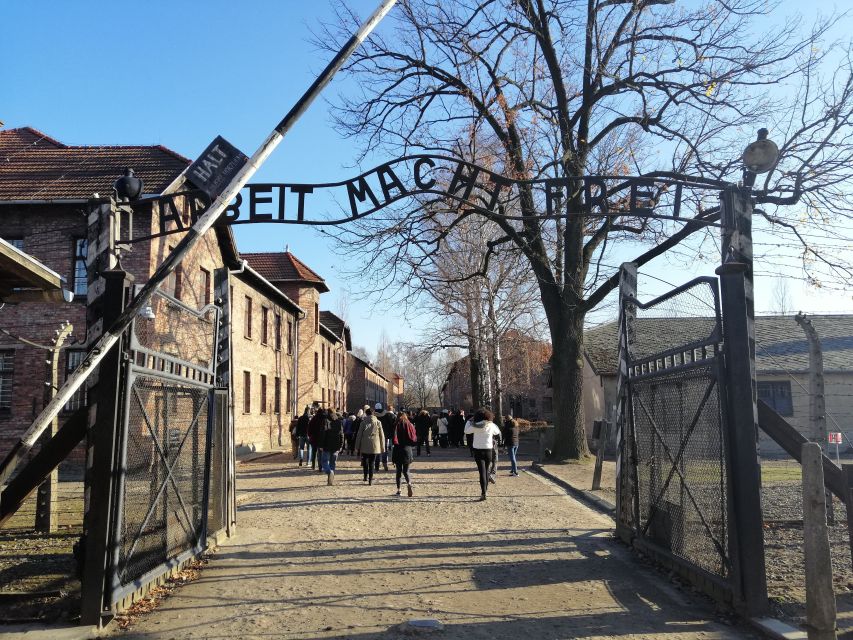
The Auschwitz portion begins with a guided group visit lasting about 3.5 hours. It includes Auschwitz I and Auschwitz II-Birkenau, so you see both the original camp and the much larger later site.
At Auschwitz I, the museum presents evidence of the Nazi German camp system and the genocide carried out there. The site was established on the outskirts of Oświęcim in 1940. After the war, it became a museum and memorial, with exhibits that give physical weight to a subject often encountered only through books and films.
The displays are difficult. You may see personal belongings and other evidence of the people imprisoned and murdered there. This is not a place for quick photographs or casual sightseeing. A guide helps explain what you are seeing and places individual buildings and objects within the wider story.
A film made after the camp’s liberation is shown in several languages. The tour information does not promise a particular language screening for every departure, so consider this an included museum element rather than the main reason to book. The guide and site visit carry most of the experience.
The English-speaking camp guide is one of the strongest parts of the day. Accounts describe guides such as Peter and a highly praised female guide as clear, respectful, and able to answer extra questions. One guide shared accounts connected with survivors who later returned to the site. That sort of human detail can help you understand the place without turning the visit into a dry list of dates.
Expect a controlled pace. The memorial’s visitor service sets the timing and break periods, not the tour company. You may not be able to linger wherever you wish or extend a particular stop because something has affected you. That structure can feel restrictive, but it is also part of managing a large memorial site responsibly.
Birkenau and the scale of the crime
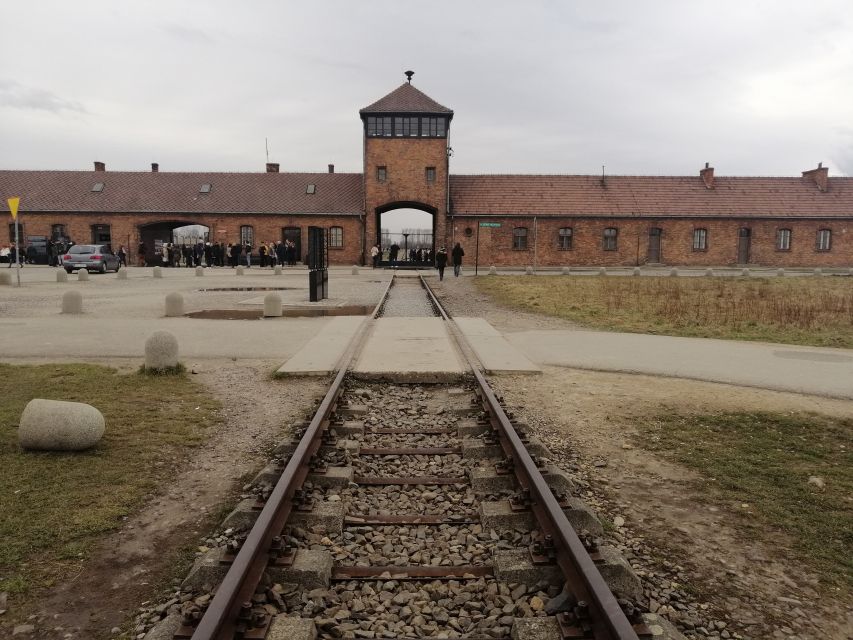
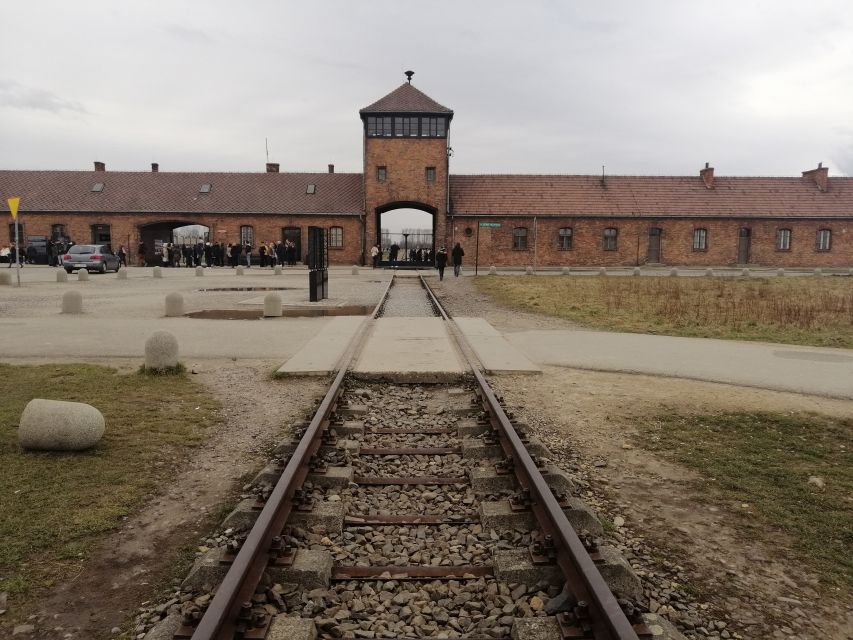
After Auschwitz I, the group continues to Birkenau. The German Nazis established Auschwitz II-Birkenau in 1941, and between 1942 and 1945 about 1.5 million people lived and died there, most of them Jews. Poles, Roma, Russians, and prisoners from 28 European countries were also among those held there.
The scale changes sharply here. Birkenau’s open grounds and long rows of barracks make the camp system easier to grasp as an organized process rather than a single collection of buildings. The site’s size is part of what makes the visit so hard to absorb.
Auschwitz-Birkenau was added to the UNESCO World Heritage list in 1979. That designation is less important during the visit than the memorial purpose of the site, but it explains why the place is preserved and protected for education.
Wear comfortable shoes. You will spend a substantial part of the day walking, and the route includes both indoor museum areas and open camp grounds. The tour is not recommended for people with limited mobility and is not suitable for wheelchair users. Large bags and luggage are not allowed, so leave your main suitcase at your Warsaw accommodation.
Allow yourself some quiet time afterward. The schedule moves on to Krakow, but the emotional effect may not. You are not required to treat the next stop as cheerful entertainment. Krakow offers a change of setting, not a clean break from what you have just seen.
A few more in Warsaw
- From Warsaw: Auschwitz-Birkenau Guided Tour with Fast Train
★ 4.7 · 50 reviews - From Warsaw: Krakow Sightseeing Tour by Express Train
★ 5.0 · 13 reviews
The 1.5-hour transfer to Krakow
After Auschwitz-Birkenau, the shared vehicle takes about 1.5 hours to reach Krakow. This is a useful pause between the memorial and the city, though it also adds to an already demanding day.
The vehicle transfer is included, which saves you from arranging another train or bus after the museum. Drivers handle the route and the meeting points, and the transport receives high marks for comfort and punctuality.
You should use this time to rest, drink water, and decide how you want to spend the limited time in Krakow. There is no lengthy city tour included. Your driver brings you to the Old Town area, and you explore on your own before returning to the station.
Three hours in Krakow’s Old Town
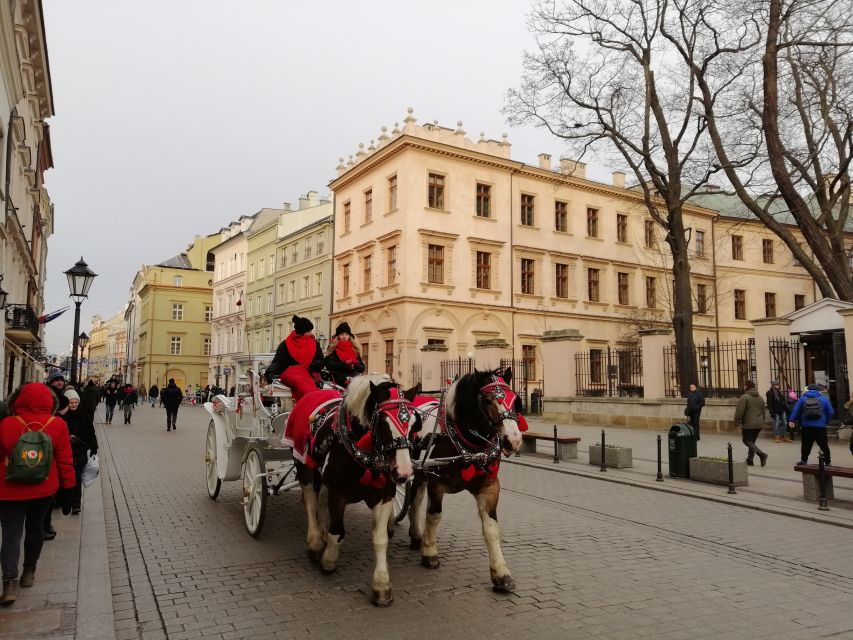
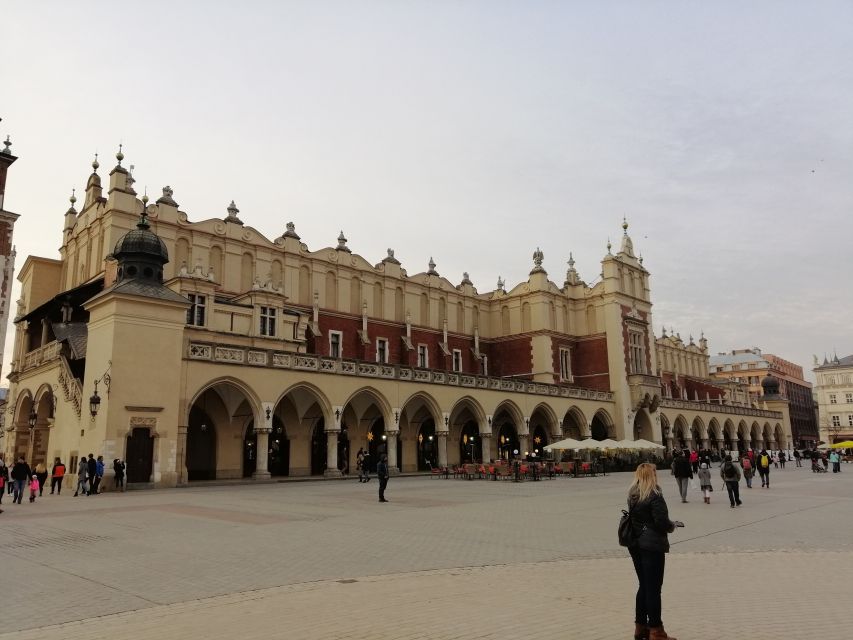
Krakow gets three hours, enough for an introduction but not enough for a full visit. The Old Town is compact enough for a purposeful walk, and the city’s Main Market Square gives you a strong first look at Krakow’s medieval center.
The square is described as the largest medieval old-town square in Europe. From here, you can see or reach several of the city’s main landmarks:
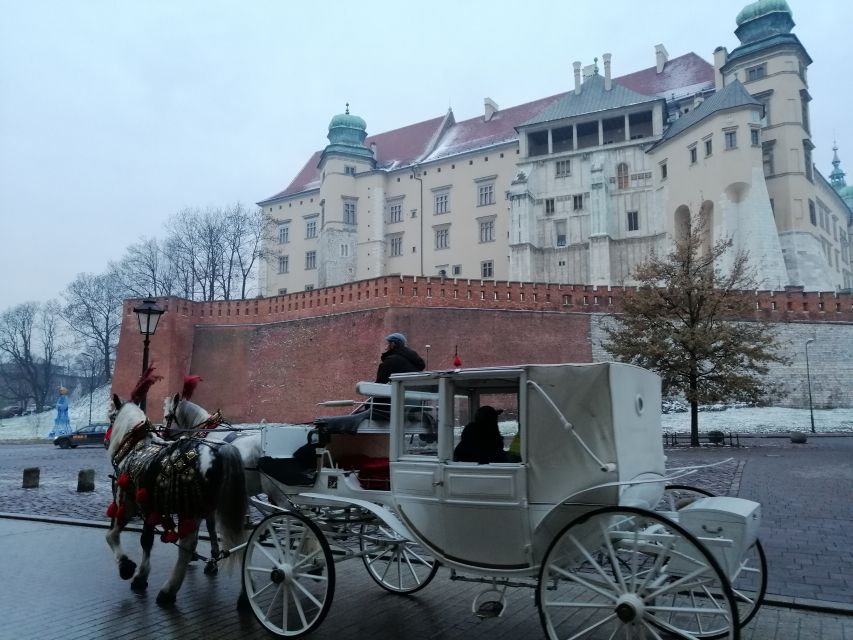
- Wawel Hill, with Wawel Cathedral and the Royal Castle
- St. Mary’s Basilica
- The Town Hall Tower
- The Krakow Barbican
- Sukiennice, known as the Cloth Hall
You may need to choose rather than enter everything. Three hours sounds generous after Auschwitz, but it disappears quickly if you stop for a meal, walk to Wawel Hill, and spend time around the square. I would treat this as a well-planned introduction, not a substitute for staying in Krakow overnight.
A practical route is to begin at the Main Market Square, walk through the Cloth Hall area, continue toward St. Mary’s Basilica and the Town Hall Tower, then head toward Wawel Hill if your energy and watch allow. You can instead keep the walk tighter and spend more time at a restaurant.
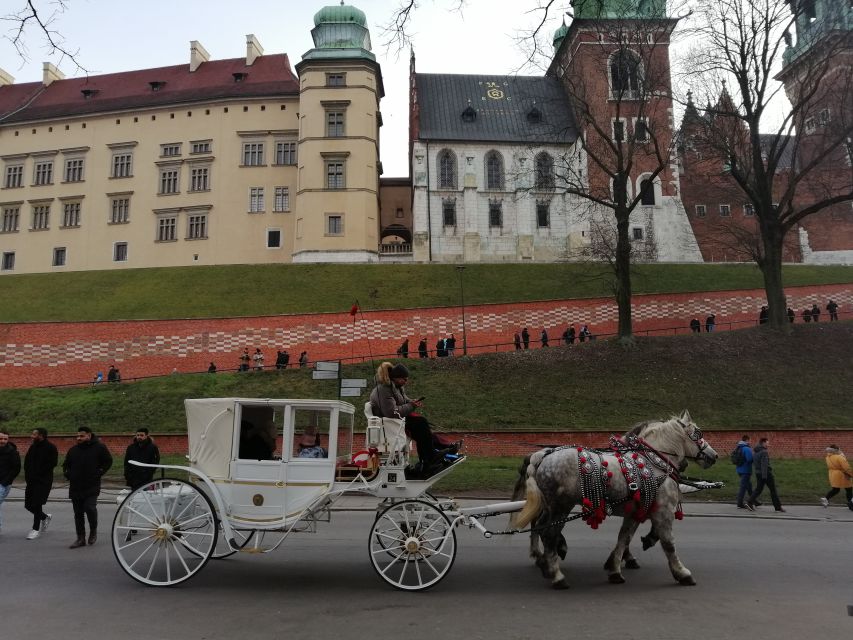
Food and drinks are not included. The schedule allows time for lunch during the overall trip and for eating in Krakow, so budget separately. The Old Town has many bars and regional restaurants, along with historic buildings and horse-drawn cabs. After the solemn morning, the city’s street life can feel like a sharp change of mood.
Do not expect a relaxed café afternoon. You need to return to the station for the evening train, and the tour depends on everyone keeping track of time. Your driver or local contact should explain the meeting point, but I would still confirm it before walking away from the group.
The return train and hotel drop-off
The return train leaves Krakow at about 8:30 p.m. After your free time, you board for Warsaw, where someone meets you on the platform and transfers you back to your hotel.
This final handoff is another reason the tour suits people who value assistance. At the end of a 17-hour day, finding a taxi or navigating a large station can be the last thing you want to do. The return system keeps the final stretch straightforward.
Expect to arrive back in Warsaw late. Several schedules put hotel drop-off around 11 p.m., though the actual time depends on the train and your accommodation. Do not book an early morning activity for the following day unless you are comfortable with a short night.
Is $174 good value?
At $174 per person, this is not the cheapest possible way to visit Krakow and Auschwitz. An independent trip might cost less if you are comfortable arranging trains, museum admission, local transport, and precise meeting times yourself.
The price makes more sense when you count what is included: hotel pickup and return, assistance at both Warsaw train stations, round-trip second-class intercity tickets, shared transport between Krakow and Auschwitz, the Auschwitz-Birkenau tour, and an English-speaking guide.
The real value is coordination. Auschwitz admission is tied to a named ticket, and the museum requires full participant details. Entry may be refused if the name on the booking does not match the name on your passport or ID. The museum tickets are non-refundable because of these requirements, so check every name carefully before paying.
You also receive one day that combines two major Polish destinations without changing hotels. For a visitor with only a short stay in Warsaw, that can be worth more than saving a little money on separate tickets.
The drawback is that you pay for convenience while accepting a fixed, tiring schedule. You have little control over break times at the memorial, only three hours in Krakow, and no food included. If you want a slow city visit or extensive time at the museum, spend a night in Krakow instead.
Who should book this experience?
I would choose this trip if you are based in Warsaw, want to see Auschwitz-Birkenau, and prefer not to manage several transport connections. It is also a good fit for solo visitors and anyone who wants clear support at the stations.
It suits people who can walk comfortably, cope with an early start, and give a full day to the experience. The strongest part is not luxury. It is the reliable chain of drivers, train tickets, local transport, and guides.
I would hesitate if you have mobility limitations, need frequent unscheduled breaks, dislike group tours, or want a detailed Krakow visit. Three hours gives you a taste of the Old Town, while the Auschwitz visit follows the memorial’s set pace.
Free cancellation is available up to 24 hours before departure, and you can reserve now and pay later. Still, do not treat the cancellation window as a way around the museum’s named-ticket rules. Once tickets are issued, the museum requirements make changes more difficult.
Should you book the Warsaw to Auschwitz and Krakow tour?
Book it if your priority is Auschwitz-Birkenau with dependable transport from Warsaw. The early morning, multiple transfers, and late return are a fair price for removing the day’s logistical strain.
The best feature is the balance: a serious guided visit to both camp sites, followed by enough time to walk Krakow’s Old Town and eat a meal. The main warning is the pace. This is a powerful, exhausting day, not a leisurely excursion.
Bring your passport or ID, comfortable shoes, water, and only a small bag. Check every booking name twice. If you accept the long hours and limited Krakow time, AB Everest Travel’s careful organization makes this a practical way to connect two important Polish destinations in one demanding day.
FAQ
How long does the Warsaw to Auschwitz and Krakow tour last?
The full experience lasts about 17 hours. Pickup may be early in the morning, and hotel drop-off in Warsaw may be close to 11 p.m.
Is hotel pickup and drop-off included?
Yes. The package includes pickup from your accommodation in Warsaw, transfer to the train station, and transport from the Warsaw station back to your hotel.
What transport is included?
You receive round-trip second-class express intercity train tickets between Warsaw and Krakow. Shared transport between Krakow and Auschwitz is also included, along with station transfers.
How long is the guided Auschwitz-Birkenau visit?
The guided group visit lasts about 3.5 hours and covers both Auschwitz and Birkenau.
How much free time is available in Krakow?
You receive about three hours of free time to explore Krakow’s Old Town, including sights around the Main Market Square, Wawel Hill, St. Mary’s Basilica, the Cloth Hall, and other central landmarks.
What identification do I need?
Bring your passport or identity card. Auschwitz requires your full name and contact details when booking, and the name on the booking must match the name on your identification at entry.
Can I bring luggage or book this tour with a wheelchair?
Large bags and luggage are not allowed. The tour is not suitable for wheelchair users or people with limited mobility.
Just added in Warsaw
- Historical Walking Tour of Jewish Warsaw★ 5.0 · 68 reviews
- Deluxe Polish Food Tour Experience in Warsaw★ 5.0 · 19 reviews
- CO2-Offset Arrival Transfer from Warsaw Airport to Warsaw City★ 5.0 · 1 review
- Amazing photo walk through the Old town of Warsaw★ 5.0 · 32 reviews
- 8-day tour around Poland by private car★ 5.0 · 2 reviews
- 2 Hour Super Segway City Tour of Warsaw★ 5.0 · 5 reviews
- Electric Scooter Tour: Full Tour – 3-Hours of Magic!★ 5.0 · 3 reviews
- 2h Rental of Motorboat for 10 in Warsaw no License Needed★ 5.0 · 1 review