
REVIEW · TRAIN EXPERIENCES
In 10 days around Poland – by train, with hotels and local tours
Poland rewards a well-planned route. This 10-day trip links Warsaw, Gdansk, Malbork, Poznan, Wroclaw, and Krakow by first-class train, with hotels, local guides, drivers, and nine breakfasts included. I like the small maximum group of 10, which should make station transfers and guided walks easier to manage. I also like the mix of famous sights and free time, so you are not marched from one attraction to the next.
The main point to check before paying is the arrival information. The day-by-day plan begins with arrival in Warsaw, but the stated meeting point is Krakow-Balice Airport, and both the start and end locations are listed there. That needs clarification with GFP Travel. The price is $3,900 per person, a serious sum, but it covers 3-star or 4-star hotels, local guides and drivers, first-class rail tickets, airport or station transfers, and most major admissions.
In This Review
- Key features of this Poland rail journey
- What the $3,900 price really buys
- Day 1: Arriving and getting settled
- Day 2: Warsaw from royal court to garden palace
- Day 3: First-class rail to Gdansk
- Day 4: Gdansk’s old streets and the Solidarity story
- Day 5: Malbork Castle, Poland’s great brick fortress
- Day 6: Poznan and a shorter introduction
- Day 7 and Day 8: Wroclaw’s rivers, cathedral, and grand square
- Day 9: Krakow’s royal route and central square
- Day 10: Choosing Auschwitz, Wieliczka, or Kazimierz
- Guides, drivers, and the small-group advantage
- What is included, and what is not
- Who should book this rail tour?
- Should you book In 10 Days Around Poland?
- FAQ
- Where does the tour start?
- Where does the tour end?
- How long does the experience last?
- Which cities are included?
- Are train tickets included?
- Are hotels included?
- Are meals included?
- What can I choose on the final day?
- How large is the group?
Key features of this Poland rail journey
- Six major Polish cities in 10 days: You see Warsaw, Gdansk, Poznan, Wroclaw, and Krakow, with Malbork Castle as a major day trip.
- First-class train travel: Direct trains connect the main cities, while drivers handle station transfers and hotel arrivals.
- A group capped at 10 people: This is small enough for a more personal touring experience than a large coach trip.
- Strong local guiding: City walks cover royal buildings, cathedrals, old squares, Jewish heritage, Solidarity, and Polish art and culture.
- Nine breakfasts included: You only need to budget separately for dinners, lunches, and the optional Krakow regional meal.
- A flexible final day: You choose Wieliczka Salt Mine, Auschwitz-Birkenau Museum, or a half-day visit to Kazimierz.
What the $3,900 price really buys
At $3,900 per person, this is not a budget rail pass with a few hotel nights attached. You are paying for a managed trip. Someone meets you at airports and stations, takes you to centrally located hotels, arranges first-class train tickets, and supplies local guides in each destination.
That service has real value in Poland because the route involves several changes of city. You do not have to work out how to get from a station to a hotel after a long train ride, or wonder if your reserved carriage is in the right part of the platform. Drivers are arranged in Warsaw, Gdansk, Poznan, Wroclaw, and Krakow.
The included hotels are listed as 3-star or 4-star properties. Their exact names are not provided, so you cannot judge room size, breakfast style, or neighborhood for each night in advance. The hotels are described as centrally located, and that matters. A central base lets you walk to old-town sights and use public transport when your feet need a break.
The trip includes nine breakfasts but no dinners. You should set aside extra money for evening meals and daytime food. One optional dinner in Krakow, with live music in a regional restaurant, costs $45 per person. That dinner is not part of the base price.
For some people, this is a fair price for convenience and personal support. For independent rail experts, it may feel expensive because you could book trains and hotels yourself. The strongest reason to choose this arrangement is not simply the train ticket. It is the coordination, small group size, local guiding, and quick help when plans change.
A few more in Warsaw
- Warsaw: Tour to Krakow and Auschwitz by Train with Pickup
★ 4.6 · 603 reviews - From Warsaw Auschwitz and Krakow one day tour by train with pick up and drop off
★ 4.5 · 267 reviews - From Warsaw: Auschwitz-Birkenau Guided Tour with Fast Train
★ 4.7 · 50 reviews
Day 1: Arriving and getting settled
The first day is deliberately light. A driver welcomes you at the airport or train station and takes you to a centrally located Warsaw hotel. You have time to rest after your journey.
That gentle start is useful because the next day includes a five-hour guided tour. It also gives you a chance to confirm train arrangements and ask questions before the route gets busy. Still, check the arrival point carefully before booking flights. The general itinerary says Warsaw, while the formal meeting-point details name Krakow-Balice Airport. This is the one practical issue I would settle in writing.
Day 2: Warsaw from royal court to garden palace
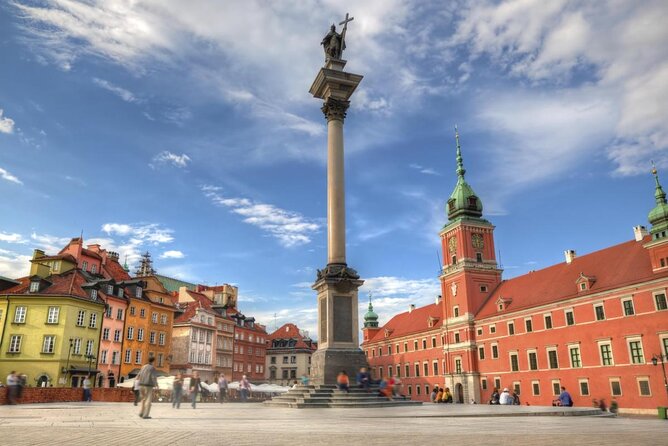
Warsaw’s guided tour covers the Royal Castle, the Royal Route, Old Market Square, the Barbican, Krakowskie Przedmiescie, Lazienki, and the Palace on the Water. It is a five-hour introduction to the capital, with admission included.
The route gives you several views of Warsaw at once. The Royal Castle and Royal Route present the city’s royal and political side. Old Market Square and the Barbican bring you into the old center, while Lazienki offers a quieter setting with gardens and the Palace on the Water.
This is a full half-day, but not an exhausting schedule on paper. You have the afternoon free for a slower walk, a meal, or rest. That free period matters because the trip becomes more mobile from the next morning.
Day 3: First-class rail to Gdansk
After breakfast, a driver takes you to Warsaw railway station for a direct train to Gdansk. The rail journey is listed at about four hours, followed by a driver transfer to your central hotel.
Gdansk is a strong next stop because it changes the mood of the trip. Warsaw is the national capital. Gdansk brings maritime character, merchant architecture, and the modern political story of the Solidarity movement.
The train arrangement is one of the tour’s practical strengths. You do not need to rent a car, navigate Polish roads, or manage luggage through a series of connections. The main drawback is that this is a transfer day rather than a sightseeing day. Once you add the station transfer and hotel check-in, you may have limited energy for more than a short walk.
Something quite different:
- Warsaw: Chopin Concert in the Old Town
★ 4.8 · 2,287 reviews - Warsaw: Traditional Galar Cruise on The Vistula River
★ 4.6 · 1,640 reviews - Warsaw: Old Town Highlights Walking Tour in English
★ 4.7 · 1,516 reviews - Warsaw Concert: Chopin – Painted by Candlelights with Wine
★ 4.8 · 1,442 reviews
Day 4: Gdansk’s old streets and the Solidarity story
The Gdansk tour includes the Golden Gateway, Neptun’s Fountain, Artus Court, Uphagen House, Dluga Street, Mariacka Street, the wooden Crane on the Motlawa River, and the Solidarity Monument at the Gdansk Shipyard.
This is an especially well-balanced day. You see decorative old-town streets, civic buildings, a waterfront landmark, and the shipyard tied to the Solidarity movement. That final stop gives the city more meaning than a pretty walk around restored facades.
The afternoon visit to Oliva adds something different: an organ music concert in Oliva Dome. It is a distinctive cultural stop, and it keeps the schedule from becoming a repeat of squares, churches, and museums. The listed tour length is four hours, though the full day includes the Oliva visit and time for private arrangements, so confirm the exact timing.
Day 5: Malbork Castle, Poland’s great brick fortress
Malbork is one of the trip’s major highlights. You travel from Gdansk for a half-day guided visit to the largest medieval brick castle in Poland, with the option of lunch at the castle restaurant before returning to Gdansk.
This is a smart day trip from Gdansk. You get a major sight without packing and changing hotels again. The castle also gives the itinerary a strong medieval component, after the urban and modern history of the previous day.
The schedule allows time in the afternoon for relaxing, shopping, or a private walk in Gdansk. Admission is listed as free in the itinerary, while the overall tour includes admissions in several other places. Since the wording is not perfectly consistent, ask exactly what is covered at Malbork and what you should budget for locally.
Day 6: Poznan and a shorter introduction
You take a direct train from Gdansk to Poznan, with a driver transfer from the station to your hotel. After check-in, a guided tour covers the Cathedral, Renaissance Town Hall, and the Baroque Church of St. Mary Magdalene.
The guided portion is about three hours, making this one of the lighter sightseeing days. That can be welcome after Gdansk and Malbork. Poznan is presented here as a city associated with Polish and international fairs, but the tour focuses on its religious, civic, and architectural landmarks.
The limitation is time. You arrive by train, transfer, check in, and then tour the city in one afternoon. You get a useful first look, but not an expansive visit. If Poznan interests you most, ask if the itinerary can be adjusted, since the operator has shown flexibility with changes.
Day 7 and Day 8: Wroclaw’s rivers, cathedral, and grand square
Day 7 is another direct-train transfer, this time from Poznan to Wroclaw. A driver meets you at the station and takes you to your hotel. The day is mainly for travel and settling in.
Day 8 supplies the full introduction. The guided walk includes Ostrów Tumski, the Cathedral, the University with its Baroque Aula Leopoldina, and the Market Square with its restored townhouses and Gothic City Hall.
Wroclaw benefits from this two-day pattern. You arrive without needing to sightsee immediately, then explore when you have a clear morning. The city’s river setting and island district give the tour a different feel from Warsaw, Gdansk, and Poznan. A boat ride is not listed in the itinerary, so do not assume it is included, though it may be something to ask about during your free time.
The four-hour city tour includes admission to at least some sights. Since the afternoon is open, you can take a private walk or simply enjoy the square at your own pace. That balance is one of the best features of the trip.
Day 9: Krakow’s royal route and central square
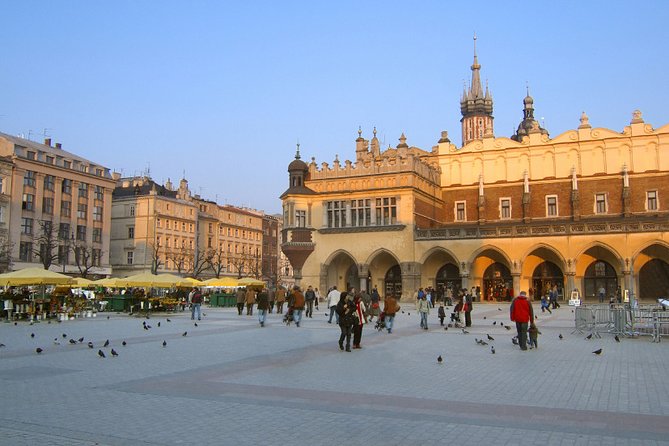
A direct train takes you from Wroclaw to Krakow. After a driver transfer and hotel check-in, you join a half-day tour of Krakow, described as Poland’s cultural capital.
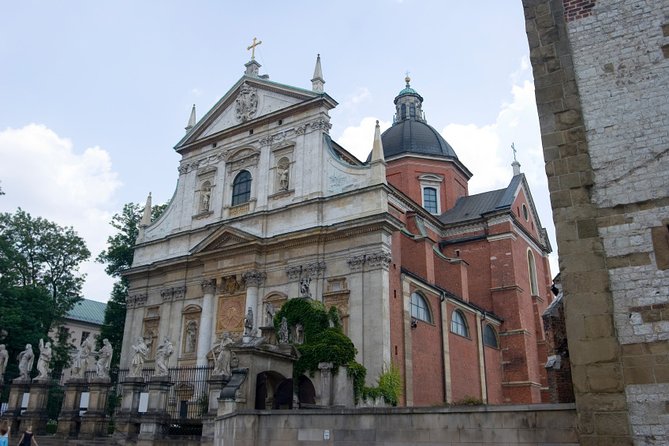
The route centers on Rynek Glowny, the large main square, with the Cloth Hall and St Mary Basilica. You then walk the Royal Route toward Wawel Hill, home to the cathedral and Royal Castle.
This is an efficient first visit to Krakow’s central sights. The tour length is about four hours, and the afternoon or evening remains yours. You can use that time for a private walk or choose the optional dinner with live regional music for $45 per person.
Krakow is the kind of city where a central hotel pays off. The tour gives you the structure and context, while free time lets you return to the square, explore at a slower pace, or stop for food. The drawback is that arriving by train and touring on the same day may leave you tired.
Day 10: Choosing Auschwitz, Wieliczka, or Kazimierz
The final morning gives you a choice among three very different experiences: the Wieliczka Royal Salt Mine, the Auschwitz-Birkenau Nazi German Camp Museum, or a half-day tour of Kazimierz, Krakow’s Jewish district.
This choice is valuable because it lets you match the final day to your interests. Wieliczka offers an unusual underground heritage site. Auschwitz-Birkenau is a serious memorial visit that requires emotional preparation as well as time. Kazimierz offers a closer look at Krakow’s Jewish history and urban character.
The schedule says breakfast, a half-day regional visit, and then a transfer to Krakow airport or train station. Confirm flight times carefully. A half-day tour followed by a departure transfer leaves little room for delays.
Guides, drivers, and the small-group advantage
The human side of this trip is one of its strongest points. The operator’s manager, Tomasz, is described as quick to respond, flexible with changes, and highly organized. One booking was changed to fit a wider Poland trip, and another traveler received help getting to the airport after a serious medical emergency. That does not guarantee every future situation, but it shows the kind of support the company aims to provide.
Local guides are used in Warsaw, Gdansk, Poznan, Wroclaw, and Krakow. That is better than having one guide repeat the same style and information across the country. You get city-specific help and a chance to ask about local places as you go.
The maximum group size is 10. That is small enough for easier questions, quicker station movements, and a more personal feel. You still need moderate physical fitness. Expect several hours of walking, repeated hotel changes, train boarding, and city-center sightseeing.
What is included, and what is not
The package includes:
- Air-conditioned vehicle transfers
- 3-star or 4-star hotel accommodation
- Local guides and drivers
- First-class train tickets
- Nine breakfasts
- Listed admissions where specified
Dinners are not included. Lunches are also not listed as included, though lunch at the Malbork Castle restaurant is available. The $45 Krakow dinner is optional.
Mobile ticketing and English-language operation make the trip easier for international visitors. The tour also requires a minimum number of people to operate. If that minimum is not met, the provider says you will be offered another date or experience, or a full refund.
The cancellation rule is strict: the experience is non-refundable and cannot be changed for any reason. I would avoid booking until your flights, health, and dates are firm.
Who should book this rail tour?
I would recommend it to someone visiting Poland for the first time who wants to cover several major cities without driving. It is also a good match if you value personal assistance, prefer first-class trains, and want local guides rather than relying only on an app or guidebook.
It suits couples, small groups of friends, and solo visitors who like company but do not want a large coach. The mix of planned sightseeing and open afternoons also works well if you want structure without surrendering every hour.
I would be more cautious if you prefer slow travel. Five cities plus a castle and a final regional tour in 10 days is a brisk pace. You will spend several mornings moving hotels or boarding trains. Independent visitors who enjoy booking their own rooms and rail tickets may also find the package costly.
Should you book In 10 Days Around Poland?
Book this tour if you want Poland’s main highlights arranged into one dependable route, with first-class rail, central hotels, station transfers, and local guides. The strongest value is the support from Tomasz and the driver-guide network, especially when plans need adjusting.
Before paying, confirm the Warsaw versus Krakow arrival point, the exact hotels, which admissions are included, and the timing of your final-day airport transfer. If those details suit you, this is a well-planned introduction to Poland with useful breathing room between guided visits. If you want a slower, cheaper trip, book the cities independently and spend longer in fewer places.
FAQ
Where does the tour start?
The daily itinerary says the tour begins with arrival at Warsaw airport or train station. However, the formal meeting-point information lists Krakow-Balice Airport. Confirm the correct starting location with GFP Travel before booking.
Where does the tour end?
The listed end point is Krakow-Balice Airport. The final day also allows departure from the Krakow airport or train station.
How long does the experience last?
The tour lasts approximately 10 days, from the initial arrival and Warsaw transfer through departure from Krakow on Day 10.
Which cities are included?
The route includes Warsaw, Gdansk, Poznan, Wroclaw, and Krakow. It also includes a day trip to Malbork.
Are train tickets included?
Yes. First-class train tickets are included, and the listed rail journeys are direct between the main cities.
Are hotels included?
Yes. Accommodation at 3-star or 4-star hotels is included. The supplied information does not name the individual properties.
Are meals included?
Nine breakfasts are included. Dinners are not included. Lunch is not listed as included, and the optional Krakow dinner with live music costs $45 per person.
What can I choose on the final day?
You can choose a half-day visit to the Wieliczka Royal Salt Mine, Auschwitz-Birkenau Museum, or Kazimierz, the Jewish district in Krakow.
How large is the group?
The tour has a maximum of 10 participants. It also requires a minimum number of travelers to operate.
Just added in Warsaw
- Wroclaw Small-Group Tour with Lunch from Warsaw★ 5.0 · 2 reviews
- World War II Warsaw Old Town, Military Cemetery Walking Tour★ 4.7 · 3 reviews
- Warsaw: Wolf’s Lair & Swieta Lipka Small-Group Tour + Lunch★ 5.0 · 3 reviews
- Wilanów Palace: 2-Hour Guided Tour with Entrance Tickets★ 4.8 · 8 reviews
- Warsaw Zoo Skip-the-Line Entry Ticket with Private Transport★ 4.8 · 3 reviews
- Warsaw: Private Vodka Tasting Night with Snacks and Pickup★ 5.0 · 7 reviews
- Warsaw Private Wilanow Palace & Garden Tour★ 4.6 · 30 reviews
- Warsaw Wolf’s Lair with St. Lipka and Mamerki Private Guided★ 4.2 · 3 reviews
Train Experiences, compared.

Private transfer from Central Railway Station to any location in Warsaw
Read our review →Browse the lists this tour appears in