
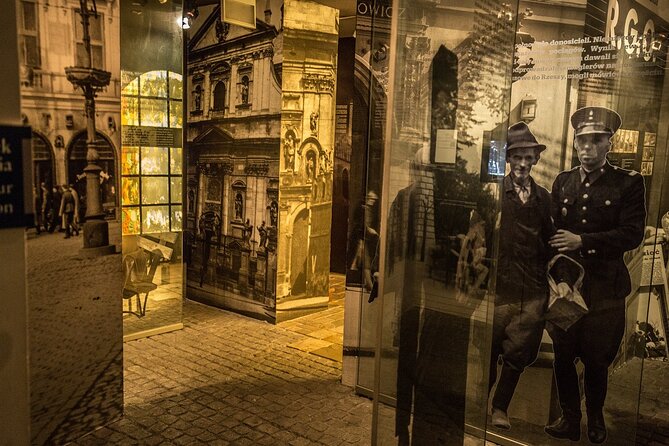
REVIEW · SCHINDLER'S FACTORY TOURS
Guided Tour of Schindler’s Factory and Ghetto and Plaszow Camp in Krakow
History feels close to the pavement here. This four-hour Krakow tour links the Oskar Schindler Enamel Factory with the former Jewish Ghetto and Płaszów Camp, giving you the wider story behind one of the city’s most famous museums. I like the way it combines indoor exhibits with real streets, a surviving ghetto wall, Heroes Square, and the camp site featured in Schindler’s List. I also like that a professional guide provides context at each stop instead of leaving you to piece the story together alone.
The main point to understand before booking is that Schindler’s Factory is not a biography of Oskar Schindler. Its exhibition focuses on Krakow under Nazi occupation, so anyone expecting a museum devoted mainly to Schindler’s personal life may find the emphasis different than expected. Płaszów is also a serious, emotionally difficult stop rather than a light sightseeing outing.
In This Review
- Key points to know before you book
- Why this Krakow history tour matters
- Inside the Oskar Schindler Enamel Factory
- The 12-metre ghetto wall fragment
- Empty chairs at Ghetto Heroes Square
- Reaching Płaszów Camp
- The guide and the group size
- Meeting point, finish, and physical demands
- Is $76.80 good value?
- Who should book this experience?
- Final verdict: a serious tour with a useful wider view
- FAQ
- How long does the tour last?
- Where does the tour begin?
- Where does the tour end?
- Is admission to Schindler’s Factory included?
- Is there an admission fee for the ghetto wall, Heroes Square, or Płaszów?
- Is Schindler’s Factory mainly a museum about Oskar Schindler?
- How many people can join the tour?
- Is the tour suitable for someone with limited mobility?
- Can I cancel for a full refund?
Key points to know before you book
- The factory museum covers occupied Krakow: The main exhibition, Kraków under Nazi Occupation 1939 to 1945, examines daily life under German rule rather than focusing only on Schindler.
- Płaszów completes the story: The former camp site connects the museum and ghetto stops to the setting shown in the film Schindler’s List.
- Heroes Square has a powerful memorial: Rows of empty cast-iron chairs represent the belongings left behind when the ghetto was liquidated.
- A surviving ghetto wall adds physical context: You will see a 12-metre fragment with a commemorative plaque in Hebrew and Polish.
- The tour lasts about four hours: That gives you time for the museum, outdoor memorials, and Płaszów without turning the day into a full-day commitment.
- The group can reach 25 people: That is small enough for a guide-led visit, though a larger group may feel less personal at busy points.
Why this Krakow history tour matters
You can visit Schindler’s Factory on your own, but the museum covers a difficult and wide-ranging subject. A guide helps connect the displays to the streets and districts you see afterward. That link matters because Nazi occupation was not confined to one building or one camp. It reshaped homes, shops, public spaces, work, and movement across Krakow.
This tour follows that progression in a useful order. You begin inside the factory museum, where the exhibition sets the historical frame. You then move through Podgórze, the district that contained the Jewish Ghetto, before ending at Płaszów in the southern suburbs.
I especially like this structure because it avoids treating Schindler’s story as an isolated tale of one industrialist. The tour places his factory within the wider experience of Jewish residents in occupied Krakow, including forced relocation, separation from ordinary life, deportation, and murder.
At $76.80 per person, this is not the cheapest way to see one Krakow museum. The price makes more sense if you value a guide, want the former ghetto and Płaszów included, and prefer to cover the main sites in one organized outing. If you only want to see the factory exhibition, an independent visit may offer better value.
More Schindler Factory tours:
- Krakow: Oskar Schindler’s Factory Entry Ticket & Guided Tour
★ 4.2 · 3,793 reviews - Krakow: Schindler’s Factory Tour with Entrance Ticket
★ 4.5 · 3,182 reviews - Krakow: Schindler’s Factory Skip-the-Line Ticket
★ 4.4 · 3,105 reviews
Inside the Oskar Schindler Enamel Factory
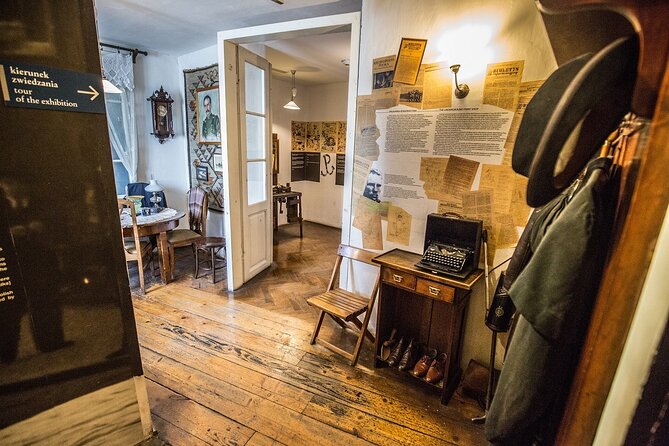
The tour begins at 4 Lipowa Street, at Fabryka Emalia Oskara Schindlera. The building is now part of the Historical Museum of Krakow and houses the exhibition Kraków under Nazi Occupation 1939 to 1945.
You receive about 90 minutes inside, with admission included. That is a useful amount of time for a guided introduction to the museum, though you should not expect to study every display at length. The exhibition is popular and covers a large subject, so the guide’s explanations help you decide what deserves your attention.
The most important practical point is the museum’s focus. This is not a personal Schindler museum in the narrow sense. It reveals many sides of life in Krakow under Nazi rule, showing how occupation affected the city and its people.
That broader approach is one of the tour’s strengths. You get more than the familiar film narrative. The museum places Schindler’s factory within the political and social conditions of the time, helping you understand why the factory became important and how industrial work fit into the occupation system.
The visit can be emotionally demanding. The subject matter is serious, and the museum deals with persecution and death rather than offering a simple story with a cheerful finish. I would give yourself a little quiet time after leaving before rushing to the next sight.
The 12-metre ghetto wall fragment
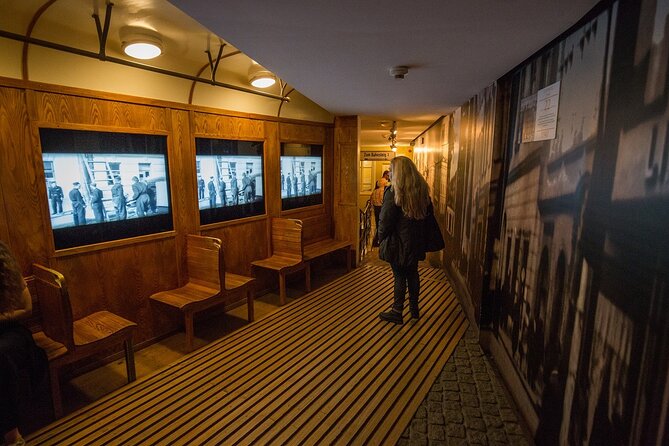
The next stop is a 12-metre section of the original Krakow Ghetto wall. There is no admission charge, and the visit lasts about 15 minutes.
A short wall fragment may seem modest beside a large museum, but that is exactly why it can be effective. You are looking at a surviving piece of the barrier that helped isolate Krakow’s Jewish population. The physical scale makes the policy of confinement feel less abstract.
A commemorative plaque, added in 1983, carries text in Hebrew and Polish. Its message recalls that people lived, suffered, and died there before beginning their final journey to the death camps.
The guide’s role is valuable at this stop. Without context, you might spend only a moment looking at old brickwork. With an explanation of what the wall marked and how it fitted into the ghetto, the stop becomes a clear link between the museum displays and the streets around you.
The visit is brief, so do not expect a large memorial complex or a long museum presentation here. It is a focused outdoor stop. Wear comfortable shoes, since the day moves between several locations and includes time outside.
Empty chairs at Ghetto Heroes Square
Plac Bohaterów Getta, or Ghetto Heroes Square, was inside the Jewish Ghetto from 1941 to 1943. It served as a place where Jewish residents were gathered before transport to concentration camps.
Today, several dozen cast-iron chairs sit separately across the square. The monument represents the property and personal belongings left scattered after the ghetto was liquidated.
This is one of the most memorable parts of the walking section because the design is simple and easy to understand. The chairs do not recreate a scene with statues or elaborate storytelling. Instead, they suggest absence. A public square that once held people now contains empty seats.
You spend about 20 minutes here. That is enough to hear the meaning behind the memorial and take in the layout without turning the stop into a long lecture. I find this kind of pause important on a serious tour. It gives you a physical place to think about the people who were forced from their homes.
The square also connects to the story of the Pod Orłem pharmacy. The pharmacy played a heroic role during the occupation, and the guide explains the people and actions behind it. That detail adds a human scale to the wider history. You are not only hearing about official orders and deportations. You are also hearing about choices made by individuals in a dangerous time.
More Jewish heritage tours in Krakow:
- Krakow: Schindler’s Factory & Ghetto Guided Tour
★ 4.7 · 1,694 reviews - Krakow: Jewish Quarter and Former Ghetto Tour
★ 4.9 · 1,441 reviews - Krakow: Bike Tour of Old Town, Jewish Quarter and the Ghetto
★ 4.9 · 1,155 reviews - Krakow: Kazimierz Jewish Quarter Walking Tour
★ 4.8 · 571 reviews
Reaching Płaszów Camp
The final major stop is Płaszów, located in Krakow’s southern suburbs. You spend about 90 minutes here, and there is no separate admission fee.
The Nazis founded Płaszów shortly after the German invasion of Poland. It opened in 1940 as a forced labor camp, then expanded in 1941 and became a concentration camp. From October 28, 1942, Jews from the Krakow Ghetto began to be deported there.
Płaszów supplied labor to military factories and a quarry. This helps explain why the site belongs in the tour. It was not merely a backdrop from a famous movie. It was part of a system that exploited prisoners and linked the camp to industrial production.
The setting is also significant because Płaszów was featured in the 1993 film Schindler’s List. If you know the movie, seeing the actual site can give those scenes a sharper historical frame. Still, you should not expect a film attraction. The importance of Płaszów lies in the real events that happened there, not in its connection to Hollywood.
This stop may be the most difficult emotionally. The site does not offer the same type of indoor exhibit as the factory museum, so the guide’s explanation becomes especially important. You may find the open setting quieter and less immediately structured than a conventional museum. That can make the history feel stark, but it also means you should pay close attention to the route and commentary.
A moderate level of physical fitness is recommended. The tour includes walking through an urban district, outdoor memorial stops, and time at the camp site. The provider does not describe the route as requiring strenuous hiking, but this is not a seated museum visit from start to finish.
The guide and the group size
The tour is led by a professional guide, and the available feedback gives special praise to the guide’s information and the way the day was made memorable. The provider’s response was signed by Manuel, though the information does not confirm that Manuel is the guide for every departure.
That distinction matters. Guide quality can shape this experience more than almost anything else. The sites are important, but their meaning is not always obvious from what you see. A good guide can explain the change from ghetto to camp, point out what remains, and keep the discussion clear without flattening the human story.
Groups can include up to 25 people. That is a manageable maximum for a city tour, though you should not expect the intimacy of a private visit. If the group reaches its limit, it may take longer for everyone to gather at street corners or hear every explanation clearly.
The average booking lead time is 79 days, which suggests that you should not leave this until the last moment if the date matters to you. That is especially useful advice for a short Krakow stay, when museum time slots and organized tours can fill early.
Meeting point, finish, and physical demands
The tour starts at Lipowa 4 in Krakow, the address of Schindler’s Factory. It ends at Henryka Kamieńskiego 57, 30-644 Kraków, rather than returning to the starting point.
That one-way format is practical in some ways because you finish closer to Płaszów and the southern part of the city. It also means you should plan your next activity from the endpoint, not from the museum. The tour information notes that public transportation is nearby.
The full experience lasts approximately four hours. That makes it easier to fit into a Krakow itinerary than a full-day excursion, but you should keep the rest of the day flexible. The subject matter is heavy, and the outdoor portions may take more energy than the clock suggests.
Wear shoes suitable for walking and dress for changing conditions. The exact route between stops is not specified, but the tour clearly combines indoor time with outdoor streets and the former camp site.
Is $76.80 good value?
The price is $76.80 per person, with admission to Schindler’s Factory included. The wall fragment, Heroes Square, and Płaszów do not require separate admission charges.
You are paying mainly for the guide and the combined route. If you visited the museum independently and skipped the other sites, you could likely spend less. But that comparison leaves out the value of having someone explain how the factory, ghetto, pharmacy, memorial square, and camp fit together.
I see this as a good value for someone who wants a single, serious introduction to Krakow under Nazi occupation. It is less attractive for a visitor who prefers to read every museum panel slowly, set their own pace, or focus only on Oskar Schindler.
The 90-minute museum visit is long enough to make the admission worthwhile, and the added outdoor stops give the tour a broader purpose. You are not simply paying for transport between attractions. You are paying for a connected story.
Who should book this experience?
I would recommend it to first-time Krakow visitors who want historical context without arranging several separate visits. It suits people who have seen Schindler’s List and want to understand the real places behind the film, provided they are ready for a serious treatment of the subject.
It also works well for anyone who prefers a guide-led visit to a museum. The exhibition is large and its subject is complex, so having someone shape the visit can save time and prevent important details from being missed.
I would think twice if you are looking for a light cultural outing, a biography of Schindler, or a relaxed half-day walk. The emotional content is unavoidable, and Płaszów is not a polished attraction designed for easy sightseeing.
Free cancellation is available if you cancel at least 24 hours before the start time. Changes or cancellations within 24 hours are not accepted for a refund, so keep that deadline in mind when making plans.
Final verdict: a serious tour with a useful wider view
Book this tour if you want more than the factory museum alone. The strongest feature is the way it connects the exhibition to the former Jewish Ghetto and Płaszów, while the praised guide-led format gives the stops meaning and order.
The main caution is simple: expect occupation history, deportation, forced labor, and a concentration camp site, not a movie-themed outing. For a respectful and well-organized four-hour look at Krakow during Nazi rule, the combination offers solid value at $76.80, especially for a first visit.
FAQ
How long does the tour last?
The tour lasts approximately four hours.
Where does the tour begin?
It begins at Lipowa 4, 32-051 Kraków, Poland, at the Oskar Schindler Enamel Factory.
Where does the tour end?
It ends at Henryka Kamieńskiego 57, 30-644 Kraków, Poland.
Is admission to Schindler’s Factory included?
Yes. Admission to the Oskar Schindler Enamel Factory museum is included.
Is there an admission fee for the ghetto wall, Heroes Square, or Płaszów?
The tour information lists admission as free for the ghetto wall fragment, Ghetto Heroes Square, and Płaszów Concentration Camp.
Is Schindler’s Factory mainly a museum about Oskar Schindler?
No. The main exhibition is Kraków under Nazi Occupation 1939 to 1945 and focuses on occupied Krakow and life under Nazi rule rather than being a biographical museum about Schindler.
How many people can join the tour?
The group can include a maximum of 25 people.
Is the tour suitable for someone with limited mobility?
The tour information recommends a moderate level of physical fitness. It includes walking through Podgórze and outdoor visits to the ghetto wall, Heroes Square, and Płaszów.
Can I cancel for a full refund?
Yes, if you cancel at least 24 hours before the experience start time. Cancellations or changes made less than 24 hours in advance are not refunded.
Just added in Krakow
- Auschwitz-Birkenau – Skip the Line Tickets★ 3.5 · 29 reviews
- Auschwitz-Birkenau: Fast-Track Ticket & Guided Tour No Transfers★ 3.5 · 17 reviews
- Zakopane & Sleigh Ride with Bonfire – Group Tour from Kraków★ 5.0 · 2 reviews
- Sleigh Ride & Bonfire in Zakopane with Funicular – Private Trip★ 5.0 · 48 reviews
- Thermal Baths & Zakopane – Private Trip from Krakow★ 5.0 · 1 review
- Zakopane & Gubalowka Funicular – Private Winter Tour from Krakow★ 5.0 · 10 reviews
- Divine Mercy Sanctuary – Private Tour from Krakow★ 5.0 · 4 reviews
- stag dog chase Krakow prank★ 5.0 · 4 reviews