
REVIEW · JEWISH QUARTER TOURS
Gdansk: Jewish Heritage Guided Private Walking Tour
History hides in plain sight here. This private four-hour tour connects Gdansk’s Jewish past with the city’s grand Old Town, from the site of the destroyed Great Synagogue to the sole surviving synagogue in Wrzeszcz. I especially like the private format, which lets you ask questions and shape the pace, and the way the tour links architecture with personal stories, including Jewish veterans who tried to protect the Great Synagogue during Kristallnacht. The main consideration is that entrance fees are not included, and much of the tour focuses on historical sites rather than preserved interiors.
The tour also makes practical sense for a short stay. Your guide meets you at your hotel, provides transportation, and returns you afterward, so you do not need to work out the route between central Gdansk and Wrzeszcz. Guides speak English, Polish, French, Italian, Portuguese, Spanish, German, or Russian. Beata received especially warm praise for being informative and engaging, while Eva was described as patient, clear, and responsive to the group’s preferences. Luis also earned a brief but positive mention.
In This Review
- Key points to know before booking
- Why Gdansk’s Jewish story matters
- Walking through the Old Town’s Jewish landmarks
- The Great Synagogue and the story of Kristallnacht
- Granary Island and the former ghetto area
- The Kindertransports monument
- The Jewish cemetery’s original walls and graves
- Gdansk’s Jewish Theatre and cultural life
- The New Synagogue in Wrzeszcz
- What four hours and private guiding add
- Who should book this Gdansk tour?
- Booking details that affect your decision
- Should you book the Jewish Heritage Guided Private Walking Tour?
- FAQ
- How long is the Gdansk Jewish heritage tour?
- What is the price?
- Is the tour private?
- Is hotel pickup included?
- Is transportation included?
- Are entrance fees included?
- Which languages are available?
- Is the tour wheelchair accessible?
- Can I cancel for a full refund?
Key points to know before booking
- The Great Synagogue site: Learn how Gdansk’s largest synagogue became a symbol of Jewish unity before it was destroyed by Germans in 1939.
- The Jewish cemetery: See the original walls, entrance gate, and surviving graves, one of the tour’s most tangible connections to Gdansk’s Jewish community.
- The former ghetto area: Visit Granary Island and hear about Jewish life and persecution during the Holocaust.
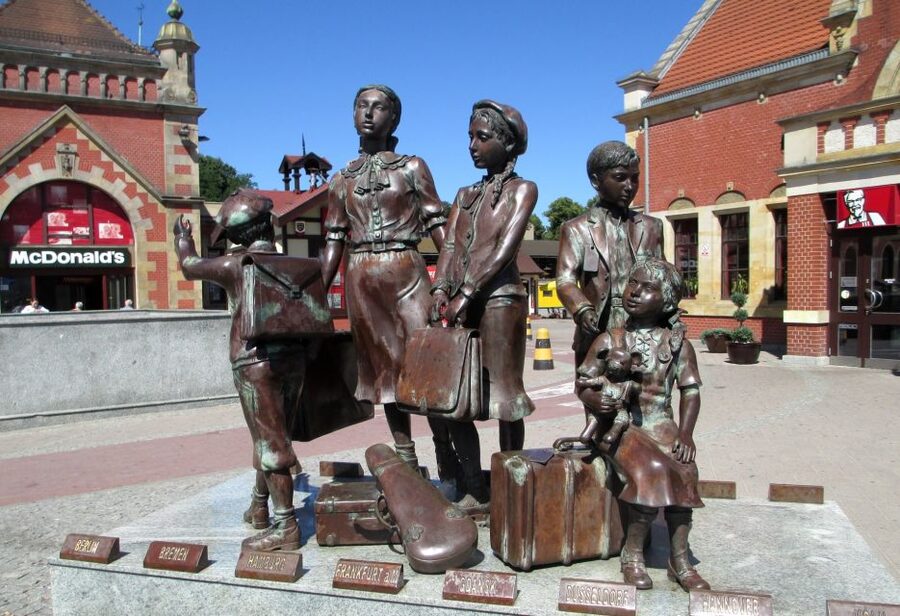
- Kindertransport history: Stop at the monument and learn how children were sent out of danger before the Second World War.
- The New Synagogue in Wrzeszcz: See Gdansk’s only remaining synagogue, built in 1926.
- A genuinely private visit: Hotel pickup, transportation, and a guide for only your group make this a useful choice for families, couples, and cruise passengers with limited time.
Why Gdansk’s Jewish story matters
Gdansk’s Jewish history reaches back, possibly as far as the 10th century. The city’s position as a major seaport helped it grow in trade, industry, and crafts, and Jewish merchants became part of that economic and cultural life.
During the 15th and 16th centuries, Gdansk was one of Poland’s most prosperous cities. Its success attracted merchants and skilled workers, including Jewish residents who helped shape commercial life. This background matters because it places Jewish history inside the city’s wider story, rather than treating it as a separate subject.
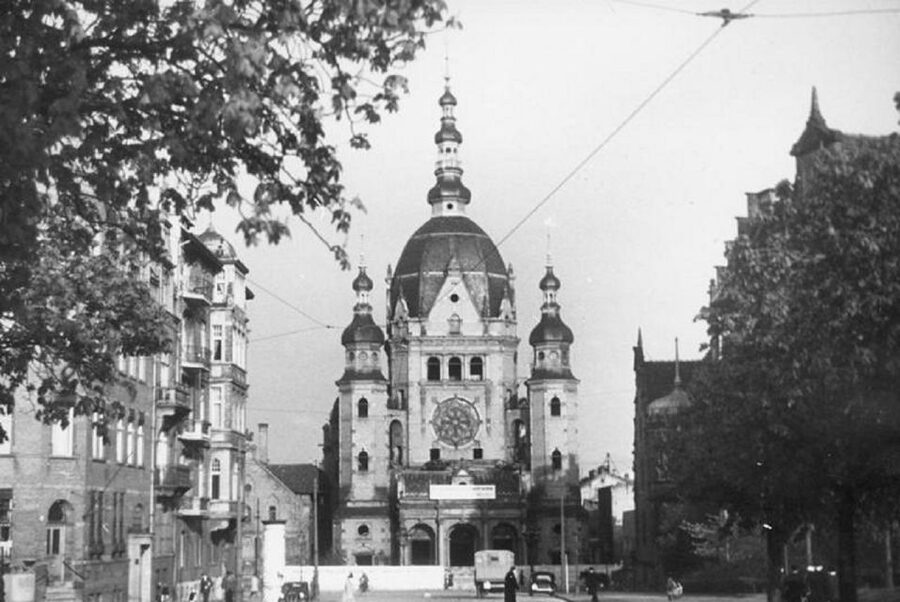
At the end of the 19th century, Gdansk’s Jewish community built its largest synagogue. The building represented cooperation and unity among local Jews, but that story ended with Nazi persecution and its destruction in 1939.
I like that this tour does not reduce Gdansk’s Jewish past to one date or one tragedy. You move from commerce and religious life to war, forced removal, rescue efforts, and the small Jewish community that remains today.
More History Tours in Gdańsk
- Gdansk: City Cruise on Historical Polish Boat
★ 4.8 · 2,913 reviews - Gdańsk: Sunset Cruise on a Historic Polish Boat
★ 4.9 · 977 reviews - Gdańsk City Sights & History Guided Walking Tour in English
★ 4.8 · 876 reviews
Walking through the Old Town’s Jewish landmarks
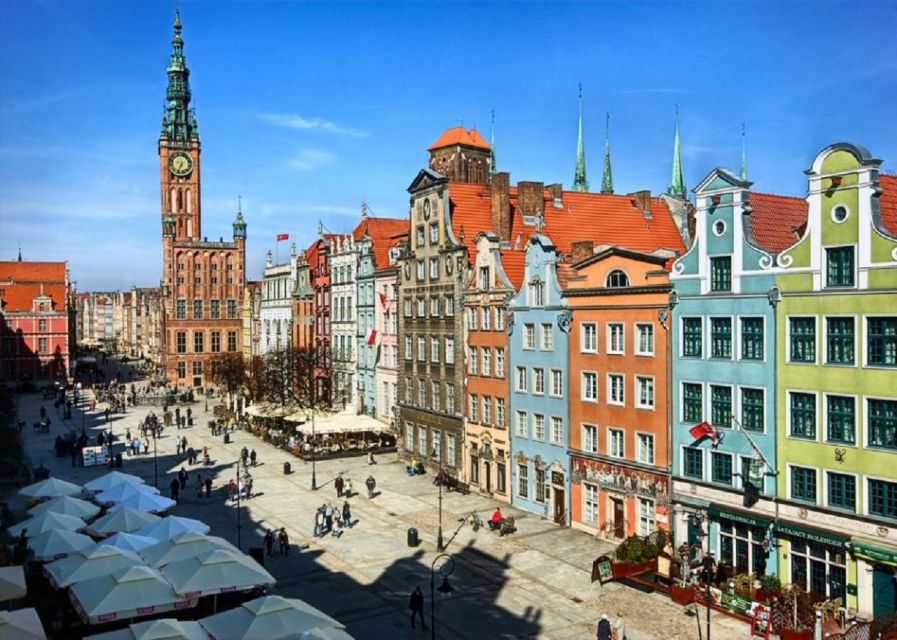
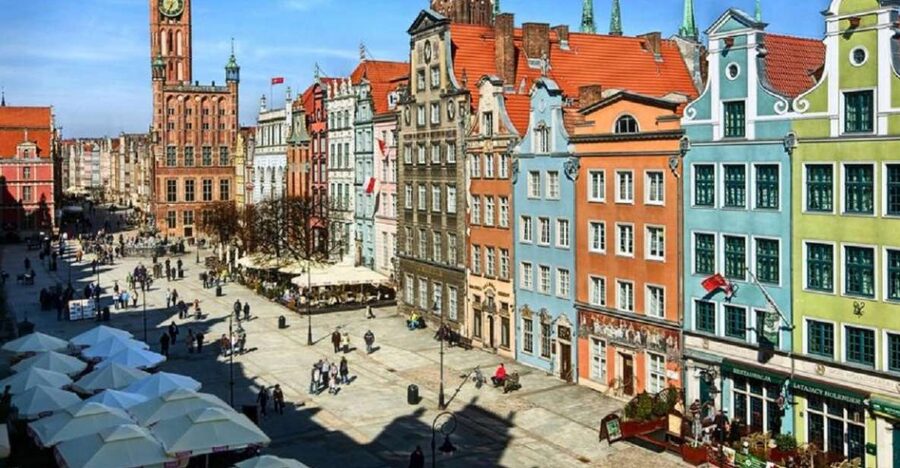
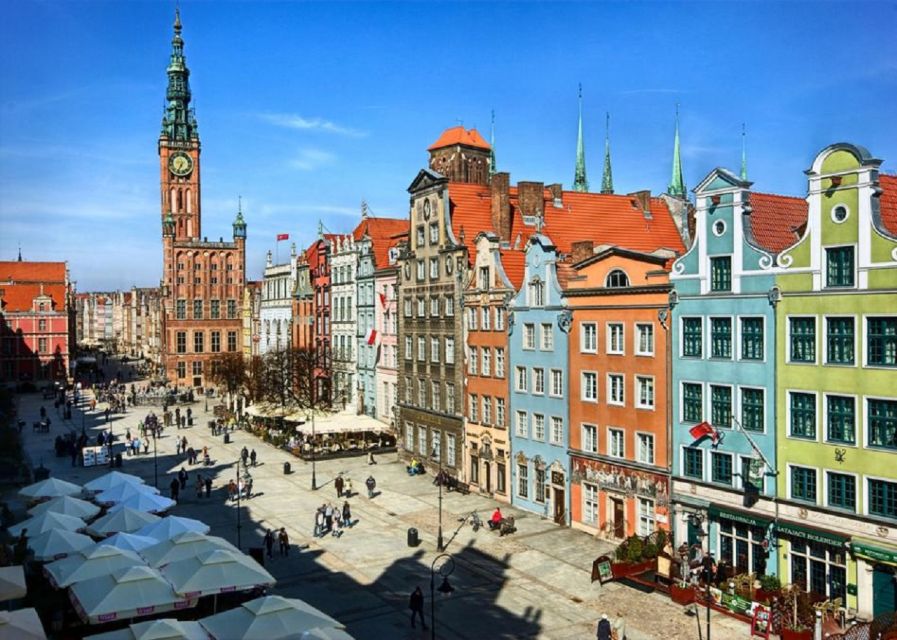
The tour begins with a walk through the Old Town. Gdansk is famous for its historic architecture, and this setting gives the Jewish story a strong visual frame. You see the city’s grand buildings and streets while your guide points out places connected with Jewish residents, businesses, religious life, and public memory.
The Old Town portion is not simply a general city walk with a few Jewish facts added on. The route follows the Trail of Jewish Monuments, giving you a clearer sense of where Jewish life fitted into the city’s development.
Expect a blend of architecture, urban history, and explanation. Some stops are places that no longer contain the original Jewish buildings, so you will need to picture what stood there before the war. That can be less immediately striking than entering a preserved museum, but it also shows how much of Gdansk’s Jewish world was erased.
Your guide’s role is especially important here. A private guide can pause to explain a detail, answer questions, or spend more time on a subject that interests you. Eva was praised for being patient and responsive to personal preferences, which is useful on a tour dealing with serious and sometimes difficult material.
The Great Synagogue and the story of Kristallnacht
One of the most important stops is the place where the Great Synagogue once stood. Built at the end of the 19th century, it was the largest synagogue in Gdansk and a symbol of unity for the city’s Jewish population.
The building was destroyed by Germans in 1939. You do not visit a surviving synagogue interior here, so the value of the stop comes from the explanation and the act of locating the site in today’s city.
A particularly powerful part of the story concerns Jewish veterans who saved the Great Synagogue on Kristallnacht. Your guide explains how these men intervened to protect the building during the anti-Jewish violence. The story adds a human scale to a period often presented only through statistics and political events.
I consider this one of the tour’s strongest moments because it complicates the usual picture of Jewish history in wartime Europe. You hear about people making a brave choice under pressure, not only about institutions and dates.
Granary Island and the former ghetto area
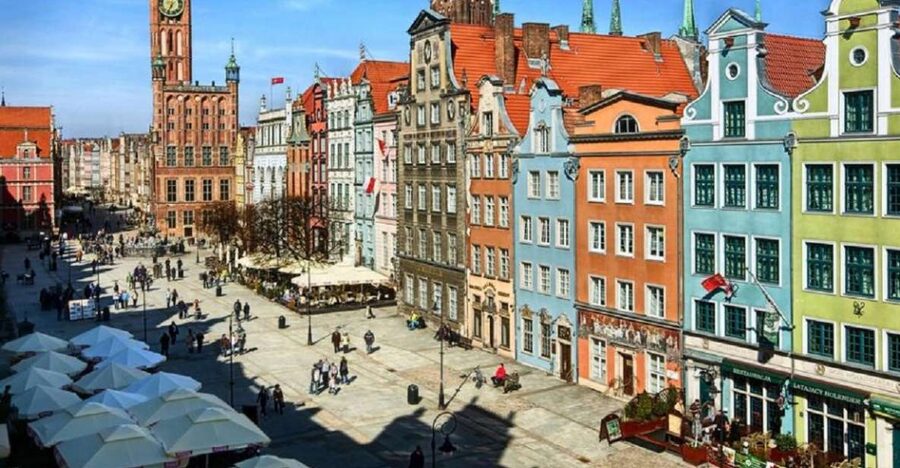
The route continues to Granary Island, where you learn about the former Jewish ghetto area and the Holocaust. This part of the tour shifts the focus from Jewish civic life to persecution, confinement, and destruction.
The information provided does not promise preserved ghetto buildings or a large museum collection at this stop. You should therefore expect an outdoor historical visit, with the guide providing the essential context. The place itself may not tell the full story without explanation, which is why the private format helps.
This is also a point where the tour can feel emotionally heavy. You are moving from a community that helped shape Gdansk’s trade and culture to the violent removal of Jewish residents. A good guide needs to keep the account clear and respectful without rushing through it. The positive comments about Beata being informative and engaging suggest the guiding style can make a real difference.
For me, the value here lies in connecting the physical city with the Holocaust. You are not studying an isolated memorial. You are hearing how persecution affected a specific neighborhood and a specific community within Gdansk.
More Walking Tours in Gdańsk
- Main Town Gdańsk Walking Tour
★ 5.0 · 644 reviews - Discover Gdansk Walking Tour
★ 5.0 · 495 reviews - Gdańsk: Old Town Private Walking Tour with Legends and Facts
★ 4.9 · 245 reviews - Gdansk Old Town 2-Hour Walking Tour
★ 4.5 · 94 reviews
The Kindertransports monument
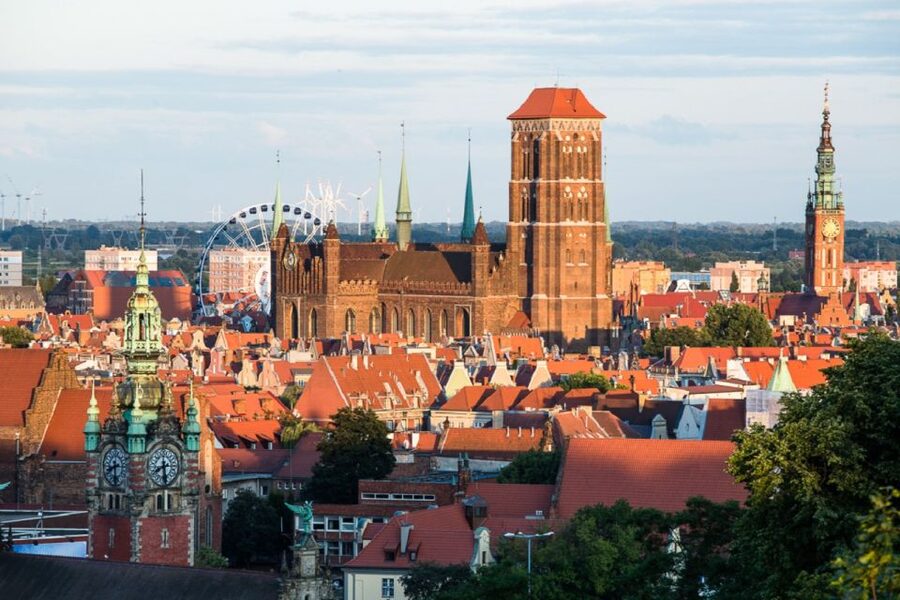
The Kindertransports monument provides another important stop. Your guide explains what the Kindertransports were and why they mattered.
The Kindertransports sent Jewish children out of danger before the Second World War. The subject introduces a different kind of wartime story, one involving rescue, separation, and the painful choice to send children away from their families.
This stop can be especially useful for families or anyone who wants the tour to include more than military history. It shows how the approaching danger affected children and parents before the full scale of Nazi persecution became clear.
The monument also gives the tour a clear place for remembrance. You are not only hearing about events in the past. You are seeing how Gdansk marks them in the present.
The Jewish cemetery’s original walls and graves
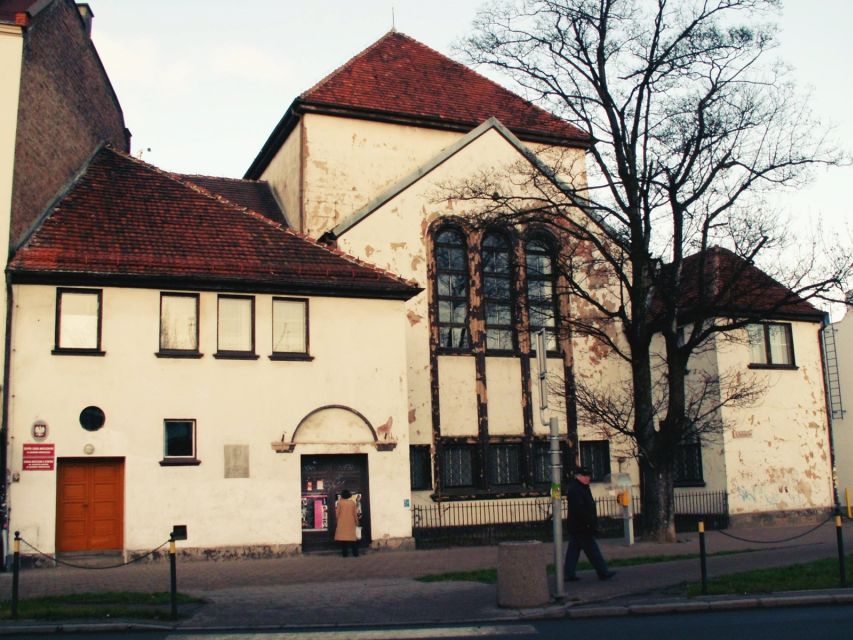
The local Jewish cemetery is one of the tour’s most physical and memorable locations. You see its original walls, entrance gate, and graves, providing a direct link to the community that lived in Gdansk before the war.
Cemeteries often communicate history in a quieter way than monuments do. Names, dates, and worn stones show that this was a living community made up of families and individuals. The cemetery helps balance the larger stories of trade, synagogues, and wartime persecution with personal reminders of ordinary lives.
This stop may be less suitable for anyone looking only for grand architecture or dramatic views. Its strength is its atmosphere and authenticity. I would give it time, listen carefully, and avoid treating it as a quick photo stop.
The tour information specifically notes the original walls and entrance gate, so you can expect to see meaningful surviving features rather than only a modern marker. Since entrance fees are not included in the tour price, ask your guide what access arrangements apply when you book.
Gdansk’s Jewish Theatre and cultural life
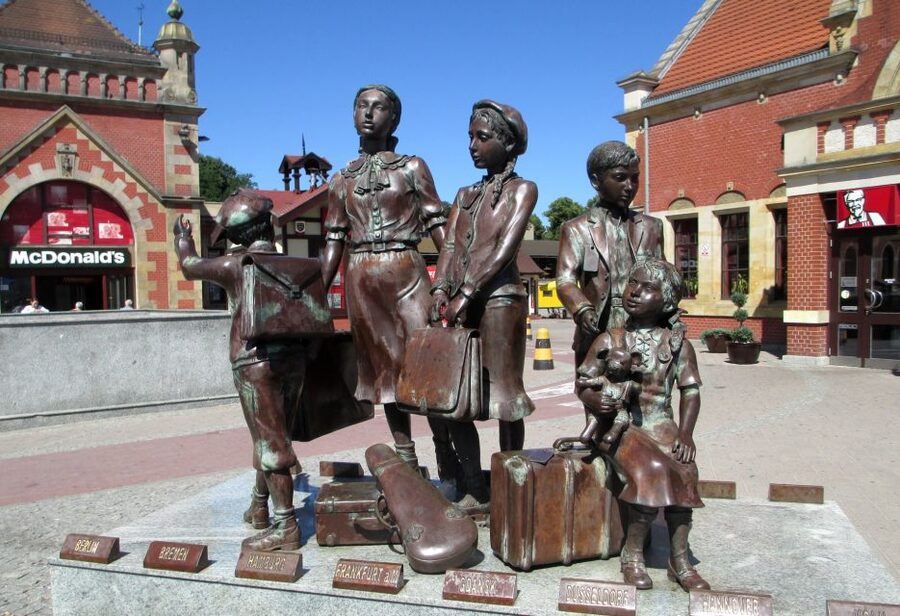
The tour also introduces the famous Jewish Theatre in Gdansk. This helps widen the story beyond religion and wartime suffering.
Jewish communities contributed to city life through business, industry, crafts, and culture. Theatre offers a way to understand that cultural presence and the public life Jewish residents created for themselves.
The supplied details do not promise a theatre performance or an indoor visit. Treat this as an explanatory stop connected with the city’s Jewish cultural history. That distinction matters because you should not book expecting a show or a long theatre tour.
Still, I like its place in the itinerary. A Jewish heritage tour should show how people lived, worked, worshipped, and created culture, not only what happened to them during the Holocaust.
The New Synagogue in Wrzeszcz
The final major sight is the New Synagogue in Wrzeszcz, built in 1926. It is the sole remaining synagogue in Gdansk, making it an important closing point for the tour.
After seeing the site of the destroyed Great Synagogue, visiting a surviving synagogue gives the story a different ending. The New Synagogue connects Gdansk’s prewar Jewish life with the city’s Jewish presence today.
The tour details do not say that admission to the synagogue interior is included, so do not assume you will enter. The building itself remains the key sight, and your guide can explain its place in the city’s religious history.
The move to Wrzeszcz is also why transportation is useful. You begin with the Old Town’s walkable historic center, then reach a district outside that core without spending time figuring out public transport or arranging a taxi. Your guide brings you back to your hotel at the end.
What four hours and private guiding add
Four hours is a sensible length for this subject. Jewish history in Gdansk includes many layers, and a shorter walk could easily become a rushed list of names and dates. This tour gives the guide enough time to connect the monuments, cemetery, ghetto area, and synagogue.
A private group is the main reason to consider the $60 per-person price. You are paying not only for a guide, but also for hotel pickup, drop-off, and transportation. If you are traveling alone, the cost is less appealing than it would be for a couple or family sharing a private vehicle and guide. For a small group, the price can be reasonable because the route and conversation are tailored to you.
The tour suits you best if you want context and discussion rather than a quick succession of photo stops. Beata’s engaging style and Eva’s patience were singled out in the feedback, and those qualities are valuable when the subject includes the Holocaust and the loss of a community.
The tour is wheelchair accessible, but the information provided does not describe the exact surface conditions at every stop. If you use a wheelchair, mention your needs when booking so the provider can confirm the route details.
Who should book this Gdansk tour?
I would recommend it to:
- First-time visitors who want Jewish history placed within Gdansk’s wider story
- Families who want a thoughtful introduction to the Holocaust and Kindertransports
- Cruise passengers with an extra day or limited time in port
- Visitors who prefer a private guide to a large group
- People interested in architecture, cemeteries, synagogues, and urban history
- Anyone who wants hotel pickup and transportation included
It may not be the best choice if you want a museum-heavy tour, extensive synagogue interiors, or a light sightseeing walk. Much of the experience takes place outdoors, and several important locations require your guide’s explanation because the original buildings no longer survive.
The tour can also work well as a first introduction before exploring Gdansk on your own. At the end, your guide explains what else you can discover independently, which gives you a useful next step instead of leaving you with a pile of disconnected facts.
Booking details that affect your decision
The price is $60 per person, and the tour lasts four hours. A private guide, hotel pickup and drop-off, and transportation are included, while entrance fees are not.
You can reserve now and pay later, and cancellation is free up to 24 hours in advance for a full refund. That flexibility is useful if your plans are still shifting, especially for cruise passengers. One American group booked at the last minute after a cruise delay created an extra day in Gdansk, then had a successful visit with Beata.
Tours are available with live guides in English, Polish, French, Italian, Portuguese, Spanish, German, and Russian. Your guide waits in the hotel lobby with your name, so be ready on time. A private pickup is convenient, but delays can affect a four-hour schedule.
Should you book the Jewish Heritage Guided Private Walking Tour?
Book this tour if you want a focused, personal look at Gdansk’s Jewish past and prefer a guide who can adjust the conversation to your interests. The cemetery, Great Synagogue site, Kindertransports monument, former ghetto area, and New Synagogue create a thoughtful route through both Jewish life and the Holocaust.
I would be more cautious if you expect preserved interiors or a museum collection. This is mainly a guided visit to historical places, and the quality depends heavily on the guide’s explanations.
For couples, families, and small groups, the $60 price includes enough practical help to make the tour worthwhile. For solo visitors, compare the cost with group alternatives. If you do book, request the language you want and ask what access is planned for the synagogue and cemetery, since entrances are not included.
FAQ
How long is the Gdansk Jewish heritage tour?
The tour lasts four hours.
What is the price?
The listed price is $60 per person.
Is the tour private?
Yes. It is offered for a private group.
Is hotel pickup included?
Yes. The guide meets you in your hotel lobby and also returns you to your hotel afterward.
Is transportation included?
Yes. Transportation during the tour is included.
Are entrance fees included?
No. Entrance fees are not included in the tour price.
Which languages are available?
Live guides are available in French, Italian, Portuguese, English, Polish, Spanish, German, and Russian.
Is the tour wheelchair accessible?
Yes. The activity is listed as wheelchair accessible.
Can I cancel for a full refund?
Yes. You can cancel up to 24 hours before the tour for a full refund.
More Jewish Heritage Tours in Gdansk
- Krakow: Schindler’s Factory & Ghetto Guided Tour
★ 4.7 · 1,694 reviews - Krakow: Jewish Quarter and Former Ghetto Tour
★ 4.9 · 1,441 reviews - Krakow: Bike Tour of Old Town, Jewish Quarter and the Ghetto
★ 4.9 · 1,155 reviews - Krakow: Kazimierz Jewish Quarter Walking Tour
★ 4.8 · 571 reviews
Just added in Gdansk
- Wolf’s Lair private tour from Gdansk★ 5.0 · 1 review
- Whisky Tasting in Gdańsk★ 5.0 · 3 reviews
- Transfer from Gdańsk or Airport Gdańsk (GDN) to Kościerzyna★ 5.0 · 1 review
- Westerplatte – 2h private trip by luxury car|★ 5.0 · 4 reviews
- Westerplatte private tour led by Expert-Guide (door to door)★ 5.0 · 5 reviews
- Gdansk EVERYDAY Vodka Tasting Tour★ 5.0 · 6 reviews
- Undercover City Games: Gdynia★ 5.0 · 34 reviews
- VIP transfer from airport Gdansk (GDN) to Hotel in Gdansk / Sopot★ 5.0 · 2 reviews