
REVIEW · WALKING TOURS
Wroclaw: Old & New Town Highlights Private Guided Walking To
Wroclaw rewards curious walkers. This four-hour private tour links the city’s medieval center with its wartime, communist, and modern chapters, so you see more than pretty buildings and copper dwarfs. I especially like the private format, which lets your guide adjust the pace and talk with your group, and the chance to visit both Wroclaw University and Cathedral Island, two very different sides of the city.
I also like that the tour reaches beyond the usual postcard stops. Guide Andrzej receives especially warm praise for his clear explanations and thoughtful conversations about social issues. The main consideration is time: four hours on foot gives you a useful city overview, but it can feel long if you prefer short sightseeing stops or a relaxed café pace.
In This Review
- Key points at a glance
- Why this Wroclaw tour offers more than a photo walk
- Starting at Plac Solny and finding your bearings
- Wroclaw University and the Baroque Aula Leopoldina
- The Market Square, Town Hall, and the city’s comic little symbols
- The Royal Road toward the oldest part of Wroclaw
- Ostrow Tumski and the quiet power of Cathedral Island
- The modern story: war, state socialism, and daily life
- What four hours feels like on this route
- Languages, guide quality, and the personal touch
- Is $154 per person good value?
- Who should book this private walk?
- Should you book the Wroclaw Old and New Town tour?
- FAQ
- How long is the Wroclaw walking tour?
- Where does the tour begin?
- Where does the tour end?
- Is this a private tour?
- What languages are available?
- Is entrance to Wroclaw Cathedral included?
- Is St. Adalbert’s Church included?
- Does the tour visit Wroclaw University?
- Does the tour cover modern Polish history?
- Is the tour wheelchair accessible?
- Can the tour program be adjusted?
- What happens if I need to cancel?
Key points at a glance
- A private four-hour route covers the Old Town, Market Square, Wroclaw University, the Royal Road, and Ostrow Tumski.
- The history stretches from medieval Wroclaw to today, including World War II and the Polish People’s Republic.
- A licensed guide leads the walk, with tours available in Spanish, English, French, German, Italian, Polish, and Russian.
- The Market Square and Gothic Town Hall provide the classic Wroclaw setting, while the university adds grand Baroque interiors.
- Ostrow Tumski offers the most atmospheric stop, with St. John the Baptist’s Cathedral, churches, and cloisters.
- The meeting point is easy to find, at Plac Solny under the spire monument, and the walk returns there.
Why this Wroclaw tour offers more than a photo walk
Many city walks stay safely inside the medieval center. This one tries to explain how Wroclaw changed over time, from its early religious and trading role to the difficult decades of war, state socialism, and present-day life.
That wider story matters in Wroclaw. Beautiful façades tell only part of the city’s story. Your guide is expected to connect the buildings with the political and social changes that shaped them. The result should feel less like a checklist of monuments and more like a conversation about how a city keeps changing around its old streets.
The private setup is a real advantage. You are not tied to the interests or pace of a large group, and the program can be adapted to your preferences. If your family wants more architecture, you can spend longer on the university and churches. If you are more interested in twentieth-century Poland, you can ask for more attention to World War II, the Polish People’s Republic, and everyday life today.
The tour has a 4.9 rating from eight ratings, and the strongest praise centers on the guide. Andrzej is described as professional, well prepared, and able to explain Wroclaw in an easy, human way. One particularly useful detail is that his tours leave room for discussion about social issues, not just dates and buildings.
More Walking Tours in Wrocław
- Wrocław: Old Town and Ostrów Tumski Walking Tour in English
★ 4.8 · 311 reviews - Wroclaw: Private Old Town Guided Walking Tour (2 hours)
★ 4.8 · 275 reviews - Old Town Wrocław Walking Tour
★ 5.0 · 249 reviews
Starting at Plac Solny and finding your bearings
The walk begins at Plac Solny, under the spire monument. This is a practical meeting point in the heart of the central district, close to the Market Square and the main pedestrian routes through the Old Town.
Starting here puts you near some of Wroclaw’s most polished historic streets. You will quickly get a sense of the city’s scale, with handsome buildings, open squares, and lanes leading toward the larger Rynek Glowny, or Main Market Square.
Your guide should also help you get oriented before the walk gathers speed. That is useful in Wroclaw, where several squares, churches, and historic lanes can blur together on a first visit. I would arrive a little early so you can locate the spire monument without rushing.
Wroclaw University and the Baroque Aula Leopoldina
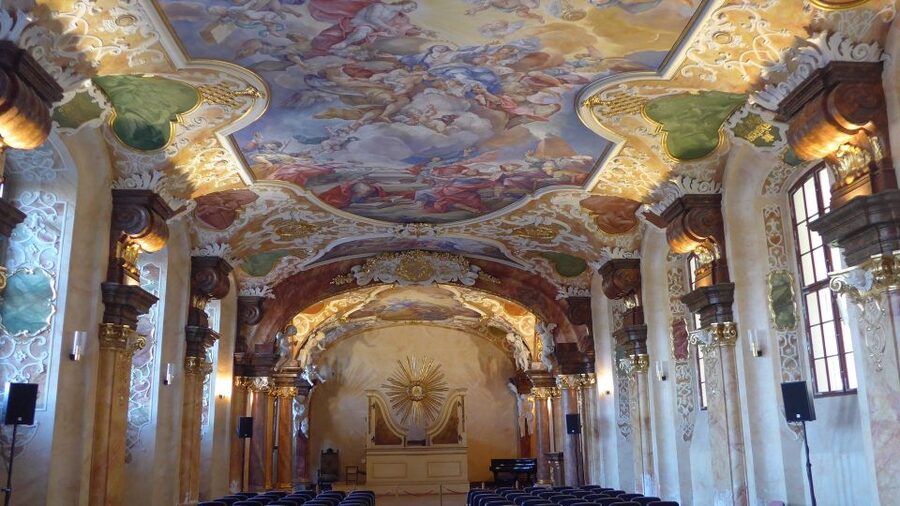
One of the tour’s strongest architectural stops is the main building of Wroclaw University. From the outside, it gives the route a grand academic landmark. Inside, the Baroque Aula Leopoldina adds the kind of ornate detail that rewards a slower look.
The university stop helps balance the tour. The Market Square tells you about civic and commercial Wroclaw, while the university points to the city’s intellectual and religious importance. The Aula Leopoldina is especially useful for visitors who enjoy interiors as much as street views.
Entrance to the university building is part of the route description, with the historical buildings included in the program. The exact amount of time spent inside can depend on your guide and the group’s interests, so ask early if this is a priority for you.
The Market Square, Town Hall, and the city’s comic little symbols
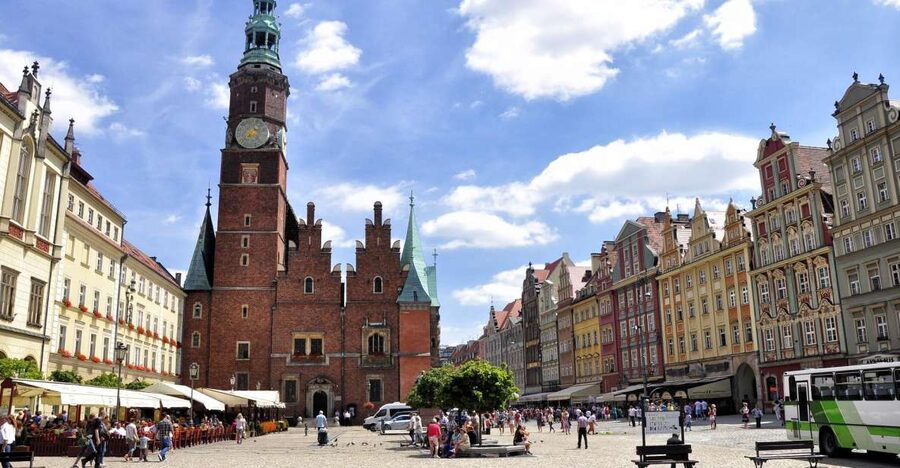
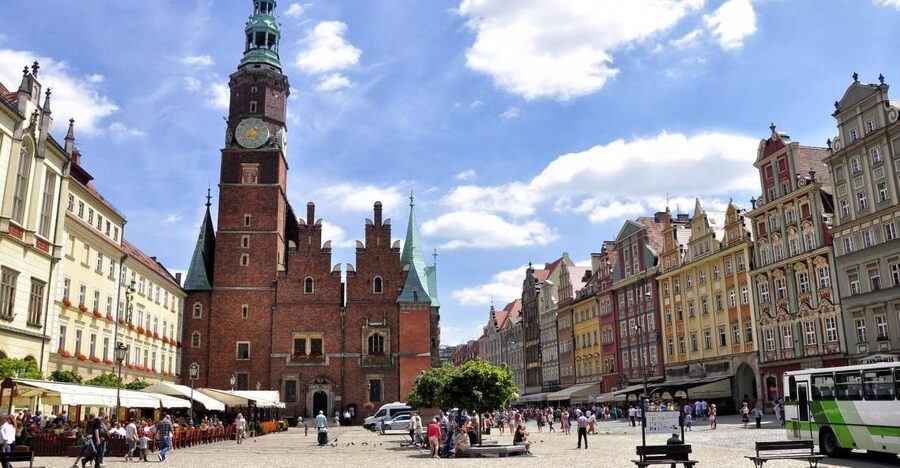
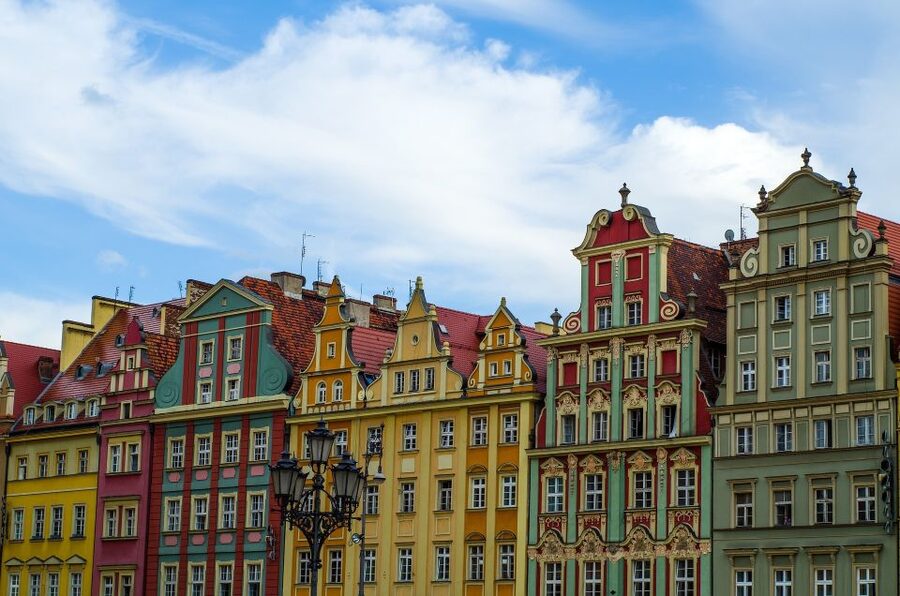
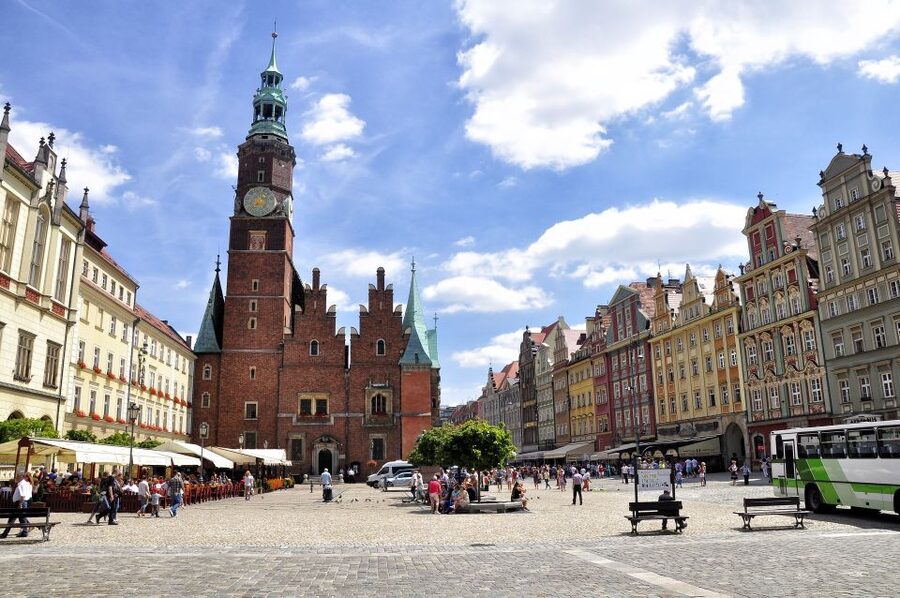
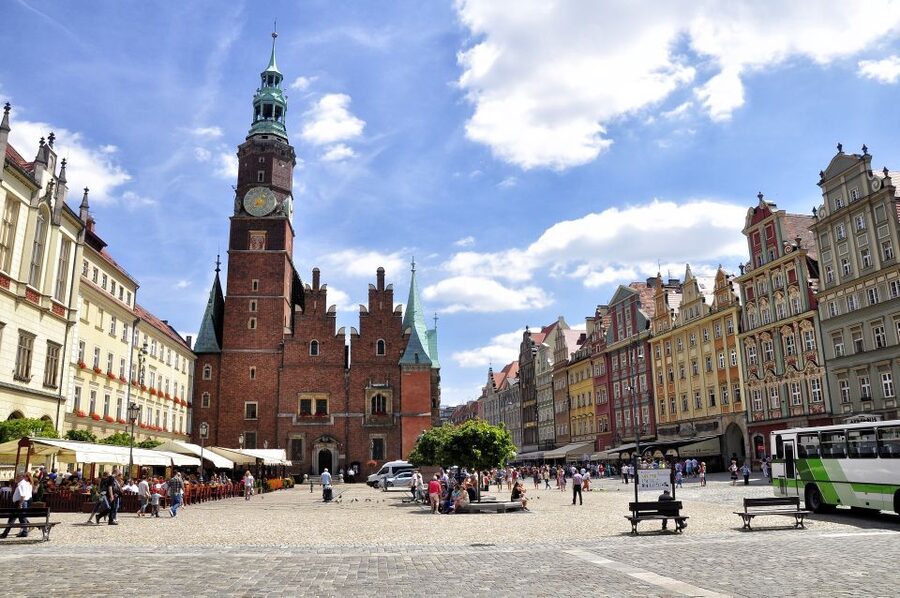
The route continues through medieval streets toward the Market Square, one of Europe’s largest. It is surrounded by colorful old tenement houses, with the Gothic Town Hall at the center. This is the classic Wroclaw scene, and you will want time to look upward rather than only across the square.
The square works best when your guide explains how it functioned as the city’s civic and trading heart. The architecture is attractive, but the real value comes from learning how the buildings relate to municipal power, commerce, and daily life.
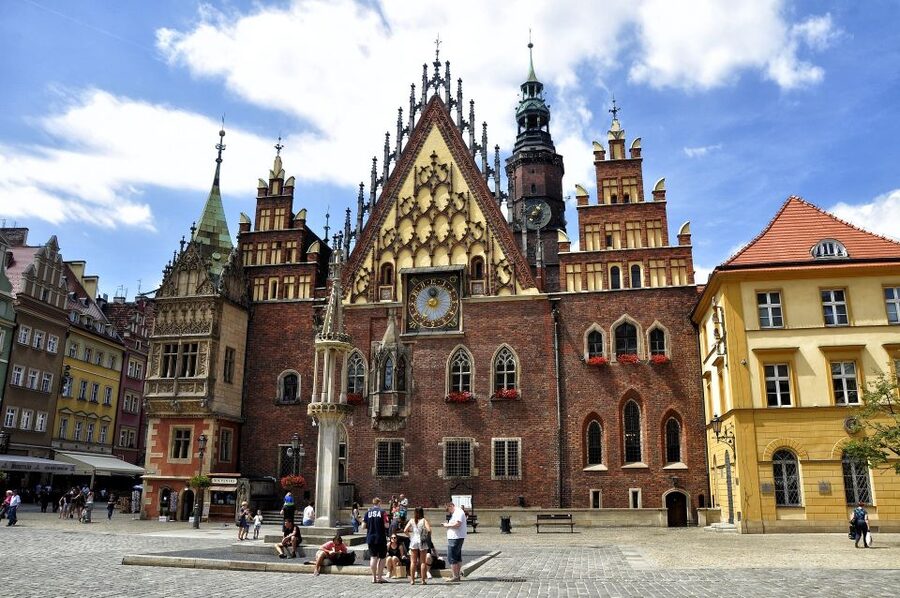
The Wroclaw Town Hall is another key stop. Its Gothic details give you a strong sense of the city’s medieval confidence. You also encounter the Cloth Hall, a reminder that this was not simply a ceremonial space. It was built around trade and public business.
Keep an eye out for Wroclaw’s famous copper dwarfs. They are scattered through the center and have become one of the city’s most recognizable modern symbols. On your own, you might spend the whole day spotting them without understanding why they matter. A guide can place them within the city’s newer identity and show you examples along the route.
The walk also includes a memorial to Dietrich Bonhoeffer, the German pastor and resistance figure. This is a smaller, more reflective stop than the Market Square, and it fits the tour’s larger aim of connecting Wroclaw’s streets with the hard political history of the region.
Something quite different:
- Wroclaw: E-Car Tour and Audio Guide
★ 4.6 · 1,738 reviews - Wroclaw: 2-Hour Private Guided Tour by Electric Car
★ 4.8 · 805 reviews - Wroclaw: City Tour Sightseeing By Golf Cart Shared Or Privat
★ 4.8 · 189 reviews - Auschwitz-Birkenau Tour from Wrocław
★ 5.0 · 129 reviews
The Royal Road toward the oldest part of Wroclaw
From the central district, the route follows the Royal Road toward Ostrow Tumski. This gives the walk a clear shape. You begin among civic buildings and busy central streets, then move toward the city’s oldest religious quarter.
The Royal Road is valuable because it links places that can seem separate on a map. Instead of jumping between isolated sights, you can watch the character of Wroclaw change as you walk. The guide’s commentary is important here, since the route itself is more meaningful when you understand why rulers, clergy, and visitors used it.
This section also gives your guide room to discuss the city’s newer history. The tour specifically covers World War II, the Polish People’s Republic, and modern Wroclaw. That can make the walk more demanding intellectually, but it is one of the reasons to choose this tour over a narrow architectural stroll.
You should not expect a full museum-style treatment of each period in four hours. Instead, the guide provides a connected introduction and points out places where the past remains visible. If modern Polish history matters to you, use the private format to ask direct questions.
Ostrow Tumski and the quiet power of Cathedral Island
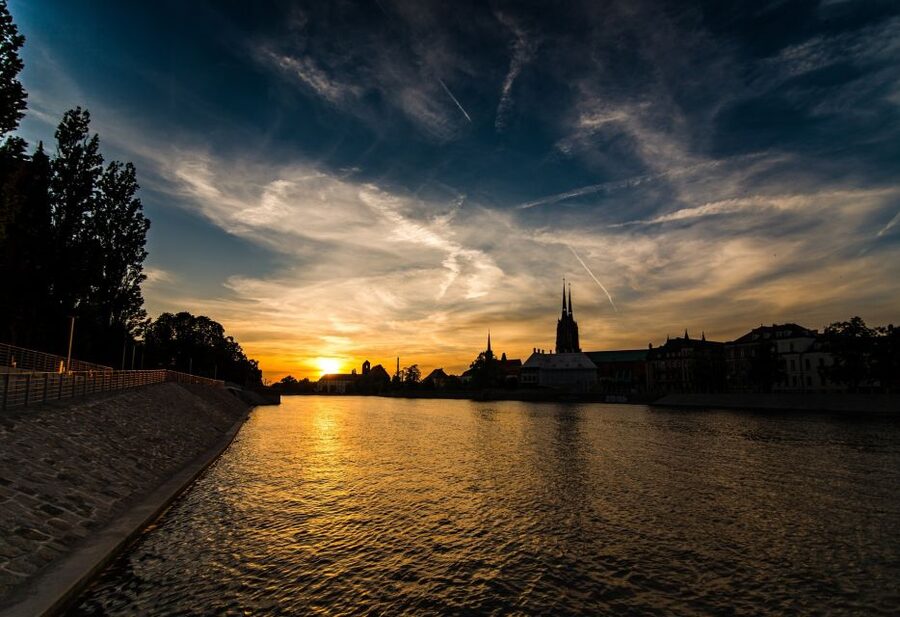
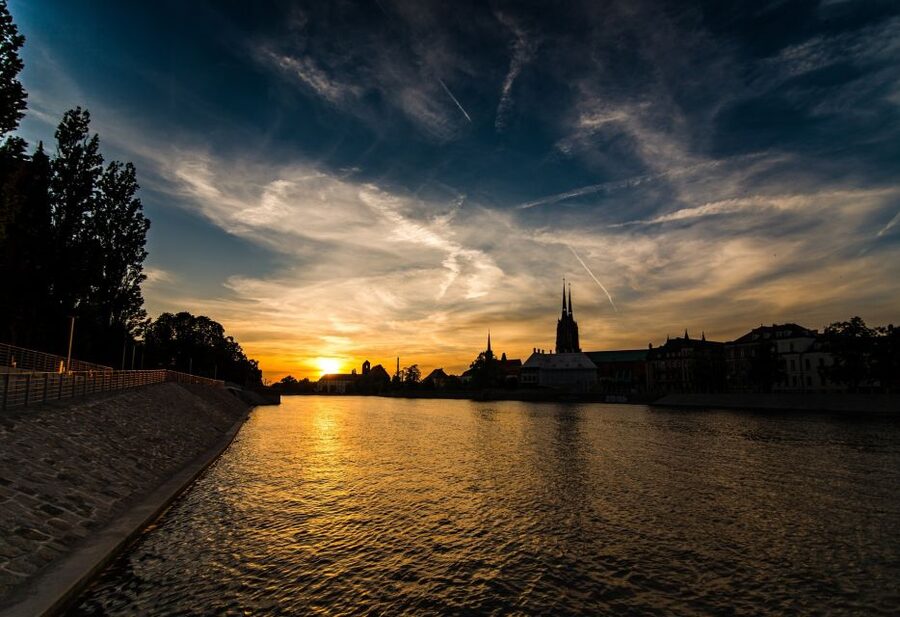
Ostrow Tumski, also called Cathedral Island, is the emotional high point of the route. It is the oldest part of Wroclaw and one of the city’s most important religious areas. Its churches, cloisters, and historic streets create a mood that feels quite different from the commercial center.
The main landmark is the Cathedral of St. John the Baptist, with entrance included. You also visit St. Adalbert’s Church, where admission is free. These visits give the tour a useful interior dimension after the open streets and squares of the Old Town.
The cathedral area is not just a collection of churches. It shows how strongly religious institutions shaped Wroclaw over centuries. Your guide can help you read the buildings as part of a larger story, rather than treating each one as a separate photo stop.
This is also where the walking pace may feel most rewarding. After the city center’s grand façades and public spaces, Ostrow Tumski offers a more contemplative setting. I would save a little energy for this part of the tour. The route has already covered several major sights by the time you reach it.
The modern story: war, state socialism, and daily life
The tour’s most unusual promise is its attention to the newer history of Wroclaw. Many visitors focus on the medieval center and never ask what happened to the city during World War II, the years of the Polish People’s Republic, or the period after communism.
Your guide is meant to explain those shifts as part of the city’s full story. That may include how political changes affected ordinary life, how public spaces were used, and how Wroclaw became the city you see today. The information provided does not specify every modern-history stop, so the exact examples will depend on the guide and your questions.
This part is especially useful if you already know the main monuments. You may have seen the Town Hall in photographs, but a discussion of Poland’s turbulent twentieth century can change how you understand the city around it.
The private group format helps here. Difficult subjects can be discussed at your own level, and you can pause for clarification. Andrzej is praised for making time for human and social topics, which suggests this tour is at its best when you treat it as a conversation rather than a nonstop lecture.
What four hours feels like on this route
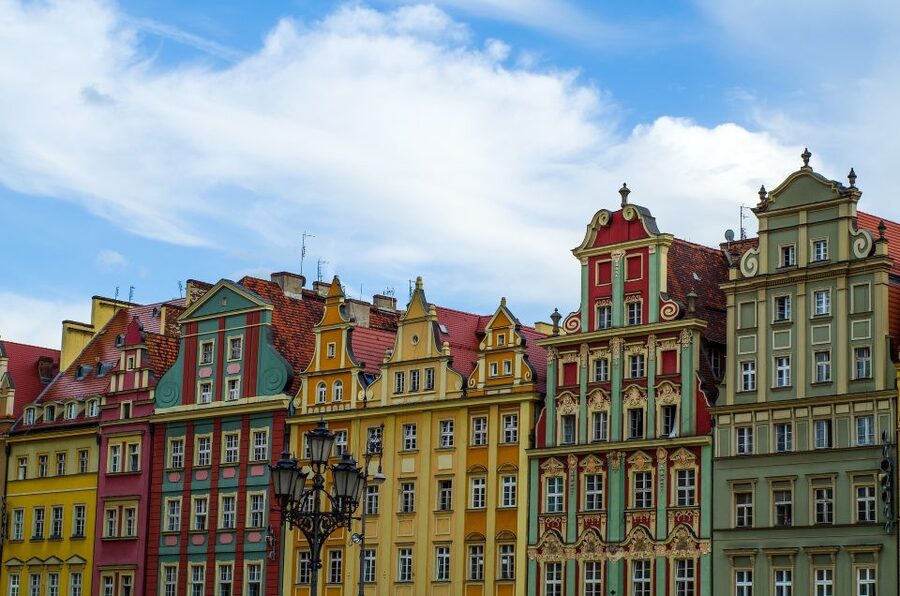
Four hours gives the guide enough time to connect the Old Town, university, Market Square, Royal Road, and Ostrow Tumski. It also allows space for the two church visits and the cathedral entrance.
The tradeoff is stamina. This is a genuine walking tour, not a quick circuit with long breaks. Wear comfortable shoes and consider the weather before booking. The tour is wheelchair accessible, which is useful, but the route still covers a substantial amount of historic ground.
A private tour can help manage the pace. You can ask for a short pause, spend longer at a favorite building, or move along if a stop is not your priority. Still, you should not book this expecting a slow half-day with extended café time.
Starting times vary, so check availability for the schedule that fits your day. The activity ends back at Plac Solny, which makes it easy to continue exploring the center afterward.
Languages, guide quality, and the personal touch
Live guiding is available in Spanish, English, French, German, Italian, Polish, and Russian. That range makes the experience practical for many international visitors, but guide quality remains more important than the language list.
Andrzej’s praise is specific. He is described as a competent professional who provides many interesting details and explains Wroclaw’s history clearly. The strongest sign of quality is not simply that he knows the city, but that he leaves room for real conversation.
That matters on a tour covering both medieval architecture and modern Poland. A guide who only recites dates can make four hours feel heavy. A guide who responds to your interests can help the city make sense.
The program includes tips about local restaurants, patisseries, and pubs. Treat that as a useful bonus at the end of the walk. Since your guide knows the route and the city, you can ask for suggestions that fit the rest of your day.
Is $154 per person good value?
At $154 per person, this is not a budget walking tour. The price makes the most sense for a private group that values personal attention, language choice, and a tailored route.
For one or two people, the cost may feel high compared with a standard group walk. For a family or group of friends, the value improves because you are paying for a private guide rather than a seat on a large shared tour. You also receive access to the cathedral and a program that joins several parts of the city in one outing.
The strongest value comes from the history coverage. If you only want photographs of the Market Square, you can explore that area independently. If you want help understanding Wroclaw from the medieval period through World War II, state socialism, and today, the guide adds something harder to arrange on your own.
You can reserve now and pay later, and cancellation is free up to 24 hours before the tour for a full refund. Skip-the-ticket-line access is also included. Check the details before booking, and read the day-before email for important instructions.
Who should book this private walk?
I would recommend it to first-time visitors who want a strong orientation without joining a large group. It also suits families and friends who want to set their own pace and ask questions freely.
History-minded visitors should appreciate the range. You get medieval streets, civic architecture, Baroque university interiors, religious landmarks, copper dwarfs, and an introduction to the difficult twentieth century.
It is less suitable if you dislike extended walking or want a narrowly focused tour of only one district. The route covers a lot, and the modern-history discussion may be more than you want if your goal is simply a relaxed architecture walk.
The tour is also a good choice for visitors who value local advice. Restaurant, patisserie, and pub suggestions can help you turn the walk into a useful first-day introduction to Wroclaw.
Should you book the Wroclaw Old and New Town tour?
Book it if you want Wroclaw explained as a living city, not just displayed as a collection of attractive buildings. The private format, broad historical scope, licensed guide, and included visits to St. Adalbert’s Church and St. John the Baptist’s Cathedral give the four hours real substance.
I would especially choose it for a family or small group willing to spend $154 per person for direct attention. Ask for Andrzej if available, and tell the guide at the start how much time you want devoted to modern Poland.
Skip it if you only want a short, inexpensive introduction to the Market Square. For everyone else, this is a well-rounded way to connect Wroclaw’s medieval center with the city’s more difficult and less visible recent past.
FAQ
How long is the Wroclaw walking tour?
The tour lasts four hours. Starting times vary, so you need to check availability for the date you want.
Where does the tour begin?
It begins at Plac Solny in Wroclaw, under the spire monument.
Where does the tour end?
The activity ends back at the meeting point at Plac Solny.
Is this a private tour?
Yes. The tour is for a private group, such as your family or friends.
What languages are available?
Live guiding is available in Spanish, English, French, German, Italian, Polish, and Russian.
Is entrance to Wroclaw Cathedral included?
Yes. Entrance to the Cathedral of St. John the Baptist is included.
Is St. Adalbert’s Church included?
Yes. The tour includes a visit to St. Adalbert’s Church, with free admission.
Does the tour visit Wroclaw University?
Yes. The route includes the historical buildings of Wroclaw University and the Baroque Aula Leopoldina.
Does the tour cover modern Polish history?
Yes. The guide discusses Wroclaw from the medieval period through World War II, the Polish People’s Republic, and the present day.
Is the tour wheelchair accessible?
Yes. The activity is listed as wheelchair accessible.
Can the tour program be adjusted?
Yes. The program can be adapted to the preferences of your private group.
What happens if I need to cancel?
You can cancel up to 24 hours in advance for a full refund. You can also reserve now and pay later.
Just added in Wroclaw
- Wroclaw: WW2 Tour to Project Riese & Gross-Rosen Museum★ 4.8 · 26 reviews
- Wrocław: World War II and the non-existent city of Breslau★ 3.6 · 3 reviews
- Wroclaw : Walking Custom Tour with a Local Guide★ 4.8 · 3 reviews
- Wroclaw: University Baroque Tour★ 5.0 · 19 reviews
- Wroclaw: 3-Hour Bike Tour in English or Polish★ 4.8 · 66 reviews
- Wrocław: Tour of the Old Town in an Imperial E-car★ 4.3 · 13 reviews
- Wrocław: Venice of the North! Monuments on the Odra River 2h★ 5.0 · 2 reviews
- Wroclaw to Rock City in Adrspach and Ksiaz Castle day trip★ 4.9 · 16 reviews
Walking Tours, compared.
Gdańsk City Sights & History Guided Walking Tour in English
Read our review →
Old Town & Wawel Castle Walking Tour in English
Read our review →Browse the lists this tour appears in