REVIEW · WARSAW TOURS
World War II Warsaw Private Tour with Military Cemetery
Warsaw’s wartime story is written in stone. This private tour links the city’s major World War II memorials with a guide who explains the people and events behind them. I like the one-to-one format, which gives you room to ask questions, and I like the way it connects the former Jewish Ghetto with the Warsaw Uprising and military cemetery. The main drawback is that the shorter two-hour option leaves out Powazki Military Cemetery, one of the tour’s strongest stops.
The tour costs $108.47 per person and runs about two to four hours, depending on the option you choose. That is not a small price for a walking tour, but it includes a private licensed guide, and the four-hour version adds public transport tickets and entry to the military museum at Powazki. If you want a clear introduction to wartime Warsaw without doing all the research yourself, this can be good value.
In This Review
- Key points to know before booking
- Why this private Warsaw WWII tour works
- Starting beside the Warsaw Mermaid
- Warsaw Uprising Monument: a forceful beginning
- The Ghetto Heroes Monument and the old Jewish district
- Umschlagplatz and the cost of deportation
- Walking through the Warsaw Ghetto area
- The Little Insurgent and the Warsaw Uprising
- The eastern deportations and Grzybowski Square
- The Nike of Warsaw and the city’s resistance
- Powazki Military Cemetery: allow the full 45 minutes
- The Tomb of the Unknown Soldier
- Is $108.47 per person good value?
- Timing, walking, and practical limits
- Who should book this Warsaw history tour?
- Should you book it?
- FAQ
- How long does the World War II Warsaw private tour last?
- Is Powazki Military Cemetery included?
- Does the tour include public transport tickets?
- Is museum entry included?
- Where does the tour begin and end?
- Is hotel pickup available?
Key points to know before booking
- Two tour lengths change the experience: The two-hour route covers central memorials, while the four-hour option adds Powazki Military Cemetery and transport across the city.
- The former Warsaw Ghetto is central to the story: You visit the Ghetto Heroes Monument, Umschlagplatz, and streets connected with the ghetto area.
- Powazki is the emotional high point: The cemetery takes about 45 minutes and contains graves of soldiers and prominent Polish figures.
- A private guide makes the difference: You can stop, ask questions, and request places such as Grzybowski Square.
- Most sights are viewed from outside: The listed memorials have free admission, but the route is primarily an outdoor history walk.
- Old Town pickup has limits: Hotel pickup is available in Warsaw Old Town, but you may need to meet at the Warsaw Mermaid if your accommodation is farther away.
Why this private Warsaw WWII tour works
Warsaw can be confusing for anyone trying to understand World War II in a short visit. The city’s wartime sites are spread across different districts, and several monuments refer to events that happened years apart. This tour gives you a guide and a ready-made route, so you can focus on the stories rather than on maps and historical research.
The private setup is especially useful here. A large group often moves quickly past difficult places, while a private guide can adjust the pace and explain a point again when the chronology gets tangled. The tour is also a good choice if you want to ask direct questions about the Polish resistance, the Warsaw Ghetto, German occupation, or Soviet deportations.
One important point: this is not a single museum visit with a few outdoor stops. It is mainly a memorial and city walk, with a museum visit included in the four-hour version. You should expect to spend time outside, move between sites, and absorb the history through monuments, streets, cemeteries, and commentary.
The one written review praises the guide for being well informed and for showing parts of Warsaw that the visitor would not have seen alone. That is exactly where this tour earns its keep. The monuments are free, but the route planning and historical explanation are the real product.
A few more in Warsaw
- Warsaw: Chopin Concert in the Old Town
★ 4.8 · 2,287 reviews - Warsaw: Traditional Galar Cruise on The Vistula River
★ 4.6 · 1,640 reviews - Warsaw: Old Town Highlights Walking Tour in English
★ 4.7 · 1,516 reviews
Starting beside the Warsaw Mermaid
The regular meeting point is next to the Warsaw Mermaid at Rynek Starego Miasta 18i in the Old Town. This is a practical place to begin because it is easy to identify, and the tour ends back there.
Pickup is available from accommodations and hotels in Warsaw Old Town if you provide the full address when booking. If you do not provide an address, or your accommodation is more than 1.5 kilometers from the meeting point, the guide meets you beside the Mermaid instead. Check your email the day before, since the provider sends important meeting information then.
The route can be adjusted when Old Town pickup is arranged. Do not assume that hotel pickup applies across all of Warsaw. If you are staying outside the Old Town, plan to reach the Mermaid on your own.
Warsaw Uprising Monument: a forceful beginning
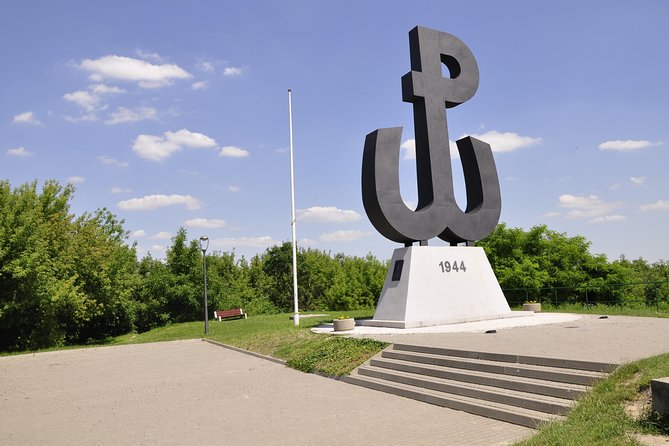
The Warsaw Uprising Monument is one of the tour’s most powerful opening stops. The sculpture presents fighters emerging from the ruins, and its shape gives the memorial a sense of movement and urgency.
You have about 15 minutes here. That is enough to see the monument, take in its scale, and hear the basic story of the 1944 uprising. It is not enough for a long discussion of every military and political detail, so use the private format to ask what interests you most.
This stop helps separate two stories that are often confused. The Warsaw Uprising was the armed revolt by the Polish resistance in 1944. It is different from the Warsaw Ghetto Uprising, which took place in 1943. A good guide can help you keep those dates and groups clear as the tour continues.
The Ghetto Heroes Monument and the old Jewish district
The Monument to the Ghetto Heroes commemorates the Jewish resistance and the persecution carried out during the German occupation. It is located in the former Warsaw Jewish Ghetto, making the setting part of the experience rather than a mere backdrop.
You spend roughly 10 minutes at the monument. The stop is brief, but the subject is heavy. The monument marks the courage of people who resisted after years of imprisonment, hunger, and systematic persecution.
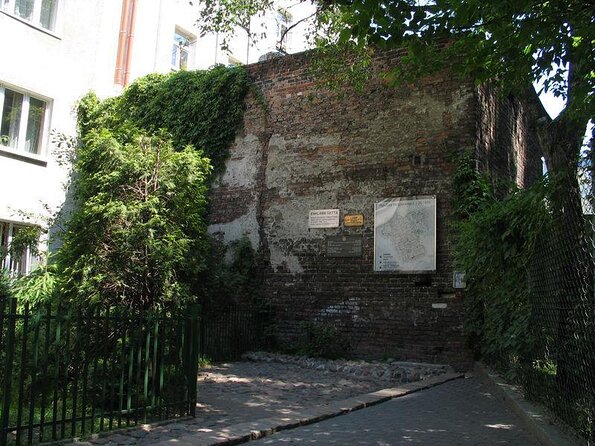
The surrounding area can feel more open and modern than you might expect. That is one reason a guide matters. Much of the wartime district was destroyed or rebuilt, so the history is not always visible at street level. Your guide helps connect the present-day setting with the confined area created by the German authorities.
Something quite different:
- Warsaw Concert: Chopin – Painted by Candlelights with Wine
★ 4.8 · 1,442 reviews - Warsaw: City Sightseeing Hop-On Hop-Off Bus Tour
★ 3.6 · 1,415 reviews - Warsaw: POLIN Museum of the History of Polish Jews Ticket
★ 4.7 · 1,142 reviews - #1 Pub Crawl Warsaw with Optional Premium 1 Hour Open Bar
★ 5.0 · 790 reviews
Umschlagplatz and the cost of deportation
At Umschlagplatz, German soldiers gathered Jews captured during the suppression of the Warsaw Ghetto Uprising before deporting them. The site is free to visit, but there is nothing casual about this stop.
Umschlagplatz is valuable because it shifts the story from resistance to forced removal. You are not simply hearing about the ghetto as a place of confinement. You are standing at the point where people were assembled and sent away.
The supplied route does not give a fixed stop length here, so the exact time may depend on the selected tour and the guide’s pace. If this part of the history matters especially to you, ask for time to discuss what happened at the site rather than treating it as a quick photo stop.
Walking through the Warsaw Ghetto area
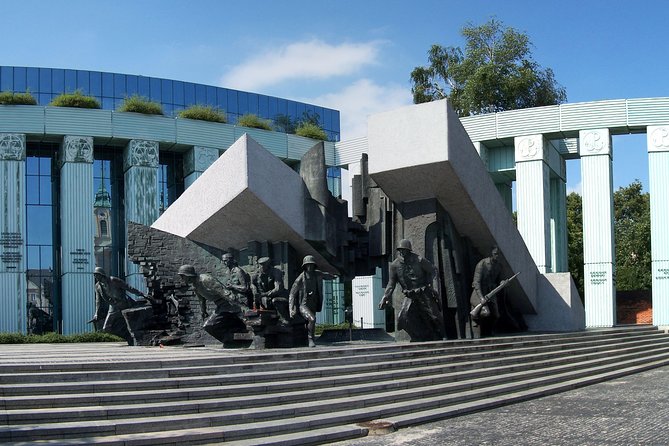
The former Warsaw Ghetto was established in October and November 1940. It occupied only about 2.4 percent of the city’s land, yet more than 450,000 Jews were forced into the district under overcrowded conditions.
The tour allows about 15 minutes for the Ghetto area itself. That may seem short for such a large subject, but the route combines this stop with the Ghetto Heroes Monument and Umschlagplatz. Together, they give you a basic framework for understanding the district.
I find this part most useful when approached slowly and thoughtfully. The site is not presented as a preserved quarter with intact buildings. Instead, the guide helps you read the remaining memorials and urban spaces. You may find the contrast between modern Warsaw and the history beneath it unsettling, but that contrast is an important part of the city’s story.
The Little Insurgent and the Warsaw Uprising
The Statue of the Little Insurgent is a small bronze monument to children who lost their lives during the Warsaw Rising. You spend about 10 minutes here.
Its size is part of its effect. After seeing large memorials, you encounter a child-sized figure connected with a conflict that involved the whole city. The statue brings the war closer to ordinary families and young people, rather than leaving the story only with generals and soldiers.
This is another point where the two uprisings can become confused. Ask your guide to place the monument within the 1944 Warsaw Uprising. The private format makes that clarification easy.
The itinerary also includes a museum stop describing the fighting and everyday life during the Rising. The museum presents Warsaw residents’ tribute to those who fought and died for an independent Poland and a free capital. The exhibition keeps the terror of occupation in the background while focusing on the uprising itself.
The exact museum timing and inclusion depend on the option you select. Read the selected version carefully before paying, since the number of attractions changes between the two-hour and four-hour tours.
The eastern deportations and Grzybowski Square
The Monument to the Fallen and Murdered in the East recalls the fate of an estimated 1.5 to 2 million Poles, including children and older people, who were sent by the Soviet Union to labor camps.
This monument widens the tour beyond the German occupation. Warsaw’s wartime experience was shaped by both Nazi Germany and the Soviet Union, and this stop helps explain why Polish memory of the period is not limited to one occupying power.
The listed route also includes Grzybowski Square as a possible stop on request. The square and nearby Prozna Street have historical importance, while today the area offers places to eat and drink. This is a useful optional pause if you want to see how a wartime district functions in modern Warsaw, though you should not expect it to carry the same emotional force as the memorials.
Because Grzybowski Square is listed as possible on request, confirm with the guide if you want it included. It may not fit every version or timing.
The Nike of Warsaw and the city’s resistance
The Monument to the Heroes of Warsaw is often called the Nike of Warsaw. It is a large, impressive memorial to people who fought against Nazi occupation.
The scale gives the stop a different mood from the Little Insurgent. Here, the city’s resistance is presented in broad, heroic terms. You can expect a short visit of about 15 minutes, enough to appreciate the sculpture and hear why it matters.
This part of the route works well after the smaller monuments because you see several forms of remembrance: Jewish resistance, children caught in war, military sacrifice, and the wider population’s struggle. A private guide can help connect these themes instead of leaving you with a series of unrelated statues.
Powazki Military Cemetery: allow the full 45 minutes
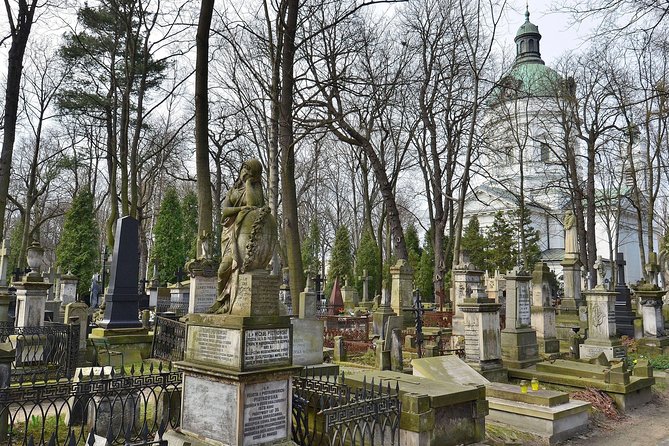
The four-hour option adds Cmentarz Wojskowy na Powazkach, or Powazki Military Cemetery. This is the tour’s longest stop, with about 45 minutes for walking around the grounds.
The cemetery is well kept and contains the graves of soldiers from World War I and World War II, along with famous Polish figures. Rows of stone and wooden crosses make the human cost of war visible in a way that a city monument cannot always do.
I would choose the four-hour tour mainly for Powazki. The cemetery offers time for quiet observation, and the slower pace suits the subject. You can walk among the graves, listen to the guide, and ask about the people buried there.
The cemetery is not included in the two-hour tour. The four-hour version requires public transport to reach it, but transport tickets are provided. That saves you the hassle of working out the connection during a tightly timed tour.
The four-hour option also includes free entry to the Military Museum in Powazki. The supplied details describe this as part of the longer version, while the two-hour tour does not include the transport tickets or museum entry. Check your chosen option carefully, since the route and number of attractions vary.
The Tomb of the Unknown Soldier
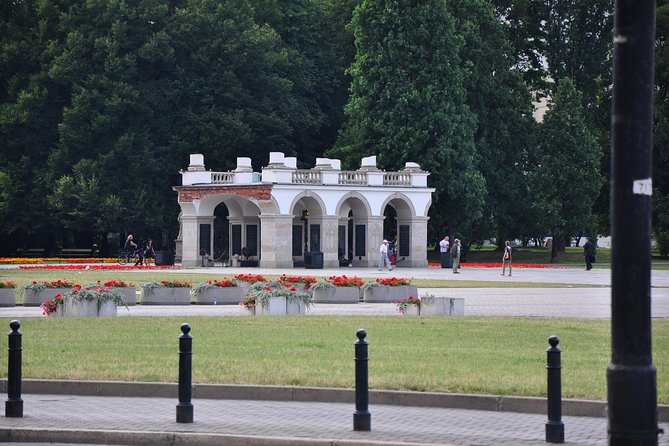
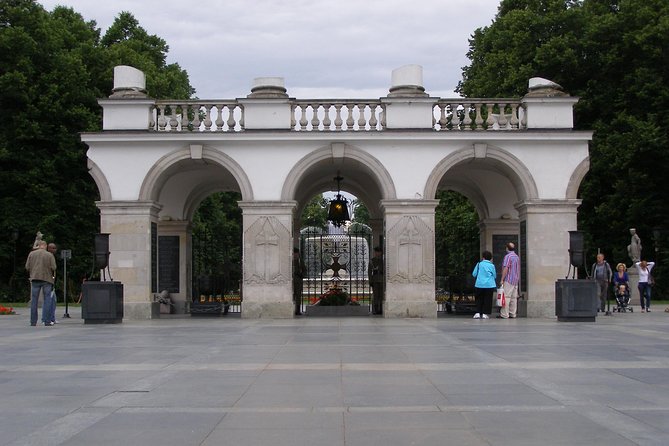
The Tomb of the Unknown Soldier is another moving memorial, surrounded by a large square and park. The route allows about 15 minutes here.
The monument honors those who died in battle without a known grave. Its setting adds to the sense of ceremony, with the open square and park giving the memorial room to breathe.
This stop works well near the end because it gathers the tour’s main themes into one place: military loss, national independence, and public remembrance. You may find it less intimate than Powazki, but its formal setting gives it a different weight.
The itinerary also refers to another World War II monument without naming it. The exact addition may depend on the selected option, so ask the guide at the start which stops are included in your booking.
Is $108.47 per person good value?
At $108.47 per person, this is a premium city tour. The price makes more sense for a private group than for a solo visitor, especially because group discounts may be available. If several people share the booking, the cost per person can become more reasonable than paying separately for several smaller activities.
You are paying for more than admission. Most listed memorials are free, so the main value comes from the licensed guide, route planning, historical commentary, and the chance to shape the conversation around your interests.
The four-hour option offers the stronger value if you want Powazki Military Cemetery and the museum. It also includes public transport tickets, which removes a practical cost and a bit of planning. The two-hour route is better for a quick introduction, but it covers a lot of serious history in a short window.
I would not choose this tour for a casual sightseeing day. I would choose it if World War II history is a main reason for visiting Warsaw, or if you want a focused introduction before visiting museums independently.
Timing, walking, and practical limits
The tour lasts approximately two to four hours. The shorter version keeps you around central memorial sites, while the longer version adds public transport and Powazki.
You should be prepared for walking between stops and standing outdoors. The route is near public transportation, and most people can participate, but the supplied information does not give a detailed accessibility description. If mobility is a concern, ask the provider how the chosen route works before booking.
The activity is private, so only your group participates. That makes it easier to ask questions and request a change, but the exact route still depends on the option you book. Hotel pickup only applies within the stated Old Town area.
Free cancellation is available if you cancel at least 24 hours before the start time. Cancellations or changes made within 24 hours are not refunded or accepted.
Who should book this Warsaw history tour?
I would recommend it to first-time visitors who want the wartime story explained in a logical order. It also suits families or small groups who prefer a private guide and need the pace adjusted.
The four-hour version is best for anyone who wants the full memorial route, Powazki, transport, and the museum. History students, military-history enthusiasts, and visitors with Polish family connections may especially value the chance to ask detailed questions.
The two-hour version suits you if your schedule is tight or you already plan to visit other museums. Just remember that Powazki is not included, and the shorter route may feel brisk given the number of memorials.
Should you book it?
Book this tour if you want Warsaw’s World War II sites tied together by a personal guide rather than visited as isolated monuments. The strongest features are the private format, the guide’s clear historical explanation, and the four-hour route to Powazki Military Cemetery.
Choose the four-hour option if you can. The cemetery, museum access, and included public transport give the experience more depth and better value. Choose two hours only when time is limited and you mainly want the central memorials.
This is a serious tour, not light sightseeing. If you are ready to spend a few hours with difficult stories, it offers a focused and practical way to understand how German occupation, Jewish persecution, Polish resistance, and Soviet deportations shaped Warsaw.
FAQ
How long does the World War II Warsaw private tour last?
The experience lasts approximately two to four hours, depending on the option selected.
Is Powazki Military Cemetery included?
Powazki Military Cemetery is included in the four-hour tour but not the two-hour tour.
Does the tour include public transport tickets?
Two-way public transport tickets are included in the four-hour tour. They are not included in the two-hour tour.
Is museum entry included?
Free entry to the Military Museum in Powazki is included with the four-hour tour. It is not included with the two-hour tour.
Where does the tour begin and end?
The standard meeting point is beside the Warsaw Mermaid at Rynek Starego Miasta 18i in Warsaw Old Town. The activity ends back at the meeting point.
Is hotel pickup available?
Pickup is available from accommodations and hotels located in Warsaw Old Town. If your accommodation is more than 1.5 kilometers from the meeting point, or you do not provide the address, the guide meets you beside the Warsaw Mermaid.
Just added in Warsaw
- Wroclaw Small-Group Tour with Lunch from Warsaw★ 5.0 · 2 reviews
- World War II Warsaw Old Town, Military Cemetery Walking Tour★ 4.7 · 3 reviews
- Warsaw: Wolf’s Lair & Swieta Lipka Small-Group Tour + Lunch★ 5.0 · 3 reviews
- Wilanów Palace: 2-Hour Guided Tour with Entrance Tickets★ 4.8 · 8 reviews
- Warsaw Zoo Skip-the-Line Entry Ticket with Private Transport★ 4.8 · 3 reviews
- Warsaw: Private Vodka Tasting Night with Snacks and Pickup★ 5.0 · 7 reviews
- Warsaw Private Wilanow Palace & Garden Tour★ 4.6 · 30 reviews
- Warsaw Wolf’s Lair with St. Lipka and Mamerki Private Guided★ 4.2 · 3 reviews
Warsaw Tours, compared.
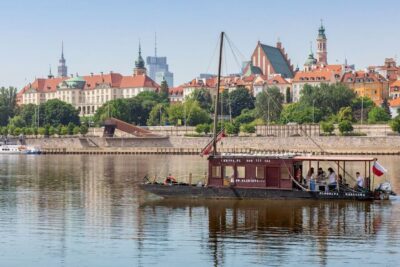
Traditional Galar Cruise on The Vistula River
Read our review →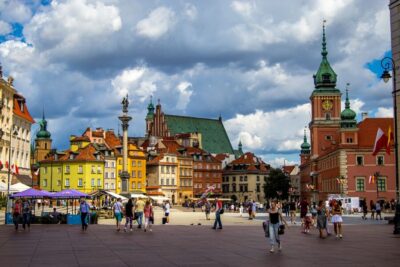

Warsaw Concert: Chopin – Painted by Candlelights with Wine
Read our review →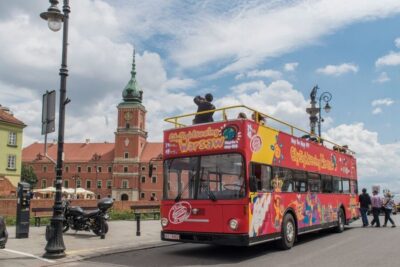
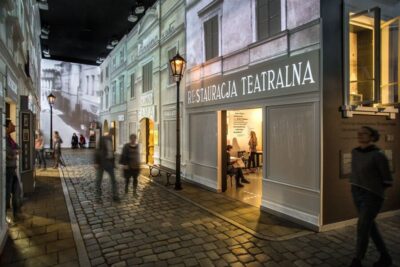
POLIN Museum of the History of Polish Jews Ticket
Read our review →
#1 Pub Crawl Warsaw with Optional Premium 1 Hour Open Bar
Read our review →