
REVIEW · WALKING TOURS
World War 2 in Warsaw walking tour in English
Warsaw’s wartime story is written into its streets. This 150-minute English walking tour connects the city’s most important World War II sites, from the former Nazi German District and Jewish Ghetto to resistance strongholds and execution places. I especially like the use of old photographs and family stories, which give the history a human scale, and the local guides, many of them born and raised in Warsaw. The main drawback is the pace: one older participant found it too brisk, while extreme winter cold forced another group to stop after 45 minutes.
The tour costs $20 per person, a fair price for two and a half hours with a professional guide. I would book it early in your Warsaw stay, since it gives you useful context for the city’s rebuilt streets, monuments, and museums. Just wear sensible shoes, check the weather, and arrive ready for a serious subject.
In This Review
- Key points to know before you go
- Why this Warsaw WWII walk matters
- Starting beneath the orange umbrella
- The former Nazi German District and occupation
- The former Jewish Ghetto and the 1943 uprising
- Execution sites and the cost of occupation
- Polish Resistance and the 1944 Warsaw Uprising
- The Tomb of the Unknown Soldier
- How the guides bring the past closer
- Pace, weather, and physical comfort
- Is $20 a fair price?
- Who should book this walk?
- FAQ
- How long is the World War 2 in Warsaw walking tour?
- What language is the tour conducted in?
- How much does the tour cost?
- Where is the meeting point?
- What locations does the tour cover?
- Is the tour wheelchair accessible?
- Can I cancel for a refund?
- Can I reserve now and pay later?
- Should you book it?
Key points to know before you go
- Local guides with personal connections: Guides such as Magda, Gosia, Piotr, Andrew, Albert, Iga, and Peter explain events through Polish history and, at times, their own family memories.
- A walk through several wartime chapters: The route covers the former Nazi German District, Adolf Hitler Square, the Jewish Ghetto, execution sites, and Polish Resistance positions.
- Photos make the destroyed city visible: Wartime images help you compare modern Warsaw with the streets that existed before, during, and after the war.
- Small groups improve discussion: You can hear the guide more easily and ask questions about difficult political and human issues.
- A serious but approachable tone: Guides keep the subject respectful while using clear explanations, occasional humor, and stories of courage and survival.
- A full 150 minutes outdoors: The walk is wheelchair accessible, but the length, pace, and weather deserve careful thought.
Why this Warsaw WWII walk matters
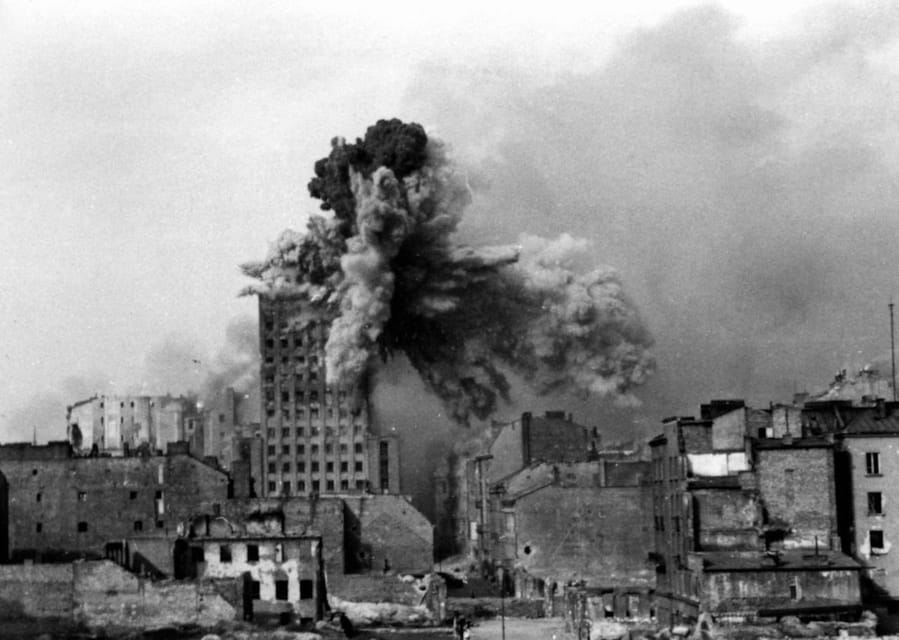
Warsaw suffered on a scale that is difficult to grasp from a museum label alone. The city endured bombing, German occupation, executions, forced confinement, and the destruction that followed two major uprisings. This tour places those events in the streets where they happened.
I like that the route does not treat World War II as one simple story. You hear about the 1943 Jewish Ghetto Uprising and the 1944 Warsaw Uprising, but you also get the wider setting: life under SS control, the changing political pressure on Poland, and the way ordinary civilians tried to survive.
That wider view is important. It helps you understand that Warsaw’s wartime experience included many overlapping stories: Jewish resistance, Polish resistance, military defeat, civilian suffering, shifting borders, and the struggle to preserve national identity. A guide can explain those links as you move from one place to another.
The emotional weight is real. This is not a cheerful sightseeing stroll, though the guides make it accessible. I would choose it if you want to understand Warsaw rather than simply photograph its restored squares.
More Walking Tours in Warsaw
- Warsaw: Old Town Highlights Walking Tour in English
★ 4.7 · 1,516 reviews - Warsaw: Old Town Guided Walking Tour
★ 4.9 · 599 reviews - Half-Day Polish Food Walking Tour with Guide and Dinner
★ 4.5 · 381 reviews
Starting beneath the orange umbrella
The meeting point is easy to identify if you know what to look for. Find the guide holding an orange umbrella near the 20-meter-high column with a statue on top. One past participant specifically clarified that the umbrella is orange, not yellow, so keep that detail in mind.
You join a group of other tourists, with the exact size depending on the departure. The small-group format is one of the tour’s strongest features because World War II history requires listening. A large crowd would make it harder to hear dates, names, and personal details, especially near traffic.
The guide leads in English. The guides are local Poles, and that local viewpoint shapes the whole walk. Magda has been praised for clear explanations and personal care, even during temperatures around minus 20 Celsius. Piotr is known for balancing a light atmosphere with respect for the subject. Andrew, Albert, Gosia, Iga, Peter, and Arek have also led tours praised for their clear speaking and strong command of the material.
Do not expect every departure to feel exactly the same. This is a guide-led experience, so the style can vary. One guide may spend more time on family stories, while another may focus on military events or political context. That variation is part of the character of a walking tour.
The former Nazi German District and occupation

One early part of the route examines the area associated with the Nazi German administration. Here, the guide explains how Warsaw functioned under occupation and how daily life changed under German rule.
This is where the tour begins to move beyond battlefield history. You learn about a city watched by the SS, where residents faced fear, restrictions, arrests, and the constant danger of violence. The point is not simply to identify a former headquarters or administrative building. It is to show how occupation affected streets, homes, work, movement, and family life.
I find this section especially useful if you know the major events but have less sense of what occupation felt like for civilians. The guide’s photographs help connect the modern city to wartime scenes. A street that now seems ordinary can take on a very different meaning when you see what stood there during the war.
The route may also touch on the former Adolf Hitler Square. The name itself reflects the political control imposed on the city. Your guide can explain how public spaces were renamed and used for Nazi power, ceremony, and propaganda.
The drawback is that many buildings and street scenes have changed. Warsaw was damaged and rebuilt so extensively that you may not always see a surviving wartime structure. The photographs and explanation are essential, and you should not expect a perfectly preserved open-air museum.
The former Jewish Ghetto and the 1943 uprising
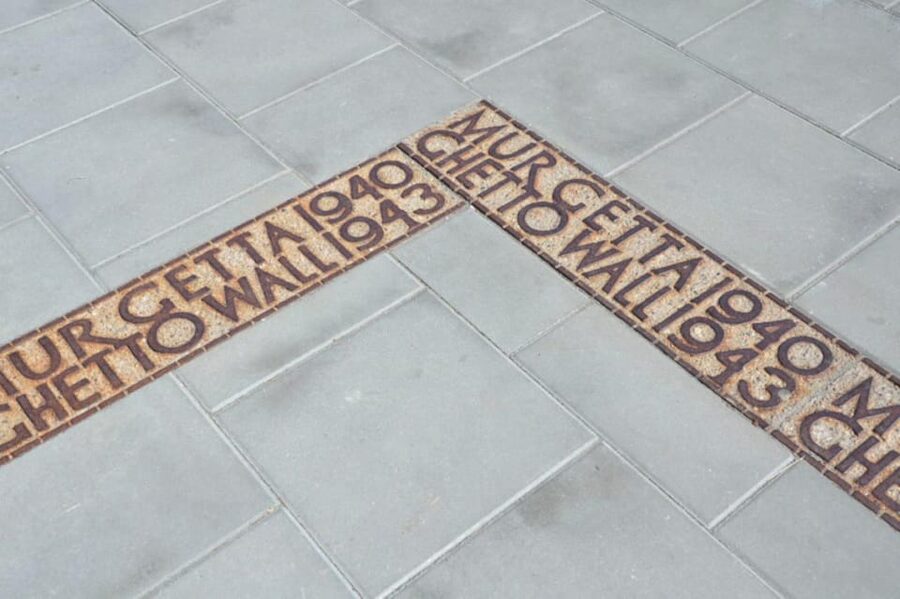
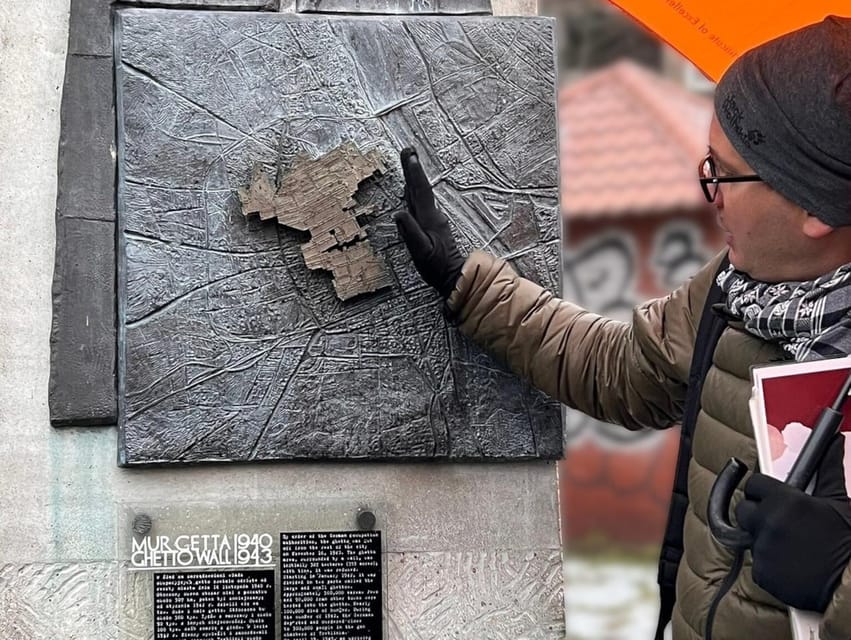
The former Jewish Ghetto gives the walk some of its most difficult and important material. The guide explains the forced separation of Jewish residents, the brutal conditions inside the ghetto, and the resistance that led to the 1943 uprising.
This part requires attention and respect. The tour is not designed to turn suffering into spectacle. Instead, it places the uprising within the experience of people who had already endured persecution, hunger, confinement, and the destruction of their community.
The photographs are particularly valuable here. They show the contrast between prewar Warsaw, wartime devastation, and the city that exists today. One of the strongest parts of this approach is that it allows you to see people as well as ruins. Family stories and small details can make the past feel less abstract than a list of dates.
I also appreciate the attention to different viewpoints. The tour considers civilians, resistance members, and those caught between powerful forces. That does not make the subject easier, but it makes the account more honest.
If you want a detailed visit devoted only to Jewish Warsaw, this walk may not be enough on its own. It covers several major parts of the war across the city, so the Ghetto section is one chapter in a larger story. You may want to pair it with a museum visit if this period is your main reason for coming to Warsaw.
Something quite different:
- Warsaw: Chopin Concert in the Old Town
★ 4.8 · 2,287 reviews - Warsaw: Traditional Galar Cruise on The Vistula River
★ 4.6 · 1,640 reviews - Warsaw Concert: Chopin – Painted by Candlelights with Wine
★ 4.8 · 1,442 reviews - Warsaw: City Sightseeing Hop-On Hop-Off Bus Tour
★ 3.6 · 1,415 reviews
Execution sites and the cost of occupation
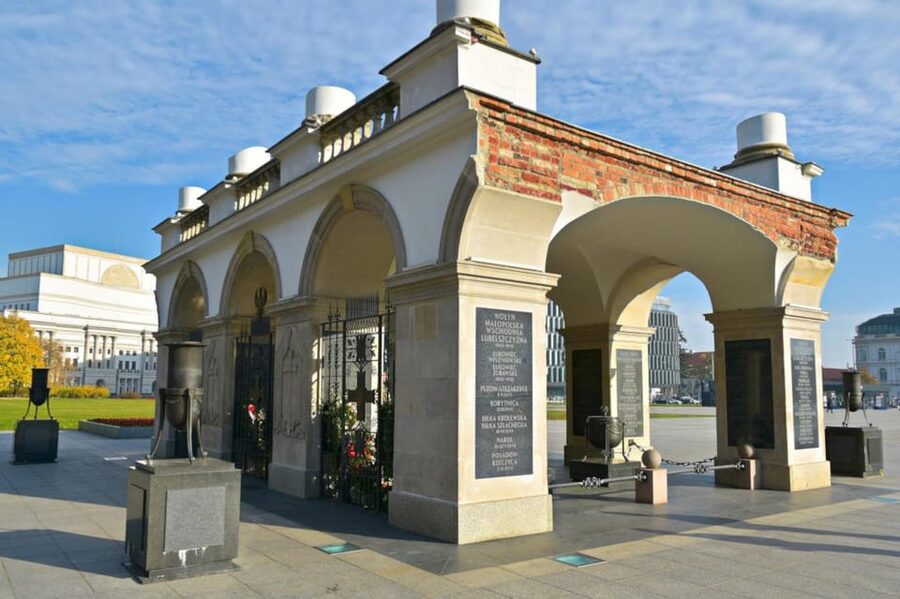
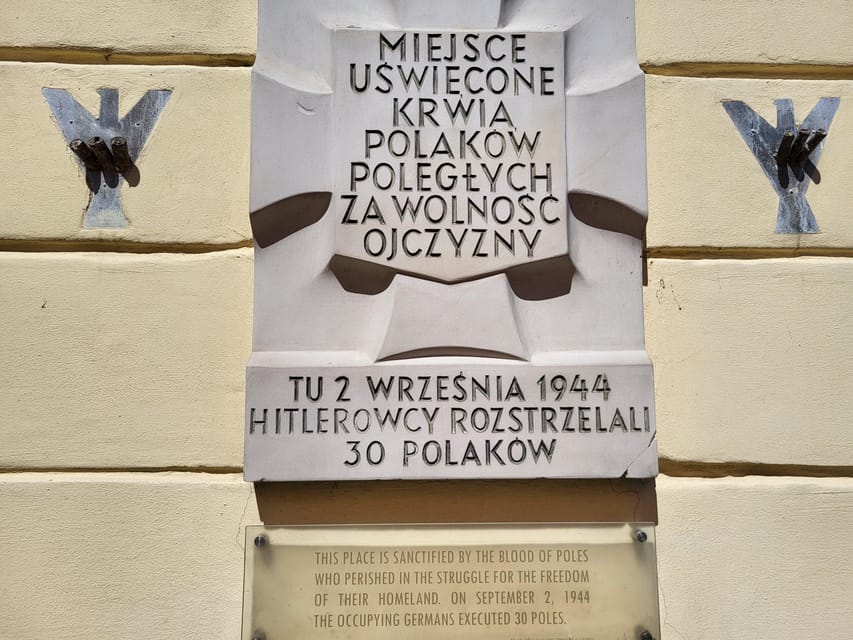
The route includes places connected with executions. These stops can be stark because there may be little visible evidence left. The guide’s task is to explain what happened without overwhelming the group or smoothing over the horror.
This is where a local guide adds real value. A book can tell you that executions took place in a certain area. A guide can explain how that violence formed part of the occupation system and how it affected the surrounding population.
The tour also shows why Warsaw’s wartime story cannot be reduced to one battle or one political decision. Executions, arrests, forced labor, destruction, and terror formed the background to everyday life. The resistance movements grew within that pressure, but civilians paid a terrible price.
The subject matter is heavy, and I would not choose this tour as a casual activity between shopping stops. Still, the guides seem to handle the tone with care. Piotr was praised for explaining different perspectives without downplaying the horror. Another guide used family memories to help explain how people felt at the time.
That human touch is useful, but it also means the experience may affect you more than expected. Allow yourself some quiet time afterward.
Polish Resistance and the 1944 Warsaw Uprising
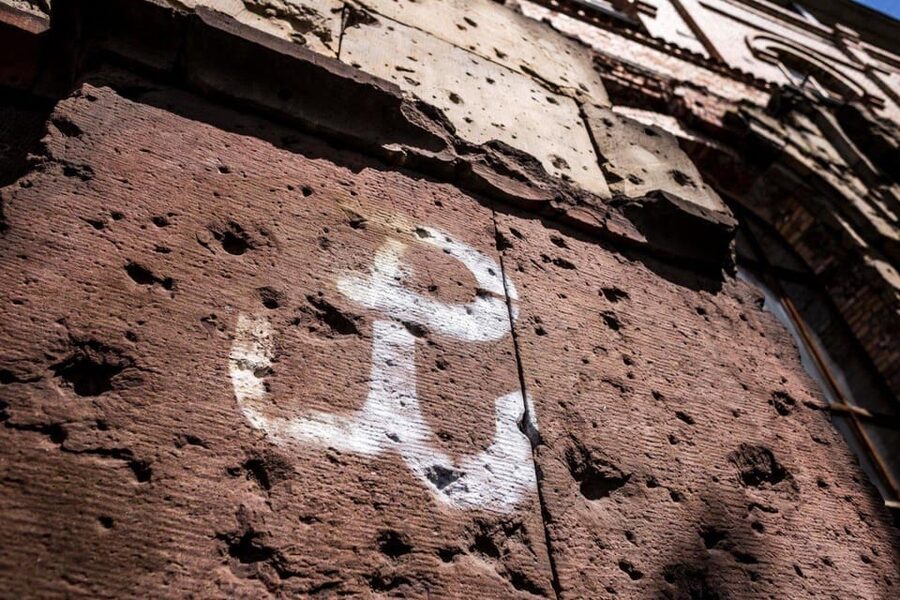
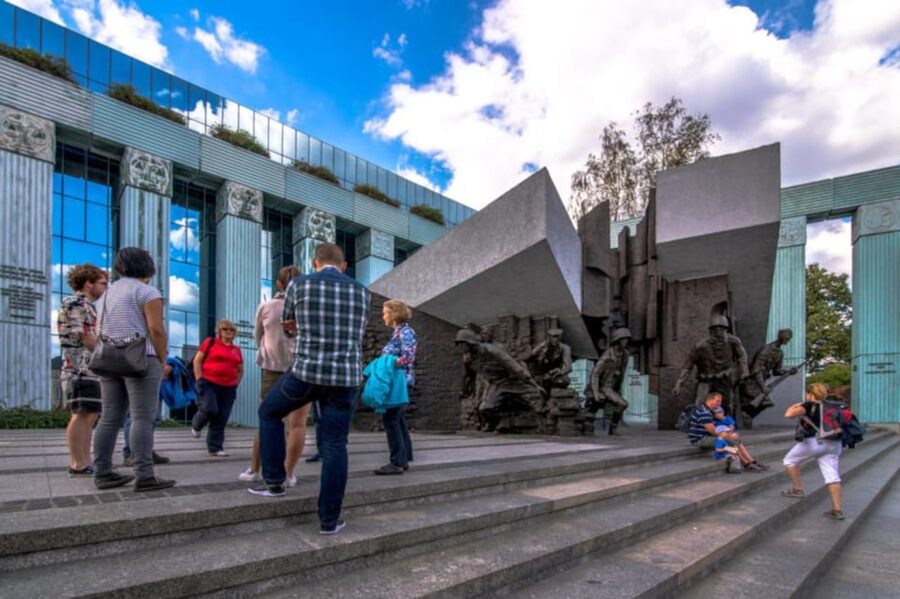
The later part of the walk focuses on the Polish Resistance and the 1944 Warsaw Uprising. These sites show how the city’s resistance developed and how Warsaw’s residents fought despite the enormous imbalance of power.
Your guide explains strongholds and important locations connected with the uprising. The physical remains may be limited, yet the locations help you picture how resistance fighters and civilians used the city. Old maps and photographs are useful here because they show streets and buildings as they looked during the fighting.
One participant particularly valued a story about workers at the central bank. It was described as the kind of remarkable episode that could fill a film, and it shows why personal stories can stay with you longer than broad military summaries.
The tour also places the uprising within Poland’s wider political situation. One guide concentrated on Poland’s borders and the political pressure affecting the country during the war. That context matters because the 1944 uprising was not an isolated local revolt. It was tied to Poland’s struggle for independence and to the uncertain future facing the country.
The difficult part is keeping all the names, dates, and political forces straight while walking. If you are new to the subject, do not worry about remembering everything. Listen for the basic sequence and ask questions when you need to.
The Tomb of the Unknown Soldier
The route can include the Tomb of the Unknown Soldier and the changing of the guard. This was described as a moving highlight, and I can see why. After hearing about occupation, resistance, and destruction, the ceremony gives the walk a quiet public expression of remembrance.
It also provides a change of pace. Much of the tour asks you to imagine what happened in places that have been rebuilt or altered. At the tomb, memory is made visible through ceremony and national respect.
The exact experience can depend on timing. The tour information identifies the changing of the guard as part of the route for at least some departures, but it should not be treated as the sole reason to book. The main value remains the historical walk and the guide’s interpretation.
How the guides bring the past closer
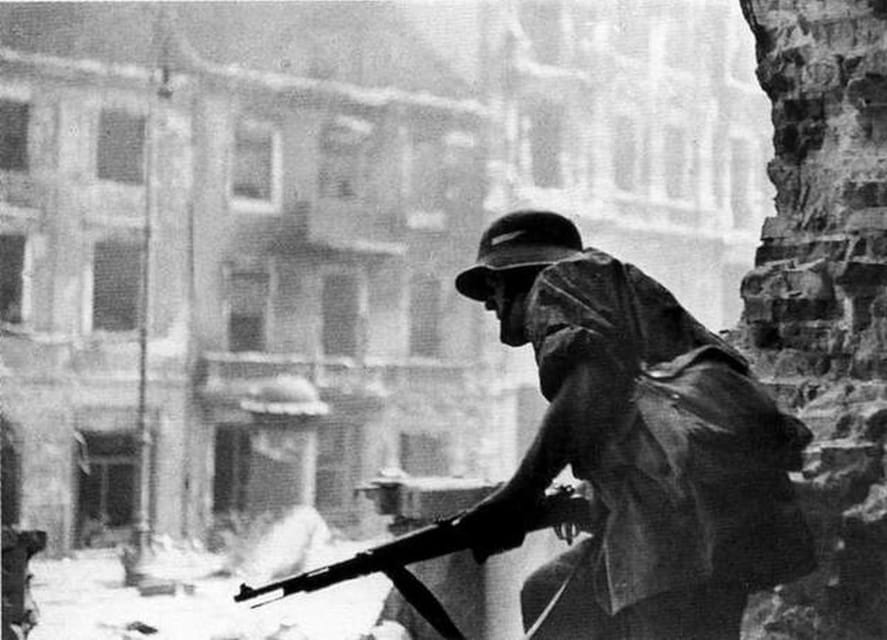
The strongest praise for this activity centers on the guides. That is not surprising, since the same streets can feel flat without a good explanation and powerful with one.
Magda has been described as passionate, kind, and careful with the group. She used photographs to explain Warsaw before, during, and after the war. Gosia and Goska have been praised for clear storytelling, good pacing, and meaningful stops. Iga brought a serious subject to life while remaining open to questions. Andrew was valued for answering a wide range of questions, while Albert explained complicated events in a clear and engaging way.
Several guides also use personal or family stories. Those details do not replace historical evidence, but they help you understand how the war reached ordinary households. The tour’s description specifically promises family stories, and this is one of the features that separates it from simply following a map.
English ability is another practical strength. Participants have highlighted guides who speak clearly and can discuss difficult questions. One useful suggestion was a portable speaker, since traffic noise occasionally made it hard to catch every word. If hearing the guide is important to you, stay near the front of the group.
Pace, weather, and physical comfort
The walk lasts 150 minutes, or two and a half hours. Most people found that length manageable, and some would have happily continued. The route was described as well paced, with no difficult steps or rough ground, and the activity is listed as wheelchair accessible.
Still, this is not a slow wander. One older participant had trouble keeping up and expected a gentler pace. If you walk slowly, tell the guide at the start and position yourself where you can keep up without rushing.
Weather can change the experience completely. Winter departures have taken place in temperatures of minus 17 to minus 20 Celsius, with wind chill making conditions even harder. One group managed only 45 minutes in extreme cold. Summer and autumn should be more comfortable, but you are still outdoors for the full walk.
Wear shoes suited to city walking and dress for the forecast. Bring water in warm weather, and use gloves, a hat, and proper layers in winter. There are no indoor sections listed as a regular part of the activity, so do not assume you can warm up midway through.
Is $20 a fair price?
At $20 per person, I consider this good value if you want a guided introduction to Warsaw’s World War II story. You get 150 minutes with a professional local guide, access to an organized route, visual material such as photographs and maps, and the chance to ask questions in English.
The value is not in the number of sights checked off. It is in the connections between them. A short walk to a former administrative district, a ghetto site, an execution place, and a resistance stronghold becomes meaningful when the guide explains how the events relate.
The price is also modest compared with a private tour. You join a shared group, so you do not control every pause or topic. If you need a custom route, extensive time at one site, or a private conversation about one family’s history, this format may feel limited.
The tour information notes that commissions, agency costs, and taxes take a large share of the payment. If your guide gives you a strong experience, tipping is presented as optional and welcome. I would decide based on the quality of the guiding, not obligation.
You can cancel up to 24 hours before the start for a full refund, and you can reserve now and pay later. Those terms are useful if your Warsaw plans are still shifting.
Who should book this walk?
I recommend it to first-time visitors who want a clear introduction to Warsaw’s wartime past. You do not need to be a history specialist. Ryan’s experience shows that the guide can explain the subject to people with limited background, while more serious history fans can ask harder questions.
Families can also make it work. One group included a 10-year-old who became thoughtful about the subject, and another included a teenager who found the tour absorbing. Still, parents should judge their child’s readiness because the material includes executions, persecution, and civilian suffering.
I would also recommend it to visitors who prefer context over polished attractions. You will not simply admire architecture. You will look at ordinary spaces and learn what happened there.
I would hesitate if you dislike long outdoor walks, are visiting in severe winter weather, or need a very slow pace. I would also avoid scheduling it immediately before another emotionally demanding activity.
FAQ
How long is the World War 2 in Warsaw walking tour?
The tour lasts 150 minutes, or two and a half hours.
What language is the tour conducted in?
The tour is conducted in English with a live English-speaking guide.
How much does the tour cost?
The listed price is $20 per person.
Where is the meeting point?
Meet near the 20-meter-high column with a statue on top. Look for the guide holding an orange umbrella.
What locations does the tour cover?
The tour visits places connected with the former Nazi German District, the former Adolf Hitler Square, the former Jewish Ghetto, execution sites, and Polish Resistance strongholds linked with the 1944 Warsaw Uprising.
Is the tour wheelchair accessible?
Yes, the activity is listed as wheelchair accessible.
Can I cancel for a refund?
Yes. You can cancel up to 24 hours in advance for a full refund.
Can I reserve now and pay later?
Yes. The booking option allows you to reserve your place and pay later.
Should you book it?
Book this tour if you want Warsaw’s wartime story explained on location, with photographs, personal memories, and a strong Polish viewpoint. The guides are the main reason to go, and names such as Magda, Piotr, Gosia, Andrew, Albert, Iga, and Peter have been associated with clear, thoughtful presentations.
The 4.7 out of 5 score from 237 ratings supports the tour’s strong reputation, but the practical limits matter. Expect a serious subject, a brisk city walk, and full exposure to the weather. Arrive early at the orange umbrella, stay close enough to hear, and dress properly. For $20, this is one of the better ways to begin understanding why modern Warsaw looks the way it does.
Just added in Warsaw
- Historical Walking Tour of Jewish Warsaw★ 5.0 · 68 reviews
- Deluxe Polish Food Tour Experience in Warsaw★ 5.0 · 19 reviews
- CO2-Offset Arrival Transfer from Warsaw Airport to Warsaw City★ 5.0 · 1 review
- Amazing photo walk through the Old town of Warsaw★ 5.0 · 32 reviews
- 8-day tour around Poland by private car★ 5.0 · 2 reviews
- 2 Hour Super Segway City Tour of Warsaw★ 5.0 · 5 reviews
- Electric Scooter Tour: Full Tour – 3-Hours of Magic!★ 5.0 · 3 reviews
- 2h Rental of Motorboat for 10 in Warsaw no License Needed★ 5.0 · 1 review
Walking Tours, compared.
Gdańsk City Sights & History Guided Walking Tour in English
Read our review →
Old Town & Wawel Castle Walking Tour in English
Read our review →Browse the lists this tour appears in