
REVIEW · COOKING CLASSES
Warsaw’s No 1 cooking class-Polish dumplings with liqueur tasting
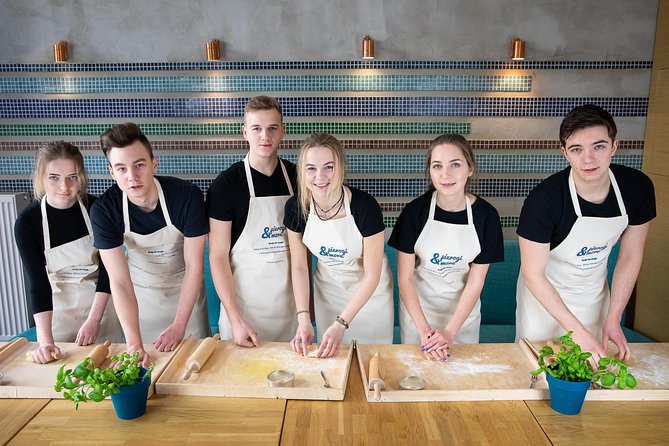
Come hungry for pierogi and new friends. This two-hour Warsaw cooking class gives you a hands-on lesson in Poland’s beloved dumplings, from kneading dough to folding several shapes, then serves the results as a shared meal. I especially like the clear, step-by-step teaching and the chance to take home a practical Polish skill, not just a few food photos.
I also like the small group size, capped at 10 people, and the relaxed family-style meal at the end. Vegetarian and vegan fillings can be arranged in advance. The main caution is that the room may feel warm during a busy session, and the finished dumplings are shared with the group, which may not suit anyone very concerned about cross-contact or shared food.
In This Review
- Key points at a glance
- Why pierogi make such a good Warsaw activity
- Arriving at Pierogi & More
- The opening lesson: origins before the dough
- Kneading, rolling, and filling the pierogi
- Folding tricks that make the lesson worthwhile
- Cooking and eating your own work
- The Polish liqueur tasting
- The people and atmosphere
- What you receive for $77.97
- Timing, booking, and useful planning advice
- Who should book this pierogi class?
- Should you book Warsaw’s pierogi class?
- FAQ
- How long does the pierogi cooking class last?
- Where does the class start and finish?
- Is the class taught in English?
- Are vegetarian and vegan options available?
- Can children join the class?
- What is included in the experience?
Key points at a glance
- Four kinds of Polish pierogi: Learn dough, fillings, folding methods, and cooking techniques rather than simply watching a chef.
- A meal made by you: Your dumplings become the main course, served family-style with the creations made by the whole class.
- Polish liqueur tasting included: The session ends with a light tasting and a playful guessing activity involving two liqueurs.
- Small class, plenty of help: The maximum is 10 people, with instructors circulating to offer hands-on guidance.
- Vegetarian and vegan options: Request suitable fillings when booking, with dietary needs accommodated when arranged ahead.
- Useful Warsaw location: The class takes place at Pierogi & More, northwest of the Old Town and near public transportation.
Why pierogi make such a good Warsaw activity
Pierogi are one of Poland’s signature foods, but ordering a plate in a restaurant tells you only part of the story. In this class, you learn what makes the dish work: the feel of the dough, the amount of filling, the seal around the edge, and the way each dumpling is cooked.
The opening lesson gives you a short introduction to the origins of pierogi before the practical work begins. That context matters. You are not just shaping anonymous dough. You are learning a food tied to Polish home cooking, family tables, and everyday celebrations.
The class focuses on pierogi with meat and vegetable fillings. Several different varieties are prepared, and you learn more than one folding technique. That variety keeps the session from becoming repetitive, while also showing you that pierogi need not all look alike.
I like this format because it gives you a souvenir you can use. A postcard goes into a drawer. A pierogi recipe can become dinner at home.
More Food Tours in Warsaw
- Warsaw: Polish Vodka Museum Tour with Tasting
★ 4.6 · 788 reviews - Half-Day Polish Food Walking Tour with Guide and Dinner
★ 4.5 · 381 reviews - Warsaw Food Tasting Tour with Delicious Poland
★ 5.0 · 277 reviews
Arriving at Pierogi & More
The meeting point is Pierogi & More warsztaty kulinarne, at Stawki 3, 00-193 Warszawa. It is northwest of Warsaw’s Old Town and near public transportation. One useful approach is to allow enough time to find the entrance without rushing, since the class begins promptly.
The site is described as clean and well organized. One detailed account specifically praised the cleanliness of the cooking area and bathroom, which is reassuring for a food activity where you will be handling dough and fillings.
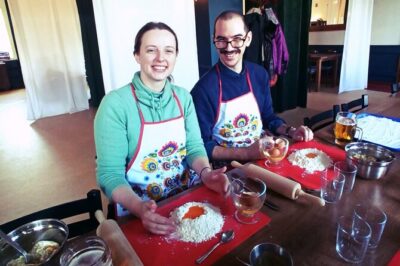
The maximum group size is 10. In practice, a session may be smaller, which gives you more room at the work surface and more chances to ask questions. Workstations are set up for two people, although solo participants can also take part.
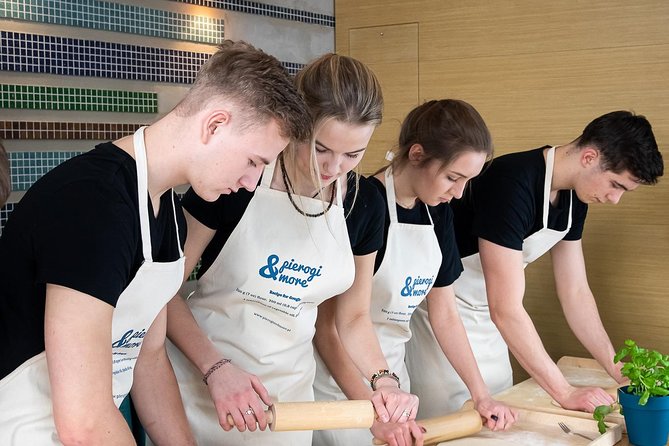
The small-group arrangement is important here. Pierogi making involves small movements that are easy to miss in a large demonstration. An instructor needs to see how you roll the dough, how much filling you use, and how well you press the edges together. With a group of 10 or fewer, help is close by.
The opening lesson: origins before the dough
The class starts with a brief introduction to pierogi and what you will do during the session. This is not presented as a long lecture. You get enough background to understand the place of the dish in Polish cooking, then move quickly to the counter.
That balance suits the activity. You are in Warsaw to cook, not sit through a classroom presentation. The introduction adds meaning without taking up the time needed for the hands-on work.
The instructors also share information about Polish food traditions and family customs as they teach. Past sessions have been led by staff including Daria, Ben, Patrycya, Nina, and Zuzia. The exact instructor may vary, but the teaching style described is consistent: friendly, organized, patient, and willing to answer questions.
Daria, for example, began with a short icebreaker and explained the plan before demonstrating each stage. Ben was praised for adding food traditions, local suggestions, humor, and generous hospitality. Patrycya was noted for giving individual help in a small class. These details suggest that the class is social as well as practical.
Kneading, rolling, and filling the pierogi
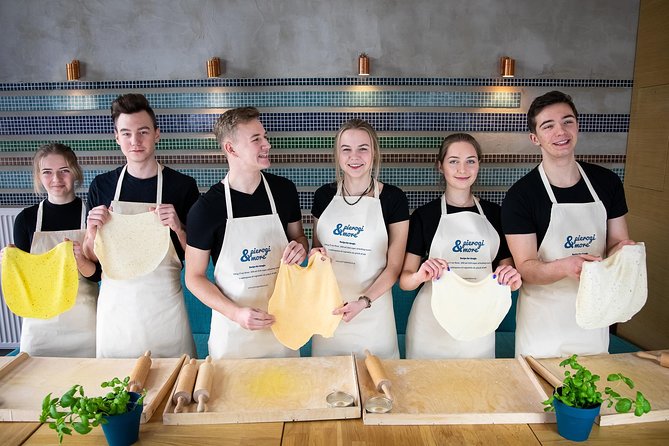
The central lesson begins with the dough. You learn how to knead it, then roll it out to the right thickness. This is one of the most useful parts of the experience because dough that is too thick can overpower the filling, while dough that is too thin can split during cooking.
The instructor demonstrates the process before you try it yourself. You then work through the steps with guidance nearby. The teaching is designed for beginners, so you do not need previous cooking-class experience.
The fillings include meat and vegetarian choices. The session also offers vegan options if requested in advance. One account described dairy-free needs being handled carefully, with vegan pierogi cooked first, followed by vegetarian dumplings, to reduce cross-contact.
That is a helpful sign, but you should still communicate your needs clearly at booking. The information provided confirms that vegetarian and vegan options are available on request. It does not promise that the entire facility is free from allergens.
A small limitation is that the emphasis is on making and shaping the pierogi, not preparing every filling from basic ingredients. One person wished there had been more work with the fillings themselves. If you want a full restaurant-style lesson covering every component from scratch, this may feel a little focused. If you mainly want to learn the dough and folding skills, the arrangement works well.
A few more in Warsaw
- Warsaw: Polish Dumplings Cooking Class
★ 4.8 · 151 reviews - Pierogi Cooking Class with Market Shopping and Local Snacks
★ 5.0 · 343 reviews - Krakow Pierogi Cooking Class with Market Visit & Home-Cooked Meal
★ 5.0 · 212 reviews - Pierogi Cooking Class: Mastering the Art of Polish Dumplings
★ 5.0 · 129 reviews
Folding tricks that make the lesson worthwhile
Folding is where the class becomes playful. You learn several techniques for sealing and shaping the dumplings, rather than making only one standard form. The instructor demonstrates, then coaches you while you copy the method.
You also get practical tips, or small kitchen hacks, that help keep the filling inside and improve the finished texture. These are the details that can make a home attempt succeed. Many people can follow a printed recipe, but fewer know how much filling is too much or how firmly to press the edge.
The instructors encourage creativity, too. You can try different folds and shapes after learning the basic method. That keeps the session light and gives you a reason to pay attention to the mechanics instead of simply producing identical dumplings.
The process is active but not stressful. The teaching staff demonstrate, circulate, correct small mistakes, and keep the group moving. If you are nervous about cooking in front of strangers, this is a forgiving setup.
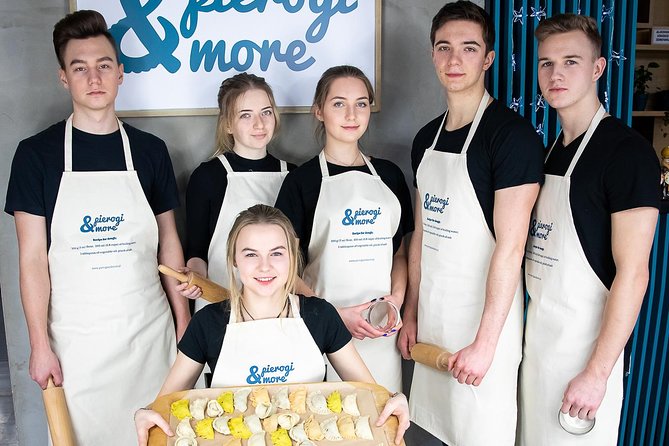
You will likely make more pierogi than you need for one plate. That is intentional. The final meal includes the work of the whole class, so you get to try several fillings and shapes.
Cooking and eating your own work
The best part comes after the assembly. The instructor shows you how to cook the pierogi, then the class sits down to eat.
The meal is served family-style, with everyone sharing the dumplings made during the session. This creates an easy social rhythm. You cook side by side, then sit together and compare the results. It is a good choice for couples, families, solo participants, and anyone who enjoys meeting people around food.
You should arrive hungry. The dumplings serve as the main meal, and the portions are described as generous. Some people have even had leftovers, although you should not count on taking food away.
The shared meal has one clear consideration. Everyone eats from the class’s combined production. If you are very cautious about shared food, ask about the arrangement before booking. For most people, this is part of the charm: your dinner becomes a group effort rather than a private plate prepared behind a kitchen door.
The meal also gives the class a satisfying ending. You do not leave with a few uncooked samples or a demonstration-only experience. You have made the food, watched it cook, and eaten it.
The Polish liqueur tasting
The liqueur tasting is a small but memorable extra. After the meal, you sample Polish liqueurs, including a playful activity involving two drinks. It adds a distinctly local touch and helps the class finish on a social note.
This is not described as a full spirits seminar. Think of it as a short tasting attached to the cooking experience. If you do not drink alcohol, you should confirm suitable arrangements before booking, since the included tasting is part of the advertised format.
The tasting also gives the session a little variety. Without it, the activity would be entirely about dough and dumplings. With it, you get a simple introduction to another part of Polish food culture.
Because alcohol is included, the activity may suit adults better than families with young children. Children under 8 are not permitted. If you bring an older child, at least one adult must remain responsible for that child during the class.
The people and atmosphere
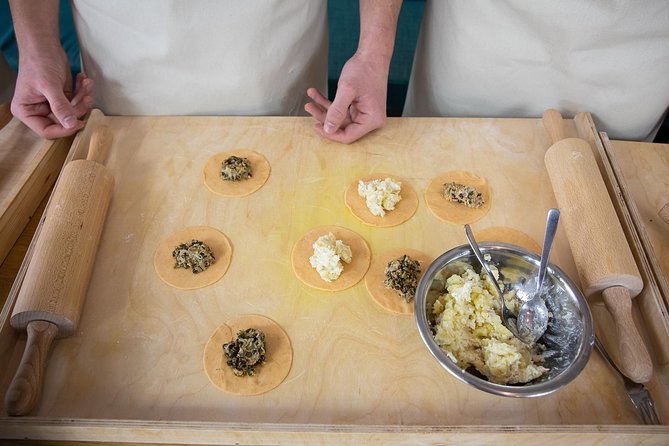
The strongest feature of this experience is the teaching. The instructors are described as warm, patient, organized, and attentive. They give clear directions, demonstrate the process, and continue helping while you work.
The atmosphere is casual rather than formal. You learn a lot, but the class is not treated like an examination. There is room for humor, questions, photographs, and conversation with the other people at your table.
The family-style meal is especially effective for creating connections. You may arrive with your own companion and leave having shared dinner with people from several countries. That social element is difficult to get from a standard restaurant meal.
The tone is not perfect for everyone. One description noted that an instructor could become a little brief and stoic when the group needed to move along. That is a minor tradeoff for a class with a fixed two-hour schedule. Keeping the group on time means the instructor may occasionally need to be direct.
The room can also become hot. Wear comfortable clothing and avoid arriving overdressed. You will be handling flour and food, so practical clothes make more sense than anything delicate.
What you receive for $77.97
At $77.97 per person, this is not the cheapest meal in Warsaw. You can order pierogi for far less at a local restaurant. The value comes from combining dinner with instruction, cultural background, a small-group setting, and a recipe you can use later.
You are paying for about two hours of guided activity, not just the food on the plate. The cost also includes the liqueur tasting and, according to the experience details, mobile ticketing and English-language instruction.
The class is particularly good value if you are already planning to eat a meal out and want an activity that feels connected to Poland. Instead of booking a separate dinner and a separate cultural attraction, you get both food and participation in one sitting.
It may be less appealing if you dislike group activities or already know how to make filled dumplings. It is also not the right pick if you want a quiet, private cooking lesson. The group meal is central to the experience.
With a 4.9 rating from 576 reviews and a 97 percent recommendation rate, the numbers point to consistently strong satisfaction. More useful than the score, though, is the repeated pattern: praise for organization, clear instruction, tasty food, clean facilities, and friendly staff.
Timing, booking, and useful planning advice
The activity lasts approximately two hours, so it fits neatly into a Warsaw afternoon or evening. Since the group needs to work together, arrive on time. The class starts at the stated meeting point and ends there as well.
It is often reserved about 35 days ahead. That does not mean you must book a month in advance, but it is a useful warning if your Warsaw dates are fixed. The class has a maximum of 10 participants and may fill faster during popular periods.
The ticket is mobile, and the activity is offered in English. Confirmation is provided at booking. Public transportation is nearby, and the location is walkable from the Old Town according to the practical feedback supplied.
Free cancellation is available until 24 hours before the start time for a full refund. Changes or cancellations inside that 24-hour window are not accepted for a refund. If the provider cancels because the minimum number of participants is not reached, you can choose another date or experience, or receive a full refund.
Who should book this pierogi class?
I would recommend it most strongly to:
- Couples who want a shared activity beyond sightseeing.
- Families with children aged 8 or older.
- Solo visitors who enjoy meeting people over a meal.
- Anyone who loves Polish food and wants to recreate it at home.
- Vegetarians and vegans who arrange their needs in advance.
- First-time cooking-class participants who prefer clear guidance.
It may not suit children under 8, people seeking a private lesson, or anyone uncomfortable with a shared meal. People with serious food allergies should contact the provider before booking and explain their needs rather than relying only on the standard vegetarian or vegan option.
Should you book Warsaw’s pierogi class?
Yes, if you want a practical and social taste of Poland. The class earns its high rating through details that matter: a small group, patient instruction, several folding techniques, a real meal made by the class, and a liqueur tasting to finish.
I especially like that you leave with more than a full stomach. You take away a method you can repeat at home, along with a better sense of how pierogi fit into Polish food traditions.
Book ahead if your schedule is tight, request vegetarian, vegan, or dairy-free arrangements early, and wear something comfortable for a warm cooking room. If those points suit you, this is a well-priced way to turn one Warsaw meal into a useful memory.
FAQ
How long does the pierogi cooking class last?
The experience lasts approximately two hours.
Where does the class start and finish?
It starts at Pierogi & More warsztaty kulinarne, Stawki 3, 00-193 Warszawa, Poland, and ends back at the same meeting point.
Is the class taught in English?
Yes. The experience is offered in English.
Are vegetarian and vegan options available?
Yes. Vegetarian and vegan options are available on request. You should provide those details when booking.
Can children join the class?
Children under 8 are not permitted. If you bring a child, at least one adult must be responsible for the child during the class.
What is included in the experience?
You learn to make Polish pierogi with meat and vegetable fillings, cook and eat the dumplings, and take part in a Polish liqueur tasting.
More Workshops in Warsaw
- First class Warsaw Airport Transfer (WAW)
★ 5.0 · 10 reviews - Warsaw: Pottery Decorating Ceramic Workshop
★ 3.7 · 4 reviews - Krakow: Pierogi Home Cooking Class
★ 5.0 · 23 reviews - PIEROGI classes with Masterchef
★ 4.0 · 10 reviews
Just added in Warsaw
- Historical Walking Tour of Jewish Warsaw★ 5.0 · 68 reviews
- Deluxe Polish Food Tour Experience in Warsaw★ 5.0 · 19 reviews
- CO2-Offset Arrival Transfer from Warsaw Airport to Warsaw City★ 5.0 · 1 review
- Amazing photo walk through the Old town of Warsaw★ 5.0 · 32 reviews
- 8-day tour around Poland by private car★ 5.0 · 2 reviews
- 2 Hour Super Segway City Tour of Warsaw★ 5.0 · 5 reviews
- Electric Scooter Tour: Full Tour – 3-Hours of Magic!★ 5.0 · 3 reviews
- 2h Rental of Motorboat for 10 in Warsaw no License Needed★ 5.0 · 1 review
Cooking Classes, compared.
Pierogi Cooking Class with Market Shopping and Local Snacks
Read our review →
Krakow Pierogi Cooking Class with Market Visit & Home-Cooked Meal
Read our review →
Pierogi Cooking Class: Mastering the Art of Polish Dumplings
Read our review →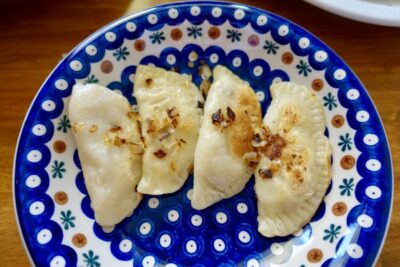
Browse the lists this tour appears in