
REVIEW · POLISH FOOD TOURS
Pierogi Cooking Class with Market Shopping and Local Snacks
Come hungry, leave with a Polish skill. This three-hour Krakow experience combines a local market visit, a home cooking lesson, and a generous meal of handmade pierogi. I especially like the small maximum of six people, which gives you room to work at the kitchen table, and the chance to shop for ingredients before cooking instead of simply arriving at a prepared demonstration.
The host, Olga, is repeatedly praised for her patience, warmth, and clear teaching. You will make the dough, prepare the potato and cottage cheese filling, shape the dumplings, cook them, and eat the results with snacks and regional alcohol. The main drawback is simple: this takes place in a private apartment, so you should be comfortable with a homelike setting rather than a purpose-built cooking school. Also, Sunday sessions skip the market visit.
In This Review
- At a glance
- Starting at the Grunwald Monument
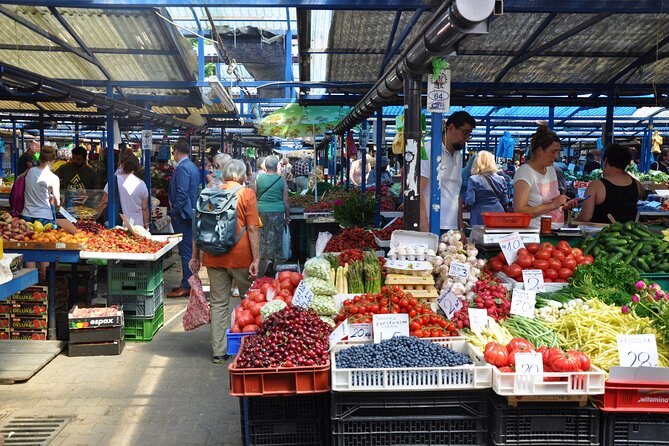
- The market comes before the mixing bowl
- Walking into a local home
- Making dough the Polish way
- Folding, boiling, and eating
- Polish drinks and table conversation
- How much value do you get for $83.48?
- Who should book this class?
- Practical timing and food advice
- Should you book the pierogi class?
- FAQ
- Where does the pierogi class begin?
- Where does the experience end?
- How long does the experience last?
- Is the market visit included on Sundays?
- How many people can join the class?
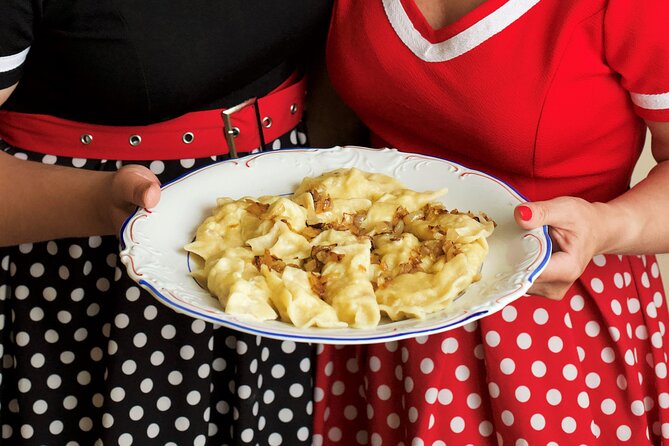
- What pierogi filling will I make?
At a glance
- Shop before you cook: Begin at Krakow’s oldest marketplace, where Olga points out fresh cheeses, sausages, pickles, mushrooms, and other Polish ingredients.
- Learn the full pierogi process: You make the dough, filling, folds, and finished dumplings yourself.
- A true small-group class: The maximum is six people, with several sessions described as having only four participants.
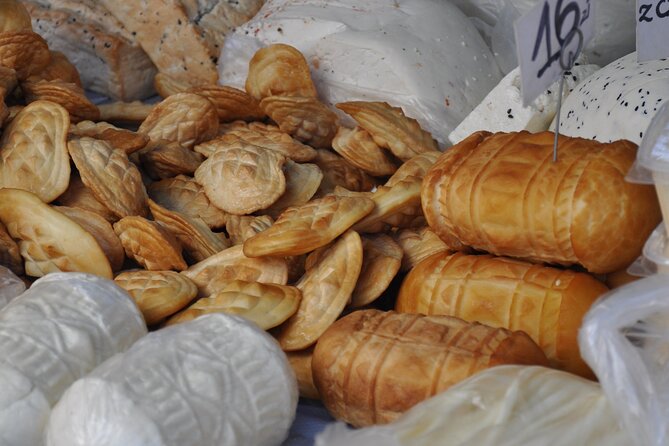
- Eat more than pierogi: Seasonal snacks may include smoked cheese, fresh cheese, Polish sausage, sour cucumbers, and sour cabbage.
- Finish with Polish spirits: Regional alcohol, including homemade liquor and bison-grass-infused vodka, accompanies the meal.
- Sunday exception: The cooking class still takes place, but the food-market stop is not included.
Starting at the Grunwald Monument
The meeting point is the Grunwald Monument at plac Jana Matejki, near Krakow’s Old Town. This is a useful central location, and the area is close to public transportation. You meet Olga there, then walk to the market together.
The exact rhythm can vary slightly with the group and the market, but the experience is planned as a compact three-hour outing. That makes it easy to fit into a morning or afternoon in Krakow. I would avoid scheduling a large dinner afterward. You are not just making a few sample dumplings. The class can produce a serious amount of food, with one group describing a table filled with more than 100 pierogi.
It is worth arriving ready to walk and with enough appetite left for the meal. The market and apartment are connected by a short walk, reported by one family as less than ten minutes from the market to Olga’s home.
More Polish Food Tours in Kraków
- Krakow Pierogi Cooking Class with Market Visit & Home-Cooked Meal
★ 5.0 · 212 reviews - Krakow: Food Tour of 10 Tastings with Pierogi, Vodka & More
★ 5.0 · 169 reviews - Pierogi Cooking Class: Mastering the Art of Polish Dumplings
★ 5.0 · 129 reviews
The market comes before the mixing bowl
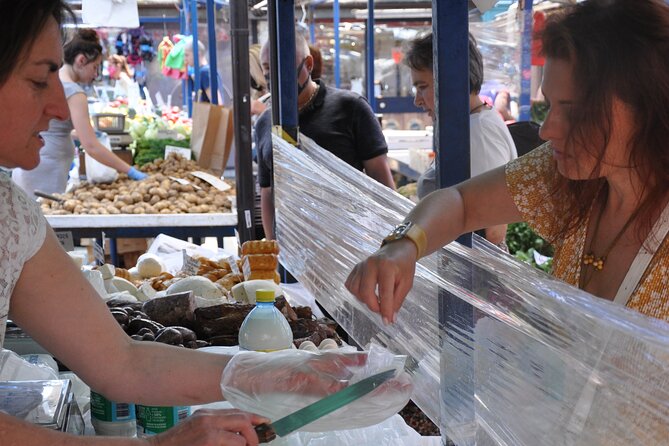
The first part gives the cooking lesson a useful local frame. Rather than beginning with flour already measured into neat bowls, Olga takes you through the oldest marketplace in town to buy what the group needs and taste some of what catches your eye.
The market stop is not just shopping for supplies. Olga explains the products, helps identify suitable cheese for the filling, and points out items you may want to buy later for yourself. Fresh and smoked cheeses, Polish sausage, pickles, vegetables, and mushrooms may appear during the visit, depending on the season and what is available.
This is one of the best parts for anyone who wants more than a recipe. You get a quick lesson in what Polish food looks like before it reaches the kitchen. Cheese matters here, since the traditional filling depends on fresh cottage cheese mixed with potatoes and caramelized onions. One detailed account praised Olga’s explanation of different cheeses and how to choose the right one for pierogi.
The tasting also begins early. Seasonal cheese and other market products become snacks later, so the shopping has an immediate payoff. You are not merely being told what Polish people eat. You get to taste it, compare textures, and ask questions while standing among the food stalls.
There is one important limitation. Sunday departures do not include the market visit. If the market is a major reason for booking, choose another day. The apartment-based cooking portion remains the heart of the experience, but you will miss the shopping and first taste of the outing.
Walking into a local home
After the market, you walk to Olga’s apartment. This changes the tone of the afternoon. You are not entering a commercial teaching kitchen with rows of workstations. You are being welcomed into a private home, where the class feels closer to a meal with a local friend who happens to be very good at making dumplings.
The setting has clear benefits. The groups are small, the atmosphere is relaxed, and the host can talk about Polish food and Krakow in a personal way. Several accounts describe the apartment as clean, comfortable, and welcoming. Olga serves snacks and drinks before the hands-on work begins, giving everyone time to settle in and meet the other people in the group.
Expect simple Polish food with plenty of character. The seasonal starter might include fresh or smoked cheese, sausage, sour cucumbers, sour cabbage, bread with lard, or other local bites. One especially detailed food lesson included lard spread on bread with a pickle topping. That may not be to everyone’s taste, but it is a useful chance to try an old-fashioned Polish combination instead of sticking to familiar tourist food.
The private setting is also the main consideration. If you prefer polished venues, professional cooking stations, or a formal class structure, this may feel informal. If you like sitting at a local table and hearing personal food traditions, the apartment is a major part of the appeal.
Making dough the Polish way
The class teaches the entire process, beginning with pierogi dough. Olga demonstrates how the dough should be kneaded and explains the small choices that affect the finished dumpling. Participants then work with the dough themselves, rather than watching from the side.
The kneading technique is a useful takeaway. One participant who had made other types of dumplings found the method different enough to be worth learning, especially the feel and consistency needed for Polish pierogi. You should expect some trial and error. Rolling dough thin enough, but not so thin that it tears, takes a little practice.
That hands-on format works well for families. Children as young as seven have taken part, and the process gives younger cooks a job at each stage. They can help roll, fill, and fold the dumplings, although adults may need to provide a little assistance when the dough becomes fiddly.
The traditional filling is vegetarian: cottage cheese, potatoes, and caramelized onions. That makes the main recipe approachable for people who do not eat meat, while the sausage and other meat products appear among the snacks. The lesson also covers how the potatoes should be cooked and handled for the filling, not simply mixed together without explanation.
The recipe is practical enough to repeat at home. You leave understanding the order of the work and the reasons behind it. That is more useful than taking a recipe card home after watching someone else do everything.
More Workshops in Kraków
- Krakow: Pierogi Home Cooking Class
★ 5.0 · 23 reviews - Mercedes V Class VIP minivan Kraków
★ 5.0 · 2 reviews - Mercedes E Class black cab Kraków
★ 5.0 · 2 reviews - Krakow: 2-Hour Cocktail-Making Workshop
★ 5.0 · 1 review
Folding, boiling, and eating
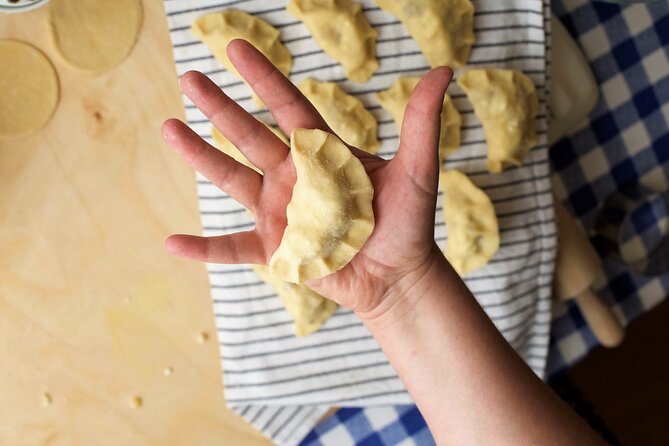
Folding pierogi looks easy when someone else does it. Your first few may prove otherwise. Olga shows you how to portion the filling, seal the dough, and create the recognizable pleated edge. The group gets to make its own dumplings, and the imperfect ones are still perfectly edible.
The shaping is part craft and part social activity. Everyone works at the same table, compares folds, and improves with each attempt. A family account noted that the technique took several tries to master, while other participants found Olga’s method clear and manageable. That is a fair expectation: you will learn the basics, but you should not expect every dumpling to look like it came from a factory.
Once shaped, the pierogi are boiled and served with toppings, including sour cream. The class then becomes a shared meal. You eat the dumplings you made, along with the snacks prepared earlier. Some groups have had extra pierogi to take home, though that should be treated as a pleasant possibility rather than a guaranteed inclusion.
The meal is where the class earns much of its value. At $83.48 per person, you are paying for instruction, market guiding, food, drinks, and a hosted cultural experience. It is not the cheapest way to eat pierogi in Krakow. It is a fairer comparison to a three-hour food activity than to a restaurant meal, especially since you gain a skill and a recipe along with lunch or dinner.
The food quantity also matters. Do not plan this as a light snack between sightseeing stops. With local starters, a full batch of dumplings, sour cream, and alcohol, the class can easily serve as one of your main meals for the day.
Polish drinks and table conversation
Regional alcohol is included with the meal, and the offering can include homemade liquor or a selection of local spirits. Bison-grass-infused vodka has been served during the experience, including one memorable presentation from a fish-shaped container.
That detail gives the final meal a playful Polish touch, but you do not need to drink alcohol to enjoy the class. The supplied information does not describe a nonalcoholic pairing, so if you do not drink, it is sensible to ask about alternatives when booking or at the start.
Conversation is another important part of the afternoon. Olga shares food traditions, talks about Krakow, and offers suggestions for places to eat and things to do. Several people describe the activity as a good way to meet other participants, especially because the small group has time to talk while preparing food.
I like this kind of local advice early in a Krakow visit. You can use Olga’s suggestions for the rest of your stay, and the class gives you a better sense of what to look for in Polish markets and restaurants. It is not a formal city tour, so do not book it expecting major monuments or a long historical lecture. The Krakow context comes through food, family recipes, and practical tips.
How much value do you get for $83.48?
The price is above what you would pay for a plate of pierogi, but the comparison is misleading. This experience includes a guided market visit, tastings, a private-home setting, hands-on instruction, a substantial meal, and drinks. It also limits attendance to six people, which matters when everyone needs space to roll dough and form dumplings.
The value is strongest if you want an activity that combines food and conversation. You are not only eating a local specialty. You are learning how to reproduce it, seeing the ingredients before they are cooked, and hearing how the dish fits into Polish home cooking.
The value is weaker if your goal is simply to sample as many Krakow dishes as possible. A food walk may cover more restaurants and a wider range of dishes. This class focuses closely on one staple, with supporting snacks rather than a broad tasting menu.
The high satisfaction level is supported by a 5.0 rating from 343 reviews and a recommendation rate of 99 percent. Those figures do not remove the need to consider your own preferences, but they fit the consistent strengths of the experience: Olga’s friendly teaching, the small group, the welcoming apartment, and the amount of food.
Who should book this class?
I would recommend it most strongly to:
- Families: Children can take part in rolling, filling, and folding, and the activity gives everyone a shared task.
- Couples and friends: The class leaves plenty of room for conversation and produces a relaxed shared meal.
- First-time visitors to Krakow: Olga’s local suggestions can help you decide where to eat and what to see next.
- Vegetarians: The main pierogi filling uses cottage cheese, potatoes, and onions, though the snack selection may include sausage and lard.
- Food-focused visitors: You get close to the ingredients and learn a recipe you can repeat at home.
- People who prefer small groups: The maximum is six, and some sessions have been even smaller.
I would think twice if you dislike entering a private home, have very limited mobility for the walk between the market and apartment, or want a highly formal cooking school. The activity is also less complete on Sunday because the market visit is removed.
Service animals are allowed, and the meeting point is near public transportation. Confirmation arrives within 48 hours of booking, subject to availability. Free cancellation is available up to 24 hours before the start time. If the minimum number is not reached and the activity is canceled, you are offered another date or experience, or a full refund.
Practical timing and food advice
Book this near the beginning of your Krakow stay if you can. The food guidance and restaurant suggestions are more useful when you still have several meals ahead of you. It also gives you time to return to the market and buy ingredients or a pierogi mold, as one family did after learning how to make fruit pierogi at home.
Wear clothing that lets you work comfortably in a kitchen. The supplied details do not specify a dress code or special equipment, so ordinary sightseeing clothes should be fine, but you should be ready to handle dough and food. Most of all, arrive hungry and avoid a dinner reservation immediately afterward.
The three-hour length is long enough to cover the market, snacks, preparation, cooking, and meal without turning the class into an all-day commitment. Keep the rest of that part of your schedule loose. A little extra conversation can be part of the charm, and rushing away from the table would miss some of the point.
Should you book the pierogi class?
Yes, if you want a warm, food-centered activity with real participation. The strongest reasons are Olga’s patient teaching, the small group, the market stop on non-Sundays, and the chance to eat a full Polish meal in a local apartment.
Book it early if your dates are fixed, since it is commonly reserved well ahead of time, around 46 days in advance on average. Choose a non-Sunday session for the complete experience, and consider the $83.48 price worthwhile if you value instruction, drinks, food, and local conversation more than a simple restaurant meal.
Skip it only if you want a fast tasting or feel uncomfortable with a private-home setting. For most people who enjoy cooking, Polish food, and a relaxed afternoon, this is one of the more memorable ways to meet Krakow through its kitchen.
FAQ
Where does the pierogi class begin?
The experience begins at the Grunwald Monument at plac Jana Matejki, 30-001 Krakow, Poland.
Where does the experience end?
The activity ends back at the meeting point.
How long does the experience last?
It lasts approximately three hours.
Is the market visit included on Sundays?
No. On Sundays, the experience takes place without a visit to the food market.
How many people can join the class?
The maximum group size is six people.
What pierogi filling will I make?
You will prepare the traditional filling of fresh cottage cheese, potatoes, and caramelized onions.
More Shopping Tours in Krakow
- Krakow: Private Shopping Tour with Snacks and Beer Tasting
★ 5.0 · 2 reviews
More Market Tours in Krakow
- Krakow Christmas Market Immersive Tour
★ 5.0 · 6 reviews - ☆★☆️Kraków☆★☆ Communist▫Flea▫Market▫Tour+Collectors⚡Boost️⚡
★ 5.0 · 2 reviews
Just added in Krakow
- Auschwitz-Birkenau – Skip the Line Tickets★ 3.5 · 29 reviews
- Auschwitz-Birkenau: Fast-Track Ticket & Guided Tour No Transfers★ 3.5 · 17 reviews
- Zakopane & Sleigh Ride with Bonfire – Group Tour from Kraków★ 5.0 · 2 reviews
- Sleigh Ride & Bonfire in Zakopane with Funicular – Private Trip★ 5.0 · 48 reviews
- Thermal Baths & Zakopane – Private Trip from Krakow★ 5.0 · 1 review
- Zakopane & Gubalowka Funicular – Private Winter Tour from Krakow★ 5.0 · 10 reviews
- Divine Mercy Sanctuary – Private Tour from Krakow★ 5.0 · 4 reviews
- stag dog chase Krakow prank★ 5.0 · 4 reviews
Polish Food Tours, compared.
Half-Day Polish Food Walking Tour with Guide and Dinner
Read our review →
Krakow Pierogi Cooking Class with Market Visit & Home-Cooked Meal
Read our review →
Food Tour of 10 Tastings with Pierogi, Vodka & More
Read our review →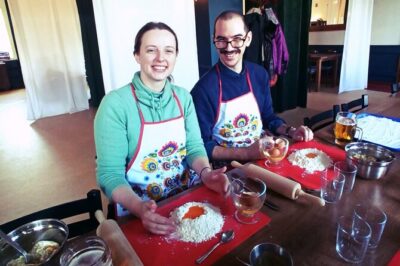
Pierogi Cooking Class: Mastering the Art of Polish Dumplings
Read our review →
6-Course Full Polish Food Tour with Vodka Tasting
Read our review →
Traditional Polish Food and Drinks Tasting Tour
Read our review →Browse the lists this tour appears in