
REVIEW · COOKING CLASSES
Flavours of Polish Christmas: 4 course dinner + cooking class
Christmas comes once a year in Poland. That is what makes this Warsaw evening so appealing: you do not just eat festive food, you learn why it matters and make part of it yourself. I like the small group of up to 10 people, which should give you room to work, and I like the warm, family-style atmosphere created by Maria and her son. The main consideration is that this is not a full cooking course. You make the dumplings, while most of the other dishes are prepared ahead of time.
The 2.5-hour experience combines a cooking lesson, a seated Christmas dinner, Polish traditions, carols, and a tasting of Polish liqueurs. It costs $120.52 per person, which is a fair price if you value a complete evening rather than a short recipe demonstration. Just remember that it is offered in December only, begins at 5:30 pm, and the meal includes fish unless you choose to skip that course.
In This Review
- Key points at a glance
- Why Polish Christmas food matters
- Arriving at Stawki 3 at 5:30 pm
- The pierogi lesson: the hands-on heart of the evening
- Beetroot soup and mushroom-filled uszka
- The fish starter and dietary planning
- Dinner at the shared table
- Poppy seed dessert and Polish liqueurs
- What you take home afterward
- The atmosphere: warm, social, and not overly formal
- Who should book this Warsaw experience?
- Should you book Flavours of Polish Christmas?
- FAQ
- How long does the Flavours of Polish Christmas experience last?
- What time does the class begin?
- Where does the experience start and finish?
- What do I cook during the class?
- What food is included in the dinner?
- Are drinks included?
- Is the experience suitable for vegetarians or vegans?
Key points at a glance
- Make pierogi from scratch: Knead the dough, roll it thin, add sauerkraut filling, and learn several folding methods.
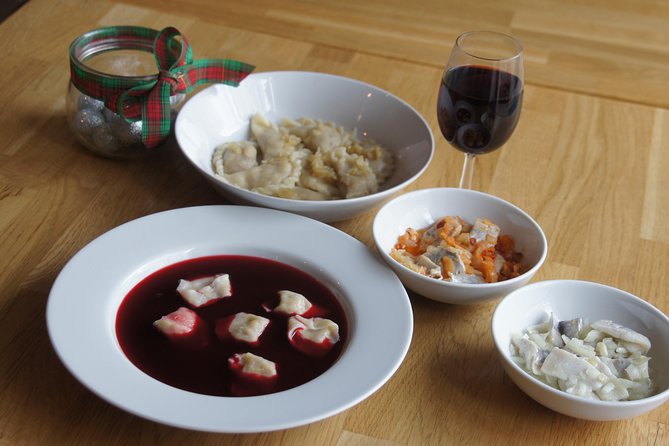
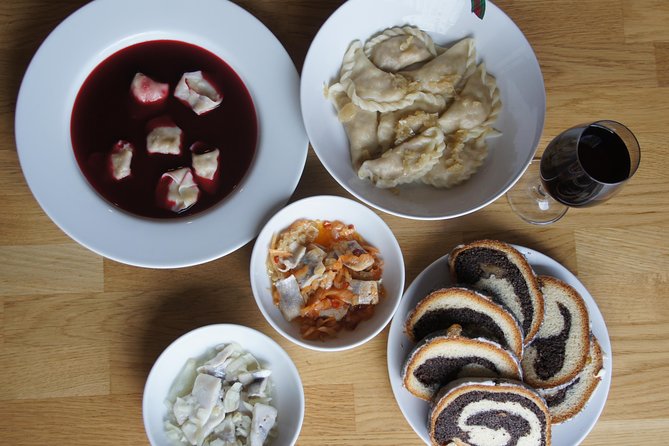
- Taste a Polish Christmas menu: Expect beetroot soup with mushroom-filled dumplings, sauerkraut pierogi, fish as a starter, and a festive poppy seed dessert.
- Hear the meaning behind the meal: Learn about breaking Christmas wafers, leaving an extra place at the table, and other seasonal customs.
- Share a family-style evening: The group sits together for dinner, and some sessions end with Polish Christmas carols.
- Take the class home: An English recipe booklet, a handout about Christmas traditions, and a link to class photographs are included.
- Plan for December: The experience is seasonal, starts at 5:30 pm, and returns to the same meeting point in Warsaw.
Why Polish Christmas food matters
Polish Christmas Eve, known as Wigilia, is one of the country’s most important family celebrations. Many of the dishes served that night are made only once a year, so this meal gives you a useful window into Polish home cooking rather than a generic restaurant menu.
The food also reflects the customs of a meat-free Christmas Eve table. This class includes fish as the starter, along with vegetables, mushrooms, sauerkraut, beetroot, and poppy seed dessert. If fish is not suitable for you, you can skip that course. Vegetarians and vegans should contact the provider before booking if they need more changes, since the supplied information only confirms that the fish starter can be omitted.
I especially like the way the food and customs are tied together. Breaking wafers before the meal and setting an extra plate at the table are not random bits of folklore. They help explain the generous, family-focused feeling of Polish Christmas.
A few more in Warsaw
- Warsaw’s No 1 cooking class-Polish dumplings with liqueur tasting
★ 5.0 · 576 reviews - Warsaw: Polish Dumplings Cooking Class
★ 4.8 · 151 reviews - Pierogi Cooking Class with Market Shopping and Local Snacks
★ 5.0 · 343 reviews
Arriving at Stawki 3 at 5:30 pm
The class begins at Pierogi & More warsztaty kulinarne, at Stawki 3, 00-193 Warsaw. The venue is near public transportation, and the activity finishes at the same address. Since the start time is fixed at 5:30 pm, give yourself enough time to reach the neighborhood without rushing, particularly if you are coming from Warsaw’s Old Town after sightseeing.
That timing works well in December. You can spend the afternoon visiting the city, then settle in for a warm meal as evening arrives. It is also a useful choice for Christmas Day itself. One account describes booking it after an afternoon in the Old Town, when there were few appealing options left for the evening.
The class is limited to 10 people. That matters here. Pierogi making requires counter space, flour, dough, filling, and a little personal attention. A small group makes it more likely that you can see the demonstration, ask for help, and get your dough folded properly instead of simply watching from the back.
The setting is described as pleasant and easy to reach, but you should think of this as a working kitchen and shared dining space, not a formal restaurant. The charm comes from taking part and sitting down together afterward.
The pierogi lesson: the hands-on heart of the evening
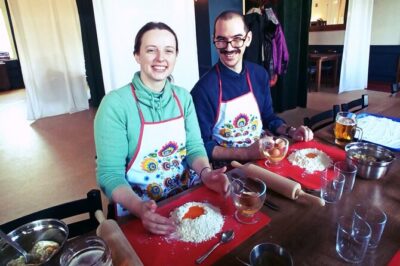
After a short introduction, Maria teaches the part of the menu you actually cook: vegetarian pierogi filled with sauerkraut. You learn how to knead the dough, roll it out, add the filling, and seal the dumplings.
This is the most useful part of the experience because pierogi look simple until you try to make them. Dough that is too thick can feel heavy. Dough that is too thin may split. Too much filling makes sealing difficult, while too little leaves you with a disappointing bite. Maria also shares practical tricks for making the dumplings tastier and easier to handle.
You are shown different folding techniques rather than being pushed toward one perfect shape. That gives the class a relaxed feel. You can concentrate on learning the method, not winning a pierogi beauty contest. The supplied accounts describe the instruction as helpful and patient, with slower participants kept up with the rest of the group.
The lesson is also social. People work side by side, compare shapes, and laugh at the occasional lopsided dumpling. That makes this a strong choice for families, couples, groups of friends, and workplace gatherings. You do not need advanced kitchen skills, and you do not need to arrive knowing how to cook Polish food.
One important detail: you do not prepare every course. The other Christmas dishes are made in advance by the host. If you want a class where you cook an entire meal from raw ingredients, this will feel limited. If you prefer a manageable lesson followed by a proper dinner, the format makes good sense.
Beetroot soup and mushroom-filled uszka
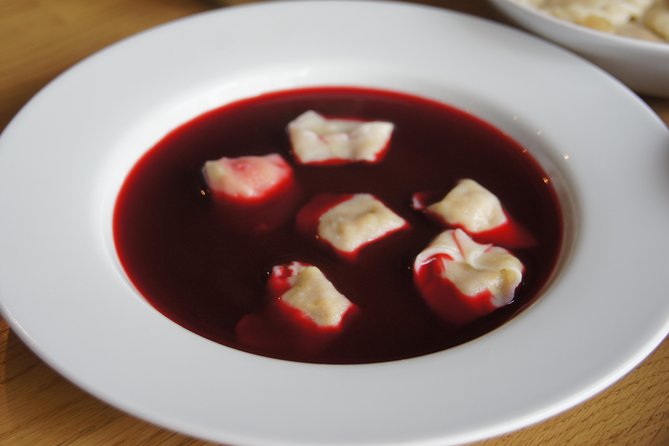
One of the first seasonal dishes is beetroot soup served with small mushroom-filled dumplings. These dumplings are called uszka, a name that means little ears. They are smaller and shaped differently from the larger pierogi you make during the lesson.
The soup gives you a taste of a Christmas favorite without adding another complicated cooking project to the evening. It also lets you compare the two types of dumplings: the tiny mushroom-filled uszka in the soup and the sauerkraut pierogi you prepare yourself.
The beetroot soup is part of what makes the dinner feel properly festive. It is not simply a bowl of soup added to fill out the menu. It is one of the dishes closely associated with Polish Christmas Eve. You get cultural context as you eat, which helps the meal make more sense than a plate of unfamiliar food on its own.
More Dining Experiences in Warsaw:
- Half-Day Polish Food Walking Tour with Guide and Dinner
★ 4.5 · 381 reviews - Warsaw: Lunch or dinner at Hard Rock Cafe with Skip-the-Line
★ 4.4 · 70 reviews - Warsaw: Dinner Show at Sabat Theatre
★ 4.6 · 34 reviews - From Krakow: Polish Folk Show with All-You-Can-Eat Dinner
★ 4.5 · 1,593 reviews
The fish starter and dietary planning
Fish is served as the starter. The exact type is not specified, so you should not book expecting a particular fish dish. If you are vegetarian or vegan, you can skip this course.
That is a clear accommodation, but it is not the same as a fully customized vegetarian or vegan menu. The cooking lesson uses a vegetarian sauerkraut filling, which is useful, but the supplied details do not promise replacements for every course. If dietary restrictions are central to your booking, confirm them with Maria before paying.
For everyone else, the fish course adds another traditional element to the Christmas table. The menu is designed around the customs of the season, not around a single famous dish. You will eat a number of small, meaningful parts of the meal rather than one oversized main course.
Dinner at the shared table
Once the cooking is finished, everyone sits together to eat. This is where the experience shifts from lesson to celebration. You taste the dishes, hear more about Polish Christmas customs, and have time to enjoy the company of the group.
Several details make the dinner feel personal. Maria explains traditions such as breaking wafers and placing an extra setting at the table. Some sessions have included singing Christmas carols, which may appeal to you if you enjoy a lively, participatory evening. It also means the tone can be more like joining a friendly holiday gathering than attending a quiet restaurant meal.
The dinner is listed as four courses, while the description also refers to learning a three-course meal. The practical menu appears to include a fish starter, beetroot soup with mushroom dumplings, sauerkraut pierogi, and poppy seed dessert. Because the wording is not perfectly consistent, ask about the final course breakdown if the exact sequence matters to you.
The important point is that you should arrive hungry. The combination of soup, dumplings, fish, dessert, and drinks is intended to be a full evening meal. You are not merely sampling one pierogi and being sent back into the cold.
Poppy seed dessert and Polish liqueurs
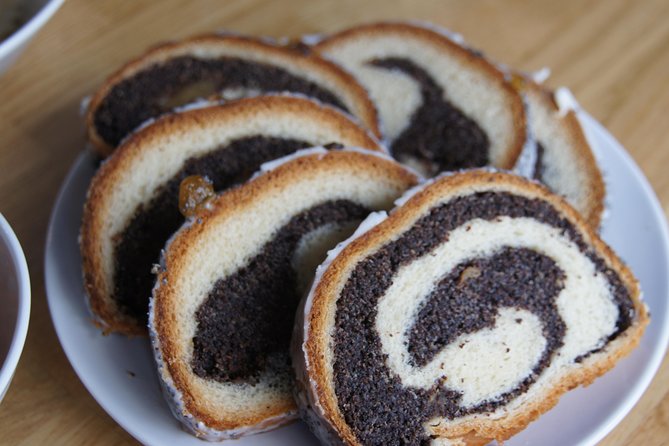
The meal ends with a festive poppy seed cake. Poppy seeds have a familiar place in Central and Eastern European holiday baking, and this dessert gives you a sweet finish after the sour, earthy flavors of sauerkraut, mushrooms, beetroot, and fish.
Polish liqueurs are included for tasting, with a soft drink available instead. The alcohol is part of the seasonal welcome, but it is not the entire point of the evening. If you do not drink, you can still take part in the meal and traditions without being left out.
The inclusion of drinks helps explain the price. You are paying for instruction, a full dinner, printed recipes, cultural explanation, and a shared event. Compared with paying separately for a meal and a short class, $120.52 can represent solid value, especially if you are visiting Warsaw during the Christmas season and want one organized evening activity.
It is less compelling if you only want to eat cheaply or if you are searching for a serious, multi-course culinary course. The value is in the combination.
What you take home afterward
The English recipe booklet is one of the best practical extras. You can recreate the pierogi at home, which several people have done after returning from Poland. That gives the experience a longer life than a typical restaurant dinner.
You also receive a handout about Polish Christmas traditions. It helps you remember the cultural details that can otherwise blur together after a busy trip. A link to photographs taken during the class is included as well, giving you a record of the evening without needing to spend the whole time taking pictures yourself.
The recipes are particularly useful for families and groups. If you cook the pierogi again at home, you are not just copying a souvenir recipe. You are repeating the technique you practiced in Warsaw, including the dough, rolling, filling, and folding.
The atmosphere: warm, social, and not overly formal
The strongest praise for this experience centers on Maria’s hosting. She is described as friendly, accommodating, and attentive during the lesson. One repeat customer has brought several different friends from abroad to her classes, which says a lot about the appeal of the evening as a way to introduce visitors to Poland.
The family feeling is another major strength. Maria and her son have hosted evenings where the group cooked, ate together, and sang carols. That sense of welcome is likely to matter more than a perfectly polished presentation.
You should still know what kind of night you are choosing. This is a participatory class with shared tables and a social mood. It may not suit you if you prefer a quiet meal, a private cooking lesson, or a highly technical chef-led workshop.
For company groups, the format works especially well. Colleagues who normally see one another only at work get a simple task to share, and nobody needs to be an expert. The small group size also keeps the event from feeling like a large corporate banquet.
Who should book this Warsaw experience?
I would recommend it most strongly for:
- First-time visitors who want a friendly introduction to Polish food.
- Families with older children or adult children.
- Couples and friends who enjoy cooking together.
- Workplace groups looking for a seasonal activity.
- Anyone spending Christmas in Warsaw and needing a planned evening.
- Home cooks who want a reliable pierogi recipe in English.
You may want to skip it if you need a fully vegan meal, dislike fish, or want to cook every dish yourself. You should also keep the December-only schedule in mind. This is not a year-round option you can fit into any Warsaw itinerary.
Service animals are allowed, and the venue is near public transportation. Confirmation is sent within 48 hours of booking, subject to availability. The booking is non-refundable and cannot be changed, so only reserve once your December plans are firm.
Should you book Flavours of Polish Christmas?
Yes, if you want a welcoming Polish Christmas evening with real participation, plenty of food, and a cultural story behind the meal. The class gives you a useful pierogi lesson, but its bigger success is the way it joins cooking, dinner, traditions, and conversation around one table.
I would not choose it as a substitute for a professional culinary course. You make the pierogi, while the soup, fish, and dessert are prepared for you. But that trade-off keeps the evening relaxed and leaves you time to enjoy the food.
Book this if the idea of shaping imperfect dumplings, tasting beetroot soup, learning about Christmas wafers, and ending with poppy seed cake sounds like a good December night in Warsaw. Arrive hungry, allow time to reach Stawki 3, and make sure fish and the non-changeable booking terms work for you.
FAQ
How long does the Flavours of Polish Christmas experience last?
The experience lasts approximately 2 hours and 30 minutes.
What time does the class begin?
It begins at 5:30 pm.
Where does the experience start and finish?
It starts at Pierogi & More warsztaty kulinarne, Stawki 3, 00-193 Warsaw, Poland. It finishes back at the same meeting point.
What do I cook during the class?
You make Polish pierogi with a vegetarian sauerkraut filling. The lesson covers kneading dough, rolling it out, filling it, and folding the dumplings.
What food is included in the dinner?
The meal is described as a four-course Christmas dinner with fish as a starter, beetroot soup with mushroom-filled dumplings, sauerkraut pierogi, and a poppy seed dessert.
Are drinks included?
Yes. A tasting of Polish liqueurs is included. You can choose a soft drink instead.
Is the experience suitable for vegetarians or vegans?
You can skip the fish starter if you are vegetarian or vegan. The cooking lesson uses a vegetarian sauerkraut filling, but the supplied details do not confirm replacements for every course, so ask the provider about your needs before booking.
More Workshops in Warsaw
- Pierogi Class and Liquor Tasting with View on Warsaw
★ 5.0 · 71 reviews - First class Warsaw Airport Transfer (WAW)
★ 5.0 · 10 reviews - Warsaw: Pottery Decorating Ceramic Workshop
★ 3.7 · 4 reviews - Krakow Pierogi Cooking Class with Market Visit & Home-Cooked Meal
★ 5.0 · 212 reviews
Just added in Warsaw
- Wroclaw Small-Group Tour with Lunch from Warsaw★ 5.0 · 2 reviews
- World War II Warsaw Old Town, Military Cemetery Walking Tour★ 4.7 · 3 reviews
- Warsaw: Wolf’s Lair & Swieta Lipka Small-Group Tour + Lunch★ 5.0 · 3 reviews
- Wilanów Palace: 2-Hour Guided Tour with Entrance Tickets★ 4.8 · 8 reviews
- Warsaw Zoo Skip-the-Line Entry Ticket with Private Transport★ 4.8 · 3 reviews
- Warsaw: Private Vodka Tasting Night with Snacks and Pickup★ 5.0 · 7 reviews
- Warsaw Private Wilanow Palace & Garden Tour★ 4.6 · 30 reviews
- Warsaw Wolf’s Lair with St. Lipka and Mamerki Private Guided★ 4.2 · 3 reviews
Cooking Classes, compared.
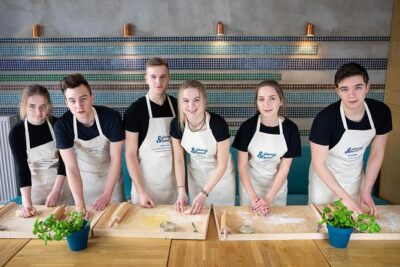
Warsaw’s No 1 cooking class-Polish dumplings with liqueur tasting
Read our review →
Pierogi Cooking Class with Market Shopping and Local Snacks
Read our review →
Krakow Pierogi Cooking Class with Market Visit & Home-Cooked Meal
Read our review →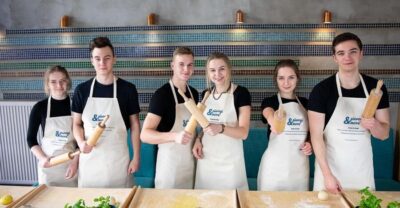
Pierogi Cooking Class: Mastering the Art of Polish Dumplings
Read our review →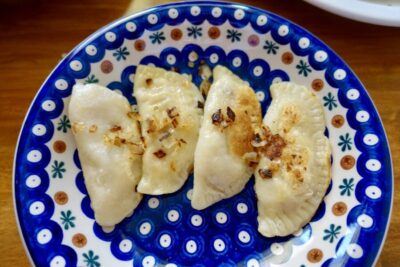
Browse the lists this tour appears in