
REVIEW · COMMUNISM TOURS
Warsaw: Private Communism Tour with Hotel Pickup
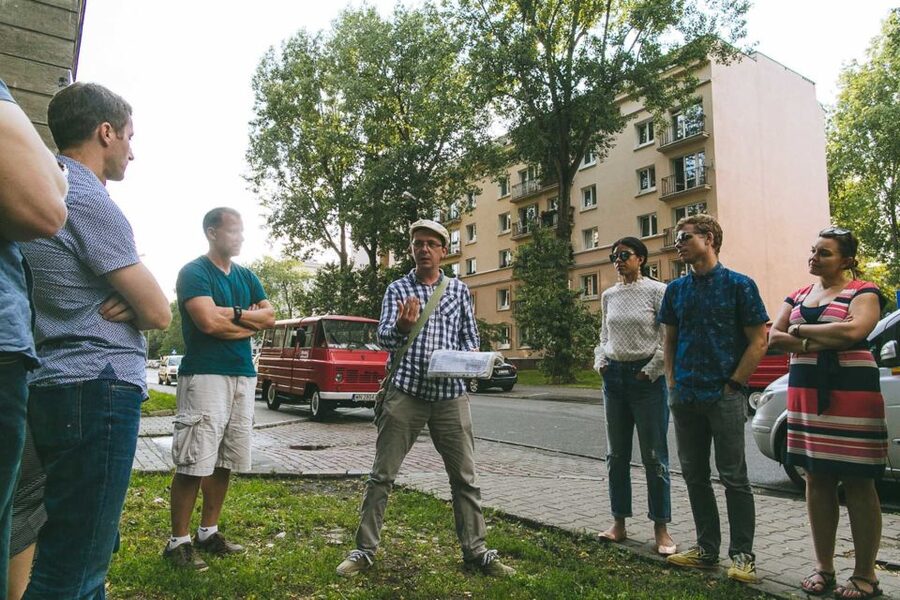
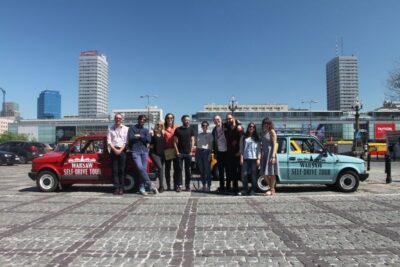
History rides shotgun here. This private Warsaw tour pairs a vintage Żuk minibus with clear stories about daily life under communism, from postwar rebuilding to the political changes of 1989. I like the personal format, and I like that a local English-speaking guide can adjust the pace and answer your questions instead of delivering a fixed speech.
The main consideration is the vehicle itself. Classic Żuks have heating for winter, but no air conditioning, and some do not have seat belts, as allowed for historic vehicles. You will also walk at each stop, so comfortable shoes and weather-ready clothing matter.
In This Review
- Key details before you book
- Why a Żuk makes the past feel close
- Hotel pickup keeps the first hour simple
- Warsaw rebuilt according to a new political idea
- Palace of Culture and Science: Warsaw’s unavoidable symbol
- Constitution Square and socialist urban planning
- The former Communist Party headquarters
- From shortages to informal solutions
- The 1980s and the road to 1989
- How much walking should you expect?
- Is $165 per person a fair price?
- Who will get the most from this tour?
- Should you book the Warsaw Communism Tour?
- FAQ
- How long does the Warsaw Communism Tour last?
- Is the tour private?
- What language does the guide speak?
- Is hotel pickup included?
- Where does the tour finish?
- What vehicle is used?
- Does the minibus have air conditioning?
- Do all the vehicles have seat belts?
- Can children join the tour?
- Can I cancel for a refund?
Key details before you book
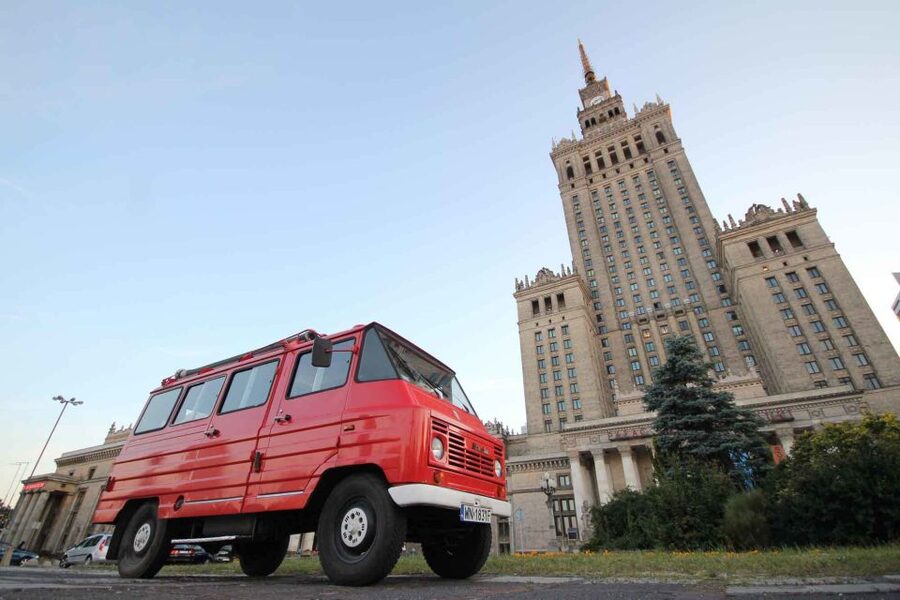
- Ride in a real communist-era Żuk: The minibus is not just transport. It sets the mood before the history begins.
- See Warsaw’s socialist landmarks: The route includes the Palace of Culture and Science, Constitution Square, the former Communist Party headquarters, and other Cold War locations.
- Focus on ordinary life: Shortages, censorship, central planning, informal networks, and daily survival are central themes.
- Private groups of up to eight: Your group gets a more flexible pace and room for questions.
- Hotel pickup and central drop-off: Pickup and drop-off are included within 3 kilometers of central Warsaw.
- Three hours, with plenty of ground covered: The minibus links the stops, while walking sections give you time to look around.
Why a Żuk makes the past feel close
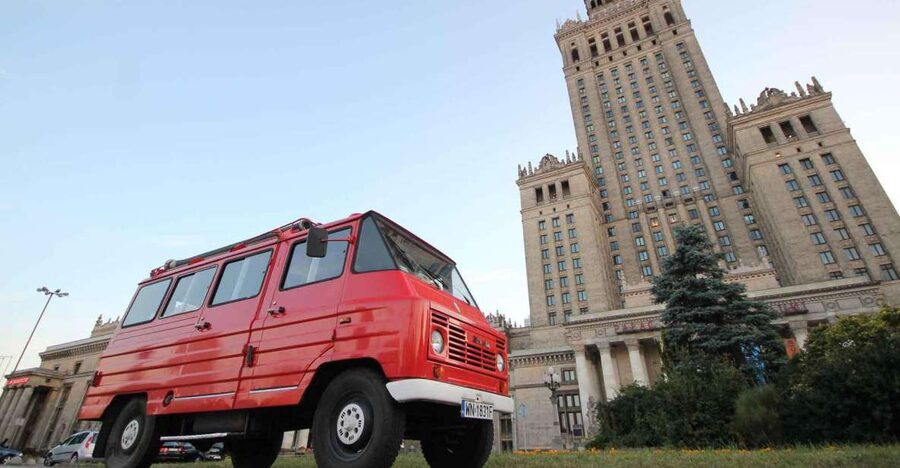
A museum can show you a ration card or an old kitchen appliance. A Żuk lets you sit inside a working piece of the period.
The vehicle was produced in communist Poland, and its boxy shape and retro interior provide an immediate sense of time and place. You are not simply moving between monuments in a modern van. The transport itself becomes part of the story.
That matters because communist Poland is easier to understand when you connect political decisions with ordinary objects and routines. The guide can explain how the state shaped work, housing, shopping, information, and movement while you travel in a vehicle made during that same system.
Each minibus carries up to eight people, and the operator has a fleet of five. This keeps the group genuinely small. If you have a question about food shortages, censorship, life in Warsaw apartment blocks, or the political changes of the 1980s, you can ask it without trying to interrupt a large bus tour.
There is a practical tradeoff. These are classic vehicles, not modern sightseeing coaches. Some have no seat belts, and none has air conditioning. They do have heating for winter, but on a warm summer day the ride may feel less comfortable. I would choose light clothing in hot weather and bring an extra layer in cooler months.
More Communism Tours in Warsaw
- Private Tour: Warsaw’s Communist History by Retro Fiat
★ 5.0 · 115 reviews - Warsaw: Communism Tour in an Original Socialist Van
★ 4.9 · 75 reviews - Warsaw: Communist History Self-Driving Tour
★ 4.8 · 52 reviews
Hotel pickup keeps the first hour simple
Pickup is available from your hotel within a 3-kilometer radius of Warsaw’s city center. That is useful if you are still finding your way around the city or want to avoid arranging a taxi before an early or mid-day start.
The tour ends with drop-off at a location of your choice within central Warsaw. You can ask to return to your hotel or finish somewhere useful for the rest of your day, as long as it is within the stated central area.
Because the experience lasts three hours, it fits neatly into a day of sightseeing. You could use it near the start of a Warsaw visit, when the city’s postwar shape still needs explaining. You could also schedule it later, after visiting the Old Town, so the tour adds political and social context to places you have already seen.
The exact starting time depends on availability. Allow a little flexibility around the pickup, since the guide needs to collect your group and begin from your hotel area.
Warsaw rebuilt according to a new political idea
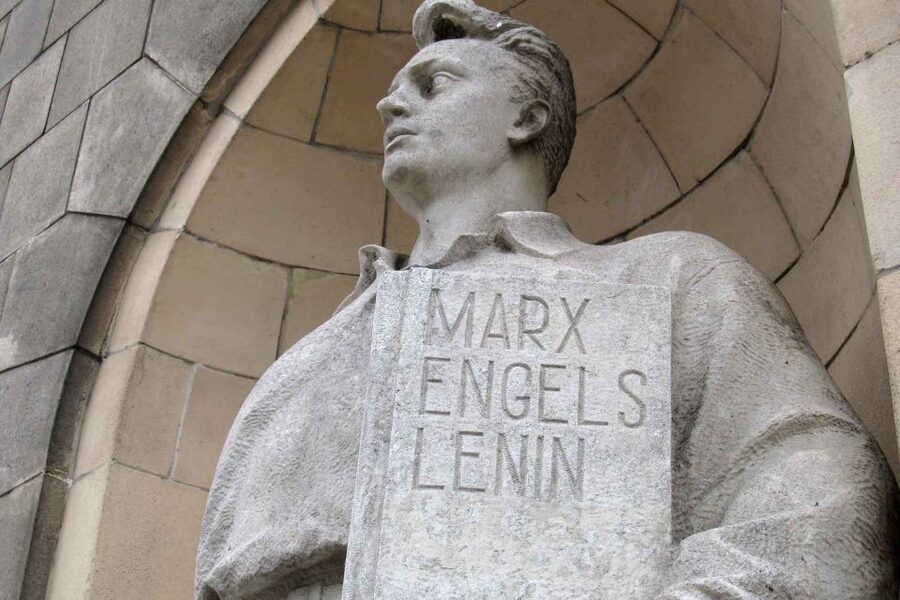
The tour begins with Warsaw’s postwar story. Much of the city had been destroyed during World War II, and the rebuilding that followed was not only a matter of replacing damaged buildings.
The new authorities used reconstruction to express socialist ideals. Streets, public buildings, housing, monuments, and open spaces could all serve a political purpose. Your guide explains how the city rose from wartime ruins and how its rebuilt form reflected the priorities of communist Poland.
This is a valuable opening because it gives you a framework for the stops that follow. Instead of seeing a large square or imposing government building as an isolated attraction, you learn how architecture and city planning were connected to power.
The focus is not just on leaders and official speeches. The strongest part of this subject is the connection to daily life. The tour explains how people lived in the 1950s, 1960s, and 1970s, when the economy was centrally planned and consumer goods could be difficult to find.
You will hear about shortages, censorship, and the informal networks people used to get things done. The point is not to paint every part of life in one color. It is to show how people adapted, traded favors, found workarounds, and created practical solutions inside a system that often failed to supply basic goods reliably.
Palace of Culture and Science: Warsaw’s unavoidable symbol
The Palace of Culture and Science is one of the most important sights on this route. Its scale makes it impossible to ignore, and its political meaning is just as large.
The building is linked to the Soviet period and remains one of Warsaw’s clearest reminders of the city’s communist past. Your guide places it within the story of postwar reconstruction and Soviet influence, helping you see why the building has attracted both admiration and resentment.
For some people, the palace is an impressive landmark. For others, it represents outside control and an unwanted political order. That split is exactly what makes it useful on a communism tour. You do not need to decide in advance how you feel about it. Listen to the context, look at its position in the city, and consider how one building can carry several meanings at once.
The Żuk is especially fitting here. You arrive at a famous symbol of the era in a vehicle built during the same period. That combination gives the stop a visual unity that a regular coach would miss.
Something quite different:
- Warsaw: Chopin Concert in the Old Town
★ 4.8 · 2,287 reviews - Warsaw: Traditional Galar Cruise on The Vistula River
★ 4.6 · 1,640 reviews - Warsaw: Old Town Highlights Walking Tour in English
★ 4.7 · 1,516 reviews - Warsaw Concert: Chopin – Painted by Candlelights with Wine
★ 4.8 · 1,442 reviews
Constitution Square and socialist urban planning
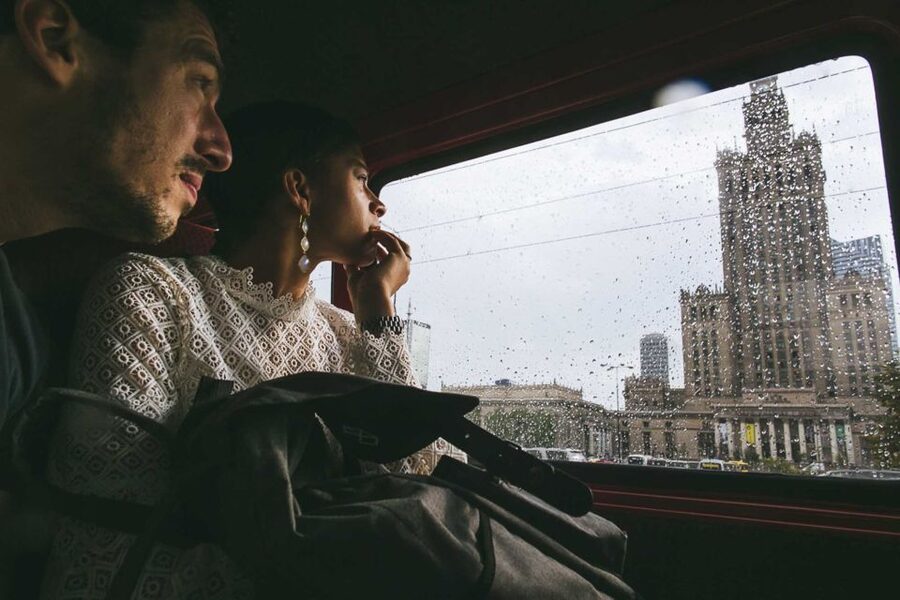
Constitution Square shows how the authorities used public space to project the values of the new state. It is tied to the postwar rebuilding of Warsaw and the architectural style associated with socialist Poland.
The square is not only a place to pause for photographs. It helps explain how public buildings, broad spaces, housing, and ceremonial routes were arranged to create a modern socialist capital.
As you walk here, pay attention to scale and layout. The design can feel formal and imposing, but it was also meant to provide housing and rebuild a city that had been badly damaged. The guide’s job is to hold both ideas together: the human need for reconstruction and the political use of architecture.
This is one of the places where the walking sections matter. From inside the minibus, you can cover ground quickly. On foot, you can take in the proportions of the square and notice details that would pass by a window.
The former Communist Party headquarters
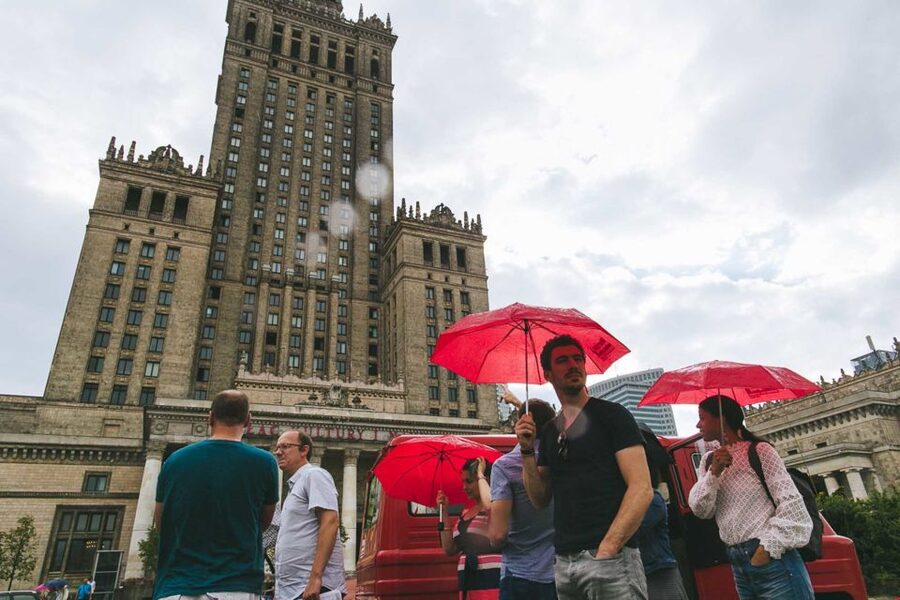
The former Communist Party headquarters adds another layer to the tour. Here, the subject shifts from grand architecture to the machinery of political authority.
Your guide explains how the party shaped public life and how decisions made by officials affected work, media, education, shopping, and personal choices. The building serves as a useful anchor for understanding the difference between the official version of life and the practical reality faced by ordinary residents.
That contrast is one of the tour’s best features. Communism was not experienced only in party offices or public ceremonies. It reached into kitchens, workplaces, schools, newspapers, and shops. The guide connects the official system to the small decisions people made each day.
If you enjoy asking questions, the private format is especially helpful at this stop. You can ask how censorship worked, how people handled shortages, or how public opinion changed over time. The tour is designed for discussion, not just for pointing at buildings.
From shortages to informal solutions
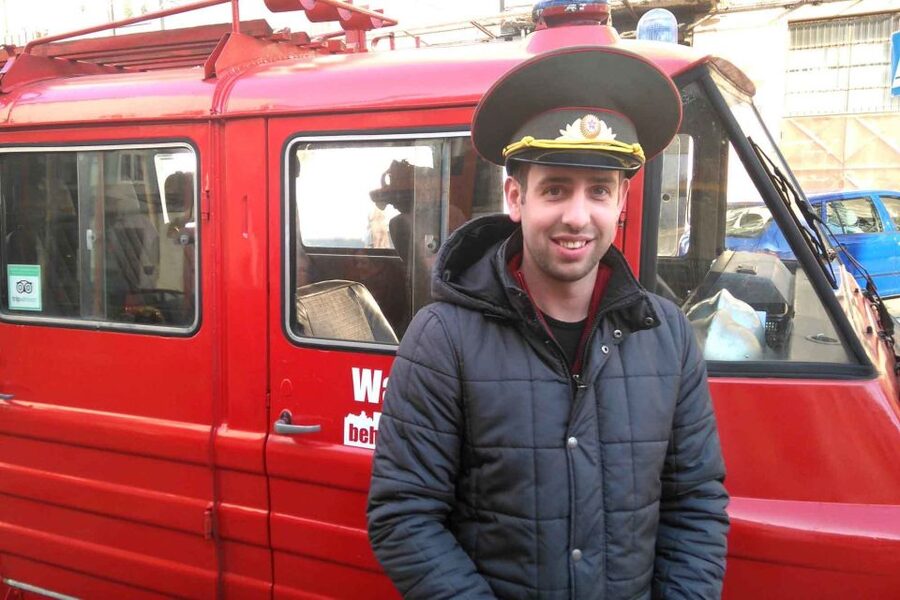
The tour’s most useful subject is everyday life. A political timeline can tell you when a government changed, but it does not always explain what it felt like to shop, work, communicate, or plan a family life under that government.
Here, the guide explains the effects of a centrally planned economy. Shortages and limited choice shaped daily routines. Informal networks became important, and people developed creative ways to obtain goods and solve problems.
This part should appeal to anyone who wants more than a list of dates. You will get a better sense of how systems work at street level. Grand political ideas eventually become waiting, bargaining, sharing, saving, repairing, and asking someone you know for help.
The guide also addresses censorship, which adds an important second side to the story. Restrictions on information affected how people understood events and how they discussed them. The result was not simple silence. People found ways to communicate and interpret what they were seeing.
The strongest guides make space for questions about the past, present, and future of Poland. Lukasz and Martin have both led this experience, and guide quality matters here. A good discussion can turn familiar sights into a much sharper picture of how society functioned.
The 1980s and the road to 1989
The final part follows the political changes of the 1980s and leads to Poland’s first free elections in 1989. This gives the tour a clear ending rather than leaving you in a general cloud of Cold War facts.
The decade brought pressure for change and a growing challenge to the existing system. Your guide connects the political shifts to the places you have visited and to the experiences of people living through them.
Ending with 1989 is effective because it shows that communist rule was not simply an old chapter with no connection to modern Poland. The changes of that period helped shape the country you see today.
This is also a good moment to ask questions about how the transition affected ordinary people. The experience is not advertised as a full political seminar, so the level of detail will depend partly on your guide and your interests. Still, the private format gives you room to follow the parts of the story that matter most to you.
How much walking should you expect?
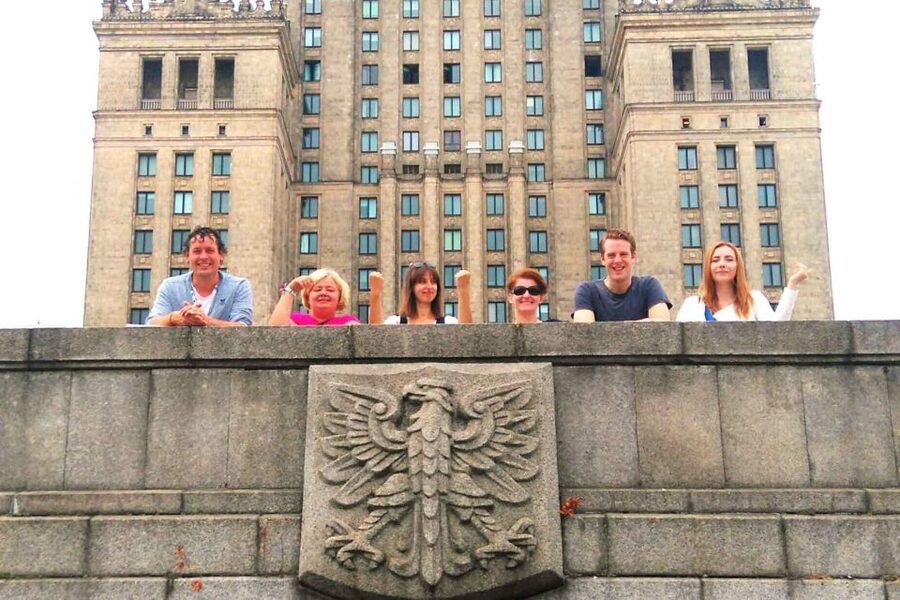
The minibus is used mainly to transfer you between locations. You will walk at each stop, so this is not a ride-only sightseeing trip.
The walking sections make the tour more useful. You can examine public spaces, see the scale of the buildings, and pause for explanations without trying to hear everything through a vehicle window. At the same time, the minibus saves your legs and lets you cover more of Warsaw than you could comfortably manage on foot in three hours.
Wear comfortable shoes and clothing suited to the forecast. Bring a coat in cold weather and protection from rain if needed. In summer, remember that the vintage vehicle has no air conditioning.
Children over 150 centimeters can be booked online. For children under that height, contact the operator ahead of time to check booster-seat availability. Booster seats are mandatory under Polish law when required by the child’s size.
Unaccompanied minors are not allowed. The tour is private, so it works best for families, couples, friends, or a small group with an interest in Warsaw’s modern political past.
Is $165 per person a fair price?
At $165 per person, this is not a budget sightseeing ride. The value depends on your group size and how much you care about a private guide and specialized subject.
For a full group of eight, the cost is easier to justify because you are sharing a private vehicle and guide among several people. For one or two people, it is a more expensive choice than a standard group tour, but you gain hotel pickup, a flexible pace, and the chance to shape the discussion around your interests.
You are also paying for a narrow subject handled through authentic places rather than a general city circuit. The Żuk, the small group, and the guide’s personal explanation make the experience different from simply reading about communist Warsaw or visiting one museum.
I would book it if you want social history, political context, and a memorable way to move around the city. I would skip it if you prefer a modern air-conditioned vehicle, a low-cost group outing, or a tour focused mainly on medieval Warsaw and the Old Town.
Free cancellation is available up to 24 hours before the start for a full refund, and you can reserve now while paying later. Those policies help if your Warsaw schedule is still changing.
Who will get the most from this tour?
You are a good match for this experience if you like asking how people actually lived under a political system. It suits anyone interested in Cold War Europe, twentieth-century architecture, urban planning, Polish history, or the changes that followed 1989.
It also works well for repeat visitors who have already seen the Old Town and want a different side of Warsaw. The tour covers major communist-era sights while explaining the human routines behind them.
Families can enjoy the unusual vehicle, but check the height and booster-seat rules before booking for a younger child. People with limited tolerance for warm, cramped, or old-fashioned transport should think carefully about the vehicle conditions.
The experience has earned five-star ratings, with particular praise for the guides, the interesting historical discussion, and the chance to go beyond the usual route. One guide added two church stops when asked, which suggests that the private format can sometimes allow small changes, though you should not assume every extra stop will be available.
Should you book the Warsaw Communism Tour?
Book it if you want Warsaw explained through its communist-era buildings, public spaces, vehicles, and everyday routines. The combination of a Żuk minibus and a private English-speaking guide gives the subject a human scale.
Before paying, confirm the pickup location, ask about the vehicle assigned to your group if seat belts or air conditioning are important, and wear proper walking shoes. If you can accept those limits, this is a focused, personal way to understand the Warsaw that existed between the postwar rebuilding and the free elections of 1989.
FAQ
How long does the Warsaw Communism Tour last?
The tour lasts three hours.
Is the tour private?
Yes. It is offered as a private group experience, with each minibus holding up to eight passengers.
What language does the guide speak?
The live guide speaks English.
Is hotel pickup included?
Yes. Hotel pickup and drop-off are included for hotels within 3 kilometers of Warsaw’s city center.
Where does the tour finish?
The tour ends with drop-off at a location of your choice within central Warsaw.
What vehicle is used?
Transportation is provided by a vintage Żuk minibus produced during communist Poland.
Does the minibus have air conditioning?
No. The classic vintage minibuses are not equipped with air conditioning. They do have heating for winter.
Do all the vehicles have seat belts?
Some vintage minibuses do not have seat belts. This is permitted for historic vehicles.
Can children join the tour?
Children over 150 centimeters can be booked online. For children under 150 centimeters, contact the operator ahead of time to ask about mandatory booster-seat availability. Unaccompanied minors are not allowed.
Can I cancel for a refund?
Yes. You can cancel up to 24 hours in advance for a full refund.
Just added in Warsaw
- Wroclaw Small-Group Tour with Lunch from Warsaw★ 5.0 · 2 reviews
- World War II Warsaw Old Town, Military Cemetery Walking Tour★ 4.7 · 3 reviews
- Warsaw: Wolf’s Lair & Swieta Lipka Small-Group Tour + Lunch★ 5.0 · 3 reviews
- Wilanów Palace: 2-Hour Guided Tour with Entrance Tickets★ 4.8 · 8 reviews
- Warsaw Zoo Skip-the-Line Entry Ticket with Private Transport★ 4.8 · 3 reviews
- Warsaw: Private Vodka Tasting Night with Snacks and Pickup★ 5.0 · 7 reviews
- Warsaw Private Wilanow Palace & Garden Tour★ 4.6 · 30 reviews
- Warsaw Wolf’s Lair with St. Lipka and Mamerki Private Guided★ 4.2 · 3 reviews
Communism Tours, compared.
Legendary Private Nowa Huta Communism Tour with Crazy Guides
Read our review →
Private Tour: Warsaw’s Communist History by Retro Fiat
Read our review →
Private Nowa Huta Adventure Tour in Communist Cars
Read our review →
Communist Krakow – Nowa Huta Walking Tour in English
Read our review →Browse the lists this tour appears in