REVIEW · WARSAW TOURS
Warsaw Highlights of Old & New Town Private Guided Tour
Warsaw tells its story in layers. This private tour connects the rebuilt Old Town, royal avenues, wartime memorials, Jewish heritage sites, and modern city landmarks with a local guide who can explain how they fit together. I especially like the private format, which lets your group ask questions and adjust the route, and the chance to see places such as the Royal Castle, Holy Cross Church, and the Warsaw Uprising Monument in one outing. The main caution is value: at $137.33 per person, it is a serious spend for a walking tour, and you need to be comfortable on your feet for at least three hours.
The strongest guide experiences come from guides such as Ewa, Natalia, Grace, Barbara, and Igor. Their praise centers on clear English, personal stories, patience, and a strong command of Polish history. But guide quality has not been perfectly even, with some complaints about soft speech, poor English, and weak organization, so I would confirm the meeting details and expect the tour to work best when you communicate what interests you most.
In This Review
- Key points to know before booking
- Why this private Warsaw tour works as an introduction
- Starting beside the Warsaw Market Square
- Old Town, Castle Square, and the Royal Castle
- Churches, bells, and views above the Old Town
- The Royal Way and Warsaw’s elegant center
- Warsaw’s wartime story, from the ghetto wall to the uprising
- New Town, the Barbican, and smaller historic stops
- Modern Warsaw and the changing Vistula waterfront
- How much does $137.33 per person buy you?
- Guide quality, pace, and physical demands
- Who should book this private walk?
- Should you book it?
- FAQ
- How long does the Warsaw Highlights of Old and New Town tour last?
- Is Royal Castle entry included?
- Is hotel pickup available?
- Where does the tour start and finish?
- Is this a private tour?
- Can the tour include church interiors, the ghetto sites, or the bell tower?
Key points to know before booking
- The route links Old Town and New Town: You see Castle Square, the Market Square, the Barbican, New Town Square, and the Royal Way in one extended walk.
- The six-hour version includes the Royal Castle: Castle entry is included only in that longer version, making the choice of duration important.
- Warsaw’s destruction and rebuilding shape the tour: The Old Town looks historic, but much of it was reconstructed after World War II.
- The Jewish history stops are powerful but brief: The ghetto wall fragment and Jewish Ghetto Heroes Monument may be included by request.
- It is a true walking experience: Some reviews describe more than three hours on foot, so good shoes and realistic expectations matter.
- Hotel pickup is limited: Pickup is available only from hotels in Warsaw Old Town. Everyone else must arrange transportation to the start.
Why this private Warsaw tour works as an introduction
Warsaw can be confusing at first. Its polished medieval-looking Old Town sits beside reminders of wartime destruction, communist-era construction, royal buildings, modern shopping centers, and a fast-changing Vistula waterfront. A guide helps you read those contrasts instead of seeing them as disconnected sights.
This experience is designed for a private group, not a large crowd. That matters in Warsaw, where the best questions often concern the city’s difficult past: why the Old Town looks so old after being destroyed, how the Warsaw Ghetto was established, and what happened during the 1944 uprising.
Your guide can also adjust the program to your group’s interests. You might spend more time on churches, Chopin, royal Warsaw, Jewish history, or modern architecture. That flexibility is the main reason to consider this tour over a standard city walk.
The official duration is about four to six hours, depending on the version you book and the stops you request. The shorter option gives you a broad introduction. The six-hour version makes more sense if you want to enter the Royal Castle and take the history at a less hurried pace.
A few more in Warsaw
- Warsaw: Chopin Concert in the Old Town
★ 4.8 · 2,287 reviews - Warsaw: Traditional Galar Cruise on The Vistula River
★ 4.6 · 1,640 reviews - Warsaw: Old Town Highlights Walking Tour in English
★ 4.7 · 1,516 reviews
Starting beside the Warsaw Market Square
The listed meeting point is the Museum of Warsaw at Rynek Starego Miasta 42. This puts you directly in the center of the Old Town, near the Market Square and several of the tour’s most important stops.
Give yourself extra time to locate the exact meeting point. One participant found the start difficult to find, and even the guide reportedly had trouble locating it. Check the instructions sent the day before and keep your phone available. If you are staying in Old Town, hotel pickup may be possible, but you should provide the accommodation address when booking and make sure it is actually within the stated pickup area.
The first part of the route may include the Warsaw Mermaid, the city’s familiar symbol, along with the Museum of Warsaw building. The museum itself is not included as an interior visit in this program, but its location helps frame the Old Town’s story through everyday objects and city life.
Old Town, Castle Square, and the Royal Castle
The reconstructed Old Town is the visual heart of the walk. Its cobbled lanes, colorful merchant houses, churches, and compact squares feel medieval and baroque, yet the whole district was rebuilt after the Nazis destroyed much of Warsaw. Your guide can point out how carefully the city recreated its earlier appearance rather than simply replacing it with modern buildings.
At Rynek Starego Miasta, the Market Square, you will find cafés, galleries, shops, restaurants, and the familiar mermaid statue. It is a good place to pause and get your bearings, though the square can feel busy at popular times. The tour description allows about ten minutes here, so do not expect a long café stop unless your private group agrees to adjust the schedule.
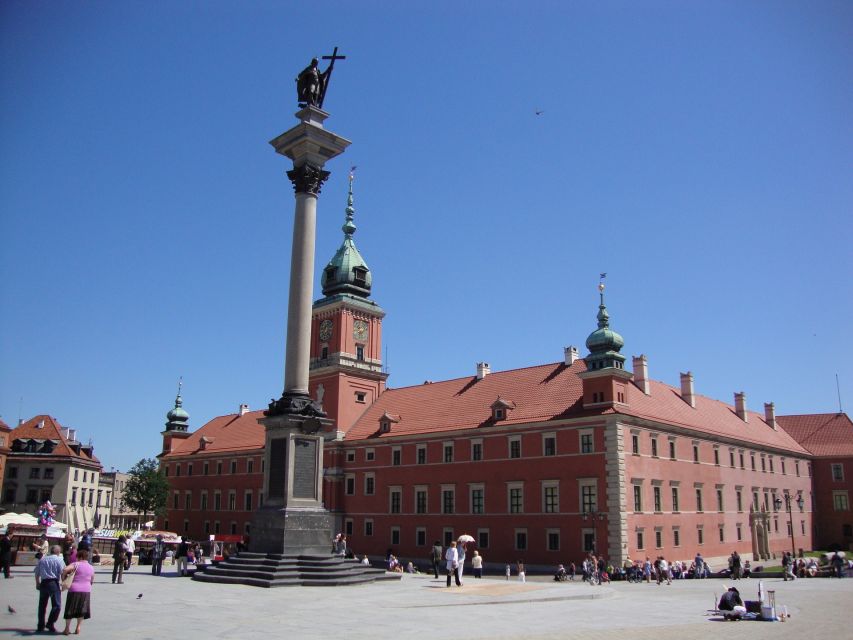
Castle Square opens the Old Town toward the Royal Way. The square is marked by King Sigismund’s Column, one of Warsaw’s best-known landmarks. Sigismund III moved the capital from Kraków to Warsaw, so this column is more than a photo stop. It represents the city’s rise as Poland’s political center.
The Royal Castle is the major interior attraction. It served as the center of the Polish Commonwealth for centuries and was destroyed by German forces before being rebuilt with period interiors and architectural details. Entry tickets are included in the six-hour version, not necessarily the shorter tour. If the castle matters to you, confirm that you are booking the correct duration.
The castle visit also changes the pace of the day. You will have more to see than the exterior, but the overall program contains an enormous number of possible stops. A private guide can help prevent the day from becoming a race between doorways and monuments.
Churches, bells, and views above the Old Town
Several church stops are available, although interior access is generally listed as possible on request rather than guaranteed. St. John the Baptist Cathedral is one of Warsaw’s most important churches. It dates back to the thirteenth century and has been linked with royal coronations and national ceremonies.
The Church of the Jesuits has a striking red exterior and an ornate interior. St. Anne’s Church is another worthwhile stop, especially for its decorated interior and peaceful atmosphere. If open and included, its bell tower observation terrace gives you a close view over the Old Town and a broader look toward central Warsaw. The description notes a relatively cheap admission price, but the ticket is not listed as included.
The Wishing Bell sits in a courtyard in the Old Town. It is a small attraction, but it adds the kind of local legend that keeps a walking tour from becoming a parade of famous façades. The itinerary also includes the Church of the Visitationists, the Carmelite Church, and the Field Cathedral of the Polish Army, often as exterior views.
The Carmelite Church is especially easy to spot beside the Presidential Palace. Its baroque façade, double pillars, and stone lantern-like features make it one of the more memorable buildings along the Royal Way. The Church of the Visitationists is plainer inside, while the Field Cathedral offers a simpler rebuilt style.
Something quite different:
- Warsaw Concert: Chopin – Painted by Candlelights with Wine
★ 4.8 · 1,442 reviews - Warsaw: City Sightseeing Hop-On Hop-Off Bus Tour
★ 3.6 · 1,415 reviews - Warsaw: POLIN Museum of the History of Polish Jews Ticket
★ 4.7 · 1,142 reviews - #1 Pub Crawl Warsaw with Optional Premium 1 Hour Open Bar
★ 5.0 · 790 reviews
The Royal Way and Warsaw’s elegant center
From the Old Town, the route can continue along Krakowskie Przedmiescie and Nowy Swiat. Together, these streets form much of Warsaw’s historic Royal Way, running past churches, palaces, monuments, university buildings, cafés, and public squares.
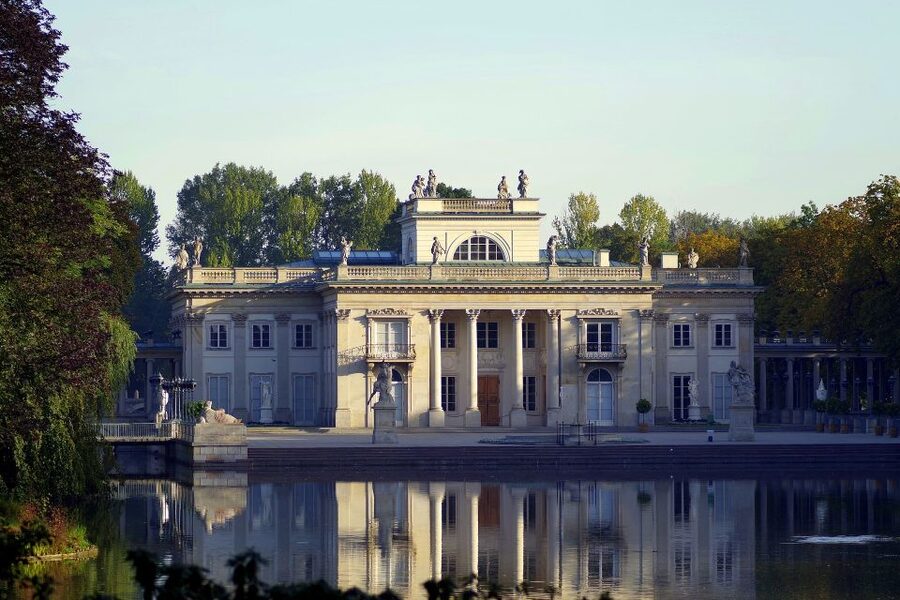
Krakowskie Przedmiescie is the grander stretch, lined with historic buildings and religious institutions. The Presidential Palace is one of the main exterior highlights. The Adam Mickiewicz Monument honors one of Poland’s leading poets, while the Church of St. Joseph of the Visitationists provides another architectural pause.
Nowy Swiat feels more commercial and relaxed, with places to stop for coffee. This is one of the more pleasant sections for simply walking and watching the city. The route may also include Chopin’s benches, which play his music through a multimedia system. For anyone interested in the composer, this is a clever way to connect his work with the streets of Warsaw without requiring a long museum visit.
At Holy Cross Church, the focus is Chopin’s heart, kept inside one of the church’s pillars. The church is richly decorated, and the detail gives the stop emotional weight. Interior entry is listed as possible on request, so make your preference clear early in the tour.
The Copernicus Monument and the University of Warsaw are further highlights along this central corridor. The university campus has decorated buildings, gardens, and balconies. The library is particularly interesting from the outside, and its rooftop garden may be available to see by request.
Warsaw’s wartime story, from the ghetto wall to the uprising
The most serious part of this walk concerns Warsaw under Nazi occupation and the city’s Jewish population. A fragment of the Warsaw Ghetto wall survives between buildings. It is easy to miss and lacks the scale of a conventional monument, but that is precisely why a guide is useful. You might walk past it without realizing what you are seeing.
The Warsaw Ghetto was created in 1940, forcing more than 450,000 Jewish people into a confined area that made up only a small part of the city. The stop itself may be brief, listed at about ten minutes, and is available by request. Do not expect a full museum visit here. Instead, treat it as a quiet marker within the city.
The Ghetto Heroes Monument is outside the POLIN Museum of the History of Polish Jews. It commemorates Jewish resistance and suffering during the German occupation. The monument has a solemn, direct presence, and it deserves more than a quick photograph. If this subject is central to your visit, tell the guide so the timing does not get squeezed by the larger route.
The Warsaw Uprising Monument provides a second major wartime focus. Its sculptural figures show Polish fighters emerging from the ruins, conveying effort, sacrifice, and defeat without needing much explanation. Nearby, the Monument to the Fallen and Murdered in the East remembers Poles deported by the Soviet Union to labor camps, including children and older people.
The Monument to the Heroes of Warsaw, often called the Nike of Warsaw, commemorates those who fought against Nazi occupation. Taken together, these stops give you a better sense of how many separate tragedies shaped the modern city.
New Town, the Barbican, and smaller historic stops
North of the Old Town, the route reaches New Town Square, a quieter space founded under King John III Sobieski after his victory over the Turks at Vienna in 1683. The architecture here has a calmer feel than the main Market Square, with Renaissance and baroque elements around the open plaza.
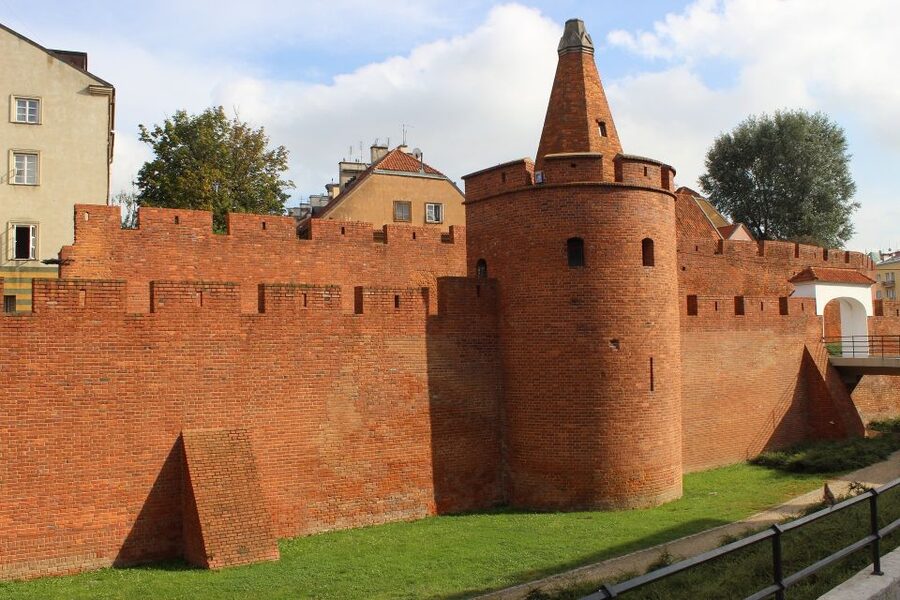
The Warsaw Barbican is part of the old defensive system and dates to the sixteenth century. It once guarded the northern entrance through the Novomejska Gate. Today, the red-brick fortification is one of the most recognizable points along the Old Town edge.
Near it, the Statue of the Little Insurgent remembers children who died during the Warsaw Rising. It is a small bronze figure, but the subject is profoundly sad. This is a good example of why the guide’s explanation matters. Without context, the statue could look like a charming children’s monument. With context, it becomes a moving reminder of wartime Warsaw.
Other possible stops include the New Town’s St. Mary’s Church, one of the older surviving Gothic buildings in the city, and the Krasinski Palace. Some locations are exterior-only, including the Field Cathedral, the Museum of Warsaw, the Copernicus Science Centre, and the Marie Curie Museum. Read the wording carefully: a long list of sights does not mean you will tour every building inside.
Modern Warsaw and the changing Vistula waterfront
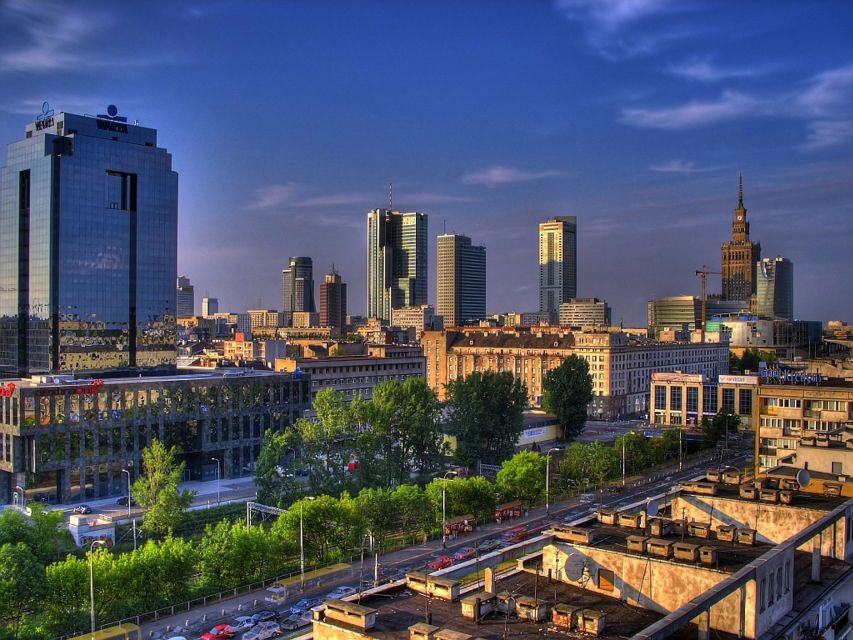
The program also reaches beyond the historic center. The Palace of Culture and Science is Poland’s highest building and one of Warsaw’s strongest visual symbols. Its monumental architecture reflects the communist period, and its presence beside newer buildings makes the city’s political changes visible in a single view.
Nearby, Zlote Tarasy is a large shopping complex with a distinctive sloping roof. It is not a historic attraction, but it shows the commercial side of present-day Warsaw. Hala Koszyki offers another modern contrast, bringing restaurants and food businesses under one roof. If you want a meal tip, this is one of the useful places to ask your guide about.
The Vistula waterfront has new boulevards and waterside pubs, with a more casual atmosphere than the formal Royal Way. The Copernicus Science Centre is one of Europe’s largest science centers, with more than 400 exhibits, but this tour may show only the exterior. The Multimedia Fountain Park is also available by request, with music, lights, and fountains.
These additions make the tour feel broad, but they also raise a practical question: can you see everything in one day? Not in meaningful detail. The 48-stop list is best understood as a menu of possible sights, not a promise that every stop receives equal time.
How much does $137.33 per person buy you?
At $137.33 per person, this tour is expensive compared with a simple group walking tour. The price becomes easier to justify if you are traveling with family or friends, want a private guide, need a route adapted to your interests, and plan to use the guide for restaurant, pastry shop, and pub suggestions.
The six-hour version offers the clearest value because it includes Royal Castle entry. The private setting also lets you ask about Poland’s complicated twentieth-century history without holding up a large group. For a couple, the cost is still substantial. For a larger private group, the per-person price may feel more reasonable, especially if hotel pickup from Old Town is available.
The weak point is that many listed stops are free exterior views, and several interior visits are only possible by request. If you expect admission to multiple museums, towers, and churches, you may find the price high. Ask exactly which interiors are planned before paying.
Guide quality, pace, and physical demands
The strongest guide reports describe Ewa as engaging and good with both families and larger groups. Natalia was praised for historical detail and local familiarity. Grace and Barbara were described as warm, informed, and passionate about Polish heritage, while Igor earned praise for arriving early, answering many questions, and being patient.
There have also been serious concerns about guide communication. Some participants found a guide’s English difficult to understand, while another felt the route lacked a clear plan. This is not a reason to dismiss the entire experience, but it is a reason to confirm the language and tell the operator what you want to see.
Expect at least three hours on your feet, and potentially more. Cobblestones, long avenues, church steps, and the possible bell tower climb all add effort. I would choose comfortable shoes, keep the day free of another tightly timed activity, and request sitting breaks if anyone in your group needs them.
Free cancellation is available up to 24 hours before the start time. The experience is offered in English, and confirmation arrives at booking. Public transportation is nearby, but hotel pickup is restricted to Warsaw Old Town.
Who should book this private walk?
I would choose this tour if you are visiting Warsaw for the first time and want a guide to connect the city’s royal, Jewish, wartime, religious, and modern chapters. It is also a good fit for families or small groups that want to ask questions and change the emphasis during the day.
History-minded visitors will get the most from the route, especially if they are willing to slow down at the ghetto memorials and uprising monuments. The tour also works well as a first-day orientation, giving you ideas for later visits to museums, restaurants, churches, and the waterfront.
I would hesitate if you dislike long walks, want extensive interior sightseeing, or are mainly looking for a low-cost introduction. The tour can feel overpriced if the day becomes a quick succession of outside views. You should also be willing to speak up if you want the Royal Castle, church interiors, the Jewish history sites, or the observation terrace included.
Should you book it?
Book it if the private format matters, you want strong historical explanation, and you can comfortably spend several hours walking. Choose the six-hour option if the Royal Castle is a priority, and contact the provider before the day to confirm the meeting point, guide language, and requested interiors.
Skip it if you want a cheap, relaxed stroll or a museum-heavy program. Warsaw’s Old Town is easy to explore independently, but the right guide can add the missing context, especially at the ghetto wall, uprising monuments, and reconstructed streets. The experience is worth the price only when the guide is clear, organized, and responsive to your group.
FAQ
How long does the Warsaw Highlights of Old and New Town tour last?
The tour lasts approximately four to six hours. The exact length depends on the version booked and the stops included.
Is Royal Castle entry included?
Royal Castle tickets are included in the six-hour version of the tour. The shorter version may not include castle entry.
Is hotel pickup available?
Pickup is available only from hotels in Warsaw Old Town. If you stay elsewhere, you are encouraged to arrange transportation to the meeting point.
Where does the tour start and finish?
The listed start point is the Museum of Warsaw at Rynek Starego Miasta 42. The tour ends at Plac Marszalka Jozefa Pilsudskiego.
Is this a private tour?
Yes. Only your own group participates, and the program can be adapted to your group’s preferences.
Can the tour include church interiors, the ghetto sites, or the bell tower?
Several of these stops are available by request. Church interiors, the Warsaw Ghetto, the Ghetto Heroes Monument, the St. Anne’s bell tower, the University of Warsaw Library, and other optional locations should be requested in advance or discussed with your guide.
Just added in Warsaw
- Wroclaw Small-Group Tour with Lunch from Warsaw★ 5.0 · 2 reviews
- World War II Warsaw Old Town, Military Cemetery Walking Tour★ 4.7 · 3 reviews
- Warsaw: Wolf’s Lair & Swieta Lipka Small-Group Tour + Lunch★ 5.0 · 3 reviews
- Wilanów Palace: 2-Hour Guided Tour with Entrance Tickets★ 4.8 · 8 reviews
- Warsaw Zoo Skip-the-Line Entry Ticket with Private Transport★ 4.8 · 3 reviews
- Warsaw: Private Vodka Tasting Night with Snacks and Pickup★ 5.0 · 7 reviews
- Warsaw Private Wilanow Palace & Garden Tour★ 4.6 · 30 reviews
- Warsaw Wolf’s Lair with St. Lipka and Mamerki Private Guided★ 4.2 · 3 reviews
Warsaw Tours, compared.
Traditional Galar Cruise on The Vistula River
Read our review →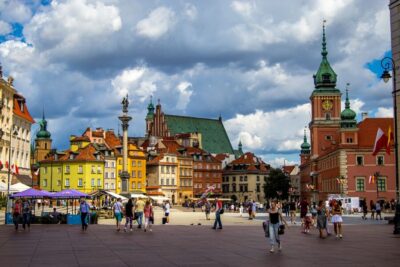

Warsaw Concert: Chopin – Painted by Candlelights with Wine
Read our review →
POLIN Museum of the History of Polish Jews Ticket
Read our review →
#1 Pub Crawl Warsaw with Optional Premium 1 Hour Open Bar
Read our review →