
REVIEW · OLD TOWN WALKING TOURS
Warsaw: 2-Hour Old Town Walking Tour
Warsaw’s Old Town rose from total ruin. I like this tour’s clear focus on the city’s remarkable postwar rebuilding and its walk along the Royal Route, where palaces, churches, monuments, and everyday city life meet. I also like the private-group format, which gives you room to ask questions rather than simply follow a flag through the streets. The main drawback is price: at $69 per person, it costs more than a large group walk, especially since entrances and gratuities are extra.
The tour also gives Warsaw’s famous names a human setting. You hear about Frédéric Chopin, Marie Curie, Pope John Paul II, Canaletto, and the Solidarity movement while visiting the places connected to them. Guides such as Marzena and Mary have been praised for lively storytelling, strong language skills, useful food tips, and answers that go well beyond a list of dates.
- The youngest old town in the world: Warsaw’s historic center was rebuilt after World War II, closely following its prewar appearance.
- A two-hour route with real range: You cover the Royal Route, Castle Square, the cathedral, Market Square, the Barbican, and New Town.
- Canaletto’s paintings mattered: His detailed city views helped guide the reconstruction of Warsaw’s destroyed center.
- A church with a battlefield past: St. John’s Cathedral is linked to the extraordinary period when this religious building served as a war front.
- A private English-speaking guide: Tours are offered in English, German, or Polish, with headsets for groups of up to 10.
- A useful first-day orientation: The guide supplies a map and information booklets, along with restaurant and sightseeing advice.
In This Review
- Starting at the Copernicus Monument on Nowy Świat
- Walking the Royal Route into Warsaw’s royal past
- Castle Square and King Sigismund’s Column
- The rebuilt Old Town and the meaning of UNESCO status
- Canaletto’s city views and the work of reconstruction
- Inside the story of St. John’s Cathedral
- Market Square, the Barbican, and New Town
- Stories of Chopin, Marie Curie, and Solidarity
- What $69 per person really buys you
- Timing, comfort, and practical limits
- Who should book this Warsaw walking tour?
- FAQ
- Where does the tour meet?
- How long does the walking tour last?
- What languages are available?
- Is this a private tour?
- Is the tour wheelchair accessible?
- Are entrance fees included?
- Is food provided?
- Are tips included?
- Can I cancel for a refund?
Starting at the Copernicus Monument on Nowy Świat
Your meeting point is in front of the Nicolaus Copernicus Monument and Staszic Palace at ul. Nowy Świat 72, also listed as Krakowskie Przedmieście, 00-333 Warsaw. Look for a guide holding a PolinTours, Private Guide sign.
This is a practical starting place because you begin on the Royal Route rather than meeting deep inside the Old Town. You can get your bearings as the tour moves toward the historic center, and the opening stretch gives your guide room to explain how Warsaw developed around royal residences, churches, monuments, and major streets.
The meeting point matters more than it may seem. Warsaw has several monuments and large public spaces, so check the map link before leaving your hotel. Arrive in comfortable shoes, bring water, sun protection, and keep some cash handy. The walk is wheelchair accessible, but an accessible tour is not necessarily an effortless tour, so you may want to confirm the route details when booking.
Walking the Royal Route into Warsaw’s royal past
The Royal Route is the backbone of this experience. You move through one of Warsaw’s most important ceremonial and historic corridors, seeing royal palaces and residences alongside monuments and churches.
I like this part because it places the Old Town in a wider setting. If you only visit the Market Square, you see a pretty destination. If you approach it along the Royal Route, you get a better sense of how the center connected royal power, religion, culture, and public life.
Your guide also brings in stories about famous people associated with Warsaw. Chopin gives the city a musical connection, Marie Curie adds a scientific one, and Pope John Paul II links Warsaw to Poland’s religious and modern political story. These references are useful because they keep the walk from becoming a parade of anonymous facades.
The route is not just about grand buildings. Guides are encouraged to point out smaller details and places you might pass without noticing alone. That personal commentary is one of the strongest reasons to consider paying for a private tour instead of simply following a map.
More Walking Tours in Warsaw
- Warsaw: Old Town Highlights Walking Tour in English
★ 4.7 · 1,516 reviews - Warsaw: Old Town Guided Walking Tour
★ 4.9 · 599 reviews - Half-Day Polish Food Walking Tour with Guide and Dinner
★ 4.5 · 381 reviews
Castle Square and King Sigismund’s Column
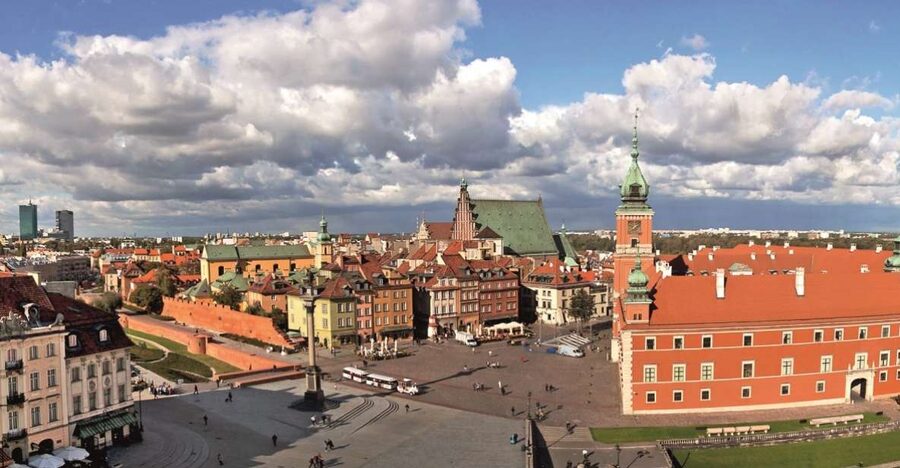
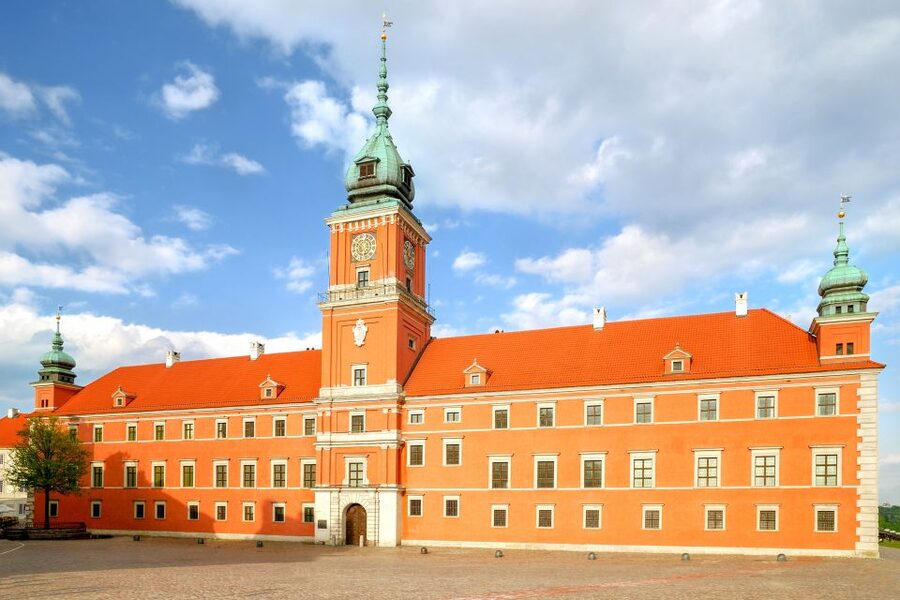
Castle Square is one of the major visual moments of the walk. Here, King Sigismund’s Column provides a clear marker for the old royal center, while the Royal Castle introduces the political story of Warsaw.
The Royal Castle is especially important because the second oldest constitution in the world was adopted there. That fact gives the building more weight than its attractive exterior alone suggests. Your guide can connect the castle to Poland’s political changes and explain why this square became such a central part of national memory.
The castle interior is not included. That is worth noting if you want to see the rooms and collections inside. This tour is designed as an outdoor history walk, so you should plan a separate visit if entering the Royal Castle is a priority.
Castle Square also helps explain the scale of Warsaw’s wartime destruction. The city was not simply repaired after a few damaged buildings. Much of the historic center had to be rebuilt from near-total ruin.
The rebuilt Old Town and the meaning of UNESCO status
Warsaw’s Old Town is often called the youngest old town in the world. The phrase sounds strange at first, but it describes a remarkable fact: the historic center was almost completely destroyed during World War II and then reconstructed after the war in its prewar form.
This is the central lesson of the walk. You are not seeing a perfectly untouched medieval quarter. You are seeing a carefully recreated historic center, built from surviving plans, photographs, documents, and artistic records.
The reconstruction later earned the Old Town a place on the UNESCO World Heritage list. That recognition is not based simply on age. It reflects the unusual cultural value of rebuilding a historic city center so faithfully after deliberate destruction.
I find this context essential. Without it, Warsaw’s colorful facades and tidy squares can look like any attractive European old town. With it, every restored wall carries a second story: what once stood there, what was lost, and how the city chose to rebuild.
Canaletto’s city views and the work of reconstruction
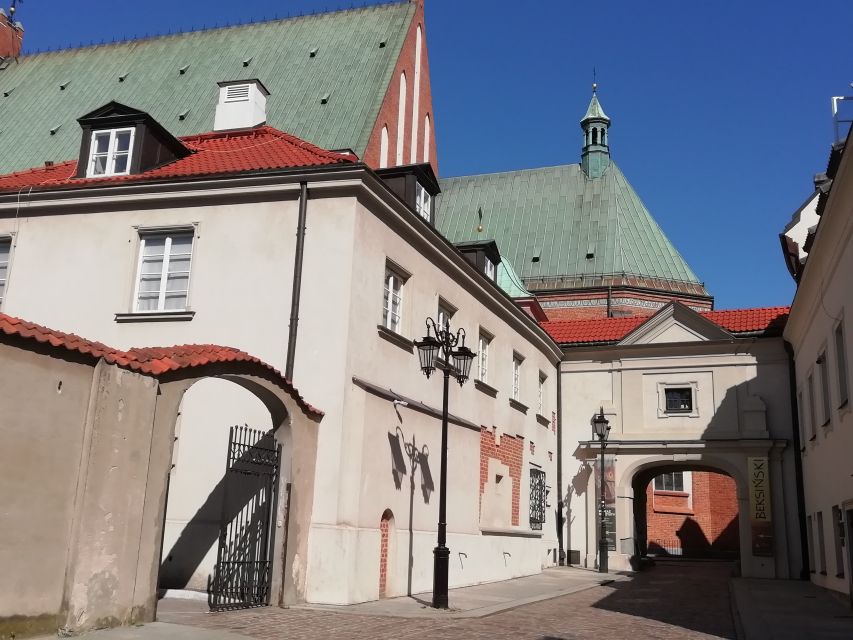
One of the more unusual subjects on this tour is the Venetian painter Canaletto. His detailed paintings of Warsaw became valuable references during the reconstruction of the Old Town.
This is a fine example of how art can serve a practical purpose. Canaletto’s work was not created as an architectural survey, but its careful views of streets and buildings helped planners understand the earlier appearance of the city.
Your guide can use his paintings to help you compare the rebuilt streets with the older city. That makes the reconstruction easier to grasp than a simple statement that Warsaw was destroyed and rebuilt. You begin to look for proportions, rooflines, facades, and street arrangements.
This stop also adds variety to the tour. You are not hearing only about armies and politics. You are learning how paintings, records, and memory helped restore a city.
More Old Town walks in Warsaw:
- Warsaw: Chopin Concert in the Old Town
★ 4.8 · 2,287 reviews - Warsaw: Chopin Concert at Historical Venue in Old Town
★ 4.7 · 445 reviews - Old Town Warsaw Walking Tour
★ 4.5 · 333 reviews - Warsaw Old Town 1.5-Hour or Full 3-Hour Segway Tour
★ 4.9 · 209 reviews
Inside the story of St. John’s Cathedral
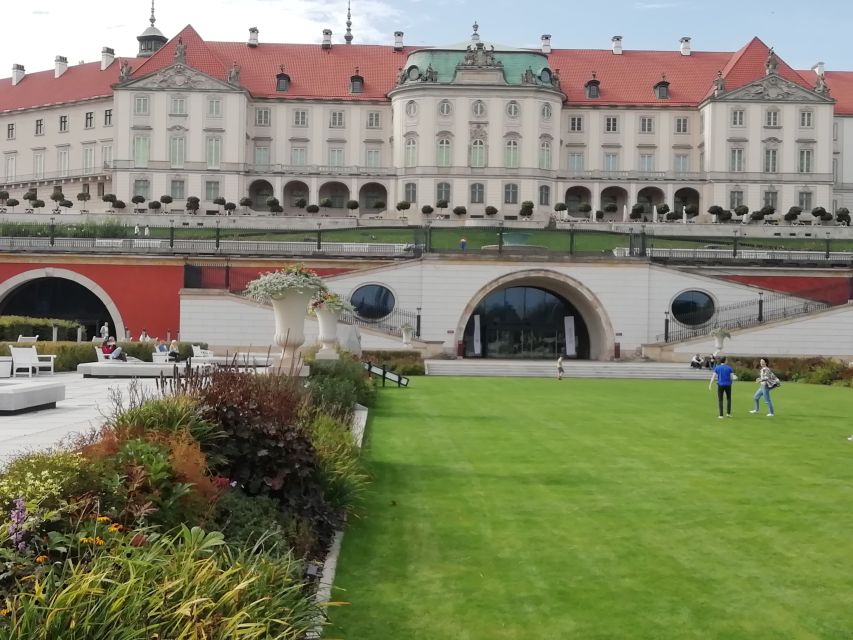
St. John’s Cathedral is one of the tour’s most serious stops. It is linked to the extraordinary claim that it served as a war front during World War II.
That detail changes how you see a church building. It was not only a place for worship or a historic monument. During the war, it became part of the fighting itself. The guide’s explanation helps connect the building to the wider destruction of Warsaw and to the human cost behind the rebuilt streets.
The cathedral also belongs to the architectural and religious story of the Old Town. Your guide can point out why it matters within the historic center and how its presence fits the route from Castle Square toward the Market Square.
Entrance fees are not included, so the visit should be understood as an exterior stop unless your booking details say otherwise. If you want interior visits, ask about the plan before the tour begins.
Market Square, the Barbican, and New Town
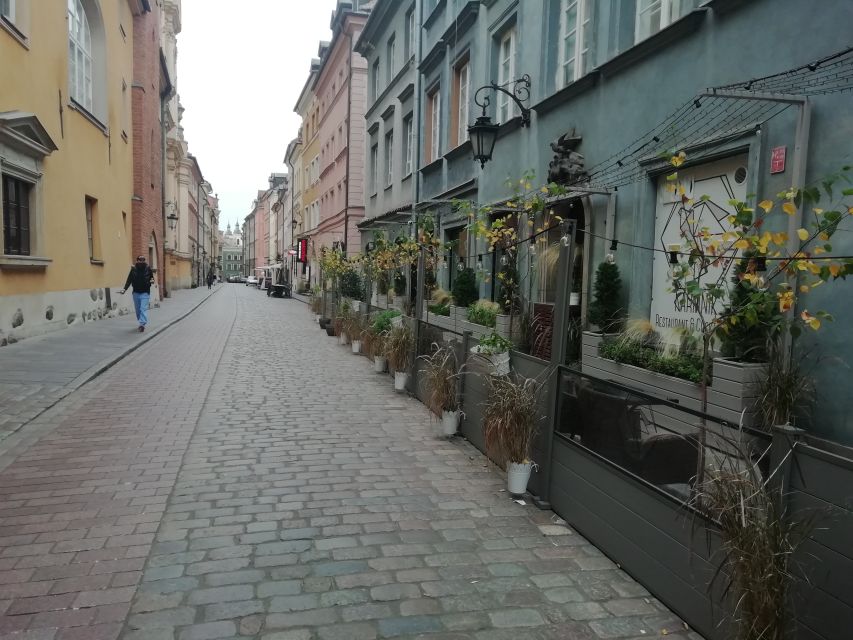
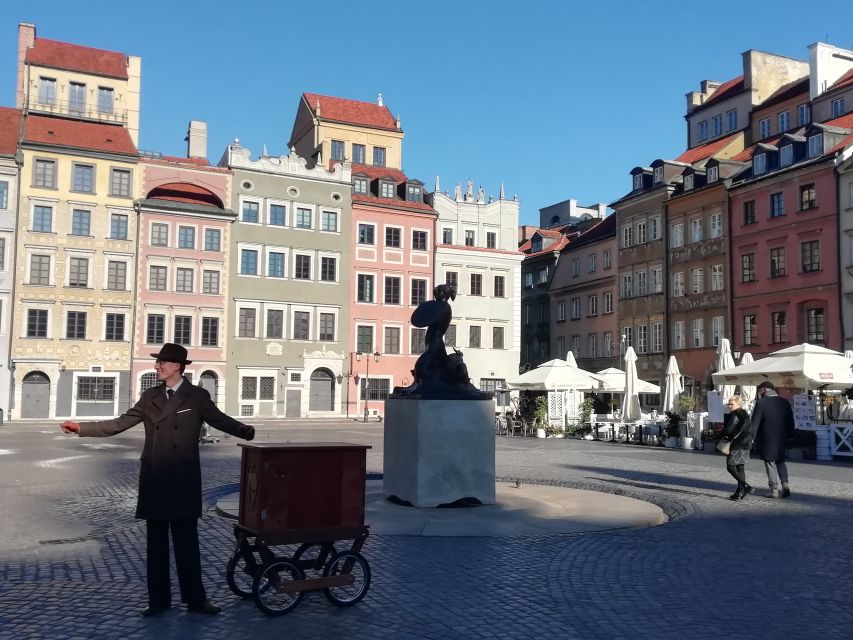
Market Square supplies the postcard view many people expect from Warsaw. Its streets and buildings feel romantic, and the guide fills in the legends and authentic stories that give the setting more character.
This is where the private format can be particularly useful. You can pause to ask why the square was rebuilt in a certain way, how the prewar appearance was known, or which details are based on paintings and records. A guide can also point out features you might otherwise overlook while taking photographs.
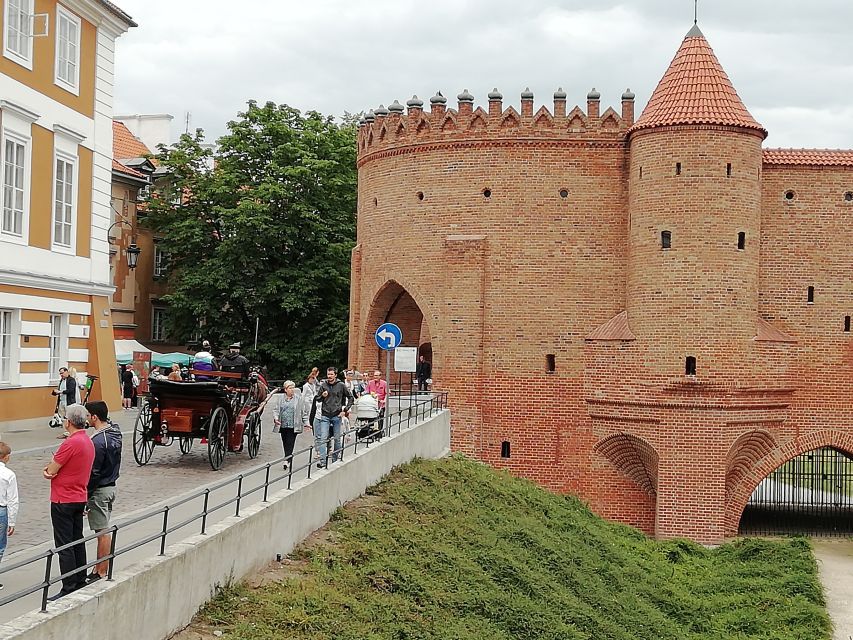
The Barbican marks another important part of the historic center. This defensive structure helps you think about Warsaw as a fortified city, not merely a royal and cultural capital. The walk then continues toward New Town, giving you a sense of how the older center extends beyond the most photographed square.
New Town is useful because it broadens the route. You are not rushed from one famous monument to another and then sent back to the meeting point. You see another part of the historic center and gain a better idea of how the districts connect.
The exact pace depends on the guide and the questions you ask. The advertised duration is two hours, though one group enjoyed a tour lasting a little more than two hours. That extra time is not guaranteed, but it suggests the experience can be flexible when the guide has room in the schedule.
Stories of Chopin, Marie Curie, and Solidarity
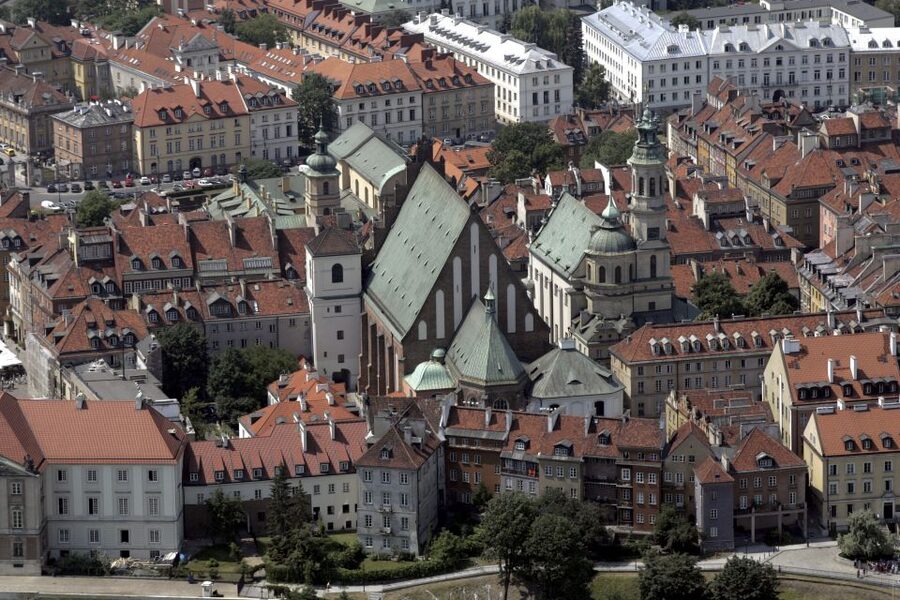
Warsaw’s story is not only about reconstructed buildings. The tour also connects the streets to people and movements that shaped Poland.
Chopin gives you a way to link Warsaw with music and national identity. Marie Curie represents the city’s contribution to science and its international reach. Pope John Paul II connects Warsaw with Poland’s Catholic tradition and modern public life.
The Solidarity movement adds a more recent political layer. These stories help you see Warsaw as a living capital rather than a museum of rebuilt walls.
The guides praised most strongly for this experience are Marzena and Mary. Marzena has led tours in English and German, and she is known for presenting the city’s history in a clear, engaging way. She has also offered food suggestions that guests could use later the same day. Mary has been described as kind, passionate, and especially good at explaining why particular sites matter.
You should not assume you will receive a specific guide, but the feedback suggests that the quality of the experience depends heavily on the individual leading it. That is normal for a private walking tour, and it is also why a good guide can make this two-hour route feel much longer in value.
What $69 per person really buys you
At $69 per person, this is not Warsaw’s cheapest introduction. The price is easier to justify if you are traveling as a small private group and want a guide who can adapt the pace, explain wartime reconstruction carefully, and answer your questions.
You are paying for a certified local guide, a private group setting, a city map, information booklets, and headsets when the group reaches up to 10 people. You are not paying for lunch, monument entrances, or gratuities.
For a solo visitor or a couple on a tight budget, the cost may feel high for a two-hour walk. For a family, older group, or small party that wants personal attention, the value improves. A private guide can also help you decide what to visit later, which can save time during a short stay.
Plan for a tip of 15 to 20 percent if the guide provides the level of service described. Since gratuities are not included, add that amount to your working budget.
Timing, comfort, and practical limits
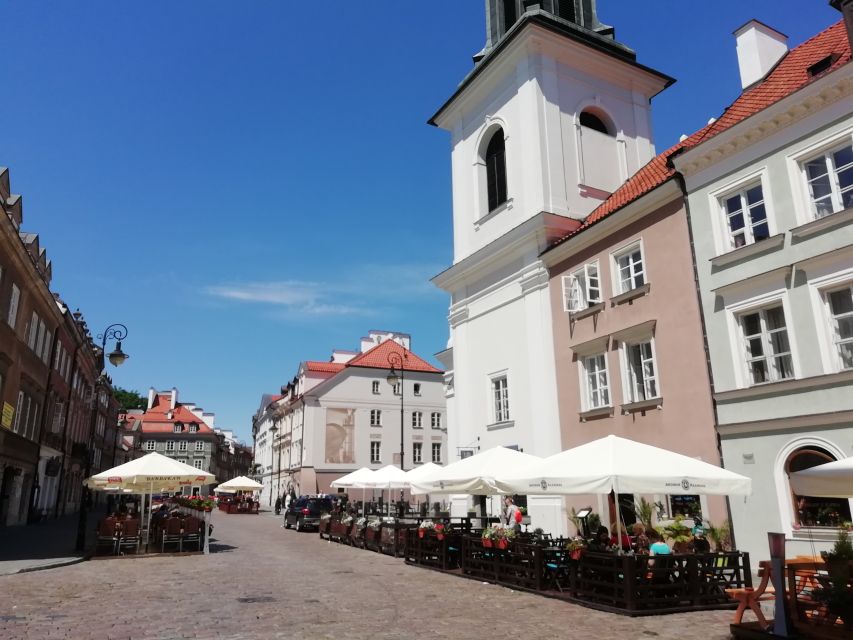
This is an outdoor walking tour, so weather matters. Comfortable shoes are essential, and sunglasses, a sun hat, and sunscreen are sensible additions in bright weather. There is no food served during the walk, although a cafe is available where you can buy something.
Do not bring pets, alcohol, drugs, oversize luggage, large bags, or suitcases. Those restrictions are especially useful to remember if you are going directly from a train station or hotel change.
The tour is available in English, German, and Polish. Headsets are provided for groups of up to 10 people, which should make the guide easier to hear in busy public areas.
You can cancel up to 24 hours before the start for a full refund, and you can reserve now while paying later. Those terms are helpful if your Warsaw schedule is still changing.
Who should book this Warsaw walking tour?
I would choose this tour if you want the story behind the Old Town, not just its photographs. It suits first-time visitors, families with questions, small private groups, and anyone interested in World War II, reconstruction, royal Poland, or the Solidarity movement.
It is also a good first activity in Warsaw. After two hours, you should have a clearer map of the central districts and a better idea of which sites deserve a later indoor visit.
I would hesitate if your main goal is to enter the Royal Castle or cathedral, since entrances are not included. I would also compare prices if you are traveling alone and only need a short orientation.
For most visitors who value personal storytelling, the tour earns its price through context. Warsaw’s Old Town is beautiful, but its real power comes from knowing that much of what you see had to be imagined, measured, painted, and rebuilt. Book it if that story matters to you.
FAQ
Where does the tour meet?
Meet in front of the Nicolaus Copernicus Monument and Staszic Palace at ul. Nowy Świat 72. The address is also listed as Krakowskie Przedmieście, 00-333 Warsaw.
How long does the walking tour last?
The scheduled duration is two hours. The actual walk may run slightly longer, depending on the guide and the pace of the private group.
What languages are available?
The tour is offered in English, German, and Polish.
Is this a private tour?
Yes. The activity is arranged for a private group.
Is the tour wheelchair accessible?
Yes, the activity is listed as wheelchair accessible.
Are entrance fees included?
No. Entrances are not included in the tour price.
Is food provided?
No food is served during the tour. You can buy food at a cafe.
Are tips included?
No. Gratuities are separate, with a recommended tip of 15 to 20 percent at the end.
Can I cancel for a refund?
You can cancel up to 24 hours in advance for a full refund. You can also reserve now and pay later.
Just added in Warsaw
- Wroclaw Small-Group Tour with Lunch from Warsaw★ 5.0 · 2 reviews
- World War II Warsaw Old Town, Military Cemetery Walking Tour★ 4.7 · 3 reviews
- Warsaw: Wolf’s Lair & Swieta Lipka Small-Group Tour + Lunch★ 5.0 · 3 reviews
- Wilanów Palace: 2-Hour Guided Tour with Entrance Tickets★ 4.8 · 8 reviews
- Warsaw Zoo Skip-the-Line Entry Ticket with Private Transport★ 4.8 · 3 reviews
- Warsaw: Private Vodka Tasting Night with Snacks and Pickup★ 5.0 · 7 reviews
- Warsaw Private Wilanow Palace & Garden Tour★ 4.6 · 30 reviews
- Warsaw Wolf’s Lair with St. Lipka and Mamerki Private Guided★ 4.2 · 3 reviews
Old Town Walking Tours, compared.


Sightseeing EcoCruise around the Old Town of Gdansk
Read our review →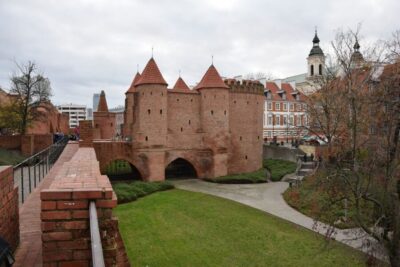
Old Town & Wawel Castle Walking Tour in English
Read our review →Browse the lists this tour appears in