
REVIEW · WALKING TOURS
Walk through the Warsaw Old and New Town: like Phoenix from the ashes
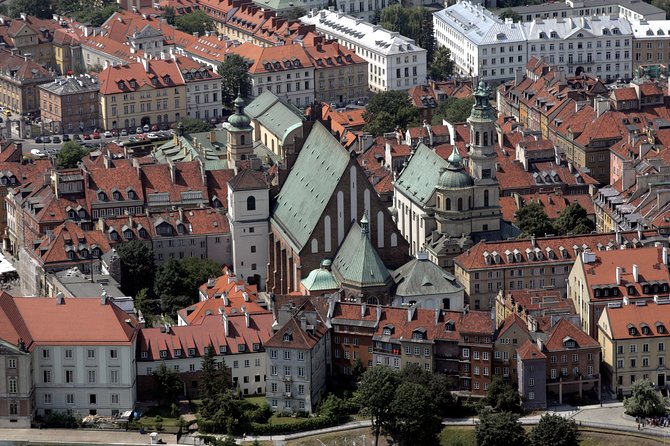
Warsaw’s past is written in rebuilt stone. This two-hour walk connects Chopin’s heart, royal power, and wartime survival in a compact route through the city center. I especially like the way it moves from grand Krakowskie Przedmiescie to the rebuilt Old Town, then on toward the Warsaw Uprising Monument.
I also like that this is a private activity for your own group, not a large public walk. A one-on-one booking can make the experience especially personal. The main point to check is the language: the tour is offered in English, but the guide is described as German-speaking, so confirm this before paying. At $72.87 per person, the value depends heavily on your group size and how much you want guided historical context.
In This Review
- Key points to know before booking
- Why this Warsaw walk works so well in two hours
- Starting at Krakowskie Przedmiescie and the Copernicus Monument
- Holy Cross Church and Chopin’s connection to Warsaw
- The University of Warsaw and an older side of the city
- Saxon kings at the Tomb of the Unknown Soldier
- The Presidential Palace and Poland’s public life
- Castle Square and the rebuilt Old Town
- St. John the Baptist Cathedral and the Warsaw Uprising
- Gnojna Gora and a look toward the Vistula
- Market Square, legends, and the Old Town streets
- Marie Curie’s birthplace and the New Town
- Finishing at the Warsaw Uprising Monument
- Is $72.87 per person good value?
- Who should book this experience?
- Should you book the Warsaw Old and New Town walk?
- FAQ
- How long does the Warsaw Old and New Town tour last?
- Where does the tour start?
- Where does the tour end?
- Is the tour private?
- Are museum admissions included?
- Can I cancel for a full refund?
Key points to know before booking
- A compact route with a powerful theme: The walk explains how Warsaw rose from near-total wartime destruction.
- Private for your group: You do not share the activity with strangers, and a small booking may become one-on-one.
- Chopin and Marie Curie are part of the story: The route links two famous Poles to specific Warsaw sites.
- The Old Town is the main event: Castle Square, the Royal Castle, the cathedral, and the Market Square receive the most attention.
- No transport or snacks are included: You walk between the stops, with admission fees separate.
- The end point is meaningful: The tour finishes at the Warsaw Uprising Monument, not back at the starting point.
Why this Warsaw walk works so well in two hours
This is not a broad survey of every Warsaw sight. It is a focused walk along the historic center, with a clear story: power, culture, destruction, and reconstruction.
You begin at the Nicolaus Copernicus Monument on Krakowskie Przedmiescie. From there, the route heads through several important public and religious sites before reaching Castle Square and the Old Town. It then continues into the New Town and finishes at the Warsaw Uprising Monument.
That structure gives you a useful first look at central Warsaw. You see enough to understand the city’s layout, but you do not spend half the tour standing in one museum. The trade-off is depth. Most stops last only five to fifteen minutes, so you should expect short explanations rather than long visits inside buildings.
The tour is listed at about two hours. That makes it a good first activity after arriving in Warsaw, especially if you want a framework for later independent exploring. You will likely leave with a better sense of where to return for a museum, church, café, or longer walk.
More Walking Tours in Warsaw
- Warsaw: Old Town Highlights Walking Tour in English
★ 4.7 · 1,516 reviews - Warsaw: Old Town Guided Walking Tour
★ 4.9 · 599 reviews - Half-Day Polish Food Walking Tour with Guide and Dinner
★ 4.5 · 381 reviews
Starting at Krakowskie Przedmiescie and the Copernicus Monument
The meeting point is the Nicolaus Copernicus Monument on Krakowskie Przedmiescie. Look for the guide holding a PolinTours sign.
This is a practical starting point because Krakowskie Przedmiescie is one of Warsaw’s best-known historic avenues. The route begins with a famous Polish figure, then builds toward the city’s royal center. I like this opening because it avoids a dull orientation talk and puts you directly among recognizable landmarks.
The guide will accompany your group for the full walk. Since the activity is private, you can ask questions at your own pace. The private format may be especially useful for families, couples, or friends who want to focus on particular topics, such as Polish literature, wartime history, religion, or music.
One detail deserves attention: the tour information refers to a German-speaking guide while also listing English as the offered language. That is not a small distinction. Confirm the guiding language before booking if English is essential to you.
Holy Cross Church and Chopin’s connection to Warsaw
The stop at Holy Cross Church lasts about five minutes, but the subject is one of Warsaw’s most personal stories. Here you learn about Frédéric Chopin and the church where his heart rests.
That detail gives the tour an emotional center. Chopin is often treated as a national symbol, but this stop links the famous composer to a real place in the city. You are not simply passing another church façade. You are hearing why this particular building matters to Warsaw’s memory of him.
The short timing means you should not expect a full church visit or a long music lecture. Still, it is a useful stop for anyone interested in Chopin, Polish identity, or the way Warsaw keeps its cultural figures present in daily life.
The University of Warsaw and an older side of the city
The tour pauses at the oldest part of the University of Warsaw for about five minutes. This is a brief look, not a campus tour.
Its place in the route helps show that Warsaw is more than royal buildings and wartime memorials. Education, public life, and national culture also belong to the city’s story. The guide can connect the university setting with the wider historic center, though the supplied details do not promise entry into university buildings.
This is one of the stops where expectations matter. If you are looking for a detailed academic history, five minutes will feel short. If you want a quick landmark and a sense of the city’s intellectual life, it fits the pace well.
Something quite different:
- Warsaw: Chopin Concert in the Old Town
★ 4.8 · 2,287 reviews - Warsaw: Traditional Galar Cruise on The Vistula River
★ 4.6 · 1,640 reviews - Warsaw Concert: Chopin – Painted by Candlelights with Wine
★ 4.8 · 1,442 reviews - Warsaw: City Sightseeing Hop-On Hop-Off Bus Tour
★ 3.6 · 1,415 reviews
Saxon kings at the Tomb of the Unknown Soldier
At the Tomb of the Unknown Soldier, you spend around ten minutes learning about the former estate of the Saxon kings in Poland.
The stop combines remembrance with royal history. That pairing is useful because Warsaw’s past is not one straight line. The same central area reflects monarchy, military memory, and the later rebuilding of the capital.
The tour does not list an admission fee here, and the stop is free. You can expect an outdoor explanation rather than a museum visit. I would pay close attention to the guide’s account of the Saxon royal estate, since this gives context to the grand spaces you see elsewhere along the route.
The Presidential Palace and Poland’s public life
The walk continues to the Presidential Palace, where the guide explains its unusual history. The stop lasts about ten minutes.
This is a chance to look at a building that still serves a current public role, rather than only a historic one. The palace connects Warsaw’s past with the modern Polish state. It also gives the route a change of pace after the university and military memorial.
The information provided does not promise entry inside the palace. Treat this as an exterior stop with historical interpretation. That is normal for a walking tour, but you should not book it expecting an interior tour of government buildings.
Castle Square and the rebuilt Old Town
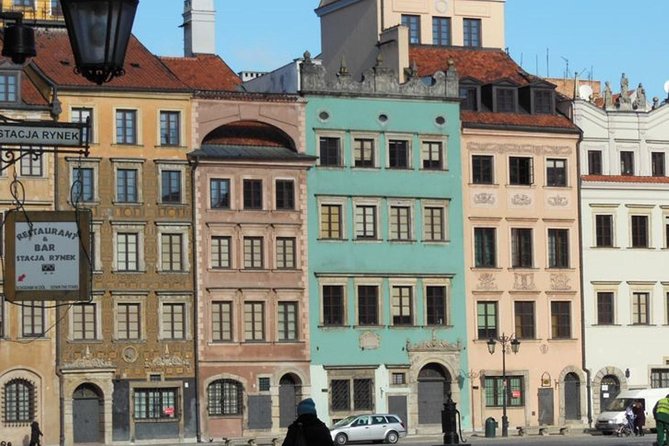
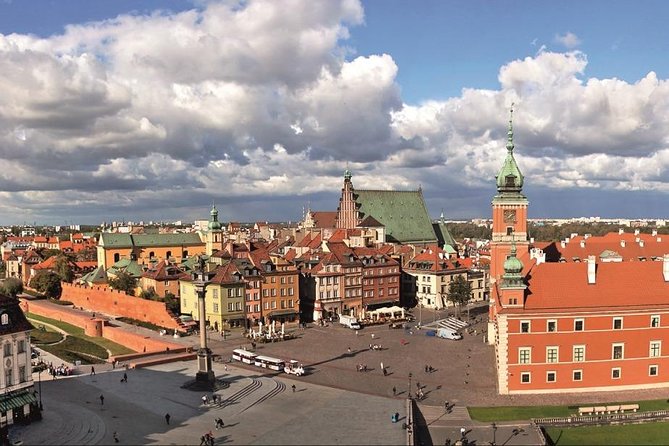
Castle Square is the heart of the experience. The stop lasts about fifteen minutes, and the guide covers the Royal Castle, the first democratic constitution in Europe, and the rebuilding of Warsaw’s Old Town.
This is where the tour’s title, like Phoenix from the ashes, makes sense. Warsaw’s Old Town was rebuilt after wartime destruction, and the guide explains how the work was financed and the role of a Venetian painter. Those details turn a pretty square into a lesson about memory and choice.
The Old Town is described as a UNESCO World Heritage Site and the youngest Old Town in the world. The phrase sounds strange at first, but it points to the central fact: these historic-looking streets are the result of a major reconstruction effort. You are looking at a place that carries the appearance of age while also telling a modern story of recovery.
The Royal Castle adds another layer. You learn about the Polish constitution while standing in a space tied to royal authority. That contrast is one of the strongest parts of the walk. The guide is not only naming buildings. The route shows how Poland moved through monarchy, political change, war, and rebuilding.
For many people, this will be the highlight. Allow yourself extra time after the tour if you want to study the square and surrounding streets without rushing.
St. John the Baptist Cathedral and the Warsaw Uprising
The Archcathedral Basilica of St. John the Baptist receives about ten minutes. The guide explains that the Second World War front ran through the church and discusses the Warsaw Uprising, including the role of the Russian army.
This is a serious part of the walk. The church is not presented only as a religious site or an old building. It becomes evidence of how war reached the center of city life. The discussion of the uprising adds political and military context to the physical damage and later rebuilding.
Ten minutes is enough for an introduction, but the subject deserves more study if wartime Warsaw is your main interest. You may want to return to the Warsaw Uprising Museum separately. That museum is not part of this tour, and no admission is included in the walk.
Still, the cathedral stop matters because it places the uprising within the streets you are already walking. History here is not confined to a display case. It is tied to the church, the square, and the route itself.
Gnojna Gora and a look toward the Vistula
At Gnojna Gora, the group stops for about five minutes to look at the Vistula.
This is a short scenic pause after several dense historical subjects. The view gives you a sense of Warsaw’s position along the river and offers a break from the close streets of the Old Town.
Do not expect a long viewpoint visit. The stop is brief, and the supplied details do not promise a broad river excursion or extended photo break. It works best as part of the walking sequence rather than as a destination in its own right.
Market Square, legends, and the Old Town streets
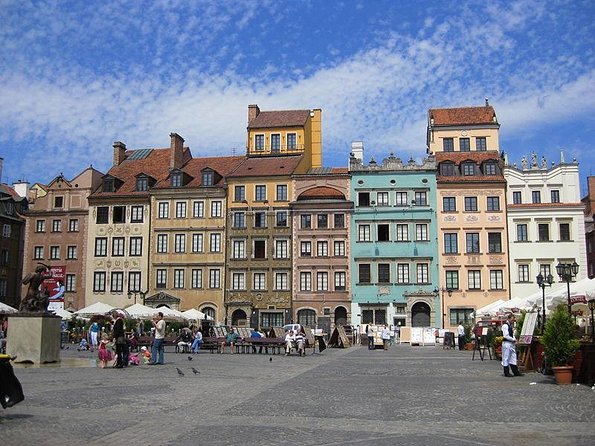
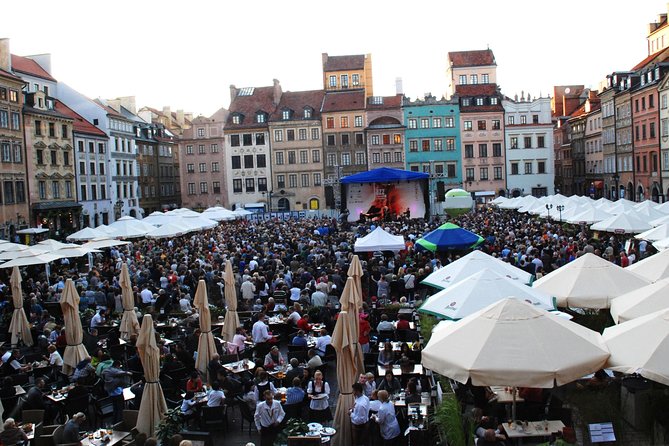
The Rynek Starego Miasta, or Old Town Market Square, receives about ten minutes. Here the guide leads you through picturesque streets, points out major landmarks, and shares legends and authentic stories connected with the market.
This is the part where the rebuilt Old Town becomes most visually appealing. The route is not only about political events and wartime destruction. You also get the smaller stories that help streets and buildings feel memorable.
Because the stop is short, you will not see every corner. The best approach is to treat the guide’s route as an introduction, then return later if you want photographs, a meal, or a slower look at the surrounding lanes.
The tour then passes through a city gate into the New Town. That transition is useful because it shows how the historic center changes from one district to another without requiring transport.
Marie Curie’s birthplace and the New Town
In the New Town, the tour stops at the Maria Skłodowska-Curie Museum for about ten minutes. The museum marks the birthplace of Marie Curie, described here as Poland’s most famous Pole.
Admission is not included. That matters because the stop is mainly an exterior introduction unless you arrange a separate visit. If Marie Curie is a major reason you are interested in this route, plan another visit with enough time for the museum itself.
The stop adds welcome variety. You have already heard about Chopin, kings, presidents, soldiers, and the uprising. Marie Curie brings science and personal achievement into the story. Her birthplace also reinforces how much national history is concentrated within a relatively small part of Warsaw.
Finishing at the Warsaw Uprising Monument
The tour ends at the Field Cathedral of the Polish Army and the Warsaw Uprising Monument. The final stop lasts about ten minutes.
Ending here gives the walk a clear purpose. You begin with a monument to Copernicus and finish with a memorial to one of the defining events in modern Warsaw. The route moves from national culture to political power, from royal history to destruction and resistance.
The end point is at Plac Krasińskich, not at the starting monument. Plan your next move from there. No transport is included, and the walk does not return you to Krakowskie Przedmiescie.
This final location also makes the tour more useful for planning the rest of your visit. If the uprising becomes your main interest, you will know which subject to pursue next. If you want to continue exploring on foot, you are already beyond the Old Town’s busiest central points.
Is $72.87 per person good value?
At $72.87 per person, this is not the cheapest way to see Warsaw’s historic center. The price includes a licensed city tour and tax, but not snacks, transport, or admissions.
The private format is the key to the value. For a group of several people, a private guide can be worthwhile because you share the experience only with your own party. You can ask questions without competing with a large crowd, and the guide can keep the pace suited to your group.
For a solo visitor, the calculation is different. One direct booking became a one-on-one tour, which can be excellent if you want personal attention. It is also a high per-person cost for a two-hour walk, especially since the route does not include museum admission.
I would book it for a first day in Warsaw if you value a private guide and want a clear introduction to the city’s central history. I would look for a cheaper group walk if your main goal is simply to see the Old Town streets.
Who should book this experience?
This walk suits you best if you:
- Want a short orientation to Warsaw’s central historic districts
- Prefer a private activity for your own group
- Care about the wartime destruction and reconstruction of Warsaw
- Enjoy connecting famous people with specific places
- Want to see the Old Town, New Town, royal center, and uprising memorial in one route
- Are comfortable with outdoor stops and limited time at each site
It may not suit you if you want long indoor visits, museum admission, or a relaxed photography walk. The schedule is tightly packed, and several stops last only five minutes.
Most people can participate, service animals are allowed, and the route is near public transportation. Confirmation is provided at booking. Free cancellation is available up to 24 hours before the start time, but changes or cancellations inside that window are not accepted.
Should you book the Warsaw Old and New Town walk?
I would book this tour if you want Warsaw’s main story in a compact, private format. Its strongest feature is not any single monument. It is the link between the city’s famous people, royal institutions, churches, rebuilt streets, and wartime memorials.
The one-on-one possibility is a real advantage for solo visitors, while group discounts may improve the price for larger parties. Before booking, confirm the guide’s language, since the details refer to a German-speaking guide even though English is listed as an option.
Choose it for context and a well-planned route, not for extended museum time. If you want to understand why Warsaw’s Old Town looks historic yet represents a remarkable act of rebuilding, this two-hour walk offers a strong starting point.
FAQ
How long does the Warsaw Old and New Town tour last?
The tour lasts approximately two hours.
Where does the tour start?
It starts at the Nicolaus Copernicus Monument on Krakowskie Przedmiescie in Warsaw. The guide carries a PolinTours sign.
Where does the tour end?
The tour ends at the Warsaw Uprising Monument on Plac Krasińskich, near the Field Cathedral of the Polish Army.
Is the tour private?
Yes. Only your own group participates in the activity.
Are museum admissions included?
No. Admissions are not included. The Maria Skłodowska-Curie Museum is listed as an admission-fee stop, while the other listed stops are free.
Can I cancel for a full refund?
Yes. You can cancel at least 24 hours before the experience start time for a full refund. Cancellations or changes made less than 24 hours before the start time are not accepted.
Just added in Warsaw
- Wroclaw Small-Group Tour with Lunch from Warsaw★ 5.0 · 2 reviews
- World War II Warsaw Old Town, Military Cemetery Walking Tour★ 4.7 · 3 reviews
- Warsaw: Wolf’s Lair & Swieta Lipka Small-Group Tour + Lunch★ 5.0 · 3 reviews
- Wilanów Palace: 2-Hour Guided Tour with Entrance Tickets★ 4.8 · 8 reviews
- Warsaw Zoo Skip-the-Line Entry Ticket with Private Transport★ 4.8 · 3 reviews
- Warsaw: Private Vodka Tasting Night with Snacks and Pickup★ 5.0 · 7 reviews
- Warsaw Private Wilanow Palace & Garden Tour★ 4.6 · 30 reviews
- Warsaw Wolf’s Lair with St. Lipka and Mamerki Private Guided★ 4.2 · 3 reviews
Walking Tours, compared.
Gdańsk City Sights & History Guided Walking Tour in English
Read our review →
Old Town & Wawel Castle Walking Tour in English
Read our review →Browse the lists this tour appears in