
REVIEW · SKIP THE LINE
Skip-the-Line Warsaw Royal Castle Private Guided Tour
Warsaw tells its story in rebuilt stone. This private walk links the Old Town’s churches, squares, monuments, and royal route with a visit to the Royal Castle, giving you a clear introduction to Poland’s rulers and medieval past. I especially like the small group format and the way the tour connects the castle to the wider city, rather than treating it as an isolated museum.
I also like that you have a licensed English-speaking guide dedicated to your group. Guides such as Natalia, Czeslaw, and Eva have been praised for being on time, friendly, and good at explaining the castle’s rooms and postwar rebuilding. The main consideration is the price, about $150.59 per person, which is easier to justify for a private group than for one or two people.
In This Review
- Key points to know before booking
- Why this tour works well in Warsaw
- Meeting King Sigismund on Castle Square
- Walking the reconstructed Old Town
- The Royal Castle and its rebuilt interiors
- Churches, towers, and the option to ask for more
- The Barbican, New Town, and smaller Old Town details
- Krakowskie Przedmiescie and Warsaw’s royal route
- Vistula views and the end of the walk
- Is $150.59 per person a fair price?
- Who should book this private Warsaw tour?
- Should you book the Skip-the-Line Warsaw Royal Castle tour?
- FAQ
- How long does the tour last?
- What language is the tour offered in?
- Is this a private activity?
- Where does the tour begin?
- Where does the tour end?
- Does the tour visit the Royal Castle?
- Is the tour skip-the-line?
- Can I enter the churches during the tour?
- Can I visit the bell tower at St. Anne’s Church?
- What happens if I need to cancel?
Key points to know before booking
- The Royal Castle is the central focus: You see the royal rooms and learn how the castle was reconstructed after wartime destruction.
- A private guide keeps the visit personal: Only your group takes part, so you can ask questions and request church interiors or the St. Anne’s bell tower.
- The route covers far more than the castle: Expect Old Town streets, Castle Square, the Barbican, Krakowskie Przedmiescie, monuments, churches, and Chopin sites.
- The meeting point is easy to identify: Begin at King Sigismund’s Column on Castle Square.
- Timing matters: The castle uses scheduled entry and security procedures, so arriving late can cause trouble.
- November has one restriction: Special castle events may remove the Lanckoroński Gallery from the route.
Why this tour works well in Warsaw
Warsaw’s Old Town looks old, but much of it was rebuilt after the Second World War. That fact changes how you read the streets. The Gothic facades, baroque churches, burgher houses, and castle interiors are not untouched survivors. They are careful acts of reconstruction.
A good guide helps you understand that difference. Instead of simply pointing at pretty buildings, the guide can explain what was lost, what was recovered, and how Warsaw recreated its historic center. That is one of the strongest reasons to choose this tour over a quick self-guided walk.
The visit lasts about two to three hours. That is enough time to cover the principal sights without turning the whole day into a march. Still, the route lists many stops, so you should expect several places to be viewed from outside or passed at a brisk pace. The castle receives the most focused attention.
Because the tour is private, you are not tied to the questions or pace of a large group. If you want more time on Polish monarchs, wartime destruction, Chopin, or church architecture, you can ask. The exact balance depends on your guide and the interests of your group.
A few more in Warsaw
- Warsaw: Chopin Concert in the Old Town
★ 4.8 · 2,287 reviews - Warsaw: Traditional Galar Cruise on The Vistula River
★ 4.6 · 1,640 reviews - Warsaw: Old Town Highlights Walking Tour in English
★ 4.7 · 1,516 reviews
Meeting King Sigismund on Castle Square
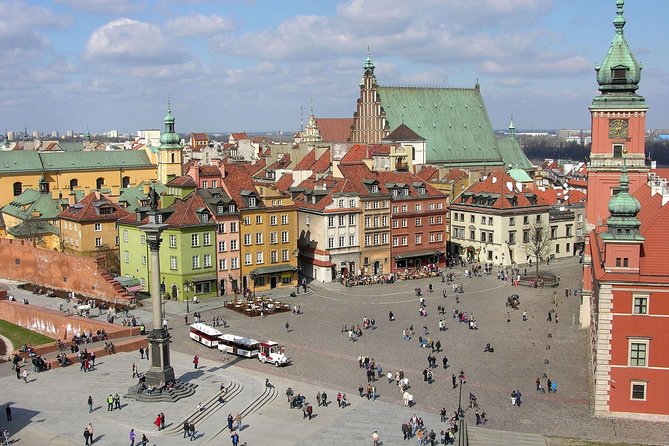
The tour begins at King Sigismund’s Column, in Plac Zamkowy, the broad square beside the Royal Castle. It is one of Warsaw’s easiest meeting points, and the column gives you a useful first clue about the city’s past.
Sigismund III moved Poland’s capital from Krakow to Warsaw in the late sixteenth century, and the column honors that change. The monument dates from the 1600s and remains one of the city’s best-known landmarks.
Castle Square also sets up the story of the tour. The open plaza was formed in the nineteenth century and is framed by the castle, historic houses, and routes leading into the Old Town. From here, your guide can explain the royal connection between the castle, Krakowskie Przedmiescie, and the wider capital.
The square can be busy, so arrive early. The operator specifically warns that castle entry follows a set schedule and security rules. If you are delayed, contact the guide as soon as possible.
Walking the reconstructed Old Town
The Old Town portion includes cobblestone lanes, Gothic-style streets, baroque buildings, churches, and tiered merchant houses. The visual effect is charming, but the more important point is the story behind it.
After Warsaw was devastated, the historic center was rebuilt to reflect its earlier appearance. Your guide can help you see the difference between original fabric, reconstructed facades, and modern restoration work. That context gives the walk more weight than a standard photo stop.
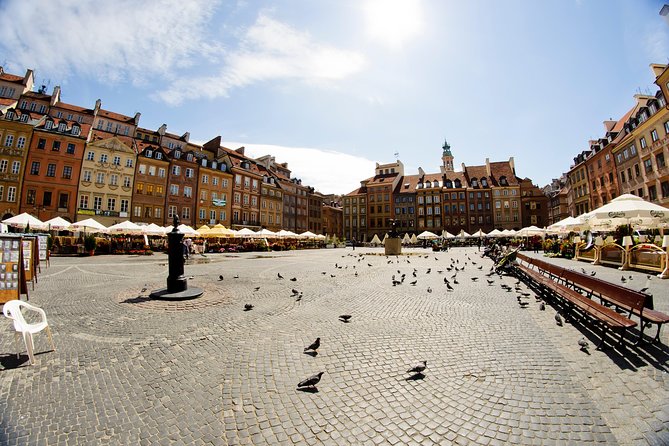
At Rynek Starego Miasta, the Old Town Market Square, you will see seventeenth- and eighteenth-century merchant houses around a lively open space. Cafes, galleries, shops, food sellers, and restaurants make this a good place to pause after the tour, though the scheduled stop itself is short.
The Warsaw Mermaid sculpture sits in the square. Its legend is part of the city’s identity, and the guide can explain the story attached to the figure. It is a small detail, but these legends help make the walk feel local rather than purely architectural.
You also pass the Museum of Warsaw, though the visit here is outside only. That matters if you expected a museum admission. The building is worth seeing, but the tour does not provide a full museum visit within the stated route.
The Royal Castle and its rebuilt interiors
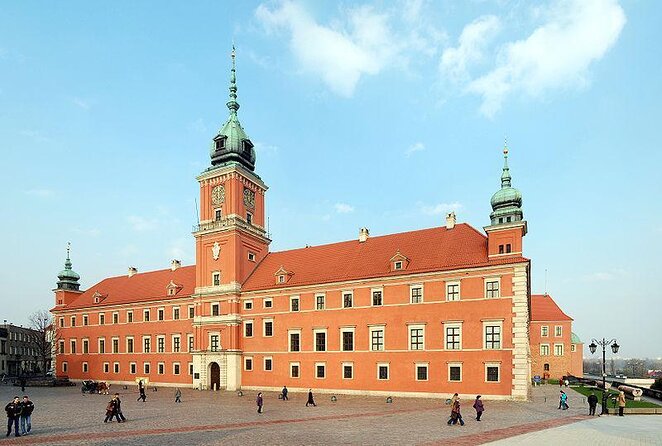
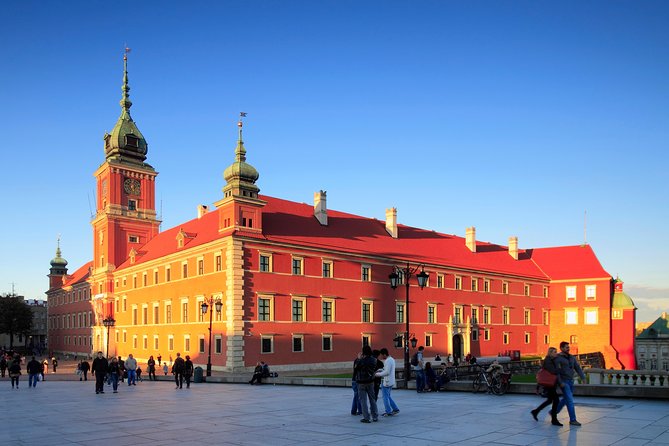
The Royal Castle is the heart of this experience. For centuries, it served as a central seat of the Polish Commonwealth and a place connected with royal government and national ceremonies.
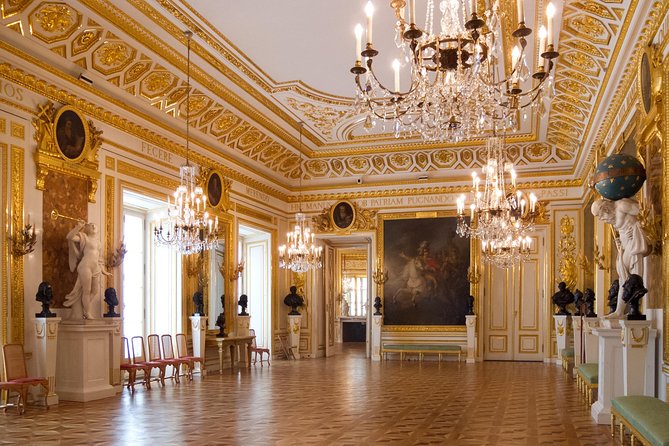
German troops destroyed the castle after the Warsaw Uprising. The building you see today was reconstructed to recreate its seventeenth-century architecture and interiors. The rebuilding story is not a side note. It is one of the most meaningful parts of visiting Warsaw.
A guide can make the rooms easier to understand by explaining their purpose, decoration, and connection to Polish rulers. Natalia was praised for walking through the rooms carefully, explaining what each space was used for, answering questions, and taking note of particular interests. Czeslaw was praised for clear, informative explanations, while Eva received praise for making the royal chambers interesting and relevant.
This is where the private format has the clearest value. In a large group, you often hear the basic facts and move on. With your own guide, you can ask why certain rooms were restored, how surviving objects were used, and what the castle represented before and after the war.
The tour is advertised as skip-the-line, but you still need to follow the castle’s entry schedule and security rules. Skip-the-line does not mean ignore the clock. Arrive at the column on time, with your booking confirmation available on your phone.
In November, special events may mean the Lanckoroński Gallery is left out. If that gallery matters to you, confirm the seasonal arrangement before booking.
Something quite different:
- Warsaw Concert: Chopin – Painted by Candlelights with Wine
★ 4.8 · 1,442 reviews - Warsaw: City Sightseeing Hop-On Hop-Off Bus Tour
★ 3.6 · 1,415 reviews - Warsaw: POLIN Museum of the History of Polish Jews Ticket
★ 4.7 · 1,142 reviews - #1 Pub Crawl Warsaw with Optional Premium 1 Hour Open Bar
★ 5.0 · 790 reviews
Churches, towers, and the option to ask for more
The route includes several churches, but the supplied details make clear that entering some of them is possible on request. This is useful because the exterior walk alone cannot show you the interiors.
St. Anne’s Church is known for its ornate structure and altars, but the interior is also described as peaceful. Its bell tower offers a relatively inexpensive climb and views over the Old Town, with the city center visible farther away. Ask your guide early if you want this included. It may not fit automatically into the planned timing.
The Cathedral of St. John the Baptist is one of Warsaw’s major churches. It was originally built in the thirteenth century and was linked with royal coronations and national events. The Church of the Jesuits adds a different visual note, with a strong red exterior and a richly decorated interior.
The Field Cathedral of the Polish Army is mainly an outside stop on this route. Its rebuilt form is simpler than some of the ornate churches nearby. You also see the Carmelite Church of Our Lady of the Assumption, a baroque building beside the presidential palace. Its double pillars and stone ornaments make it one of the more distinctive facades on the royal route.
Other church stops include St. Mary’s Church in New Town and the Church of St. Joseph of the Visitationists. St. Mary’s is one of the oldest buildings in Warsaw and one of the few remaining Gothic examples in the city. The Church of St. Joseph is plainer inside, with a more restrained feel than the heavily decorated churches.
The practical point is simple: tell the guide what you want. If you hope to enter St. Anne’s, the cathedral, Holy Cross Church, or St. Mary’s, ask rather than assuming every interior is part of the fixed visit.
The Barbican, New Town, and smaller Old Town details
The Warsaw Barbican is a sixteenth-century fortification built to protect the northern entrance to the city. Its curved brick walls make a strong contrast with the polished squares and palace facades nearby.
The Little Insurgent statue is one of the more emotional stops. It honors children who died during the Warsaw Rising. The sculpture is small, but the subject is heavy, and a guide can place it within the larger story of the uprising and the city’s destruction.
The Wishing Bell, a seventeenth-century bronze bell in a courtyard, gives the walk a lighter local tradition. It is the kind of small sight that is easy to miss without someone showing you where to look.
In New Town, you see the square founded by John III Sobieski to celebrate his victory over the Turks at Vienna in 1683. The area has Renaissance and baroque architecture, along with the church of the sisters of the Holy Sacrament.
These stops make the tour broader than a castle admission. You are not only seeing royal rooms. You are also moving through the city’s military, religious, civic, and everyday layers.
Krakowskie Przedmiescie and Warsaw’s royal route
Krakowskie Przedmiescie is part of Warsaw’s long royal road, a broad historic route lined with old buildings and important institutions. The walk here connects the castle to the presidential palace and churches farther south.
The Presidential Palace is a neoclassical building with guarded grounds. You see it from outside, but it is an important stop for understanding modern Polish government and the ceremonial character of the street.
At Holy Cross Church, you can see the place associated with Chopin’s heart. The church is highly decorated, and the Holy Cross at the entrance survived the wartime bombings. If Chopin interests you, this stop adds emotional depth to the later visit to Chopin’s bench.
The multimedia Chopin bench plays his music and offers an inventive way to connect the composer with Warsaw. It is a short stop, but it breaks up the architectural sightseeing and gives you something to hear as well as see.
The Adam Mickiewicz Monument honors one of Poland’s leading poets. Its steps, decorative elements, and surrounding sculptures make it a major landmark along the route.
Vistula views and the end of the walk
The itinerary also reaches the Vistula waterfront. Warsaw’s riverfront continues to develop, with new boulevards and waterside pubs creating a relaxed atmosphere.
Do not expect a full river excursion. This is a sightseeing stop that shows another side of the capital, away from the castle and church interiors. It can be a pleasant change after several hours among stone streets and monuments.
The activity ends at a different location from the start, but the supplied details do not specify the exact final meeting point. Check the final instructions sent by the operator the day before. That email may also contain important timing information.
Is $150.59 per person a fair price?
At about $150.59 per person, this is not a budget walking tour. The value depends heavily on your group size.
For a couple, the total cost is substantial. You are paying for a private licensed guide, a scheduled castle visit, and a route that covers much of central Warsaw in two to three hours. If you want a personal explanation of the castle and the city’s destruction and rebuilding, that may be worthwhile.
For a family or larger private group, group discounts can improve the calculation. You also avoid the compromises of a public group, where the guide must follow one pace and cannot spend extra time on your interests.
The tour is especially useful if you have limited time in Warsaw and want an organized introduction. It is less attractive if you mainly want to stroll slowly, spend hours inside the Museum of Warsaw, or explore every church without a schedule. Several stops are outside views, and the tour cannot give each of the many listed sights equal attention.
The strongest value comes from the guide’s interpretation. The castle itself is important, but the explanation of its rooms, destruction, and rebuilding is what turns the visit into something memorable.
Who should book this private Warsaw tour?
I would choose this tour if you want:
- A first look at Warsaw’s Old Town and royal route
- A private English-speaking guide
- A focused visit to the Royal Castle
- Context about Polish monarchs and medieval Poland
- Help understanding wartime destruction and reconstruction
- The chance to request church interiors or the St. Anne’s tower
- A compact two to three hour introduction rather than a full-day program
I would choose another plan if you prefer to set your own pace or spend most of the day inside museums. The route is wide-ranging, so you should expect a guided overview rather than an exhaustive visit to every stop.
The tour suits couples, families, and small groups that value questions and flexibility. It also works well for first-time visitors who want a guide to establish the city’s main story before exploring alone.
Should you book the Skip-the-Line Warsaw Royal Castle tour?
Yes, if the Royal Castle is high on your Warsaw list and you want the city’s rebuilt Old Town explained by a private guide. The clearest strengths are the castle focus, the private format, and the guides’ ability to explain the rooms and reconstruction in a clear, engaging way.
Before booking, compare the price with your group size and decide how much guided time you want. Arrive punctually at Sigismund’s Column, check the pre-tour email, and request the St. Anne’s tower or church interiors in advance.
With those expectations, this is a strong choice for a short, history-filled introduction to Warsaw. It gives you the landmarks, but also the difficult story beneath the new-looking facades.
FAQ
How long does the tour last?
The tour lasts approximately two to three hours.
What language is the tour offered in?
The tour is offered in English.
Is this a private activity?
Yes. Only your group participates in the activity.
Where does the tour begin?
It begins at Sigismund’s Column in Castle Square, Plac Zamkowy, Warsaw.
Where does the tour end?
The activity ends at a different location from the starting point. The exact final location should be checked in the tour details sent by the operator.
Does the tour visit the Royal Castle?
Yes. Visiting the Royal Castle Museum is a central part of the experience.
Is the tour skip-the-line?
The tour provides skip-the-line access, but you must still arrive on time for the castle’s scheduled entry and security procedures.
Can I enter the churches during the tour?
Entry into some churches, including St. Anne’s Church, the cathedral, Holy Cross Church, and St. Mary’s Church, may be possible on request. Ask the guide during the tour.
Can I visit the bell tower at St. Anne’s Church?
The observation terrace on St. Anne’s bell tower may be visited on request. The climb has an additional relatively inexpensive admission price.
What happens if I need to cancel?
You can receive a full refund if you cancel at least 24 hours before the experience start time. Cancellations or changes made less than 24 hours in advance are not accepted for a refund.
Just added in Warsaw
- Wroclaw Small-Group Tour with Lunch from Warsaw★ 5.0 · 2 reviews
- World War II Warsaw Old Town, Military Cemetery Walking Tour★ 4.7 · 3 reviews
- Warsaw: Wolf’s Lair & Swieta Lipka Small-Group Tour + Lunch★ 5.0 · 3 reviews
- Wilanów Palace: 2-Hour Guided Tour with Entrance Tickets★ 4.8 · 8 reviews
- Warsaw Zoo Skip-the-Line Entry Ticket with Private Transport★ 4.8 · 3 reviews
- Warsaw: Private Vodka Tasting Night with Snacks and Pickup★ 5.0 · 7 reviews
- Warsaw Private Wilanow Palace & Garden Tour★ 4.6 · 30 reviews
- Warsaw Wolf’s Lair with St. Lipka and Mamerki Private Guided★ 4.2 · 3 reviews
Skip the Line, compared.
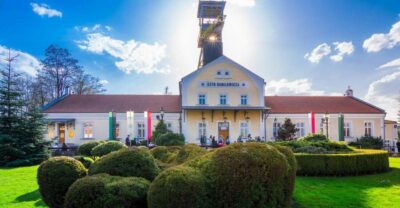
Wieliczka Salt Mine Tour & Skip the Line Ticket
Read our review →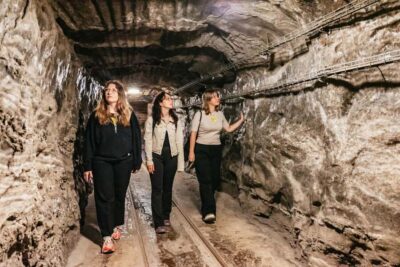
Wieliczka Salt Mine Tour from Kraków – Skip the Line Entry
Read our review →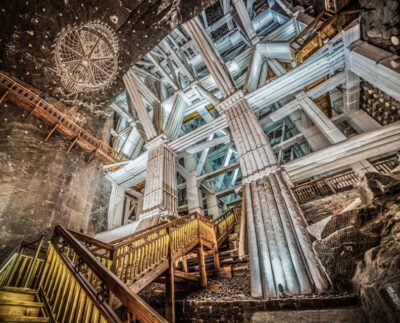
Wieliczka Salt Mine Skip-the-Line Live Guided Tour
Read our review →
Skip-the-Line Wawel Castle Chambers Private Tour
Read our review →
Wieliczka Salt Mine Guided Tour Skip the Line Ticket
Read our review →
Rynek Underground Museum Skip-the-line Guided Tour
Read our review →
Pub Crawl with Shots, Drinks & Skip-the-Line Entry
Read our review →Browse the lists this tour appears in