REVIEW · WARSAW TOURS
Private Jewish Warsaw Tour with social-distance bus
Warsaw’s Jewish story is both moving and difficult. I like the private pickup and the way a car connects scattered memorials, and I especially like the mix of cultural life and wartime memory. The main consideration is that three hours can feel short for such a serious subject.
This tour keeps walking to a minimum, but it does not make the history feel distant. You move between the ghetto wall, Mila 18, Umschlagplatz, the cemetery, and Nozyk Synagogue with an experienced guide. Saturday is not recommended, and the POLIN Museum visit is separate from the guided portion.
In This Review
- Key points to know before booking
- Why this three-hour tour matters in Warsaw
- Zlota Street and the last preserved ghetto wall
- Warsaw Ghetto Heroes Monument and the POLIN Museum
- Mila 18 and the Jewish Martyrdom Route
- Umschlagplatz and the road to Treblinka
- The Jewish Cemetery and Warsaw’s cultural life
- Nozyk Synagogue and the Jewish Theatre
- What the private format adds
- Is $185.22 per person good value?
- Timing, weather, and practical advice
- Who should book this Jewish Warsaw tour?
- Should you book it?
- FAQ
- Where does the private Jewish Warsaw tour take place?
- How long does the tour last?
- Is hotel pickup available?
- Is this a private tour?
- Does the tour use a car or a bus?
- Is the POLIN Museum included?
- How much time should I allow for POLIN Museum?
- Is food included?
- Is the tour recommended on Saturdays?
- What happens if bad weather cancels the tour?
Key points to know before booking
- A private car saves time: Warsaw’s Jewish memorials are spread across the city, so driving between them lets you see more in three hours.
- The preserved ghetto wall is on Zlota Street: This modest fragment is easy to miss without help.
- Mila 18 connects you with the Warsaw Ghetto Uprising: The bunker site recalls the final stand of the uprising’s commanders.
- Umschlagplatz is the emotional center: This was the deportation point for Jews sent toward Treblinka.
- The Jewish Cemetery adds a cultural dimension: Religious leaders, activists, artists, and other important figures are buried there.
- You can finish at POLIN: The tour can end at the museum, giving you the option to continue on your own.
Why this three-hour tour matters in Warsaw
Warsaw once held the second largest Jewish community in the world. Before the Second World War, Jewish life here included religious institutions, theaters, schools, political groups, businesses, and ordinary family neighborhoods.
The Nazi occupation destroyed that world. The Warsaw Ghetto became a place of forced confinement, hunger, disease, and death. In 1943, Jewish fighters launched the Warsaw Ghetto Uprising, an act of resistance that lasted longer than the Germans expected.
A tour of this subject needs more than a list of monuments. You need someone to explain how the places fit together. That is the useful part of this private experience. Instead of searching for several sites alone, you are collected from your hotel or apartment and taken directly between them.
The vehicle is also practical. The tour is described as using a social-distance bus, while the detailed route refers to travel by car. Either way, the important point is that this is a private road-based tour, not a long walking route. Only your group participates, and the guide can spend time on the questions that matter to you.
The pace is brisk, but the route covers a lot of ground. You should expect short walks at several stops, with most of the distance handled by vehicle.
A few more in Warsaw
- Warsaw: Chopin Concert in the Old Town
★ 4.8 · 2,287 reviews - Warsaw: Traditional Galar Cruise on The Vistula River
★ 4.6 · 1,640 reviews - Warsaw: Old Town Highlights Walking Tour in English
★ 4.7 · 1,516 reviews
Zlota Street and the last preserved ghetto wall
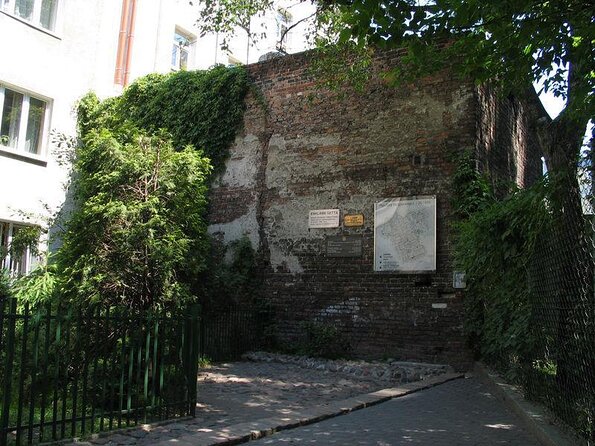
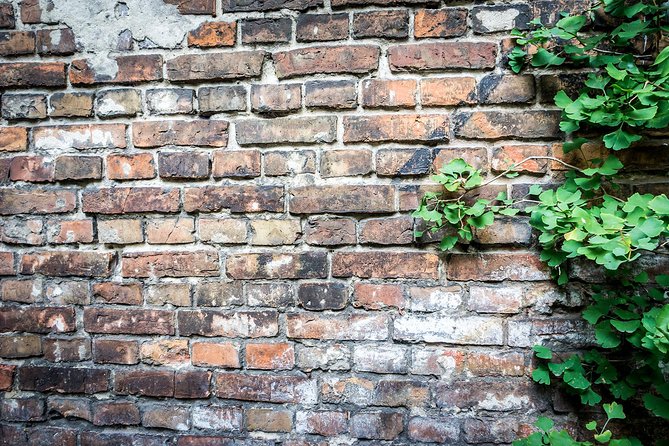
The first stop is a fragment of the original ghetto wall on Zlota Street. It is not a grand monument. That is part of its force.
Warsaw changed dramatically after the war, and much of the former ghetto area was rebuilt. The remaining wall fragment gives you a physical link to the boundaries that once trapped hundreds of thousands of people. Your guide can help you understand why a small section of brick matters in a city where so little of the original district remains.
You spend about 15 minutes here. That is enough to look closely, hear the basic story, and take in the setting, but not enough for a long discussion. If you care strongly about architecture or wartime structures, you may wish the stop were longer.
Still, this is a useful opening. It puts the geography before the larger memorials. You begin with the shape of the ghetto, then move toward the people and events connected with it.
Warsaw Ghetto Heroes Monument and the POLIN Museum
The next stop is the Monument to the Warsaw Ghetto Heroes. Its location beside the POLIN Museum makes it one of the clearest places in Warsaw to consider both Jewish life and Jewish destruction.
The monument commemorates the Warsaw Ghetto Uprising. The guide explains the resistance and helps you read the site as more than a dramatic sculpture. You spend roughly 15 minutes here, enough for an introduction and some quiet thought.
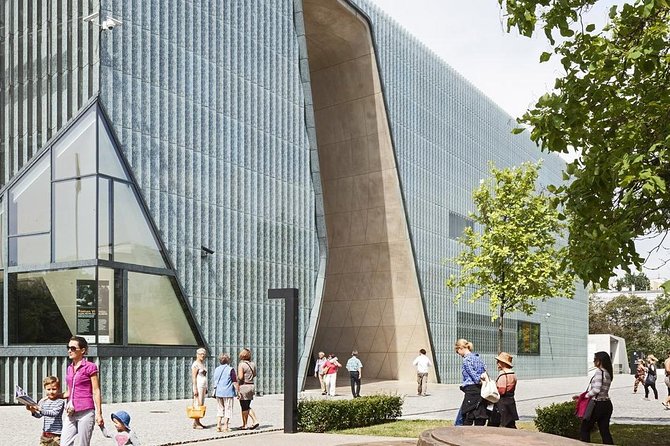
The POLIN Museum is directly nearby. It presents around 1,000 years of Polish Jewish history through an interactive exhibition. The guided tour does not include the museum admission or a museum visit as part of the three-hour route, but you can be dropped there afterward.
That option is valuable. A short tour can give you the framework, while POLIN can supply the wider story of settlement, religion, language, work, politics, and culture. Allow about two hours if you want to see the museum on your own, as the tour information suggests.
You should decide before the final drop-off. If you are already tired or have another plan, ending at your hotel makes sense. If this is your main Jewish Warsaw experience, continuing into POLIN will give the day more balance.
Mila 18 and the Jewish Martyrdom Route
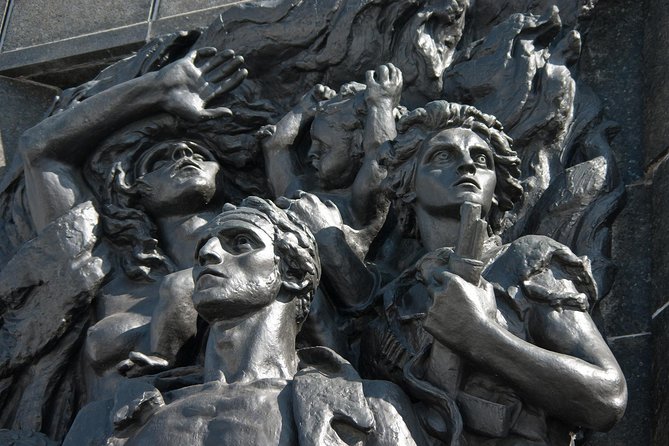
From the monument, you take a short walk toward Zamenhofa Street and the Jewish Martyrdom Route. The route links several places connected with the ghetto and the uprising.
At Mila 18, the guide points out the location of the bunker where the commander of the Jewish uprising took his own life. The site is quiet and restrained. There is no need for a large display to make it powerful.
This stop lasts about 20 minutes, making it one of the longer pauses. That gives your guide room to explain the uprising and the final days of the ghetto. You may find this part especially useful if you know the broad outline of the war but want to understand what happened on the ground.
The short walk matters here. After several vehicle transfers, walking along the route helps you sense how close these places are. It also keeps the experience from becoming a series of quick photographs taken from a car.
The subject is heavy. Parents with young children should consider how much detail will be appropriate, since the route deals directly with persecution, deportation, suicide, and mass murder.
Something quite different:
- Warsaw Concert: Chopin – Painted by Candlelights with Wine
★ 4.8 · 1,442 reviews - Warsaw: City Sightseeing Hop-On Hop-Off Bus Tour
★ 3.6 · 1,415 reviews - Warsaw: POLIN Museum of the History of Polish Jews Ticket
★ 4.7 · 1,142 reviews - #1 Pub Crawl Warsaw with Optional Premium 1 Hour Open Bar
★ 5.0 · 790 reviews
Umschlagplatz and the road to Treblinka
The tour then drives to Umschlagplatz. This was the square where Jews were loaded onto trains for deportation to Treblinka.
The memorial here is one of the most painful places in Warsaw. The guide explains the role of the square and the deportations that passed through it. A wall carries Jewish names, recalling the people who were forced from the ghetto and symbolizing the former ghetto boundary.
You spend about 10 minutes at this stop. That sounds brief, but the site is emotionally concentrated. A longer visit is not always better, especially when the guide has already built the story through the earlier stops.
I recommend treating this as a place for attention rather than a photo stop. Listen to the explanation, read what you can, and allow a little silence. The memorial’s power comes from the contrast between the ordinary city around it and the crimes that took place there.
The route is carefully ordered. The wall shows confinement, the monument recalls resistance, Mila 18 brings you to the uprising, and Umschlagplatz shows the machinery of deportation. You are not simply seeing unrelated markers.
The Jewish Cemetery and Warsaw’s cultural life
About two kilometers from Umschlagplatz, you drive to the Jewish Cemetery. This changes the focus from destruction to community.
The cemetery contains old Jewish tombstones and the graves of religious leaders, activists, artists, and other honored people. It helps you picture Jewish Warsaw as a functioning society, not only as a victim’s story.
That balance is essential. A tour focused only on the Holocaust can leave you with an incomplete picture. The cemetery points toward scholarship, faith, public life, and artistic work that existed before the war and continues to shape Jewish memory today.
The visit lasts about 15 minutes. Cemetery conditions can vary with the weather, so suitable clothing matters. The tour information specifically advises dressing for the weather, and that advice is worth taking seriously if you are visiting during a cold, wet, or hot spell.
You should also expect a respectful atmosphere. This is an active place of memory, not simply another sightseeing stop. Keep your clothing practical and your behavior quiet.
Nozyk Synagogue and the Jewish Theatre
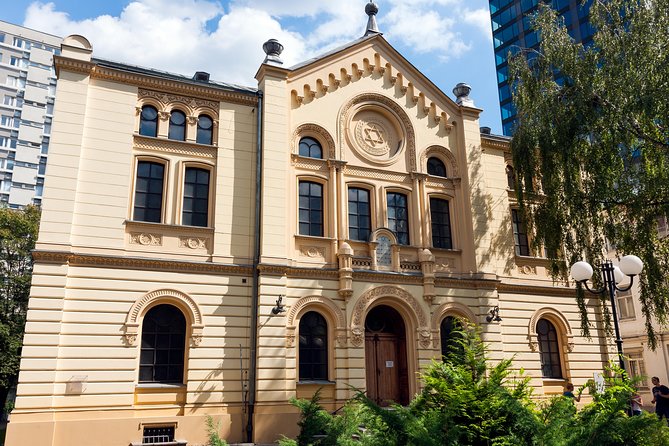
Nozyk Synagogue offers another important shift in the story. It is described as the only prewar synagogue in Warsaw that survived the Second World War without being demolished.
The visit takes about 10 minutes. That is short, but the building’s survival gives the stop unusual importance. After seeing walls and memorials connected with death and destruction, entering a surviving house of worship reminds you that Jewish religious life was not erased completely.
The synagogue may be especially meaningful if you want to see a living place rather than only memorials. The tour does not promise a full service or extended interior visit, so you should treat this as a brief stop within the route.
Near the end, you pass the Jewish Theatre named after Ester Rachel and Ida Kaminska. It is the only theater in Warsaw that presents performances in Yiddish.
You may not enter for a performance during this tour, but the theater adds an important cultural note. Yiddish was once widely spoken among Polish Jews, and its continued use in theater links present-day Warsaw with the language and artistic life of the prewar community.
This is one of the most distinctive details on the route. Many Jewish heritage tours focus only on cemeteries and wartime sites. Including a theater shows that the story also involves language, performance, humor, and public culture.
What the private format adds
The private setup is the strongest practical feature. Your hotel or apartment can be the pickup point, so you do not need to find an unfamiliar meeting place across Warsaw.
A private group also gives you more control over the tone. You can ask for clarification, pause over a place that matters to you, or keep moving if the subject becomes too intense. The exact flexibility is not spelled out, so you should not assume the schedule can change freely, but the format is more personal than a large group excursion.
The car saves time between sites. That matters because the Jewish landmarks are not all clustered around one square. Without transport, you could spend much of a three-hour visit walking or arranging separate rides.
The tradeoff is that you spend less time wandering through the former ghetto area. If you prefer a slow walking tour with long pauses and street-level observation, this route may feel compressed. If you want to see the main sites efficiently, the car is a sensible choice.
The experience includes bottled still or sparkling water, Coca-Cola, Polish beer, and traditional Wedel chocolate candies. There is no meal, so eat beforehand or plan food afterward. The drinks and chocolate are a pleasant touch, but they do not replace lunch.
The guide is described as having personal wartime experience, with guides who survived the war and feel a strong connection to Warsaw’s Jewish heritage. That can give the tour a human voice, but you may want to confirm the guide’s background when booking if this point is important to you.
Is $185.22 per person good value?
At $185.22 per person, this is not a budget tour. The value depends heavily on the size of your private group and how much you would pay for transport, a guide, and several short visits on your own.
For one or two people, the price is a serious expense. For a larger private group, the cost may feel more reasonable because the vehicle and guide serve the whole party. Group discounts are available, though the exact discount is not provided.
I see the price as paying for time and structure, not for admission tickets. The listed stops have no admission charge included, and POLIN is not part of the guided ticket. You are paying to be collected at your accommodation, driven between scattered sites, and given context by a dedicated guide.
The strongest value comes if you have only one free morning or afternoon in Warsaw. You can see the wall, monument, Mila 18, Umschlagplatz, cemetery, synagogue, and theater in about three hours. Doing that independently would require careful planning.
The value is weaker if you already know Warsaw well, have your own transport, or want to spend a full day at POLIN. In that case, the tour may cover the sites too quickly.
Timing, weather, and practical advice
The tour lasts about three hours, but the final stop can be either POLIN Museum or your hotel. That makes it easy to connect with a museum visit or return to your accommodation for a break.
Book at least several days ahead if possible. The experience is commonly reserved about five days in advance, so last-minute availability may not be dependable.
Saturday is specifically not recommended. No reason is given, so you should ask the operator whether the issue involves synagogue access, museum timing, traffic, or another scheduling concern.
Wear shoes suitable for short walks and clothing that matches the forecast. The itinerary includes outdoor memorials, a cemetery, and street walks, so poor weather can affect comfort. The tour requires good weather, and if it is canceled for that reason, you are offered another date or a full refund.
Most people can take part, and service animals are allowed. The route is near public transportation, though the private pickup means you do not need to use it for the main tour.
Free cancellation is available up to 24 hours before the start time. Changes or cancellations inside that window are not accepted, so check your plans before the deadline.
Who should book this Jewish Warsaw tour?
I would recommend it to you if you want a clear introduction to Warsaw’s Jewish heritage and prefer a private guide to independent research. It suits couples, families with older children, and small groups who value hotel pickup and efficient transport.
It is also a good choice if you want to combine the Holocaust sites with reminders of Jewish religious and cultural life. The cemetery, synagogue, and Yiddish theater keep the story from becoming only a sequence of tragic places.
I would be more cautious if you want a slow, reflective walking tour, extensive time inside each site, or a full museum experience. The route is emotionally demanding and tightly timed.
Should you book it?
Book this tour if you have limited time and want the major Jewish Warsaw sites connected by an informed private guide. The strongest reasons are the hotel pickup, private vehicle, efficient route, and the excellent balance between memorials and surviving cultural places.
Skip it if you prefer to set your own pace or plan to spend most of the day at POLIN. If you book, reserve for a weekday, dress for the weather, and leave enough time afterward for the museum if you want the broader story.
FAQ
Where does the private Jewish Warsaw tour take place?
The tour takes place in Warsaw, Poland, with stops connected to the former Jewish district, wartime memorials, the Jewish Cemetery, Nozyk Synagogue, and the Jewish Theatre.
How long does the tour last?
The guided experience lasts approximately three hours.
Is hotel pickup available?
Yes. Pickup is offered from hotels, apartments, and other accommodation locations.
Is this a private tour?
Yes. Only your own group participates in the private activity.
Does the tour use a car or a bus?
The experience is described as a social-distance bus tour, while the route details refer to traveling by car. The practical feature is private road transport between the sites.
Is the POLIN Museum included?
The guided museum visit is not included. You can be dropped off at POLIN Museum at the end and visit it independently.
How much time should I allow for POLIN Museum?
The tour information suggests that a visit to POLIN usually takes about two hours.
Is food included?
No meal is included. The tour provides bottled still or sparkling water, Coca-Cola, Polish beer, and Wedel chocolate candies.
Is the tour recommended on Saturdays?
No. Saturdays are specifically not recommended.
What happens if bad weather cancels the tour?
If poor weather causes cancellation, you are offered a different date or a full refund.
Just added in Warsaw
- Wroclaw Small-Group Tour with Lunch from Warsaw★ 5.0 · 2 reviews
- World War II Warsaw Old Town, Military Cemetery Walking Tour★ 4.7 · 3 reviews
- Warsaw: Wolf’s Lair & Swieta Lipka Small-Group Tour + Lunch★ 5.0 · 3 reviews
- Wilanów Palace: 2-Hour Guided Tour with Entrance Tickets★ 4.8 · 8 reviews
- Warsaw Zoo Skip-the-Line Entry Ticket with Private Transport★ 4.8 · 3 reviews
- Warsaw Wolf’s Lair with St. Lipka and Mamerki Private Guided★ 4.2 · 3 reviews
- Warsaw: Private Vodka Tasting Night with Snacks and Pickup★ 5.0 · 7 reviews
- Warsaw Private Wilanow Palace & Garden Tour★ 4.6 · 30 reviews
Warsaw Tours, compared.
Traditional Galar Cruise on The Vistula River
Read our review →
Warsaw Concert: Chopin – Painted by Candlelights with Wine
Read our review →
POLIN Museum of the History of Polish Jews Ticket
Read our review →
#1 Pub Crawl Warsaw with Optional Premium 1 Hour Open Bar
Read our review →