
REVIEW · OLD TOWN WALKING TOURS
Private 4h Tour in Warsaw Old Town
Warsaw tells its story in layers. This private walking tour makes those layers easy to follow, from Sigismund’s Column to the Royal Route, with a guide who can connect medieval trade, royal power, wartime ruin, and postwar rebuilding. I especially like the private format, which lets your group ask questions and set the pace, and the strong focus on Warsaw’s difficult 20th-century story.
The tour also earns points for its human touch. Guides named Maria, Cesar, Carolina, and Mariola have been praised for clear historical explanations, personal connections to Warsaw, language skills, and useful food recommendations. The main drawback is simple: you do not enter most monuments, so this is best for orientation and context rather than palace rooms, museum collections, or long interior visits.
In This Review
- Key points to know before you book
- Why this private Warsaw walk works
- Castle Square and Sigismund’s Column
- Old Town, rebuilt with remarkable care
- Royal Castle Gardens and St. John’s Cathedral
- Market Square and the Warsaw Mermaid
- The Barbican and the edge of the old defenses
- Warsaw Uprising Monument and Krasiński Palace
- Miodowa Street’s churches and palaces
- Theatre Square and the Tomb of the Unknown Soldier
- The Royal Route to the Copernicus Monument
- What the $111.75 price really buys
- Who should book this Warsaw Old Town tour?
- FAQ
- How long is the private Warsaw Old Town tour?
- Where does the tour begin?
- Where does the tour end?
- Is this a private activity?
- What language is offered?
- Are admission tickets included?
- Can I cancel for a full refund?
Key points to know before you book
- A private four-hour walk covers the Old Town, castle area, major memorials, and the Royal Route with only your own group.
- Warsaw’s destruction and rebuilding are central themes, especially at the Old Town, Royal Castle, and Warsaw Uprising Monument.
- No regular admission fees are included because the stops are viewed from outside, aside from possible access details not specified for the tour.
- The route ends near the Nicolaus Copernicus Monument, leaving you well placed to continue along Krakowskie Przedmieście.
- Guides can add personal insight, with Maria, Cesar, Carolina, and Mariola praised for strong storytelling and recommendations.
- The $111.75 price is easier to justify for a small group, since the fee buys private attention rather than a shared coach or large walking party.
Why this private Warsaw walk works
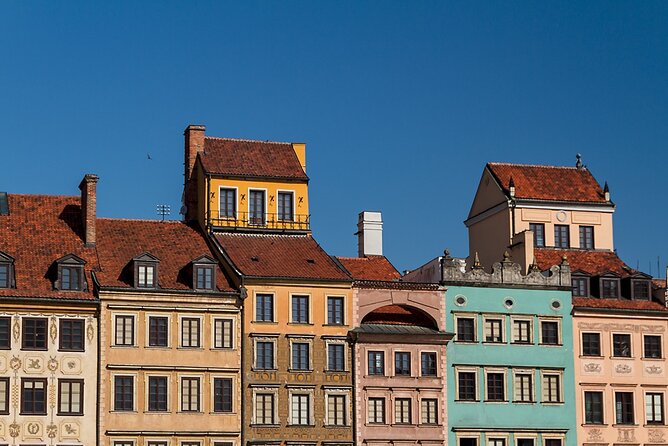
Warsaw’s Old Town can look almost too neat at first glance. Its colorful façades, tidy square, and restored castle give little hint that roughly 90 percent of the historic district was destroyed in 1944. The value of a good guide here is not simply naming buildings. It is helping you understand what is original, what was rebuilt, and why the reconstruction matters.
This tour gives you that framework on foot. You begin at Sigismund’s Column on Castle Square, move through the Old Town and its market square, then continue past the cathedral, Barbican, Uprising Monument, grand squares, royal memorials, and the Royal Route.
The group size is the key advantage. Because it is a private activity, you can ask about Poland’s political past, stop for a photograph, or request more detail about a particular church or monument. The route is packed, though, so you should expect steady walking and fairly short stops rather than a slow, museum-style visit.
The published stop times add up to about three hours and 20 minutes. The full experience lasts about four hours, allowing time to walk between sights and for the guide to explain the spaces along the way.
More Old Town walks in Warsaw:
- Warsaw: Chopin Concert in the Old Town
★ 4.8 · 2,287 reviews - Warsaw: Old Town Highlights Walking Tour in English
★ 4.7 · 1,516 reviews - Warsaw: Old Town Guided Walking Tour
★ 4.9 · 599 reviews
Castle Square and Sigismund’s Column
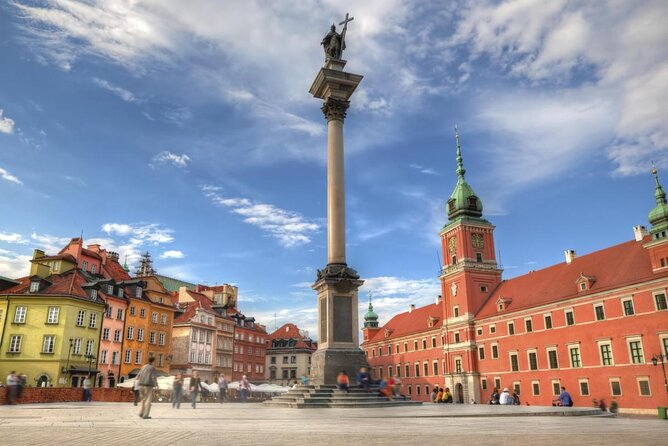
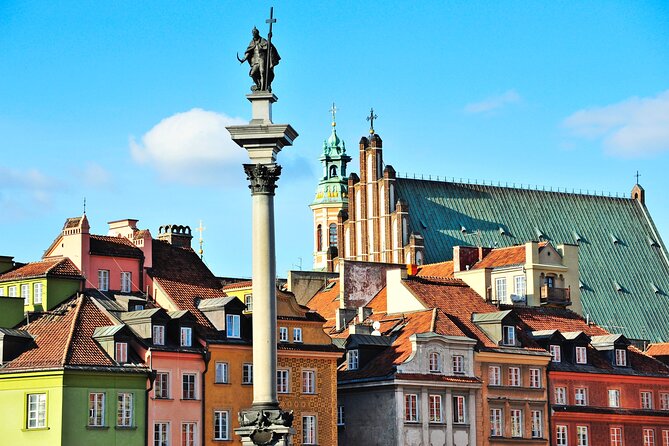
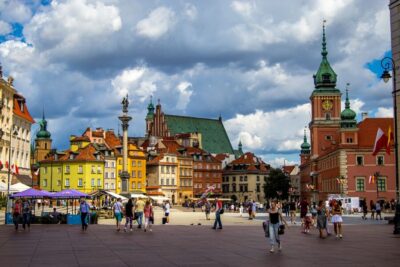
The tour starts at King Sigismund’s Column, beside Castle Square. It is an excellent place to begin because the monument points directly to the moment Warsaw became the seat of royal power.
Sigismund III Vasa moved the capital from Kraków to Warsaw in the late 16th century, and the column honors that king. It is also one of the city’s most recognizable symbols, second only, perhaps, to the Warsaw Mermaid.
The column has had a rough life. It was moved twice as Warsaw’s streets changed. German troops brought it down on September 2, 1944, and the statue and column were reconstructed by 1949. Earlier versions are displayed near the walls of the Royal Castle, giving you a useful visual reminder that even this familiar landmark has several chapters.
You will spend about 10 minutes here. That is enough for an introduction and photographs, but not enough for a long architectural discussion. The real benefit comes from the guide’s explanation of how the square connects the castle, Old Town, and the former Royal Route.
Old Town, rebuilt with remarkable care
The Old Town receives the longest stop, about 45 minutes, and rightly so. This is the heart of the walk.
Warsaw was founded beside the river on an important trading route between the Baltic Sea and the Black Sea. Merchants and craftsmen helped the settlement grow. Wooden buildings gradually gave way to masonry houses, while earth defenses became stone walls. A town hall was built in 1429, though it no longer survives, and the district gained its church, defensive towers, and Barbican.
The hard part of the story comes in 1944. The Old Town was nearly wiped out during the Second World War. Its later reconstruction was so careful that UNESCO placed the district on its World Heritage List as an example of the faithful rebuilding of a historic city.
This is where photographs and old plans can change the way you see Warsaw. Look closely at the façades and you may find it hard to picture the ruins that once filled these streets. A guide can help you read the rebuilt district as both an old town and a modern act of national recovery.
Do not expect a full museum visit here. The 45 minutes are for streets, buildings, stories, and orientation. If you want to study architectural details or linger at cafés, plan to return later on your own.
Royal Castle Gardens and St. John’s Cathedral
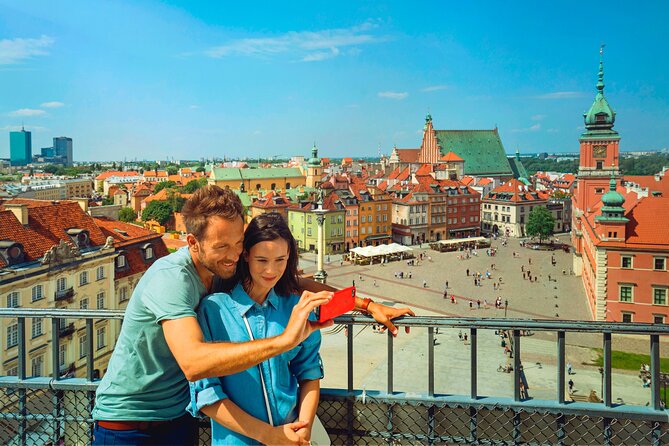
The Royal Castle Gardens receive about 15 minutes. The castle became a royal residence in the 16th century when Masovia joined the Polish Crown. It was damaged and rebuilt more than once, then bombed and burned at the beginning of the Second World War.
The destruction did not end there. In 1944, the castle was blown up in retaliation for the Warsaw Uprising. Reconstruction began only in 1971, funded largely by public generosity, and the building opened to visitors in 1984. Its inclusion on the UNESCO list recognizes not just the building’s earlier importance, but the quality and meaning of its reconstruction.
The gardens provide a short pause from the tight Old Town streets. You will see the castle setting and learn its story, but the tour does not promise a full interior visit. If you want the royal apartments and art collections, you will need separate time.
A short walk brings you to the Archcathedral Basilica of St. John the Baptist, one of Warsaw’s oldest churches. It hosted major national events, including the oath connected with the Constitution of May 3, described as the first constitution of its kind in Europe. Its crypt contains the tombs of important Polish figures, including the Chapel-Mausoleum of the Primate of the Millennium.
The cathedral is allotted about 15 minutes. If you visit Warsaw between July and September, note the International Organ Music Festival, held here every Sunday at 4 PM. That concert is not part of the tour, but it could make a fine return visit.
A few more in Warsaw
- Warsaw: Traditional Galar Cruise on The Vistula River
★ 4.6 · 1,640 reviews - Warsaw Concert: Chopin – Painted by Candlelights with Wine
★ 4.8 · 1,442 reviews - Warsaw: City Sightseeing Hop-On Hop-Off Bus Tour
★ 3.6 · 1,415 reviews - Warsaw: POLIN Museum of the History of Polish Jews Ticket
★ 4.7 · 1,142 reviews
Market Square and the Warsaw Mermaid
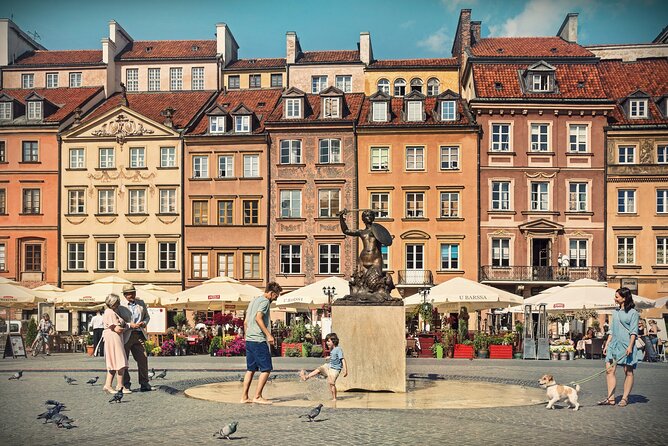
Rynek Starego Miasta, the Old Town Marketplace, is the district’s social center. Tenement houses surround the square, with restaurants, cafés, clubs, galleries, and museums occupying the surrounding buildings.
The square is divided into four sections named for Enlightenment-era activists: Kołłątaj, Dekert, Barss, and Zakrzewski. At its center is a statue of the Warsaw Mermaid, the city’s famous symbol. The mermaid’s image appears all over Warsaw, so this is a good moment to understand why she matters before you begin spotting her elsewhere.
The stop lasts about 15 minutes. That is enough to hear the square’s main story and take in the façades. I would use the guide’s food advice here. Carolina, one of the guides associated with this experience, has been praised for offering practical suggestions for snacks and meals, a useful bonus when you are deciding where to eat after the walk.
The Barbican and the edge of the old defenses
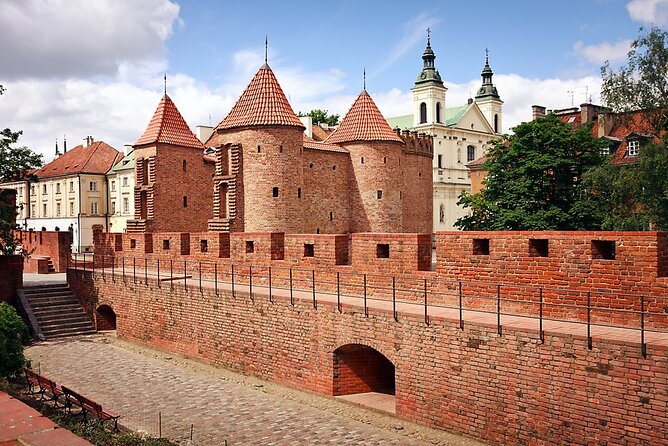
The Warsaw Barbican marks the transition between the Old Town and the newer city beyond the medieval walls. Built in 1548, it formed part of roughly 4,000 feet of defensive ramparts.
Today, painters and musicians often use the area, giving the passage a more relaxed feel than its military purpose suggests. From May through October, an exhibition inside the Barbican presents historic Warsaw photographs and models of former walls and towers.
That exhibition is particularly helpful because it lets you compare old plans with the current city. You can picture the defensive system that once protected the town and understand how much has vanished.
The scheduled stop is about 15 minutes. If the exhibition is open and you want time to study it, ask your guide how to return later. This portion is more about the city’s former shape than about entering a major monument.
Warsaw Uprising Monument and Krasiński Palace
The Warsaw Uprising Monument is one of the most serious stops. Its sculpted figures show insurgents emerging for battle, a powerful image of the 1944 uprising against German occupation.
The uprising ended in defeat and the deaths of about 200,000 Poles. The monument gives the event a physical presence, but the surrounding setting also invites difficult questions about why the uprising began, how it unfolded, and why its memory remains so important in Warsaw.
You have about 10 minutes here, which is brief for such a weighty subject. Still, the placement makes sense. The tour has already shown you the rebuilt Old Town, and now you can connect that reconstruction to the destruction that came before it.
Nearby is Krasiński Palace, also called the Palace of the Republic. Once the residence of Jan Krasiński, it now holds special collections for the National Library. It is regarded as one of Warsaw’s most appealing Baroque buildings, with reliefs inspired by ancient works.
The park behind the palace was among the early green spaces open to residents across social classes. It offers a welcome moment to slow down. Across the street, the green Supreme Court building adds a modern institutional note to the scene.
Miodowa Street’s churches and palaces
Miodowa Street takes about 20 minutes and provides a close look at the city’s former elite addresses. The narrow street is lined with old residences and religious buildings, each with a different link to Polish education, church life, or public service.
At number 24, the former Collegium Nobilium trained young people from the ruling class. It now houses the Academy of Theatre. Number 17 is the 18th-century Palace of Warsaw’s Archbishops, the residence of the Primate of Poland.
You will also pass Warsaw’s only Eastern Catholic Church and Pac Palace, now home to the Ministry of Health. The Capuchin Church is another worthwhile detail. Its altar contains the heart of Jan III Sobieski, who founded the church.
Further along, you can see the Monument of Warsaw’s Heroes, commonly called the Monument of Nike. This is a street where a guide’s explanation adds far more than a quick photograph. The buildings are close together, and without context it is easy to miss how many different institutions shaped this short stretch.
Theatre Square and the Tomb of the Unknown Soldier
The route continues to Plac Teatralny, or Theatre Square, for about 15 minutes. The Late Baroque Blank Palace borders one side, while the rebuilt Jabłonowski Palace recalls the prewar city hall.
The rebuilt city hall keeps only the original façade and clock tower. Passing through the gate beneath the tower reveals foundations laid in the 19th century, a small detail that helps show how Warsaw preserves fragments even when whole buildings are gone.
The Grand Theatre faces the square. It houses the National Opera and National Theatre, and its opera stage is among Europe’s largest. If you attend a performance, you can see its chandeliers, columned foyer, and patterned floors. During the walking tour, you will mainly get the exterior and its place in the city.
At the Tomb of the Unknown Soldier, the mood changes again. The tomb honors soldiers who died fighting for Poland’s freedom. It contains ashes connected with the defense of Lviv and urns holding soil from battlefields where Polish troops fell during the last century.
An eternal flame burns beside the tomb, guarded by an honor detail that changes daily at noon. The tour allows about 10 minutes here. If your schedule brings you near the tomb around midday, the changing guard may add a ceremonial moment, though the tour timing cannot guarantee it.
The Royal Route to the Copernicus Monument
The final 30 minutes follow the Royal Route from Castle Square toward Trzech Krzyży Square. This historic corridor links churches, palaces, university buildings, restaurants, shops, and government sites.
You may see St. Anne’s Church, including the view from its tower, though the tower visit is not stated as part of this walk. The route also passes the Polonia House, once the Museum of Industry and Trade, where Maria Skłodowska-Curie worked.
The Radziwiłł Palace now serves as the residence of Poland’s president. Warsaw University’s campus includes Kazimierzowski Palace, while Czapski Palace houses the Academy of Fine Arts. Farther along, Nowy Świat continues the elegant run of cafés, shops, and restaurants from Krakowskie Przedmieście.
The guide leaves you at the Nicolaus Copernicus Monument on Krakowskie Przedmieście. This is a useful ending rather than a dead stop. You can continue along the Royal Route, return to a church or palace, choose a restaurant, or simply explore at your own pace.
What the $111.75 price really buys
At $111.75 per person, this is not a budget orientation walk. Its value depends heavily on group size. For one or two people, the cost is a serious consideration. For a family or group of friends, private guiding can make the price more reasonable because you are buying attention for your own party.
The tour includes a professional local guide, but no paid admission is listed. That keeps the route moving and avoids spending the whole afternoon inside one attraction. At the same time, you should not book it expecting castle rooms, museum exhibits, or long church interiors.
The strongest value is interpretation. Warsaw’s rebuilt appearance can hide the scale of its destruction. A guide who explains the before-and-after story, as Maria, Cesar, Carolina, and Mariola have been praised for doing, can give you a much stronger first understanding of the city than a self-guided stroll.
The tour is offered in English. Confirmation arrives at booking, the start is near public transportation, and most people can take part. Free cancellation is available until 24 hours before the start time. Changes or cancellations inside that window are not accepted for a refund.
Who should book this Warsaw Old Town tour?
Book it if you want a private introduction to Warsaw’s central sights, especially if the city’s wartime destruction and postwar rebuilding are important to you. It suits first-time visitors, families who want to ask questions, and anyone who prefers a guide with local perspective rather than a fixed audio route.
It is also a good first-day choice. The tour gives you a map in your head, then leaves you near the Royal Route, where you can continue exploring. The food suggestions offered by guides such as Carolina may also help you plan the rest of the day.
Skip it if your top priority is entering the Royal Castle, studying museum collections, or spending long periods inside churches. You will see many important buildings, but the experience is built around streets, monuments, views, and explanation.
FAQ
How long is the private Warsaw Old Town tour?
The tour lasts approximately four hours. The listed sightseeing stops total about three hours and 20 minutes, with the remaining time allowing for walking between locations and explanations along the route.
Where does the tour begin?
It begins at Sigismund’s Column on Castle Square, Plac Zamkowy, 00-001 Warszawa, Poland.
Where does the tour end?
The guide leaves you at the Nicolaus Copernicus Monument on Krakowskie Przedmieście, along the Royal Route. You can continue exploring the city independently from there.
Is this a private activity?
Yes. Only your group participates in the tour.
What language is offered?
The tour is offered in English.
Are admission tickets included?
The tour information lists free admission for the sightseeing stops and includes a professional local guide. It does not list paid interior admissions to the Royal Castle, churches, museums, or other attractions.
Can I cancel for a full refund?
Yes. You can cancel at least 24 hours before the experience starts for a full refund. Cancellations or changes made less than 24 hours before the start time are not accepted for a refund.
Just added in Warsaw
- Wroclaw Small-Group Tour with Lunch from Warsaw★ 5.0 · 2 reviews
- World War II Warsaw Old Town, Military Cemetery Walking Tour★ 4.7 · 3 reviews
- Warsaw: Wolf’s Lair & Swieta Lipka Small-Group Tour + Lunch★ 5.0 · 3 reviews
- Wilanów Palace: 2-Hour Guided Tour with Entrance Tickets★ 4.8 · 8 reviews
- Warsaw Zoo Skip-the-Line Entry Ticket with Private Transport★ 4.8 · 3 reviews
- Warsaw Private Wilanow Palace & Garden Tour★ 4.6 · 30 reviews
- Warsaw Wolf’s Lair with St. Lipka and Mamerki Private Guided★ 4.2 · 3 reviews
- Warsaw: Private Vodka Tasting Night with Snacks and Pickup★ 5.0 · 7 reviews
Old Town Walking Tours, compared.


Sightseeing EcoCruise around the Old Town of Gdansk
Read our review →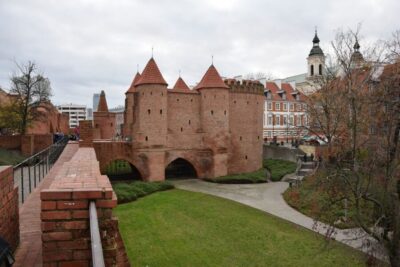
Old Town & Wawel Castle Walking Tour in English
Read our review →Browse the lists this tour appears in