
REVIEW · OLD TOWN WALKING TOURS
Old Town with Royal Castle + Warsaw Uprising Museum: SMALL GROUP /inc. Pick-up/
Warsaw tells its story in three stops. I like the live Old Town walk, where a guide connects grand squares with personal history, and I like the door-to-door transport between sites. The chance to visit both the Royal Castle and Warsaw Uprising Museum in one half-day gives you a useful first look at the city.
The main consideration is time. Four hours is enough for an introduction, but not for a slow museum visit or long pauses over every room and exhibit. The group may be marketed as small-group, yet bookings can reach 15 people, so confirm the expected group size if that matters to you.
In This Review
- Key points to know before booking
- Why this four-hour Warsaw tour works
- A guided walk through Rynek Starego Miasta
- The Royal Castle and Poland’s political past
- The Warsaw Uprising Museum in 90 minutes
- Transport that keeps the day moving
- What the audio-guides change
- Timing, group size, and the real pace
- Who should book this Warsaw experience?
- Should you book it?
- FAQ
- How long does the tour last?
- What attractions are included?
- Is hotel pickup included?
- Is a guide included?
- Are audio-guides included?
- What languages are available at the Royal Castle?
- What languages are available at the Warsaw Uprising Museum?
- How many people can join the tour?
- Can I cancel for a full refund?
Key points to know before booking
- Three major sights in about four hours: Old Town, the Royal Castle, and the Warsaw Uprising Museum fit into one compact outing.
- A live guide leads the Old Town portion: You hear commentary while walking instead of relying only on an audio recording.
- The museums are self-guided: Audio-guides are provided at both the castle and the uprising museum.
- Hotel or apartment pickup is included: Transport takes you to the Old Town, between the main stops, and back afterward.
- The museum pairing gives you two sides of Warsaw: The castle explains royal and political Poland, while the uprising museum focuses on wartime destruction and resistance.
- Morning and afternoon departures are available: This makes it easier to fit the tour around other Warsaw plans.
Why this four-hour Warsaw tour works
Warsaw can feel confusing at first because its most important sights tell very different stories. The Old Town presents the city’s polished, historic face. The Royal Castle recalls kings, parliament, and national government. The Warsaw Uprising Museum brings you into the terrible events of 1944.
I like the way this tour puts those three chapters together. You do not spend the whole day inside one museum, and you do not have to arrange separate transport across the city. The tour also gives you two styles of interpretation: direct commentary from a guide during the walk, followed by audio-guides that let you move through the museums at your own pace.
The price is $111.70 per person. That is not a bargain for a four-hour outing, especially if you are traveling alone and must meet the minimum booking requirement of two people. Still, the price includes pickup, return transport, taxes, the Old Town guide, and audio-guides at both museums. If you value a prepared route and do not want to sort out city transport, the cost can be reasonable.
The biggest value is time saved. Warsaw’s Old Town and the two museums are not one single attraction. Transport, tickets, and orientation can take energy away from the actual sightseeing. Here, the basic movement between stops is handled for you.
More Museums in Warsaw
- Warsaw: POLIN Museum of the History of Polish Jews Ticket
★ 4.7 · 1,142 reviews - Warsaw: Polish Vodka Museum Tour with Tasting
★ 4.6 · 788 reviews - Warsaw: Museum World of Illusion Entry Ticket
★ 3.9 · 666 reviews
A guided walk through Rynek Starego Miasta
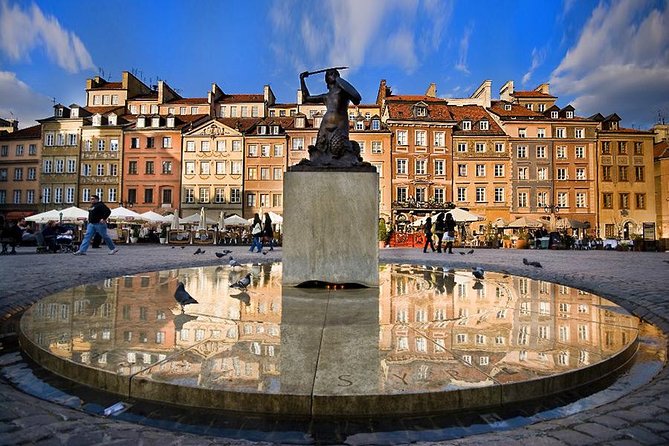
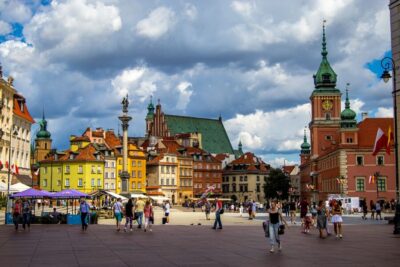
The tour begins in Warsaw’s Old Town, centered on Rynek Starego Miasta, or Old Town Market Square. This is the sort of place where you should pause before rushing toward the next sight. The square is surrounded by colorful historic tenements and has a central fountain with a sculpture of the Warsaw Siren, the city symbol.
The square is attractive, but its importance goes beyond appearance. It gives you a quick sense of Warsaw’s civic identity. The Siren appears throughout the city, and seeing the symbol here helps connect the square to the wider story of Warsaw.
The guided portion lasts about 30 minutes. That is short, so expect a focused orientation rather than a full historical walk. Your guide can point out the main features, explain how the Old Town connects with the rest of the city, and add the human details that a map cannot provide.
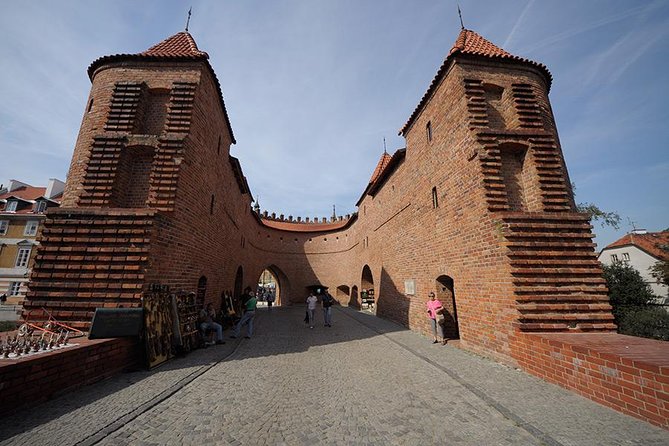
You will also see Castle Square, the Royal Castle, and Sigismund’s Column. The column is one of the key markers of Warsaw’s historic center, and the square provides a natural transition from the medieval-looking Old Town toward the royal complex.
The walk may also touch on the nearby Royal Route, the city’s prominent artery connecting former royal residences. Along the route and in the Old Town, you can find cafes, restaurants, and art galleries. The tour does not appear to include free time for a meal, so treat those places as suggestions for later rather than part of the scheduled experience.
One detail I value here is the live commentary. A guide can adjust the explanation to the group and keep the walk moving. The supplied feedback describes the guide as informative and friendly, with a knack for keeping the information interesting. That is especially useful during a short walk, when dry dates and names could easily turn the opening section into a lecture.
The Royal Castle and Poland’s political past
The Royal Castle receives about one hour. It is a baroque-classicist building on Castle Square and one of the clearest symbols of Poland’s royal and political past.
The site first served as the residence of the Mazovian princes. From the 16th century onward, it became the seat of the ruling bodies of the Polish Republic, including the king and the Sejm, Poland’s parliament. The building later served as the workplace of the Chief of State and the residence of the president during the 1920s and 1930s.
That timeline makes the castle more than a collection of elegant rooms. As you move through it, you are following the changing structure of Polish power. The building represents monarchy, parliamentary government, and the modern state in one place.
The visit includes an audio-guide, with options in Polish, English, German, Russian, French, Italian, and Spanish. This is important because you are exploring independently rather than following the guide room by room. You can listen at your own pace, but you should keep an eye on the schedule.
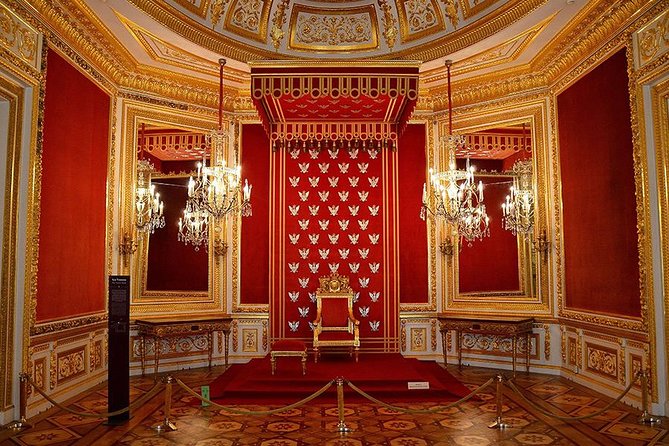
The castle rooms include chambers built for King Stanisław August Poniatowski and the Sejm chambers. The Throne Room, decorated with red velvet and gold, is among the key interiors. The Knight Room is also singled out as one of the notable spaces.
One hour is enough for a meaningful first visit if you keep moving. It is not enough for a slow examination of every room, every object, and every audio-guide track. If royal interiors are your main interest, you may prefer a separate, longer visit. On this tour, the castle works best as a focused introduction.
The self-guided format has one clear advantage: you are not tied to a group explanation inside every room. The drawback is that you must manage your own pace. If you linger too long in the early galleries, you may have to shorten the final part of your visit.
The Warsaw Uprising Museum in 90 minutes
The final major stop is the Warsaw Uprising Museum, with about 90 minutes allotted. This is the emotional center of the tour.
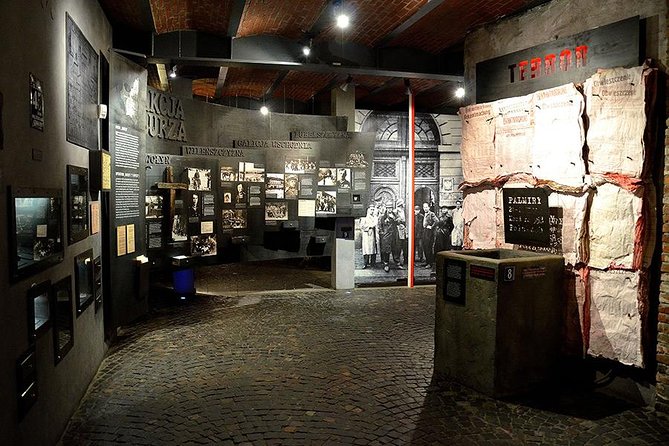
The museum focuses on the Warsaw Uprising of 1944, when Polish resistance fighters rose against German occupation. The event came at a terrible cost. Warsaw was devastated, and a generation of young people, many not yet 20, died. The city that had been known for its architecture, social life, religious mix, and modern infrastructure was demolished almost to the last building.
The museum’s central question is difficult but necessary: why did people rise, and what price were they prepared to pay for the chance of freedom? You are not simply looking at old objects in glass cases. The exhibition uses multimedia elements to recreate the atmosphere of 1944 and place you inside the decisions, fear, and destruction of that year.
The audio-guide is available in a long list of languages, including English, Polish, German, French, Spanish, Italian, Russian, Chinese, Japanese, Ukrainian, Portuguese, Dutch, Swedish, Czech, Croatian, Finnish, Danish, Romanian, Hungarian, Slovak, Slovenian, Bulgarian, Georgian, Hebrew, Indonesian, Macedonian, and Azerbaijani.
Ninety minutes gives you a useful amount of time, but the subject deserves concentration. This is not the kind of museum to race through while thinking about lunch. I suggest saving your attention for the personal stories and multimedia sections that explain how ordinary people experienced the uprising.
The museum can also be demanding emotionally. That is not a flaw, but it is worth knowing before you book. The castle offers formal rooms and political history; the uprising museum gives you wartime trauma and the cost of resistance. The contrast is powerful, but the second half of the tour may feel heavy.
More Old Town walks in Warsaw:
- Warsaw: Chopin Concert in the Old Town
★ 4.8 · 2,287 reviews - Warsaw: Old Town Highlights Walking Tour in English
★ 4.7 · 1,516 reviews - Warsaw: Old Town Guided Walking Tour
★ 4.9 · 599 reviews - Warsaw: Chopin Concert at Historical Venue in Old Town
★ 4.7 · 445 reviews
Transport that keeps the day moving
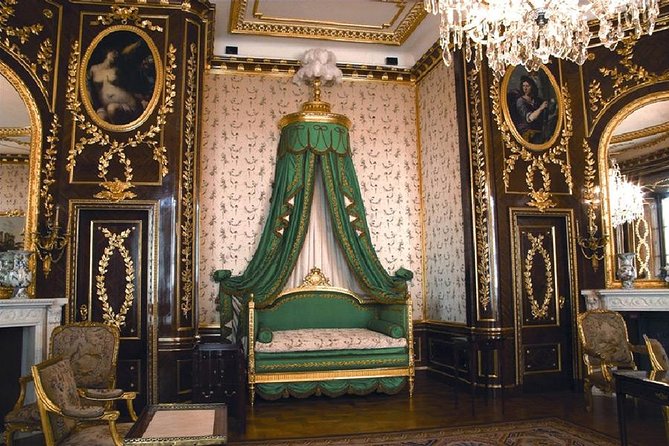
Door-to-door transportation is included from your hotel or apartment to the Old Town. After the walking tour, transport takes you from the Old Town to the uprising museum, then returns you to your accommodation.
This arrangement is useful if you are staying outside the central area or prefer not to work out Warsaw’s public transport system on a short schedule. You also avoid the awkward gap between a guided walk and an independently visited museum.
The vehicle is limited to eight passengers according to the main tour description, while the booking information allows a maximum of 15 people. That difference is worth clarifying before you pay. A vehicle carrying eight feels more personal and easier to coordinate. A group of 15 is still manageable, but it is not the same small-group experience.
A driver or coordinator is available to help during the tour. That role matters because the guide does not appear to accompany you through the castle and uprising museum. The coordinator helps keep the route organized while the audio-guides handle the detailed museum explanations.
Pickup is a real convenience, but it also means you should provide accurate accommodation details and be ready at the agreed time. The tour offers morning or afternoon departures, so you can choose the slot that fits your day. A morning visit may leave your evening open for a restaurant or concert. An afternoon departure may work better if you want a quiet start.
What the audio-guides change
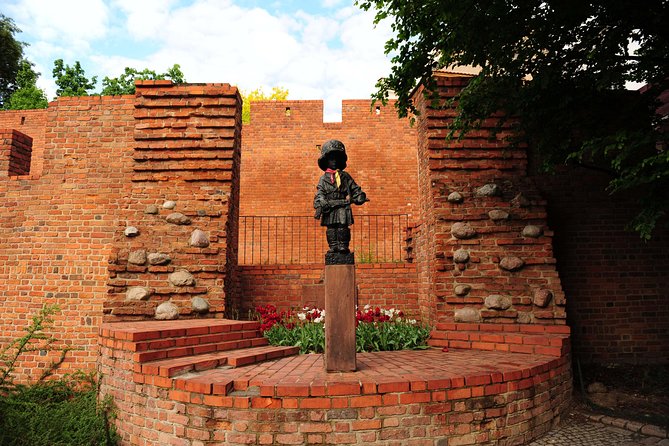
Audio-guides are included at both museums, and they shape the experience in a useful way. At the Royal Castle, they let you focus on rooms that interest you most. At the uprising museum, they provide a structured way to follow a complex story.
You should think of the tour as a guided walk plus two independent museum visits. If you want one guide talking continuously from pickup through the final return, this is not that kind of outing. If you prefer some freedom after receiving a clear introduction, the format is a good fit.
The live guide is most valuable in the Old Town, where a short explanation can make the square, column, cathedral, and royal buildings easier to understand. The audio-guides then give you more control inside the museums.
There is also a practical language benefit. The castle audio-guide covers seven languages, and the uprising museum offers many more. Check the available language you need when booking, especially if you are not comfortable following a long historical explanation in English.
Timing, group size, and the real pace
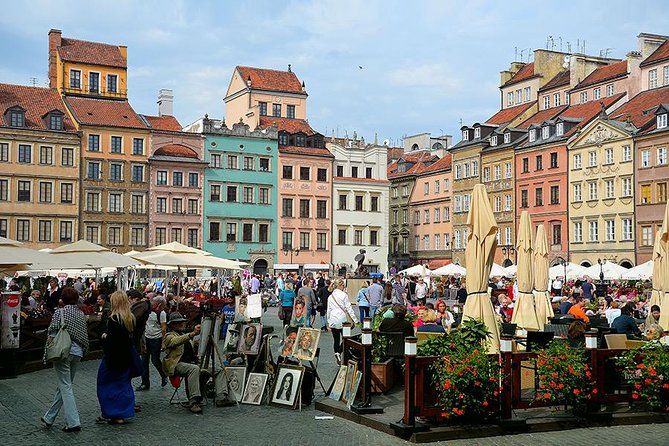
The advertised duration is approximately four hours. The listed stops add up to about three hours, leaving time for driving, pickup, transitions, and getting organized at each site.
That schedule is efficient, not leisurely. You should expect a strong overview rather than a day of lingering. The 30-minute Old Town walk gives you the setting. The one-hour castle visit introduces the royal rooms and political history. The 90-minute museum visit provides the most time for detailed reflection.
A minimum of two people per booking applies, and the maximum is 15. Most people can participate, according to the tour information. No special physical requirements are listed, but the Old Town section involves walking, and the two museum visits require time on your feet.
The short format suits a first visit to Warsaw, especially if you have limited time. It also suits you if you want an organized introduction before exploring individual places again on your own. It is less suitable if you already know the city well or want long, unhurried museum sessions.
Who should book this Warsaw experience?
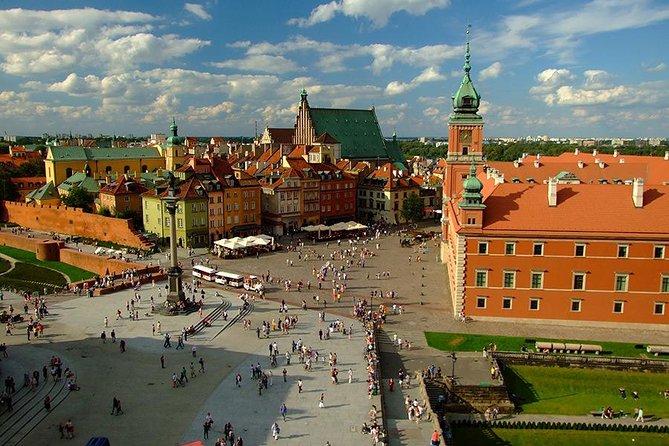
I would recommend this tour to first-time visitors who want Warsaw’s main historical themes arranged in a clear order. Families and couples may appreciate the pickup and return transport, while solo visitors should note the minimum of two people per booking.
It is also a good choice if you want both the beauty of the Old Town and the difficult truth behind Warsaw’s wartime destruction. The tour does not present the city as only picturesque. That balance is one of its strengths.
History-focused visitors should be happy with the subjects covered, though they may want extra time at both museums. The tour also works for people who dislike large coach groups, provided the actual vehicle size is confirmed in advance.
You may want to skip it if you prefer to choose every stop yourself, spend half a day in one museum, or take long breaks for food and photography. The schedule leaves little room for drifting.
Should you book it?
Book this experience if you want a well-organized first look at Warsaw without arranging three separate visits. The friendly, informative guide, included transport, and combination of royal history with the 1944 uprising make the route useful rather than merely convenient.
At $111.70 per person, the tour is best judged as a time-saving package. You are paying for transport, coordination, a live Old Town introduction, and two audio-guided museum visits. Confirm the group size and your preferred audio-guide language before booking, then choose morning or afternoon based on how much independent time you want afterward.
Free cancellation is available up to 24 hours before the start time. If you need to cancel later, the payment is not refunded.
FAQ
How long does the tour last?
The tour lasts approximately four hours.
What attractions are included?
The tour includes Warsaw Old Town, the Royal Castle in Warsaw, and the Warsaw Uprising Museum.
Is hotel pickup included?
Yes. Door-to-door transport is provided from your hotel or apartment to the Old Town, between the Old Town and the uprising museum, and back to your accommodation.
Is a guide included?
A guide provides live commentary during the Old Town walking tour. A driver or coordinator is also available to help during the experience.
Are audio-guides included?
Yes. Audio-guides are provided at both the Royal Castle and the Warsaw Uprising Museum.
What languages are available at the Royal Castle?
The Royal Castle audio-guide is available in Polish, English, German, Russian, French, Italian, and Spanish.
What languages are available at the Warsaw Uprising Museum?
The Warsaw Uprising Museum audio-guide is available in English, Azerbaijani, Bulgarian, Chinese, Croatian, Czech, Danish, Finnish, French, Georgian, Hebrew, Spanish, Indonesian, Japanese, Macedonian, Dutch, German, Polish, Portuguese, Russian, Romanian, Slovak, Slovenian, Swedish, Ukrainian, Hungarian, and Italian.
How many people can join the tour?
A minimum of two people is required per booking, and the maximum is 15 people. The main description says transportation is in vehicles limited to eight passengers, so you should confirm the expected vehicle and group size before booking.
Can I cancel for a full refund?
Yes. You can cancel for a full refund up to 24 hours before the experience start time. Changes or cancellations made less than 24 hours before the start time are not accepted for a refund.
Just added in Warsaw
- Wroclaw Small-Group Tour with Lunch from Warsaw★ 5.0 · 2 reviews
- World War II Warsaw Old Town, Military Cemetery Walking Tour★ 4.7 · 3 reviews
- Warsaw: Wolf’s Lair & Swieta Lipka Small-Group Tour + Lunch★ 5.0 · 3 reviews
- Wilanów Palace: 2-Hour Guided Tour with Entrance Tickets★ 4.8 · 8 reviews
- Warsaw Zoo Skip-the-Line Entry Ticket with Private Transport★ 4.8 · 3 reviews
- Warsaw: Private Vodka Tasting Night with Snacks and Pickup★ 5.0 · 7 reviews
- Warsaw Private Wilanow Palace & Garden Tour★ 4.6 · 30 reviews
- Warsaw Wolf’s Lair with St. Lipka and Mamerki Private Guided★ 4.2 · 3 reviews
Old Town Walking Tours, compared.


Sightseeing EcoCruise around the Old Town of Gdansk
Read our review →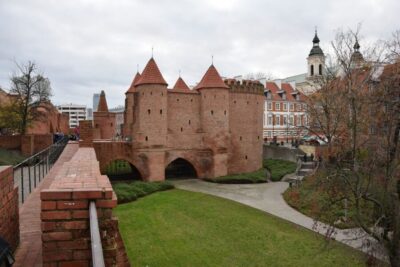
Old Town & Wawel Castle Walking Tour in English
Read our review →Browse the lists this tour appears in