REVIEW · WARSAW TOURS
Offbeat Warsaw: Explore the Edgy & Artsy Praga District
Praga rewards curious walkers. This two-hour tour with Łukasz takes you beyond Warsaw’s polished Old Town into a district of Jewish heritage, old courtyards, street art, movie locations, avant-garde housing, and former factories. I like the small maximum of 10 people, which gives you a real chance to ask questions, and I like the useful finish near metro and tram connections.
The main tradeoff is pace. You cover many stops in only two hours, so several visits are short looks from outside rather than long explorations. Praga also has a rougher, less polished feel than central Warsaw. That is part of its appeal, but you should stay alert, especially if you return after dark.
In This Review
- Key reasons to choose this Praga walk
- Why Praga makes a good second look at Warsaw
- Starting at St. Florian’s and the Praga band monument
- Jewish sites and the former orphanage
- A 19th-century park and the Loreto Chapel
- Jagiellońska 44 and Warsaw’s avant-garde housing
- Mała and the atmosphere of The Pianist
- Stalowa: cafes, galleries, and street art
- The Konopacki residence and the neighborhood’s origins
- Ending at Bohema’s former factory complex
- What $42.14 buys you
- Timing, walking, and practical expectations
- Who will enjoy this walk most
- Should you book Offbeat Warsaw?
- FAQ
- Where does the tour begin?
- What time does the tour start?
- How long does the tour last?
- Where does the tour finish?
- Is the tour offered in English?
- How many people can join the tour?
- What is the price?
- Is public transportation available near the end?
- Can I cancel for a full refund?
Key reasons to choose this Praga walk
- See a different Warsaw: Leave the postcard center behind for old streets, Communist-era buildings, working-class corners, and post-industrial sites.
- Meet at St. Florian’s: The tour begins at plac Weteranów 1863 Roku, in front of the cathedral, at 1 p.m.
- Follow local stories: Łukasz focuses on short stories, neighborhood details, and places you could easily pass without noticing.
- Visit film and art locations: The route includes Mała, a filming location for The Pianist, plus murals and street art along Stalowa.
- Keep the group personal: The maximum is 10 people, a useful size for questions and conversation.
- Finish with easy transport: The route ends at Bohema, near Szwedzka metro station and a tram stop serving the Old Town.
Why Praga makes a good second look at Warsaw
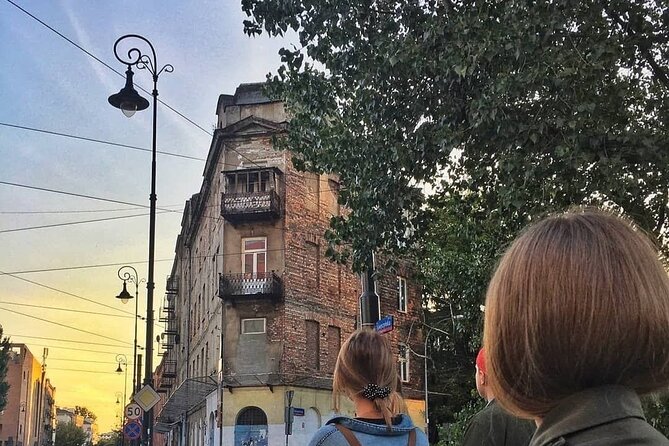
Warsaw’s rebuilt Old Town is worth your time, but it can give you a tidy picture of the city. Praga offers a less arranged experience. On the eastern side of the Vistula, it retains traces of older streets, religious sites, local commerce, Communist-era planning, and industrial change.
That contrast is the reason I would not treat this as a replacement for the classic Warsaw sights. It works better as a companion. See the Royal Route and Old Town for the grand civic story, then come here to look at how people lived, worked, worshiped, and made neighborhoods in the spaces between official monuments.
The walk also has a strong visual side. You may photograph murals, weathered facades, old market scenes, unusual architecture, and the mix of renovated and worn buildings. Praga does not offer one single look. Its character comes from the shifts between eras.
A few more in Warsaw
- Warsaw: Chopin Concert in the Old Town
★ 4.8 · 2,287 reviews - Warsaw: Traditional Galar Cruise on The Vistula River
★ 4.6 · 1,640 reviews - Warsaw: Old Town Highlights Walking Tour in English
★ 4.7 · 1,516 reviews
Starting at St. Florian’s and the Praga band monument
Meet Łukasz at plac Weteranów 1863 Roku, in front of St. Florian’s, for the 1 p.m. start. The opening ten minutes help set the area in context before the route moves into the neighborhood.
One early stop is the Monument to Praga Courtyard Bands, or Pomnik Praskiej Kapeli Podwórkowej. It honors a local musical tradition linked to street and courtyard performers. This is a small monument, but it introduces an important idea: Praga’s identity is not only found in large buildings. Music, neighborhood customs, and informal public life matter here too.
I like stops such as this because they give you a way to read the district. Instead of simply photographing an old street, you begin to notice the local habits and stories attached to it.
Jewish sites and the former orphanage
The route continues to Teatr Baj, associated with a former Jewish orphanage. You spend about five minutes here, enough for Łukasz to explain the site and connect it to the Jewish life once present in Praga.
The tour also includes the former site of the Praga Synagogue from the 1830s, identified on the route as Nożyk Synagogue. This is primarily a history stop rather than a grand interior visit. The value is in understanding what is no longer visible and how the neighborhood’s Jewish past fits into Warsaw’s wider story.
You should set your expectations correctly. This is not a synagogue tour with an extended indoor visit. Several points are brief, so the guide’s explanation is central. If you care about Warsaw’s Jewish heritage, these stops add a useful eastern-district perspective to visits elsewhere in the city.
A 19th-century park and the Loreto Chapel
The route includes a 19th-century park before reaching the Chapel of Our Lady of Loreto. The park is not described as a long break, but it gives the walk a change of rhythm after the denser urban streets.
The Loreto Chapel is one of Praga’s most important early landmarks. Dating to the 17th century, it is described as the oldest historical monument in the district. The ten-minute stop gives you more time here than at the smaller monuments, which makes sense. This is a place where architecture and religious history carry much of the story.
I would pay attention to the contrast between the chapel and the later buildings that follow. Praga’s appeal comes from these layers placed close together: an early religious structure, 19th-century streets, Communist housing, new creative spaces, and old industrial sites being reused.
Something quite different:
- Warsaw Concert: Chopin – Painted by Candlelights with Wine
★ 4.8 · 1,442 reviews - Warsaw: City Sightseeing Hop-On Hop-Off Bus Tour
★ 3.6 · 1,415 reviews - Warsaw: POLIN Museum of the History of Polish Jews Ticket
★ 4.7 · 1,142 reviews - #1 Pub Crawl Warsaw with Optional Premium 1 Hour Open Bar
★ 5.0 · 790 reviews
Jagiellońska 44 and Warsaw’s avant-garde housing
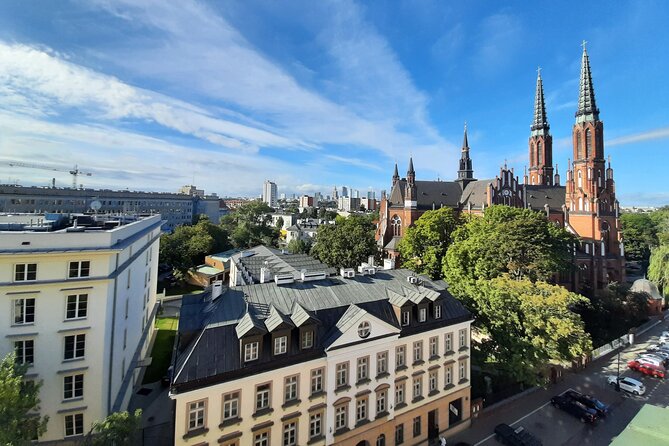
At Jagiellońska 44, the tour pauses at one of Warsaw’s first Communist-era housing estates. It was designed by prominent Polish avant-garde architects, and the stop lasts about ten minutes.
This is one of the route’s most useful choices because it moves beyond the familiar image of Communist architecture as merely gray or repetitive. Planned housing can reveal the hopes and limits of a period. The design tells you about modern ideas, practical needs, and the way Warsaw rebuilt and expanded after wartime destruction.
You will not be touring a museum here. The building is experienced from the street, so Łukasz’s explanation gives the stop its meaning. Ask questions if you want to understand what makes this estate different from ordinary postwar blocks.
Mała and the atmosphere of The Pianist
Mała is included as a filming location for The Pianist. The stop lasts about ten minutes, giving you time to see the street and understand how the setting was used in the film.
Film locations can be lightweight sightseeing, but this one works better when tied to Warsaw’s wartime story. The street helps connect the city you see now with the destruction, displacement, and survival shown in the movie. It is also a good reminder that Praga’s older fabric has often served as a stand-in for parts of Warsaw that no longer exist.
If you have seen The Pianist, bring that memory with you, but you do not need to be a film enthusiast to enjoy the stop. The site is part of the neighborhood itself, not a separate attraction with a formal exhibit.
Stalowa: cafes, galleries, and street art
The longest stop is on Stalowa, with about 15 minutes to look around. This is one of the route’s liveliest sections, with cafes, bars, galleries, and street art.
I would save your best photography here. Look for the way painted walls sit beside older facades, and notice how small creative businesses use the street. The district’s fashionable side is visible here, but it has not erased the older character completely.
That mixture is also why Praga may feel uneven. Some corners look carefully renewed, while others remain worn and rough. You may enjoy that honest contrast, or you may prefer the cleaner presentation of central Warsaw. Either reaction is fair.
The time is enough for an introduction, not for a cafe meal or a full gallery visit. If Stalowa interests you, note the places you want to revisit after the tour. You can ask Łukasz for suggestions about cafes and restaurants in the area.
The Konopacki residence and the neighborhood’s origins
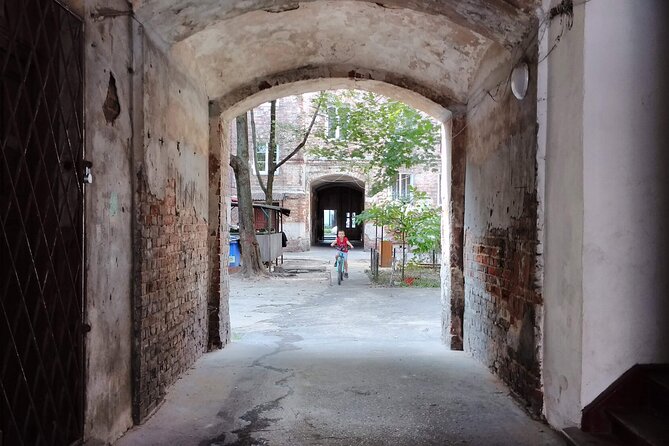
Pałacyk Ksawerego Konopackiego is the former residence of the person who founded the neighborhood. The stop takes about five minutes.
This small palace helps give Praga a local point of origin. Rather than treating the district as a random collection of old streets, the route shows you that its growth was shaped by particular people and plans. The building also adds architectural variety after the housing estate and street-art sections.
Because the stop is short, do not expect a full palace visit. Think of it as a compact piece of the neighborhood’s foundation story, best appreciated with the surrounding streets in mind.
Ending at Bohema’s former factory complex
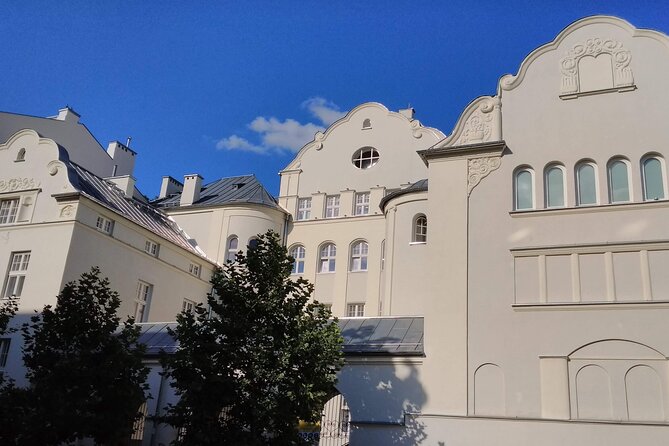
The walk ends at Fabryka Schichta Bohema, a former 19th-century cosmetics factory complex at Szwedzka 20. The site now combines post-industrial buildings with contemporary construction and serves as a multi-purpose hub.
This is a fitting final stop. You begin with religious and neighborhood history, move through housing and street culture, and finish in a former factory adapted for modern use. Praga’s past is not frozen. Old industrial spaces are being given new roles, sometimes in ways that change the district’s feel.
The ending is practical as well as visual. Szwedzka metro station is nearby, and a tram stop about 400 meters away can take you toward Castle Square in the Old Town. That makes it easy to continue sightseeing rather than spend time figuring out your return route.
What $42.14 buys you
At $42.14 per person, this is not the cheapest way to take a walk around Warsaw. The price makes more sense if you want interpretation rather than a self-guided route. You are paying for a local guide, an English-language experience, a planned route, and the chance to ask questions in a group capped at 10.
The small group matters. Praga has enough detail to reward conversation, and a large crowd would make street-side explanations harder to hear. With 10 people or fewer, you should have a better chance to speak directly with Łukasz and ask about places that catch your eye.
The route includes no listed admission charges, so the value comes from access to local context rather than tickets. If you are comfortable reading maps and researching Warsaw on your own, you could walk parts of Praga independently. The tour earns its cost when you want the connections between the sites, especially the Jewish history, architecture, film locations, and neighborhood changes.
Timing, walking, and practical expectations
Plan for about two hours, with the start at 1 p.m. The itinerary covers 10 main stops, plus the park, so the pace is purposeful. Wear comfortable shoes and keep your camera ready, since some of the best details may be on walls, signs, courtyards, or building fronts.
The tour is offered in English and uses a mobile ticket. It begins near public transportation and ends near both metro and tram links. Most people can participate, but the supplied details do not promise a fully step-free route, so anyone with specific mobility needs should confirm before booking.
Free cancellation is available up to 24 hours before the local start time. A minimum number of people is required, and if that minimum is not met, you are offered another date or experience, or a full refund.
Who will enjoy this walk most
I would choose this tour if you have already seen, or plan to see, Warsaw’s main central sights and want a more local-feeling district. It suits people interested in urban change, Jewish heritage, architecture, Polish cinema, murals, and old industrial buildings.
It is also a good fit if you prefer a guide who tells short stories instead of delivering a long list of dates. The comments about Łukasz repeatedly point to his English, flexibility, easy manner, and ability to answer questions. One custom tour was adapted around the group’s interests and included local snacks, drinks, lunch, and a return to an apartment, but you should not assume those extras are part of this standard two-hour walk.
Families with older children, photographers, architecture fans, and film buffs should find plenty to notice. If your main goal is grand interiors, major museums, or a long food stop, this is probably not the right choice. The experience is mostly about seeing the district and understanding it through a local guide.
Should you book Offbeat Warsaw?
Book it if you want to see Warsaw beyond Old Town and prefer a compact walk with plenty of context. The strongest reasons are Łukasz’s local knowledge, the 10-person limit, and the range of stops, from the Loreto Chapel to Stalowa’s murals and Bohema’s factory buildings.
Skip it if your schedule is too short for anything outside the central sights, or if rough-edged streets make you uncomfortable. For most curious visitors, though, this is a smart way to spend two hours. It shows you a Warsaw that is less polished, more layered, and much easier to appreciate with someone who knows where to look.
FAQ
Where does the tour begin?
It begins at plac Weteranów 1863 Roku in Warsaw, in front of St. Florian’s.
What time does the tour start?
The scheduled start time is 1 p.m.
How long does the tour last?
The walking tour lasts approximately two hours.
Where does the tour finish?
It ends at Fabryka Schichta Bohema, Szwedzka 20, in Warsaw.
Is the tour offered in English?
Yes. The experience is offered in English.
How many people can join the tour?
The group is limited to a maximum of 10 people.
What is the price?
The listed price is $42.14 per person.
Is public transportation available near the end?
Yes. Szwedzka metro station is near Bohema. A tram stop about 400 meters away provides service toward Castle Square in the Old Town.
Can I cancel for a full refund?
Yes, if you cancel at least 24 hours before the experience start time. Changes or cancellations made less than 24 hours in advance are not accepted for a refund.
Just added in Warsaw
- Wroclaw Small-Group Tour with Lunch from Warsaw★ 5.0 · 2 reviews
- World War II Warsaw Old Town, Military Cemetery Walking Tour★ 4.7 · 3 reviews
- Warsaw: Wolf’s Lair & Swieta Lipka Small-Group Tour + Lunch★ 5.0 · 3 reviews
- Wilanów Palace: 2-Hour Guided Tour with Entrance Tickets★ 4.8 · 8 reviews
- Warsaw Zoo Skip-the-Line Entry Ticket with Private Transport★ 4.8 · 3 reviews
- Warsaw: Private Vodka Tasting Night with Snacks and Pickup★ 5.0 · 7 reviews
- Warsaw Private Wilanow Palace & Garden Tour★ 4.6 · 30 reviews
- Warsaw Wolf’s Lair with St. Lipka and Mamerki Private Guided★ 4.2 · 3 reviews
Warsaw Tours, compared.
Traditional Galar Cruise on The Vistula River
Read our review →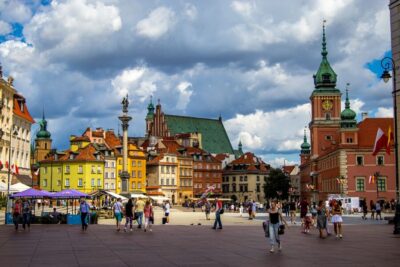
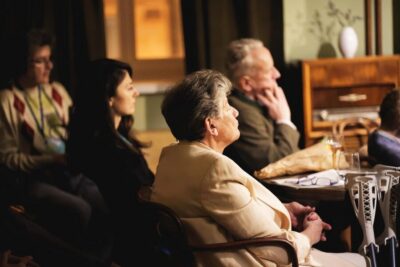
Warsaw Concert: Chopin – Painted by Candlelights with Wine
Read our review →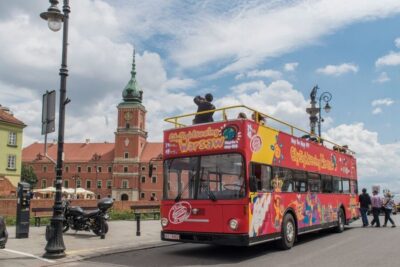
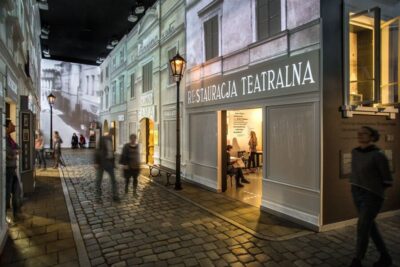
POLIN Museum of the History of Polish Jews Ticket
Read our review →
#1 Pub Crawl Warsaw with Optional Premium 1 Hour Open Bar
Read our review →