REVIEW · WARSAW TOURS
Must-do sites in Warsaw: retro car private tour with hotel pickup
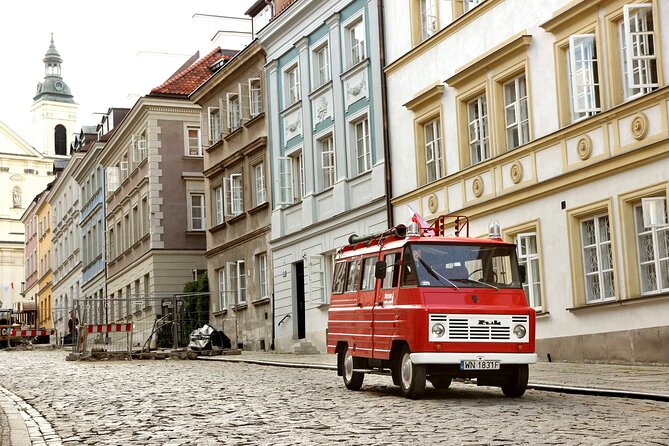
Warsaw tells its story in layers. This private tour makes those layers easier to grasp, pairing a vintage minibus ride with walks through the Old Town and visits to major national memorials. I like the hotel pickup and the personal feel of having only your own group, especially when a guide such as Art, Adam, or Mariusz can adjust the story to your interests. I also like the mix of famous landmarks and quieter corners such as Gnojna Góra.
The main point to consider is the balance between driving and walking. The minibus carries you between areas, but it is not a rolling sightseeing platform for three hours. You walk at several stops, and some vintage minibuses lack air conditioning or seat belts, as historic-vehicle rules allow.
In This Review
- Key things to know before you book
- Why this vintage Warsaw tour works
- Castle Square begins the story
- The Royal Castle and St. John’s Archcathedral
- Gnojna Góra adds a quieter viewpoint
- Market Square and the Warsaw Mermaid
- The Barbican shows Warsaw’s old defenses
- Krasiński Square and the Warsaw Uprising
- Piłsudski Square ends with national memory
- What the private minibus is really like
- Pickup, timing, and the best meeting point
- Who will get the most from this tour?
- Should you book it?
- FAQ
- How long does the Warsaw retro car tour last?
- Is hotel pickup and drop-off included?
- Is the tour private?
- How many people fit in one minibus?
- Is the tour offered in English?
- Does the tour enter the Royal Castle?
- Is walking required?
- Are the vintage minibuses air-conditioned?
- Can children join the tour?
Key things to know before you book
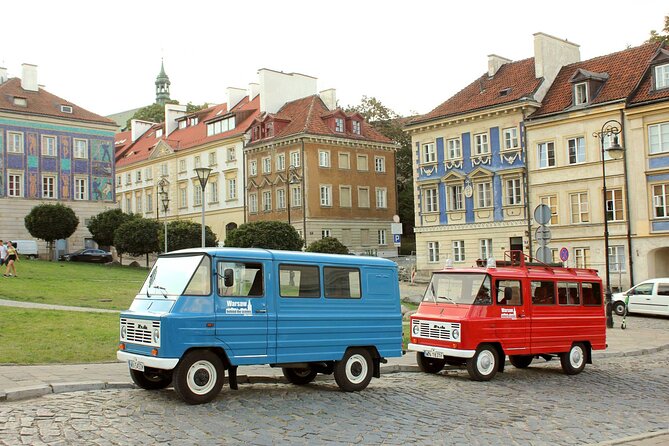
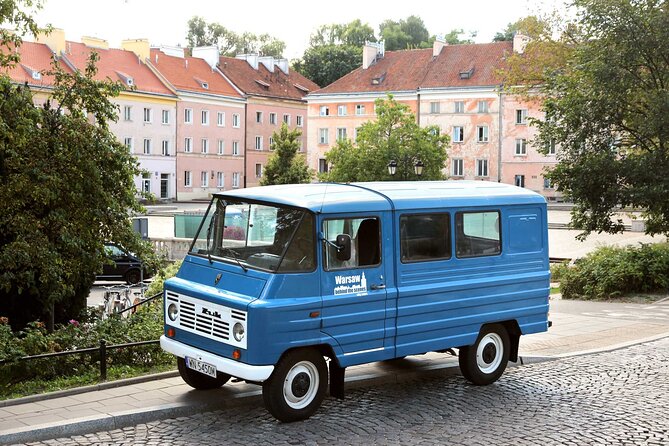
- A Żuk-style vintage minibus adds real character: The unusual vehicle is part of the appeal, and children especially may enjoy the ride.
- The tour covers Warsaw’s essential historic core: You visit Castle Square, the Old Town Market Square, the Barbican, Krasiński Square, and Piłsudski Square.
- Old Town touring is done on foot: Cars cannot enter the historic center, so wear proper walking shoes.
- Hotel pickup and drop-off save planning time: But the transfer counts toward the three-hour tour, so a central meeting point may be wiser from a distant hotel.
- Private touring gives you a more personal history lesson: Guides including Art, Adam, and Mariusz have been praised for clear, engaging explanations.
- The price is best for a small group: At $168.58 per person, the value improves when you share the private vehicle with family or friends.
Why this vintage Warsaw tour works
Warsaw can be hard to read at first. Much of the city was destroyed during World War II, then rebuilt with remarkable care. A quick walk through the Old Town can leave you admiring pretty façades without understanding what was lost and why the reconstruction matters.
This tour gives you that framework. It begins with medieval and royal Warsaw, then moves through national memory, wartime destruction, and postwar rebuilding. You are not simply checking off monuments. You are learning how a city repeatedly changed its role and appearance.
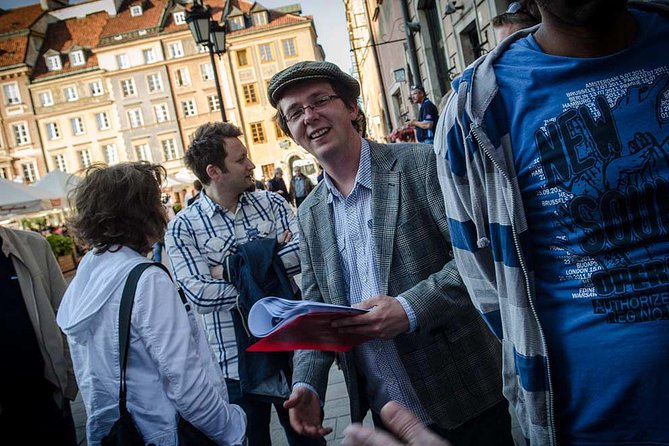
The private format helps. Your guide can explain Poland’s partitions, the wartime years, and the Warsaw Uprising at a pace that suits your group. Several guides, including Art, Adam, and Mariusz, have drawn especially warm praise for their ability to make difficult history clear and keep children and tweens interested.
The tour costs $168.58 per person. That is not a cheap introduction to Warsaw, especially for one person, but the price includes the vehicle, an English-speaking guide, and pickup and drop-off. For a family or small group, the private setup can make sense. You are paying for a focused three-hour orientation rather than joining a large group at a fixed meeting point.
The tour is also booked well ahead, with an average booking lead time of 37 days. That suggests you should reserve early if your Warsaw dates are fixed.
A few more in Warsaw
- Warsaw: Chopin Concert in the Old Town
★ 4.8 · 2,287 reviews - Warsaw: Traditional Galar Cruise on The Vistula River
★ 4.6 · 1,640 reviews - Warsaw: Old Town Highlights Walking Tour in English
★ 4.7 · 1,516 reviews
Castle Square begins the story
Your first sightseeing stop is Castle Square, or Plac Zamkowy, the gateway to Warsaw’s Old Town. The square carries both royal ceremony and modern Polish memory. It marks the start of your walking section because cars cannot enter the Old Town.
You spend about 15 minutes here, which is enough for an introduction rather than a full study of every building. Your guide explains Warsaw’s origins, its royal connections, and the events that shaped the capital over more than seven centuries.
This is a useful opening because the square helps you understand the layout of the historic center. From here, the route continues along streets that once formed the heart of political and religious life. I would pay close attention to the guide’s explanation of reconstruction. The buildings look old, but much of what you see was rebuilt after wartime destruction.
Next comes King Sigismund’s Column, with about five minutes at the monument. The column honors the king who moved Poland’s capital from Kraków to Warsaw. That small fact explains why Warsaw became the country’s political center, even though Kraków remains so important to Polish culture and royal history.
Your guide also covers the column’s destruction and later rebuilding. It is a compact stop, but it gives you a clear example of Warsaw’s larger story: destruction did not erase the city’s symbols.
The Royal Castle and St. John’s Archcathedral
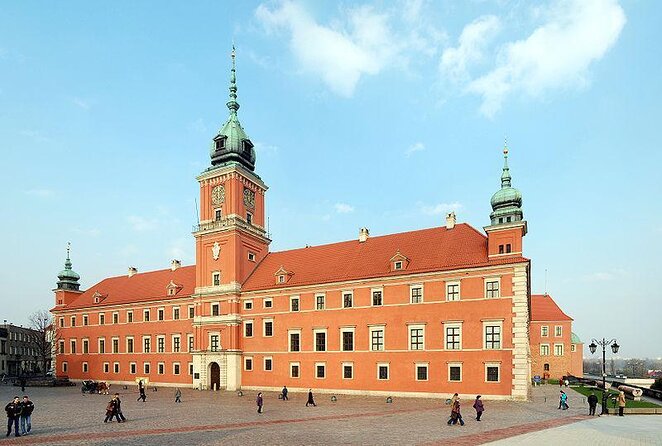
The exterior of the Royal Castle follows naturally from Castle Square. The castle was once the official residence of Polish kings and a major seat of state power. Your guide explains how it was looted and destroyed during World War II, then rebuilt with painstaking care.
You do not receive an admission ticket for the castle, and the tour focuses on the exterior. If you want to see the interiors, you would need to arrange that separately. Still, the outside is important because it helps you picture the former political center of the Polish state.
The tour then follows Świętojańska Street to the Archcathedral Basilica of St. John the Baptist. You spend about 20 minutes here, the longest stop in the Old Town portion. This church is one of Warsaw’s oldest and is closely tied to Polish monarchy, state ceremonies, and the Polish-Lithuanian Commonwealth.
The church visit also brings a change in tone. Castle Square feels civic and ceremonial. St. John’s feels more tied to worship, national identity, and the lives of earlier generations. Your guide can connect the building to the wider political story without turning the walk into a list of dates.
Admission is listed as free. As with any active place of worship, your visit may be shaped by services or local conditions, so modest clothing and a quiet manner are sensible.
Gnojna Góra adds a quieter viewpoint
Gnojna Góra is one of the more unusual stops. It takes you slightly away from the main Old Town route and offers a viewpoint with links to Warsaw’s former defensive systems and river trade.
You spend about 10 minutes here. That is not long, but the stop breaks up the better-known monuments and gives you a chance to think about ordinary city life. Warsaw was not only a royal capital. It was also a trading town shaped by the river, walls, merchants, workers, and daily routines.
This stop may appeal most if you prefer context over postcard views. It is less instantly recognizable than Castle Square or the Barbican, but that is exactly why it earns its place. The route shows you that Warsaw’s past is found in small corners as well as grand memorials.
Something quite different:
- Warsaw Concert: Chopin – Painted by Candlelights with Wine
★ 4.8 · 1,442 reviews - Warsaw: City Sightseeing Hop-On Hop-Off Bus Tour
★ 3.6 · 1,415 reviews - Warsaw: POLIN Museum of the History of Polish Jews Ticket
★ 4.7 · 1,142 reviews - #1 Pub Crawl Warsaw with Optional Premium 1 Hour Open Bar
★ 5.0 · 790 reviews
Market Square and the Warsaw Mermaid
The Old Town Market Square, Rynek Starego Miasta, is one of the prettiest points on the route. Colorful townhouses surround the square, which served as a center of civic life for centuries.
The present appearance requires some explanation. The area was rebuilt after World War II, and your guide helps you understand the scale of that work. Without that context, you might assume every façade survived intact. With it, the square becomes a lesson in memory, reconstruction, and national identity.
You spend around 15 minutes here. Your guide also tells the legend of the Warsaw Mermaid, the city symbol seen in monuments and city imagery. This is a lighter part of the tour, and it gives children a story to remember after the more serious history.
You might want extra free time in the square for photographs or a closer look at the surrounding streets. Since the tour lasts about three hours, the schedule is designed for orientation rather than a long café stop or detailed architectural study.
The Barbican shows Warsaw’s old defenses
From the Market Square, you walk toward the Warsaw Barbican and the medieval defensive walls. The Barbican once protected a gateway into the city, and the surrounding walls help you picture Warsaw before modern roads and expanding suburbs changed its shape.
You spend about 15 minutes here. The guide explains how the fortifications worked and how this area was returned to its historic appearance after the war.
The Barbican is a good place to see how the tour joins physical remains with reconstructed history. You are looking at defensive structures that feel medieval, but the story also includes twentieth-century destruction and postwar rebuilding.
Expect uneven walking surfaces and several walking sections throughout the Old Town. Comfortable shoes matter more than stylish ones here. The minibus helps you cover ground, but it does not remove the need to walk.
Krasiński Square and the Warsaw Uprising
After the Old Town, the minibus takes you to Krasiński Square. Here you see the Warsaw Uprising Monument, one of the city’s most powerful memorials.
The 1944 Warsaw Uprising was an attempt by the Polish underground to resist Nazi occupation. It ended with immense destruction and loss. This stop gives your guide room to explain the event and the sacrifices made by Warsaw residents.
The memorial is not simply another photo stop. It asks you to consider the cost of resistance and the way Warsaw remembers its wartime past. I value its inclusion because a tour that only presents royal buildings and colorful squares would leave out the central trauma that shaped the modern city.
The timing is not specified separately for this stop, so your guide controls the pace within the three-hour schedule. If this history matters greatly to you, listen carefully and ask questions. The private format gives you a better chance to do that than a large group tour would.
Piłsudski Square ends with national memory
The final stop is Piłsudski Square and the Tomb of the Unknown Soldier. This national memorial honors fallen soldiers and offers a quiet ending after the Old Town’s streets and the Uprising Monument.
The sequence works well. You begin with the city’s royal origins, move through religious and civic landmarks, then reach the twentieth century’s hardest chapters. The Tomb of the Unknown Soldier leaves you with a broad sense of Poland’s repeated struggle to preserve its identity.
There is no admission charge for these outdoor stops. The value comes from the guide’s explanation and from seeing the sites in a logical order, not from entering a ticketed attraction.
What the private minibus is really like
The vintage minibus is both transportation and entertainment. A Żuk ride has a personality that a standard modern van does not. Mariusz, one of the guides associated with the experience, was praised for making the ride memorable, and families may find the vehicle especially appealing.
Each minibus holds up to eight people, and a fleet of five vehicles is available. Because this is a private activity, only your group participates. That makes it easier to ask questions, pause briefly for clarification, or keep children engaged.
There are practical limits. The vehicles are mainly used to transfer you between locations, not to provide continuous sightseeing from the seats. Some have no seat belts, which is permitted for historic vehicles, and the minibuses do not have air conditioning. Heating is available in winter.
In warm weather, that lack of air conditioning may matter. In cold weather, the heating helps, but you should still dress sensibly. The operator requires booster seats for children under 150 centimeters under Polish law, and you need to contact the operator in advance to check availability. Instant online booking is available for adults and children over 150 centimeters.
Pickup, timing, and the best meeting point
Hotel or apartment pickup and drop-off are included, which removes one of the small annoyances of arriving in a new city. You do not need to find a starting point or work out public transport before breakfast.
There is a catch: the transfer to and from your accommodation counts toward the total tour time. If your hotel is far from central Warsaw, you may get more sightseeing by meeting the guide in the city center. Send the operator your address if it is not shown among the pickup choices.
The experience lasts about three hours. That is enough for a strong first look at Warsaw, but not enough for long interior visits, extended meals, or unhurried photography at every stop. I would schedule it early in your stay, then return later to the Royal Castle or Old Town sites that deserve more time.
The tour is offered in English. Service animals are allowed, and the experience is near public transportation. Most people can participate, but the walking sections mean you should plan around your own comfort and footwear.
Who will get the most from this tour?
I would recommend it most strongly to first-time visitors who want a clear overview of Warsaw in one morning or afternoon. It also suits families, since the vehicle is unusual and the guide-led format has kept tweens engaged.
History-minded visitors will appreciate the route from royal Warsaw to wartime memory. The tour gives you a useful base before exploring museums or returning to the Old Town on your own.
It may be less suitable if you want a slow walking tour, lengthy castle interiors, or a modern, fully climate-controlled vehicle. It is also less attractive value for a solo visitor paying the full per-person price without companions.
The strongest part of the experience is the guide. Art, Adam, and Mariusz have each been praised for clear explanations, warmth, and the ability to make Poland’s past understandable. That personal storytelling is what turns the route from transportation into a proper introduction.
Should you book it?
Book this tour if you want a private, guided overview and like the idea of moving around Warsaw in a historic minibus. The best reasons are the hotel pickup, small-group attention, wide range of landmarks, and serious historical context.
Think twice if air conditioning, seat belts, or long independent visits are essential to you. Also compare the pickup time if your accommodation is far from the center. With free cancellation up to 24 hours before the start time, you have some flexibility, but changes made inside that window are not accepted.
At $168.58 per person, I see the strongest value for couples, families, and small groups who want an engaging orientation rather than a basic transfer. If that sounds like your first day in Warsaw, this is a smart way to get your bearings.
FAQ
How long does the Warsaw retro car tour last?
The tour lasts approximately three hours, including transfers to and from your hotel or apartment.
Is hotel pickup and drop-off included?
Yes. Pickup and drop-off at your hotel or apartment are included, but the transfer time counts toward the total tour duration.
Is the tour private?
Yes. Only your group participates in the activity.
How many people fit in one minibus?
Each minibus accommodates up to eight passengers. The operator has a fleet of five minibuses.
Is the tour offered in English?
Yes. An English-speaking guide is included.
Does the tour enter the Royal Castle?
The route visits the exterior of the Royal Castle. Admission to the castle interior is not included.
Is walking required?
Yes. The minibus transfers you between locations, but the Old Town portion includes walking because cars are not permitted there. Comfortable clothing and suitable footwear are recommended.
Are the vintage minibuses air-conditioned?
No. The classic minibuses are not equipped with air conditioning. Some do not have seat belts, which is permitted for historic vehicles, while all vehicles have heating for winter.
Can children join the tour?
Adults and children over 150 centimeters can book instantly online. Children under 150 centimeters require a booster seat under Polish law, so you should contact the operator in advance to check availability.
Just added in Warsaw
- Wroclaw Small-Group Tour with Lunch from Warsaw★ 5.0 · 2 reviews
- World War II Warsaw Old Town, Military Cemetery Walking Tour★ 4.7 · 3 reviews
- Warsaw: Wolf’s Lair & Swieta Lipka Small-Group Tour + Lunch★ 5.0 · 3 reviews
- Wilanów Palace: 2-Hour Guided Tour with Entrance Tickets★ 4.8 · 8 reviews
- Warsaw Zoo Skip-the-Line Entry Ticket with Private Transport★ 4.8 · 3 reviews
- Warsaw: Private Vodka Tasting Night with Snacks and Pickup★ 5.0 · 7 reviews
- Warsaw Private Wilanow Palace & Garden Tour★ 4.6 · 30 reviews
- Warsaw Wolf’s Lair with St. Lipka and Mamerki Private Guided★ 4.2 · 3 reviews
Warsaw Tours, compared.
Traditional Galar Cruise on The Vistula River
Read our review →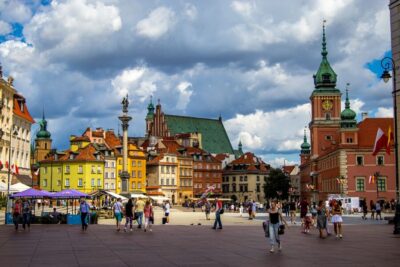

Warsaw Concert: Chopin – Painted by Candlelights with Wine
Read our review →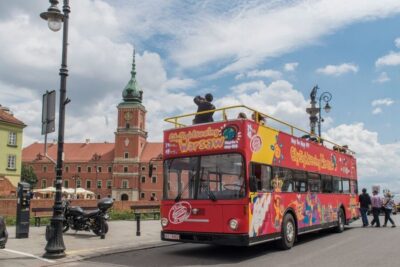
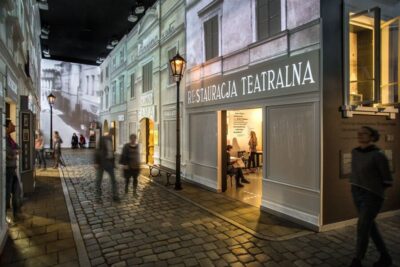
POLIN Museum of the History of Polish Jews Ticket
Read our review →
#1 Pub Crawl Warsaw with Optional Premium 1 Hour Open Bar
Read our review →