
REVIEW · WALKING TOURS
Life Behind the Iron Curtain Warsaw Walking Tour
Communism makes more sense on foot. This 150-minute walk turns Warsaw’s broad avenues, grand squares, and stern public buildings into a guide to everyday life under state socialism. You’ll hear about censorship, rationing, travel restrictions, political power, and the clever humor people used to cope with a system that often made simple tasks absurdly difficult.
I especially like the personal family stories and the way the tour connects big political events to ordinary shopping, work, and travel. I also like the clear route, about 3 kilometers through central Warsaw, with visual aids to help explain buildings and vanished institutions. The main consideration is the amount of walking, since the tour is not recommended if long distances are difficult.
The tone is serious when it needs to be, but never gloomy for two and a half hours. Guides such as Oliwia and Agnieszka bring dry humor and a personal connection to Warsaw. At $32 per person, this is a good-value history walk for anyone who wants more than a quick look at the Palace of Culture and Science.
In This Review
- Key points to know before you go
- Why this Warsaw walking tour works
- Constitution Square and the planned new center
- Marszałkowska Street and public power
- Socialist realism, with a Polish twist
- The Free Speech Memorial and the cost of saying too much
- The former Communist Party headquarters
- Cedet and the problem of empty shops
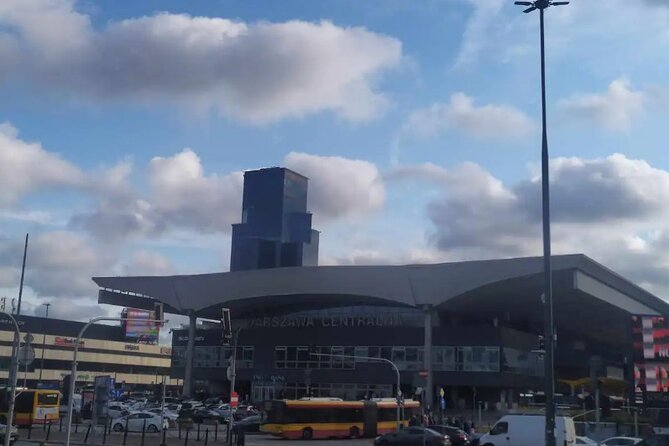
- Warsaw Central Station and controlled movement
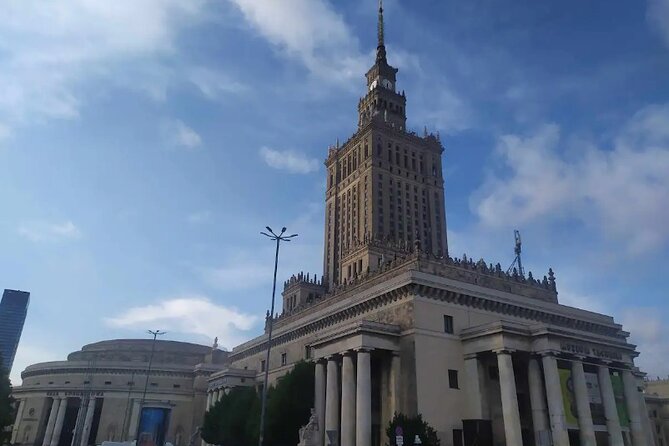
- The Palace of Culture and Science
- The guides make the difference
- Is $32 good value?
- Who should book this tour?
- Should you book Life Behind the Iron Curtain?
- FAQ
- How long does the Life Behind the Iron Curtain tour last?
- How far does the walking route cover?
- Where does the tour start?
- How do I find the guide?
- Where does the tour finish?
- What language is the tour conducted in?
- Is the Palace of Culture and Science viewing terrace included?
- Can I cancel the booking?
Key points to know before you go
- Constitution Square begins the story: The tour starts at the square planned as a new center for postwar Warsaw, surrounded by major examples of socialist realist design.
- Marszałkowska Street was built for spectacle: Its width made it useful for parades, marches, and public displays of state power.
- Everyday absurdity is the focus: You’ll learn how people dealt with empty shops, rationing, travel limits, and official systems that rarely worked as promised.
- The Free Speech Memorial changes the mood: This stop links censorship, underground publishing, and espionage to the physical city.
- The Palace of Culture is more than a photo stop: You’ll discuss its political meaning and the strong feelings it still brings out in Poland.
- Small groups make the history personal: Private and small-group options allow time for questions and family stories from guides including Oliwia and Agnieszka.
Why this Warsaw walking tour works
Many Warsaw tours focus on the medieval Old Town, wartime destruction, or the 1944 Uprising. Those subjects matter, but they can leave out the decades after the Second World War, when Poland became part of the Soviet sphere and daily life was shaped by a one-party state.
This tour fills that gap with a useful approach. Instead of treating communism as only a Cold War story, it asks what the system felt like when you needed food, a new pair of shoes, a passport, or a basic answer from a shop assistant.
That human scale is the tour’s best feature. You hear about empty stores and still learn how people managed to buy things. You hear why a simple question such as what can I get you? became a joke when there was little or nothing available to sell. You also hear about the ingenuity, patience, and humor used to get through nearly 40 years of communist rule.
The tour does not present the period as a museum piece. The stories explain how politics entered ordinary homes, workplaces, shops, and travel plans. For me, that makes the architecture easier to read. A wide avenue is no longer just a wide avenue. It becomes a space designed for state ceremonies and public control.
More Walking Tours in Warsaw
- Warsaw: Old Town Highlights Walking Tour in English
★ 4.7 · 1,516 reviews - Warsaw: Old Town Guided Walking Tour
★ 4.9 · 599 reviews - Half-Day Polish Food Walking Tour with Guide and Dinner
★ 4.5 · 381 reviews
Constitution Square and the planned new center
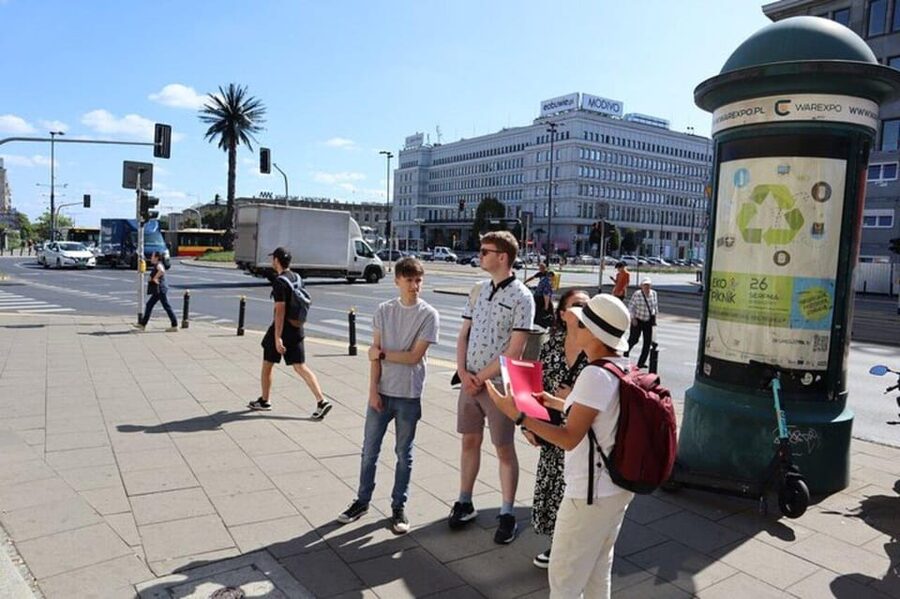
The meeting point is Constitution Square, where you should look for a guide carrying a white and green umbrella. This is a practical detail worth remembering, since a busy central square can make finding a small group harder than expected.
The square was intended to become the new city center of Warsaw. Its scale and architecture reflect the ambitions of the postwar government, which wanted to reshape the capital through grand urban planning and socialist realism.
Your guide spends about 15 minutes here, setting up the political and architectural background. You’ll look at the buildings as examples of a style meant to project order, confidence, and collective purpose.
Here the tour introduces one of its most interesting tensions. You may look at the decorative design and think it is attractive or even elegant. Many Poles associate the same buildings with forced ideology, shortages, and an unwanted political system. That difference between appearance and memory is central to understanding socialist realism.
This is also a good place to ask questions early. Guides including Oliwia and Agnieszka are praised for making room for discussion, and a small group gives you a better chance to ask about details that interest you.
Marszałkowska Street and public power
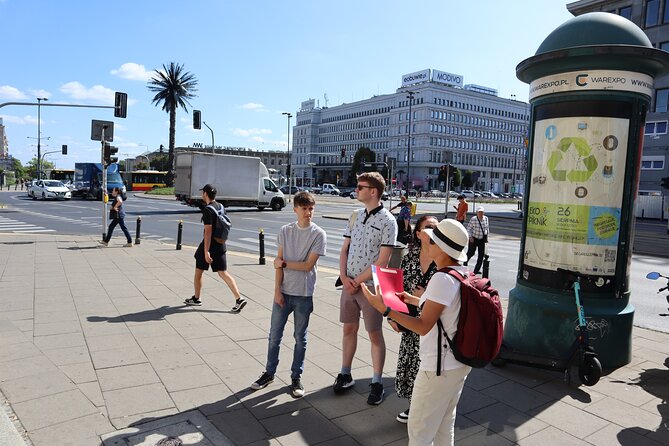
From Constitution Square, the walk continues along Marszałkowska Street for about 15 minutes of guided explanation. The street’s width was not an accident. It was used for parades and marches, giving the state a broad stage for ceremonies and displays of loyalty.
You’ll see how urban design can serve politics. A large avenue can move traffic, but it can also organize crowds, direct attention, and make government power look larger than the people standing beneath it.
This stop helps you read Warsaw with a sharper eye. The grand scale is not simply about architecture. It reflects a system that liked symbols, order, mass participation, and carefully managed public events.
The walking distance is moderate, but the tour covers about 3 kilometers overall. On a warm day, the pace may include stops in the shade, as Oliwia has done for groups before. Still, wear comfortable shoes and be ready to remain outside for much of the experience.
Socialist realism, with a Polish twist
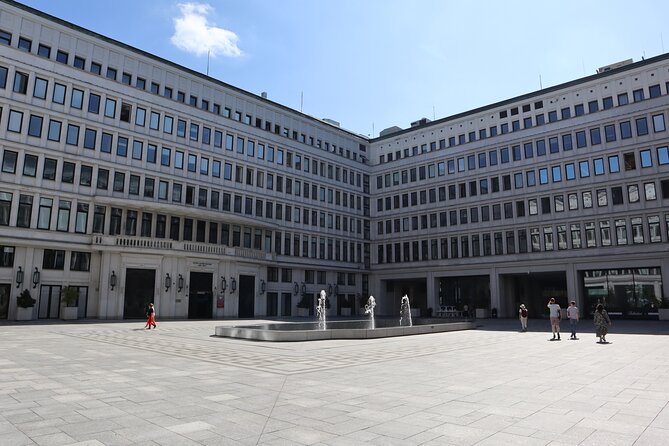
Socialist realism is one of the tour’s visual anchors. You’ll see buildings designed to communicate strength, discipline, and the promise of a bright future under communism.
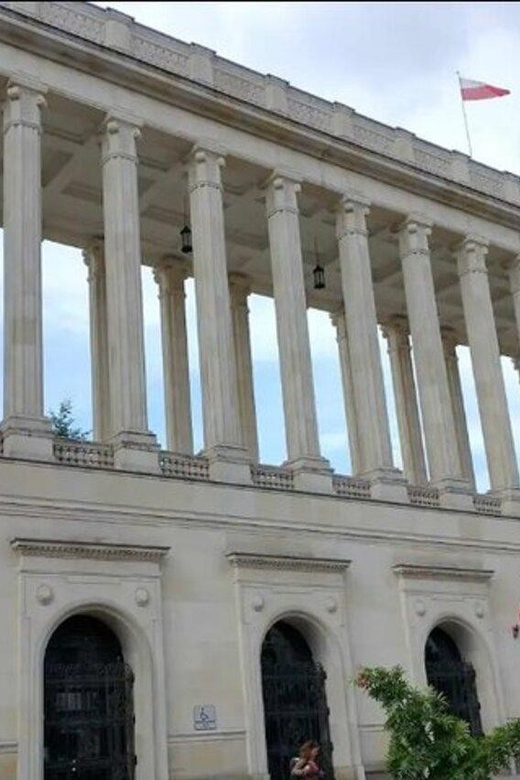
The style can be surprisingly appealing to an outsider. It often uses symmetry, monumental entrances, decorative detail, and a sense of permanence. The catch is that the style was not neutral decoration. It was tied to the political message of the time.
Your guide explains why many Poles do not share the same admiration. For people who lived through the period, the buildings can recall surveillance, shortages, censorship, and political pressure. You may admire the look while also understanding why the memories attached to it remain uncomfortable.
That distinction is one reason a walking tour is useful. A photo can show you columns and carved figures. A guide can explain what those forms were meant to say, and why the message did not always match daily reality.
Something quite different:
- Warsaw: Chopin Concert in the Old Town
★ 4.8 · 2,287 reviews - Warsaw: Traditional Galar Cruise on The Vistula River
★ 4.6 · 1,640 reviews - Warsaw Concert: Chopin – Painted by Candlelights with Wine
★ 4.8 · 1,442 reviews - Warsaw: City Sightseeing Hop-On Hop-Off Bus Tour
★ 3.6 · 1,415 reviews
The Free Speech Memorial and the cost of saying too much
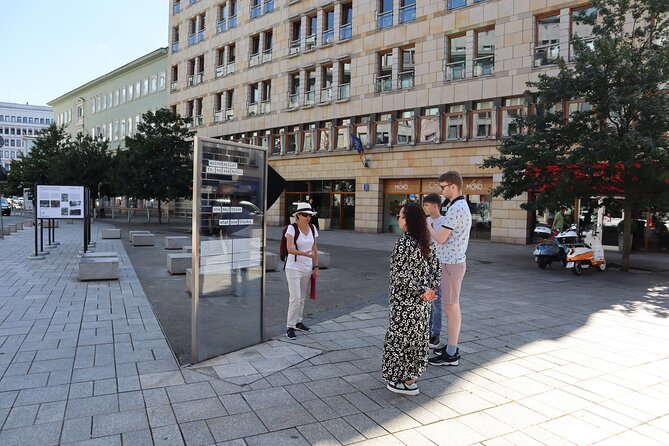
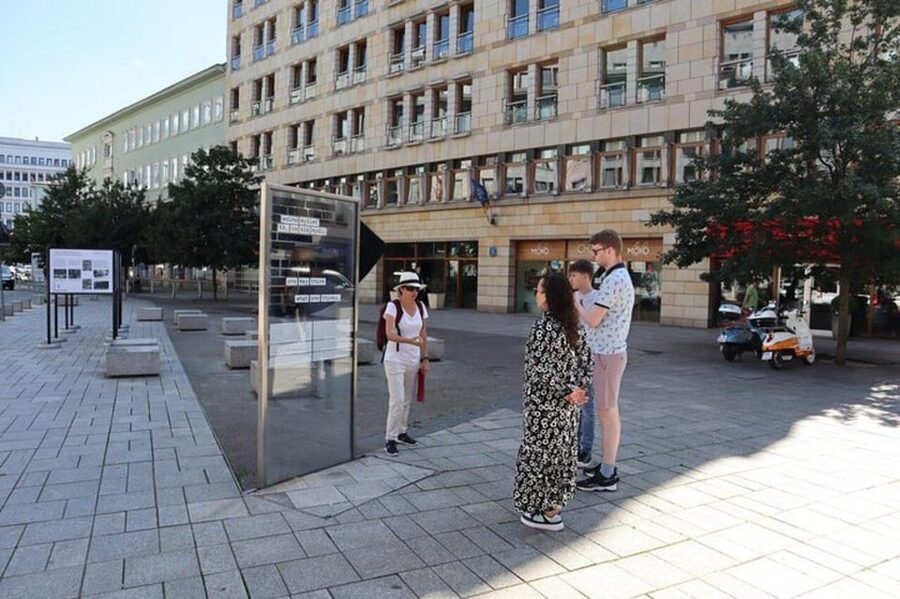
The Free Speech Memorial, known locally as Memoriał Wolnego Słowa, brings the tour to one of its most important subjects: censorship.
This stop covers the control of information, the risks of speaking openly, and the role of underground publishing. It also opens a discussion about espionage, an appropriate topic in a city shaped by Cold War tension and political suspicion.
The memorial gives the subject a physical location. You are not only hearing that free expression was restricted. You are standing at a place connected to the struggle to print, share, and preserve ideas outside official control.
I find this part especially valuable for anyone who knows the broad political story but wants to understand its effect on normal life. Censorship was not limited to major speeches or newspapers. It shaped what people could read, discuss, and trust.
The guide’s visual aids are useful here. They give you something concrete to study while the explanation moves between public policy and personal experience. If political history usually feels abstract, this stop should make it more immediate.
The former Communist Party headquarters
The route then reaches Centrum Bankowo Finansowe, the building connected with the former headquarters of the Communist Party. The guided stop lasts about 10 minutes.
This is where the tour makes state power visible again. The party was not simply one political organization among many. It shaped the country’s public life, and its offices represented authority backed by the broader communist system.
Your guide explains the building’s role and places it within the story of Warsaw’s postwar center. The location works well because the surrounding streets show how political institutions, public architecture, and everyday life were linked.
This is also a good moment to think about the difference between official power and practical power. A party headquarters could project control, yet the system still struggled to provide basic goods or reliable services. That contrast gives the tour much of its humor.
Cedet and the problem of empty shops
Central Department Store Cedet is one of the most useful stops for understanding consumer life. You’ll spend about 15 minutes learning how people were expected to shop in a system where stores could be open but supplies were scarce.
The tour tackles a question that sounds simple: how did people buy things when shops were empty? The answer is not reduced to one clever trick. Instead, the explanation shows how personal connections, timing, patience, and improvisation could matter more than money alone.
You also hear why the standard shopkeeper’s question, what can I get you?, became such a sharp joke. If the shelves held little, the question sounded detached from reality.
This section is likely to appeal to you if you enjoy social history more than political dates. It explains the habits people developed to manage shortages, and it shows why a shopping trip could become an exercise in planning and luck.
The building also gives you a useful contrast between a department store’s purpose and the reality of communist consumption. A store suggests choice. An empty store suggests the limits of choice. That tension says a great deal without needing a long lecture.
Warsaw Central Station and controlled movement
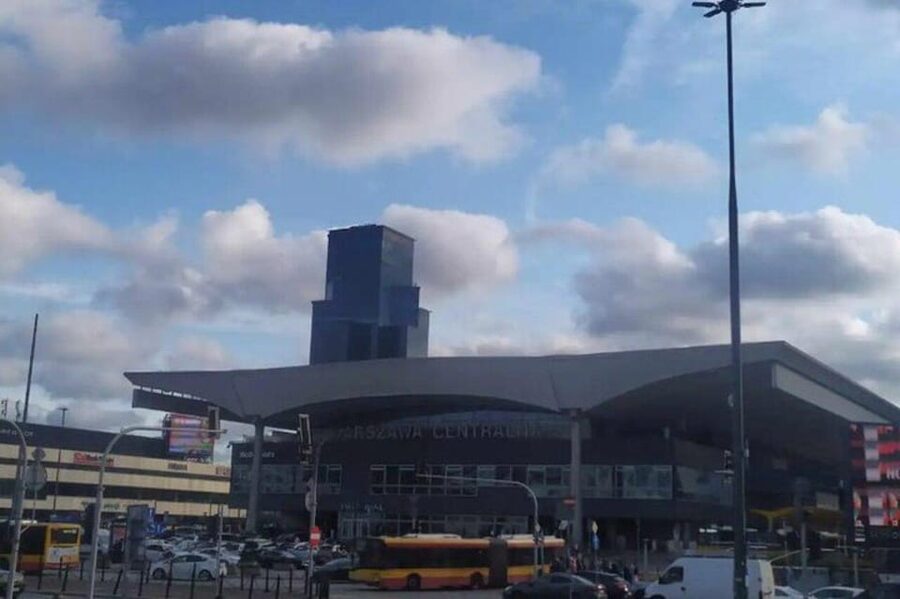
The stop at Warsaw Central Station lasts about 10 minutes. Stations usually suggest freedom, departure, and new possibilities. Here, the discussion turns to how the state made sure Poles did not travel too far.
The subject is not only trains. It is the wider system of controls that affected movement beyond Poland’s borders. A passport or a ticket did not automatically mean you could travel wherever you wished.
This part connects personal plans to government policy. A journey that looks routine to you today could once depend on official approval and political trust. That is a powerful reminder that communist control reached well beyond public squares and party offices.
Central Station also helps the route change pace. After architecture, censorship, and shopping, you consider what it meant to leave the country, visit another place, or simply imagine a wider world.
The Palace of Culture and Science
The final major stop is the Palace of Culture and Science, with about 15 minutes of guided discussion. It is the most controversial building in Warsaw, and the tour explains why.
The palace is huge, highly visible, and impossible to ignore in the central skyline. Its presence raises questions about power, generosity, occupation, and memory. For some people, it is an important landmark and a useful cultural building. For others, it remains a symbol of Soviet domination.
You will not simply be told to like or dislike it. Instead, the guide explains the competing meanings attached to the structure. That balanced treatment is helpful because the building can be visually impressive and politically uncomfortable at the same time.
The tour does not include the fee for the viewing terrace. If you want the panoramic view, budget separately and allow extra time. The tour itself finishes at Emilii Plater 54, so the terrace is an optional addition rather than part of the core walk.
The palace also ties together many earlier themes. It reflects monumental architecture, centralized power, public spectacle, and the complicated memory of the communist period. By this point, you should be able to see why the building provokes such different reactions.
The guides make the difference
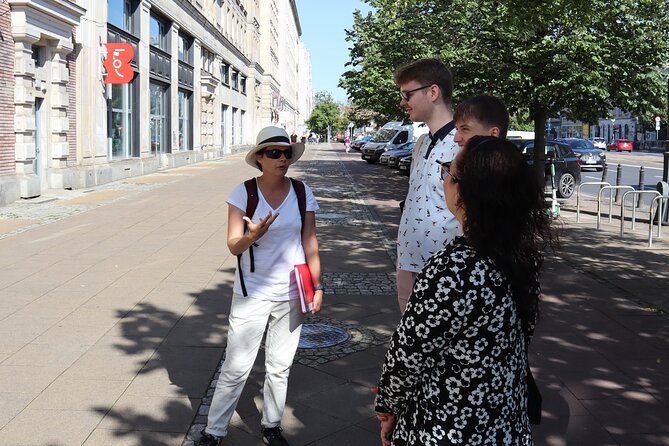
The strongest part of this experience is the guiding. Oliwia is praised for her wit, dry humor, clear English, and personal connection to Warsaw. She has led this walk alongside other central Warsaw tours, and her passion for the city comes through in the way she links separate periods together.
Agnieszka brings another strong style. She is described as dedicated, engaging, and generous with time for questions. Her explanations connect family experience to the wider story of Poland and Europe.
That personal element matters. A guide with family ties to the city can explain not only what the government did, but how those policies affected real households. It also makes room for the emotional side of the subject without turning the walk into a political speech.
The tone is often witty, but the humor has a purpose. Communism produced many absurd situations, and Polish humor became one way to deal with them. The jokes help you remember the details, while the serious context keeps the tour from making light of suffering.
Is $32 good value?
At $32 per person, the price is fair for a 150-minute guided walk in central Warsaw. You are paying for more than a route between famous buildings. The value comes from the explanations, visual aids, historical context, and time available for questions.
The tour also includes an information pack before the visit, with frequently asked questions and useful links. You receive recommendations for more places to see, along with suggestions for eating and drinking. Those extras are helpful if this is your first stay in Warsaw.
Private and small-group options are available. A small group is especially useful for this topic because the best parts often come from questions about family life, shortages, censorship, or travel. A large crowd could make that exchange less personal, so check the available group format when booking.
The main limitation is not price. It is pace and subject matter. You need to walk about 3 kilometers and spend much of the time outdoors. You also need an interest in recent political history. If you only want famous sights and quick photographs, another Warsaw tour may suit you better.
Free cancellation up to 24 hours before the start and the option to reserve now and pay later make the booking less risky. The tour is listed as wheelchair accessible, but the walking distance still deserves attention if you have mobility concerns.
Who should book this tour?
I would choose this walk early in a Warsaw visit if you want a clearer framework for the city. It can help you understand why certain buildings feel impressive to one person and painful to another.
It suits adults, families with older children, history fans, architecture lovers, and anyone curious about daily life under communism. The family reviews are especially strong, and the guides keep the material lively with stories rather than only dates and political names.
You should also book it if you have already seen Warsaw’s Old Town and want a different side of the capital. The route covers central places you might pass without understanding, then gives each one a social and political meaning.
I would skip it if long walks are difficult or if your main goal is medieval architecture. The tour is not a museum visit, and it does not promise a light sightseeing stroll. It asks you to think about shortages, censorship, restricted movement, and the moral weight of public symbols.
Should you book Life Behind the Iron Curtain?
Yes, if you want to understand how communism shaped ordinary Polish life. The tour is strongest when it explains small details, such as empty shops, restricted travel, official jokes, and the gap between impressive buildings and hard daily realities.
Book it for the guides as much as for the route. Oliwia and Agnieszka bring humor, patience, and personal stories that make the subject easier to grasp. At $32, with a 150-minute walk, visual aids, pre-tour information, and practical Warsaw recommendations, it offers solid value.
Choose it with comfortable shoes, an open mind, and enough time to ask questions. You will leave with more than photographs of socialist architecture. You will have a better sense of how Warsaw’s people adapted, joked, and carried on behind the Iron Curtain.
FAQ
How long does the Life Behind the Iron Curtain tour last?
The tour lasts approximately 150 minutes, or two and a half hours.
How far does the walking route cover?
The route covers approximately 3 kilometers.
Where does the tour start?
The tour starts at Constitution Square in Warsaw.
How do I find the guide?
Look for the guide carrying a white and green umbrella at the meeting point.
Where does the tour finish?
The tour finishes at Emilii Plater 54.
What language is the tour conducted in?
The live tour is conducted in English.
Is the Palace of Culture and Science viewing terrace included?
No. The entry fee to the viewing terrace is not included in the tour price.
Can I cancel the booking?
Yes. You can cancel up to 24 hours in advance for a full refund. You can also reserve now and pay later.
Just added in Warsaw
- Historical Walking Tour of Jewish Warsaw★ 5.0 · 68 reviews
- Deluxe Polish Food Tour Experience in Warsaw★ 5.0 · 19 reviews
- CO2-Offset Arrival Transfer from Warsaw Airport to Warsaw City★ 5.0 · 1 review
- Amazing photo walk through the Old town of Warsaw★ 5.0 · 32 reviews
- 8-day tour around Poland by private car★ 5.0 · 2 reviews
- 2 Hour Super Segway City Tour of Warsaw★ 5.0 · 5 reviews
- Electric Scooter Tour: Full Tour – 3-Hours of Magic!★ 5.0 · 3 reviews
- 2h Rental of Motorboat for 10 in Warsaw no License Needed★ 5.0 · 1 review
Walking Tours, compared.
Gdańsk City Sights & History Guided Walking Tour in English
Read our review →
Old Town & Wawel Castle Walking Tour in English
Read our review →Browse the lists this tour appears in