
REVIEW · WALKING TOURS
Life Behind the Iron Curtain Warsaw Walking Tour
Warsaw’s communist past still shapes the city. This 2.5-hour walking tour links familiar streets and buildings to daily life behind the Iron Curtain, from parade routes and food shortages to censorship and party rule. I like the clear route through central Warsaw, and I especially like the guides’ use of family stories to explain a period that can otherwise feel cold and distant. The main drawback is that it is a walking tour with several stops, so it is not a good match if long distances are difficult.
I also like the small maximum group of 10, which should make it easier to ask questions and hear the guide in busy central areas. Guides such as Olivia, Oliwia, and Agnieszka have been praised for lively storytelling, useful Warsaw tips, and personal connections to the era. Keep in mind that the Palace of Culture viewing terrace costs an extra 28 PLN if you want to add that visit.
In This Review
- Key points about Warsaw behind the Iron Curtain
- Why this 2.5-hour walk is worth your time
- Constitution Square and the planned socialist city center
- Marszałkowska Street and the theater of public marches
- The Ministry of Agriculture and socialist realism
- Mysia 3, censorship, and the cost of free speech
- The former Communist Party headquarters at Nowy Świat
- Cedet and the everyday struggle to buy things
- Railway stations and travel under the old system
- The Palace of Culture and Science as the final symbol
- The guides make the difference
- Who should book this Warsaw walking tour?
- Should you book Life Behind the Iron Curtain?
- FAQ
- How long is the Life Behind the Iron Curtain Warsaw Walking Tour?
- How much does the tour cost?
- Where does the tour begin?
- Where does the tour end?
- Is the tour offered in English?
- What is the maximum group size?
- Is the Palace of Culture viewing terrace included?
- Is this tour suitable for people with walking difficulties?
- Can I cancel for a full refund?
Key points about Warsaw behind the Iron Curtain
- Constitution Square sets the scene: See the square planned as the new center of postwar socialist Warsaw.
- Parade streets reveal political theater: Marszałkowska Street shows how wide avenues served marches, displays, and state ceremony.
- Censorship gets a physical address: At Mysia 3, the tour explains the machinery of control, surveillance, and restricted speech.
- Shortages become part of the story: The former Cedet department store helps explain why ordinary shopping could take so much effort.
- The Palace of Culture closes the tour: Finish with Warsaw’s most disputed communist-era symbol and the option of a paid viewing terrace.
- A small group keeps it personal: The tour accepts no more than 10 people and includes visual aids plus a Warsaw information pack.
Why this 2.5-hour walk is worth your time
Communist-era Warsaw is easy to miss. You can walk past a grand government building, a railway station, or the Palace of Culture and see only architecture. This tour gives those places a purpose. It explains who used them, what they represented, and how ordinary people experienced the system.
I find that useful because the Polish People’s Republic was not just a political chapter. It affected shopping, travel, work, speech, city planning, and family life. The route keeps those subjects tied to real places instead of turning the experience into a lecture in the abstract.
The tour costs $28.57 per person. For that price, you receive about 150 minutes with a guide, visual aids, a pre-tour Warsaw information pack, and suggestions for places to visit, eat, and drink afterward. Since all the listed stops are free, you are paying mainly for interpretation and local context. That is fair value if you want to understand the city rather than simply photograph it.
The route is also compact enough to fit into a morning or afternoon. The walk covers central Warsaw, and the scheduled stop times range from 15 to 30 minutes. I would still wear comfortable shoes, since the experience is built around moving from one site to another.
More Walking Tours in Warsaw
- Warsaw: Old Town Highlights Walking Tour in English
★ 4.7 · 1,516 reviews - Warsaw: Old Town Guided Walking Tour
★ 4.9 · 599 reviews - Half-Day Polish Food Walking Tour with Guide and Dinner
★ 4.5 · 381 reviews
Constitution Square and the planned socialist city center
The meeting point is Plac Konstytucji, or Constitution Square. The tour begins here with an important question: what did the authorities want Warsaw to become after the war?
The square was intended as a new city center for the Polish People’s Republic. Its scale and design help explain socialist realism, an architectural style meant to project order, confidence, and the power of the state. The square was not planned simply as a pleasant public space. It had a political role.
You spend about 20 minutes here, enough time to look closely and hear why the buildings were designed in this manner. This is a strong opening because it gives you a framework for the rest of the walk. The city around you becomes evidence of a government trying to shape public life through streets, buildings, and ceremony.
A guide can also point out details that you might pass without noticing. The visual aids supplied with the tour should help place present-day Warsaw beside its earlier appearance. That comparison matters in a city rebuilt and altered so many times.
Marszałkowska Street and the theater of public marches
From Constitution Square, the group follows Marszałkowska Street for about 20 minutes. This broad avenue was used for parades and marches, so the street was designed for more than normal traffic.
Wide roads and open views are useful tools for a state that wants to display strength. A parade route turns architecture into a backdrop. People could be gathered, organized, and shown to the public as part of a carefully managed national story.
This section should appeal to you if you enjoy reading cities as political documents. The guide connects the street’s physical form with the public rituals that took place there. One of the most iconic sites of the Polish People’s Republic appears along the way, though the value is less about ticking off a landmark than understanding why it mattered.
The stop is short, but it helps keep the tour moving. You are not spending half an hour at every building. Instead, the route builds its argument in pieces: planned squares, ceremonial streets, government offices, censorship centers, and places tied to daily needs.
The Ministry of Agriculture and socialist realism
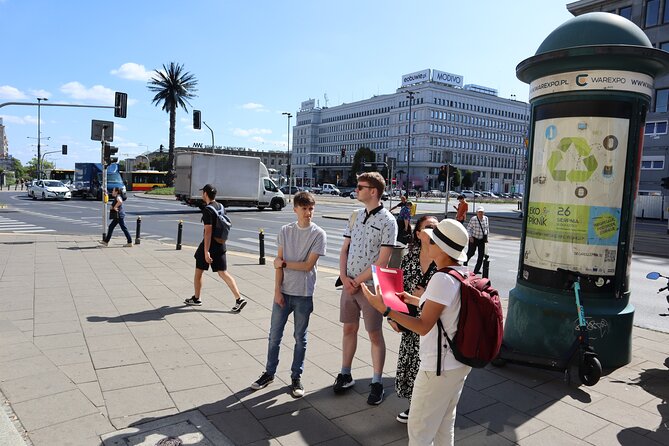
The Ministry of Agriculture and Rural Development provides a closer look at socialist realism. The scheduled stop lasts about 15 minutes.
Here, the guide explains the features of the style and why such buildings were constructed. The subject is not just decorative detail. Architecture under the Polish People’s Republic had to communicate ideas about authority, work, progress, and the proper role of the state.
I appreciate this stop because it gives you a way to look at other buildings in Warsaw after the tour. Once you understand the style’s purpose, grand facades and formal designs begin to make more sense. You can ask not only if a building is attractive, but also what message it was intended to send.
The stop is outside, and no admission fee is listed. That keeps the tour simple, though you should not expect an interior architectural visit here.
Something quite different:
- Warsaw: Chopin Concert in the Old Town
★ 4.8 · 2,287 reviews - Warsaw: Traditional Galar Cruise on The Vistula River
★ 4.6 · 1,640 reviews - Warsaw Concert: Chopin – Painted by Candlelights with Wine
★ 4.8 · 1,442 reviews - Warsaw: City Sightseeing Hop-On Hop-Off Bus Tour
★ 3.6 · 1,415 reviews
Mysia 3, censorship, and the cost of free speech
Mysia Street brings the tour to one of its most pointed subjects. At Mysia 3, you see the Free Speech Memorial and discuss censorship and espionage. The tour allocates about 20 minutes to this stop.
This is where the political system becomes personal. Restrictions on speech are easy to discuss in general terms, but a named location makes the subject more concrete. The guide explains how information was controlled and how surveillance affected public and private life.
The memorial also gives the group a chance to consider what free expression means after decades of state control. You may find this one of the most thought-provoking parts of the walk because it connects an older system with a principle that still matters today.
The value here depends heavily on the guide’s storytelling. The guides associated with this experience have been praised for explaining the subject through family memories and real-life accounts. Those personal details can make the period easier to understand, especially if you did not grow up with the Iron Curtain as part of your own history.
The former Communist Party headquarters at Nowy Świat
At Nowy Świat 6/12, the route reaches the building that now houses the Banking and Finance Center. During the Polish People’s Republic, this was the headquarters of the Communist Party and a place from which the country was managed.
The contrast between its former role and current use is the point. Buildings can outlive the political systems that created them, but their meaning does not vanish overnight. A guide can help you think about how a country changes when the offices of power remain while their purpose changes.
The scheduled discussion lasts about 15 minutes. It is a useful pause between larger themes. After seeing how the state presented itself in squares and on parade streets, you now see where decisions were made.
This stop also reinforces one of the tour’s best features: it shows you how modern Warsaw sits on top of its recent past. You do not need a museum ticket to encounter that history. It is built into the ordinary city center.
Cedet and the everyday struggle to buy things
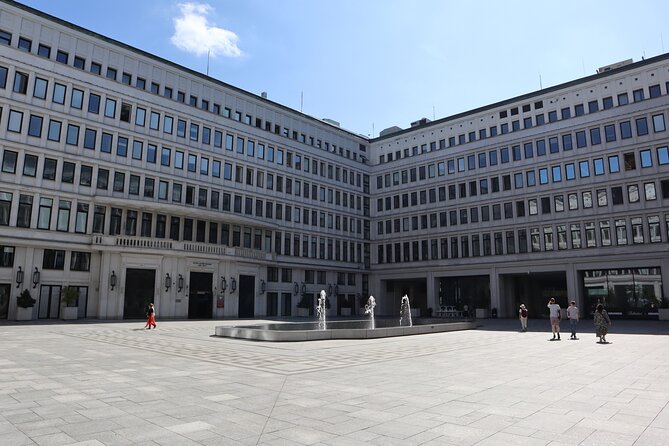
The former Central Department Store Cedet brings the discussion down from high politics to daily errands. The tour spends about 15 minutes explaining why buying ordinary goods could be one of the hardest parts of life during the Polish People’s Republic.
This may be the most relatable stop for many people. Governments and monuments can feel remote. Shopping for food, clothing, or household items is not remote at all. Shortages and limited choice shaped routines, family plans, and expectations.
The guide uses the former department store to explain the practical side of the economic system. You learn why a large store did not necessarily mean easy shopping, and why access to everyday products could become a source of stress.
I would pay close attention here if you want a fuller picture of the era. It is easy to reduce communism to leaders, slogans, and architecture. Cedet shows how political and economic decisions reached into kitchens, wardrobes, and calendars.
The stop also helps explain why personal memories matter. Family accounts can add texture to subjects such as queues, scarcity, and improvisation. The guides have been praised for sharing those connections in a way that makes the period feel close rather than remote.
Railway stations and travel under the old system
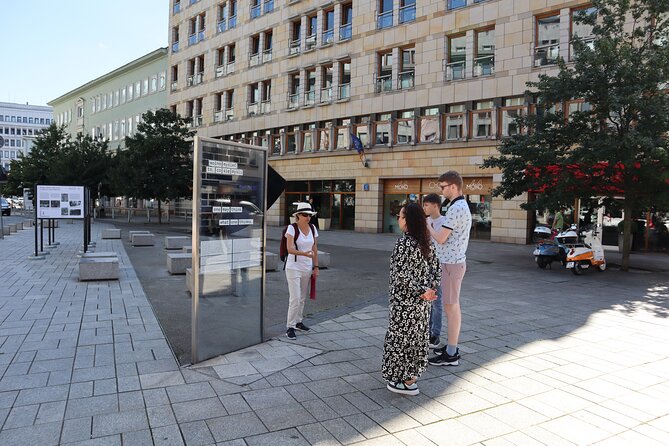
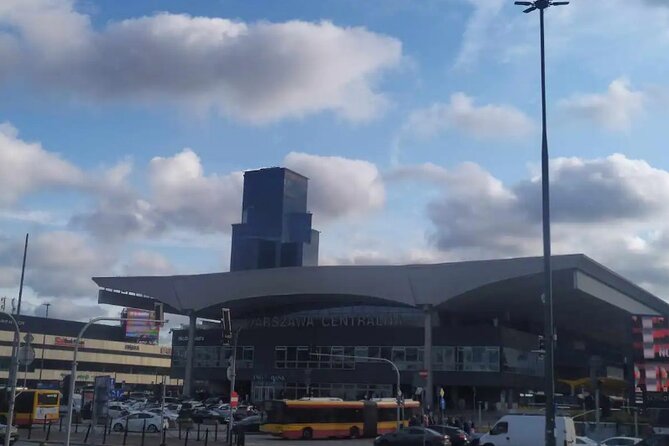
The next stop is Warsaw Central Railway Station, with discussion of both the Central Railway Station and Downtown Railway Station. The scheduled time is about 15 minutes.
Travel during the Polish People’s Republic was not simply a matter of buying a ticket and choosing a destination. Local, regional, and international travel each had their own realities. The guide explains how movement through the country and beyond its borders worked during that period.
Railway stations are fitting places for this subject. They are built for movement, yet the political system placed limits on where people could go and how easily they could get there. The modern station setting also creates a sharp contrast with the earlier era.
This is another stop where you will benefit from looking beyond the building itself. The point is not to tour the station as an architectural attraction. It is to understand the station as part of a system that connected people, controlled movement, and reflected the country’s place in Europe.
The Palace of Culture and Science as the final symbol
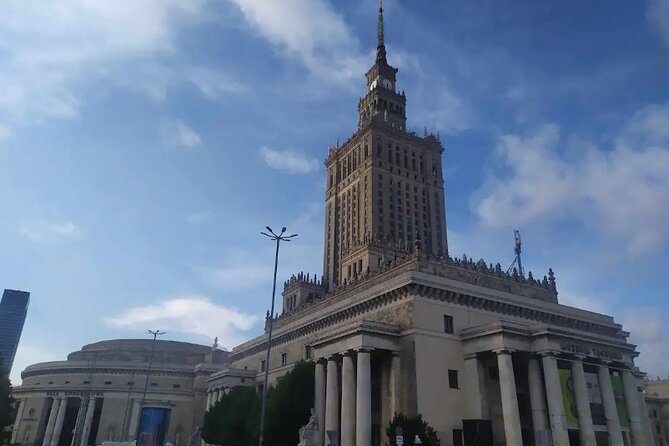
The tour ends near the Palace of Culture and Science, with about 30 minutes devoted to the building. This is the longest stop, and that makes sense. The palace is both a landmark and a political argument in stone.
The guide explains what you need to know about this symbolic and controversial building. It represents the Soviet influence that shaped postwar Poland, yet it has also become part of Warsaw’s modern identity. Some people see it as an unwanted reminder of domination. Others see it as an important part of the city’s story and a familiar point of orientation.
Ending here gives the walk a strong visual finish. You have just discussed party control, censorship, shortages, and restricted travel. The palace gathers those themes into one structure that is difficult to ignore.
The viewing terrace is optional and costs 28 PLN. That fee is not part of the tour price. If you want the view, budget for it separately and confirm the terrace arrangements when booking. If you skip it, the outdoor discussion still completes the tour’s main subject.
The end point is on Emilii Plater near the Palace of Culture and Science. That is convenient for continuing around central Warsaw, finding food, or using public transportation.
The guides make the difference
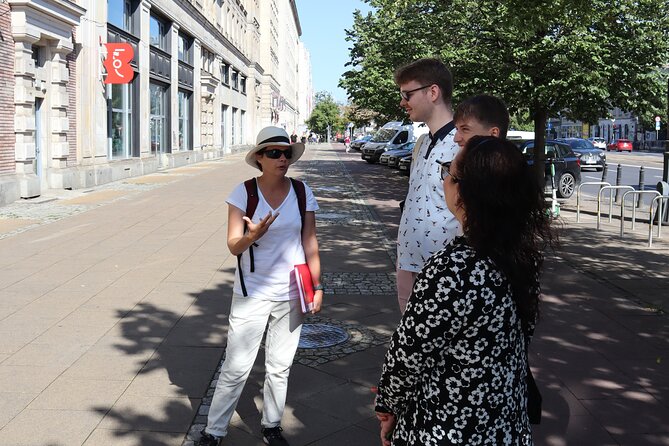
The strongest part of this experience is the guiding. Olivia has been praised for clear explanations, entertaining delivery, useful recommendations, and family stories that connect the past with the present. Oliwia has also been described as outgoing, thoughtful, and able to explain how the end of the Soviet era still affects people who lived through it.
Agnieszka brings another well-regarded style, with cheerful storytelling and a broad command of the subject. You may not receive the same guide on every departure, so the exact tone can vary. Still, the experience is clearly built around human explanation rather than a memorized list of dates.
The family perspective is especially valuable. One guide was very young when her family left Warsaw during communism, but she drew on the experiences of parents and grandparents. That is a useful middle ground. You get historical context without pretending that one person’s memories represent every Polish experience.
The included visual aids should help with comparisons and details. The pre-tour information pack, with FAQs and useful links, is also a nice touch if you want to arrive with some background.
Who should book this Warsaw walking tour?
I would choose this tour if you have already seen Warsaw’s major sights and want to understand what happened between the war and the fall of communism. It also works well early in your stay because the guide provides suggestions for more places to see, eat, and drink.
History fans will get the most from it, but you do not need specialist knowledge. The route explains its key ideas on site, using buildings and streets as evidence.
The small group suits you if you prefer a more personal walk and want to ask questions. The 2.5-hour length is long enough to cover serious material but short enough to fit around other plans.
I would hesitate only if you have difficulty walking long distances. The tour has no listed admission fees at the main stops, but it still involves moving through central Warsaw on foot. The experience is offered in English, and service animals are allowed.
Booking around 47 days ahead is common, so I would not leave this until the last minute if your Warsaw dates are fixed. Free cancellation is available up to 24 hours before the start time, which gives you some useful flexibility.
Should you book Life Behind the Iron Curtain?
Book it if you want Warsaw’s communist past explained through real streets, offices, shops, and stations rather than only through museum displays. The strongest reasons are the small group, the focused route, and the guides’ ability to connect public history with family experience.
Skip it if you want an indoor museum tour, a broad survey of all Polish history, or a route with very little walking. For most visitors interested in how Warsaw became the city it is today, $28.57 is a sensible price for two and a half hours of sharp context and practical local advice.
FAQ
How long is the Life Behind the Iron Curtain Warsaw Walking Tour?
The tour lasts approximately 2 hours and 30 minutes.
How much does the tour cost?
The listed price is $28.57 per person.
Where does the tour begin?
The meeting point is Constitution Square, Plac Konstytucji, 00-647 Warszawa, Poland.
Where does the tour end?
The tour ends near the Palace of Culture and Science at Emilii Plater 54, 00-901 Warszawa, Poland.
Is the tour offered in English?
Yes. The experience is offered in English.
What is the maximum group size?
The group is limited to a maximum of 10 people.
Is the Palace of Culture viewing terrace included?
No. Entry to the viewing terrace is not included and costs 28 PLN.
Is this tour suitable for people with walking difficulties?
The tour is not recommended for people who have problems walking long distances.
Can I cancel for a full refund?
Yes. You can cancel up to 24 hours before the experience start time for a full refund. Changes or cancellations made less than 24 hours before the start time are not accepted for a refund.
Just added in Warsaw
- Wroclaw Small-Group Tour with Lunch from Warsaw★ 5.0 · 2 reviews
- World War II Warsaw Old Town, Military Cemetery Walking Tour★ 4.7 · 3 reviews
- Warsaw: Wolf’s Lair & Swieta Lipka Small-Group Tour + Lunch★ 5.0 · 3 reviews
- Wilanów Palace: 2-Hour Guided Tour with Entrance Tickets★ 4.8 · 8 reviews
- Warsaw Zoo Skip-the-Line Entry Ticket with Private Transport★ 4.8 · 3 reviews
- Warsaw: Private Vodka Tasting Night with Snacks and Pickup★ 5.0 · 7 reviews
- Warsaw Private Wilanow Palace & Garden Tour★ 4.6 · 30 reviews
- Warsaw Wolf’s Lair with St. Lipka and Mamerki Private Guided★ 4.2 · 3 reviews
Walking Tours, compared.
Gdańsk City Sights & History Guided Walking Tour in English
Read our review →
Old Town & Wawel Castle Walking Tour in English
Read our review →Browse the lists this tour appears in