REVIEW · WARSAW TOURS
Jewish Warsaw
Warsaw’s Jewish story is hidden in plain sight. This private three-hour tour links surviving streets, a working synagogue, the Jewish cemetery, and major memorials with a guide who explains what you are seeing. I like the clear route from Grzybowski Square to POLIN Museum, and I like that hotel pickup can make the morning easy. The main drawback is that the advertised $89.35 price does not include the entrance fees, and the tour moves quickly through many serious subjects.
This is a strong choice if you want context before visiting POLIN Museum, or if you would miss Warsaw’s Jewish sites on your own. Guide Mary was praised for explaining both familiar facts and less obvious parts of Jewish life in Warsaw. You should allow extra time after the tour if you want to enter the museum itself.
In This Review
- Key points to know before booking
- Why this three-hour route works
- Starting at Grzybowski Square
- Prozna Street and the remains of daily life
- Entering Nozyk Synagogue
- Krochmalna and the world of Isaac Bashevis Singer
- Chlodna Street and the Warsaw backyards
- The Keret House
- Forty minutes in the Jewish Cemetery
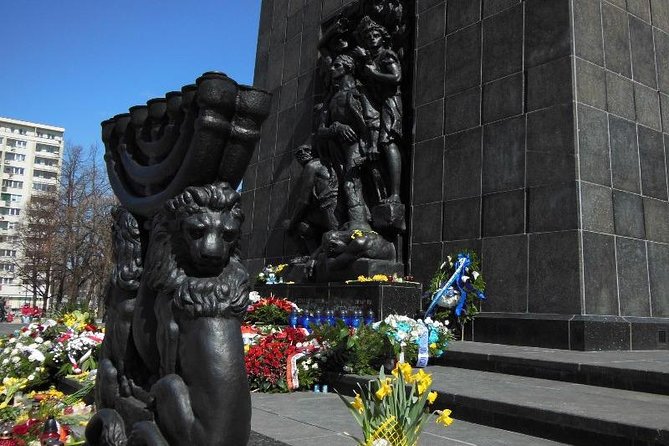
- The Ghetto Heroes Monument
- Ending at POLIN Museum
- What the $89.35 price really buys
- How the guide shapes the experience
- Who should book Jewish Warsaw?
- Practical planning tips
- Should you book it?
- FAQ
- How long is the Jewish Warsaw tour?
- Where does the tour begin?
- Where does the tour end?
- Is hotel pickup available?
- Is this a private tour?
- Is museum admission included?
- What is the cancellation policy?
Key points to know before booking
- Private touring keeps the pace personal: Only your group takes part, so the guide can answer questions and adjust the rhythm within the three-hour schedule.
- The route covers prewar, wartime, and postwar Warsaw: You move from Grzybowski Square and preserved streets to the ghetto memorial and POLIN Museum.
- Nozyk Synagogue is still active: It is the only synagogue in Warsaw that survived World War II and remains in operation.
- The Jewish Cemetery needs time and attention: Forty minutes here gives the guide room to discuss burials, notable figures, Esperanto, Janusz Korczak, and Jewish theater.
- The tour ends at POLIN, not inside it: The building is explained from outside, then you can visit on your own with the museum’s audio guides.
- Budget for extra admission costs: The Jewish Warsaw entrance fee is listed as €5 per person, while some stop admissions are not included.
Why this three-hour route works
Jewish Warsaw is not a single preserved quarter waiting behind one gate. Much of the prewar neighborhood was destroyed, rebuilt, or altered. What remains is spread across central Warsaw, so a guided route helps you connect places that can otherwise feel disconnected.
This experience begins in the old Jewish center and ends at the POLIN Museum. That order matters. You first see streets and buildings linked to everyday life, then places connected to death and destruction, and finally a modern institution devoted to the long history of Polish Jews.
The private format is useful here. With only your own group, you do not have to follow a large crowd through narrow streets or wait for a dozen people to gather at each stop. You can ask about a family name, a building, a cemetery custom, or a detail that catches your eye.
The timing is tight, though. Nine stops in about three hours means several visits are brief. Grzybowski Square gets 15 minutes, Prozna Street 10 minutes, and the Keret House 10 minutes. The cemetery receives the longest stop at 40 minutes, which is sensible because it needs quiet and explanation.
A few more in Warsaw
- Warsaw: Chopin Concert in the Old Town
★ 4.8 · 2,287 reviews - Warsaw: Traditional Galar Cruise on The Vistula River
★ 4.6 · 1,640 reviews - Warsaw: Old Town Highlights Walking Tour in English
★ 4.7 · 1,516 reviews
Starting at Grzybowski Square
The tour opens at Grzybowski Square, listed at Pl. Grzybowski 2. This was part of the center of prewar Jewish Warsaw, and it gives you a first sense of the scale of the city’s Jewish community before World War II.
The guide uses the square to establish the basic story: Warsaw was home to the largest Jewish community in Europe until the war. That single fact changes how you read the city. You are not looking at a small neighborhood with a few historic buildings. You are trying to picture a major urban community, with homes, businesses, religious life, schools, theaters, and political movements.
I like beginning here because it avoids starting with only wartime suffering. You first hear about a living society. That makes the later stops more understandable and more painful.
The tour offers hotel pickup. The guide either meets you at reception with a PolinTours sign or waits in a car outside your hotel. If your hotel is far from the center, the meeting place is arranged by email. Make sure you know the agreed location before setting out, since the standard route begins at Grzybowski Square.
Prozna Street and the remains of daily life
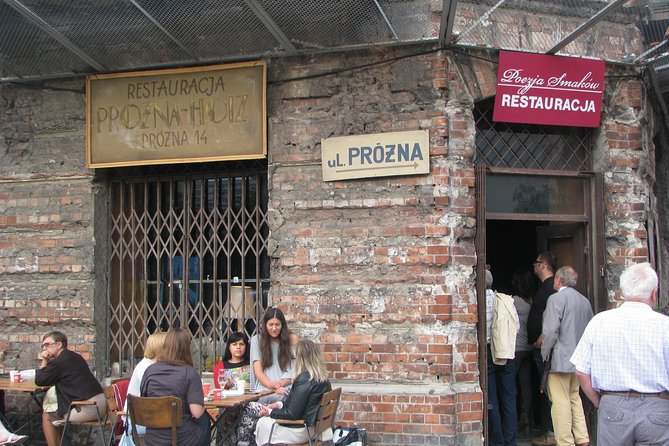
Prozna Street is one of the most useful stops for understanding what has survived. The street retains original buildings and once functioned as a Jewish commercial street. You hear about the people who lived and worked there, including prominent Warsaw families and well-known names.
The stop lasts about 10 minutes, so expect an introduction rather than a long architectural study. Look closely at the façades and imagine the street as a place of work and residence, not simply as a preserved photo setting.
This is also where a guide adds real value. A street can tell you that buildings are old, but it cannot tell you who lived behind the windows or how Jewish commercial life shaped the area. The route’s focus on inhabitants keeps the story human.
Entering Nozyk Synagogue
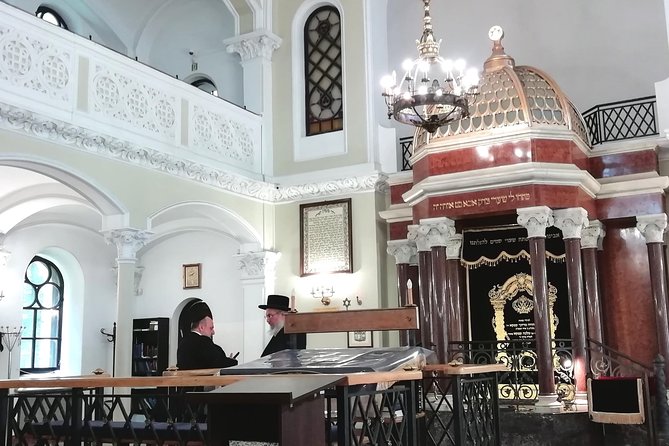
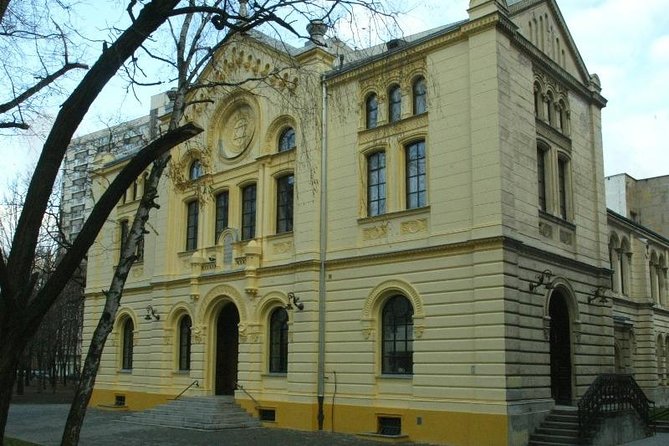
Nozyk Synagogue is the only synagogue in Warsaw that survived World War II and remains in operation. That makes it one of the most important stops, even though the visit is scheduled for only 15 minutes.
Admission is not included, so plan for the listed Jewish Warsaw entrance fee of €5 per person. Since this is an active place of worship, follow the guide’s instructions and treat the visit with care. The tour information does not specify opening restrictions or photography rules, so it is wise to confirm current arrangements when booking.
The synagogue gives you a direct link between the Jewish Warsaw of the past and Jewish life today. You are not just looking at a memorial or a reconstructed display. You are visiting a functioning religious site.
I would pay close attention here, because a short stop can pass quickly. If religious architecture is your main interest, you may want to ask whether more time is possible within your private tour.
Something quite different:
- Warsaw Concert: Chopin – Painted by Candlelights with Wine
★ 4.8 · 1,442 reviews - Warsaw: City Sightseeing Hop-On Hop-Off Bus Tour
★ 3.6 · 1,415 reviews - Warsaw: POLIN Museum of the History of Polish Jews Ticket
★ 4.7 · 1,142 reviews - #1 Pub Crawl Warsaw with Optional Premium 1 Hour Open Bar
★ 5.0 · 790 reviews
Krochmalna and the world of Isaac Bashevis Singer
The route passes through Krochmalna, a street closely tied to the writing of Isaac Bashevis Singer, the Nobel Prize-winning author. The stop is only about five minutes, but the literary connection gives the neighborhood another layer.
Singer’s Warsaw was filled with particular streets, arguments, characters, shops, faith, poverty, ambition, and family tension. At Krochmalna, the guide connects the physical city with the world described in his prose.
Do not expect a full literary walk in five minutes. Instead, treat this as a short orientation point. If Singer’s work matters to you, note the street name and return later with one of his books or stories in mind.
Chlodna Street and the Warsaw backyards
At Chlodna Street, you look at houses that remain in original condition and explore Warsaw backyards. The stop lasts around 10 minutes.
The reference to backyards is important. Grand monuments rarely explain how people actually lived. Courtyards, entrances, and worn buildings can give you a better sense of the physical setting of ordinary life.
The tour description does not promise interior access, so expect to view the buildings and spaces included in the route rather than enter private properties. This is another point where a guide helps you see more than a façade. Ask about what changed during and after the war, and which elements remain original.
The Keret House
The Keret House is known as the narrowest house in the world. You spend about 10 minutes learning about its history.
This is a brief, unusual stop, and it breaks up the heavier parts of the tour. Its narrow form is memorable, but the value is not just the novelty. It prompts questions about architecture, limited space, and the way modern Warsaw has been built around traces of the past.
Because the visit is short, you should not expect a full architectural tour or a lengthy interior visit. The experience is mainly about seeing the house and hearing its story from the guide.
Forty minutes in the Jewish Cemetery
The Jewish Cemetery is the longest stop, with about 40 minutes set aside. That tells you where the tour places its greatest weight.
Here you see the resting place of rabbis, zaddiks, and Jewish families. The guide explains Jewish burial customs and traditions, which gives the cemetery a purpose beyond being a collection of old stones.
The stop also brings in several important subjects: the history of Esperanto, Janusz Korczak’s orphanage, and Jewish theater. Those connections show how broad Jewish life in Warsaw was. Religion, language, education, literature, performance, and social care all appear within one visit.
You should expect this part to be reflective. Wear practical shoes and allow yourself to slow down. The cemetery is not a quick photo stop, and the subject deserves attention.
Admission is not included. The supplied information lists an entrance fee of €5 per person for Jewish Warsaw, so confirm how that fee applies to your specific departure.
The Ghetto Heroes Monument
At the Ghetto Heroes Monument, the guide discusses the Warsaw Ghetto Uprising and the memorial’s place in the city. This is also where you hear about Willy Brandt’s famous kneeling gesture.
The monument is a major point in Warsaw’s public memory. It is not simply a marker for one event. It asks you to consider resistance, destruction, remembrance, and the way later generations have faced the crimes of the Nazi era.
The scheduled visit lasts 15 minutes. That is enough for an explanation and a moment to look closely, but not enough for a long discussion of every part of the uprising. If this subject is central to your trip, plan time to return independently.
The transition from the cemetery to the monument is effective. You have just heard about people and traditions, then you confront a memorial focused on wartime resistance and loss.
Ending at POLIN Museum
The tour finishes outside the POLIN Museum of the History of Polish Jews at Mordechaja Anielewicza 6. The guide explains the building’s symbolism and architecture, with about 15 minutes devoted to the museum exterior.
This is a smart endpoint. The route gives you a basic framework, then leaves you at the city’s main institution for a longer presentation of Jewish life in Poland.
Your tour does not include museum admission. Afterward, you can enter and use the museum’s audio guides. Plan this as a separate visit rather than assuming 15 minutes covers the museum. The building itself receives only a short introduction, while the full museum requires much more time.
If your schedule allows, visit POLIN immediately after the tour. The guide’s explanations can help you place the exhibits in context. If you are tired, return later, but do not mistake the outdoor stop for a museum visit.
What the $89.35 price really buys
At $89.35 per person, this is not a budget stroll. The value depends on how much you want a private guide and door-to-door convenience.
You are paying for roughly three hours of organized interpretation, a private group, an air-conditioned vehicle, and a route that would be awkward to cover efficiently without planning. You also get hotel pickup when available, which saves time and makes the start less stressful.
The price does not cover lunch or the listed entrance fees. Public transport may also be relevant. The tour information recommends buying a ticket in advance or carrying small change for a public transport-based version, while the included features list an air-conditioned vehicle. Because those details point to different transport arrangements, ask PolinTours which format applies to your booking.
The tour is better value for a small group that can share the private experience. For one person, the per-person price may feel high. For a family or group of friends, the private format becomes easier to justify, especially with hotel pickup.
How the guide shapes the experience
The guide is the key part of this tour. The route includes many short stops, so clear explanations matter more than long time at each site.
Mary is identified as a guide who explained both familiar subjects and less obvious parts of Jewish life. That is exactly what this route needs. You want someone who can move from a street address to a family story, from a synagogue to burial customs, and from a memorial to the city’s wider history without losing the thread.
The tour is offered in English. Since the subject is serious and includes names, dates, religious terms, and place names, ask questions when you need a point repeated. The private format makes that easier.
Who should book Jewish Warsaw?
I would recommend this tour to:
- First-time visitors who want a clear introduction to Jewish Warsaw.
- People planning to visit POLIN Museum and wanting context beforehand.
- Families or small groups who prefer a private guide.
- Readers interested in Isaac Bashevis Singer, Janusz Korczak, Jewish theater, or Esperanto.
- Anyone who wants hotel pickup and a planned route rather than arranging several sites alone.
I would be more cautious if you want long museum time, extended photography stops, or a slow architectural walk. Nine stops in three hours means the tour is broad rather than leisurely.
The cemetery and memorial stops may also feel emotionally heavy. That is not a flaw, but you should set aside enough time afterward to process what you have seen.
Practical planning tips
Book ahead if your dates are fixed. This experience is booked, on average, 76 days in advance, which suggests that waiting until the last minute may limit your choices.
Confirmation is normally sent at booking. If you book within three days of the tour, confirmation may arrive within 48 hours and remains subject to availability.
The tour requires good weather. If poor weather causes cancellation, you are offered another date or a full refund. You can cancel for a full refund up to 24 hours before the start time, but changes or cancellations inside that window are not accepted.
Wear shoes suitable for walking and bring a little extra time for the cemetery and POLIN Museum. Carry small change if your transport arrangement uses public transit, and keep the €5 entrance cost in your budget.
Should you book it?
Book Jewish Warsaw if you want a serious, well-planned introduction to a city that cannot be understood through monuments alone. I especially like the route’s range: Grzybowski Square and Prozna Street show prewar life, Nozyk Synagogue connects the past with present worship, the cemetery adds personal and religious detail, and POLIN gives you a natural next step.
The tour is not designed for deep study at each site. Its strength is connection. In three hours, you get a guide, transportation support, a private group, and a thoughtful path through places you might otherwise overlook.
For the best value, book it early, confirm the transport and admission details, and reserve extra time for POLIN Museum after the tour. If you want a first look at Jewish Warsaw with a human guide rather than a list of addresses, this is a worthwhile choice.
FAQ
How long is the Jewish Warsaw tour?
The tour lasts approximately three hours.
Where does the tour begin?
The standard meeting point is Grzybowski Square, Pl. Grzybowski 2, 00-824 Warszawa, Poland.
Where does the tour end?
The tour ends at the POLIN Museum of the History of Polish Jews, Mordechaja Anielewicza 6, 00-157 Warszawa, Poland.
Is hotel pickup available?
Yes. The guide can meet you at your hotel reception with a PolinTours sign or wait in a car outside the hotel entrance. If your hotel is far outside the city center, the meeting point is arranged by email.
Is this a private tour?
Yes. Only your group participates in the private tour.
Is museum admission included?
No. The tour ends outside POLIN Museum. You can enter afterward and visit with the museum’s audio guides.
What is the cancellation policy?
You can cancel up to 24 hours before the experience for a full refund. Cancellations or changes made less than 24 hours before the start time are not accepted.
Just added in Warsaw
- World War II Warsaw Old Town, Military Cemetery Walking Tour★ 4.7 · 3 reviews
- Wroclaw Small-Group Tour with Lunch from Warsaw★ 5.0 · 2 reviews
- Warsaw: Wolf’s Lair & Swieta Lipka Small-Group Tour + Lunch★ 5.0 · 3 reviews
- Wilanów Palace: 2-Hour Guided Tour with Entrance Tickets★ 4.8 · 8 reviews
- Warsaw Zoo Skip-the-Line Entry Ticket with Private Transport★ 4.8 · 3 reviews
- Warsaw: Private Vodka Tasting Night with Snacks and Pickup★ 5.0 · 7 reviews
- Warsaw Private Wilanow Palace & Garden Tour★ 4.6 · 30 reviews
- Warsaw Wolf’s Lair with St. Lipka and Mamerki Private Guided★ 4.2 · 3 reviews
Warsaw Tours, compared.
Traditional Galar Cruise on The Vistula River
Read our review →
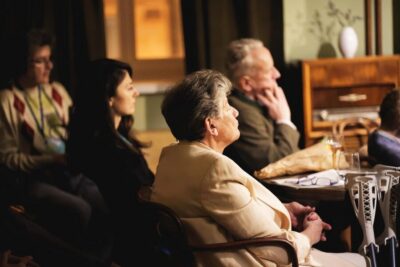
Warsaw Concert: Chopin – Painted by Candlelights with Wine
Read our review →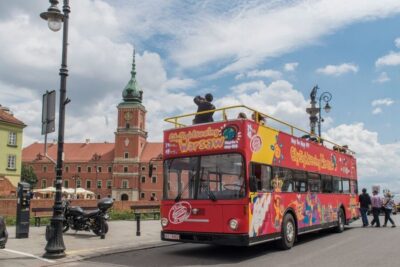
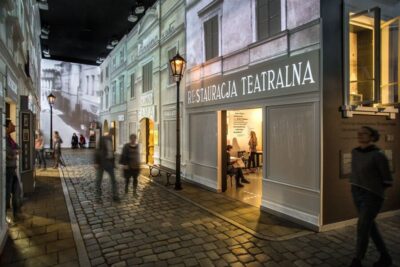
POLIN Museum of the History of Polish Jews Ticket
Read our review →
#1 Pub Crawl Warsaw with Optional Premium 1 Hour Open Bar
Read our review →