REVIEW · WARSAW TOURS
Jewish Legacy in Warsaw. Private Tour with the best local specialist.
Warsaw’s Jewish story is written in surviving walls, memorials, and empty spaces. This private tour brings together Nozyk Synagogue, POLIN Museum, the former ghetto, and several key sites connected with the Warsaw Ghetto Uprising, then adds a trip to Praga for locations used in The Pianist. I like the way the route connects wartime events with Jewish life before and after the Holocaust. I also like the private format, since a group of up to three can ask questions and set the pace more easily than a large walking tour.
The main consideration is reliability. The overall rating is 4.6 from nine reviews, but one booking ended with no guide arriving and a fast refund after a series of unanswered calls. I would confirm the pickup details shortly before the tour, especially because the experience begins at 9:00 a.m. and pickup is offered throughout Warsaw.
In This Review
- Key points to know before booking
- Why this tour matters in Warsaw
- Starting at Nozyk Synagogue
- A short introduction to POLIN Museum
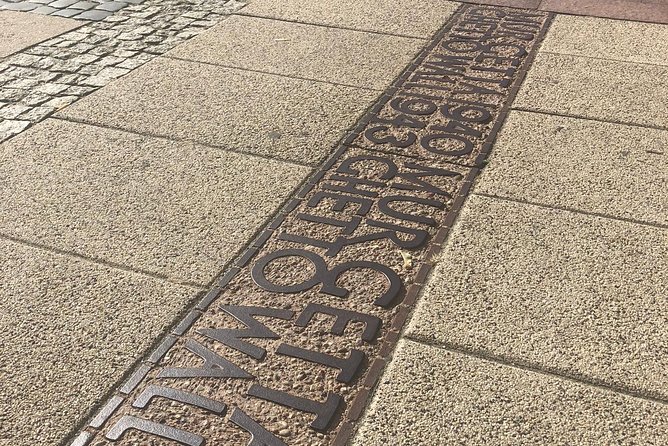
- Finding the fragment of the ghetto wall
- Remembering Umschlagplatz and the deportations
- Mila 18 and the Warsaw Ghetto Uprising
- The Ghetto Heroes Monument and Willy Brandt’s gesture
- Chlodna Street and the divided ghetto
- Praga and the Warsaw of Roman Polanski’s The Pianist
- What $361.23 means for a group of three
- The reliability question
- Who will get the most from this experience?
- Booking advice and cancellation terms
- Should you book Jewish Legacy in Warsaw?
- FAQ
- Where does the tour take place?
- What time does the tour start?
- Is pickup available?
- How many people can join the private tour?
- Is the tour offered in English?
- Does the tour include a full visit to POLIN Museum?
- Can I cancel for a full refund?
Key points to know before booking
- Nozyk Synagogue is Warsaw’s oldest surviving synagogue, and the visit lasts about 20 minutes.
- POLIN Museum receives a brief visit, focused on the building and interior rather than a full museum tour.
- The former ghetto route includes the wall fragment, Umschlagplatz, Mila 18, Chlodna Street, and the ghetto heroes monument.
- Praga adds film history, with streets used for The Pianist and an optional look at the villa connected with The Zookeeper’s Wife.
- The private price is $361.23 for up to three people, which can be reasonable for a full specialist-led outing if you fill the vehicle.
- Pickup is available across Warsaw, but one serious no-show report makes advance confirmation a sensible step.
Why this tour matters in Warsaw
Warsaw can be confusing if you are trying to understand its Jewish past on your own. The former ghetto was destroyed, rebuilt, and broken into scattered traces. A wall fragment may sit behind an ordinary building. A memorial may mark a place where the physical evidence has disappeared. The value of this tour is the connection between those separate points.
You are not simply looking at monuments one by one. The route follows a rough story: Jewish life and worship, the creation of the ghetto, deportation, armed resistance, remembrance, and the way Warsaw’s surviving streets later became film locations.
The private arrangement is especially useful for this subject. You can ask for more time at a memorial, request a clearer explanation, or spend less time at a stop that does not hold your interest. Since the group limit is three people, the experience should feel more like a guided conversation than a standard coach excursion.
The schedule begins at 9:00 a.m. and includes pickup anywhere in Warsaw. Exact total length is not stated, but the listed stops add up to several hours before allowing for driving between them. Plan your morning and early afternoon around the tour rather than squeezing it between other fixed appointments.
A few more in Warsaw
- Warsaw: Chopin Concert in the Old Town
★ 4.8 · 2,287 reviews - Warsaw: Traditional Galar Cruise on The Vistula River
★ 4.6 · 1,640 reviews - Warsaw: Old Town Highlights Walking Tour in English
★ 4.7 · 1,516 reviews
Starting at Nozyk Synagogue
Nozyk Synagogue is one of the most important early stops because it gives the itinerary a direct link to Jewish religious life in Warsaw. It is the oldest existing synagogue in the city, and the tour allows about 20 minutes here.
The building survived the Nazi period partly because of its location and practical use during the final chapter of the ghetto. That fact gives the stop unusual weight. It is not only a place of worship from an earlier era. It is also one of the few surviving structures that connects present-day Warsaw with the city’s Jewish community before the destruction.
Twenty minutes is enough for an introduction and a look around, but not enough for a long architectural or religious visit. I would treat this as a focused orientation stop. If synagogue interiors are especially important to you, ask at the beginning how much time can be spent here.
The tour is offered in English, and the private format should make it easier to ask about the building’s survival, its current role, and the way it fits into the wider route.
A short introduction to POLIN Museum
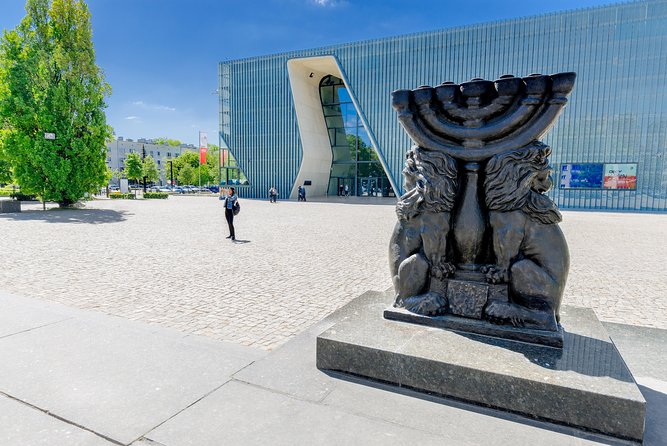
The next major stop is the POLIN Museum of the History of Polish Jews. The itinerary allows about 50 minutes and describes a visit to the museum’s location with a quick look inside at the interior design.
This is an important distinction. The time provided does not suggest a full visit to the museum’s exhibitions. POLIN is a large institution, and a proper museum visit would require much longer than 50 minutes. Here, the focus is the setting, the building, and the museum’s role in presenting Jewish life in Poland across a broad historical span.
I like this choice because it keeps the tour from treating Jewish history as only a wartime story. The museum’s purpose is to present Jewish life, culture, and contributions in Poland, not just persecution and death. Even a short introduction helps place the ghetto sites in a much wider frame.
If you want to tour the full museum, plan a separate visit. Do not assume that this private outing includes enough time for the entire exhibition. The tour is better understood as an overview stop before the memorials connected with the ghetto and uprising.
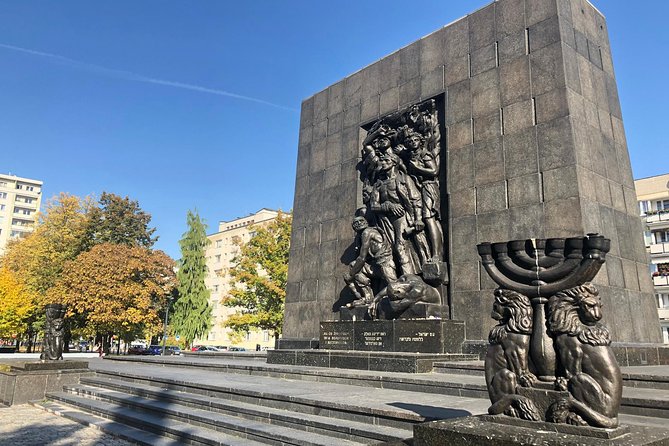
Nearby, you pass the monument connected with Willy Brandt, the German chancellor who knelt before the Ghetto Heroes Monument as a gesture of apology and reconciliation. It is a small but powerful piece of postwar memory, showing how the meaning of these sites has continued to develop long after the war.
Finding the fragment of the ghetto wall
The surviving fragment of the ghetto wall at 60 Zlota Street is one of the itinerary’s most striking stops. About 20 minutes is planned here.
The site can be easy to miss without a guide. It is not presented as a grand, open ruin. The fragment survives among modern Warsaw buildings, which makes the contrast especially sharp. You are looking at a small physical remnant of a huge enclosed district that once held hundreds of thousands of Jewish residents under brutal conditions.
The tour description identifies it as the only remaining fragment of the largest Jewish ghetto that existed. That wording explains why the stop matters, but it also points to a limitation: one piece of wall cannot show the scale of the ghetto by itself. You need the guide’s explanation to understand what has vanished and why so little remains.
This is a good place to pause and orient yourself. Pay attention to the surrounding city. Warsaw was rebuilt so extensively that ordinary streets can conceal the boundaries of the old ghetto. The fragment gives you something concrete to see before the tour moves into the larger sequence of deportation and resistance sites.
Something quite different:
- Warsaw Concert: Chopin – Painted by Candlelights with Wine
★ 4.8 · 1,442 reviews - Warsaw: City Sightseeing Hop-On Hop-Off Bus Tour
★ 3.6 · 1,415 reviews - Warsaw: POLIN Museum of the History of Polish Jews Ticket
★ 4.7 · 1,142 reviews - #1 Pub Crawl Warsaw with Optional Premium 1 Hour Open Bar
★ 5.0 · 790 reviews
Remembering Umschlagplatz and the deportations
At Umschlagplatz, you spend about 20 minutes at the former railroad loading area where Jews were gathered and transported to the Treblinka death camp.
The name can sound technical, but the place carries a grim meaning. This was not a normal rail stop for passengers. It was the point from which people were forced onto trains during the deportations.
The value of stopping here is its connection to the machinery of mass murder. Other sites on the route focus on community, resistance, or remembrance. Umschlagplatz focuses on removal and death. The sequence is difficult, but it is important. Without this stop, the story of the ghetto uprising can seem detached from the deportations that preceded it.
Allow yourself time to absorb the site. Twenty minutes may pass quickly, especially if the guide gives a detailed explanation. This is not a place for rushing through photographs. A private tour gives you the chance to ask questions quietly and move at a pace that feels respectful.
Mila 18 and the Warsaw Ghetto Uprising
The memorial at Mila 18 marks the largest bunker in the former Jewish ghetto. The stop lasts about 20 minutes.
This is where Mordechaj Anielewicz, leader of the Jewish Fighting Organization, hid with nearly 30 other members during the uprising. The bunker became a final refuge for resistance fighters facing overwhelming Nazi forces.
Mila 18 is more than a military site. It represents the decision to resist even when the odds offered little hope of survival. The physical remains are not presented like a preserved fortification, so the guide’s explanation is central. You are relying on the location, the memorial, and the account of what happened there to picture the underground resistance.
I would pay close attention to the relationship between Mila 18 and the other stops. Umschlagplatz shows the deportations. Mila 18 shows organized resistance. The ghetto wall fragment shows the system of confinement. Together, these places create a clearer picture than any single memorial can provide.
The Ghetto Heroes Monument and Willy Brandt’s gesture
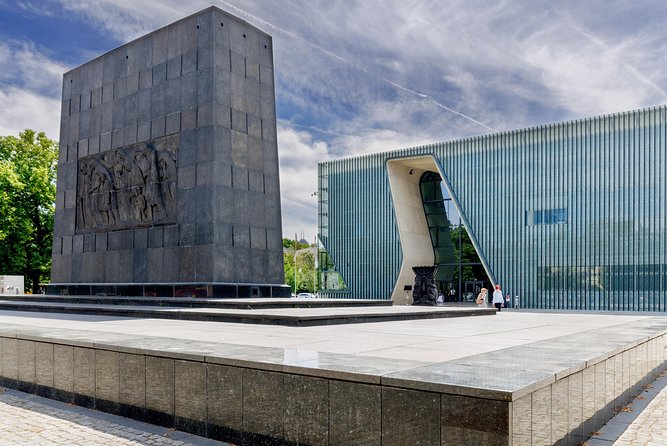
The Monument to the Heroes of Warsaw is allotted about 50 minutes, making it one of the longest stops. The tour describes it as a memorial to those who endured the nightmare of the ghetto.
This extra time is useful. The monument is one of the central remembrance sites in Warsaw, and it deserves more than a quick photo stop. Its setting near POLIN also makes it a natural point for discussing how Poland and Germany have remembered the uprising and the destruction of Warsaw’s Jewish community.
The nearby Willy Brandt monument adds another layer. Brandt’s act of kneeling in front of the Ghetto Heroes Monument became a symbol of German apology and reconciliation with Jews. It is a reminder that memorials are not only about the events they mark. They also reflect later efforts to acknowledge responsibility and repair relationships.
If you are interested in memorial design, this may be the most rewarding stop on the route. The 50-minute allowance gives the guide room to explain the monument and its setting instead of treating it as one more item on a checklist.
Chlodna Street and the divided ghetto
Chlodna Street receives a short 10-minute stop. The street was associated with the footbridge that linked the smaller ghetto section with the larger one.
The footbridge itself is no longer there, but the location helps explain how the ghetto was divided. The tour describes this as the liveliest and most dangerous section of the ghetto, a combination that reveals how crowded daily life could continue under terrible conditions.
This is one of the stops where imagination has to do more work. You are not visiting a fully preserved scene. You are standing in a modern street and using the guide’s account to understand what the bridge meant, how people moved between the sections, and why this crossing was so important.
Ten minutes is brief, but probably enough for a focused explanation and a look at the location. If you prefer preserved buildings and visible artifacts, Chlodna may feel less immediately powerful than the wall fragment or the major monuments. Its value is geographic: it helps you understand the shape of the ghetto.
Praga and the Warsaw of Roman Polanski’s The Pianist
The final listed stop moves across the Vistula to Praga North, particularly streets around Zabkowska. The tour allows about 40 minutes here.
Praga is included for its connection with Roman Polanski’s film The Pianist. The area provided streets and buildings that could suggest wartime Warsaw more convincingly than many rebuilt parts of the city. For film fans, this is a useful change of pace after several solemn memorials.
The film connection should not replace the historical sites, but it can help you think about how Warsaw’s wartime appearance has been recreated on screen. The tour gives you a chance to compare the actual streets with the way they were used in the movie.
A visit to a villa connected with The Zookeeper’s Wife is optional and depends on your interest. That flexibility is a good feature of a private tour. If you have seen the film or read the book, you may want the additional stop. If not, you can keep the focus on the Jewish legacy route and avoid spending time on a side subject.
Because the villa visit is not guaranteed, treat it as an optional possibility rather than a promised part of the schedule. Ask the guide early in the day whether it can be included.
What $361.23 means for a group of three
The price is $361.23 per group of up to three people, not per person. With three participants, that works out to about $120.41 each. For two people, the per-person cost rises to about $180.62, and a solo booking pays the full group rate.
That is not a budget walking tour. The value depends on how much you want private transportation, a specialist guide, and a flexible format. Pickup is offered throughout Warsaw, which saves you from arranging your own route between scattered sites. The itinerary also covers a wide area, from central synagogue and ghetto locations to Praga.
For three people who want a focused English-language experience, the group rate can make sense. It is less attractive for one person unless the convenience and specialist attention matter more than price.
The tour’s strongest value is not the number of stops. It is the way the stops fit together. A less expensive general city tour may pass the Ghetto Heroes Monument, but it is unlikely to give the same amount of attention to Nozyk Synagogue, Umschlagplatz, Mila 18, Chlodna Street, and the film locations in one private outing.
The reliability question
The experience has a 4.6 rating from nine reviews, which is encouraging but based on a small sample. One serious account describes a 9:00 a.m. pickup that never happened. The person waited until 9:15, called the local guide twice without an answer, then contacted the booking company and received a refund in one business day.
The quick refund is a positive sign in that particular case, but a refund does not replace a lost morning in Warsaw. I would take a few simple precautions:
- Confirm the pickup address and time shortly before the tour.
- Keep the local contact number available.
- Arrive a few minutes early.
- If no one appears at 9:00, call promptly rather than waiting a long time.
- Have a backup plan for the POLIN Museum or the ghetto memorials if the appointment fails.
This is not a reason to dismiss the tour, especially given the strong overall score. It is a reason to book with clear communication and avoid placing an important same-day connection immediately afterward.
Who will get the most from this experience?
I would recommend this tour most strongly to three types of people:
- You want a private English-language guide rather than a large group.
- You want the Jewish history of Warsaw explained through specific places.
- You want to combine serious memorial sites with the film history of The Pianist.
It is also a good fit if you are staying outside the central area, since pickup is offered across Warsaw. The private format should suit families, couples, or a small group of friends who want to ask questions without holding up strangers.
I would be more cautious if your main goal is a full visit to POLIN Museum. The stop there is brief and focused on the building and interior, so you should schedule the museum separately if its galleries are a priority.
The route may also feel emotionally heavy. No one should expect a light sightseeing morning. The stop at Praga offers a change of subject, but most of the tour deals with confinement, deportation, resistance, and death.
Booking advice and cancellation terms
You can cancel for a full refund if you do so at least 24 hours before the local start time. Changes or cancellations made less than 24 hours before the 9:00 a.m. start are not accepted for a refund.
The tour is private, service animals are allowed, and most people can participate. Public transportation is nearby, although the included pickup means you may not need to use it to reach the starting point.
Since the tour is commonly booked about nine days ahead, I would reserve before arriving if the date matters to you. Then confirm the appointment shortly before the day, given the isolated no-show problem.
Should you book Jewish Legacy in Warsaw?
I would book this tour if you want a focused, private route through Warsaw’s Jewish memorial sites and value having the city’s scattered evidence explained in context. The combination of Nozyk Synagogue, POLIN, the wall fragment, Umschlagplatz, Mila 18, the Ghetto Heroes Monument, Chlodna Street, and Praga is well chosen.
I would not book it expecting a full POLIN Museum visit or a guaranteed villa visit in Praga. Those are either brief or optional. I would also keep your schedule flexible on the morning of the tour and confirm the pickup in advance.
For three people, the price is easier to justify. For one person, the cost is high, but the convenience of private pickup and a specialist-led route may still make it worthwhile. If Warsaw’s Jewish legacy is central to your visit, this tour gives you a serious and efficient introduction, with enough variety to keep the day from becoming a string of disconnected memorials.
FAQ
Where does the tour take place?
The tour takes place in Warsaw, Poland, with stops at Jewish heritage and ghetto memorial sites in the city, followed by locations in Praga North.
What time does the tour start?
The tour starts at 9:00 a.m.
Is pickup available?
Yes. Pickup is offered from locations throughout Warsaw.
How many people can join the private tour?
The price covers one private group of up to three people.
Is the tour offered in English?
Yes. English is listed as the language offered.
Does the tour include a full visit to POLIN Museum?
No full museum visit is specified. The itinerary allows about 50 minutes for the POLIN Museum location and a quick look inside at the building’s interior design.
Can I cancel for a full refund?
Yes, if you cancel at least 24 hours before the local start time. Cancellations or changes made less than 24 hours before the start are not accepted for a refund.
Just added in Warsaw
- Wroclaw Small-Group Tour with Lunch from Warsaw★ 5.0 · 2 reviews
- World War II Warsaw Old Town, Military Cemetery Walking Tour★ 4.7 · 3 reviews
- Warsaw: Wolf’s Lair & Swieta Lipka Small-Group Tour + Lunch★ 5.0 · 3 reviews
- Wilanów Palace: 2-Hour Guided Tour with Entrance Tickets★ 4.8 · 8 reviews
- Warsaw Zoo Skip-the-Line Entry Ticket with Private Transport★ 4.8 · 3 reviews
- Warsaw: Private Vodka Tasting Night with Snacks and Pickup★ 5.0 · 7 reviews
- Warsaw Private Wilanow Palace & Garden Tour★ 4.6 · 30 reviews
- Warsaw Wolf’s Lair with St. Lipka and Mamerki Private Guided★ 4.2 · 3 reviews
Warsaw Tours, compared.
Traditional Galar Cruise on The Vistula River
Read our review →
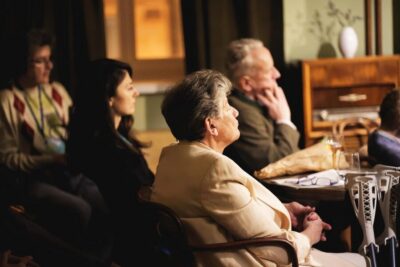
Warsaw Concert: Chopin – Painted by Candlelights with Wine
Read our review →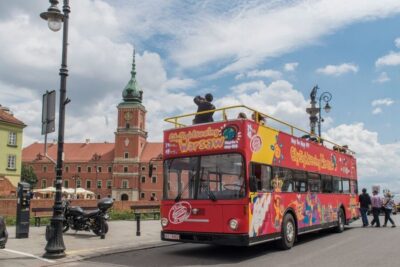
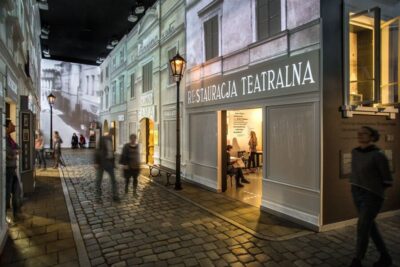
POLIN Museum of the History of Polish Jews Ticket
Read our review →
#1 Pub Crawl Warsaw with Optional Premium 1 Hour Open Bar
Read our review →