REVIEW · WARSAW TOURS
Exploration tour through the district of Praga – authentic and legendary
Praga keeps Warsaw honest. This two-hour walk crosses the Vistula into a district shaped by trade, industry, faith, and survival, with old streets and buildings that escaped much of the wartime destruction. I especially like the focus on Praga’s multicultural past and the chance to finish at the Koneser vodka complex, where you can continue exploring on your own. The main tradeoff is that the tour moves quickly, and admission fees, transport, and lunch are not included.
I also like that this is a private tour, so your group is the only group taking part. Guide Marzena receives particular praise for her clear explanations, personal connection to Warsaw, and warm way of presenting the city. At $70.01 per person, the value is strongest for a small group that wants a focused introduction rather than a large, general city walk.
In This Review
- Key points to know before you book
- Why Praga feels different from central Warsaw
- Starting at Saint Mary Magdalene Cathedral
- Praga’s backyard chapels and local characters
- Jewish Warsaw along Jagiellońska
- Sierakowskiego and Praga’s complicated survival
- The zoo director’s villa and a wartime story
- Różycki Bazaar and the business of Praga
- Religious buildings, brick factories, and Polish vodka
- How the two-hour format affects the experience
- What the $70.01 price gets you
- Who will get the most from this Praga walk
- Booking, timing, and cancellation
- Should you book this Praga tour?
- FAQ
- Where does the Praga tour begin?
- Where does the tour end?
- How long does the experience last?
- Is this a private tour?
- What is included in the price?
- Are museum and attraction admissions included?
- Are public transport tickets included?
- Is lunch included?
- Can I cancel for a full refund?
Key points to know before you book
- Praga shows a prewar side of Warsaw: Much of the district survived the Second World War, leaving older homes, shops, religious buildings, and industrial structures.
- The walk covers seven distinct stops: You move from a cathedral and Jewish sites to a zoo story, a historic bazaar, and a former vodka factory.
- The private format matters: Only your group participates, which can make it easier to ask questions and keep the pace comfortable.
- Marzena is a notable guide: Her personal knowledge of Warsaw and Praga receives strong praise, along with her empathy and commitment.
- The tour ends at Koneser: You finish at Ząbkowska 29, on the grounds of the former vodka factory, with time for your own visit.
- Budget for extras: Some admissions are not included, and you must pay separately for public transport and lunch.
Why Praga feels different from central Warsaw
Warsaw west of the Vistula is the city most people picture first: rebuilt landmarks, the Old Town, grand avenues, and a clear tourist route. Praga, on the right bank, offers a less polished but more revealing view of the capital.
The district grew through trade and industry. Before the war, Christians, Jews, and Orthodox residents lived close together. That mix shaped the streets, businesses, places of worship, and small community spaces you encounter during the walk.
Praga also escaped much of the destruction that swept across Warsaw. The tour explains that roughly three quarters of its houses could hardly survive the Second World War, yet enough of the old district remained to give you a sense of the city before the war.
That survival came at a price. Praga was neglected after the war, and its older buildings did not fit the communist vision of a new society. Later, the district became linked with free trade and independent business. Today, it is changing again, with old industrial buildings being used for cultural purposes.
I find that tension useful. You are not shown a frozen historic quarter. You see a place with scars, working roots, and new energy. The tour is best for anyone who wants Warsaw explained through one neighborhood rather than presented as a list of famous monuments.
A few more in Warsaw
- Warsaw: Chopin Concert in the Old Town
★ 4.8 · 2,287 reviews - Warsaw: Traditional Galar Cruise on The Vistula River
★ 4.6 · 1,640 reviews - Warsaw: Old Town Highlights Walking Tour in English
★ 4.7 · 1,516 reviews
Starting at Saint Mary Magdalene Cathedral
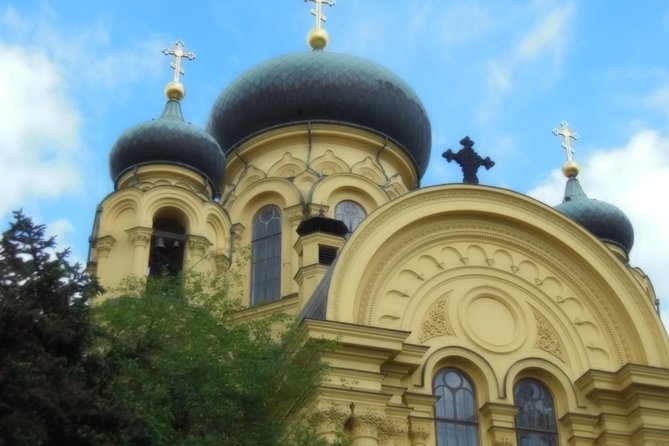
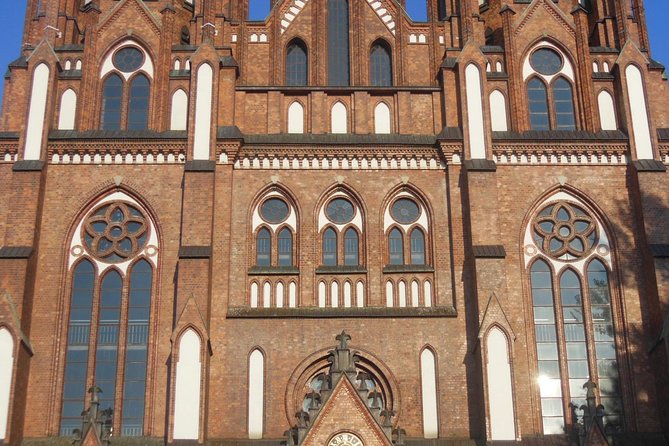
The walk begins at the Metropolitan Cathedral of Saint Mary Magdalene, at Solidarności 52. This Orthodox cathedral introduces one of the important religious threads of Praga and sets up the district’s wider story of Christian, Jewish, and Orthodox communities.
The opening stop gives you about 20 minutes. Admission is free, so there is no extra ticket to arrange here. The cathedral is not treated as an isolated sight. Instead, it helps explain why the right bank developed a character different from the rebuilt center.
The starting point is near public transport, which is useful because the tour does not include transport tickets. Check your route before setting out and allow enough time to reach the meeting point without rushing.
Since this is a private activity, you can ask the guide to clarify religious or architectural details as you go. That is more useful here than simply taking photographs and moving on.
Praga’s backyard chapels and local characters
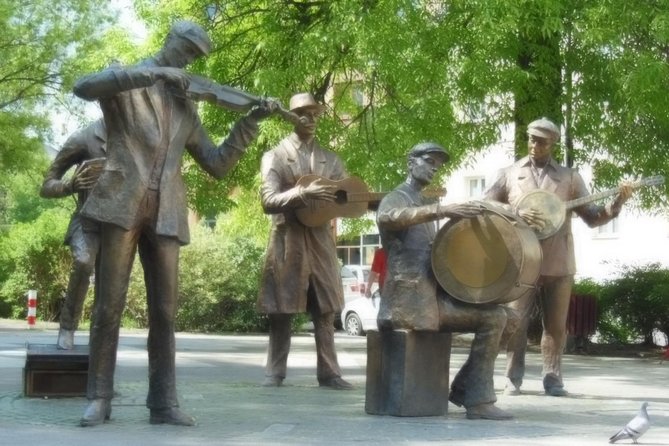
At the monument to the Praga courtyard band, the tour shifts from formal religion to everyday neighborhood culture. The stop lasts about 15 minutes and introduces the imaginative residents of Praga, along with the small backyard chapels that helped shape the district’s appearance.
This is one of the more distinctive parts of the walk because it points you toward details that are easy to miss. Praga’s story is not only about cathedrals, factories, and major events. It is also about courtyards, local customs, and the people who made practical use of limited space.
The tour also discusses business people and benefactors who saw the right bank as a place of opportunity. That theme connects neatly with Praga’s later reputation for free trade.
Admission is not included at this stop. The supplied details do not specify a required ticket amount, so you should treat this as a possible extra rather than assume every part of the visit is covered by the $70.01 price.
Jewish Warsaw along Jagiellońska
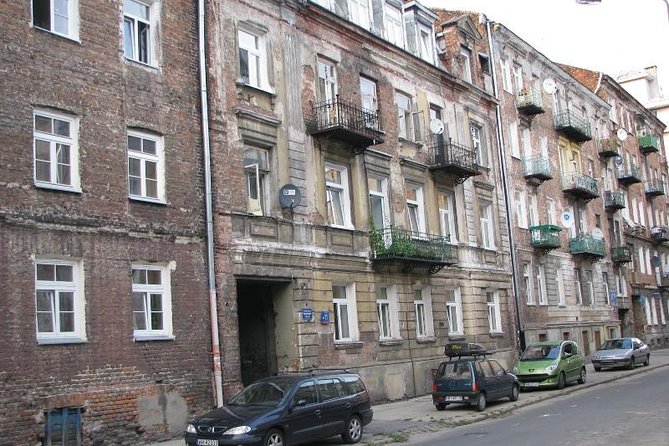
Jagiellońska brings the district’s Jewish story into sharper focus. The right bank was largely spared the destruction that affected other parts of Warsaw, so you can find original Jewish houses and shops here, along with a former Jewish student residence and a mikvah.
The stop lasts roughly 15 minutes and has no admission fee. Its value comes from seeing Jewish life as part of the neighborhood itself, not as a separate chapter disconnected from the rest of Praga.
A mikvah, a Jewish ritual bath, may be unfamiliar to some visitors. The tour gives you a chance to understand how religious and community buildings fit into the daily life of the district.
The timing is short, so I would listen closely and ask questions while you are there. If Jewish Warsaw is your main interest, this tour gives you a useful introduction, but it may not offer the depth of a full specialist walk devoted only to that subject.
Something quite different:
- Warsaw Concert: Chopin – Painted by Candlelights with Wine
★ 4.8 · 1,442 reviews - Warsaw: City Sightseeing Hop-On Hop-Off Bus Tour
★ 3.6 · 1,415 reviews - Warsaw: POLIN Museum of the History of Polish Jews Ticket
★ 4.7 · 1,142 reviews - #1 Pub Crawl Warsaw with Optional Premium 1 Hour Open Bar
★ 5.0 · 790 reviews
Sierakowskiego and Praga’s complicated survival
The stop at Józefa Sierakowskiego lasts about 20 minutes and ties several strands together. You learn what connects Praga with the Czech capital, how the district’s houses endured the war, and why communist planning treated old buildings as a problem.
The connection with Prague is an intriguing detail because it gives the neighborhood a wider Central European context. The tour does not present Praga as an isolated pocket. It places the district within the region’s shared patterns of trade, urban life, and political change.
You also hear how Praga became a symbol of free trade. That point helps explain why the area attracted business people and why its reputation developed differently from the more formal center of Warsaw.
This is a good section for visitors who want social and political context, not just architecture. The old buildings matter, but the reasons they were neglected, preserved, or reused matter just as much.
The zoo director’s villa and a wartime story
The Warsaw zoological garden is the next major stop. The walk spends about 15 minutes here and tells the story associated with the zoo director’s villa, an account that inspired Niki Caro’s film The Zoo Director’s Wife.
The tour uses this setting to connect Praga with the wartime experience of Warsaw. Because the story took place in and around the director’s villa, the stop offers a more personal angle than a general account of military destruction or city rebuilding.
Admission to the zoo is not included. The information provided does not say that the tour enters the zoo, so you should not assume that a zoo ticket is part of the walk. Treat this as a stop connected with the site and its story, with any entry handled separately if needed.
For film fans, this may be a highlight. For everyone else, it adds another layer to the district’s past and shows how local places can carry stories far beyond their original purpose.
Różycki Bazaar and the business of Praga
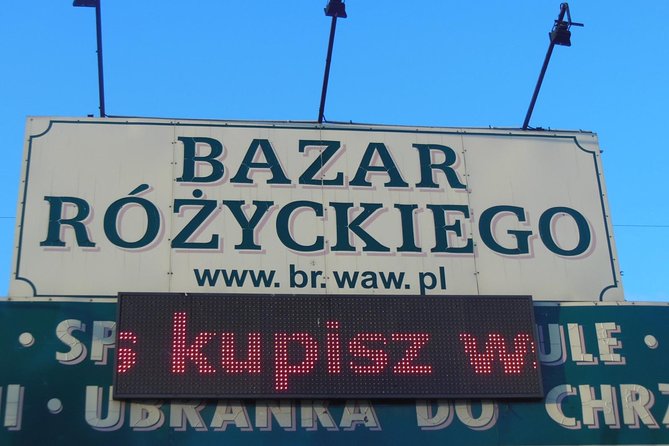
Różycki Bazaar gives you a direct look at Praga’s commercial identity. The stop lasts about 20 minutes and returns to the themes of business people, benefactors, free trade, and the right bank as a place of opportunity.
A bazaar is a fitting setting for this part of the story. Praga was shaped by buying, selling, making, and moving goods. The tour explains how commerce helped define the district, especially when older communist systems gave way to more independent trade.
The information for this stop also repeats the wartime survival and Czech connection discussed earlier. That repetition may help reinforce the main themes, though it could feel less varied if you prefer a strictly chronological route.
Admission is free. You may have time to look around, but the scheduled 20 minutes means this is still an introduction rather than an extended market visit. Keep your attention on the guide, since the value comes from connecting the place you see with the wider story of Praga.
Religious buildings, brick factories, and Polish vodka
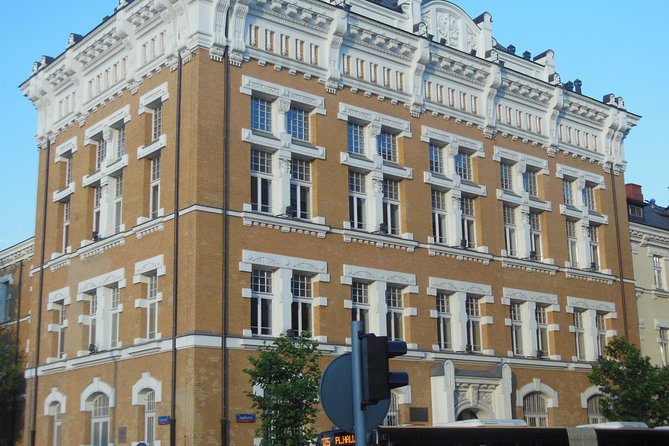
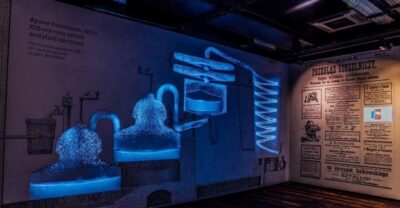
The final stop is the Polish Vodka Museum area, with about 15 minutes devoted to religious buildings, shrines, apartment blocks, and brick factories now being converted into cultural centers. You also learn about vodka and its place in Polish history.
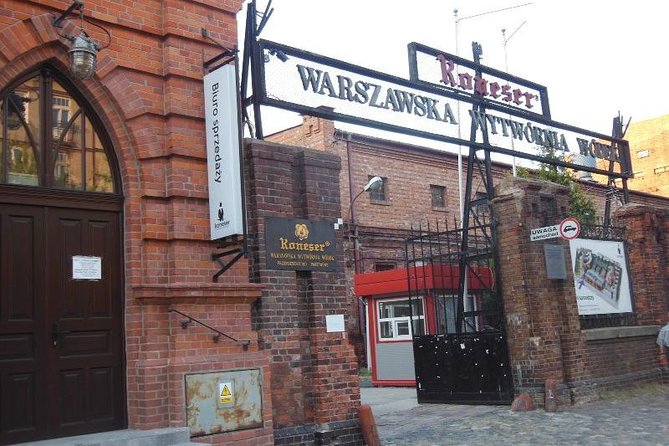
The walk ends at Ząbkowska 29, on the grounds of the Koneser vodka factory. This is a smart finishing point because you are not simply dropped at a random street corner. You have time afterward for your own exploration of the former factory complex.
Admission to the Polish Vodka Museum is not included. If you want to enter, plan for a separate ticket. The tour itself provides background, while a separate museum visit would let you spend more time with the subject.
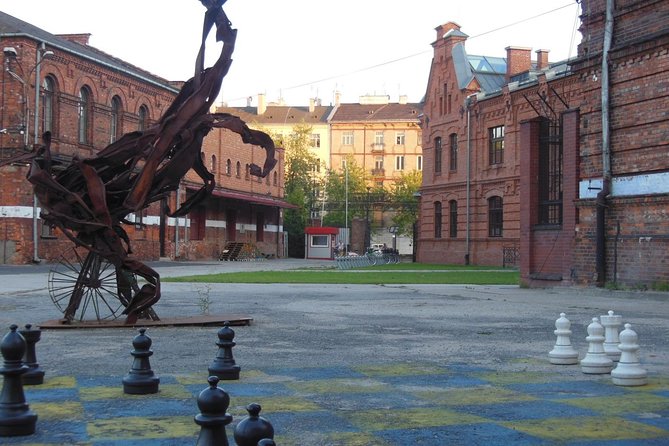
Koneser also gives the route a clear sense of change. Former industrial buildings are being put to new cultural uses, showing how Praga is shifting from an overlooked district toward a popular place for arts, food, and city life. The supplied information does not promise specific shops, restaurants, or exhibitions, so I would treat your free time as flexible rather than plan around a particular venue.
How the two-hour format affects the experience
The itinerary adds up to about two hours, with seven stops ranging from 15 to 20 minutes. That makes the route efficient, but it also means you should expect a steady walk and brief visits rather than long indoor stays.
I like this format for a first look at Praga. You cover religion, Jewish heritage, wartime memory, commerce, architecture, and vodka culture in one compact outing. You also finish in a place where you can continue at your own pace.
The downside is that the route cannot explore every subject in detail. Some stops have possible admission charges, and public transport tickets and lunch are also excluded. If you want to enter the zoo or vodka museum, or spend time inside other buildings, the total cost will rise and your schedule will need more room.
The private format helps offset the short duration. You are not sharing the activity with another booking group, so your party can ask questions and focus on subjects that interest you. The value is particularly good if several people share the experience, although the listed price is per person and the exact group discount is not specified.
What the $70.01 price gets you
At $70.01 per person, the included service is a licensed city tour. That price is not simply buying a walk between seven locations. It pays for the historical links that turn separate streets and buildings into a coherent story about Praga.
I would judge the value by your priorities. If you want a private introduction with a guide who can explain Warsaw through a local district, the price is reasonable, especially for a group that can benefit from the private format. If you mainly want free sightseeing and do not care about interpretation, you may find the cost harder to justify.
You should also budget for possible admissions, transport, and food. The tour does not include lunch, so plan your meal before or after the walk. Since the end point is Koneser, finishing there gives you a practical chance to continue your visit or make your own food plans.
Who will get the most from this Praga walk
I would recommend this experience to first-time visitors who have already seen or plan to see Warsaw’s central landmarks and want a different side of the city. It also suits people interested in Jewish Warsaw, wartime stories, urban change, religious history, and old industrial districts.
The walk is likely to work well for most people because the information says most participants can take part. Still, it lasts two hours and includes movement between several sites, so you should be comfortable with a walking tour.
Families and private groups may appreciate the flexibility of having only their own party on the activity. History-minded visitors will value the links between war, communism, trade, and redevelopment.
I would be less likely to choose it if you want a long museum visit, a food tour, or a route devoted only to one subject. The tour covers a lot, but it does so through short stops and spoken explanation.
Booking, timing, and cancellation
The experience is commonly booked about seven days in advance, so arranging it ahead of time is sensible. Confirmation normally arrives when you book, although bookings made within 12 hours of the start time are confirmed as soon as possible, subject to availability.
You receive free cancellation if you cancel at least 24 hours before the start time. Cancellations or changes made later are not accepted for a refund, and the cut-off follows Warsaw local time.
The activity has a mobile ticket and offers group discounts. Because the tour starts at the Metropolitan Cathedral of Saint Mary Magdalene and ends at Koneser, you should note both locations when planning your day. The end point is not the same as the start point, but it leaves you in a useful part of Praga for further sightseeing.
Should you book this Praga tour?
Book it if you want a focused, private introduction to Warsaw’s less polished side, with a guide who can connect old buildings to the district’s Jewish, Orthodox, Christian, commercial, and wartime stories. Marzena’s praised personal approach is a strong reason to choose this experience, especially if she is assigned to your tour.
Skip it if you want extensive time inside museums or a slow architectural study. The two-hour route is brisk, and extra admissions are not included.
For most visitors, this is a good way to get your bearings in Praga without spending half a day on a broad city tour. The best plan is to take the walk early in your Warsaw stay, then use the finish at Koneser as a launch point for your own time in the district.
FAQ
Where does the Praga tour begin?
The tour begins at the Metropolitan Cathedral of Saint Mary Magdalene, Solidarności 52, 03-402 Warszawa, Poland.
Where does the tour end?
It ends at Ząbkowska 29, 03-736 Warszawa, Poland, on the grounds of the Koneser vodka factory.
How long does the experience last?
The walking tour lasts approximately two hours.
Is this a private tour?
Yes. Only your group participates in the private activity.
What is included in the price?
A licensed city tour is included.
Are museum and attraction admissions included?
Possible admissions are not included. The itinerary specifically notes that admission is not included at some stops, including the Polish Vodka Museum and the zoo-related stop.
Are public transport tickets included?
No. Public transport tickets are not included.
Is lunch included?
No. Lunch is not included.
Can I cancel for a full refund?
Yes, if you cancel at least 24 hours before the experience start time. Cancellations or changes made less than 24 hours before the start time are not refunded or accepted.
Just added in Warsaw
- Wroclaw Small-Group Tour with Lunch from Warsaw★ 5.0 · 2 reviews
- World War II Warsaw Old Town, Military Cemetery Walking Tour★ 4.7 · 3 reviews
- Warsaw: Wolf’s Lair & Swieta Lipka Small-Group Tour + Lunch★ 5.0 · 3 reviews
- Wilanów Palace: 2-Hour Guided Tour with Entrance Tickets★ 4.8 · 8 reviews
- Warsaw Zoo Skip-the-Line Entry Ticket with Private Transport★ 4.8 · 3 reviews
- Warsaw Wolf’s Lair with St. Lipka and Mamerki Private Guided★ 4.2 · 3 reviews
- Warsaw: Private Vodka Tasting Night with Snacks and Pickup★ 5.0 · 7 reviews
- Warsaw Private Wilanow Palace & Garden Tour★ 4.6 · 30 reviews
Warsaw Tours, compared.
Traditional Galar Cruise on The Vistula River
Read our review →

Warsaw Concert: Chopin – Painted by Candlelights with Wine
Read our review →
POLIN Museum of the History of Polish Jews Ticket
Read our review →
#1 Pub Crawl Warsaw with Optional Premium 1 Hour Open Bar
Read our review →