
REVIEW · WARSAW TOURS
Discover the Dark Side of Warsaw in Praga District by Retro Bus
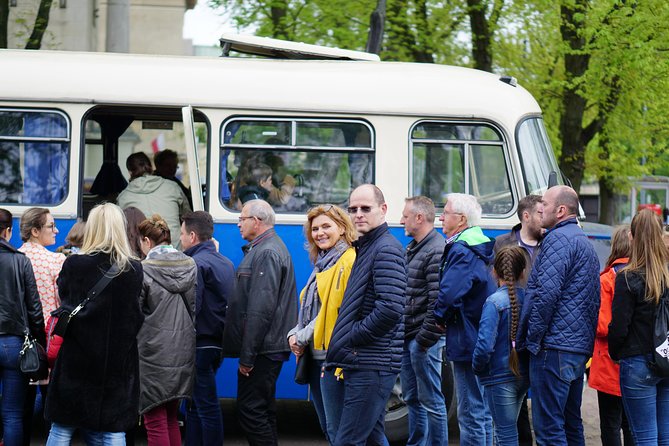
Warsaw has more than its polished center. This tour crosses the Vistula to Praga, a district shaped by war, communism, poverty, art, and renewal. I like the 1980s retro bus, which turns ordinary travel between stops into part of the sightseeing. I also like the hot chocolate stop at the E.Wedel factory and the chance to see corners of Warsaw that standard city tours often skip. The main drawback is that the dark side label can promise more grit and drama than the actual two-and-a-half-hour route delivers.
You’ll hear lively stories from guides such as Konrad, Marcin, and Paweł, all praised for clear English, humor, and strong storytelling. The ride is a good value at $42.34, but a large group, a hot day, or a bus problem can affect the pace. Bring water, dress for the weather, and expect a moving introduction to Praga rather than a hard-edged crime tour.
In This Review
- Key points to know before booking
- Why Praga deserves two and a half hours
- Starting beside Warsaw’s Palace of Culture
- Crossing the Vistula in a vintage bus
- E.Wedel and the best-tasting history lesson
- Kamionek, the stadium, and Warsaw’s changing edges
- Koneser and the old vodka factory
- Brzeska Street, Stalowa Street, and the painted city
- Różycki’s Bazaar and Praga’s rougher reputation
- The Praga Bermuda Triangle and a prewar courtyard
- Warsaw Zoo and the return across the river
- Guide quality, group size, and pace
- Is $42.34 a fair price?
- Who should book this Praga tour?
- Should you book it?
- FAQ
- Where does the tour start?
- Where does the tour end?
- What time does the tour start?
- How long does the tour last?
- Is the tour offered in English?
- Is hot chocolate included?
- Does the tour include hotel pickup?
- Can I cancel for a full refund?
Key points to know before booking
- A 1980s coach makes the ride part of the attraction: You are not simply being driven from place to place. The old bus adds character, though it may lack modern comforts such as air conditioning.
- E.Wedel serves a cup of hot chocolate: This is included and gives the route a pleasant break, even in warm weather.
- Praga tells a different Warsaw story: You see prewar buildings, courtyards, murals, a former market, a vodka factory, and neighborhoods still changing.
- The tour includes film and wartime locations: Brzeska Street appeared in Roman Polański’s The Pianist, while Warsaw Zoo connects with The Zookeeper’s Wife.
- The guides are a major strength: Konrad, Conrad, Marcin, and Paweł are praised for humor, historical detail, and handling questions well.
- The group can shape the day: The published maximum is 40 people, but several buses may operate together. A smaller bus can make the tour feel much more personal.
Why Praga deserves two and a half hours
Most first visits to Warsaw focus on the rebuilt Old Town, the Royal Route, and the Palace of Culture and Science. Those places matter, but Praga gives you a less polished view of the city. It survived much of the destruction that erased central Warsaw during World War II, so some streets retain old brick buildings, courtyards, and industrial sites.
That survival comes with complications. Praga has not been turned into one tidy museum district. Some streets are stylish and creative, while others show worn facades and uneven rebuilding. That contrast is exactly what makes the tour useful. You see a real neighborhood in transition, not a stage set prepared for sightseeing.
The word dark mainly refers to Praga’s rough past, its reputation, and the hard years after the war. Do not book this expecting a ghost walk or a tour focused on crime. The subject is broader: war, the communist period, black-market trade, vodka production, local life, and the district’s current revival.
A few more in Warsaw
- Warsaw: Chopin Concert in the Old Town
★ 4.8 · 2,287 reviews - Warsaw: Traditional Galar Cruise on The Vistula River
★ 4.6 · 1,640 reviews - Warsaw: Old Town Highlights Walking Tour in English
★ 4.7 · 1,516 reviews
Starting beside Warsaw’s Palace of Culture
The meeting point is outside the Warsaw Tourist Information Office at the Palace of Culture and Science, on plac Defilad. The building is easy to identify and remains one of the city’s most loaded symbols. It was presented as a gift from Joseph Stalin, a reminder of the Soviet influence that shaped postwar Poland.
The tour begins in central Warsaw, and the guide starts the story before the bus reaches Praga. Along the way, you may hear about the date palm in the city center, wartime objects hidden in the basement of the National Museum, and the football stadium built for the UEFA Euro 2012 championship.
These opening details help you read Warsaw as you move through it. The city’s modern streets sit on top of layers of war damage, communist planning, and rapid change. You are also given views of the Royal Castle, the Warsaw Nike monument honoring those killed during World War II, and the broad main street enlarged after the war.
There is a timing detail worth checking. The description gives a 10:30am departure in one place, while the meeting information lists 11:00am. Confirm the exact start time on your booking confirmation and arrive early.
Crossing the Vistula in a vintage bus
The short ride across the Vistula is not wasted time. Your guide introduces Praga as a former independent metropolis, a place that developed separately from the historic center across the river.
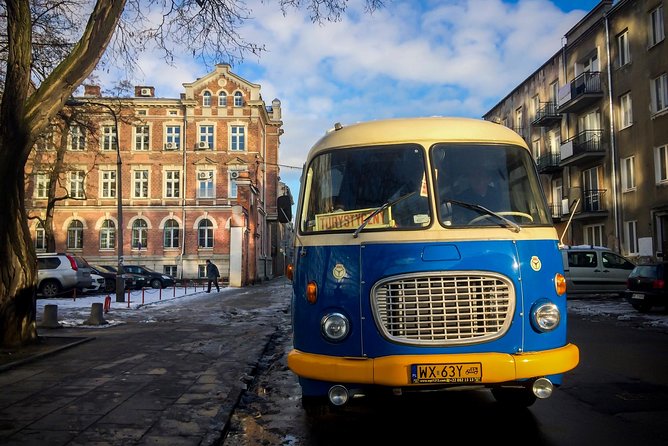
The bus itself is a big reason to choose this tour. A 1980s coach feels like a small piece of recent Polish history, and it fits the subject better than a sleek modern vehicle would. You can watch the city pass by while the guide explains how Warsaw changed after World War II and under communism.
There are tradeoffs. One bus reportedly needed a push after its battery became cold, which turned into an amusing unscheduled moment. Another comment noted that exhaust could be unpleasant. On very hot days, the lack of air conditioning can matter. The ride is atmospheric, but it is not luxury transport.
E.Wedel and the best-tasting history lesson
The first main stop is E.Wedel, the famous 19th-century chocolate factory. You receive a cup of hot chocolate and hear stories about the factory’s past. The stop lasts about 20 minutes, with admission included.
I like this pause because it breaks up the heavier material. You are not just looking at old buildings and hearing about wartime hardship. You also get a simple local treat tied to Warsaw’s industrial and commercial story.
The hot chocolate has been one of the most praised parts of the route. It was enjoyed even on a warm day, which says something about its appeal. Still, the stop is brief. Think of it as a tasting and a short history talk, not a full factory visit or chocolate workshop.
Something quite different:
- Warsaw Concert: Chopin – Painted by Candlelights with Wine
★ 4.8 · 1,442 reviews - Warsaw: City Sightseeing Hop-On Hop-Off Bus Tour
★ 3.6 · 1,415 reviews - Warsaw: POLIN Museum of the History of Polish Jews Ticket
★ 4.7 · 1,142 reviews - #1 Pub Crawl Warsaw with Optional Premium 1 Hour Open Bar
★ 5.0 · 790 reviews
Kamionek, the stadium, and Warsaw’s changing edges
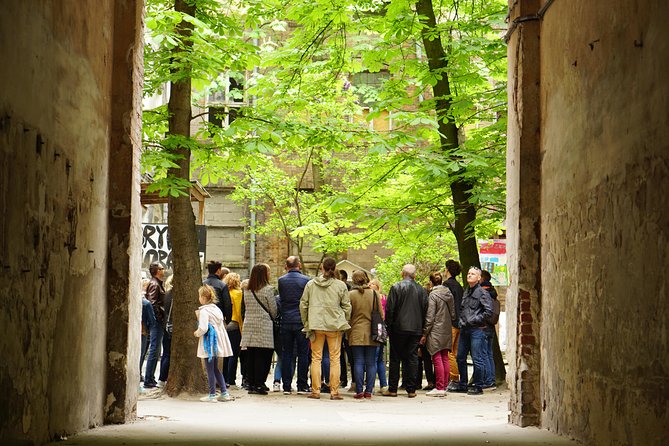
The tour continues through Kamionek, an area described as having changed sharply in recent years. Former industrial and working-class spaces now sit near hip bars and cafes. Your guide explains how that shift happened and what it means for the district.
This is one of the better places to watch Warsaw’s present-day change. A neighborhood does not become fashionable all at once. Old structures remain beside newer businesses, and the difference between the two gives the area its character.
The route also takes in Warsaw East railway station. You hear the case for why it may be the city’s most beautiful station, then pass the longest building in Warsaw. These are the sort of details that are easy to miss if you explore alone without local context.
You may also see the church of the Basilica of the Sacred Heart of Jesus. The stop lasts about 20 minutes and is presented as a chance to see one of Poland’s most beautiful churches. It gives the tour a quieter, more traditional pause after the industrial and commercial sights.
Koneser and the old vodka factory
Koneser Warsaw Vodka Factory is another 20-minute stop. The former factory is used to explain the role vodka played in Praga’s past and whether it influenced the district’s reputation.
The value here is not simply the building itself. The guide connects production, work, drinking culture, and local identity. Koneser also helps you see how former industrial property can take on a new life as part of a modern cultural and social area.
Do not expect a vodka tasting to be included. The listed inclusion is one cup of hot chocolate, and food and drinks are otherwise not included unless specified. If you want refreshments beyond that, bring something with you. One practical comment specifically advised carrying drinks because there may not be a chance to buy them during the route.
Brzeska Street, Stalowa Street, and the painted city
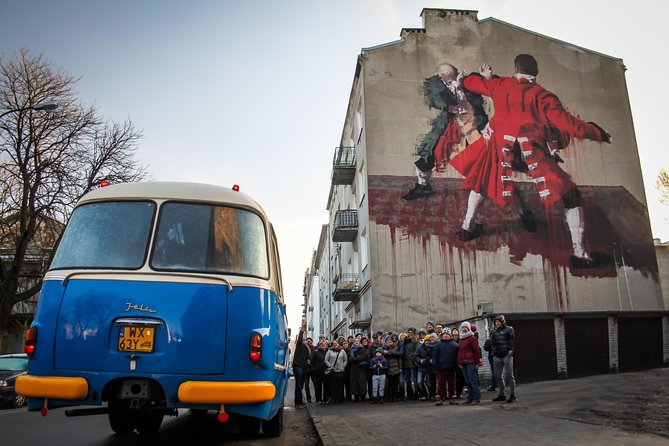
The streets of Brzeska and Stalowa bring the tour into Praga’s street-art side. Murals depict episodes from Polish history and reflect the country’s political climate. This is not decorative art placed in a single gallery district. It appears on ordinary streets, where the artwork becomes part of daily life.
The murals are interesting, but the time given to street art can feel short. If you love photography or want to study each painting, you may wish for a longer stop. The tour gives you an overview rather than a detailed art walk.
Brzeska Street also has a film connection. Its old buildings and atmosphere made it a location for The Pianist. Seeing the street after hearing about its past makes the film reference more useful than a simple list of movie sites. You can look at the setting and think about what the neighborhood has survived.
Różycki’s Bazaar and Praga’s rougher reputation
The former Różycki’s Bazaar was once known as a place where customers could buy forged documents. The tour also points out the longest-operating marketplace in Warsaw and gives you a chance to see what is sold there today.
This section explains why Praga earned its darker reputation. The district’s past included informal trade, difficult living conditions, and a sense of separation from central Warsaw. At the same time, the market is not presented only as a relic of crime. It remains part of the neighborhood’s everyday identity.
The route then explores Praga Północ, the area most closely linked with the tour’s title. You get about an hour here, including streets, courtyards, and prewar architecture. This is the most substantial walking section, so wear shoes that are comfortable on uneven urban surfaces and be ready to walk at the group’s pace.
The Praga Bermuda Triangle and a prewar courtyard
One of the most atmospheric parts of the tour is the area known as the Praga Bermuda Triangle. The name suggests something more mysterious than what you actually see, but the setting is memorable. Scenic courtyards and old residential buildings reveal the texture of prewar Praga.
You may enter the inner courtyard of a prewar residential house in New Praga. This is a valuable stop because Warsaw’s history is not only found in grand monuments. It is also found in shared courtyards, worn walls, stairways, and the way residents have adapted older buildings.
The New Praga stop lasts about 15 minutes. That is enough for an introduction and some photographs, but not enough for a long architectural study. I would pay close attention to the guide here, since the stories about the district’s founder and its development give meaning to what might otherwise look like a collection of aging buildings.
Warsaw Zoo and the return across the river
The tour points out Warsaw Zoo, known to many people through The Zookeeper’s Wife. The zoo is not listed as a separate admission visit, so you should treat it as a site seen from the route rather than a chance to tour the grounds.
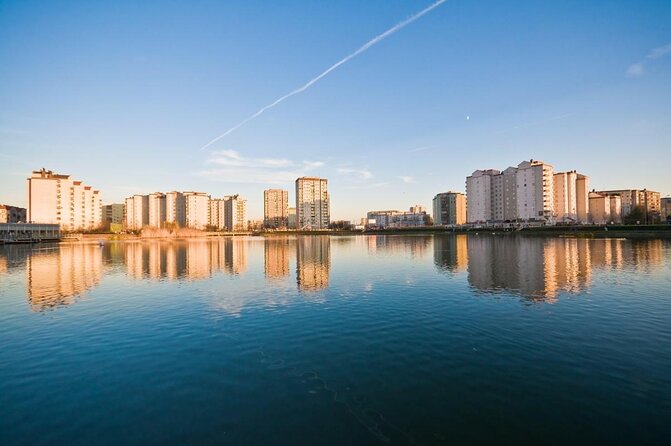
After that, the bus crosses the Vistula again. The return trip gives you another view of the river and the city on the opposite bank. The final sights include a panorama of the Royal Castle and the Warsaw Nike monument, which commemorates those who died in Warsaw during World War II.
Ending back at the Palace of Culture and Science is practical. You are left in central Warsaw, near public transportation, with an easy base for the rest of the day. The route also makes a useful first or second-day activity because it gives you names, neighborhoods, and historical questions to follow up on later.
Guide quality, group size, and pace
The guides are the tour’s strongest feature. Konrad, also referred to as Conrad, is praised for being funny, clear, and good at handling difficult moments. Marcin is noted for explaining life behind the Iron Curtain with both facts and personal anecdotes. Paweł is described as an excellent storyteller who made the history easy to follow.
That matters on a route like this. Praga is not a place where every sight explains itself. A worn facade can look merely neglected until the guide tells you what happened there and why it remains important.
The published maximum is 40 people, but several buses may sometimes run together. One large group was divided among three buses, while a smaller group enjoyed a more personal ride. If you are assigned to a small bus, do not assume you received less. It may actually improve the commentary and make stops easier.
A late or noisy group can cause problems. One account described loud drinking on the bus and rushed stops after delays. That is not a reason to reject the tour, but it is a reminder that the pace depends partly on group behavior. Arrive on time and keep your expectations realistic.
Is $42.34 a fair price?
At $42.34 per person, the price is fair if you want transport, a live English-speaking guide, a historic vehicle, and a focused look at Praga in one outing. The included hot chocolate adds a small but welcome extra. You are paying for interpretation and access to several scattered areas, not for major entrance tickets.
The value is strongest for a first visit to Warsaw or for anyone who has already seen the Old Town and wants something less standard. You cover places that would take more effort to connect on your own, including Kamionek, Koneser, Brzeska, Stalowa, New Praga, and Praga Północ.
The price is less convincing if you want a long walking tour, extensive street-art photography, or a polished sightseeing vehicle. The route moves quickly, and most stops are short. You are buying a guided overview with character, not a slow architectural seminar.
Who should book this Praga tour?
I would choose this tour if you like recent European history, film locations, old industrial districts, street art, and neighborhoods still being rebuilt. It also suits you if you prefer a story-led outing rather than a list of monuments.
It is a good match for visitors who want to understand how World War II and communism still affect Warsaw. The guides connect those periods to buildings, streets, markets, and everyday life.
You may want something else if you dislike old buses, warm vehicles, uneven streets, or group tours. The dark side title may also disappoint if you expect dramatic crime stories. The real appeal is more subtle: Praga shows Warsaw as a city with scars, memories, and an unfinished future.
The tour operates in all weather, so dress accordingly. It is offered in English, confirmation is provided when you book, and most people can take part. Free cancellation is available up to 24 hours before the start time. The activity requires a minimum number of participants, so a cancellation for that reason would lead to another date or a full refund.
Should you book it?
Yes, if you want a lively and unusual way to understand Warsaw beyond the rebuilt center. The vintage bus, excellent guides, E.Wedel hot chocolate, Koneser factory, painted streets, film locations, and old courtyards create a varied two-and-a-half-hour route.
Book it with the right expectations. You will not see every mural up close, and the pace may feel quick in a large group. But if you bring water, arrive early, and listen closely to the guide, you get strong value and a useful view of the real Praga.
FAQ
Where does the tour start?
It starts outside the Warsaw Tourist Information Office at the Palace of Culture and Science, pl. Defilad 1, 00-901 Warszawa, Poland.
Where does the tour end?
The tour returns to the original meeting point at the Palace of Culture and Science.
What time does the tour start?
The meeting information lists an 11:00am start, while the tour description also refers to a 10:30am departure. Check your booking confirmation for the exact time.
How long does the tour last?
The tour lasts approximately 2 hours and 30 minutes.
Is the tour offered in English?
Yes. The tour is offered in English and includes live commentary from a professional guide.
Is hot chocolate included?
Yes. You receive one cup of hot chocolate at the E.Wedel stop.
Does the tour include hotel pickup?
No. Hotel pickup and drop-off are not included. You must reach the Palace of Culture and Science meeting point yourself.
Can I cancel for a full refund?
Yes. You can cancel up to 24 hours before the experience begins for a full refund. Changes or cancellations made less than 24 hours before the start time are not accepted for a refund.
Just added in Warsaw
- Historical Walking Tour of Jewish Warsaw★ 5.0 · 68 reviews
- Deluxe Polish Food Tour Experience in Warsaw★ 5.0 · 19 reviews
- CO2-Offset Arrival Transfer from Warsaw Airport to Warsaw City★ 5.0 · 1 review
- Amazing photo walk through the Old town of Warsaw★ 5.0 · 32 reviews
- 8-day tour around Poland by private car★ 5.0 · 2 reviews
- 2 Hour Super Segway City Tour of Warsaw★ 5.0 · 5 reviews
- Electric Scooter Tour: Full Tour – 3-Hours of Magic!★ 5.0 · 3 reviews
- 2h Rental of Motorboat for 10 in Warsaw no License Needed★ 5.0 · 1 review
Warsaw Tours, compared.
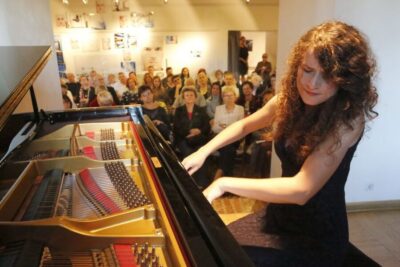
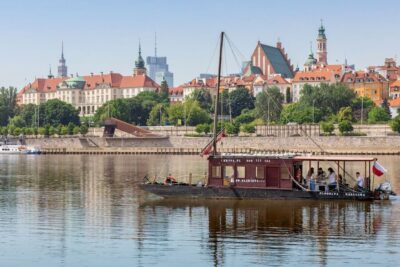
Traditional Galar Cruise on The Vistula River
Read our review →
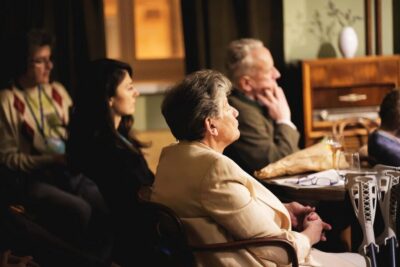
Warsaw Concert: Chopin – Painted by Candlelights with Wine
Read our review →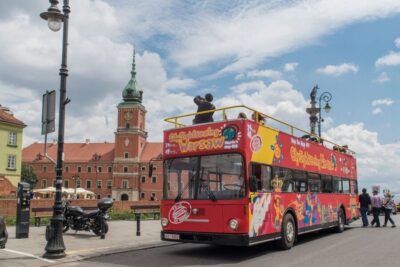
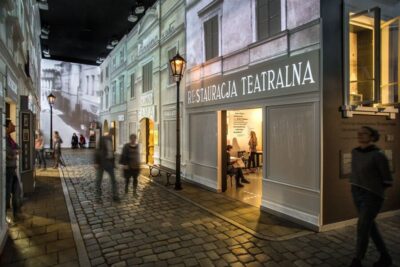
POLIN Museum of the History of Polish Jews Ticket
Read our review →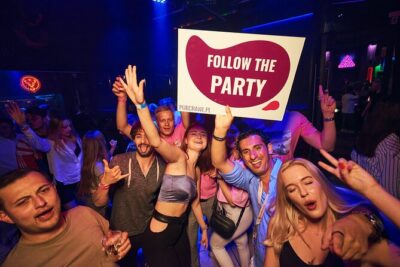
#1 Pub Crawl Warsaw with Optional Premium 1 Hour Open Bar
Read our review →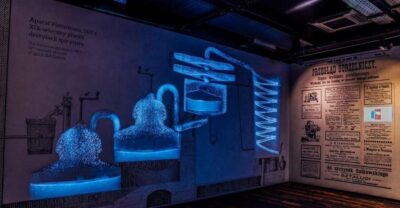
Browse the lists this tour appears in