
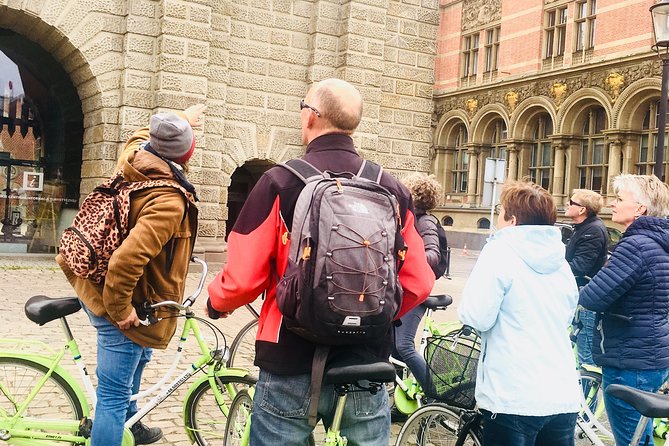
REVIEW · CYCLING TOURS
Bike Tour Gdansk – Standard
Gdańsk reveals itself quickly by bike. I like the local perspective and the chance to cover major sights, from Neptune’s Fountain to the shipyard, without rushing on foot. I also like the focus on Polish traditions and everyday life, not just dates and façades. The main consideration is time: two hours gives you a strong overview, but only brief stops at most places.
This private tour costs $43.05 per person, with group discounts available. It is a good fit if you want a personal route shaped around your interests, though admission to some sights is not included and the experience depends on good weather.
In This Review
- Key points to know before booking
- Starting near Długa Street in central Gdańsk
- Długa Street and Neptune’s Fountain
- St. Mary’s Church and its remarkable interior
- The European Solidarity Centre
- Gdańsk Shipyard and the Solidarity story
- The Museum of the Second World War
- Golden Gate and the old city approach
- Wyspa Spichrzów and the Motława waterfront
- The footbridge over the Motława and Olowianka
- The Crane, a symbol of Gdańsk
- Green Gate and the route back
- What $43.05 buys you
- Who will get the most from this bike tour
- Practical details that affect your day
- Should you book Bike Tour Gdansk Standard?
- FAQ
- How long is the Bike Tour Gdansk Standard experience?
- Where does the tour start?
- Where does the tour end?
- How much does the tour cost?
- Is the tour private?
- Are museum and attraction tickets included?
- Can the tour be customized?
- Is the footbridge over the Motława guaranteed?
- What happens if the weather is poor?
Key points to know before booking
- Solidarity takes center stage: The European Solidarity Centre and Gdańsk Shipyard give the tour its strongest historical focus.
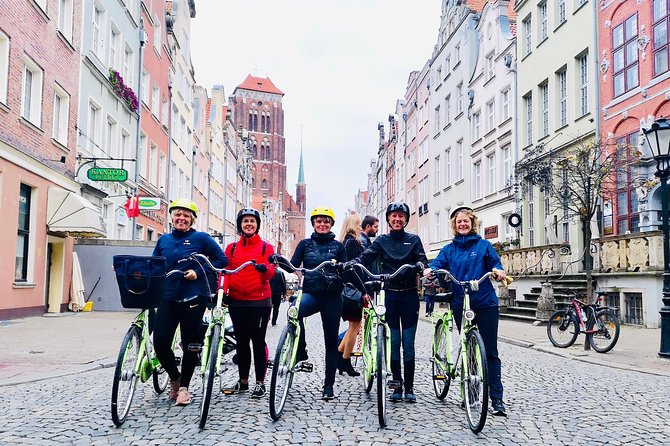
- Ten stops fit into about two hours: Expect short visits, quick explanations, and cycling between landmarks.
- You ride at a relaxed pace: The tour is designed as an easy city overview rather than a long-distance bike outing.
- Your group has the guide to itself: This is a private activity, useful if you want to ask questions or adjust the route.
- Several major sights are seen from outside: Extra admission may be needed for places such as the Museum of the Second World War and the Crane.
- Weather matters: Poor conditions can lead to a new date or a full refund.
Starting near Długa Street in central Gdańsk
The tour begins at Kołodziejska 7, 80-836 Gdańsk, and returns to the same meeting point. That central start puts you close to the city’s best-known old-town sights, so you begin with the classic Gdańsk scene rather than spending the first part of the tour reaching it.
The experience lasts about two hours. The stated stops add up to roughly 70 minutes of planned sightseeing, leaving the rest for cycling, orientation, and movement between sites. That timing tells you what kind of tour this is: a broad first look, not a series of long museum visits.
I would arrive ready to move. The tour is private, so you can ask for more explanation at a place that catches your attention, but the day still has a fixed overall length. If you want to explore every interior slowly, you will need to return later on your own.
The guide is a local born in Gdańsk. That matters here. The tour promises personal stories, Polish traditions, local habits, and the way people think about their city. You are not simply collecting photographs. You are being given a local frame for understanding them.
More Bike Tours in Gdańsk
- Gdańsk: Highlights Bike Tour
★ 4.9 · 173 reviews - Gdansk Private Bike Tour
★ 5.0 · 36 reviews - Gdansk Private Bike Tour
★ 5.0 · 21 reviews
Długa Street and Neptune’s Fountain
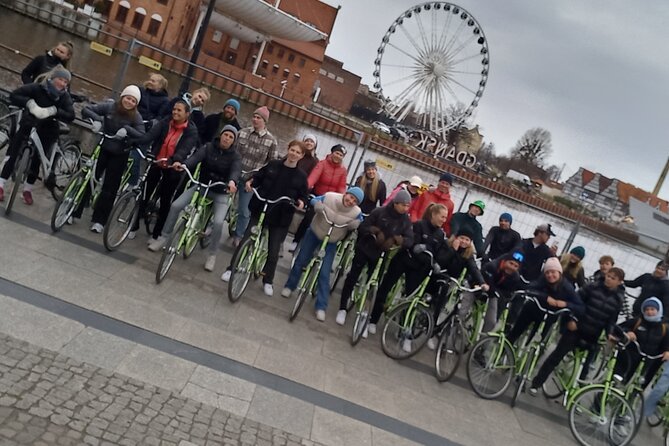
Długa Street gives you the postcard version of Gdańsk first. The route includes Neptune’s Fountain, the Town Hall, and other central monuments, with about ten minutes set aside for this opening stop.
Neptune is one of the city’s best-known symbols, and the Town Hall helps establish the scale and character of the old center. This is a useful opening because you can get oriented before the tour moves toward the city’s churches, waterfront, and twentieth-century history.
The drawback is the short time. Ten minutes is enough for an introduction and a few photographs, but not a full examination of the surrounding buildings. Admission is not included at this stop, so the value comes from the guide’s explanation and the quick visual survey.
I would treat Długa Street as a preview. Make a note of anything you want to revisit later, especially if you are interested in architecture or want more time around the Town Hall.
St. Mary’s Church and its remarkable interior
The next stop is St. Mary’s Church, with ten minutes planned inside. Admission is included, which makes this one of the more useful stops for seeing a major interior without arranging a separate ticket during the tour.
The listed highlights include Memling’s triptych The Last Judgment, the Beautiful Madonna sculpture, a basket chandelier dating from 1490, and the famous astronomical clock. Those details give you plenty to look for, even during a short visit.
The church stop is especially worthwhile because the guide can point out objects you might otherwise miss. A large historic church can feel like a hall of impressive but confusing details. A few clear markers, such as the triptych and the old chandelier, help you pay attention.
Again, ten minutes is tight. You will not have much time for quiet looking, and the tour does not promise a full visit to every part of the church. Still, included admission and a focused introduction make this a practical way to begin understanding Gdańsk’s religious and artistic side.
The European Solidarity Centre
The European Solidarity Centre is one of the most meaningful stops on the route. The visit lasts about ten minutes, and admission is included. You will learn why this place matters to Polish people, with the guide connecting it to the wider story of the Solidarity movement.
This is where the tour moves beyond old-town beauty. Gdańsk is strongly tied to the political changes that reshaped Poland, and the center helps explain that significance. The experience particularly emphasizes the Solidarity period of the 1980s, a subject praised for its interesting commentary.
Ten minutes will not allow a full museum visit. Think of this as a compact introduction that gives the place context. If the subject interests you, you should plan separate time to return and explore at greater length.
I like this part of the route because it gives the tour emotional weight. You see that Gdańsk is not only about handsome streets and waterfront views. It is also a city connected to working people, political pressure, and the end of communist rule.
Something quite different:
- Gdansk: City Cruise on Historical Polish Boat
★ 4.8 · 2,913 reviews - Gdańsk: Sunset Cruise on a Historic Polish Boat
★ 4.9 · 977 reviews - Gdańsk City Sights & History Guided Walking Tour in English
★ 4.8 · 876 reviews - Gdansk: Firearm Shooting Experience with Instructor
★ 4.8 · 866 reviews
Gdańsk Shipyard and the Solidarity story
The Gdańsk Shipyard follows naturally from the European Solidarity Centre. You spend about ten minutes learning why this large Polish shipyard became internationally known through the Solidarity movement and the collapse of the communist system.
The shipyard is important because the guide can link a physical place to events that changed the country. The stop should help you understand why Gdańsk matters beyond its medieval and early modern monuments.
This is another quick visit, so do not expect a full industrial tour. The value lies in the explanation and the connection between the shipyard and the center you have just seen. Taken together, these two stops form the strongest historical section of the ride.
If you already know the basic Solidarity story, you may want to use your private format to ask about local memories and daily life during that period. If you know little about it, listen carefully here. The commentary may become the most memorable part of the whole experience.
The Museum of the Second World War
The route pauses for five minutes at the Museum of the Second World War. The experience strongly recommends visiting it, but admission is not included. This is best understood as an orientation stop rather than a museum visit.
The short timing makes sense if the goal is to show you where the museum is and explain its place in Gdańsk’s story. It does not make sense as enough time to see the exhibitions. You will need a separate visit if you want to explore the subject properly.
For many people, this museum may deserve several hours, not five minutes. The bike tour can help you place it on your map and decide if it belongs in your schedule. Do not assume the tour price covers entry.
Golden Gate and the old city approach
The Golden Gate, or Złota Brama, receives a five-minute stop. Its allegorical statues represent Peace, Freedom, Wealth, Fame, Piety, Justice, and Concord, giving you a clear set of details to look for above the gateway.
This is a quick architectural pause, but it works well in a bike tour because the gate marks an important approach into the old center. The guide can point out the symbolism while you take in the structure.
Admission is not included, although this is mainly a short exterior sight in the stated plan. I would not expect a long stop here. Instead, use it as a compact lesson in how Gdańsk expressed civic ideals through public decoration.
Wyspa Spichrzów and the Motława waterfront
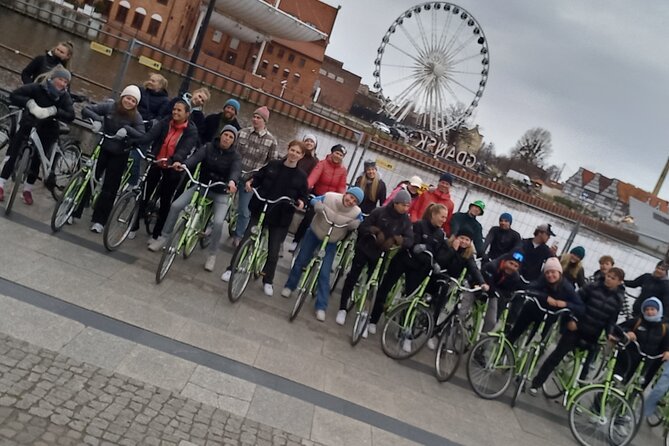
Wyspa Spichrzów is described as the historical heart of Gdańsk. It was destroyed during the Second World War, so the stop offers a chance to think about loss, rebuilding, and the changing shape of the city.
Five minutes is not long, but the place fits the tour’s larger theme. Gdańsk is presented through several layers: old-town monuments, wartime destruction, postwar change, and the political history of the shipyard.
Admission is included at this stop. The route does not promise an extended visit, so you will mainly receive an explanation and a brief look around. I would pay attention to how the guide describes the island’s past, since that context may be more useful than a fast ride past the buildings.
The footbridge over the Motława and Olowianka
The stop at the footbridge over the Motława River on Olowianka lasts about five minutes. The route includes it only if the bridge is open, so this part is conditional.
That small detail matters. You should not treat the bridge as guaranteed, especially if it is important to your plans or photographs. If it is available, it adds a waterfront moment to a route otherwise divided between old streets and modern Polish history.
The bridge stop is included, and the short pause should be enough for a quick view and orientation. If access is not possible, the tour may simply move on. The experience gives no firm alternative, so keep your expectations flexible.
The Crane, a symbol of Gdańsk
The Crane is one of the defining symbols of Gdańsk, and the tour gives it five minutes. Its position by the water makes it an obvious visual marker and a useful point for understanding the city’s connection to trade and the river.
Admission is not included. The stated timing suggests that you will see the Crane and hear about its importance rather than enter and explore it in detail.
This is a good example of the tour’s approach. You get the city’s major icons in one ride, then decide which deserve a longer return visit. If the Crane interests you, check the separate admission arrangements rather than assuming the bike tour includes them.
Green Gate and the route back
The final listed stop is the Green Gate, or Brama Zielona. It leads to the Green Bridge and receives about five minutes. Like the Golden Gate, it is a short architectural stop that helps complete your picture of the central city.
Admission is not included. The guide can point out the relationship between the gate and the bridge, while you get another view of Gdańsk’s formal entrances and waterfront connections.
The tour then returns to Kołodziejska 7. Ending where you began is practical, especially if you have left other plans nearby. By this point, you should have a useful map in your head: the old center, the river, the shipyard, the Solidarity sites, and the Second World War museum.
What $43.05 buys you
At $43.05 per person, the price is reasonable if you value a private local guide and want to cover many major sights in two hours. You are paying for structure, local interpretation, and the convenience of moving between distant parts of central Gdańsk without planning the route yourself.
The value is less clear if you only want a long bike ride or already know the city well. Several stops last five minutes, and some notable interiors require extra admission. You are buying an overview, not a full museum package.
Group discounts can improve the price for larger parties. Since only your group participates, you also have more room to ask questions or express an interest in Polish traditions, Solidarity, architecture, or local life.
The guide describes the tour as customizable. That is a useful promise, but the short duration means customization will involve emphasis, not a completely different day. You can request attention to your priorities, yet you cannot deeply explore every stop in two hours.
Who will get the most from this bike tour
I would recommend this experience to first-time visitors who want a quick orientation and a local voice. It also suits people who prefer cycling to a long walking tour and want to connect the old center with the shipyard and modern historical sites.
It is a particularly good match if you want to understand the Solidarity movement. The European Solidarity Centre and Gdańsk Shipyard receive meaningful attention, and the local commentary about the 1980s is one of the strongest reasons to book.
Families and private groups may appreciate the flexible format, provided everyone can participate in the bike activity. The tour states that most people can take part, but it does not provide more detailed accessibility information.
I would be less enthusiastic if your main goal is museum time. The Museum of the Second World War gets only five minutes, St. Mary’s Church gets ten, and several landmarks are quick exterior stops. Plan follow-up visits if you want a slower cultural experience.
Practical details that affect your day
You receive confirmation when booking, and the activity ends at its starting point. A mobile ticket makes access simple, while the private format means you will not be folded into a larger group.
The tour requires good weather. If poor weather causes cancellation, you are offered another date or a full refund. For your own plans, keep some flexibility around the booking rather than scheduling an important fixed activity immediately afterward.
You can cancel for a full refund up to 24 hours before the start time. Cancellations or changes made less than 24 hours ahead are not accepted and are not refunded. The cut-off follows local Gdańsk time.
Book at least several weeks ahead if your dates are fixed. The experience is booked on average 21 days in advance, which suggests that waiting until the last moment may not be wise during a busy visit.
Should you book Bike Tour Gdansk Standard?
Book it if you want a private, local-led introduction to Gdańsk and care about both its beautiful center and its twentieth-century story. The route covers an impressive spread in two hours, and the Solidarity section gives it more substance than a simple monument ride.
Skip it if you want long museum visits, detailed interiors, or a leisurely stop at every landmark. In that case, use this tour only as an orientation and return later to St. Mary’s Church, the Museum of the Second World War, the Crane, or the European Solidarity Centre.
For most first visits, I see the best value in booking it early in your stay. You can learn the city’s layout, ask the guide what deserves more time, and then spend the rest of your visit following up on the places that caught your attention.
FAQ
How long is the Bike Tour Gdansk Standard experience?
The tour lasts approximately two hours.
Where does the tour start?
It starts at Kołodziejska 7, 80-836 Gdańsk, Poland.
Where does the tour end?
The activity ends back at the original meeting point.
How much does the tour cost?
The listed price is $43.05 per person. Group discounts are available.
Is the tour private?
Yes. Only your group participates in this private tour or activity.
Are museum and attraction tickets included?
Admission is included at St. Mary’s Church, the European Solidarity Centre, Wyspa Spichrzów, and the footbridge stop if it is open. Admission is not included for Długa Street, the Museum of the Second World War, the Golden Gate, the Crane, or the Green Gate.
Can the tour be customized?
Yes. The tour is described as customizable around your interests and preferences.
Is the footbridge over the Motława guaranteed?
No. The route visits it only if the bridge is open.
What happens if the weather is poor?
If the tour is canceled because of poor weather, you can choose a different date or receive a full refund.
Just added in Gdansk
- Wolf’s Lair private tour from Gdansk★ 5.0 · 1 review
- Whisky Tasting in Gdańsk★ 5.0 · 3 reviews
- Transfer from Gdańsk or Airport Gdańsk (GDN) to Kościerzyna★ 5.0 · 1 review
- Westerplatte private tour led by Expert-Guide (door to door)★ 5.0 · 5 reviews
- Westerplatte – 2h private trip by luxury car|★ 5.0 · 4 reviews
- Gdansk EVERYDAY Vodka Tasting Tour★ 5.0 · 6 reviews
- Undercover City Games: Gdynia★ 5.0 · 34 reviews
- VIP transfer from airport Gdansk (GDN) to Hotel in Gdansk / Sopot★ 5.0 · 2 reviews
Cycling Tours, compared.
Complete Cracow Bike Tour (small group of maximum 15 people!)
Read our review →
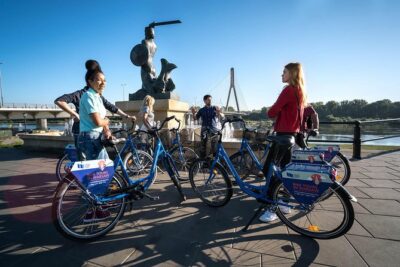
Half-Day Warsaw City Sightseeing Bike Tour for Small Group
Read our review →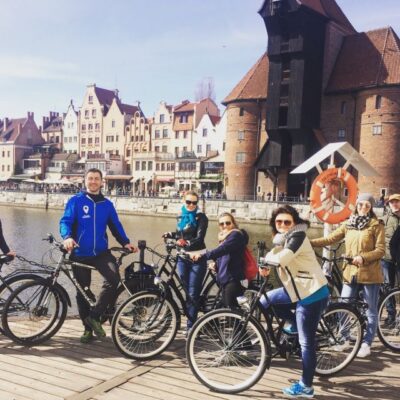
Browse the lists this tour appears in