
REVIEW · WALKING TOURS
A unique walking tour of Jewish Warsaw — past and present
Warsaw’s Jewish story is written into its streets. This three-hour walk connects surviving places, memorials, and ordinary city spaces to nearly 1,000 years of Jewish life in Poland. I like the small group limit of 10 and the careful route, which covers about 4.5 to 5 kilometers without trying to cram every Warsaw sight into one morning. I also like the way the tour links the past with Jewish life in Warsaw today. The main drawback is the distance: this is a serious walk, and the emotional subject matter can feel heavy.
Oliwia is the guide to hope for. Her clear explanations, humor, voice, and command of the ghetto story have earned especially strong praise. Just remember that entry to Nożyk Synagogue and the POLIN Museum is not included in the $32 price, so this tour is mainly an outdoor history walk with short guided visits.
In This Review
- Key points to know before you book
- Why Jewish Warsaw needs to be walked
- Starting at Sienna 53 with a small group
- Nożyk Synagogue, the city’s only surviving synagogue
- Hala Mirowska and the ordinary city around it
- Muranów, where memory is part of the streetscape
- The Ringelblum Archive memorial and the value of records
- POLIN Museum, a short introduction rather than a full museum visit
- Miła 18 and the choice to resist
- Finishing at Umschlagplatz
- What the $32 price really covers
- Oliwia’s guiding style and what the praise tells you
- Who should book this walk
- Should you book this Jewish Warsaw tour?
- FAQ
- Where does the Jewish Warsaw walking tour begin?
- How will I recognize the guide?
- How long does the tour last?
- How far do you walk?
- What language is the tour in?
- How many people can join the group?
- Is the tour wheelchair accessible?
- Is entry to Nożyk Synagogue included?
- Is entry to the POLIN Museum included?
- Where does the tour finish?
Key points to know before you book
- A rare survivor: Nożyk Synagogue is the only Warsaw synagogue that survived the war and remains in use today.
- A route through absence: You see one of the few remaining sections of the ghetto wall, along with sites where a large Jewish community once lived.
- Umschlagplatz gives the tour its hardest stop: This was the departure point for about 300,000 Jews transported to Treblinka.
- The 1943 uprising is explained on location: Monuments at Muranów and Miła 18 help explain why people resisted even when defeat was almost certain.
- Small group, English guide: The group is limited to 10 people, making it easier to hear personal accounts and ask questions.
- Plan for five kilometers: Wear comfortable shoes and allow three hours, with extra time if you want to enter either paid site.
Why Jewish Warsaw needs to be walked
Before World War II, about one third of Warsaw’s population considered itself Jewish. The city was home to the largest Jewish population in Europe, and Jewish life shaped neighborhoods, trade, religion, culture, and daily routines.
That world was destroyed during the war. The tour does not reduce the story to a list of wartime dates. Instead, you move through the city and see how a centuries-old community grew, suffered persecution, fought back, and began to reappear in modern Warsaw.
I find that approach useful because the surviving evidence is scattered. You will not see a single perfectly preserved Jewish quarter. You will see a synagogue, fragments of the ghetto wall, memorials, streets, and open spaces where the scale of what was lost is often easier to grasp than it would be inside a museum alone.
The guide also uses visual aids and first-hand accounts from Jewish survivors. That matters here. Facts can tell you how many people were confined or deported, but personal accounts help you understand what those numbers meant for families and individuals.
More Walking Tours in Warsaw
- Warsaw: Old Town Highlights Walking Tour in English
★ 4.7 · 1,516 reviews - Warsaw: Old Town Guided Walking Tour
★ 4.9 · 599 reviews - Half-Day Polish Food Walking Tour with Guide and Dinner
★ 4.5 · 381 reviews
Starting at Sienna 53 with a small group
The meeting point is in front of Baguette Mi restaurant at Sienna 53. Look for the guide holding a white and green umbrella. That detail is simple, but useful in a busy city where a group can otherwise be hard to spot.
The group is capped at 10 participants, which is a real advantage on a history tour. You should be able to hear the guide without standing shoulder to shoulder with a large crowd, and you will have a better chance to ask about details that catch your attention.
The tour is conducted in English and lasts about three hours. Since the route covers roughly 4.5 to 5 kilometers, you should treat it as a walking experience rather than a short series of nearby photo stops. I would book it early in your Warsaw visit if you want the guide’s suggestions for more places to visit, eat, and drink afterward.
Nożyk Synagogue, the city’s only surviving synagogue
Nożyk Synagogue is the first major stop, with about 15 minutes of guided explanation. It is the only Warsaw synagogue that survived the war and remains until today, giving you a rare physical link to the city’s Jewish past.
The stop helps establish an important contrast. Much of the former Jewish presence must now be understood through memorials and traces, while this synagogue offers a surviving religious building that you can see directly.
Entry is not included in the tour price. That means you should check the current admission arrangements when booking and bring extra time or money if you want to enter. The advertised tour includes a guided visit, but the separate entry fee is your responsibility.
Fifteen minutes is enough to place the synagogue in the wider story, but not enough for a long independent visit. If religious buildings are a major interest for you, think of this as an introduction rather than a full architectural tour.
Hala Mirowska and the ordinary city around it
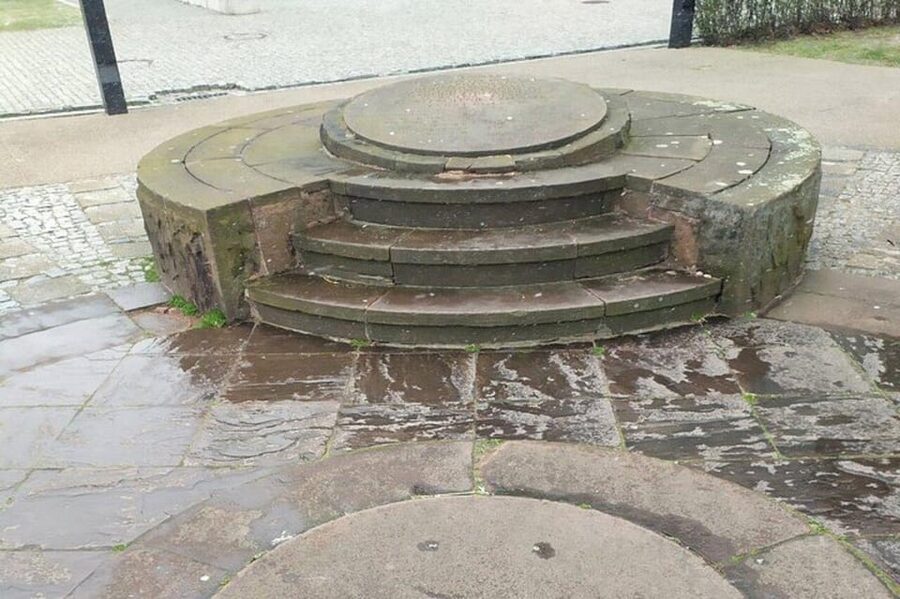
The stop at Hala Mirowska lasts about 10 minutes. This is one of the places where the route shifts from obvious memorial sites to an everyday part of Warsaw.
That change is valuable. Jewish history did not happen only at synagogues, walls, and monuments. It also unfolded in streets connected to work, shopping, food, and normal city life. A stop at a market hall helps you picture the community as a living population rather than as a subject defined only by its destruction.
You should not expect a long visit inside the hall. The point is the guide’s explanation and the connection between present-day Warsaw and the city that existed before the war. This is also a practical reminder that modern Warsaw has been built over, around, and sometimes beside the places discussed during the walk.
Something quite different:
- Warsaw: Chopin Concert in the Old Town
★ 4.8 · 2,287 reviews - Warsaw: Traditional Galar Cruise on The Vistula River
★ 4.6 · 1,640 reviews - Warsaw Concert: Chopin – Painted by Candlelights with Wine
★ 4.8 · 1,442 reviews - Warsaw: City Sightseeing Hop-On Hop-Off Bus Tour
★ 3.6 · 1,415 reviews
Muranów, where memory is part of the streetscape
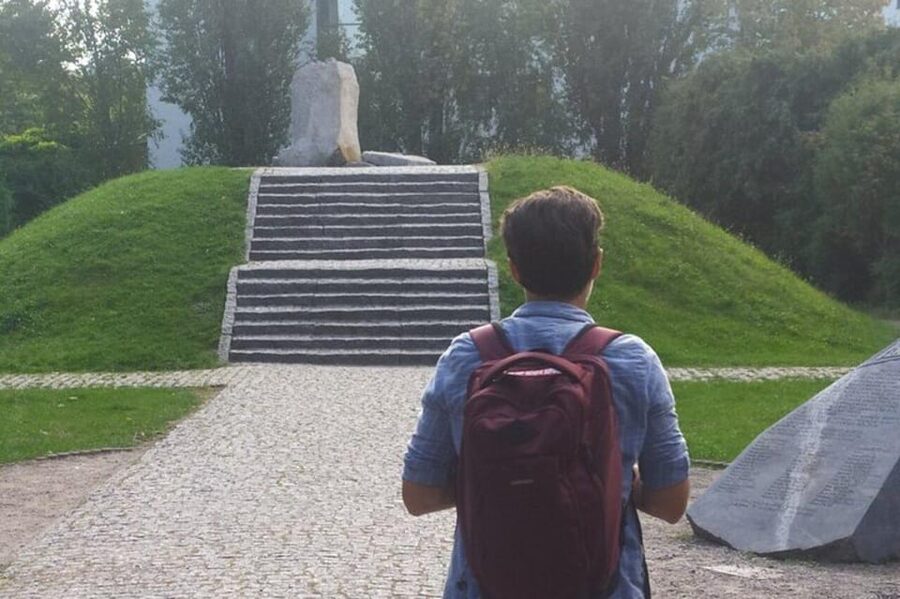
Muranów receives about 30 minutes, making it one of the route’s key sections. Here the guide explains the former ghetto area and the monuments that recall the Jews’ heroic struggle.
This is where the physical setting and the historical account come together most strongly. You are not simply looking at one object and moving on. You are learning how the area relates to confinement, resistance, survival, and the destruction of the Jewish community.
The guide also addresses the Jewish Uprising of 1943. One of the most important questions is why people resisted when they knew they were unlikely to win. The answer is tied to dignity, refusal, and the choice to fight rather than accept total control over their fate. A good explanation of this point can change the way you understand the memorials nearby.
The subject is painful, so this is not a light sightseeing walk. I would not choose it as a casual activity between shopping stops. Give yourself some quiet time afterward if you know difficult wartime history affects you strongly.
The Ringelblum Archive memorial and the value of records
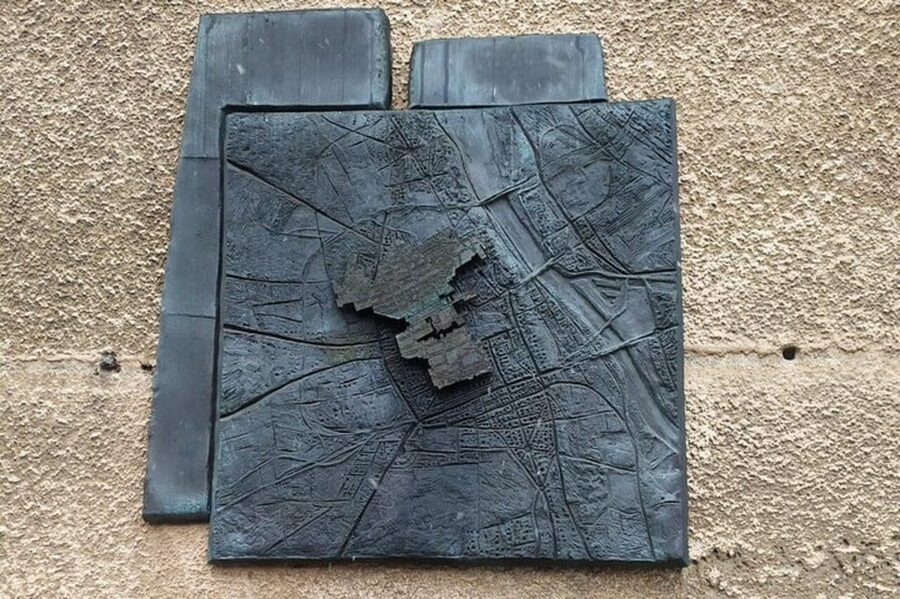
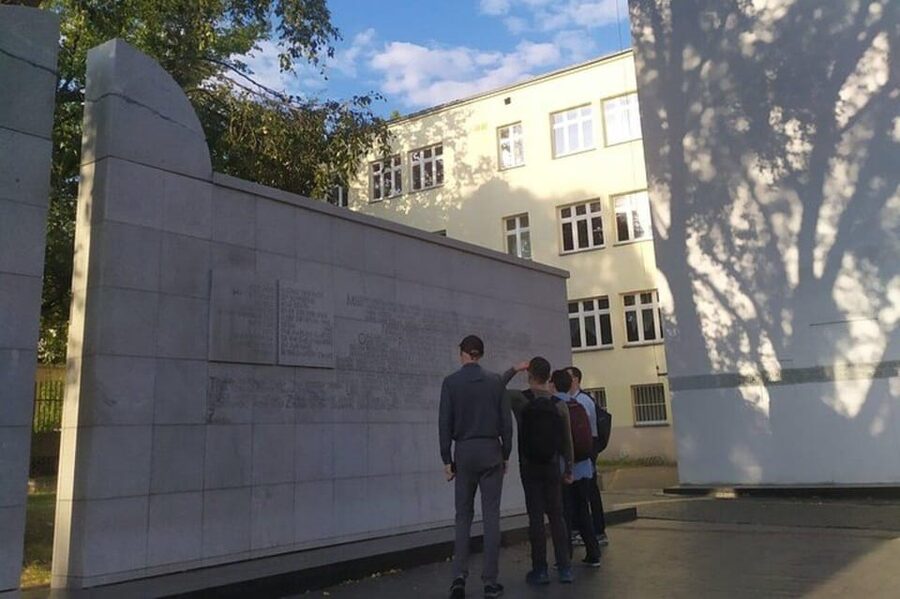
The memorial to the Ringelblum Archive receives about 10 minutes. It represents the effort to preserve evidence and testimony during the ghetto period.
This stop is especially important because history can disappear when buildings, documents, and people are destroyed. The archive points to the determination to record what was happening, preserve personal accounts, and leave evidence for the future.
You will not spend a long time here, but the guide’s visual aids and survivor accounts give the stop more weight than a quick photograph would. Listen closely to how the archive fits into the wider story. It is not just another monument. It shows the importance of documentation when people understood that their world might be wiped away.
POLIN Museum, a short introduction rather than a full museum visit
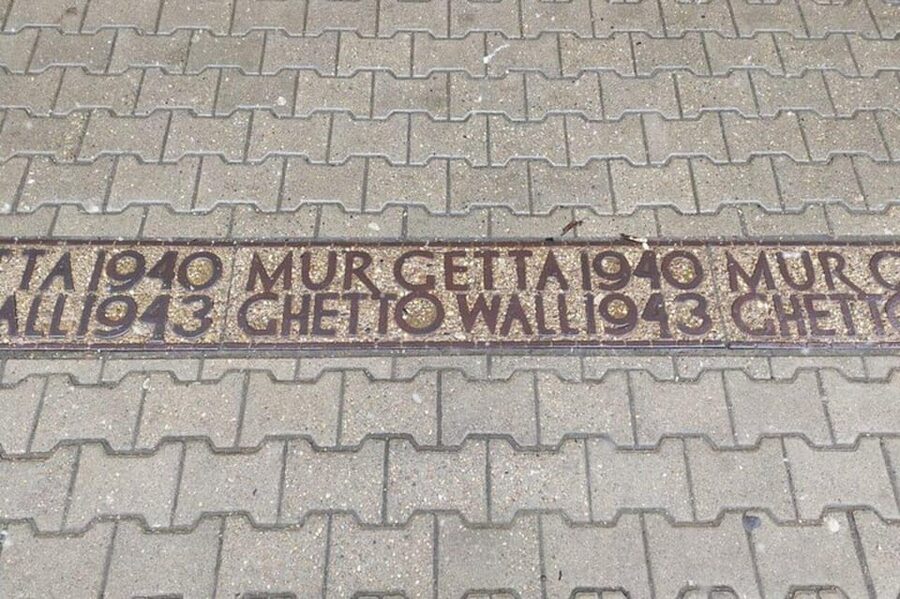
The tour includes about 10 minutes at the POLIN Museum of the History of Polish Jews. The museum is one of the most important places connected with Jewish history in Warsaw, but the short scheduled visit is not a substitute for exploring its exhibitions at length.
The benefit is orientation. The guide can explain why the museum matters and how it fits into the broader story of Jewish life in Poland. If you have not yet visited, this introduction can help you decide if you want to return for a longer independent visit.
Museum entry is not included in the $32 fee. You should budget separately if you want to go inside. The tour itself remains focused on the walking route, so do not book it expecting several hours of indoor museum time.
I like this arrangement for travelers with limited time. You get context without losing the outdoor route. If POLIN is your main reason for coming to this part of Warsaw, visit the museum separately and allow much longer than the 10-minute tour stop.
Miła 18 and the choice to resist
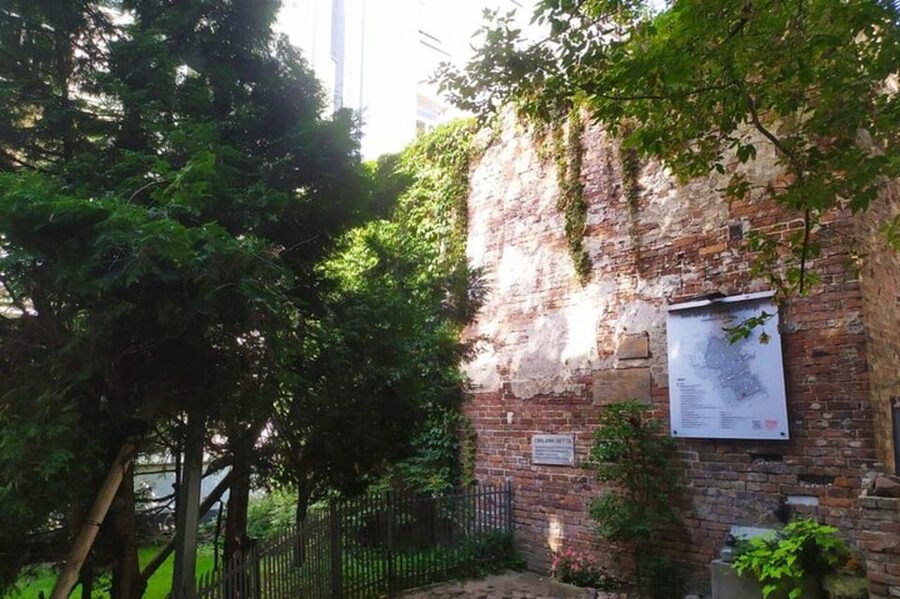
Miła 18 receives about 10 minutes and is tied directly to the 1943 uprising. The guide explains the site and the decision to resist even when the outcome seemed clear.
This is one of the places where the tour’s historical questions become personal. You are asked to think not only about what happened, but about the choices people faced when every option carried danger.
The stop is brief, so the guide’s explanation matters. The best use of your time is to listen rather than rush for photographs. The site is part of a larger memorial setting in Muranów, and it works best when you connect it with the earlier discussion of the ghetto and the nearby monuments.
If you prefer history presented in a strictly chronological way, the route may feel more conversational than textbook-like. I see that as a strength, but it means you should stay engaged and ask questions when you need to place an event in order.
Finishing at Umschlagplatz
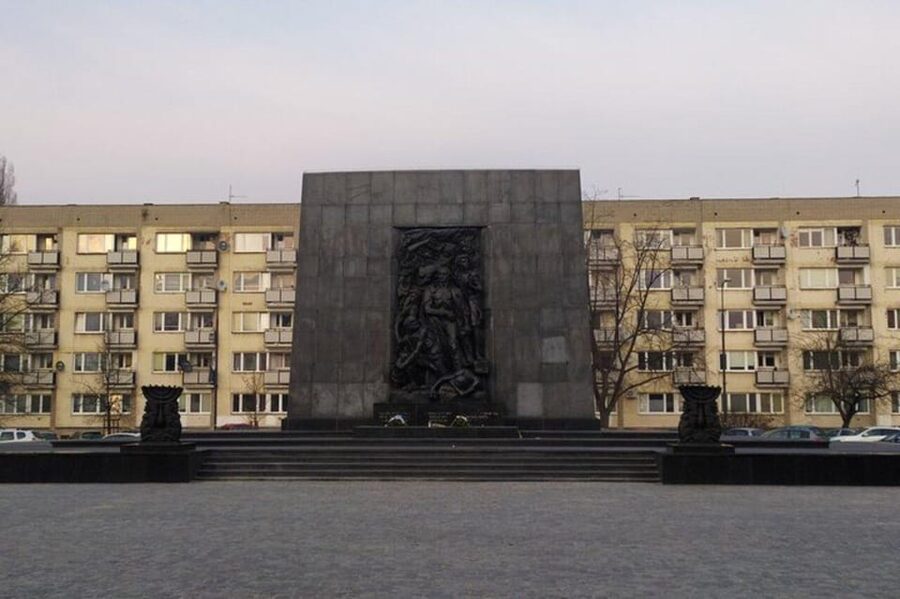
The walk ends at the Umschlagplatz monument. This is the place from which about 300,000 Jews were transported to Treblinka.
Ending here gives the route a clear and difficult final point. You have already heard about Jewish life, the ghetto, documentation, and resistance. At Umschlagplatz, those subjects come together through the mass deportations.
The final stop is not a cheerful finish, and it should not be. It gives you space to understand the scale of the destruction after seeing the smaller traces along the way. I would avoid scheduling a loud or crowded activity immediately afterward if you want time to process what you have seen.
Because the route ends at a memorial rather than returning to the starting point, check your onward plans before booking. The experience details do not specify a return transfer, so you should be prepared to continue independently from the finish.
What the $32 price really covers
At $32 per person, the value rests mainly in the guide, the route, and the interpretation. You are paying for three hours of English-language instruction in a small group, visual aids, personal accounts, and recommendations for further places to visit.
The price does not include entry to Nożyk Synagogue or the POLIN Museum. That is not a problem if you want a focused outdoor tour, but you need to add those costs if you plan to enter both sites.
I consider the price fair for visitors who want more than a self-guided list of memorials. The route covers a large area and connects places that could otherwise feel unrelated. A map can show you where they are, but it cannot easily explain why each one matters or how the pieces fit together.
The value is also stronger because the group is limited to 10. Large history tours can turn serious sites into a problem of simply staying near the guide. A smaller group should make the three hours more personal and easier to follow.
Oliwia’s guiding style and what the praise tells you
The strongest praise centers on Oliwia. She is described as exceptionally interesting to listen to, with humor, expressive delivery, and a firm grasp of the ghetto’s history. That combination is useful on a subject that could otherwise become a string of grim facts.
Several people also highlight her careful explanations and the way she handles details. I would pay attention to this if you are choosing between a general city walk and this more focused experience. The guide seems to be the heart of the tour, not an accessory to the route.
The overall rating is 5 out of 5 from eight reviews, with repeated praise for the guide’s explanations and the amount learned about the Warsaw Ghetto. That is a small number of ratings, so I would not treat it as statistical proof. Still, the praise is consistent, especially regarding Oliwia’s delivery and historical clarity.
Who should book this walk
I recommend this tour if you want to understand Warsaw through Jewish history rather than only visit its most famous general sights. It suits first-time visitors who want a strong introduction, as well as returning visitors who have already seen the Old Town and want a more serious subject.
It is also a good match if you value small groups, live explanation, survivor accounts, and the connection between historic sites and modern Jewish life. The included information pack, links, visual aids, and food and sightseeing suggestions add practical value before and after the walk.
You should think twice if long walks are difficult for you. The tour is described as wheelchair accessible, but it is not recommended for people who have problems walking long distances. The 4.5 to 5 kilometer route and three-hour duration are important facts, not minor fine print.
You may also want to skip it if you are looking only for a light, entertaining city stroll. Humor from the guide can make the presentation engaging, but the central story includes persecution, deportation, destruction, and death.
Booking is flexible: you can cancel up to 24 hours in advance for a full refund, and reserve now while paying later. Check available starting times when you choose your date.
Should you book this Jewish Warsaw tour?
Book it if you want context, not just monuments. The tour brings together Nożyk Synagogue, Hala Mirowska, Muranów, the Ringelblum Archive memorial, POLIN, Miła 18, and Umschlagplatz in one carefully connected route.
The best reason to choose it is the guide-led interpretation, especially if Oliwia is leading your departure. The main caution is the walking distance and the emotional weight. Wear comfortable shoes, allow time afterward, and budget separately for the synagogue and museum if you want to enter them.
For $32, this is a strong-value introduction to Jewish Warsaw, provided you are ready to walk and listen.
FAQ
Where does the Jewish Warsaw walking tour begin?
It begins at Sienna 53, in front of Baguette Mi restaurant.
How will I recognize the guide?
Look for a guide holding a white and green umbrella at the meeting point.
How long does the tour last?
The tour lasts approximately three hours.
How far do you walk?
The route covers approximately 4.5 to 5 kilometers.
What language is the tour in?
The live tour guide conducts the experience in English.
How many people can join the group?
The group is limited to 10 participants.
Is the tour wheelchair accessible?
Yes, the activity is listed as wheelchair accessible. However, it is not recommended for people who have problems walking long distances.
Is entry to Nożyk Synagogue included?
No. The entry fee to Nożyk Synagogue is not included in the tour price.
Is entry to the POLIN Museum included?
No. The entry fee to the POLIN Museum is not included.
Where does the tour finish?
The tour finishes at the Umschlagplatz monument.
Just added in Warsaw
- Historical Walking Tour of Jewish Warsaw★ 5.0 · 68 reviews
- Deluxe Polish Food Tour Experience in Warsaw★ 5.0 · 19 reviews
- CO2-Offset Arrival Transfer from Warsaw Airport to Warsaw City★ 5.0 · 1 review
- Amazing photo walk through the Old town of Warsaw★ 5.0 · 32 reviews
- 8-day tour around Poland by private car★ 5.0 · 2 reviews
- 2 Hour Super Segway City Tour of Warsaw★ 5.0 · 5 reviews
- Electric Scooter Tour: Full Tour – 3-Hours of Magic!★ 5.0 · 3 reviews
- 2h Rental of Motorboat for 10 in Warsaw no License Needed★ 5.0 · 1 review
Walking Tours, compared.
Gdańsk City Sights & History Guided Walking Tour in English
Read our review →
Old Town & Wawel Castle Walking Tour in English
Read our review →Browse the lists this tour appears in