REVIEW · WARSAW TOURS
13-Day Highlights of Poland Tour – private for 2-10 persons
Poland rewards a long, purposeful route. This 13-day private tour links Warsaw, Gdansk, Krakow, the Baltic coast, Teutonic castles, Auschwitz, and the Tatra Mountains without asking you to arrange trains, hotels, meals, or admission tickets. I especially like the private vehicle and the mix of major sights with less expected stops, such as the Elblag Canal and Dunajec Gorge. I also like that airport transfers and local guides are built in. The main drawback is the pace: long drives and frequent hotel changes leave little time for wandering on your own.
The price is $5,350 per person, so this is not a bargain city break. It can make sense if you value private transport, organized meals, three and four-star hotels, and a guide who handles a complicated route. Past feedback gives particular credit to driver-guide Witek and guide Grzegorz Brzostek for being helpful, clear, and flexible. Before paying, confirm the exact dinner schedule, since several evenings are marked as your own expense despite the advertised inclusion of 12 dinners.
In This Review
- Key points to know before booking
- Warsaw begins with rebuilt streets and difficult memory
- Masuria brings Hitler’s Wolfs Lair and a castle night
- The Elblag Canal and Malbork Castle deliver two big surprises
- Gdansk, Westerplatte, and Sopot explain Poland’s northern edge
- Torun and Biskupin add science and early Poland
- Poznan and Czestochowa shift from civic life to faith
- Auschwitz requires time, quiet, and emotional preparation
- Wadowice and the Dunajec Gorge bring a lighter mountain day
- Zakopane gives you Tatras, wooden buildings, and free time
- Wieliczka and Schindler connect labor with wartime Krakow
- Krakow closes the journey with Poland’s grandest old town
- What the $5,350 price really buys
- Who should book this Poland tour?
- FAQ
- Where does the tour begin?
- Where does the tour end?
- How long does the tour last?
- Is this a private tour?
- What type of transport is included?
- Are hotels included?
- Are meals included?
- Are attraction tickets included?
- What level of fitness is needed?
Key points to know before booking
- A true cross-country route: You travel from Warsaw to Masuria, Gdansk, Torun, Poznan, Czestochowa, Auschwitz, Zakopane, and Krakow.
- Private touring for your own group: The activity is listed as private, with only your group participating. The supplied details also refer to small groups of up to 15, while the tour title says 2 to 10 people, so confirm the final group limit.
- Unusual historical stops: The Wolfs Lair, Biskupin archaeological site, Malbork Castle, and Westerplatte add depth beyond the usual Warsaw and Krakow circuit.
- Several physically active days: Expect walking in old towns, four hours at Auschwitz, a salt mine visit, a mountain cable car, and an optional Tatra valley walk.
- Strong guide support: The route uses a licensed tour guide, local specialists, and a private driver. Witek and Grzegorz Brzostek are named in the available feedback.
- A costly but convenient package: Hotels, breakfasts, dinners, entries, transport, and airport transfers are included, but some dinners are marked as independent meals.
Warsaw begins with rebuilt streets and difficult memory
Your driver meets you at Warsaw Chopin Airport and takes you to your hotel. The afternoon city tour gives you a quick but useful introduction to Poland’s capital, a city almost entirely destroyed during World War II and rebuilt afterward.
The Old Town is the heart of the visit. You see the Royal Castle, the Warsaw Uprising Monument, and the historic center before walking through Łazienki Park. The park’s Chopin monument and Palace on the Water offer a softer counterpoint to the war memorials.
I like this opening because it places Warsaw’s beauty beside its scars. The downside is timing. After an international flight, a five-hour first-day program may feel demanding. If you arrive tired, tell your guide early. The schedule is private, which may allow some adjustment, but the supplied information does not promise a flexible itinerary.
The welcome dinner takes place in an Old Town restaurant. That is a good first evening arrangement: you do not need to search for food while still finding your bearings, and you begin the tour in the historic center.
A few more in Warsaw
- Warsaw: Chopin Concert in the Old Town
★ 4.8 · 2,287 reviews - Warsaw: Traditional Galar Cruise on The Vistula River
★ 4.6 · 1,640 reviews - Warsaw: Old Town Highlights Walking Tour in English
★ 4.7 · 1,516 reviews
Masuria brings Hitler’s Wolfs Lair and a castle night
Day two is one of the longest road days. After breakfast, you drive roughly four and a half hours north to the Masuria region, known for its many lakes. The central stop is the Wolfs Lair, one of Adolf Hitler’s wartime headquarters.
A local specialist leads the visit, which adds needed context to a place that can otherwise feel like a collection of concrete ruins and forest paths. This stop is best for people who want to understand World War II beyond museums in major cities.
You then continue to Lidzbark Warmiński and check into a renovated fourteenth-century castle. Spending the night in castle chambers is one of the tour’s more unusual features. Free time may include the castle pool, sauna, bowling, or biking, though these activities cost extra.
That evening’s castle restaurant meal gives the day a pleasant finish. Still, remember the travel time. You are not getting a slow, lake-focused Masuria holiday. You are using Masuria as a historical and scenic bridge between Warsaw and the Baltic coast.
The Elblag Canal and Malbork Castle deliver two big surprises
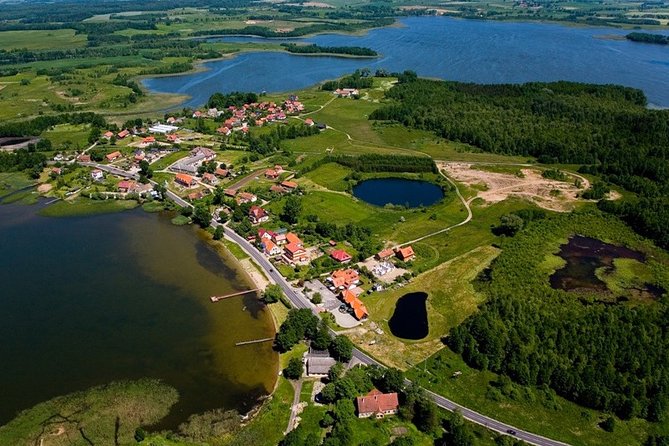
The third day starts early with a two-hour cruise along the Elblag Canal from Buczyniec. The canal was built in the nineteenth century and is known for its unusual engineering. The cruise is included, making it a worthwhile change from sitting in the vehicle.
Afterward, the route turns to Malbork Castle, the great medieval fortress of the Teutonic Knights. This is one of the trip’s major architectural stops. Its scale and defensive design help explain the power of the medieval order that controlled much of this part of Europe.
The day ends in Gdansk, where you check into your hotel and eat dinner. The schedule is efficient rather than leisurely, so you will want comfortable shoes and an early start. Still, the combination of canal and castle gives this day a good rhythm.
Gdansk, Westerplatte, and Sopot explain Poland’s northern edge
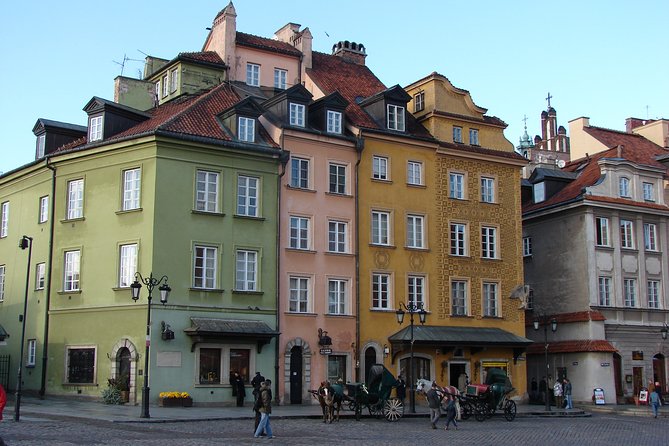
Gdansk receives a full sightseeing day. You see the historic Old Town, the Basilica, Neptune Monument, Long Market area, harbor, and the famous Crane. The city also carries the memory of Solidarity, the labor movement linked with Poland’s modern political change.
The visit to Westerplatte adds another layer. This is identified as the place where World War II began, and it gives the day a serious historical focus. You also visit Oliwa Cathedral, where a Baroque pipe-organ concert is scheduled.
Later, you go to Sopot, a Baltic resort known for its long wooden pier. This is the tour’s clearest chance to slow down beside the sea. Take the walk even if the weather is cool, but remember that dinner is on your own this evening.
Gdansk is one of the strongest parts of the route because it is not treated as just another pretty old town. You get maritime history, twentieth-century politics, religious art, and seaside time in one day. The tradeoff is that each subject gets only a limited window.
Something quite different:
- Warsaw Concert: Chopin – Painted by Candlelights with Wine
★ 4.8 · 1,442 reviews - Warsaw: City Sightseeing Hop-On Hop-Off Bus Tour
★ 3.6 · 1,415 reviews - Warsaw: POLIN Museum of the History of Polish Jews Ticket
★ 4.7 · 1,142 reviews - #1 Pub Crawl Warsaw with Optional Premium 1 Hour Open Bar
★ 5.0 · 790 reviews
Torun and Biskupin add science and early Poland
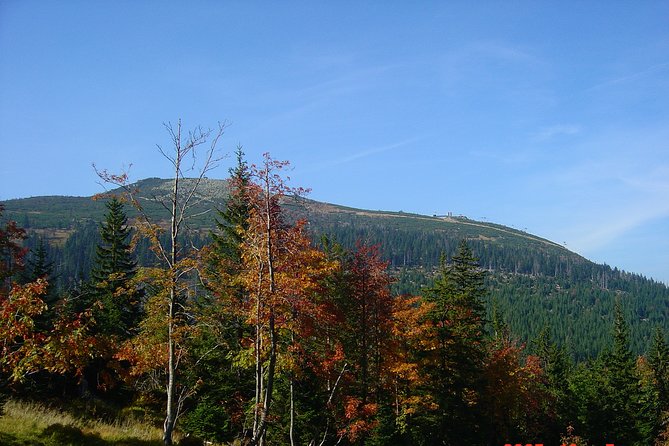
On day five, you leave Gdansk for Torun, a city set along the Vistula River. The guided Old Town walk includes the City Hall, cathedral, and the House of Nicolas Copernicus Museum.
The Copernicus connection gives Torun a clear identity. The museum visit is included, and it is a useful stop for anyone interested in the astronomer’s life and Poland’s place in European science.
The following day begins with a drive to Biskupin, an open-air archaeological museum. Its reconstructed settlement dates to about 750 BC. This is not a polished royal residence or a grand church. It is an attempt to show how an early settlement worked, which makes it a useful change of scale after the monumental stops.
You then continue to Gniezno, the historic capital of Poland, and visit its cathedral with a local guide before going to Poznan. This stretch includes several transfers, but it gives you a clearer view of Poland before the modern national capital took shape.
Poznan and Czestochowa shift from civic life to faith
Poznan’s guided tour focuses on the Town Hall and the country’s oldest cathedral, including the tombs of early Polish rulers. The cathedral visit is short, but it connects the city to Poland’s first rulers and Christian beginnings.
In the afternoon, you drive to Czestochowa. You may attend evening Mass at the Black Madonna Monastery, but dinner is on your own. The religious focus becomes stronger the next morning, when a Pauline Father guides you through Jasna Gora Monastery.
The Black Madonna is one of Poland’s most important religious symbols, and the visit will mean more if you are interested in Catholic history, pilgrimage traditions, or sacred art. If religious sites are not a priority for you, this portion may feel longer than the secular sightseeing elsewhere.
Auschwitz requires time, quiet, and emotional preparation
Day eight includes the morning visit to the Black Madonna, followed by a drive to Oswiecim and a guided visit to Auschwitz-Birkenau. The tour describes the site as a former Nazi German concentration and death camp, now a museum and memorial.
The guided visit lasts about four hours. That length matters. This is not a quick photo stop, and it should not be treated as one. You will walk through a place tied to mass murder and persecution, so plan for a serious afternoon and evening.
The hotel is in Oswiecim, allowing you to return for dinner and rest without another long transfer. That is a practical choice after an emotionally heavy visit. You should still expect the day to affect the mood of the rest of your trip.
Wadowice and the Dunajec Gorge bring a lighter mountain day
The route turns south on day nine toward the Pieniny Mountains. In Wadowice, you visit the Basilica connected with Pope John Paul II, who was baptized there. The guide also introduces you to the town’s famous cream cakes.
The main activity is a three-hour Dunajec River rafting trip with Highlander raftsmen. You pass views of Niedzica and Czorsztyn castles before entering the gorge, where white limestone walls rise beside the river.
This is one of the most scenic parts of the tour, and the included boat trip breaks up the historical sightseeing. Conditions and comfort can vary, so bring suitable clothing and be ready for time outdoors. The day ends in Zakopane with a hotel stay and dinner.
Zakopane gives you Tatras, wooden buildings, and free time
Zakopane is Poland’s winter capital, and the morning tour introduces you to the area’s distinctive nineteenth and early twentieth-century wooden architecture. A funicular ride takes you up Gubałówka for views across the Tatra Mountains.
The afternoon is intentionally less structured. You can browse local shops, look for handmade crafts, or join a two-hour guided walk into one of the Tatra National Park valleys. The walk is optional, and the itinerary also lists a selected valley visit, so ask your guide how the day will be arranged.
Dinner is at a regional restaurant with live music. After so many churches, memorials, and museums, this evening gives you a better feel for local mountain culture. The main caution is the physical side of the day. Even without the optional walk, the cable car area and town tour involve time on foot.
Wieliczka and Schindler connect labor with wartime Krakow
On day eleven, you leave Zakopane for the Wieliczka Salt Mine. The mine is about 14 degrees Celsius, so bring a sweater or light jacket. The underground route includes salt sculptures, St. Kinga’s Chapel, old mining equipment, excavated chambers, and underground salt lakes.
The visit lasts about three hours. It is a substantial walk below ground, not a quick museum visit. The salt mine is one of the tour’s most memorable interiors, but anyone uneasy in enclosed spaces should consider that before booking.
Afterward, you spend about an hour at Oskar Schindler’s Enamel Factory Museum with a guide. The museum links Krakow to the wartime experience of its Jewish population and to Schindler’s wartime work.
Dinner is on your own, and you then check into your Krakow hotel. This is another point where the advertised meal inclusions deserve clarification.
Krakow closes the journey with Poland’s grandest old town
The final full day is devoted to Krakow, which escaped the destruction suffered by Warsaw during World War II. The tour begins at Wawel Hill, where you visit the Royal Castle and Coronation Cathedral, including royal burial places and the Flemish tapestries in the royal chambers.
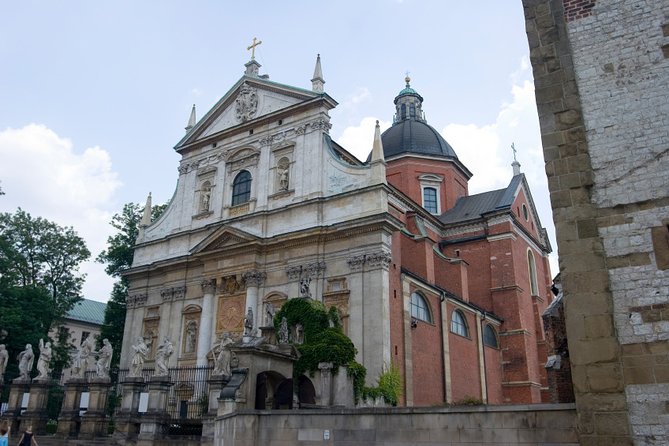
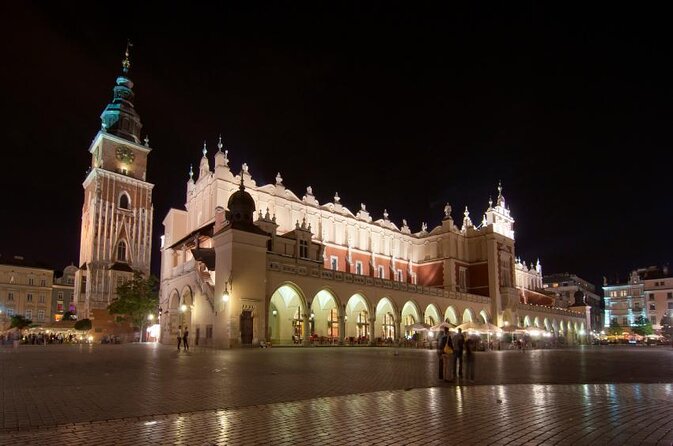
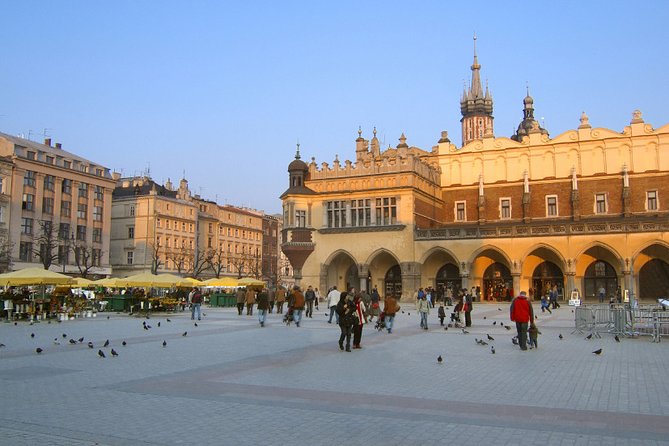
You then walk through the Old Town, including the defensive walls, Barbican, Main Market Square, St. Mary’s Basilica, and Cloth Hall. St. Mary’s is known for its fifteenth-century wooden altarpiece, while the Market Square gives you a broad, open center for your final afternoon.
Krakow is a fitting finish because it gathers many themes from the trip: royal power, religion, art, war, and everyday city life. The walking tour lasts about four hours, so the final day is active but not overloaded with a long road transfer.
The last morning includes breakfast, checkout, and a transfer to Krakow Airport. Since the tour begins at Warsaw Chopin Airport and ends in Krakow, you need to plan your international flights accordingly.
What the $5,350 price really buys
At $5,350 per person, the package costs more than arranging a standard Poland trip independently. You are paying for time saved and for a private vehicle that connects places poorly suited to a simple train itinerary.
The package includes three and four-star hotels, air-conditioned transport, licensed and local guides, attraction entries, airport transfers, breakfasts, and dinners. The private format also matters if you are traveling with family or friends and want to move at one group’s pace.
The strongest value comes from the logistics. Booking a castle night, a canal cruise, Malbork, Auschwitz, the salt mine, mountain transport, and multiple local guides would take real planning. You also avoid hauling luggage through a new hotel almost every night.
The weaker value is free time. You do not get many unplanned afternoons, and you pay for a large amount of guided structure. Ask for a complete hotel list, the vehicle size, the final group limit, and a written breakdown of included versus independent dinners before booking.
Who should book this Poland tour?
I would recommend it to first-time visitors who want to see most of Poland in one trip, especially those interested in World War II, Catholic sites, royal history, castles, and mountain scenery. It also suits families and small groups who prefer one driver and one coordinator instead of managing trains and hotels.
I would be more cautious if you want long stays in Warsaw, Gdansk, or Krakow. This is a route tour, not a slow city holiday. You should also have moderate physical fitness for walking, stairs, the salt mine, old-town touring, and the rafting day.
The tour is non-refundable and cannot be changed after booking. That makes careful planning especially important. The provider also requires a minimum number of participants and may offer a different date or a full refund if that minimum is not met.
FAQ
Where does the tour begin?
The tour begins at Frederic Chopin Airport in Warsaw, Poland, with a listed start time of 9:00 am.
Where does the tour end?
The tour ends in Krakow, with a driver transfer to Krakow Airport after breakfast and checkout on day 13.
How long does the tour last?
The tour lasts approximately 13 days.
Is this a private tour?
Yes. The activity is described as private, with only your group participating. The title specifies private touring for 2 to 10 people, while another description refers to a maximum of 15, so confirm the final group size.
What type of transport is included?
Transport is provided in an air-conditioned private vehicle.
Are hotels included?
Yes. Accommodation in three-star and four-star hotels is included, including a night in renovated castle chambers in Lidzbark Warmiński.
Are meals included?
Breakfast is included for all 12 nights, and the package lists 12 dinners. However, the daily plan marks dinner as your own expense on some evenings, including Gdansk, Czestochowa, and Krakow, so confirm the final meal arrangements.
Are attraction tickets included?
Yes. Entry tickets and guided visits are included for the listed attractions and activities, including the Elblag Canal cruise, Copernicus museum, Biskupin, Black Madonna Monastery, Dunajec rafting, Gubałówka, Wieliczka Salt Mine, Schindler Factory Museum, Wawel Castle, and St. Mary’s Basilica.
What level of fitness is needed?
A moderate level of physical fitness is recommended. The program includes extended city walks, a four-hour Auschwitz visit, the Wieliczka Salt Mine, mountain activities, and an optional two-hour walk in the Tatra National Park.
Just added in Warsaw
- Wroclaw Small-Group Tour with Lunch from Warsaw★ 5.0 · 2 reviews
- World War II Warsaw Old Town, Military Cemetery Walking Tour★ 4.7 · 3 reviews
- Warsaw: Wolf’s Lair & Swieta Lipka Small-Group Tour + Lunch★ 5.0 · 3 reviews
- Wilanów Palace: 2-Hour Guided Tour with Entrance Tickets★ 4.8 · 8 reviews
- Warsaw Zoo Skip-the-Line Entry Ticket with Private Transport★ 4.8 · 3 reviews
- Warsaw: Private Vodka Tasting Night with Snacks and Pickup★ 5.0 · 7 reviews
- Warsaw Private Wilanow Palace & Garden Tour★ 4.6 · 30 reviews
- Warsaw Wolf’s Lair with St. Lipka and Mamerki Private Guided★ 4.2 · 3 reviews
Warsaw Tours, compared.
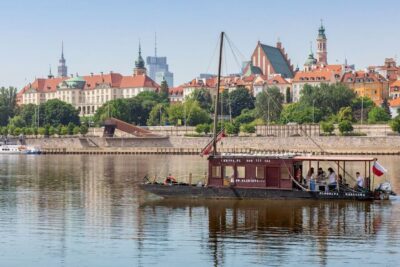
Traditional Galar Cruise on The Vistula River
Read our review →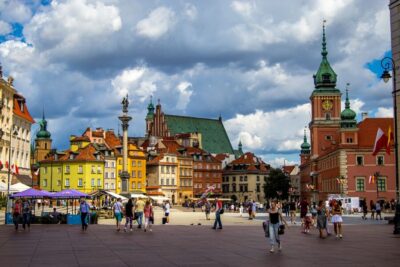

Warsaw Concert: Chopin – Painted by Candlelights with Wine
Read our review →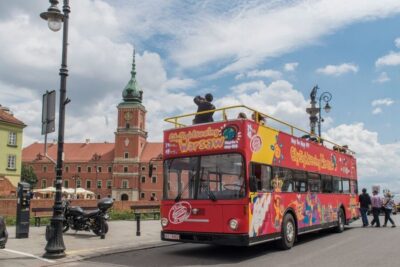
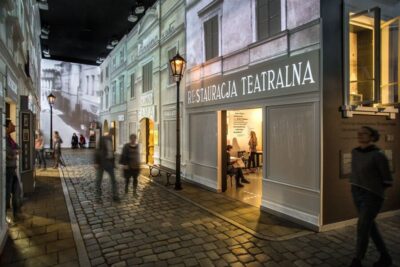
POLIN Museum of the History of Polish Jews Ticket
Read our review →
#1 Pub Crawl Warsaw with Optional Premium 1 Hour Open Bar
Read our review →