
REVIEW · CITY TOURS
Wroclaw: Guided City Walk
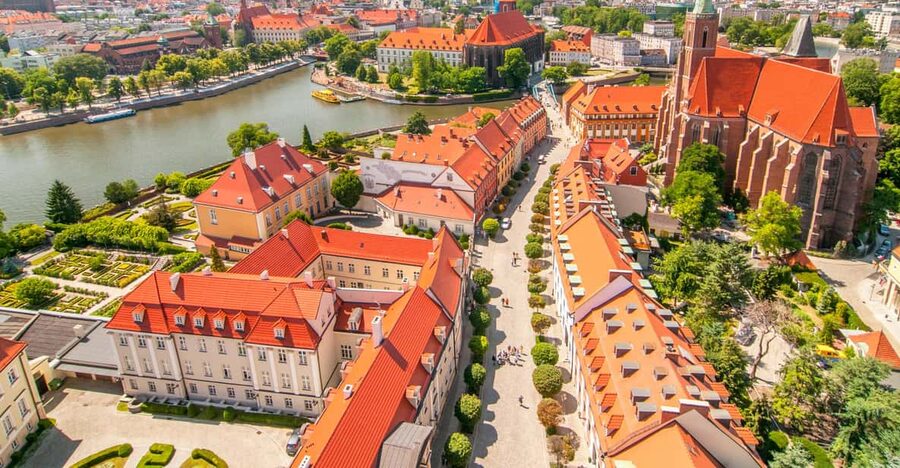
Wroclaw hides stories in plain sight. This 2.5-hour walk ties together the city’s Market Square, university, medieval lanes, and Cathedral Island, giving you a useful first look at a place shaped by Poles, Czechs, Austrians, and Germans. I like the clear route through the major sights, and I like the mix of serious history, odd legends, and tiny gnome statues. The main consideration is pace: you will cover a lot on foot, so comfortable shoes matter.
I also like that the walk stays practical. Your guide points out places to eat and drink around the square, explains what makes the city’s gnomes special, and ends with suggestions for continuing your visit. Guides including Sean and Adam have earned especially warm praise for friendly storytelling, strong local knowledge, and funny details that make the buildings easier to remember.
- A 1,000-year story in 2.5 hours: The route connects Wroclaw’s central landmarks without requiring a full day.
- Late Gothic Town Hall: Begin in Rynek, one of the city’s essential sights and the tour’s meeting point.
- Baroque university interiors and exteriors: Learn how the Habsburg period shaped this part of Wroclaw.
- Gnome spotting with a purpose: Your guide explains why these small statues appear throughout the city.
- Cathedral Island finale: Cross the Oder to the city’s oldest area, filled with churches and cloisters.
- English-speaking local guide: Shared touring keeps the price at $40 per person and adds a social element.
In This Review
- Starting in Rynek beside Wroclaw’s Town Hall
- Following medieval lanes and the city’s working past
- Hunting for Wroclaw’s small bronze gnomes
- Entering the Baroque world of the University
- Crossing the Oder toward Cathedral Island
- What the guide adds to a shared walk
- Is $40 good value for 2.5 hours?
- How to prepare for the route
- Who will enjoy this Wroclaw walk?
- Should you book Viadrina Tours?
- FAQ
- How long is the Wroclaw guided city walk?
- What language is the tour conducted in?
- Where does the tour begin?
- What sights are included?
- What should I bring?
- Can I cancel or pay later?
Starting in Rynek beside Wroclaw’s Town Hall
The tour begins in front of McDonald’s at Rynek 30, where you look for a guide carrying a red umbrella. That clear marker helps in the busy Market Square, especially if you are arriving with little time to spare.
Rynek is the right place to begin. Wroclaw’s Market Square gives you an immediate sense of the city’s scale, beauty, and complicated past. The square is framed by colorful historic buildings, with the late Gothic Town Hall as the main visual prize.
Your guide uses the square to set up the wider story. Wroclaw has passed through Polish, Czech, Austrian, and German periods, and that mixed inheritance appears in its architecture and traditions. You do not simply look at an old building. You learn how merchants, guilds, craftsmen, rulers, and changing borders helped shape the city around it.
I appreciate this kind of opening because it gives you a mental map before the walk moves into smaller streets. You can return to Rynek later for a meal or drink, already knowing which details deserve a second look.
The stop is more than a photo opportunity, but photography will be hard to resist. The Town Hall’s late Gothic design provides one of the strongest architectural moments of the walk. If you enjoy taking pictures, keep your camera ready, but listen closely too. The guide’s stories are part of the value here.
Following medieval lanes and the city’s working past
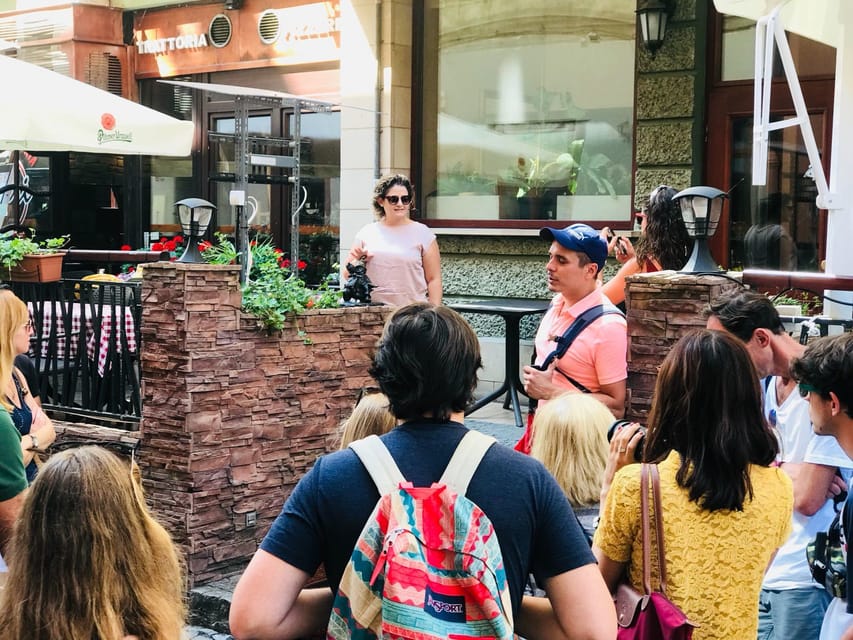
From the square, the walk moves through medieval streets where the focus shifts from grand civic buildings to everyday urban life. Your guide explains the roles of merchants, guilds, and craftsmen, helping you picture how these streets functioned before Wroclaw became the modern city you see today.
This is where a guided walk earns its price. You can admire a narrow lane alone, but you may miss why its buildings matter or how the old trades fit into the city’s development. The guide adds connections that are difficult to get from a quick photograph or a short caption.
The route also gives you a look at several architectural styles close together. Wroclaw’s mixed political past left behind a varied collection of buildings, and the walk uses that variety as part of the story. You will see how the city’s appearance changed across different eras rather than receiving one simplified version of its past.
The storytelling style is intentionally light. Alongside major historical events, the guide shares funny stories, quirky legends, and mysterious facts connected with individual buildings. That balance helps the information stick, especially if you are not the sort of person who wants a lecture on every facade.
I would keep an eye on the ground as well as the buildings. The walk is designed for sightseeing on foot, and the supplied advice specifically recommends comfortable shoes. An umbrella and jacket are also sensible because the tour runs outdoors and Polish weather can change quickly.
More Walking Tours in Wrocław
- Wrocław: Old Town and Ostrów Tumski Walking Tour in English
★ 4.8 · 311 reviews - Wroclaw: Private Old Town Guided Walking Tour (2 hours)
★ 4.8 · 275 reviews - Old Town Wrocław Walking Tour
★ 5.0 · 249 reviews
Hunting for Wroclaw’s small bronze gnomes
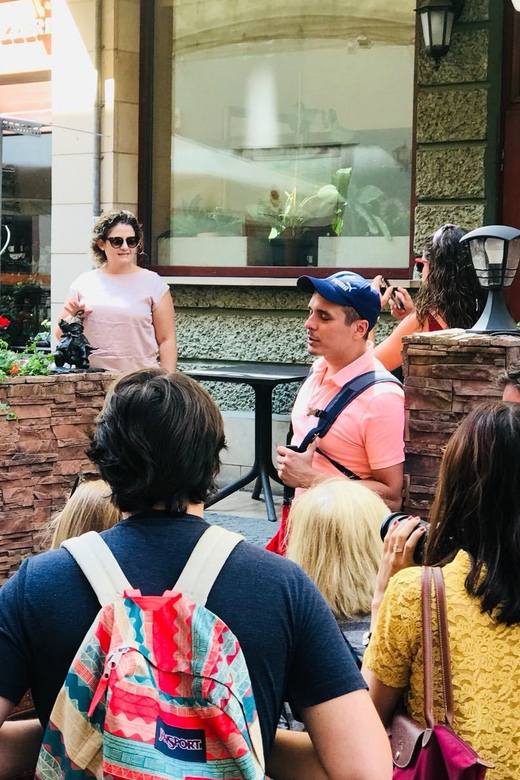
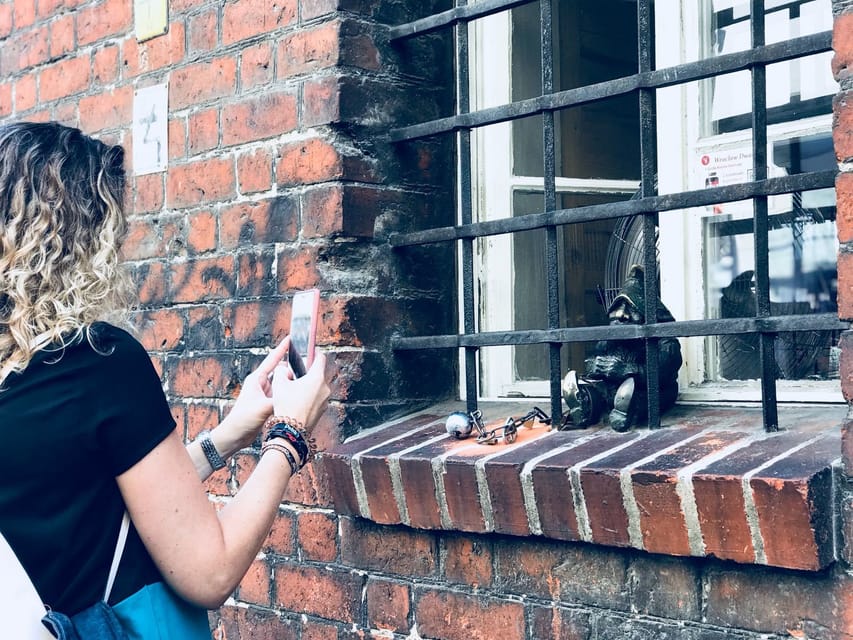
The gnomes are one of the walk’s most distinctive touches. These small statues appear around the city, and your guide explains why there are so many of them and what they mean in Wroclaw’s story.
Without that explanation, gnome hunting can feel like a random game for children. With context, it becomes a small doorway into local identity and public art. You start looking down at street corners, building fronts, and other easy-to-miss spots instead of walking past them.
I like this part because it makes the city interactive without turning the entire tour into a scavenger hunt. The gnomes add humor to a route that also deals with war, political change, religion, and shifting national influence.
Families may find the statues especially useful for keeping children interested, but adults will get something from them too. They give you a reason to pause and notice details that do not appear on a standard list of major sights.
The exact number of gnomes you will see is not specified, so I would not treat this as a guaranteed checklist. Think of it as a guide-led introduction to one of Wroclaw’s signature features. You can continue searching for more after the walk.
Entering the Baroque world of the University
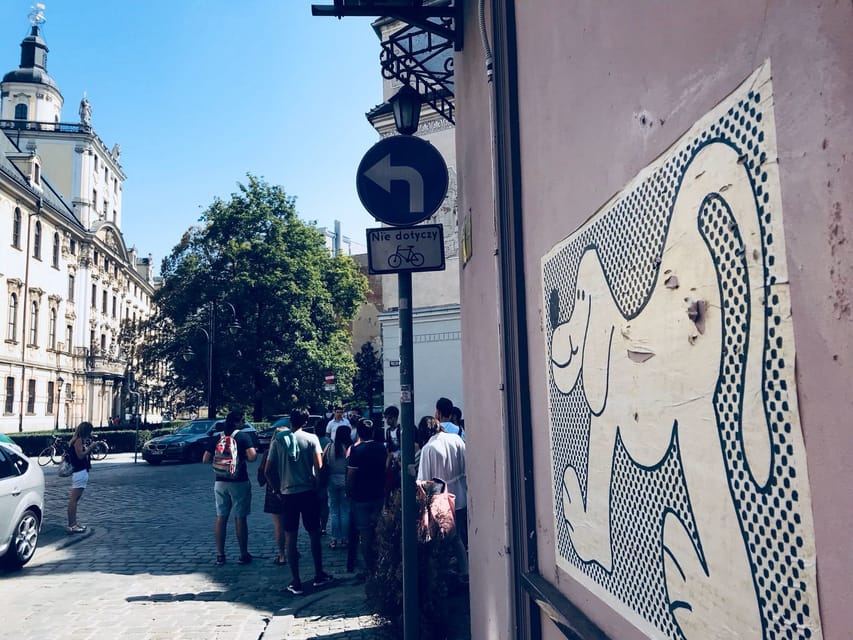
The next major stop is the university campus. Here, your guide highlights the Baroque complex of university buildings, described as a major example of architecture from the Habsburg period.
The university adds a different note to the tour. Rynek presents civic and commercial Wroclaw, while the campus points toward education, power, and imperial style. The contrast makes the route feel more rounded than a walk that only circles the central square.
The main assembly hall is singled out for its striking Baroque design. Your guide explains why the complex is sometimes called the Pearl of Habsburg rule, giving you a way to understand its place in the city’s architectural story.
You should expect the guide to point out and interpret the university buildings as part of the outdoor route. The supplied information does not promise entry into every interior or a dedicated indoor visit, so anyone hoping to spend substantial time inside the assembly hall should confirm the day’s details before booking.
That distinction matters. The university is still a strong stop even if the emphasis remains on the complex as part of the walking route. You get a clear sense of how grand Baroque architecture changed the tone of central Wroclaw, and you avoid spending the whole tour inside one building.
Crossing the Oder toward Cathedral Island
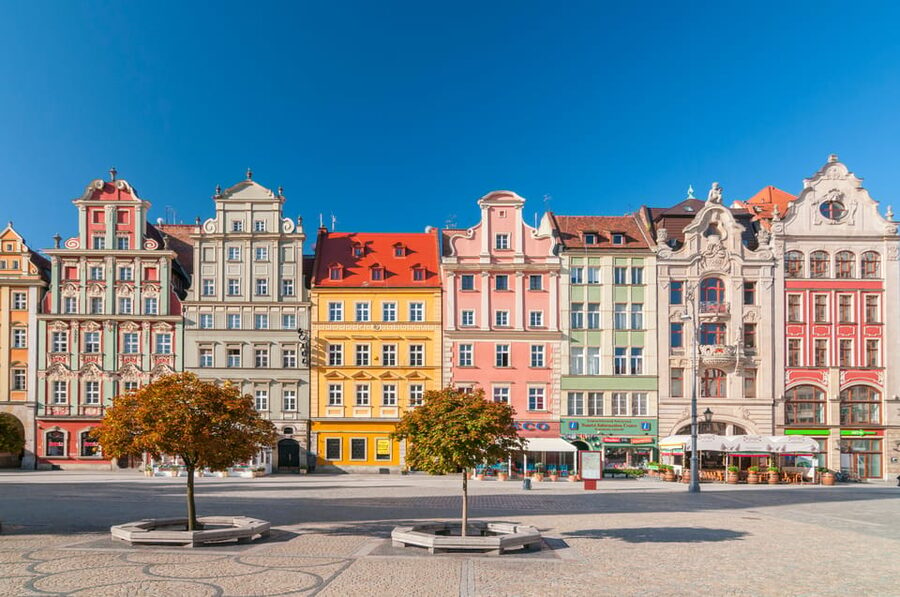
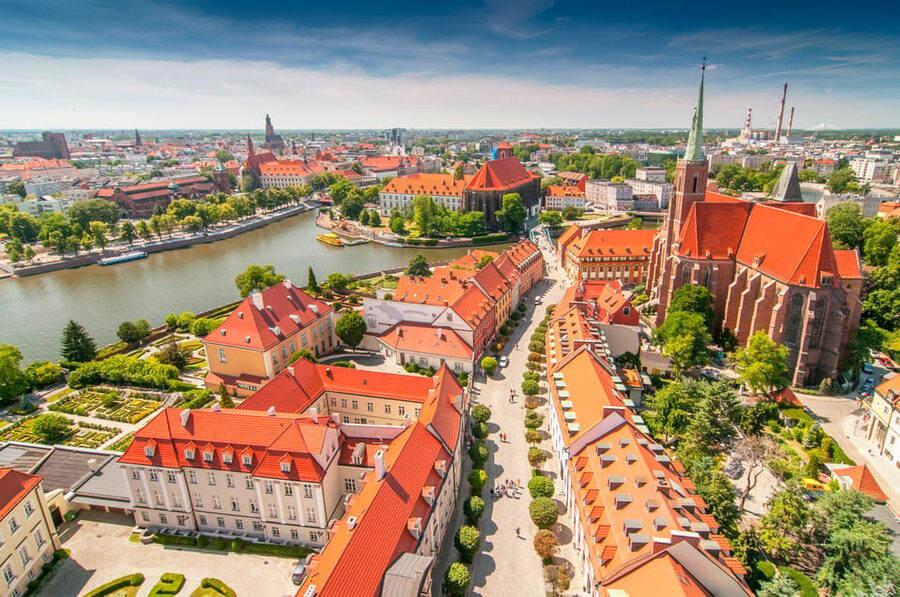
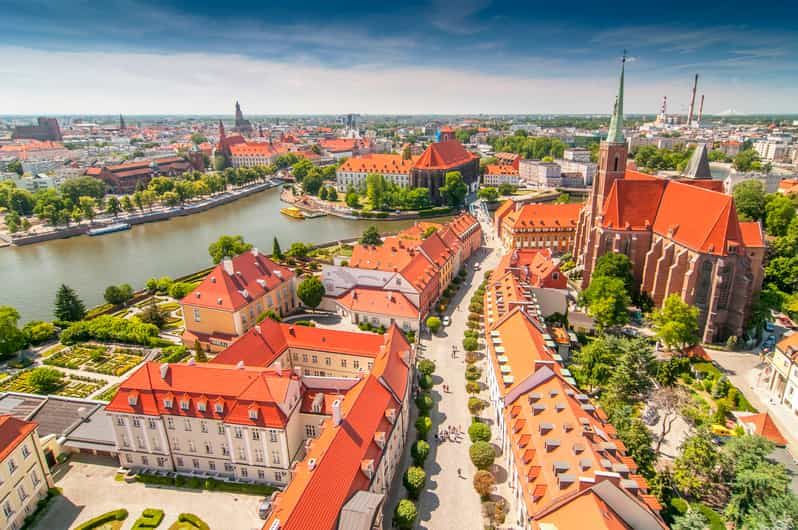
The walk continues across the Oder to Ostrów Tumski, or Cathedral Island, the oldest part of Wroclaw. This change of setting gives the tour a satisfying final movement, from market life and university buildings to churches, cloisters, and a quieter spiritual atmosphere.
The Cathedral of St. John the Baptist is the key sight here. It anchors an area filled with other churches and religious buildings, creating a strong contrast with the commercial energy of Rynek.
I like Cathedral Island as the final main area because it gives the tour a different emotional register. You have spent the first part learning about merchants, rulers, architecture, and city legends. Here, the focus turns toward faith, sacred buildings, and the long passage of time.
The crossing also helps you understand Wroclaw as more than a collection of pretty facades. The Oder is part of the city’s identity, and moving across it makes the route feel like a journey through separate chapters rather than a loop around one square.
The description places the tour’s sightseeing conclusion in Ostrów Tumski, while the meeting information says the activity ends back at the original meeting point. That is worth clarifying before you go, especially if you have a restaurant reservation, train departure, or another timed activity afterward.
Something quite different:
- Wroclaw: E-Car Tour and Audio Guide
★ 4.6 · 1,738 reviews - Wroclaw: 2-Hour Private Guided Tour by Electric Car
★ 4.8 · 805 reviews - Wroclaw: City Tour Sightseeing By Golf Cart Shared Or Privat
★ 4.8 · 189 reviews - Auschwitz-Birkenau Tour from Wrocław
★ 5.0 · 129 reviews
What the guide adds to a shared walk
This is a shared tour with an English-speaking local guide. The group format keeps the price at $40 per person and gives you a chance to meet other people, though the information provided does not state the maximum group size.
The guide is the main reason to choose this experience over walking the route alone. Adam has been praised for explaining the city and its history while adding funny stories, and Sean has been described as friendly and especially good company. Those comments suggest a warm, approachable style rather than a dry recital of dates.
That personality matters in Wroclaw. The city’s story includes several national influences and many layers of architectural change. A good guide can keep those layers understandable, then break up the serious material with a legend, a gnome, or a curious fact about a building.
You should also use the guide for practical advice. The tour includes suggestions about where to eat and drink, and the guide can recommend what to see next after the formal walk. This is useful early in a stay because you can turn the route into a first-day orientation.
The strongest praise centers on friendly, personal guiding and clear historical storytelling. I would book this tour for that human element, not just because it checks off famous sights. If you prefer to move at your own speed, stop for long photos, or spend fifteen minutes inside every church, a self-guided route may suit you better.
Is $40 good value for 2.5 hours?
At $40 per person, the tour is not the cheapest way to walk around Wroclaw. You can see the Market Square, university area, and Cathedral Island without paying for a guide.
The value comes from the connections. In two and a half hours, you get a structured route through civic buildings, medieval streets, university architecture, gnomes, the Oder, and the cathedral district. You also receive restaurant and drink suggestions, local stories, and a usable introduction to the city’s mixed past.
I consider that fair value if you are new to Wroclaw and want a strong orientation at the start of your visit. It can save you from wandering without context, and it helps you decide which places deserve a longer return visit.
The shared format is another part of the calculation. You are not paying for a private guide, so the experience may feel less tailored. On the other hand, the group setting can be pleasant if you enjoy meeting fellow visitors and hearing questions you might not think to ask.
The tour also offers reserve-now, pay-later booking and free cancellation up to 24 hours before the start for a full refund. Those policies make it easier to fit the walk around changing plans, though you still need to check available start times when booking.
How to prepare for the route
Wear shoes you can comfortably use for two and a half hours. The route includes historic streets and a river crossing, and the experience is built around walking rather than riding between sights.
Bring an umbrella and a jacket. These are not decorative suggestions for a city walk. The tour takes place outdoors, and weather can affect your comfort more than the distance itself.
Meet at the specified point in front of McDonald’s at Rynek 30. Look for the red umbrella, which is the key identification detail supplied for the start.
I would arrive with enough time to locate the meeting point without rushing. The Market Square is the natural center of the visit, but a clear landmark and guide marker still help when you are unfamiliar with Wroclaw.
Keep your schedule flexible after the tour. The guide offers suggestions for continuing your exploration, and the route itself may leave you wanting more time at the cathedral area, university buildings, or Market Square.
Who will enjoy this Wroclaw walk?
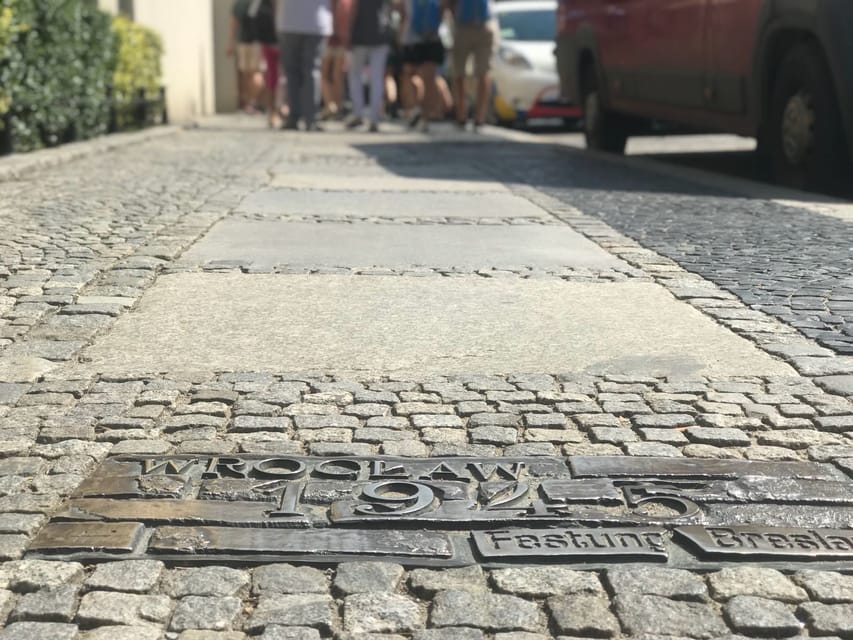
I would recommend it most strongly to first-time visitors who want to understand Wroclaw before exploring on their own. The tour gives you a broad introduction without taking an entire day, and it combines the city’s most recognizable sights with smaller details.
History-minded visitors will appreciate the discussion of Polish, Czech, Austrian, and German influence. Architecture fans will find plenty to study in the late Gothic Town Hall, medieval streets, and Baroque university complex.
Families may enjoy the gnomes, which give children a simple mission while the adults listen to the historical background. The funny stories and legends also make the walk less demanding than a strictly academic city tour.
I would be more cautious if you have limited walking ability, although the supplied information does not provide accessibility details. Ask the operator for route and surface information before booking if that affects your plans.
This is also not the best choice for someone who wants extensive interior visits. The route emphasizes outdoor city walking and major areas, with the university and religious buildings presented as parts of the wider story.
Should you book Viadrina Tours?
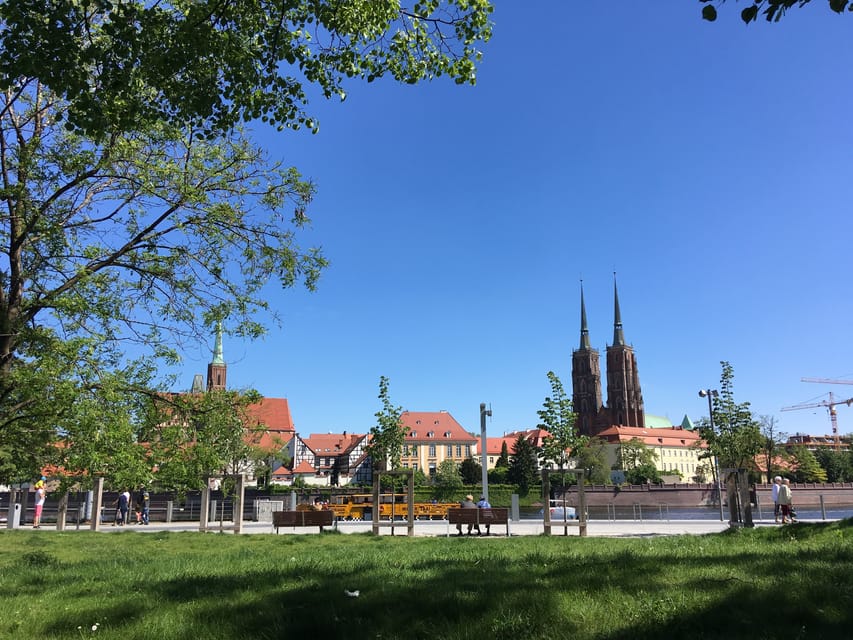
Book this Wroclaw city walk if you want a friendly, story-filled introduction to the city’s main historic areas. The strongest reasons are the well-shaped route, the guide’s focus on useful local advice, the gnome stories, and the highly praised guiding style associated with Adam and Sean.
The 4.9 rating from 87 reviews supports the picture of a consistently well-received experience, especially for personal, clear, and entertaining guiding. At $40, I see it as good value for a first day in town, provided you are comfortable walking for 2.5 hours in a shared group.
Skip it if you prefer complete independence, long museum stops, or a private itinerary built around your own interests. Also confirm the ending point if you need to leave immediately afterward, since the route description highlights Ostrów Tumski while the meeting information lists the activity as ending back at Rynek.
FAQ
How long is the Wroclaw guided city walk?
The tour lasts 2.5 hours. Starting times vary, so check availability when you book.
What language is the tour conducted in?
The live tour guide speaks English. An English-speaking local expert is included.
Where does the tour begin?
Meet in front of McDonald’s at Rynek 30 in Wroclaw. Look for the guide carrying a red umbrella.
What sights are included?
The route includes Market Square and the late Gothic Town Hall, medieval streets, the university complex, the Oder crossing, and Cathedral Island with the Cathedral of St. John the Baptist.
What should I bring?
Bring comfortable shoes, an umbrella, and a jacket. The experience is a walking tour with outdoor sightseeing.
Can I cancel or pay later?
You can cancel up to 24 hours in advance for a full refund. The reserve-now, pay-later option lets you book without paying immediately.
Just added in Wroclaw
- Wroclaw: WW2 Tour to Project Riese & Gross-Rosen Museum★ 4.8 · 26 reviews
- Wrocław: World War II and the non-existent city of Breslau★ 3.6 · 3 reviews
- Wroclaw : Walking Custom Tour with a Local Guide★ 4.8 · 3 reviews
- Wroclaw: University Baroque Tour★ 5.0 · 19 reviews
- Wroclaw: 3-Hour Bike Tour in English or Polish★ 4.8 · 66 reviews
- Wrocław: Tour of the Old Town in an Imperial E-car★ 4.3 · 13 reviews
- Wrocław: Venice of the North! Monuments on the Odra River 2h★ 5.0 · 2 reviews
- Wroclaw To Church of Peace and Project Riese Tour★ 4.8 · 4 reviews
City Tours, compared.
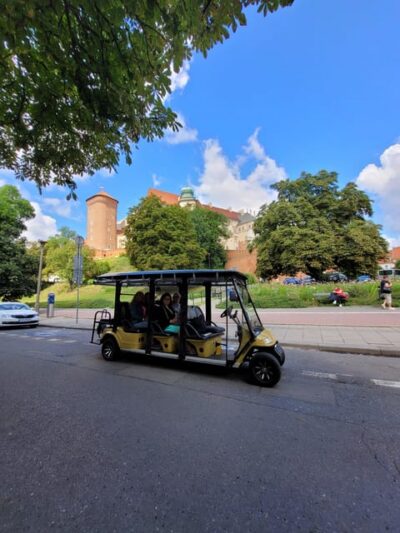
City Sightseeing Tour Eco Electric Buggy Golf Cart
Read our review →
Gdańsk City Sights & History Guided Walking Tour in English
Read our review →
Extended City Sightseeing Tour – Eco Buggy Golf Cart
Read our review →
Browse the lists this tour appears in