
REVIEW · CITY TOURS
Wroclaw: City of 100 Bridges 4-Hour Private City Tour
Wroclaw hides its best stories in plain sight. This private four-hour tour connects the city’s bridges, cathedral island, Old Town, university, Centennial Hall, and famous dwarves in one well-planned outing. I like the hotel pickup and private format, and I especially like that the route mixes grand monuments with small street details. The main catch is that entrance fees are not included, so the tour works best as a city overview rather than a series of long indoor visits.
I also like the choice of stops. You get the elegant Aula Leopoldinum, the vast Market Square, the Oder River embankment, and a chance to hunt for Wroclaw’s tiny bronze gnomes. Four hours is enough to get your bearings, but the schedule may feel brisk if you want extended time inside the Racławice Panorama Museum or Centennial Hall.
In This Review
- Key points to know before booking
- Why Wroclaw works well with a private guide
- Ostrow Tumski and St. John the Baptist Cathedral
- Crossing the Oder and following the bridge city
- The Racławice Panorama and Poland’s national story
- Wroclaw University and the baroque Aula Leopoldinum
- Market Square, Gothic town hall, and old restaurants
- Centennial Hall and Wroclaw’s modern side
- Dwarf hunting in the city center
- What the $44 price gets you
- Who should book this Wroclaw tour?
- Should you book it?
- FAQ
- How long does the Wroclaw city tour last?
- What is the price of the tour?
- Is the tour private?
- Is hotel pickup included?
- Is transportation included?
- Which languages are available?
- Are entrance fees included?
- Can you cancel the booking for a refund?
Key points to know before booking
- Private hotel-to-hotel sightseeing: Your guide meets you in the hotel lobby and transportation is included, which removes much of the city navigation work.
- A city shaped by several nations: Wroclaw’s Polish, Czech, Austrian, Prussian, German, and post-1945 Polish chapters appear in its buildings and public spaces.
- More than 100 bridges: River views and bridges give Wroclaw a character often compared with Venice, Amsterdam, St. Petersburg, and Hamburg.
- Aula Leopoldinum is a highlight: Wroclaw University’s baroque hall adds a refined indoor stop to the mostly outdoor route.
- Centennial Hall adds modern history: This UNESCO-listed complex shows Wroclaw beyond medieval streets and Gothic towers.
- Dwarf hunting gives the tour a playful finish: Looking for the small bronze figures turns a standard city walk into an easy family activity.
Why Wroclaw works well with a private guide
Wroclaw can feel confusing at first. The city is spread across islands and riverbanks, while the Old Town, cathedral area, university, museums, and Centennial Hall each have a different character. A private guide helps you connect these pieces instead of treating them as unrelated sights.
The hotel pickup is especially useful if you are new to the city. You do not need to find a meeting point or work out public transportation before breakfast. Your guide waits in the hotel lobby with a sign showing your name, and the tour includes transportation and hotel drop-off.
The private format also gives you room to ask questions. If a building catches your eye, you can ask about it. If your group wants more time for photographs, that is easier to discuss than it would be in a large group. The exact balance still depends on the guide, traffic, and how much time you spend inside paid attractions.
Languages include English, Spanish, German, Polish, Russian, French, Italian, and Portuguese. That is a useful range, especially for families or couples who would rather learn about the city in a language they speak comfortably. One guide, Mathias, received particular praise for his Spanish, while Robert led an enjoyable Italian-language tour and offered useful local tips.
A few more in Wroclaw
- Wroclaw: E-Car Tour and Audio Guide
★ 4.6 · 1,738 reviews - Wroclaw: 2-Hour Private Guided Tour by Electric Car
★ 4.8 · 805 reviews - Wrocław: Old Town and Ostrów Tumski Walking Tour in English
★ 4.8 · 311 reviews
Ostrow Tumski and St. John the Baptist Cathedral
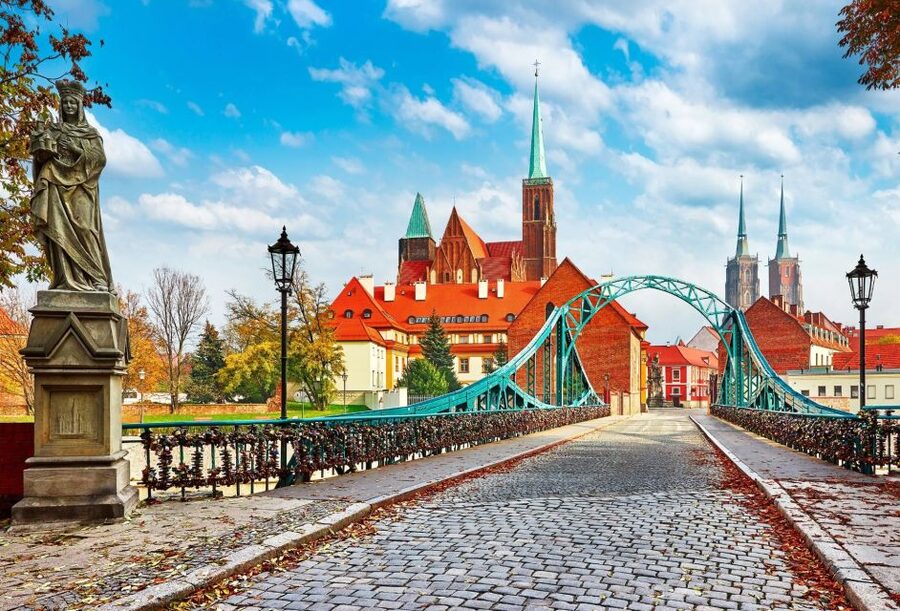
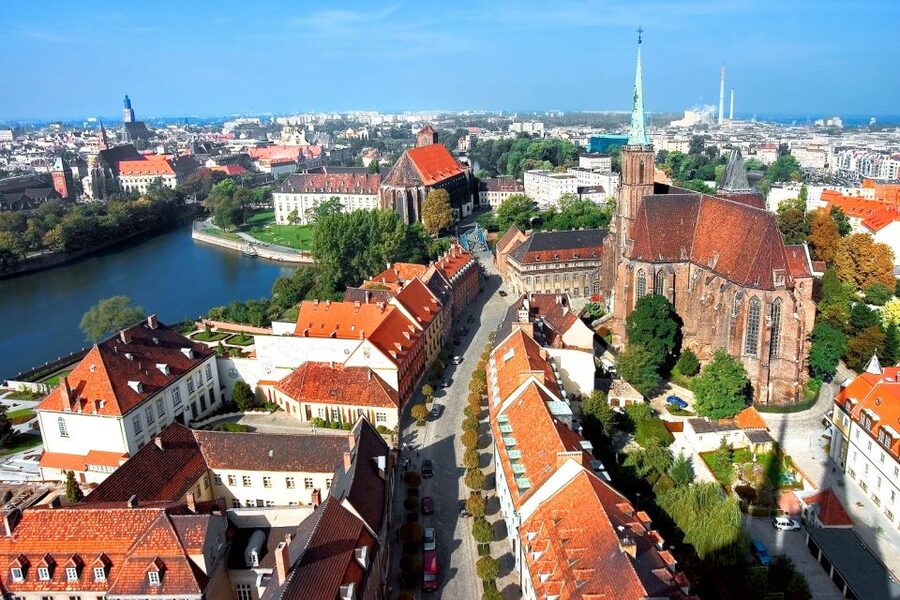
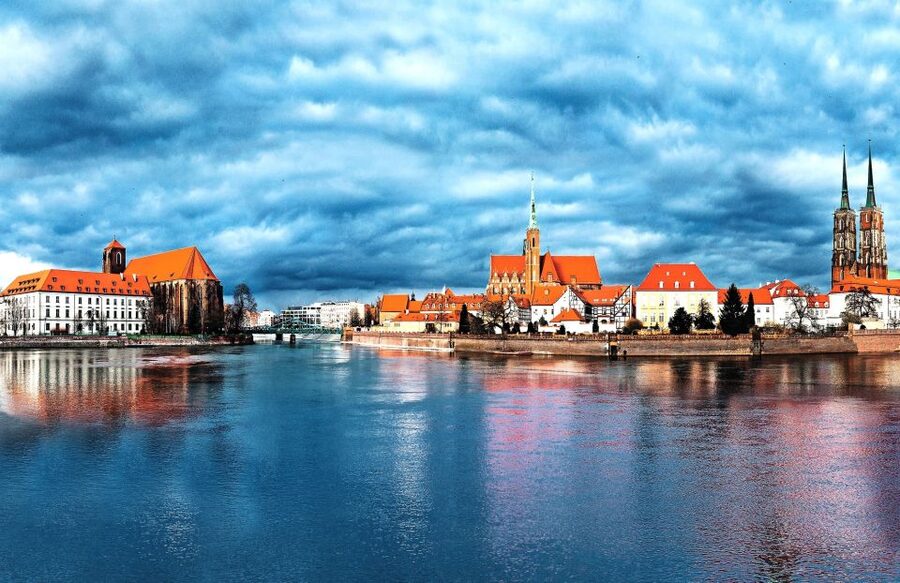
The tour begins in Ostrow Tumski, or Cathedral Island, the oldest part of Wroclaw. Despite its name, this is now a historic district rather than a true island in the simple sense. The Oder River and its channels shape the area, giving it a calm, separated feel from the central streets.
The main sight here is the Cathedral of St. John the Baptist, with its tall twin towers. The description of the towers as vertiginous is fair: they give this part of the city a strong vertical profile and help you understand why the cathedral district is one of Wroclaw’s defining views.
I like starting here because it puts the city’s age in front of you before the tour moves into squares, restaurants, and modern event spaces. Wroclaw has changed hands many times. It belonged at different points to the Kingdom of Poland, Bohemia, the Austrian Empire, Prussia, and Germany, and it has been part of Poland since 1945 after the border changes that followed World War II.
You will not get a full academic course in four hours, but a guide can point out how those changes shaped the city. The value is in seeing history as something built into the streets, not just something printed on a museum label.
Crossing the Oder and following the bridge city
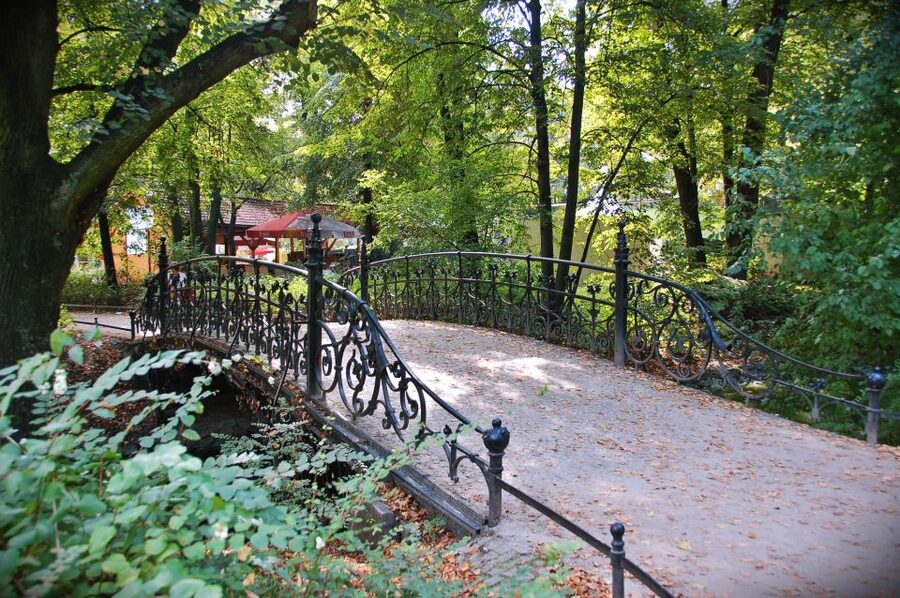
After the cathedral district, you cross a bridge over the Oder River and walk along the embankment. This is one of the tour’s most attractive outdoor stretches. Wroclaw has more than 100 road bridges and footbridges linking its riverbanks and islands.
The comparison with Venice is not just a marketing flourish. The bridges, water channels, and changing views give Wroclaw a distinct river-city feel. The city is also grouped with Amsterdam, St. Petersburg, and Hamburg as places with an even greater concentration of bridges.
You should expect good photo opportunities here, particularly if you enjoy city views that include water, towers, and old facades. The embankment also gives you a pause between the cathedral and the denser Old Town streets. Four hours is not long, so this walk will likely be a scenic overview rather than a slow riverside stroll.
Comfortable shoes matter. The tour combines walking, bridges, cobbled streets, and vehicle transfers. The supplied information does not specify a walking distance or accessibility arrangements, so you should ask the provider if anyone in your party has mobility needs.
The Racławice Panorama and Poland’s national story
The route stops by the Racławice Panorama Museum, home to a monumental 360-degree painting of the Battle of Racławice. The battle took place in April 1794, when Polish forces defeated Russian troops. The panorama is presented as one of the world’s largest circular battle scenes and has become an important Polish national symbol.
This stop adds political and military context to the architectural sightseeing. Wroclaw is not only a city of beautiful facades and bridges. Its story is also tied to changing borders, national memory, and the difficult history of Central Europe.
The wording of the itinerary says to stop by the museum, but entrance fees are not included. That distinction matters. You may see the building and learn about the panorama from your guide without entering, or you may choose to pay separately if time and availability allow.
Do not assume the museum visit forms a long part of the four-hour schedule. If the panorama is a priority, ask your guide how much time can be set aside and whether admission can fit into the route. If you prefer a broad introduction to Wroclaw, the exterior stop and explanation may be enough.
Something quite different:
- Wroclaw: Private Old Town Guided Walking Tour (2 hours)
★ 4.8 · 275 reviews - Old Town Wrocław Walking Tour
★ 5.0 · 249 reviews - Wroclaw: City Tour Sightseeing By Golf Cart Shared Or Privat
★ 4.8 · 189 reviews - Auschwitz-Birkenau Tour from Wrocław
★ 5.0 · 129 reviews
Wroclaw University and the baroque Aula Leopoldinum
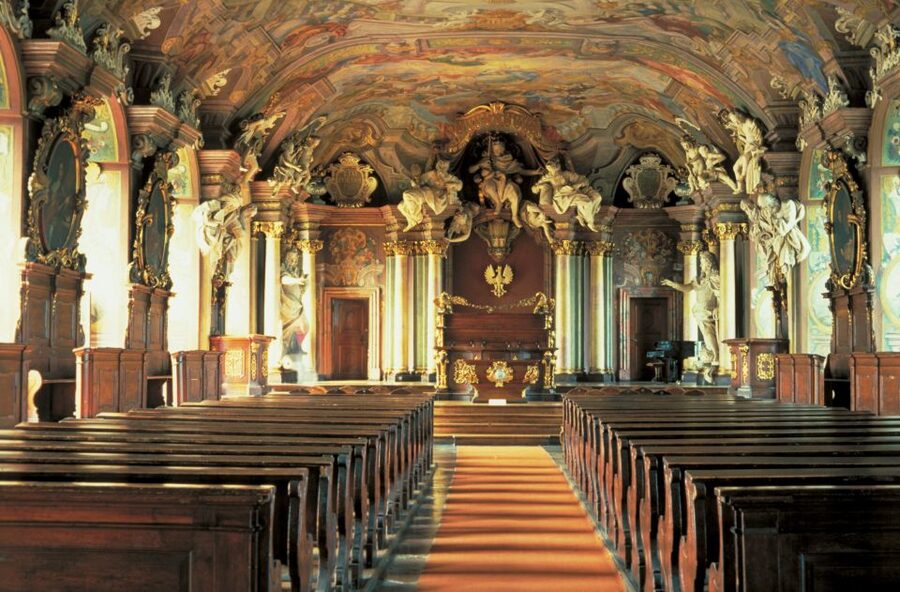
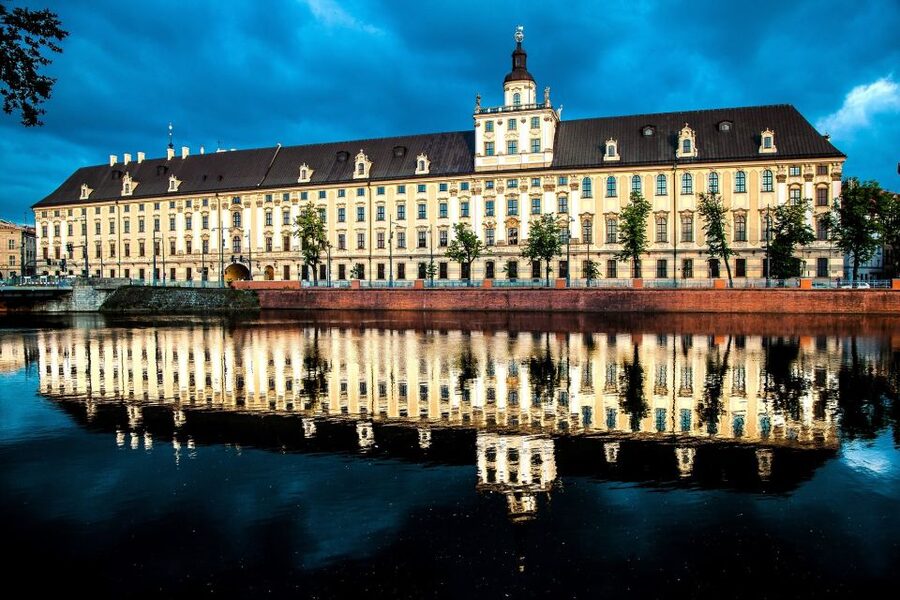
The Old Town section includes Wroclaw University, particularly Aula Leopoldinum. This is the university’s most representative hall, designed by the Italian architect Christophorus Tausch.
Aula Leopoldinum gives the tour a different mood from the cathedral and river. Its baroque design is formal, decorative, and theatrical. The hall helps show how much of Wroclaw’s cultural life was shaped by Central European institutions, not only by merchants and rulers.
Entrance fees are not included, so you should confirm whether a visit inside the hall is possible on your chosen departure. This is one of the places where the private format can help. If the interior is open and your group is keen, you can ask about making room for it. If not, the guide can still explain why the university matters and point out its place in the Old Town.
I would rank Aula Leopoldinum among the most worthwhile stops for architecture fans. It also gives the itinerary some balance. Without it, the tour could feel like a quick circuit of outdoor monuments. With it, you get a glimpse of Wroclaw as a center of learning and art.
Market Square, Gothic town hall, and old restaurants
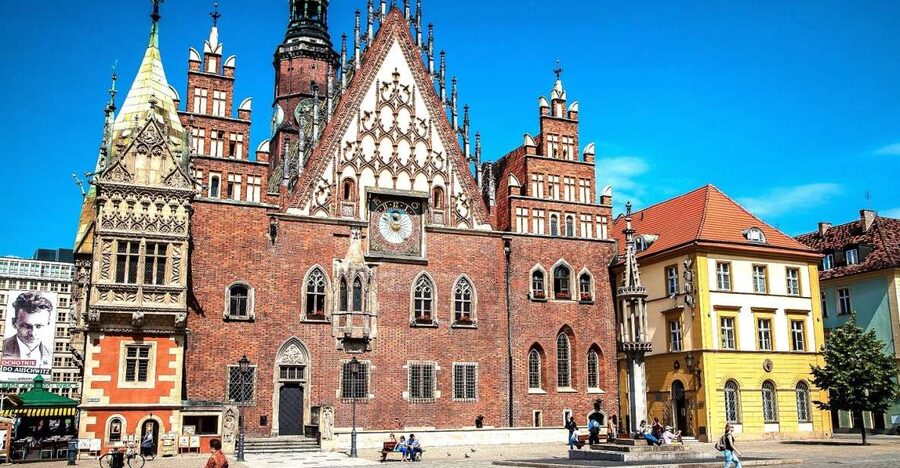
The medieval streets lead into Wroclaw’s Market Square, one of Europe’s largest. This is the city’s municipal and cultural center, surrounded by colorful tenement houses and lined with cafes and restaurants.
The square is the place to slow down and look upward. The facades are not all alike, and the color changes from one building to the next. That variety creates the cheerful atmosphere many people associate with Wroclaw’s Old Town, but the square is not just a pretty backdrop. It remains a setting for concerts, public events, and performance art.
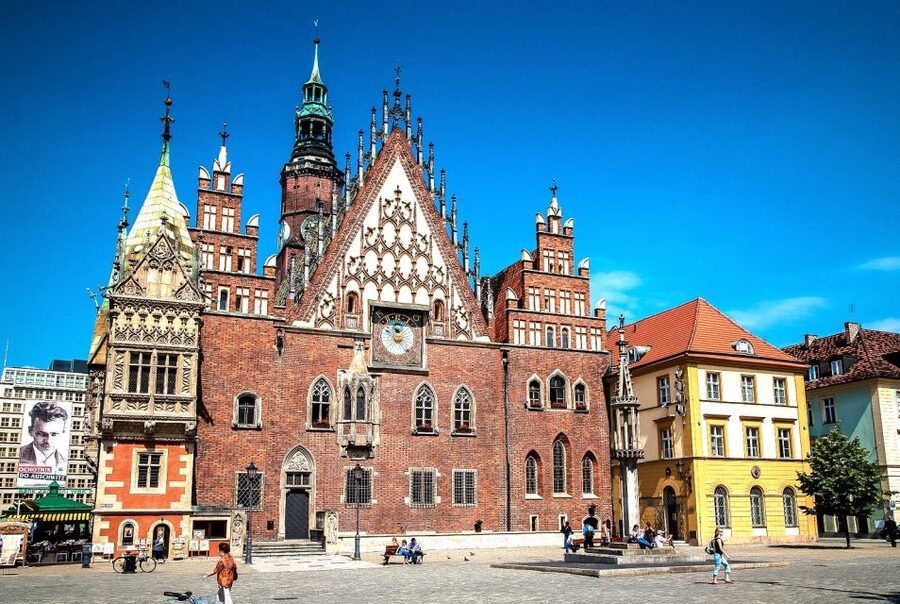
The late Gothic town hall is the square’s main architectural anchor. Its tower contains the oldest clock tower bell, installed in 1368. That single detail gives the building a useful sense of age. You can look at the town hall as a grand civic structure, then remember that its clock bell has marked public life for centuries.
Below the town hall is Piwnica Świdnicka, described as one of Europe’s oldest restaurants, dating to 1273. The tour does not include a meal, and you should not count on having time to eat during the four-hour route. Still, the restaurant is a memorable detail to note for later, especially if you want to return to the square after the tour.
The main limitation here is pace. The Market Square deserves more than a quick photograph. If you want to browse shops, sit at a cafe, or examine every facade, plan to return on your own after the tour.
Centennial Hall and Wroclaw’s modern side
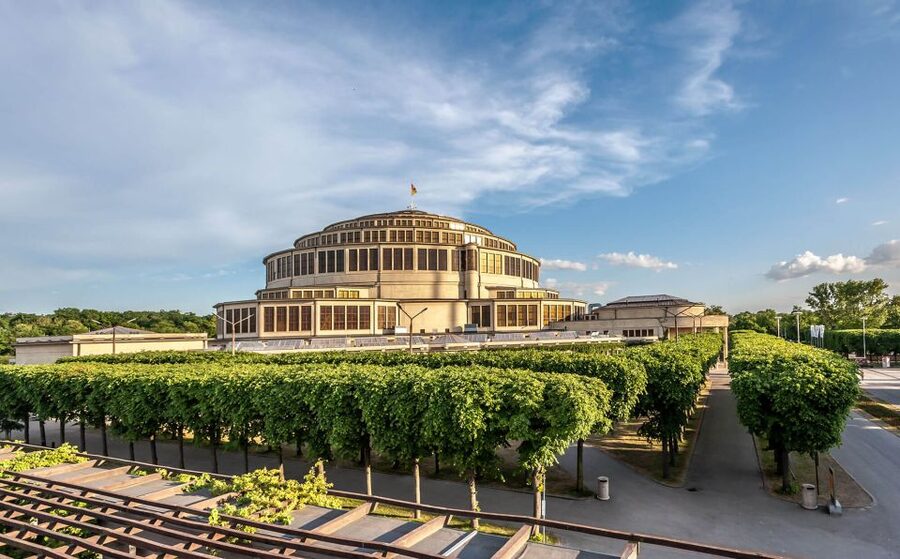
The visit to Centennial Hall broadens the picture again. This UNESCO World Heritage complex is described as one of the major architectural achievements of the 20th century. It is also an active venue for exhibitions, conferences, congresses, cultural events, and sporting activities.
That makes it an important counterpoint to the Gothic cathedral and medieval town hall. Wroclaw is not frozen in its past. Centennial Hall shows how the city took part in modern architectural and public life.
The tour provides transportation, which is valuable here because Centennial Hall is outside the tight Old Town sightseeing circuit. Reaching it without a vehicle would add planning time, particularly if you are trying to fit the cathedral, university, Market Square, and river into the same afternoon.
The itinerary does not promise a full interior tour or a particular event. Think of this as a guided look at the complex and its place in Wroclaw’s story. If modern architecture is your main interest, you may want to ask how much time will be spent there before booking.
Dwarf hunting in the city center
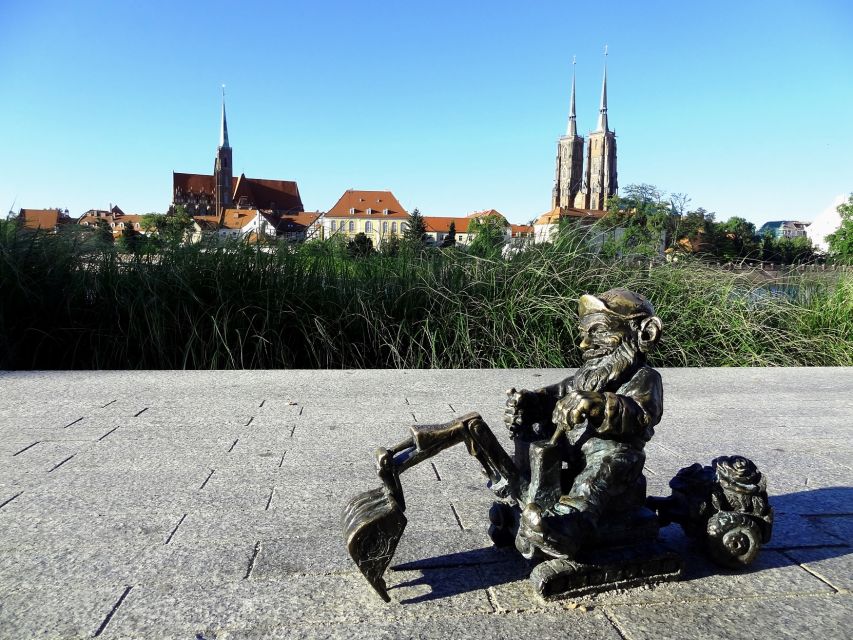
The final activity is one of Wroclaw’s most memorable: looking for the small bronze dwarves scattered around the city center. They appear near doorways, in alleyways, and on street corners, often close to the pavement where you can easily miss them.
This is a smart way to finish a first visit. The major sights teach you the city’s broad story, while the dwarves make you pay attention to the human scale of the streets. You may finish the tour knowing the location of several statues and still notice more on your own afterward.
Dwarf hunting suits families, couples, and anyone who enjoys a little play during a history tour. It also gives you a simple activity for later. Once you know to look down as well as up, ordinary walks through the center become more interesting.
The tour description calls the dwarves the city’s most popular and iconic attraction. The important point is not only their number. Their placement turns sightseeing into a visual game, and it costs nothing to continue after the guide leaves you.
What the $44 price gets you
At $44 per person, the tour is priced as a private half-day orientation rather than an admission-heavy museum program. The package includes a guide, transportation, hotel pickup, and hotel drop-off. Those services can be worth the price if you want a smooth first look at a city you do not know.
The value is strongest for couples, families, or small groups who would otherwise need to arrange several separate rides and research the route themselves. A private guide also gives you direct access to explanations about Wroclaw’s changing national identity, architecture, bridges, and public spaces.
The price is less attractive if you want long visits inside museums or plenty of unstructured time. Entrance fees are extra, and the four-hour limit means the tour must keep moving. You are paying for coverage, context, and convenience, not a slow museum day.
The booking terms are flexible: you can reserve now and pay later, and cancellation is free up to 24 hours in advance for a full refund. Starting times depend on availability, so check the schedule before planning other activities around the tour.
Who should book this Wroclaw tour?
I would recommend it to you if this is your first time in Wroclaw and you want to understand the city quickly. It is also a good fit if you are staying at a hotel outside the center, prefer private sightseeing, or want explanations in Spanish, Italian, German, French, Portuguese, Russian, Polish, or English.
Families may especially enjoy the bridge views and dwarf hunt. Architecture fans will appreciate the contrast between St. John the Baptist Cathedral, Aula Leopoldinum, the Gothic town hall, and Centennial Hall. History-minded visitors will benefit from the explanation of the city’s Polish, Czech, Austrian, Prussian, German, and postwar chapters.
I would be more cautious if your main goal is a long museum visit, a leisurely meal, or detailed exploration of every Old Town lane. In that case, use this tour as an introduction, then return independently to the Racławice Panorama, Market Square, university, or riverfront.
The recorded rating is 4.4 from six ratings. The strongest praise focuses on guides who explain important places clearly, share historical facts, and offer useful tips. Mathias was praised for his excellent Spanish, and Robert earned praise for his professionalism and friendly manner during an Italian-language tour.
Should you book it?
Book this tour if you want a private, efficient introduction to Wroclaw with transportation handled for you. The best parts are the varied route, the bridge-filled river setting, the colorful Old Town, and the playful dwarf hunt.
Skip it if you already know the center well or want to spend most of your day inside museums. For first-time visitors with four hours to spare, $44 per person is a fair price for a guided overview, provided you understand that admission tickets and longer independent stops come afterward.
FAQ
How long does the Wroclaw city tour last?
The tour lasts four hours.
What is the price of the tour?
The listed price is $44 per person.
Is the tour private?
Yes. It is organized as a private group experience.
Is hotel pickup included?
Yes. The guide meets you in your hotel lobby with a sign showing your name. Hotel drop-off is also included.
Is transportation included?
Yes. Transportation is included as part of the tour.
Which languages are available?
The guide service is available in Spanish, English, German, Polish, Russian, French, Italian, and Portuguese.
Are entrance fees included?
No. Entrance fees are not included in the tour price.
Can you cancel the booking for a refund?
Yes. You can cancel up to 24 hours in advance for a full refund. You can also reserve now and pay later.
Just added in Wroclaw
- Wroclaw: WW2 Tour to Project Riese & Gross-Rosen Museum★ 4.8 · 26 reviews
- Wrocław: World War II and the non-existent city of Breslau★ 3.6 · 3 reviews
- Wroclaw : Walking Custom Tour with a Local Guide★ 4.8 · 3 reviews
- Wroclaw: University Baroque Tour★ 5.0 · 19 reviews
- Wroclaw: 3-Hour Bike Tour in English or Polish★ 4.8 · 66 reviews
- Wrocław: Tour of the Old Town in an Imperial E-car★ 4.3 · 13 reviews
- Wrocław: Venice of the North! Monuments on the Odra River 2h★ 5.0 · 2 reviews
- Wroclaw to Rock City in Adrspach and Ksiaz Castle day trip★ 4.9 · 16 reviews
City Tours, compared.
City Sightseeing Tour Eco Electric Buggy Golf Cart
Read our review →
Gdańsk City Sights & History Guided Walking Tour in English
Read our review →
Extended City Sightseeing Tour – Eco Buggy Golf Cart
Read our review →
Browse the lists this tour appears in