
REVIEW · 2-HOUR EXPERIENCES
Wroclaw: 2-Hour Private Electric Bus Tour with Guide or Tape
Wroclaw reveals itself in layers. This private electric bus tour links the market square, Cathedral Island, and Centennial Hall without making you march across town with a map in hand. I like the small private setting, since the bus is reserved for your group, and I like the heated or air-conditioned cabin, which keeps the tour pleasant in both January and July. The main tradeoff is simple: two hours gives you a broad introduction, but not enough time for long visits inside the churches, university, or museums.
The route also works well for a first look at Wroclaw. You get a guide-driver in English or Polish, or an audio recording in seven languages, and hotel pickup can be arranged on request. In practice, some outings have lasted as long as three hours, with extra local advice from the guide, so the stated time is best treated as a target rather than a hard stop.
In This Review
- Five details that shape the experience
- Starting beneath Wroclaw’s Old Town Hall
- Plac Solny and the old town’s medieval corners
- The university, prison, and student stories
- Along the Oder Promenade toward Cathedral Island
- Bridges, towers, and the road to Centennial Hall
- The Wroclaw Fountain and a short pause
- The return through the National Museum and Shoe Bridge
- What the private electric bus changes
- Guide commentary or audio recording?
- Is $44 per person a fair price?
- Who should choose this two-hour tour?
- Practical tips for getting more from the ride
- FAQ
- How long is the Wroclaw electric bus tour?
- Where does the tour begin?
- Where does the tour finish?
- Is the electric bus shared with other groups?
- Can the bus pick me up at my hotel?
- Which languages are available?
- Is the bus comfortable in winter and summer?
- Does the tour visit Cathedral Island?
- Is cancellation allowed?
- Should you book it?
Five details that shape the experience
- A private electric bus keeps the tour personal: You share the vehicle only with your own group, rather than joining a large sightseeing coach.
- The route covers three very different parts of Wroclaw: The old town, Cathedral Island, and the Centennial Hall area each show a different side of the city.
- You can choose live commentary or an audio guide: Live guiding is available in English or Polish, while recordings are offered in Spanish, English, French, German, Italian, Russian, and Polish.
- The vehicle handles bad weather well: It is heated in winter, air-conditioned in summer, and blankets are available on cold days.
- The price is strongest for small groups: At $44 per person, the tour costs more than a public sightseeing ride, but the private vehicle and flexible pickup can make it worthwhile.
- The tour includes useful orientation but limited interior time: Most sights are viewed from the bus or during short stops, so plan separate visits if you want to go inside.
Starting beneath Wroclaw’s Old Town Hall
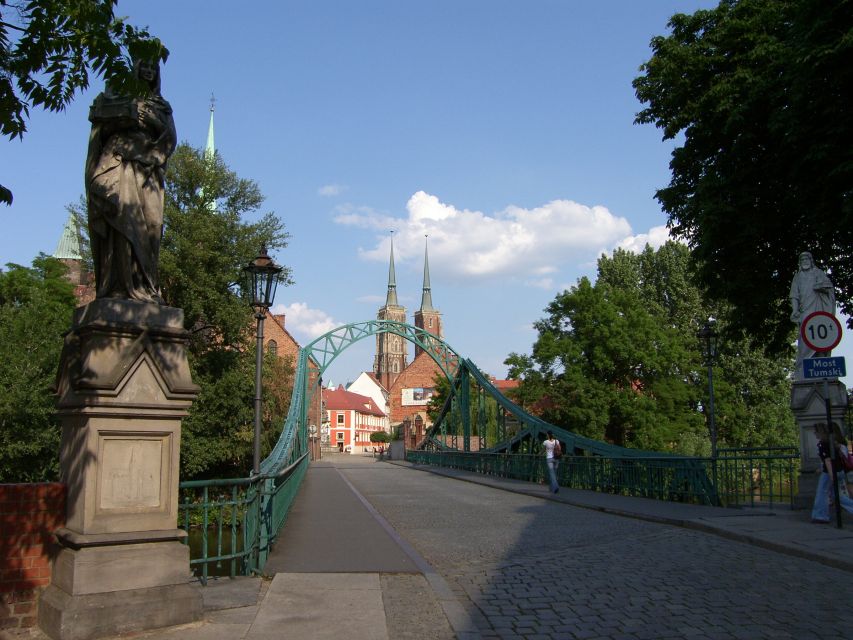
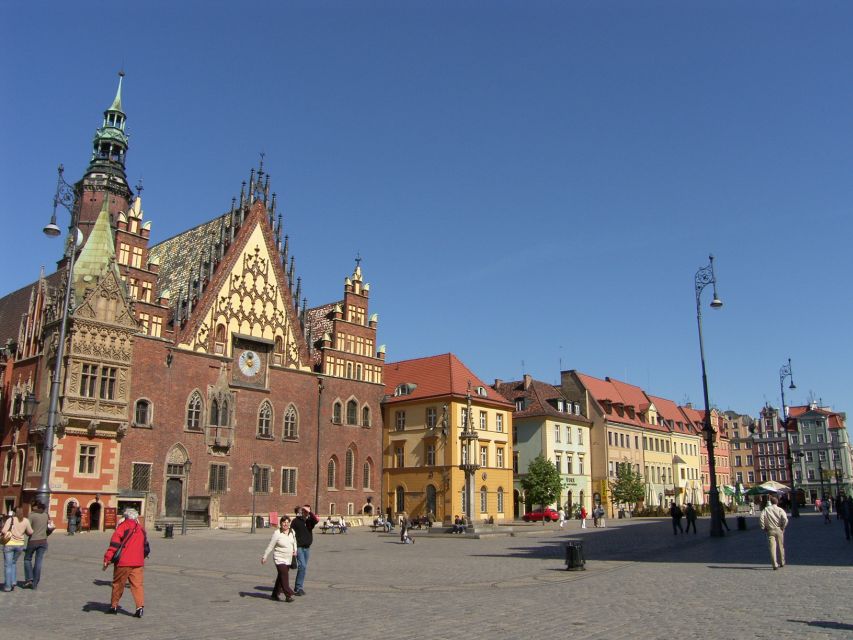
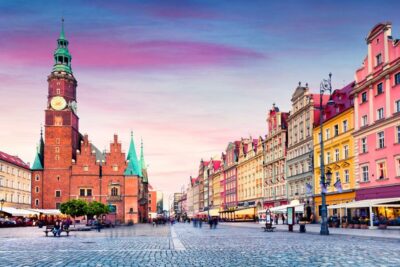
The meeting point is easy to identify if you know what to look for. Go to the Market Square and find the entrance to the Piwnica Swidnicka restaurant at Ratusz 1. The marker is a large wooden door with decorative writing, beneath the Old Town Hall.
This is a sensible place to begin because Plac Rynek is the city’s natural starting point. You are already surrounded by colorful facades, restaurants, and the old civic center before the vehicle even moves. If you arrange hotel pickup, you can skip the meeting point, but that service needs to be requested in advance.
The bus is designed for comfort rather than speed. Since this is a private group, you do not need to adjust your plans around strangers or wait for a full coach to load. That matters most if you are traveling with family, older relatives, or a small group that wants to keep the day relaxed.
A few more in Wroclaw
- Wroclaw: E-Car Tour and Audio Guide
★ 4.6 · 1,738 reviews - Wroclaw: 2-Hour Private Guided Tour by Electric Car
★ 4.8 · 805 reviews - Wrocław: Old Town and Ostrów Tumski Walking Tour in English
★ 4.8 · 311 reviews
Plac Solny and the old town’s medieval corners
The first section brings you around Plac Solny, one of Wroclaw’s largest flower markets. It is a useful contrast to the grander Market Square nearby. The square is compact, lively, and easy to understand, with flower stalls providing a splash of color in a part of town shaped by older trade and civic life.
From here, the route turns toward the former Jewish Quarter and the White Stork Synagogue. The synagogue is one of the key Jewish landmarks in Wroclaw, and the short stop gives you a chance to photograph it and hear about the neighborhood. If you want a longer look at the building or its exhibitions, you will need to return on your own.
The route then passes St. Elizabeth’s Church. The church is closely tied to the old town skyline, and the area around it is also a good place to spot Wroclaw’s famous small dwarf figures. These little statues are scattered around the city, so keep your eyes open during the drive and at each stop.
Near the church, you also see medieval meat stalls and a copper animal statue. It is an unusual detail that helps the old town feel less like a list of famous facades and more like a place with odd corners worth noticing. The stop is brief, so listen carefully if the guide points out several details in quick succession.
The university, prison, and student stories
The bus continues toward the Old Town Prison and the University of Wroclaw. The university stop includes time for photographs and a short explanation. The Fencer’s Fountain is one of the recognizable points on the university grounds, and it gives the stop a clear visual focus.
The tour also includes stories about Wroclaw’s students before reaching the Red Cross Monastery. This part is valuable because it adds everyday life to the grand buildings. You are not only looking at architecture. You are hearing how students and city residents fit into Wroclaw’s story.
Still, keep your expectations in check. The listed stop is about ten minutes, so this is an outside view rather than a full university visit. You should not expect to tour the grand interior rooms during this outing. If the university interests you, note the location and come back later with more time.
Along the Oder Promenade toward Cathedral Island
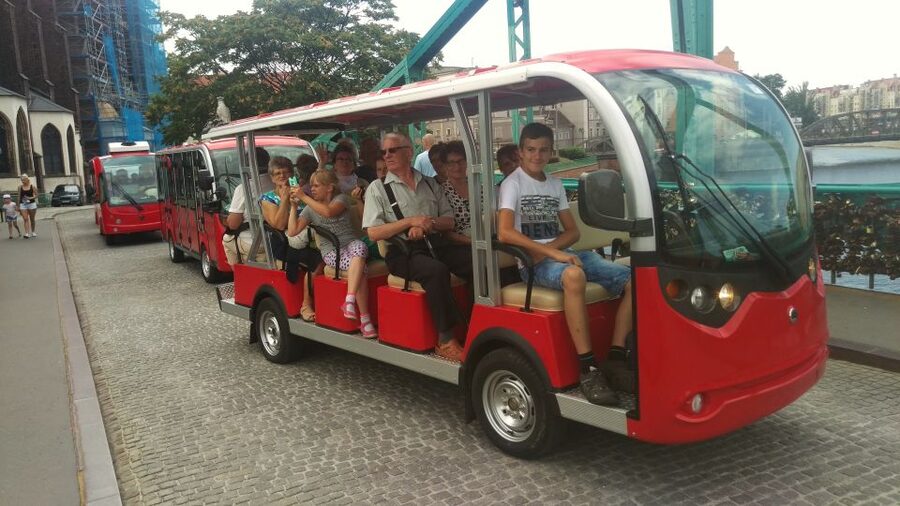
The Oder Promenade provides one of the tour’s most pleasant changes of pace. The river is central to Wroclaw’s character, and the promenade is also a starting point for boat and gondola trips. From the bus, you get an introduction to the waterfront without spending a separate half-day on a river cruise.
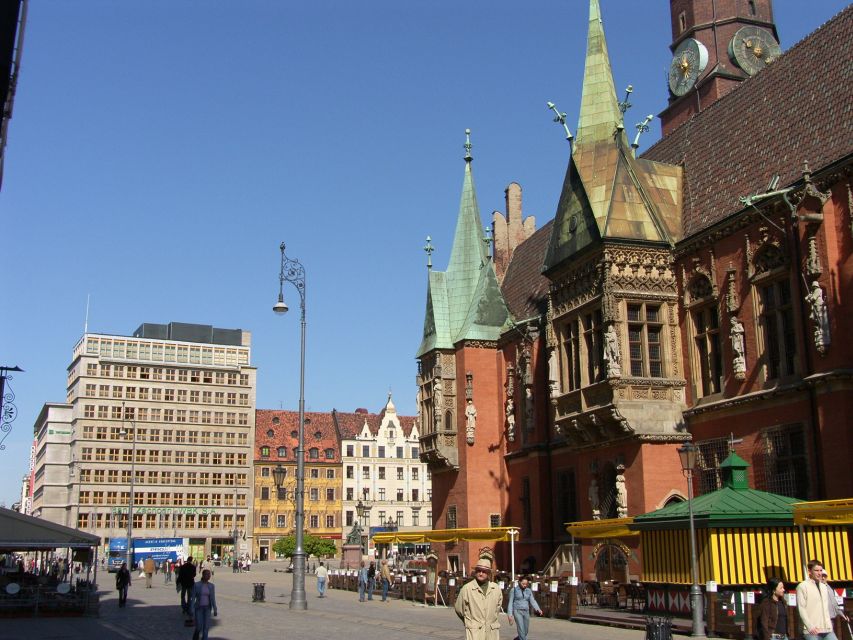
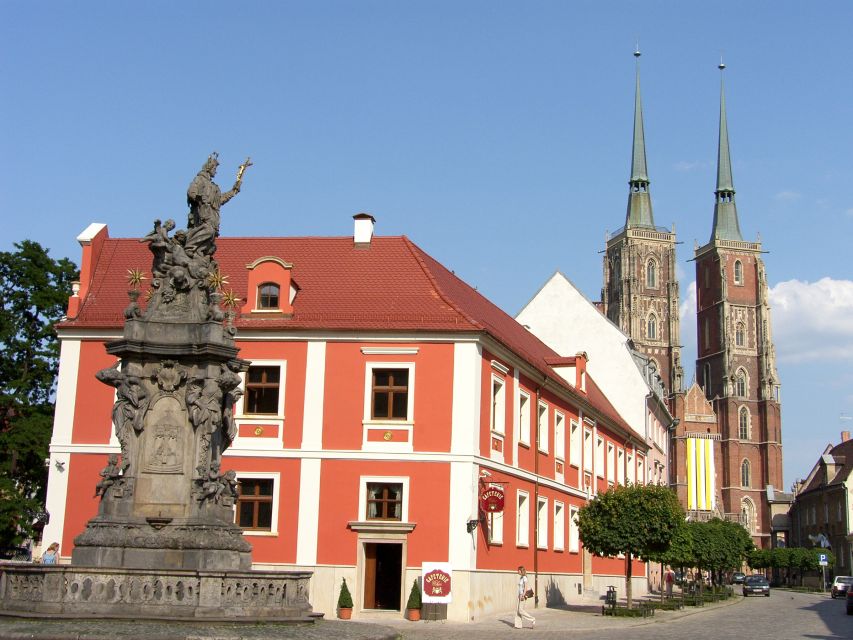
The route then reaches Cathedral Island, or Ostrów Tumski. This is one of Wroclaw’s most important historic areas, with the Cathedral of St. John at its center. The stop lasts about twenty minutes and includes photographs, sightseeing, and guide commentary.
This is one of the places where the private format helps. The guide can point out what you are seeing without forcing you to navigate a complicated route on foot. You get time to look around, but the stop is still short enough that you should think of it as an orientation visit.
The cathedral and island deserve more time than the schedule allows if you want to explore them carefully. The tour gives you the setting and the main points. It does not replace a separate walk through the island’s churches and streets.
Something quite different:
- Wroclaw: Private Old Town Guided Walking Tour (2 hours)
★ 4.8 · 275 reviews - Old Town Wrocław Walking Tour
★ 5.0 · 249 reviews - Wroclaw: City Tour Sightseeing By Golf Cart Shared Or Privat
★ 4.8 · 189 reviews - Auschwitz-Birkenau Tour from Wrocław
★ 5.0 · 129 reviews
Bridges, towers, and the road to Centennial Hall
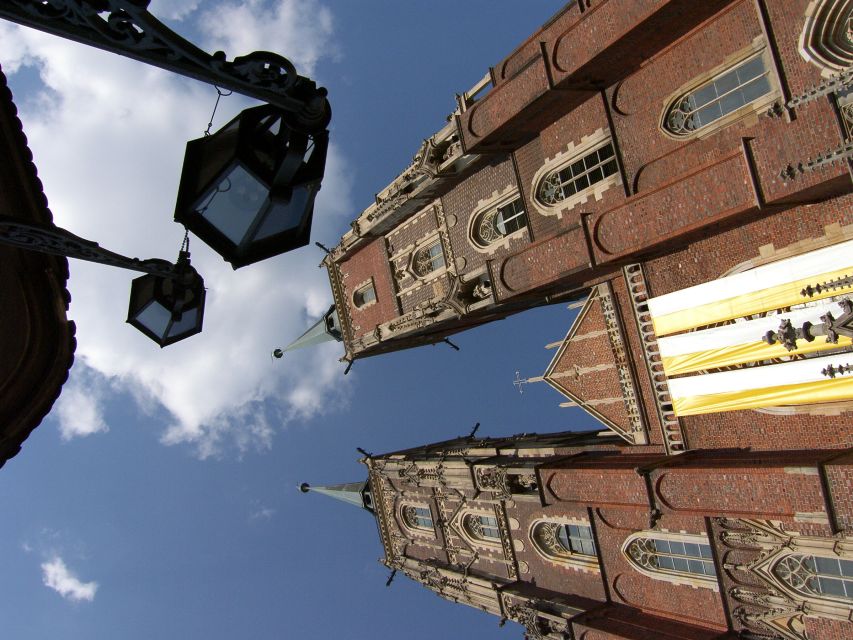
As the bus crosses Lessing Bridge, look toward the Imperial Bridge and the Water Tower. These views are best treated as passing scenes rather than formal stops. Have your camera ready, since the bus will not necessarily pause for every building mentioned by the guide.
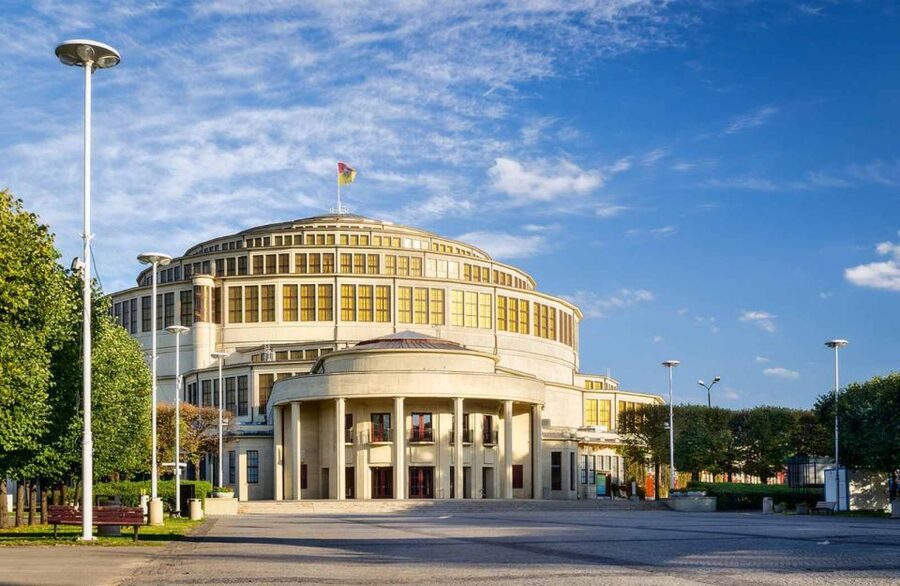
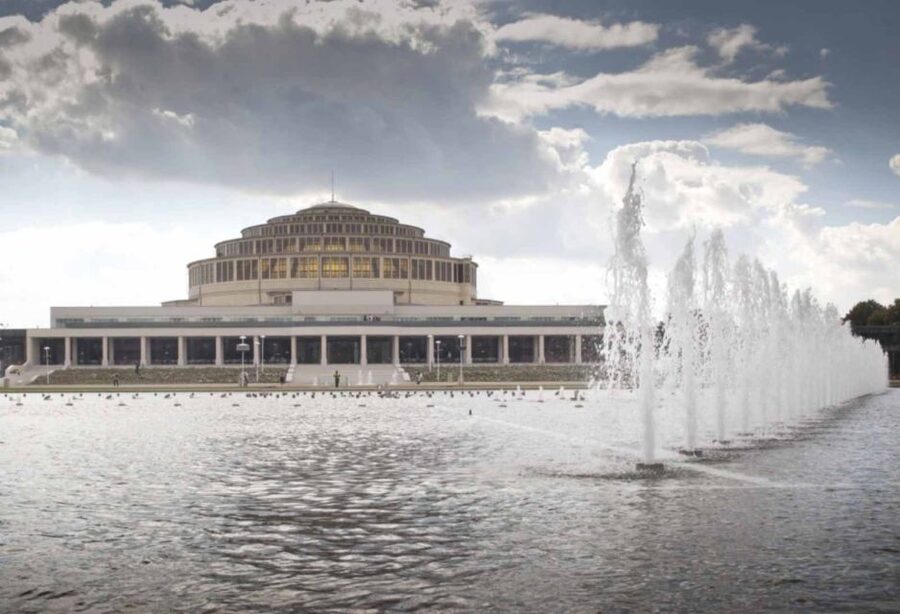
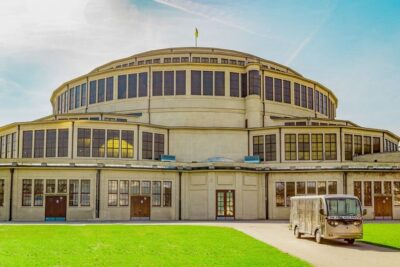
The route then moves toward the Spire and Centennial Hall, one of Wroclaw’s major architectural landmarks and a UNESCO symbol of the city. The area feels different from the medieval center. Here, the focus shifts to large-scale modern design, public spaces, and the city’s twentieth-century identity.
The Centennial Hall stop lasts around twenty minutes. The schedule allows time for sightseeing, photographs, and possibly coffee or beer. The itinerary lists those refreshments as activities at this point, but the included services do not promise that drinks are covered in the $44 price, so budget for your own purchase.
Centennial Hall is a strong reason to choose this tour over a simple old-town ride. Many short city tours stay in the center and miss this part of Wroclaw. Here, you see how the city extends beyond its medieval core and how very different periods sit within one compact visit.
The Wroclaw Fountain and a short pause
The Wroclaw Fountain receives its own ten-minute visit. The fountain is beside Centennial Hall, so this part of the route fits naturally into the same stop rather than sending you across town.
The tour description allows time to relax during a multimedia fountain show. The exact presentation can vary, so do not build your entire day around a particular performance. You will have a chance to see the fountain area and hear about its place in the city, but the schedule does not promise a long show or extended free time.
This is also a practical moment to stretch your legs. Two hours in a vehicle is comfortable, but a short walk makes the tour feel less like a continuous drive.
The return through the National Museum and Shoe Bridge
On the way back, the route follows the Oder promenade again, passing the gondola bay and the National Museum. These sights help connect the riverfront with the cultural side of the city. You see how close the museum district is to the water and to Cathedral Island.
The bus then crosses the Shoe Bridge toward St. Mary Magdalene Church. The name alone makes this a memorable point on the route. The church is linked with the legend of the poor sinner’s bell and the Witches’ Bridge, giving the guide a chance to add local folklore to the architectural tour.
This section is especially useful for orientation. Afterward, you will have a better sense of how the Market Square, university quarter, river, cathedral area, and museum district relate to one another. That map in your head can save time when you return to explore on foot.
The final stretch follows Swidnicka Street and passes the Wroclaw Opera House before returning to Piwnica Swidnicka. The ending point is the same as the start, which is handy if you want to continue with lunch, shopping, or an independent walk around the square.
What the private electric bus changes
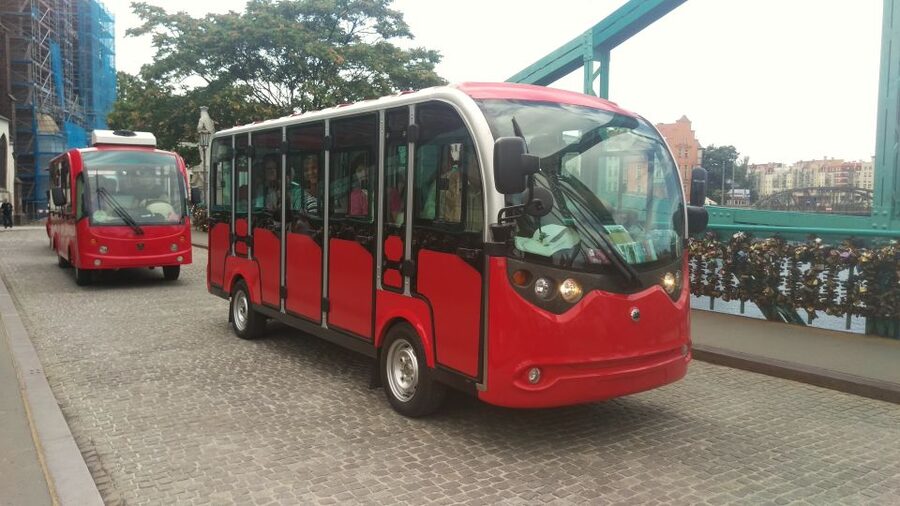
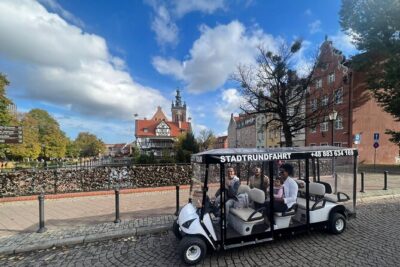
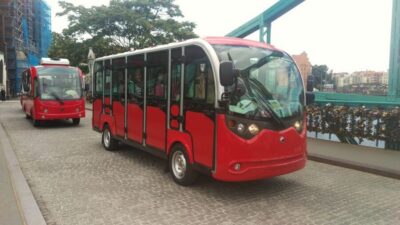
The electric vehicle is not just a green label. It changes the feel of the outing. You avoid the noise and fumes of a traditional sightseeing vehicle, and you can focus more easily on the guide’s commentary. The bus is also enclosed, which protects you from rain, cold, or strong summer heat.
The private arrangement is the bigger benefit. You can ask for clarification, take photographs without negotiating with a large group, and enjoy the ride at a more relaxed pace. Hotel pickup is available on request, which can save time if your accommodation is away from the old town.
There is one limitation. A bus cannot stop at every narrow street or let you linger at every interesting doorway. You will see many places from the vehicle, and some stops last only ten minutes. Think of this as a city introduction with selected pauses, not a replacement for walking tours and museum visits.
Guide commentary or audio recording?
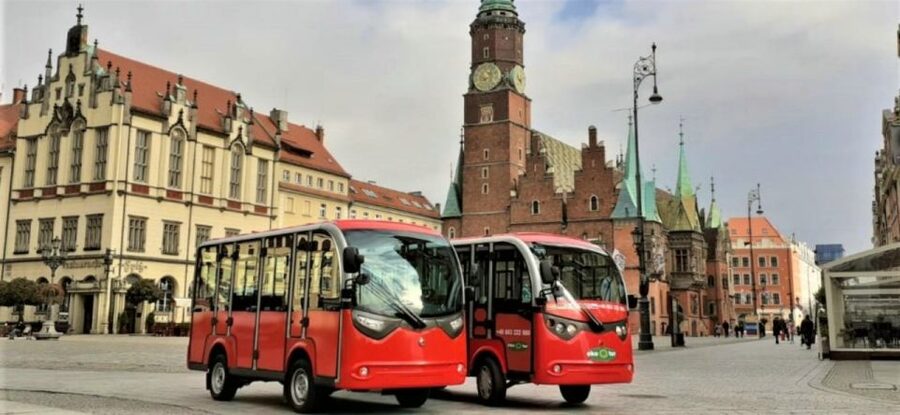
You can choose between live commentary from a driver-guide in English or Polish and an audio guide in Spanish, English, French, German, Italian, Russian, or Polish.
I would choose the live guide if you understand English or Polish and want local suggestions. A guide can respond to questions and adjust the emphasis for your group. One recent outing reportedly lasted three hours instead of two, with plenty of extra advice about Wroclaw. That kind of flexibility is a real benefit when the guide is engaged.
The audio option is more predictable. It lets you hear information in your preferred language and avoids the risk of missing details in a second language. The tradeoff is that a recording cannot answer questions or point out an unexpected detail in the same personal way.
The name of the guide is not fixed in the information provided, so you should not book this expecting a particular person. The English and Polish live options are the important part.
Is $44 per person a fair price?
At $44 per person, this is not the cheapest way to see Wroclaw. Public transport and independent walking cost far less. You are paying for a private vehicle, a driver-guide or audio system, climate control, and a route that connects attractions spread across the city.
The value improves with three or more people. A private bus for a couple is a more expensive choice, but it may still suit you if comfort, hotel pickup, or limited walking matters. For a small family or group of friends, the cost can feel more reasonable because you are not buying several separate tours.
The price also includes warm blankets on cold days and an electric vehicle reserved for your group. Those details matter in poor weather. They matter less on a mild day when you would be happy walking.
Free cancellation up to 24 hours before departure and the reserve-now, pay-later option make the booking easier to fit into a changing schedule. Starting times depend on availability, so check the time before building the rest of your day around it.
Who should choose this two-hour tour?
I would recommend it to you if you want a broad first look at Wroclaw without a long walking route. It suits families, couples, small groups, older visitors, and anyone arriving in the city for a short stay.
It is also a good choice if you want to see both the medieval center and Centennial Hall. Many visitors focus only on the Market Square, while this route takes you out to the river, Cathedral Island, and the fountain district.
You may prefer a different format if you want long interior visits, detailed photography time, or a slow walk through the old town. The schedule moves quickly, and several attractions are viewed from the bus. You should also choose another option if you specifically need guiding in a language not listed here.
Practical tips for getting more from the ride
- Arrive at the wooden Piwnica Swidnicka doorway beneath the Old Town Hall if you are meeting the bus in the center.
- Ask for hotel pickup when booking if you want to avoid finding the meeting point.
- Decide in advance between live English or Polish commentary and the multilingual audio recording.
- Keep your camera ready near the bridges, Water Tower, Cathedral Island, and the Spire.
- Wear comfortable shoes, since several stops include short walks.
- If you want to enter St. Elizabeth’s Church, the university, the synagogue, the cathedral, or the museum, plan a separate visit afterward.
- Bring extra money if you want coffee or beer near Centennial Hall, since those items are not clearly listed among the included services.
- If your schedule is tight, allow some flexibility. The stated duration is two hours, but one outing ran for about three hours.
FAQ
How long is the Wroclaw electric bus tour?
The scheduled duration is two hours. The tour can sometimes run longer, with one reported outing lasting three hours.
Where does the tour begin?
It begins at Piwnica Swidnicka on the Market Square, beneath the Old Town Hall. Look for the large wooden door at Ratusz 1, 50-029 Wroclaw.
Where does the tour finish?
The tour returns to Piwnica Swidnicka, the same place where it starts.
Is the electric bus shared with other groups?
No. The electric bus is reserved for your private group.
Can the bus pick me up at my hotel?
Yes. Hotel pickup is available on request.
Which languages are available?
Live driver-guide commentary is available in English or Polish. The audio guide is offered in Spanish, English, French, German, Italian, Russian, and Polish.
Is the bus comfortable in winter and summer?
Yes. The bus is heated in winter and air-conditioned in summer. Warm blankets are available on cold days.
Does the tour visit Cathedral Island?
Yes. The route includes Ostrów Tumski, also called Cathedral Island, with sightseeing and a photo stop at the Cathedral of St. John.
Is cancellation allowed?
Yes. You can cancel up to 24 hours before the tour for a full refund. You can also reserve now and pay later.
Should you book it?
Book this tour if you value comfort, private transport, and a quick overview of Wroclaw’s main districts. The strongest parts are the private electric bus, the weather protection, and the wide route from Plac Solny to Cathedral Island and Centennial Hall.
Skip it if your main goal is to spend an hour inside each major building or explore every lane on foot. For most first-time visitors with limited time, though, $44 buys a useful introduction and a clear sense of where to return later.
Just added in Wroclaw
- Wroclaw: WW2 Tour to Project Riese & Gross-Rosen Museum★ 4.8 · 26 reviews
- Wrocław: World War II and the non-existent city of Breslau★ 3.6 · 3 reviews
- Wroclaw : Walking Custom Tour with a Local Guide★ 4.8 · 3 reviews
- Wroclaw: University Baroque Tour★ 5.0 · 19 reviews
- Wroclaw: 3-Hour Bike Tour in English or Polish★ 4.8 · 66 reviews
- Wrocław: Tour of the Old Town in an Imperial E-car★ 4.3 · 13 reviews
- Wrocław: Venice of the North! Monuments on the Odra River 2h★ 5.0 · 2 reviews
- Wroclaw to Rock City in Adrspach and Ksiaz Castle day trip★ 4.9 · 16 reviews
2-Hour Experiences, compared.
Private Old Town Guided Walking Tour (2 hours)
Read our review →
2H City Sightseeing Tour LIVE GUIDED by Buggy/Golf cart
Read our review →
2-Hour Tour by Electric Car with a driver-guide
Read our review →
Browse the lists this tour appears in