
REVIEW · AUDIO TOURS
University of Wrocław: Audio Guide & Admission
A university with a royal-sized interior. Wrocław University packs ornate Austrian baroque rooms, academic stories, and a fine old-town view into a brisk 45-minute visit. I like the chance to see Aula Leopoldina and Oratorium Marianum, two interiors that would be easy to miss on a general city walk. I also like the clear structure: 30 minutes in the museum, followed by 15 minutes at the university and Mathematical Tower.
The main tradeoff is time. Forty-five minutes is enough for highlights, not a slow architectural study. Access to some rooms can also change if the university is hosting an event, so you should treat the listed interiors as planned highlights rather than an absolute guarantee.
In This Review
- Key points at a glance
- Why Wrocław University deserves a place on your walk
- Meeting at plac Uniwersytecki
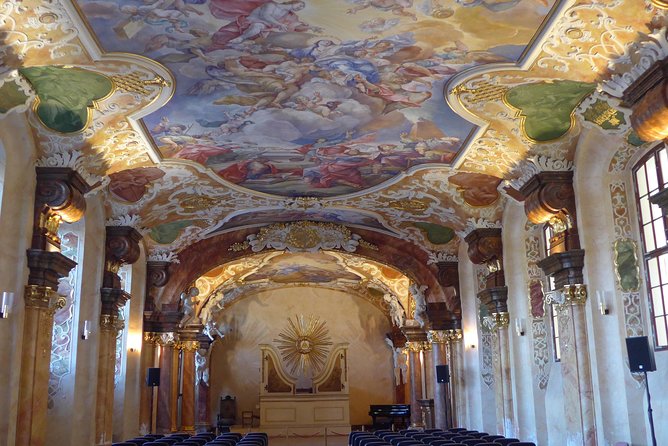
- Aula Leopoldina: the visual centerpiece
- Oratorium Marianum and the Imperial Staircase
- Brahms, the university, and Wrocław’s academic identity
- Ten Nobel Prize connections from Wrocław
- Mathematical Tower views over the old town and Odra River
- How the audio format affects the visit
- Is $17.74 good value?
- Who should book this experience?
- Booking, cancellation, and practical planning
- Should you book Wrocław University: Audio Guide and Admission?
- FAQ
- Where does the experience start?
- Where does the experience end?
- How long does the experience last?
- What language is offered?
- What does the first stop include?
- What can I see at the Mathematical Tower?
- Is admission included?
- How many people can join?
- Can I cancel for a full refund?
Key points at a glance
- Three major baroque interiors: See Aula Leopoldina, Oratorium Marianum, and the Imperial Staircase in one compact visit.
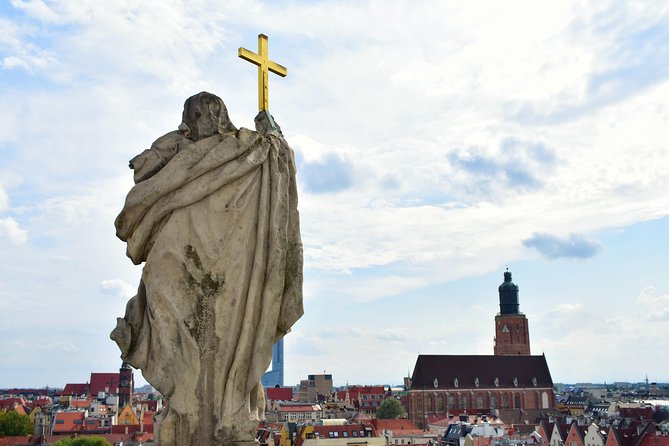
- Mathematical Tower views: Look across Wrocław’s old town and toward the Odra River.
- Academic stories: Learn why Johannes Brahms wrote the Academic Overture for Wrocław’s university.
- Ten Nobel Prize connections: The visit links the university and city to 10 Nobel Prize winners originating from Wrocław.
- English mobile audio guide: The experience is offered in English and uses a mobile ticket.
- Short, central visit: The meeting point is at SzermierzUniwersytet Wroclawski on plac Uniwersytecki, near public transportation.
Why Wrocław University deserves a place on your walk
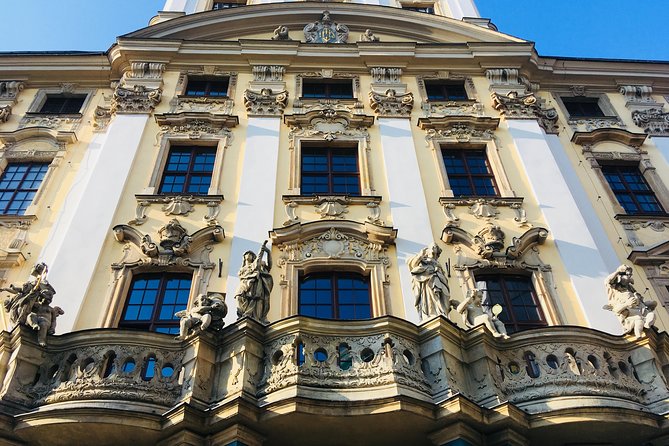
Wrocław’s old town is full of colorful facades, church towers, bridges, and busy squares. The university adds a different layer: this is a working academic institution with ceremonial rooms designed to impress visitors and honor scholarship.
The attraction is especially useful if you want more than street scenery. You get architecture, music, science, and local history in one stop. The visit does not ask you to spend half a day inside a large museum. Instead, it gives you a focused look at a few important spaces.
At $17.74 per person, the price is reasonable if all the main rooms are open and you value a guided interpretation of what you are seeing. You are not paying only for entry into a building. You are paying for access to the university interiors and an organized explanation of their cultural importance.
Still, the value depends on your interests. If you prefer long museum visits or want to explore at your own pace, 45 minutes may feel short. If you have a busy Wrocław schedule, the compact format is a real advantage.
A few more in Wroclaw
- Wroclaw: E-Car Tour and Audio Guide
★ 4.6 · 1,738 reviews - Wroclaw: 2-Hour Private Guided Tour by Electric Car
★ 4.8 · 805 reviews - Wrocław: Old Town and Ostrów Tumski Walking Tour in English
★ 4.8 · 311 reviews
Meeting at plac Uniwersytecki
The experience begins at SzermierzUniwersytet Wroclawski, on plac Uniwersytecki, 50-137 Wrocław. It ends back at the same meeting point, which makes planning easy if you are fitting the visit between other stops in the center.
The meeting point is near public transportation. That matters in Wrocław, where the central area is easy to reach but can involve several different tram and bus routes depending on where you are staying. Your confirmation arrives at booking, so keep the meeting details available on your phone.
Because the ticket is mobile, you do not need to arrange a printed voucher. I would still arrive with your phone charged and the confirmation easy to find. A short experience leaves little room for confusion at the start.
The group may include up to 40 people. That is not a tiny private visit, and the atmosphere can feel more like a formal attraction than a quiet private tour. On the other hand, a group of this size is manageable for a 45-minute indoor visit.
Aula Leopoldina: the visual centerpiece

The first stop is the Wrocław University Museum, where about 30 minutes are devoted to the university’s key ceremonial rooms. Aula Leopoldina is the main reason many people will choose this experience.
The hall is presented as a superb example of Austrian baroque. Expect an interior designed to make academic life look grand and important. Ornamental decoration, formal composition, and theatrical detail are the point here. Even if you are not an architecture specialist, the room gives you an immediate sense of how universities once presented learning as a serious public institution.
I like this stop because the room works on two levels. You can appreciate the decoration simply as a beautiful interior, then use the audio commentary to understand why the room matters. The explanation helps turn painted surfaces and elaborate details into part of a larger story about education, status, and the city.
Take your time with the ceiling and walls if the group allows it. In a room this ornate, the first impression can be overwhelming. A second look often reveals details that disappear when you are only taking photographs.
The 30-minute museum portion includes more than Aula Leopoldina, so you should not expect an extended visit devoted to this one hall. The audio format can help you stay oriented, but it also means you need to listen while looking. If you want every design detail explained, you may wish the visit were longer.
Oratorium Marianum and the Imperial Staircase
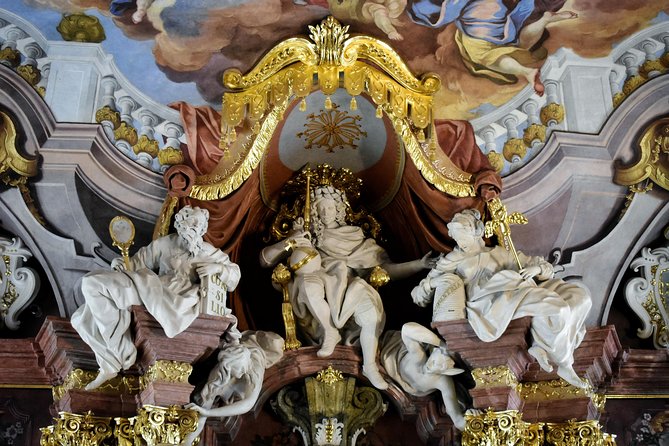
Oratorium Marianum adds another important interior to the museum visit. Along with Aula Leopoldina and the Imperial Staircase, it shows the university’s Austrian baroque character from different angles.
The value of seeing these spaces together is comparison. You are not looking at one isolated grand room. You are moving through a collection of connected interiors that served different ceremonial and institutional purposes. The changing scale and decoration help you understand how the university created a formal setting for academic life.
The Imperial Staircase is particularly easy to appreciate as part of the route. Staircases are often treated as simple passageways, but in grand historic buildings they can be designed as public statements. Here, the staircase forms part of the architectural experience rather than merely connecting one floor to another.
You should also keep your expectations practical. University buildings are not always open like ordinary museums. Events may limit access to one or more rooms on the day of your visit. If that happens, the operator says you will be contacted with an alternative time or date. If rescheduling is not possible, you may not see every room described.
That policy is worth considering before booking. The central attraction is the set of interiors, so a partial visit would change the value of the ticket. The possibility is clearly disclosed, but you should avoid scheduling this as your only major indoor activity if seeing every room is essential to you.
Something quite different:
- Wroclaw: Private Old Town Guided Walking Tour (2 hours)
★ 4.8 · 275 reviews - Old Town Wrocław Walking Tour
★ 5.0 · 249 reviews - Wroclaw: City Tour Sightseeing By Golf Cart Shared Or Privat
★ 4.8 · 189 reviews - Auschwitz-Birkenau Tour from Wrocław
★ 5.0 · 129 reviews
Brahms, the university, and Wrocław’s academic identity
The second stop shifts from decoration to ideas. At Wrocław University, you learn why Johannes Brahms composed the Academic Overture for Wrocław’s Alma Mater.
That detail gives the building a wider cultural reach. The university is not only a local landmark with pretty rooms. Its academic reputation and ceremonial life connected it to major figures in European music and education.
The Brahms story is useful because it gives you a memorable thread to carry through the visit. Architectural facts can blur together, especially during a short tour. A composer writing a work for the university provides a more human connection between the institution and the wider European culture of the period.
The explanation also helps you read the university as part of Wrocław rather than as a separate attraction. The building reflects the city’s changing political and cultural identity, even though the supplied tour details keep the focus on the university itself.
The mobile audio guide is offered in English. That makes the experience a practical choice for English-speaking visitors who want context without arranging a longer private tour. You can listen while moving through the spaces, though you should pay attention to the pace and any instructions about where to stand.
Ten Nobel Prize connections from Wrocław
Another highlight is the story of 10 Nobel Prize winners originating from Wrocław. This point broadens the visit beyond the university’s baroque decoration and connects the city to major achievements in scholarship and public life.
You will not simply be looking backward at an old building. The Nobel Prize material reminds you that Wrocław has also produced or been linked with people whose work reached far beyond the city.
This section should appeal to visitors who enjoy science, literature, politics, or academic history. It also helps families and students find a clear reason to pay attention. Children may not remember every architectural term, but a discussion about Nobel Prize winners can make the institution feel more relevant.
The experience does not specify which fields or individuals are covered in the audio guide. You should therefore think of this as a thematic introduction rather than a full Nobel history lesson. If you have a particular winner in mind, the short visit may not provide every detail you want.
Mathematical Tower views over the old town and Odra River
The final highlight is the Mathematical Tower, where you can admire views of Wrocław’s historic old town and the Odra River. This outdoor or elevated viewpoint provides a welcome change after the decorated interior rooms.
The view gives you a chance to connect the university with the city around it. From above, Wrocław’s layout becomes easier to read. You can look back at the old town and see the river as part of the city’s structure, not just as a name on a map.
I value this kind of ending because it leaves you with a physical sense of place. The baroque rooms explain the university’s importance from inside. The tower shows where the university sits in relation to Wrocław.
The tower portion lasts about 15 minutes, so do not expect a long observation session. Your time may be divided between the view and the explanation. Weather and access conditions are not described, so you should regard the tower as an important planned stop, not a promise of unlimited viewing time.
If you enjoy taking photographs, have your camera ready before reaching the viewpoint. The short schedule may not allow you to linger while searching through your bag or phone.
How the audio format affects the visit
The ticket is mobile and the experience is offered in English. The supplied information calls it an audio guide and admission experience, so you should expect the commentary to support your visit rather than a fully customized private conversation.
That format has clear benefits. You can follow a set route, hear the essential background, and keep the visit moving. You also avoid the uncertainty of trying to understand a building without knowing which rooms matter.
The limitation is interaction. An audio guide cannot adjust its explanation to your questions or change pace for your interests. If you want to ask about a painting, a staircase detail, or a particular historical figure, you may need to do extra reading later.
The strongest praise connected with the experience focuses on the quality of the explanations and the amount of historical detail. One named guide, Matías, received special praise for linking Wrocław’s past with Berlin, where one visitor currently lives. That comparison suggests a useful strength: the best interpretation does not treat the university as an isolated monument. It relates the building to the wider Central European story.
Because the published format is a mobile audio guide, confirm the exact arrangement at booking if having Matías or another live guide matters to you. The available details guarantee English presentation, not a particular guide.
Is $17.74 good value?
At $17.74, this is a mid-priced short attraction rather than a full-day tour. The cost makes the most sense if you want access to the university interiors and prefer having the building explained as you walk through it.
The price includes admission to the stated stops. It also buys a carefully limited route that fits into 45 minutes. For a first visit to Wrocław, that can be good value because you can see a major interior without giving up an entire afternoon.
The value drops if rooms are closed and no alternative date works for you. It also drops if you are happy to enter historic buildings without commentary and would rather spend your money on a longer museum or city tour.
I would compare the price with your schedule, not only with the length. A short visit is not automatically poor value. If you have one free hour near plac Uniwersytecki, this experience gives that hour a clear purpose.
Who should book this experience?
I would recommend it to you if:
- You enjoy ornate architecture but want historical explanation with it.
- You have about 45 minutes available in central Wrocław.
- You want an English-language experience.
- You like academic, musical, and city history.
- You want a view of the old town and Odra River from the Mathematical Tower.
- You prefer a structured visit over wandering through a building without context.
You may want to skip it if you need guaranteed access to every room, dislike audio-guided visits, or prefer long, unhurried museum stops. The group size can reach 40, so this is not the right choice if you are searching for a quiet private experience.
The tour should also suit a first-time visitor who wants a compact introduction to an important Wrocław institution. It is less useful for someone already familiar with the university and looking for specialist architectural research.
Booking, cancellation, and practical planning
Confirmation is provided at the time of booking. The activity is near public transportation, and most people can participate.
Free cancellation is available when you cancel at least 24 hours before the local start time. Cancellations made less than 24 hours ahead are not refunded, and changes within that period are not accepted. The experience also requires a minimum number of participants. If that minimum is not reached and the activity is canceled, you will be offered another date or experience, or a full refund.
Room access is the most important practical uncertainty. University events can close some spaces. If the operator contacts you about a change, decide based on how important the full interior route is to your plans.
Should you book Wrocław University: Audio Guide and Admission?
Book it if you want a short, focused visit with three impressive baroque interiors, an English audio guide, an academic connection to Brahms, Nobel Prize stories, and a city view from the Mathematical Tower.
The experience earns its price through concentration rather than length. It does not try to cover all of Wrocław. Instead, it gives you a useful look at one important institution and sends you back into the old town after 45 minutes.
My main advice is to book with flexible expectations about room access. If the interiors are open, this is a strong choice for architecture and culture. If a university event closes key spaces, consider rescheduling, especially if Aula Leopoldina is the main reason you are going.
FAQ
Where does the experience start?
It starts at SzermierzUniwersytet Wroclawski, plac Uniwersytecki, 50-137 Wrocław, Poland.
Where does the experience end?
The activity ends back at the meeting point.
How long does the experience last?
The experience lasts approximately 45 minutes.
What language is offered?
The experience is offered in English.
What does the first stop include?
The first stop is the Wrocław University Museum. It includes Aula Leopoldina, Oratorium Marianum, and the Imperial Staircase, with about 30 minutes allocated to this part.
What can I see at the Mathematical Tower?
You can admire views of Wrocław’s historic old town and the Odra River.
Is admission included?
Yes. Admission tickets are included for the listed stops.
How many people can join?
The activity has a maximum of 40 participants.
Can I cancel for a full refund?
Yes, if you cancel at least 24 hours before the experience start time. Cancellations made less than 24 hours before the start are not refunded.
Just added in Wroclaw
- Wroclaw: WW2 Tour to Project Riese & Gross-Rosen Museum★ 4.8 · 26 reviews
- Wrocław: World War II and the non-existent city of Breslau★ 3.6 · 3 reviews
- Wroclaw : Walking Custom Tour with a Local Guide★ 4.8 · 3 reviews
- Wroclaw: University Baroque Tour★ 5.0 · 19 reviews
- Wrocław: Tour of the Old Town in an Imperial E-car★ 4.3 · 13 reviews
- Wrocław: Venice of the North! Monuments on the Odra River 2h★ 5.0 · 2 reviews
- Wroclaw: 3-Hour Bike Tour in English or Polish★ 4.8 · 66 reviews
- Wroclaw to Rock City in Adrspach and Ksiaz Castle day trip★ 4.9 · 16 reviews
Audio Tours, compared.
Vistula River Sightseeing Cruise with Audio Guide
Read our review →
Sightseeing Cruise on Vistula River with Audio Guide
Read our review →Vistula River Sightseeing Cruise with Audio Guide
Read our review →
Vistula Night Cruise by Gondola w/ Audio Commentary
Read our review →
The Birthplace of Poland: A Self-Guided Audio Tour of Poznań
Read our review →Browse the lists this tour appears in