
REVIEW · JEWISH QUARTER TOURS
The Jewish Quarter – Walking Tour
Krakow’s past is more layered than it first appears. This two-hour walk through Kazimierz connects Jewish and Christian life, World War II, and several Schindler’s List filming locations in a way that gives the district real meaning. I like the clear focus on Jewish history in Poland, and I like that the tour does not treat Kazimierz as a Jewish-only story. The main drawback is that admission tickets are not included, so you may need to budget extra if you want to enter the synagogues.
The tour costs $33 per person and is led in English by a licensed guide from ZeeTour. Guide Zee, also referred to as Z, receives especially warm praise for his teaching and for adapting the walk to what guests wanted to see. At two hours, it is long enough to give you a useful framework without taking over your whole day.
In This Review
- Key Details Before You Book
- Why Kazimierz Matters to Krakow
- Starting at the Main Square of Kazimierz
- Miodowa Street and the Old City Walls
- The Synagogues of Tempel, Kupa, and Izaak
- A 15th-Century Building and a 16th-Century Mikveh
- Szeroka Street and Helena Rubinstein’s Birthplace
- The Nissenbaum Monument and a Moral Choice During the Holocaust
- Remuh Synagogue and the Jewish Cemetery
- Popper’s Synagogue, the Old Synagogue, and Film Locations
- What the $33 Price Really Buys You
- The Guide Makes the Difference
- Who Should Book This Walk?
- My Verdict on the Jewish Quarter Walking Tour
- FAQ
- How long is The Jewish Quarter Walking Tour?
- How much does the tour cost?
- What language is the tour conducted in?
- Are admission tickets included?
- Is public transportation included?
- Where is the meeting point?
- Can I cancel the booking for a full refund?
Key Details Before You Book
- Poland’s place in Jewish history: Learn why Poland became a major home for Jewish communities, including the striking fact that around 75 percent of the world’s Jewish population lived in Poland in the 16th century.
- Kazimierz beyond one label: See how Jewish and Christian communities lived alongside one another in the former city of Kazimierz.
- Important wartime sites: Connect streets, monuments, cemeteries, and filming locations with the events of World War II.
- A guide-led history walk: The experience includes a licensed English-speaking guide, giving you context that a self-guided stroll would likely miss.
- Synagogues and old streets: Pass the Tempel, Kupa, Izaak, Remuh, Popper’s, and Old Synagogues, along with Szeroka Street and Miodowa Street.
- Simple two-hour format: The short walking time works well at the start of a Krakow visit, especially if you want historical bearings before exploring on your own.
Why Kazimierz Matters to Krakow
Kazimierz is often called Krakow’s Jewish District, but that label can flatten the story. For centuries, Jewish and Christian communities lived in the same area, shaped the same city, and left different layers of buildings, institutions, rituals, and memories behind.
I value this approach because it avoids presenting Jewish life as something separate from Krakow. The tour begins with the idea that Jewish and Christian history in the city cannot be pulled apart neatly. That is important here. The streets tell a shared story, even when the communities had different faiths, customs, and places of worship.
The story reaches back to the 11th century and then moves through the reasons Jewish people chose Poland for settlement. The fact that Poland was home to such a large share of the world’s Jewish population in the 16th century gives you a very different picture of the country’s past. Modern Poland may not seem as multicultural as it once was, and this walk helps explain how that changed.
I would take this tour early in a Krakow stay. Once you understand what Kazimierz was, later visits to its synagogues, streets, restaurants, and memorials carry more weight.
More Walking Tours in Kraków
- Old Town Krakow & Wawel Castle Walking Tour
★ 5.0 · 1,508 reviews - Creepy Krakow: 2-Hour City Walking Tour
★ 4.7 · 1,131 reviews - Krakow: The Old Town Walking Tour
★ 4.8 · 794 reviews
Starting at the Main Square of Kazimierz
The walk includes Kazimierz’s Main Square, a natural place to begin because it helps you see the district as a historic town rather than just a collection of attractions. From here, the guide can place the surrounding streets within the old city of Kazimierz and explain how Jewish and Christian life developed side by side.
You should expect the guide to do much of the storytelling while you move through the area. This is not a museum visit with long pauses in front of labeled objects. It is a street-level history lesson, which makes the changing character of the district easier to follow.
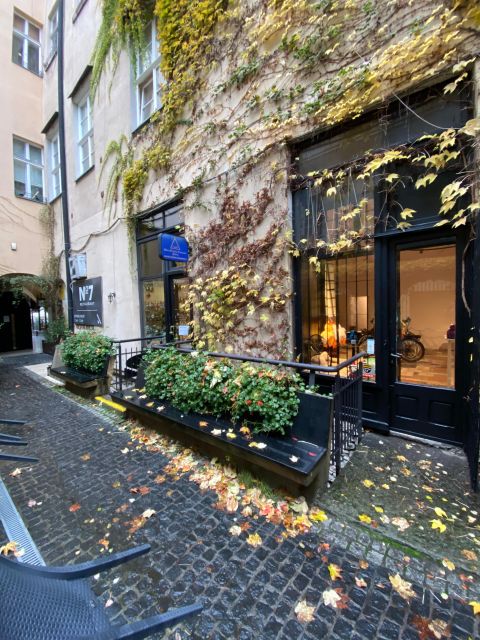
The meeting point is at Restaurant No7. Enter the building and look for the ZeeTour office in the courtyard. It is the second shop on the left. That detail matters because the meeting place is not simply a prominent outdoor landmark. Give yourself a little time to find the courtyard before the start.
Miodowa Street and the Old City Walls
Miodowa Street marks the former city walls of Kazimierz. A stop here helps explain the district’s old boundaries and its place within Krakow’s wider urban story.
I like stops such as this because they make history physical. You are not only hearing that Kazimierz was once a separate city area. You are standing along a line that helps show how the town was organized.
The tour is only two hours, so the guide cannot spend a long time at every location. That is both a strength and a limit. You get a broad, connected account, but if one period or building catches your attention, you may want to return later for a slower look.
The Synagogues of Tempel, Kupa, and Izaak
The Tempel Synagogue, Kupa Synagogue, and Izaak’s Synagogue are central stops on the walk. Together, they show that Jewish life in Kazimierz was not represented by one building or one style of worship.
The names alone can blur together if you explore without context. A licensed guide helps separate the places and explain why each one matters within the district. You should pay attention to how the synagogues fit into the streets around them, not only to their façades.
Admission tickets are not included in the tour price. The supplied details do not specify which buildings you will enter during the walk, so you should confirm the day’s access arrangements if seeing interiors is important to you. The tour remains useful even if some stops are viewed from outside, since the guide’s historical explanation is a central part of the experience.
For visitors who want a full synagogue visit, this may feel like an introduction rather than a complete study. For most people, that is a sensible tradeoff in a two-hour format.
More Jewish heritage tours in Krakow:
- Krakow: Schindler’s Factory & Ghetto Guided Tour
★ 4.7 · 1,694 reviews - Krakow: Jewish Quarter and Former Ghetto Tour
★ 4.9 · 1,441 reviews - Krakow: Bike Tour of Old Town, Jewish Quarter and the Ghetto
★ 4.9 · 1,155 reviews - Krakow: Kazimierz Jewish Quarter Walking Tour
★ 4.8 · 571 reviews
A 15th-Century Building and a 16th-Century Mikveh
The route includes the oldest building inside the Jewish Quarter, dating from the 1400s, along with a mikveh, a ritual cleansing bath house for females from the 16th century.
These are the kinds of details that give the walk its human scale. A synagogue tells you about communal worship. A mikveh points to private religious practice and the role of ritual in daily life. The old building adds another layer, showing how much of the district’s story is tied to ordinary structures rather than only famous landmarks.
The mikveh is especially useful for understanding that Jewish history is not just a sequence of major political events. It also concerns family life, religious observance, and the way communities arranged their spaces.
Because the tour covers several sites, you should not expect a long architectural examination of each building. Instead, the guide uses the places as points in a larger story. I see that as a good fit if you want meaning and connection more than a specialist architectural tour.
Szeroka Street and Helena Rubinstein’s Birthplace
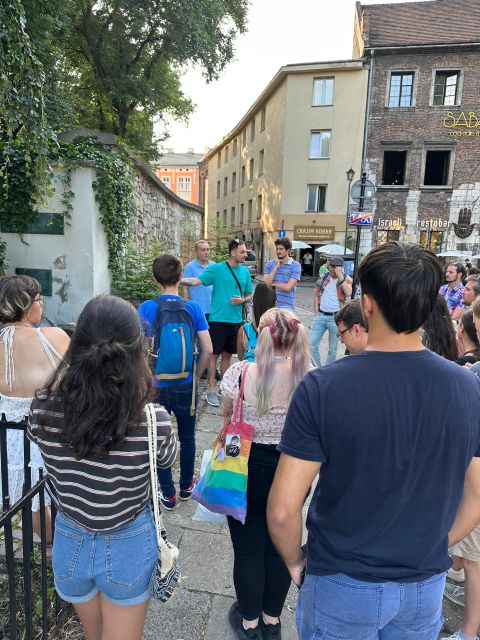
Szeroka Street is one of the key places on the route. It links the religious and social life of Kazimierz with the people who lived and worked there.
The itinerary also includes the birthplace of Helena Rubinstein. This is a memorable human detail in a tour that otherwise deals with large historical forces. It reminds you that Kazimierz produced individuals whose lives later reached far beyond Krakow.
I appreciate the inclusion because it broadens the experience. You are not only studying institutions and tragedy. You are also encountering a person whose origins are tied to this district. If you know little about Rubinstein beforehand, the stop may prompt you to learn more after the walk.
The Nissenbaum Monument and a Moral Choice During the Holocaust
The Nissenbaum Family Foundation monument is another important stop. The route also includes a statue honoring a man who tried to stop the Holocaust.
These memorials give the walk a direct moral focus. World War II history can become too abstract when reduced to dates and military movements. A family monument and a memorial to individual courage bring the subject back to people and choices.
The tour’s treatment of the Holocaust is one of its strongest reasons to book it, but you should also be ready for a serious tone. This is not a light sightseeing stroll, even though it takes place in an area with cafés and modern city life. The history deserves attention, and the guide’s role is to connect the present-day streets with what happened to the people who lived there.
The provided details do not identify the man represented by the statue, so ask the guide for the full story if this stop interests you. A live guide gives you the chance to ask questions instead of walking away with only a name on a plaque.
Remuh Synagogue and the Jewish Cemetery
The Remuh Synagogue and Jewish Cemetery are among the most significant stops on the route. They bring together worship, burial, memory, and the survival of Jewish identity in Kazimierz.
A cemetery can be difficult to understand without guidance. The guide can help you read the space as part of the district’s story rather than treating it as a quick photo stop. The synagogue adds another point of reference, showing how religious life and remembrance exist close together.
Again, admission is not included, so check whether entry is part of your planned visit or requires a separate ticket. The tour description confirms the locations on the route, but not the exact amount of time spent inside each one.
I would treat this section as a reason to slow down mentally, even if the schedule keeps moving. You are seeing places tied to generations of Jewish life in Krakow, followed by the destruction and disruption of World War II.
Popper’s Synagogue, the Old Synagogue, and Film Locations
Popper’s Synagogue and the Old Synagogue add further depth to the route. Seeing several synagogues in one walk helps you understand that Kazimierz was a large, active community with more than one center.
The tour also points out numerous filming locations used in Schindler’s List. This is a practical hook for anyone who knows the film, but the history should come first. Film locations can make a place familiar, yet they can also encourage you to see the district only through a movie’s lens.
Here, the film connection works best as an extra layer. You can recognize locations from the screen while also learning about the real communities and wartime events behind them. If you have seen the film, you will probably notice the locations more quickly. If you have not, the tour still has plenty of historical purpose.
I would not book this solely as a movie-location walk. The Jewish history of Poland, the coexistence of communities, and the World War II material are the main reasons to go.
What the $33 Price Really Buys You
At $33 per person, the tour is priced as a focused guided experience rather than a basic orientation walk. You are paying for two hours with a licensed English-speaking guide, plus a route that links many sites that would be easy to view without understanding.
The value is strongest if this is your first serious introduction to Kazimierz. A self-guided walk can show you the streets and buildings, but it may not explain why Poland mattered so much in Jewish history or how Jewish and Christian life developed together in Kazimierz.
The price is less attractive if you want long interior visits or a slow architectural study. Admission tickets are separate, and the tour must cover many stops within two hours. You may still want to return to the district afterward, buy entry tickets, and explore at your own pace.
The format also has a useful financial advantage: you can reserve now and pay later, and cancellation is free up to 24 hours before the start. Those terms make it easier to place the walk early in your schedule without locking yourself into a plan too far ahead.
The Guide Makes the Difference
The strongest praise centers on the guide, Zee, also identified as Z. Emma described the experience as a good starting point for understanding Jewish history in Poland and the events of World War II. Sinni called it the best tour they had taken in Krakow so far, with Zee explaining the subject clearly and teaching a great deal.
Lori also noted that Z went beyond the expected route to show the couple what they wanted to see and more. That suggests you should speak up if a particular building, period, or film connection matters to you. The tour allows room for interest-led questions, even though the listed route provides the main structure.
A licensed guide matters on a subject like this. Names, dates, religious terms, and wartime events can quickly become confusing. A good guide keeps the story connected and helps you understand why a modest street or building deserves attention.
Who Should Book This Walk?
I would recommend it to you if you:
- Want a clear introduction to Jewish life in Krakow and Poland
- Are interested in World War II history
- Have seen Schindler’s List and want to recognize its Krakow locations
- Prefer a live guide to reading signs on your own
- Have only a short amount of time for Kazimierz
- Want to understand the shared Jewish and Christian history of the district
It may be less suitable if you want a purely casual neighborhood walk, a food tour, or extended time inside every synagogue. The subject is serious, and the pace is designed to connect many locations rather than linger at one.
The tour is wheelchair accessible, but the supplied details do not explain the exact street or building conditions at each stop. If you need specific access information, ask ZeeTour before booking.
My Verdict on the Jewish Quarter Walking Tour
I would book this tour near the beginning of a Krakow visit. It gives you a strong base for exploring Kazimierz later, and it explains why the district means far more than its cafés, restored buildings, or film connections.
The best reason to go is the way the walk links everyday streets with Jewish religious life, Polish history, World War II, and the changes that reshaped the country. The main caution is simple: $33 does not include admission tickets, and two hours cannot provide a detailed interior visit at every stop.
If you want a serious, well-guided introduction led by Zee or another licensed English-speaking guide, this is a good use of two hours. If you want only movie locations or a relaxed stroll, choose something lighter. For most first-time visitors to Krakow who want context before sightseeing, I would make the booking.
FAQ
How long is The Jewish Quarter Walking Tour?
The tour lasts two hours.
How much does the tour cost?
The price is $33 per person.
What language is the tour conducted in?
The tour is conducted in English.
Are admission tickets included?
No. Admission tickets are not included in the tour price.
Is public transportation included?
No. Public transportation is not included.
Where is the meeting point?
Meet at Restaurant No7. Enter the building and find the ZeeTour office in the courtyard. It is the second shop on the left.
Can I cancel the booking for a full refund?
Yes. You can cancel up to 24 hours in advance for a full refund.
Just added in Krakow
- Auschwitz-Birkenau – Skip the Line Tickets★ 3.5 · 29 reviews
- Auschwitz-Birkenau: Fast-Track Ticket & Guided Tour No Transfers★ 3.5 · 17 reviews
- Zakopane & Sleigh Ride with Bonfire – Group Tour from Kraków★ 5.0 · 2 reviews
- Sleigh Ride & Bonfire in Zakopane with Funicular – Private Trip★ 5.0 · 48 reviews
- Thermal Baths & Zakopane – Private Trip from Krakow★ 5.0 · 1 review
- Zakopane & Gubalowka Funicular – Private Winter Tour from Krakow★ 5.0 · 10 reviews
- stag dog chase Krakow prank★ 5.0 · 4 reviews
- Divine Mercy Sanctuary – Private Tour from Krakow★ 5.0 · 4 reviews