
REVIEW · SEGWAY TOURS
Segway Tour Warsaw: Full Tour – 3-Hours of Magic!
See Warsaw before your feet give out. This three-hour ride covers an impressive spread of the city, from New Town and the Royal Castle to the Warsaw Ghetto and Palace of Culture and Science. I like the small-group format and the way guides such as Nikita, Renata, Paul, Francisco, and Przemek mix history with humor. The main consideration is pace: most stops last only five minutes, so this is an overview rather than a slow, detailed visit.
I also like that Segway training happens before the tour clock starts, and that beginners usually find the machines easier to handle than expected. You can cover far more ground than on foot, but the long route may feel tiring or chilly, especially later in the day. Bring gloves in cool weather, and do not expect admission inside every museum or monument.
In This Review
- Key points to know before you book
- Why a Segway makes sense in spread-out Warsaw
- Starting at Chmielna 2
- New Town, the Old Town, and Castle Square
- The Royal Route, Saxon Gardens, and presidential Warsaw
- Warsaw’s Ghetto memorial sites
- The Warsaw Uprising and Krasiński Square
- Maria Skłodowska-Curie and central Warsaw
- What the three-hour pace feels like
- Is $115.62 a fair price?
- Weather, group size, and practical limits
- Who should book the Warsaw Segway tour?
- FAQ
- How long does the Segway tour last?
- Where does the tour begin?
- Where does the tour end?
- Is the tour offered in English?
- Do I need previous Segway experience?
- Is a helmet included?
- Are raincoats provided?
- What is the maximum group size?
- Is there a weight limit?
- Can I cancel for a full refund?
Key points to know before you book
- Twenty-two stops in about three hours: You see a wide slice of Warsaw, but the stop-by-stop explanations are brief.
- Training is provided before the tour begins: No previous Segway experience is required, and several families found the machines easy to learn.
- A strong city orientation: The route links the Old Town, Royal Route area, former Jewish Ghetto, central Warsaw, and the Palace of Culture and Science.
- Guides make the difference: Nikita is often praised for his humor and grasp of past and present Warsaw, while Renata, Paul, Francisco, and Przemek also receive warm praise.
- A maximum of 20 people: The group may be larger than a private tour, though smaller groups can receive more personal attention.
- Price and weather matter: At $115.62 per person, the tour offers broad coverage, but its value depends on how much you want to see in a short time.
Why a Segway makes sense in spread-out Warsaw
Warsaw is not a one-neighborhood city. Its reconstructed Old Town, historic government district, former Ghetto sites, central squares, and socialist-era landmarks are separated by enough distance to make a walking tour feel selective.
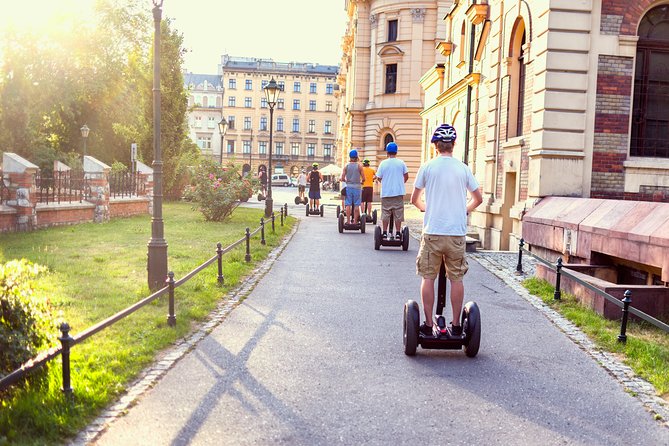
That is the main reason I find this ride appealing. You can move between major areas without spending much of your limited sightseeing time on ordinary streets. The Segway also gives you a different view of the city than a coach or tram. You are outside, close to the pavement, and able to pause at monuments and squares.
The tradeoff is depth. Five minutes at each listed stop is enough for a short explanation, a photograph, and perhaps a quick question. It is not enough to visit the Royal Castle Museum, POLIN Museum, or Maria Skłodowska-Curie Museum properly. Think of the tour as a moving introduction. You can return later to the places that catch your attention.
More Segway Tours in Warsaw
- Warsaw Old Town 1.5-Hour or Full 3-Hour Segway Tour
★ 4.9 · 209 reviews - Segway Tour Warsaw: Old Town Tour – 1,5-Hour of Magic!
★ 5.0 · 112 reviews - Warsaw: 3-Hour Guided City Highlights Tour by Segway
★ 4.9 · 102 reviews
Starting at Chmielna 2
The meeting point is at Chmielna 2, 00-020 Warszawa, near public transportation. Training takes place before the formal tour time, and that detail is worth noting. The three-hour sightseeing period does not include the instruction session.
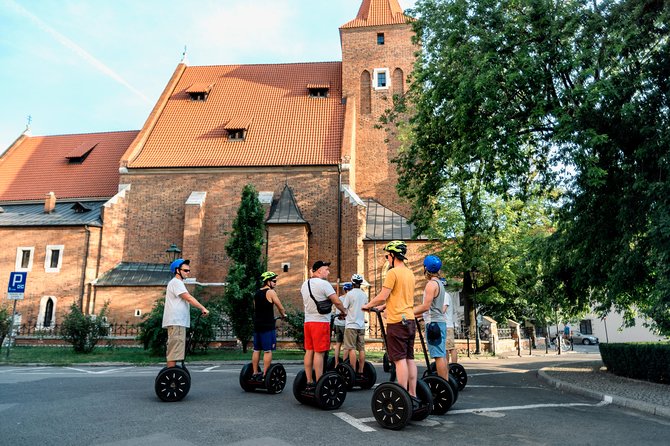
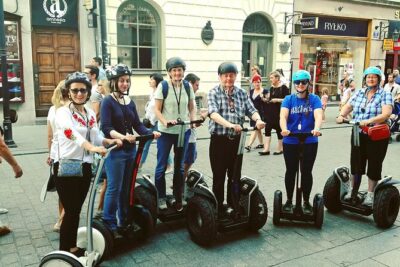
You receive a helmet and an original Segway. The guide teaches you how to start, stop, steer, and balance before setting off. First-time riders have found the learning curve mild, and one family with children aged 10, 12, and 13 said the children quickly got comfortable.
That said, you should be ready to listen carefully. A Segway is simple to operate once you understand it, but you still share public streets and pedestrian areas. Comfortable clothes and shoes make sense. In cool weather, bring gloves. One rider specifically found that hands became cold after sunset.
The tour is offered in English. It can include up to 20 people, although some departures have been private simply because only one person booked. That can give you more time for questions and a calmer introduction to the machine, but you should not book expecting a private ride unless it is confirmed.
New Town, the Old Town, and Castle Square
The first section takes you through New Town Square, then toward the Old Town and the Royal Castle. These areas give you Warsaw’s most recognizable visual introduction.
New Town Square is a useful opening stop because it shows that Warsaw’s historic center is larger than the postcard core around Castle Square. From there, the route reaches the Royal Castle, once the residence and political center of Poland’s rulers. The listed five-minute stop is for viewing and explanation, not an interior museum visit.
Old Town and Castle Square are the places where Warsaw’s reconstruction becomes most apparent. Much of the historic center was destroyed during the Second World War and later rebuilt. The colorful façades, narrow streets, and grand square look old, but the story behind them is about destruction, planning, and national recovery.
At Castle Square, you see King Sigismund’s Column, one of the city’s best-known landmarks. The column honors Sigismund III Vasa, who moved Poland’s capital from Kraków to Warsaw in the late sixteenth century. The stop also places you near the Royal Castle and the route toward the Old Town.
The Warsaw Mermaid is another quick stop. She is a symbol of the city, and the tour gives you a chance to see her without spending time hunting for the statue on your own. The Barbican follows, adding a medieval-looking defensive feature to the route.
These stops are excellent for orientation and photographs. They are less useful if you want a full explanation of architecture or time inside the castle. I would mark the Royal Castle and Old Town for a later walking visit if you have more than one day in Warsaw.
The Royal Route, Saxon Gardens, and presidential Warsaw
The itinerary also includes the Presidential Palace, Saxon Gardens, the Tomb of the Unknown Soldier, and a second pass near the Presidential Palace. These stops shift the focus from medieval streets to Poland’s political and ceremonial center.
The Presidential Palace is one of Warsaw’s major government buildings. The short stop lets you connect the city’s historic center with its modern public life. You may find the location especially helpful if you want to explore the Royal Route afterward at a slower pace.
Saxon Gardens offer a change from stone squares and monuments. The garden is linked to the former Saxon Palace, much of which was destroyed in the war. The Tomb of the Unknown Soldier occupies the surviving fragment of the palace colonnade and honors unidentified Polish soldiers.
The route includes Saxon Gardens twice in the supplied sequence, along with the Presidential Palace twice. That may reflect the practical shape of the ride rather than two separate attractions. Do not count on 22 entirely different places. Several stops are revisits or closely connected points.
Something quite different:
- Warsaw: Chopin Concert in the Old Town
★ 4.8 · 2,287 reviews - Warsaw: Traditional Galar Cruise on The Vistula River
★ 4.6 · 1,640 reviews - Warsaw: Old Town Highlights Walking Tour in English
★ 4.7 · 1,516 reviews - Warsaw Concert: Chopin – Painted by Candlelights with Wine
★ 4.8 · 1,442 reviews
Warsaw’s Ghetto memorial sites
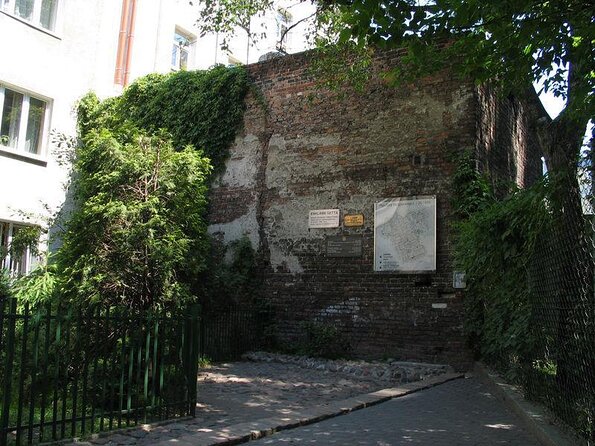
The most serious portion of the tour visits the former Warsaw Ghetto area. You pass the Warsaw Ghetto, the Ghetto Heroes Monument, POLIN Museum, and Umschlagplatz.
The Ghetto Heroes Monument commemorates the Jewish resistance during the 1943 Warsaw Ghetto Uprising. Nearby POLIN Museum of the History of Polish Jews explores the long history of Jewish life in Poland, though the museum itself is not included as an interior visit.
Umschlagplatz is one of the most painful sites on the route. From here, Jews from the Ghetto were deported to Nazi German death camps during the Second World War. A five-minute stop cannot explain this subject fully, but it can point you toward the places that deserve a longer, quieter visit.
You should expect a change in tone here. The Segway ride remains active, but the subject is not light sightseeing. A good guide matters. Nikita is praised for explaining both past and present Warsaw in an approachable way, and Przemek is noted for answering questions patiently. Those qualities are especially valuable in the Ghetto district, where facts need care and context.
If this part of Warsaw is a main reason for your visit, I would use the Segway tour as an introduction and return to POLIN Museum and the memorial sites afterward. The tour helps you understand their position in the city, but it cannot replace the museum’s exhibits or a dedicated historical walk.
The Warsaw Uprising and Krasiński Square
The Warsaw Uprising Monument and Krasiński Palace bring another major wartime chapter into view. The monument honors the 1944 Warsaw Uprising, when the Polish underground fought German forces for 63 days.
Krasiński Palace sits near an important cluster of wartime memorials and public spaces. The quick stop gives you a visual link between the monument, the palace, and the wider history of the city’s destruction.
This is one of the route’s strengths. You do not see Warsaw as a collection of pretty squares only. You move through places tied to occupation, resistance, deportation, rebuilding, and political change. The explanations are short, but the sequence encourages you to notice how close these sites are to one another.
Again, keep your expectations sensible. The guide may give you the essential story, but you will not receive a full lecture at every monument. If you want dates, names, and military detail, plan a separate visit or museum stop.
Maria Skłodowska-Curie and central Warsaw
The Monument to Maria Skłodowska-Curie adds a personal and scientific note to the route. Born in Warsaw, she later became a pioneering physicist and chemist and the first woman to win a Nobel Prize. The stop is close to the Maria Skłodowska-Curie Museum, but admission to the museum is not included.
The ride then moves toward Grzybowski Square and the Palace of Culture and Science. Grzybowski Square sits in the central area once shaped by the Ghetto and later by postwar reconstruction. It offers another reminder that layers of Warsaw’s past often occupy the same few streets.
The Palace of Culture and Science is the city’s most recognizable socialist-era landmark. Its enormous scale and Soviet-influenced design contrast sharply with the Old Town’s reconstructed historic appearance. Seeing both on one ride helps you understand Warsaw’s changes in style and power.
This part also makes the tour valuable for first-day orientation. Once you know where the Palace of Culture, Old Town, and memorial district sit in relation to one another, public transportation and walking routes become easier to understand. One family specifically appreciated recognizing the same areas later from trams and on foot.
What the three-hour pace feels like
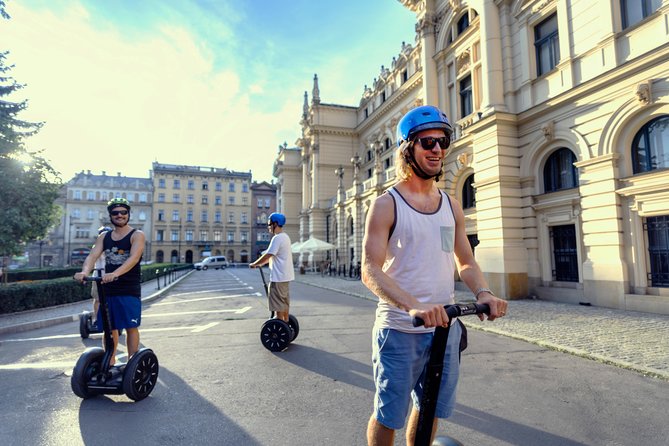
The route includes a lot: New Town, Old Town, the Royal Castle, Castle Square, the Barbican, government buildings, parks, Ghetto memorials, central squares, and the Palace of Culture and Science. That is a serious amount of ground for three hours.
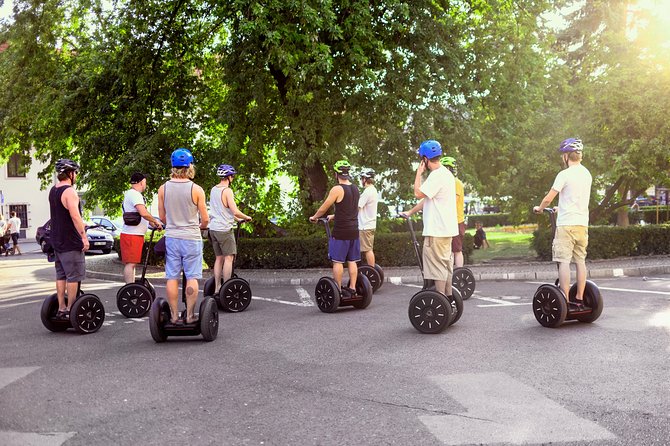
You will usually stop for about five minutes at each named point. That creates a rhythm of ride, pause, listen, photograph, and move on. It keeps the experience lively, but it may feel rushed if you prefer long conversations or time to read plaques.
The ride itself is part of the entertainment. Several people describe the Segway as easy, freeing, and simply fun. Paul is praised for taking riders to places they might not reach alone, while Francisco receives praise for making the sites interesting through clear explanations. Guides may also take photos or videos, and one rider particularly appreciated receiving photos at the end.
The experience is not ideal for someone who wants a quiet, slow walk. It also may not suit you if you dislike balancing devices or feel uneasy in a group. Training helps, and the guide can be patient, but you still need to be willing to ride for much of the three hours.
Is $115.62 a fair price?
At $115.62 per person, this is not a budget sightseeing option. You are paying for the machine, helmet, training, local guide, raincoat if needed, and the ability to cross Warsaw quickly.
The value improves if you have only a short stay and want a broad first look. A three-hour ride can help you decide where to spend the rest of your time. It may also save energy compared with walking between widely separated districts.
The price is harder to justify if you have several days in Warsaw and enjoy exploring independently. You can visit many public monuments and squares without an admission fee, then spend your money on a museum or a dedicated guided walk.
The tour includes a guarantee to skip long lines, but most listed stops are outdoor sites with free admission. That benefit matters less here than it would on an indoor museum tour. The real value lies in transport, guidance, and coverage.
Weather, group size, and practical limits
Rain does not automatically ruin the ride. Raincoats are provided, and one rider still had a good time when the weather turned wet. Still, poor weather can make a three-hour outdoor activity less comfortable, so check the forecast and dress for the conditions.
The tour is near public transportation and ends back at Chmielna 2. The stated weight range is 30 to 135 kilograms. Most people can take part, but you should consider your balance, comfort, and ability to ride for several hours.
Free cancellation is available up to 24 hours before the start time for a full refund. Changes or cancellations inside that window are not accepted for a refund. The operator may offer another date or a full refund if the minimum number of participants is not reached.
One practical warning: check your date, time, and meeting point closely. A booking problem once led to a delayed start and only a shorter Old Town route. Another complaint involved a disputed no-show and an unresolved refund. These cases do not describe the normal ride, but they show why you should keep your confirmation handy and contact the booking platform quickly if anything looks wrong.
Who should book the Warsaw Segway tour?
I would choose this tour for a first day in Warsaw, especially if you want to get your bearings fast. It suits families with older children, couples, solo visitors, and anyone who would rather ride than walk long distances.
It is also a good match for you if you enjoy history in short, clear chapters. Nikita, Renata, Paul, Francisco, and Przemek are all praised for making the ride friendly and informative, with Nikita receiving especially strong praise for humor and knowledge of Warsaw’s past and present.
I would skip it if your main goal is detailed museum time, long photography stops, or a slow look at one district. For the most rewarding plan, take the Segway tour early in your stay, then return on foot to POLIN Museum, the Royal Castle, the Old Town, or the Ghetto memorials that interest you most.
At the end, the choice is simple. Book it if you want a lively overview and a practical city orientation in three hours. Choose something slower if you already know Warsaw’s layout or want deep attention to its memorial sites.
FAQ
How long does the Segway tour last?
The tour lasts approximately three hours. Segway training is provided before the tour and does not count toward the three-hour sightseeing time.
Where does the tour begin?
The tour begins at Chmielna 2, 00-020 Warszawa, Poland.
Where does the tour end?
The activity ends back at the meeting point on Chmielna 2.
Is the tour offered in English?
Yes. The tour is offered in English.
Do I need previous Segway experience?
No. Training is provided, and previous Segway experience is not required.
Is a helmet included?
Yes. Helmet use is included in the tour.
Are raincoats provided?
Yes. Raincoats are available in case of bad weather.
What is the maximum group size?
The tour can have a maximum of 20 participants.
Is there a weight limit?
Yes. The minimum stated weight is 30 kilograms, and the maximum is 135 kilograms.
Can I cancel for a full refund?
You can cancel up to 24 hours before the experience start time for a full refund. Cancellations or changes made less than 24 hours before the start time are not accepted for a refund.
Just added in Warsaw
- Historical Walking Tour of Jewish Warsaw★ 5.0 · 68 reviews
- Deluxe Polish Food Tour Experience in Warsaw★ 5.0 · 19 reviews
- CO2-Offset Arrival Transfer from Warsaw Airport to Warsaw City★ 5.0 · 1 review
- Amazing photo walk through the Old town of Warsaw★ 5.0 · 32 reviews
- 8-day tour around Poland by private car★ 5.0 · 2 reviews
- 2 Hour Super Segway City Tour of Warsaw★ 5.0 · 5 reviews
- Electric Scooter Tour: Full Tour – 3-Hours of Magic!★ 5.0 · 3 reviews
- 2h Rental of Motorboat for 10 in Warsaw no License Needed★ 5.0 · 1 review
Segway Tours, compared.

Krakow Old Town Segway Tour 2hr with Training, Safety Gear, Guide
Read our review →
Warsaw Old Town 1.5-Hour or Full 3-Hour Segway Tour
Read our review →
Segway Tour Warsaw: Old Town Tour – 1,5-Hour of Magic!
Read our review →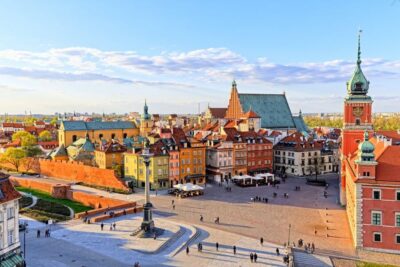
Segway Tour Gdansk: Old Town Tour – 1,5-Hour of Magic!
Read our review →Browse the lists this tour appears in