
REVIEW · SCHINDLER'S FACTORY TOURS
Schindler’s List – Oskar Schindler Factory Museum Guided Tour
History feels close here. This 90-minute guided visit takes you through Oskar Schindler’s former enamel factory in Krakow’s Zablocie district, now a museum about the city under Nazi occupation. I like the clear headsets and the way a guide gives shape to a large, sometimes difficult subject. I also like that admission is included, so you are not left to sort out the museum on your own.
The main thing to consider is the tour’s focus. You will learn a great deal about wartime Krakow and the persecution of Jews, but the visit is not devoted only to Schindler’s personal story. The museum itself is modern and interactive rather than preserved as a complete original factory, and children under eight may find the subject matter and length difficult.
In This Review
- Key points to know before you book
- Arriving at Lipowa 4 in Zablocie
- What you see inside the former enamel factory
- Schindler’s story, and the larger story around it
- Why the guide makes a difference
- Is 90 minutes enough?
- What $54.19 buys you
- Practical advice for a smoother visit
- Who should book this Krakow museum tour?
- Cancellation and booking flexibility
- FAQ
- Where does the Schindler Factory Museum tour begin?
- Where does the tour end?
- How long does the tour last?
- What language is the tour offered in?
- Is museum admission included?
- Are headsets provided?
- Is transportation included?
- Are food and drinks included?
- How many people can join the tour?
- Can I cancel for a full refund?
- Should young children join the tour?
- Is the museum only about Oskar Schindler?
Key points to know before you book
- The museum is at Lipowa 4 in Zablocie, close to public transportation and easy to use as a starting point for exploring the district.
- The visit lasts about 1 hour 30 minutes, with entrance fees and a professional English-speaking guide included.
- The focus is wartime Krakow as much as Oskar Schindler, so expect a broad account of occupation, persecution, and survival.
- Headsets help you hear the guide clearly, though one visitor with hearing difficulties reported that suitable equipment was not available.
- Groups can reach 26 people, large enough to affect the personal feel of the tour but still manageable inside a museum.
- The price is about $54.19 per person, a reasonable choice if you value explanation and time saved over exploring alone.
Arriving at Lipowa 4 in Zablocie
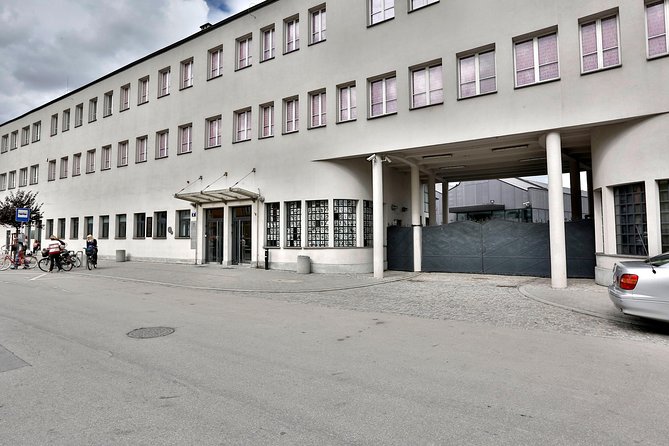
The tour begins outside Oskar Schindler’s Enamel Factory at Lipowa 4, 30-702 Krakow. You meet the guide at the museum entrance, and the activity finishes at the same place. That simple arrangement is useful because there is no transfer to organize and no risk of ending across town.
Zablocie is close to public transportation, so you can reach the museum without arranging a private car. Transportation is not included in the price, along with food and drinks. Plan your route before setting out, especially if you have a fixed appointment later in the day.
Give yourself extra time to find the correct meeting spot. One booking suffered from a last-minute change from 1:20 p.m. to 11:50 a.m. The update was sent by email the night before, but the message was missed among other emails. The museum visit still went ahead independently, yet this is a good reason to check your inbox carefully and confirm the start time on the day.
The meeting instructions can also be a little unclear. You may receive information about exchanging a voucher for a ticket, but one visitor found that this was not needed. The guide eventually located the group, though it is wiser to arrive early and ask clearly where the tour group gathers.
More Museums in Kraków
- Auschwitz-Birkenau Museum and Memorial Guided Tour from Krakow
★ 4.5 · 1,510 reviews - Krakow: Rynek Underground Museum Guided Tour
★ 4.6 · 1,122 reviews - Krakow Schindler’s Factory Museum Guided Tour in English
★ 4.5 · 650 reviews
What you see inside the former enamel factory
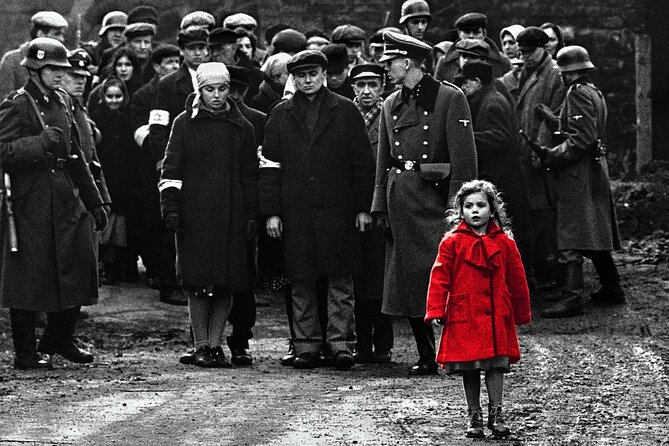
The building is the original enamel factory connected with Oskar Schindler. It became widely known after Steven Spielberg’s 1993 film Schindler’s List, which brought Schindler’s wartime actions and the Krakow setting to a global audience.
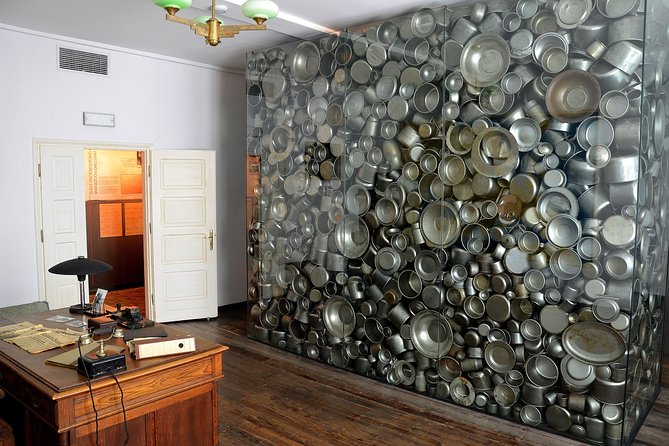
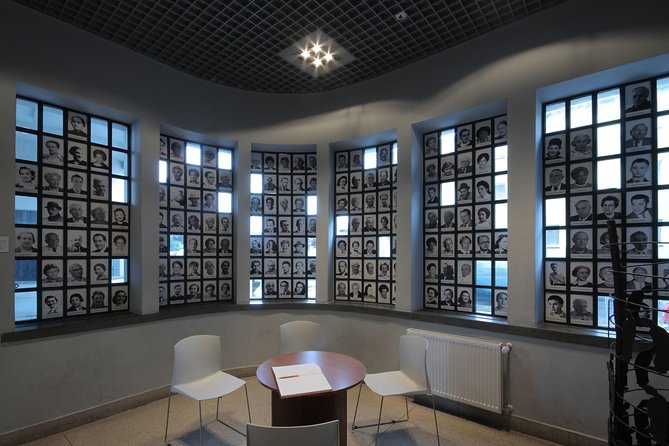
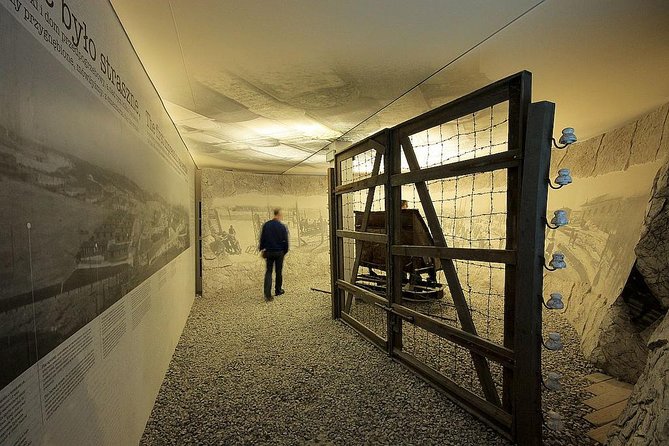
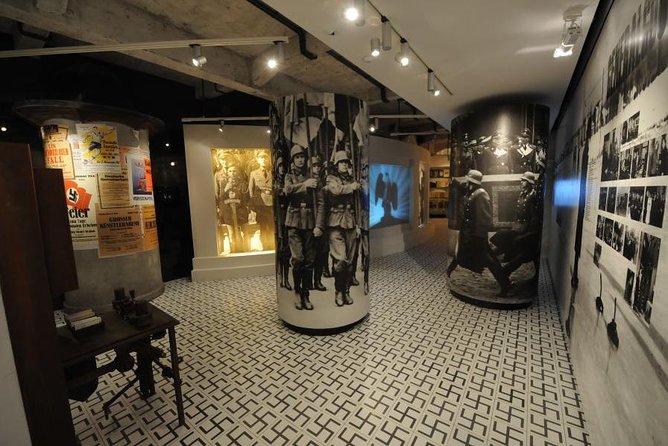
The museum does not simply display old machinery and factory rooms. Its exhibits recreate Krakow during the Second World War through photographs, objects, period settings, and interactive displays. You move through a presentation of the city under occupation, with attention to the people who lived through persecution, forced removal, fear, and survival.
That distinction matters. If you arrive expecting every room to look exactly as it did during Schindler’s working years, you may be disappointed. The museum has been developed as a historical exhibition, not preserved as a fully untouched factory floor.
I see this as both a strength and a limitation. The staged rooms and displays help you understand the period quickly, especially if you know little about Krakow’s wartime experience. At the same time, the presentation can feel less like a traditional factory museum and more like a carefully arranged account of the city’s wartime life.
The exhibition uses enough photographs and objects to keep the visit from becoming a simple lecture. You are given things to look at and interact with as the guide explains the setting. That makes the museum easier to follow than a wall of dates and names, though the material remains serious and emotionally heavy.
Schindler’s story, and the larger story around it
Oskar Schindler is central to the museum’s identity, but the tour places him within the wider story of wartime Krakow. You learn about his factory and the Jewish people whose lives were saved, while also hearing about the persecution of Jews and the actions of both persecutors and the persecuted.
This broad approach is important. Schindler’s story can be reduced to a heroic film narrative, but the museum presents the surrounding conditions that made his actions meaningful. His factory, his connections, his efforts, and the lives affected by them make more sense when you understand the city under Nazi occupation.
Still, you should set your expectations correctly. If your main aim is a detailed biography of Schindler, this may not fully satisfy you. The guide may spend more time on the entire Second World War in Krakow than on Schindler himself. One particularly positive assessment made the same point: the museum was highly informative, but the direct links to Schindler were not always as strong as expected.
That does not make the tour poor. It simply makes it a wartime Krakow museum with a Schindler connection, rather than a narrow Schindler biography. I would recommend it to anyone who wants context, not only to someone who has just watched the film.
Why the guide makes a difference
The guide is the main reason to choose this experience instead of walking through the museum alone. A strong guide can explain what you are seeing, connect individual displays to the larger story, and answer questions when the exhibition leaves you wondering what matters most.
The most praised feature is the quality of the spoken explanation. Several visitors found their guides highly informative, organized, and able to cover a great deal in a short time. One guide was described as a blonde woman who explained a large amount of history efficiently. Another guide, speaking English as a second language, was praised for giving detailed explanations about the war, the persecutors, and the persecuted.
The headset system is helpful in a museum with several people moving through the displays. You do not need to stand shoulder to shoulder with the guide to catch every word. That is a real advantage in a group of up to 26 people.
There are limits. One person reported that the guide had an impressive amount of information but that the tour company did not provide suitable headsets for a hearing impairment. If you rely on special audio equipment, contact the provider before booking and confirm exactly what is available.
Guide quality can also vary. Most of the available feedback is strongly positive, but one assessment found the guide’s presentation too much like a standard speech and not focused enough on Schindler. The best experience will depend on how the guide balances prepared information with questions from the group.
More Schindler Factory tours:
- Krakow: Oskar Schindler’s Factory Entry Ticket & Guided Tour
★ 4.2 · 3,793 reviews - Krakow: Schindler’s Factory Tour with Entrance Ticket
★ 4.5 · 3,182 reviews - Krakow: Schindler’s Factory Skip-the-Line Ticket
★ 4.4 · 3,105 reviews - Krakow: Schindler’s Factory Tour with Entrance Ticket
★ 4.6 · 1,737 reviews
Is 90 minutes enough?
The planned duration is about 1 hour 30 minutes. That is long enough to understand the museum’s main themes without giving up most of your day, but it is not enough for a slow, detailed look at every photograph, object, and interactive display.
I like this length for a first visit. You get a clear framework, and the guide prevents you from spending too long on minor details while missing the main story. If you enjoy reading every panel, you may want to return to parts of the museum at your own pace after the tour.
The quick pace also explains why a guide matters. A good guide can point out the important details and explain why a display is included. Without that help, you may understand the basic subject but miss connections between the factory, the city, and the people affected by the occupation.
The subject is demanding, too. The museum deals with persecution and the Holocaust, so the 90-minute format may be easier for some families than a longer museum visit. The content is not light entertainment. Older children and adults are the best fit, while two children under eight were reported to have found the experience difficult to enjoy.
What $54.19 buys you
At about $54.19 per person, this is not the cheapest way to see a Krakow museum. The fee includes museum admission, a professional guide, and headsets. Food, drinks, and transportation are extra.
The value depends on how you like to visit museums. If you are comfortable reading displays on your own and want to move slowly, you might prefer an independent visit. One assessment specifically felt the museum could be enjoyed without a guide.
I think the guided option earns its price for first-time visitors who want structure. You are paying for explanation, not simply entry. The guide helps you understand the museum’s context in a limited amount of time, which can be especially useful if you have only a few days in Krakow.
There is a small cafe in the museum, but you should not count on it for a full refreshment stop. Better options are available along the road outside, so consider eating before or after the visit rather than building a long meal break into the museum stop.
The overall rating is 4 out of 5 from 30 ratings, which fits the experience fairly well. The museum and guides receive strong praise, while the main complaints concern unclear meeting details, a schedule change, equipment for hearing-impaired participants, and occasional disappointment about the amount of Schindler-specific material.
Practical advice for a smoother visit
Check your booking email the night before and again on the morning of the tour. Schedule changes are possible, and an email alone is easy to miss. Arrive at Lipowa 4 early enough to identify the guide and confirm the meeting point.
Keep your voucher and booking details available, but do not assume you must exchange paperwork at the ticket desk. The instructions may not perfectly match what happens on site. If you are unsure, ask the guide rather than relying on a busy ticket seller for directions.
Wear comfortable shoes because you will spend the visit moving through the museum. Food and drinks are not included, so bring your own plan for refreshments. The nearby public transportation makes the museum practical to combine with another Krakow stop, but the tour itself ends where it begins.
Think about the emotional weight before bringing young children. Older children with an interest in history may benefit from the visit, but the subject and presentation are better suited to adults and mature teenagers than to children under eight.
Finally, remember that the guide speaks English, and the headsets are intended to make the commentary easier to hear. If you have hearing difficulties or need special assistance, ask the provider in advance rather than assuming the standard equipment will meet your needs.
Who should book this Krakow museum tour?
I would book this tour if you have seen Schindler’s List and want to understand the Krakow setting behind the film. I would also recommend it if you want a well-organized introduction to the city’s wartime experience and prefer listening to a guide instead of piecing together a museum on your own.
It suits adults, older children, history-minded visitors, and anyone with limited time in Krakow. The short format gives you a serious and useful visit without taking an entire day.
I would hesitate if your only goal is a detailed account of Oskar Schindler’s life. You will certainly encounter his factory and his efforts to save Jewish lives, but the museum gives equal or greater attention to the wider wartime story. I would also choose an independent visit if you dislike group pacing or want to read every display at length.
For most people, the guide is worth the added cost. The strongest guides make the museum easier to understand and add facts you might otherwise miss. Just confirm the time, meeting point, and audio arrangements before you go.
Cancellation and booking flexibility
You can cancel for a full refund up to 24 hours before the experience begins. Cancellations made less than 24 hours before the start time are not refunded, and changes within that period are not accepted.
The tour is offered in English and confirmation is provided when you book. Most people can participate, and the group may include as many as 26 people.
FAQ
Where does the Schindler Factory Museum tour begin?
It begins at Oskar Schindler’s Enamel Factory, Lipowa 4, 30-702 Krakow, Poland, in the Zablocie district.
Where does the tour end?
The activity ends back at the museum meeting point.
How long does the tour last?
The visit lasts approximately 1 hour and 30 minutes.
What language is the tour offered in?
The tour is offered in English.
Is museum admission included?
Yes. The entrance fee is included in the tour price.
Are headsets provided?
Yes. Headsets are provided so you can hear the guide clearly. If you have hearing difficulties, confirm in advance that the equipment will suit your needs.
Is transportation included?
No. Transportation to and from the museum is not included, although the museum is near public transportation.
Are food and drinks included?
No. Food and drinks are not included. There is a small cafe in the museum, with additional refreshment options along the road nearby.
How many people can join the tour?
The maximum group size is 26 people.
Can I cancel for a full refund?
Yes, if you cancel at least 24 hours before the experience start time. Cancellations made less than 24 hours in advance are not refunded.
Should young children join the tour?
The tour is recommended for older children and adults. Children under eight may find the subject matter and museum visit difficult to enjoy.
Is the museum only about Oskar Schindler?
No. The museum explains Schindler’s factory and the people he helped, but it also covers the wider story of wartime Krakow, the persecution of Jews, and the Second World War.
Just added in Krakow
- Auschwitz-Birkenau – Skip the Line Tickets★ 3.5 · 29 reviews
- Auschwitz-Birkenau: Fast-Track Ticket & Guided Tour No Transfers★ 3.5 · 17 reviews
- Zakopane & Sleigh Ride with Bonfire – Group Tour from Kraków★ 5.0 · 2 reviews
- Sleigh Ride & Bonfire in Zakopane with Funicular – Private Trip★ 5.0 · 48 reviews
- Thermal Baths & Zakopane – Private Trip from Krakow★ 5.0 · 1 review
- Zakopane & Gubalowka Funicular – Private Winter Tour from Krakow★ 5.0 · 10 reviews
- Divine Mercy Sanctuary – Private Tour from Krakow★ 5.0 · 4 reviews
- stag dog chase Krakow prank★ 5.0 · 4 reviews