
REVIEW · SCHINDLER'S FACTORY TOURS
Schindler’s Factory Museum
Some museums stay with you long after leaving. Schindler’s Factory Museum is one of them, not because it focuses only on Oskar Schindler, but because it shows how Nazi occupation changed daily life for the people of Krakow. I like the local guided context and the way the exhibition connects Schindler’s factory with the wider story of Polish, Jewish, and non-Jewish citizens. I also like the skip-the-line arrangement, since advance tickets matter here. The main caution is that the museum gives less attention to Schindler himself than the film may lead you to expect.
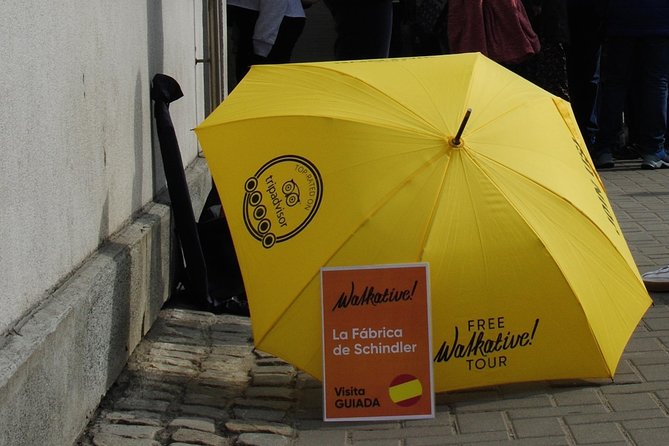
The tour costs about $36 and lasts around 90 minutes, though you may want more time if you read every panel. The meeting point is at Lipowa 4F, and the group can include up to 15 people. Look for the guide with the yellow umbrella, then prepare for a serious, sometimes crowded museum experience rather than a quick movie-site visit.
In This Review
- Key points to know before you book
- Why Schindler’s Factory matters
- Meeting the guide at Lipowa 4F
- The museum route: Krakow before and during the war
- The guide’s role in a museum full of text
- What you learn about Oskar Schindler
- Crowds, timing, and the value of skip-the-line access
- Is $36 a fair price?
- Who should take this tour?
- Practical advice for a better visit
- Should you book Schindler’s Factory Museum?
- FAQ
- Where is Schindler’s Factory Museum?
- How long does the tour last?
- How much does the tour cost?
- Is museum admission included?
- Is hotel pickup included?
- Is transportation to the museum included?
- What language is the guide?
- How do I find the guide?
- How many people can join the tour?
- Is the tour suitable for children?
- Can I cancel for a refund?
- Does the tour finish at the museum?
Key points to know before you book
- The story reaches beyond Schindler: The exhibition follows Krakow before, during, and after the Second World War, with much of the focus on life under Nazi occupation.
- Advance booking is wise: Queues can become confused, especially for people without tickets. The skip-the-line setup saves time and removes some uncertainty.
- The guide adds useful Polish context: Past guides including Damian and Lucy received strong praise for explaining the period with care and personal insight.
- The museum is not the entire original factory: The exhibition is housed in Schindler’s former administrative building, while the main factory building is used for another purpose.
- Plan for more than 90 minutes if you read slowly: The displays contain many photographs, documents, objects, and written explanations.
- The listed tour language is Spanish: Some available feedback describes English-speaking tours, so confirm the language at booking if this matters to you.
Why Schindler’s Factory matters
The museum occupies the former enamel factory associated with Oskar Schindler, the German industrialist whose wartime actions helped save more than 1,000 Jewish workers. The film Schindler’s List made his name famous, and the factory has become one of Krakow’s best-known Second World War sites.
Still, this is not a simple Schindler biography. The museum uses his factory as an entry point into the occupation of Krakow. You learn how the city changed after the Nazi invasion, how Jewish residents were persecuted, and how ordinary people adjusted to rules designed to control, isolate, and destroy them.
That wider focus is the museum’s greatest strength for me. If you already know Schindler’s story from the film, you may not find many new details about Schindler personally. You will, however, gain a clearer sense of the city around him and the people whose lives were shaped by his decisions, Nazi policy, war, and later Soviet rule.
The exhibition also avoids presenting the war as a neat story of villains and heroes. Schindler’s motives and behavior were complicated, and the people of Krakow faced difficult choices under an oppressive system. The museum’s title may draw you in with one famous man, but the subject is really a whole city under occupation.
More Museums in Kraków
- Auschwitz-Birkenau Museum and Memorial Guided Tour from Krakow
★ 4.5 · 1,510 reviews - Krakow: Rynek Underground Museum Guided Tour
★ 4.6 · 1,122 reviews - Krakow Schindler’s Factory Museum Guided Tour in English
★ 4.5 · 650 reviews
Meeting the guide at Lipowa 4F
The tour begins at Lipowa 4F in Krakow, at the museum itself. You do not receive hotel pickup, and transportation is not included, so you need to make your own way there.
The museum is near public transportation. It is also walkable from the Old Town area, with one reported walk taking a little over 30 minutes from just outside the historic center. That makes the visit easy to combine with time in Kazimierz or the Podgórze district, though you should allow extra time if you are walking.
At the meeting point, look for the guide carrying a yellow umbrella. That small detail matters. The entrance area can become confusing when ticket holders, tour groups, and people hoping to buy admission gather together. Booking ahead and finding the correct guide promptly should make the start less stressful.
The group size is limited to 15 people. That is not a private tour, but it is small enough for the guide to keep the group together and answer occasional questions. A smaller group also helps in rooms where the museum becomes crowded.
The listed guide language is Spanish. Several available comments describe English-language tours, including positive experiences with guides named Damian and Lucy. Since the language information and past feedback do not line up perfectly, I would confirm your chosen language before paying if you are not booking the Spanish option.
The museum route: Krakow before and during the war
The single museum stop follows a timeline through Krakow’s wartime experience. You move through displays that explain the city before the war, the Nazi invasion, occupation policies, and the changing lives of its residents.
This approach helps you understand the setting before the exhibition turns to Schindler. You see that the story did not begin with one factory owner. It began with a city whose political and social life was transformed by German rule.
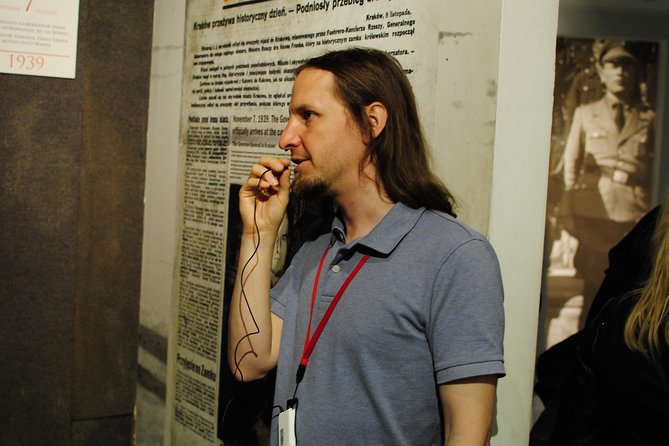
Expect many photographs, posters, official documents, personal objects, and symbols connected with the occupation. The museum uses reconstructed rooms and visual installations to create a more immediate sense of the period. Some displays are atmospheric and powerful. Others rely on a lot of text, so the experience rewards patience.
The amount of reading is one of the tour’s main tradeoffs. A guide can explain the central points and keep the route moving, but you will not absorb every document in a 90-minute visit. If you stop at each panel, you may need close to two hours or more.
The exhibition route can also feel narrow when the museum is busy. Crowds make it harder to stand back from displays or read at your own pace. Red lighting in parts of the route has also bothered some people, though reactions to the design will vary.
This is not a light museum visit. The material includes persecution, death, forced separation, and the destruction of communities. The presentation aims to show how quickly normal life could be dismantled. You should allow yourself time afterward rather than scheduling the museum between two rushed activities.
The guide’s role in a museum full of text
A guided visit is most useful here because the exhibition contains so much information. A good guide gives you a framework, points out details you might miss, and explains how individual displays fit into Krakow’s larger story.
Past tours led by Damian and Lucy were praised for clear explanations and strong personal engagement with Polish history. One guide connected the wartime story with family memories of that era. That kind of local perspective can add something a label cannot, especially when the museum moves quickly from political events to the daily experience of residents.
The guide may also explain Krakow’s postwar years, including the decades of Soviet communism. That period is not always expected by people who arrive thinking only about Schindler’s List, but it helps show that the end of Nazi rule did not mean an immediate return to normal life.
There is also a reasonable criticism of guided visits. One past participant felt the tour spent too little time on Schindler and concentrated mainly on the occupation. That criticism is fair if you book specifically to hear a detailed biography of Oskar Schindler.
I would choose this guided visit if you want help interpreting Krakow’s wartime experience. I would choose a self-guided visit if you prefer to read everything slowly and decide for yourself how long to spend at each display.
More Schindler Factory tours:
- Krakow: Oskar Schindler’s Factory Entry Ticket & Guided Tour
★ 4.2 · 3,793 reviews - Krakow: Schindler’s Factory Tour with Entrance Ticket
★ 4.5 · 3,182 reviews - Krakow: Schindler’s Factory Skip-the-Line Ticket
★ 4.4 · 3,105 reviews - Krakow: Schindler’s Factory Tour with Entrance Ticket
★ 4.6 · 1,737 reviews
What you learn about Oskar Schindler
Schindler is present, but he is not the only subject. The museum places his actions within the factory, the German occupation, and the labor system that exploited Jewish workers.
If your main goal is to see the exact places featured in the film, manage expectations. The exhibition is in the former factory office building, while the principal factory building is still standing but used for another purpose. This is a museum about the history associated with the site, not a preserved factory floor filled with original machinery.
The film connection still gives the visit emotional weight. You may recognize the name, the setting, or the basic outline of the story. But the museum asks you to look beyond the cinematic version and consider the many people whose lives do not fit into a two-hour film.
That is why I would not judge the museum only by the amount of Schindler material. The exhibition works best when you treat Schindler as one part of the story. If you want a focused Schindler biography, you may leave wanting more. If you want to understand the city and the occupation, the broader approach is valuable.
Crowds, timing, and the value of skip-the-line access
Crowding can shape your experience more than the subject matter. The museum has limited daily capacity, and people arriving without advance tickets may face a long wait. One reported queue lasted about 45 minutes, while another early visit had no trouble securing a ticket.
The practical lesson is simple: book ahead, especially if you plan to visit later in the day or during the busy summer season. The tour includes admission and an arrangement intended to help you avoid the general queue. That is a real benefit at a museum where entrance lines can become disorganized.
Do not assume skip-the-line access means you walk straight into an empty gallery. You may still need to meet the guide, join the timed entry, and move through busy rooms with other groups. It does, however, reduce the risk of losing a large part of your morning to ticket problems.
The museum has luggage storage, according to information from a past visit, but the details are not clearly emphasized in the tour information. I would avoid arriving with large bags if possible and check current storage arrangements before setting out.
Is $36 a fair price?
At about $36, this is not the cheapest museum visit in Krakow. The price includes museum admission, VAT, and a professional local guide in Spanish. It does not include hotel pickup or transport.
The value depends on how much you want guidance. If you are comfortable reading a large exhibition on your own, buying a direct museum ticket may cost less and give you more freedom. If you want historical explanation, help with the entrance process, and a small group capped at 15 people, the extra cost can make sense.
The tour’s advertised 90 minutes is enough for an organized introduction, but not necessarily enough for a slow, complete visit. I would view the paid tour as a guided orientation rather than the final word on the museum. You will probably understand the main story by the end, then decide how much more time you want with the displays.
For first-time visitors to Krakow, the price is easier to justify because the guide places the museum in the city’s Polish and Jewish context. For someone who has visited several Holocaust and war museums across Europe, the exhibition may feel familiar in parts, especially if you already know the basic chronology.
Who should take this tour?
This experience suits adults, older teenagers, and anyone wanting a serious introduction to Krakow under Nazi occupation. Admission is recommended for young people aged 14 and above, which reflects the difficult subject matter.
I would especially suggest it to you if:
- You have seen Schindler’s List and want to understand the real Krakow behind the film.
- You want a guide to explain Polish history rather than simply read labels.
- You have limited time and want admission arranged in advance.
- You are interested in the experiences of both Jewish and non-Jewish residents.
- You prefer a small group over a large coach-style visit.
You may want another option if you want a quiet, self-paced museum visit, a detailed study of Schindler alone, or a preserved factory full of working machinery. The site is emotionally demanding, too, so it deserves more attention than a quick photo stop.
Practical advice for a better visit
Book in advance. This is the most useful tip, especially for a later visit or a summer trip.
Arrive at Lipowa 4F with enough time to find the yellow umbrella. Since transport is not included, check your route before leaving. Walking from the Old Town may take a little over 30 minutes, while public transportation offers another practical choice.
Wear comfortable shoes because you will be standing and walking through the exhibition. Give yourself room in your schedule after the tour. You may want to sit somewhere nearby, talk through what you have seen, or continue to the surrounding district without rushing.
If you plan to read every panel, treat the 90-minute duration as a minimum guide rather than a strict total visit time. The museum does not allow you to leave and return on the same ticket, so take the time you need before exiting.
Free cancellation is available up to 24 hours before the start time. Cancellations made within 24 hours are not refunded, and changes during that period are not accepted.
Should you book Schindler’s Factory Museum?
Book this tour if you want more than the famous name. Its strongest feature is the guide-led explanation of how war altered Krakow’s entire population, not simply the story of one German businessman. The advance entrance arrangement is also useful, and the small group keeps the visit reasonably personal.
Think twice if you expect a museum devoted mainly to Oskar Schindler or a tour of the original production floor. The exhibition can be crowded, text-heavy, and emotionally difficult.
For most first-time visitors to Krakow, I would book it, especially with limited time. Go prepared for a serious city history museum, arrive early, confirm the Spanish-language arrangement, and leave enough time to pause afterward.
FAQ
Where is Schindler’s Factory Museum?
The meeting point is Lipowa 4F, 30-702 Krakow, Poland.
How long does the tour last?
The guided experience lasts approximately 1 hour and 30 minutes.
How much does the tour cost?
The listed price is about $36.
Is museum admission included?
Yes. The entrance to Schindler’s Factory Museum is included, along with VAT and a professional local guide.
Is hotel pickup included?
No. Hotel pickup is not included.
Is transportation to the museum included?
No. You must arrange your own transportation to the meeting point.
What language is the guide?
The tour information lists a professional local guide in Spanish. If you need another language, confirm the arrangement before booking.
How do I find the guide?
Look for the guide with the yellow umbrella at the meeting point.
How many people can join the tour?
The activity has a maximum group size of 15 people.
Is the tour suitable for children?
Admission to the exhibition is recommended for young people aged 14 and above.
Can I cancel for a refund?
Yes. You can cancel at least 24 hours before the start time for a full refund. Cancellations within 24 hours are not refunded.
Does the tour finish at the museum?
Yes. The activity ends back at the meeting point.
Just added in Krakow
- Auschwitz-Birkenau – Skip the Line Tickets★ 3.5 · 29 reviews
- Auschwitz-Birkenau: Fast-Track Ticket & Guided Tour No Transfers★ 3.5 · 17 reviews
- Zakopane & Sleigh Ride with Bonfire – Group Tour from Kraków★ 5.0 · 2 reviews
- Sleigh Ride & Bonfire in Zakopane with Funicular – Private Trip★ 5.0 · 48 reviews
- Thermal Baths & Zakopane – Private Trip from Krakow★ 5.0 · 1 review
- Zakopane & Gubalowka Funicular – Private Winter Tour from Krakow★ 5.0 · 10 reviews
- Divine Mercy Sanctuary – Private Tour from Krakow★ 5.0 · 4 reviews
- stag dog chase Krakow prank★ 5.0 · 4 reviews