
REVIEW · SCHINDLER'S FACTORY TOURS
Schindler’s Factory Museum Guided Tour – Krakow
History here is personal, not distant. Schindler’s Factory Museum turns occupied Krakow into a walk through apartments, workshops, photographs, newspapers, and wartime documents. I especially like the excellent live commentary and the way the exhibition treats Krakow’s Jewish and Polish inhabitants as people, not just dates in a textbook. The preserved office and the symbolic ark of survivors add a strong human touch. The main drawback is time: 90 minutes can feel hurried in a group, especially if you want to read every display.
I also like that the tour does not reduce the whole story to Oskar Schindler. It places him within Krakow’s larger wartime experience, which gives you a more honest picture of the city from 1939 to 1945. The group format keeps the price at a reasonable $50 per person with admission included, but it also means you will need to keep moving.
In This Review
- Key points to know before you go
- Why Schindler’s Factory tells Krakow’s wartime story so well
- The opening route: ordinary life under occupation
- The tram scene and the changing city
- Entering the ghetto and the Jewish apartment
- Płaszów and the darker turn of the tour
- Schindler’s office and the ark of survivors
- What the guide adds to the $50 price
- Timing, meeting point, and practical details
- Who should book this museum tour?
- Should you book Schindler’s Factory Museum tour?
- FAQ
- How long does the Schindler’s Factory Museum guided tour last?
- How much does the tour cost?
- Where does the tour meet?
- Is this a private tour?
- Which languages are available?
- Is museum entry included?
- Is the museum accessible by wheelchair?
- What identification is required from January 1, 2026?
Key points to know before you go
- The 90-minute route covers Krakow from 1939 to 1945, including daily life under occupation, the ghetto, and Płaszów.
- Your guide supplies the context, helping you understand objects and multimedia displays that could otherwise pass too quickly.
- Oskar Schindler is part of the story, not the entire story, which makes the visit more balanced than a simple film-themed stop.
- The tour begins in front of the museum entrance, where you look for the person holding an excursions.city sign.
- English, French, German, Italian, and Spanish tours are available, and the museum experience is wheelchair accessible.
- From January 1, 2026, full participant names and a passport or ID are required because tickets are personalized.
Why Schindler’s Factory tells Krakow’s wartime story so well
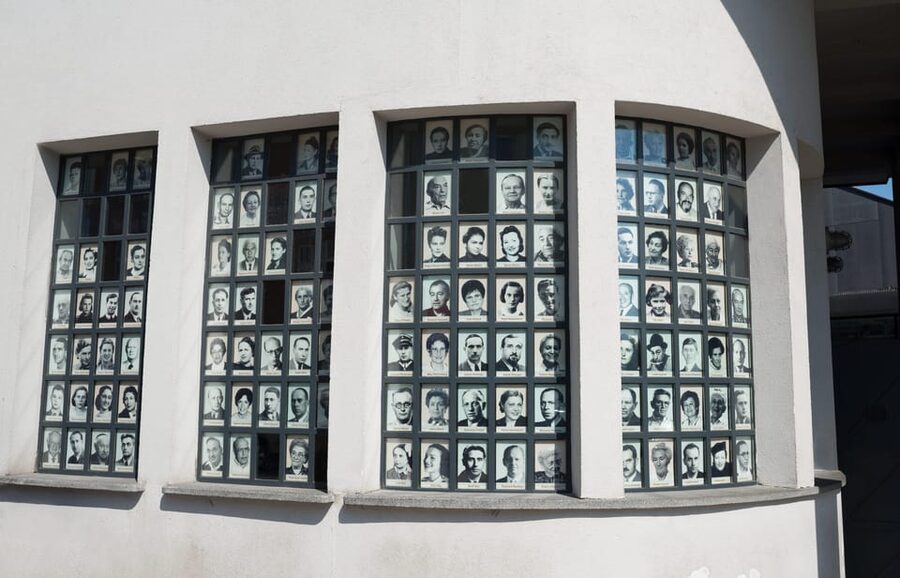
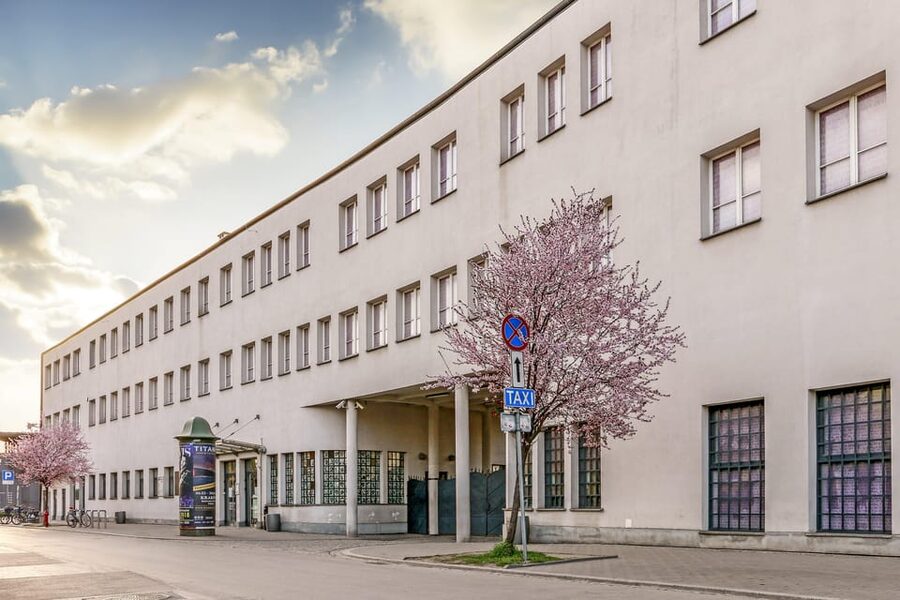
The museum occupies the former enamel factory associated with Oskar Schindler, the German industrialist who saved more than 1,000 Krakow Jews during World War II. The building gives the visit a clear connection to the famous 1993 film, but the exhibition reaches well beyond Schindler’s biography.
That distinction matters. If you arrive expecting a museum devoted only to one man, you may find the route broader and more serious than expected. The focus is the tragedy of World War II in both individual and collective terms, with Krakow as the main character.
You move through an exhibition about ordinary people living through extraordinary pressure. Ordinary objects, personal papers, official documents, newspapers, and photographs show how war entered homes, jobs, streets, and family life. The details make the period feel close without turning it into a movie set.
I find this approach more useful than a simple display of famous names. You are asked to think about how a city functions under occupation, how rules change daily behavior, and how individuals make choices when every choice carries danger.
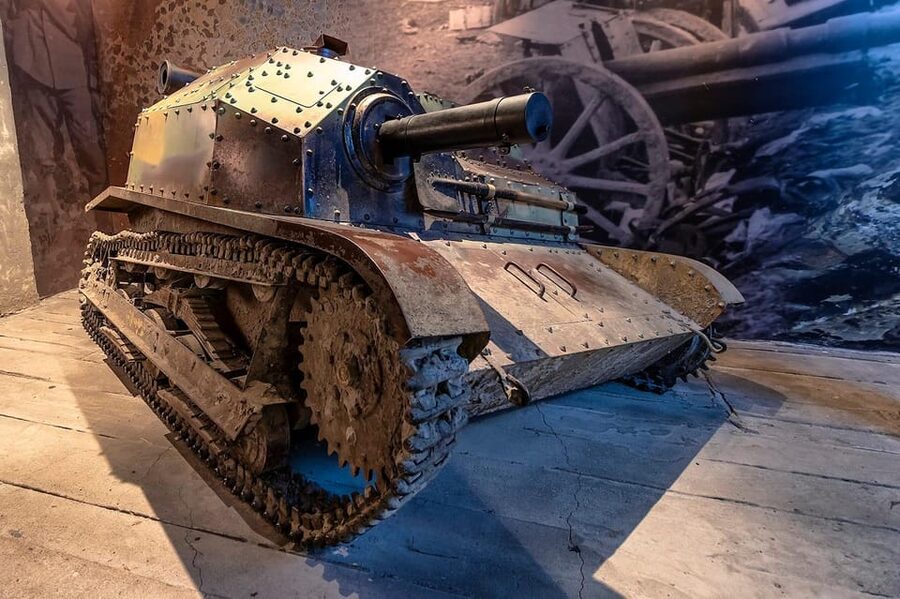
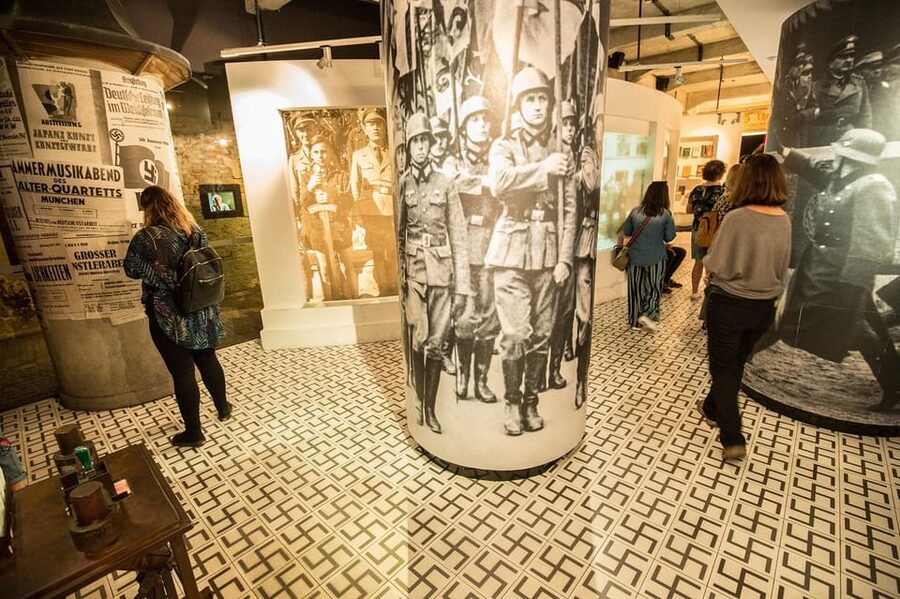
The museum uses artifacts and multimedia treatments to create a sense of place. Some sections are arranged like parts of the wartime city, so the visit feels more like a guided passage through Krakow than a standard room-by-room museum tour.
More Museums in Kraków
- Auschwitz-Birkenau Museum and Memorial Guided Tour from Krakow
★ 4.5 · 1,510 reviews - Krakow: Rynek Underground Museum Guided Tour
★ 4.6 · 1,122 reviews - Krakow Schindler’s Factory Museum Guided Tour in English
★ 4.5 · 650 reviews
The opening route: ordinary life under occupation
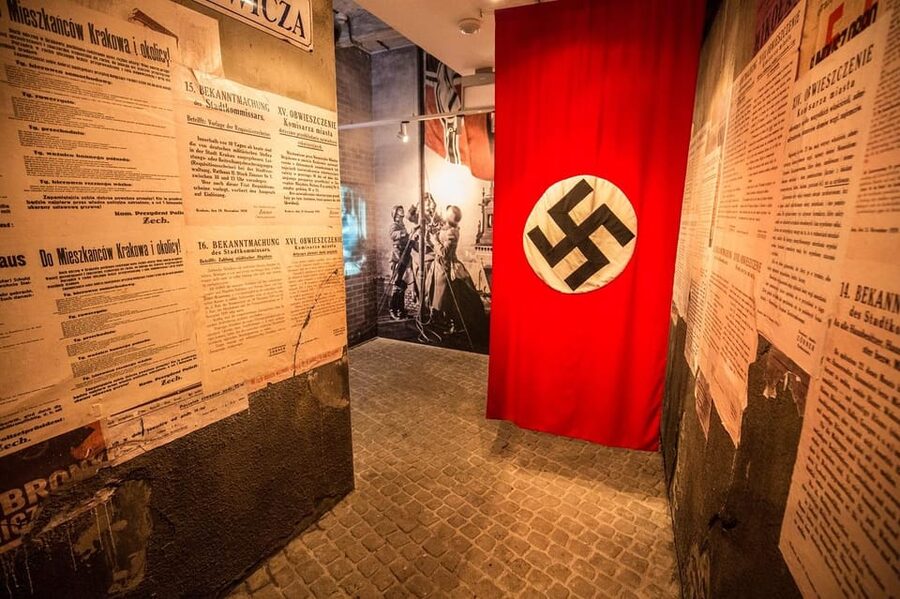
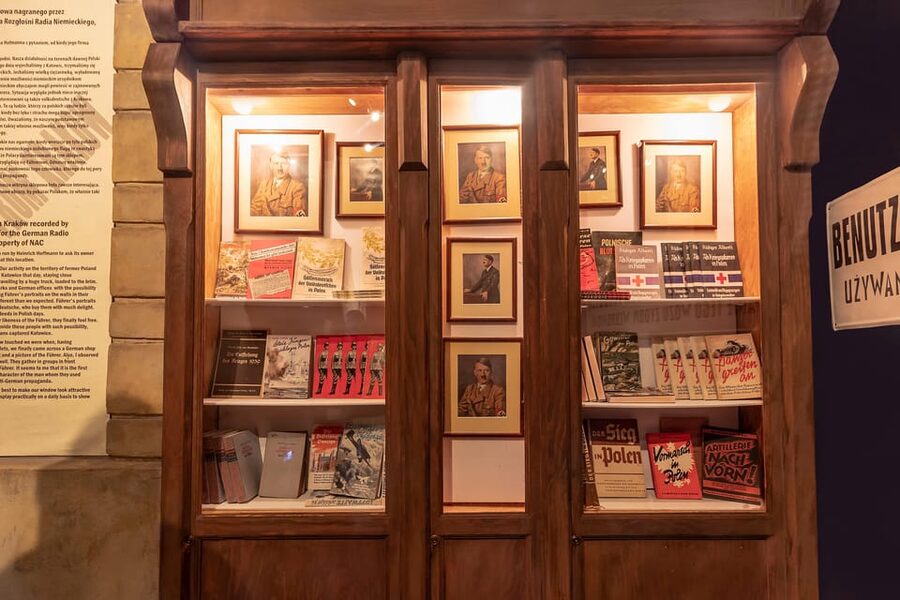
The early part of the visit introduces occupied Krakow through the routines of daily life. You might see the city through photographs, newspapers, documents, and objects that seem modest at first glance. Their value comes from what they reveal about work, identity, restrictions, and survival.
Your guide is important here. Without spoken context, a newspaper or household object can remain just that, an old item behind glass. With commentary, it becomes evidence of how people understood the world around them.
The strongest praise for this tour has focused on the guides’ ability to explain Krakow between 1939 and 1945. That is exactly where a live tour earns its price. You are not left to assemble a timeline from scattered captions. The guide links the displays and explains how one stage of the occupation led into the next.
The museum also includes settings connected with everyday professions and city life. You pass a photographer and a tailor, as well as an authentic photo studio setting. These stops help you picture the people who kept working, trading, and creating while the city was under German control.
This is not a light introduction. The route gradually moves from daily routines toward persecution, forced separation, and mass violence. I appreciate the gradual change in tone because it shows how the catastrophe affected normal life before the worst scenes arrive.
The tram scene and the changing city
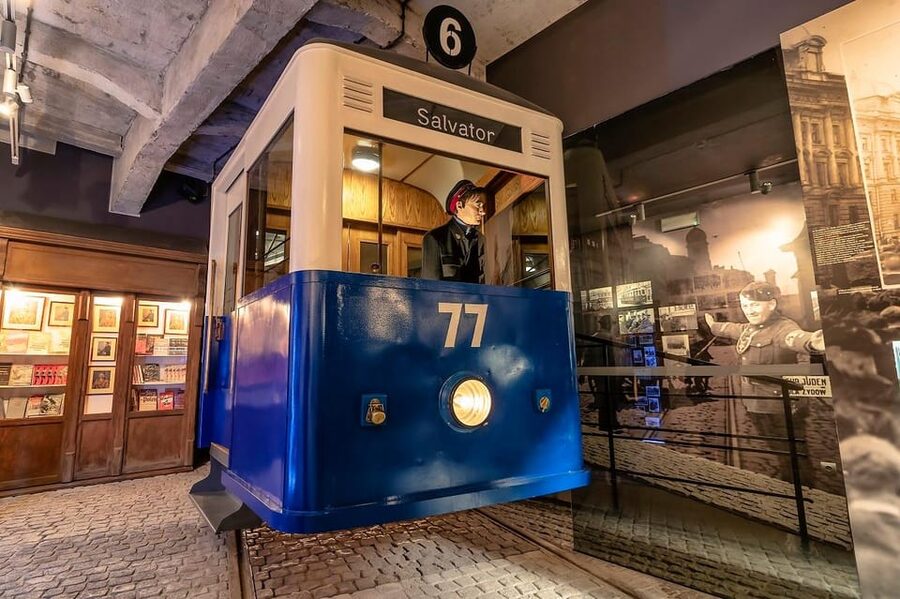
One memorable section places you on a tram. Through its windows, you watch a film showing city life. It is a clever museum device because it gives you the feeling of moving through Krakow while remaining inside the exhibition.
The tram is more than a visual trick. It connects the personal displays with the wider city. You are encouraged to consider what people saw on the streets, how neighborhoods changed, and how public life continued even as freedom narrowed.
This section can move quickly. The tour lasts only 90 minutes, and a group cannot stop for every photograph or document. If a particular display catches your eye, you may need to make a mental note and return after the guided portion, if the museum schedule and ticket arrangements allow it. The supplied details do not promise extra time, so do not assume you will be able to linger.
The group setup is the main tradeoff throughout the visit. A guide can explain far more than you could absorb alone, but the pace is set for the whole group. One four-star assessment made this exact point: the content was very good, but the museum felt too large for the time available.
That is not a flaw unique to this museum. It is simply the cost of seeing a major exhibition in a compact guided visit. You gain a clear route and strong explanations. You give up some freedom to stop whenever you like.
Entering the ghetto and the Jewish apartment
The route then takes you through a tight labyrinth representing the Krakow ghetto. A Jewish apartment within that setting gives the persecution a domestic scale.
This is one of the most important parts of the tour because it shifts the focus from public policy to private life. The ghetto was not an abstract area on a map. It was a place where families lived in cramped conditions, tried to preserve routines, and faced rules designed to strip away safety and dignity.
The apartment setting helps you think about the people who occupied these rooms. What did they keep? What did they lose? How did an ordinary room become part of a system of control?
You will not get a complete personal biography for every individual represented in the exhibition. This is not a biographical museum, and the route covers the city as a whole. Still, the combination of personal documents, objects, and the apartment setting gives the human story a firm place.
The tight design may feel uncomfortable, but that discomfort serves a purpose. You are not simply looking at a map of the ghetto and moving on. The physical route makes the space feel restricted.
For visitors with mobility concerns, the experience is listed as wheelchair accessible. If you need precise information about the width of particular passages or the route through every exhibit area, confirm details before booking, since accessibility is stated but not described room by room.
More Schindler Factory tours:
- Krakow: Oskar Schindler’s Factory Entry Ticket & Guided Tour
★ 4.2 · 3,793 reviews - Krakow: Schindler’s Factory Tour with Entrance Ticket
★ 4.5 · 3,182 reviews - Krakow: Schindler’s Factory Skip-the-Line Ticket
★ 4.4 · 3,105 reviews - Krakow: Schindler’s Factory Tour with Entrance Ticket
★ 4.6 · 1,737 reviews
Płaszów and the darker turn of the tour
After the ghetto section, the exhibition takes you with its inhabitants to the camp in Płaszów. The change is severe. The route moves from a confined neighborhood to the camp system and the larger machinery of persecution.
This part requires attention. It is not presented as a detached lesson, and the exhibition does not soften the tragedy with a film-style hero narrative. The guide’s role is especially useful here because the historical connections may be difficult to follow without a clear explanation.
The tour’s strength is its balance. Schindler’s rescue of more than 1,000 Krakow Jews is central to the story, but the museum does not present him as the only subject worth remembering. You also learn about the city, its institutions, its Jewish population, and the people caught in events they did not control.
That balance was one of the most appealing features described in the supplied feedback. The experience was praised for telling the real story of the Polish man and the city during the war rather than offering constant praise for Schindler.
There is an important nuance here. Schindler was a German factory owner, and the exhibition places his actions within a complicated wartime setting. The museum does not ask you to ignore the wider system simply because one person acted bravely within it.
For many people, Płaszów will be the most emotionally demanding section. The 90-minute schedule gives you a guided framework, but it does not leave much time for quiet reflection. If you prefer to take difficult material slowly, you may find the group pace frustrating.
Schindler’s office and the ark of survivors
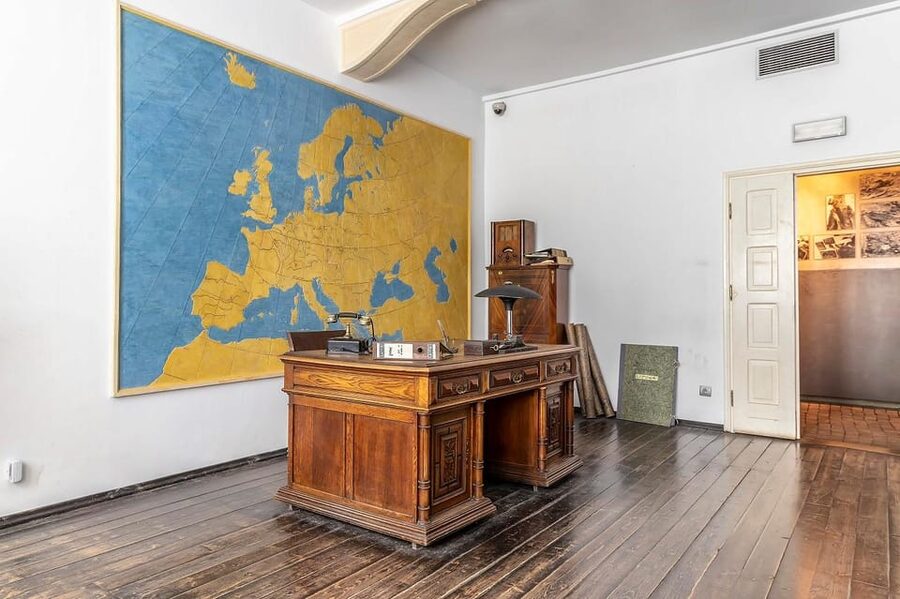
The visit reaches its clearest connection with Oskar Schindler in his preserved office. This is the place where the factory owner’s wartime role becomes tangible.
The office is not just a famous room for film fans. It helps connect the man to the factory and to the workers whose lives were affected by his decisions. The museum also presents a symbolic ark of survivors made from thousands of pots resembling those produced by his employees during the war.
The pots are a striking idea because they refer to production, labor, and survival at the same time. They are not merely decorative objects. They point back to the factory’s work and forward to the people who lived because Schindler intervened.
If you come mainly because of the film, this is likely the section you most want to see. You should still expect the museum to spend much more time on Krakow’s wartime story than on movie trivia or behind-the-scenes filming details.
The connection with the 1993 film explains part of the museum’s popularity. People from around the world want to visit the place linked to a story they already know. The exhibition rewards that interest, but it also asks you to set the film aside and pay attention to the city’s real residents.
What the guide adds to the $50 price
The cost is $50 per person, including the professional guide and museum entrance. That is not a bargain-basement museum visit, but the value depends on how much help you want with the material.
I consider the price reasonable if you want a clear explanation in your language and prefer not to piece together the chronology alone. A strong guide can point out why a document matters, explain the city’s wartime changes, and connect the ghetto, Płaszów, the factory, and Schindler’s office into one narrative.
The tour is offered in English, French, German, Italian, and Spanish. That language choice is important because difficult historical material loses much of its force when you are struggling with captions.
The strongest praise has gone to the guide’s command of Krakow’s wartime story. One five-star assessment described the guide as excellent and said the visit taught the participant a great deal about Krakow. Another specifically recommended taking a guide to get the most from the museum.
I would not choose this tour if your main goal is complete independence. You may want to read every label, pause at each photograph, or spend a long time with one personal document. A group tour is not built for that.
I would choose it if you want orientation, context, and a route through the major themes. You can see a popular museum without wasting time figuring out where to begin, and you receive explanations that may not be obvious from the displays alone.
Timing, meeting point, and practical details
The tour lasts 90 minutes. Starting times vary, so you need to check availability for your date.
Meet in front of the museum entrance at Oskar Schindler’s Enamel Factory. Look for the person holding an excursions.city sign. Arrive with enough time to identify the meeting point, since a group tour cannot easily wait for someone who is searching around the building.
The ticket line is skipped, and museum admission is included. That makes the arrangement simpler than buying entry separately, especially at a busy time.
From January 1, 2026, scheduling needs extra attention. The selected time is only a preferred time because the museum may change the exact start according to its schedule. You must provide the full names of all participants when booking and bring a passport or ID for entry. Without those details and documents, entry may be refused.
The activity is wheelchair accessible. It also includes free cancellation up to 24 hours before the scheduled visit, and you can reserve now and pay later. Those terms help if your Krakow plans are still shifting, though the personalized-ticket rule makes accurate names especially important.
Who should book this museum tour?
I would recommend it to first-time visitors who want to understand Krakow’s World War II story in one focused visit. It also suits anyone who has seen the film and wants to move beyond its central character.
History students, families with older children, and visitors who prefer spoken explanation will likely get good value. The route gives you a framework for understanding the city, and the guide can answer questions in one of five listed languages.
I would be more cautious if you dislike group tours or need a slow museum pace. Ninety minutes is enough for a strong introduction, not enough for every caption, photograph, and document. You may leave with a solid understanding of the main story while still wishing for more time.
The emotional weight also matters. The ghetto and Płaszów sections deal with persecution and mass suffering. This is not a casual sightseeing stop, even though it is housed in one of Krakow’s most popular museums.
Should you book Schindler’s Factory Museum tour?
Book this tour if you want the museum’s difficult story explained clearly and you value the perspective of an experienced live guide. The strongest reason to choose it is the balance between Schindler’s rescue effort and the broader history of Krakow from 1939 to 1945.
Skip it if you want to wander alone and read at your own pace. For most visitors, though, the $50 fee is defensible because it includes admission, avoids the ticket line, and gives structure to an exhibition that covers a lot in a short time.
Bring your passport or ID from 2026 onward, double-check the preferred start time, and expect a serious visit rather than a simple film location stop. You will see Schindler’s office, but you will also meet the city and its people during one of Europe’s darkest periods.
FAQ
How long does the Schindler’s Factory Museum guided tour last?
The guided tour lasts 90 minutes.
How much does the tour cost?
The listed price is $50 per person. The professional guide and museum entrance ticket are included.
Where does the tour meet?
The meeting point is in front of the entrance to Oskar Schindler’s Enamel Factory. Look for the person holding an excursions.city sign.
Is this a private tour?
No. This is a group tour.
Which languages are available?
Live tours are available in English, French, German, Italian, and Spanish.
Is museum entry included?
Yes. The entrance ticket to the museum is included, and the tour lets you skip the ticket line.
Is the museum accessible by wheelchair?
The activity is listed as wheelchair accessible.
What identification is required from January 1, 2026?
You must provide the full names of all participants when reserving and bring a passport or ID for entry. Museum times may also change, so the selected time is preferred rather than guaranteed.
Just added in Krakow
- Auschwitz-Birkenau – Skip the Line Tickets★ 3.5 · 29 reviews
- Auschwitz-Birkenau: Fast-Track Ticket & Guided Tour No Transfers★ 3.5 · 17 reviews
- Zakopane & Sleigh Ride with Bonfire – Group Tour from Kraków★ 5.0 · 2 reviews
- Sleigh Ride & Bonfire in Zakopane with Funicular – Private Trip★ 5.0 · 48 reviews
- Thermal Baths & Zakopane – Private Trip from Krakow★ 5.0 · 1 review
- Zakopane & Gubalowka Funicular – Private Winter Tour from Krakow★ 5.0 · 10 reviews
- Divine Mercy Sanctuary – Private Tour from Krakow★ 5.0 · 4 reviews
- stag dog chase Krakow prank★ 5.0 · 4 reviews