
REVIEW · JEWISH QUARTER TOURS
Private Tour of Krakow Old Town and Jewish Quarter in one walk
Krakow reveals itself on foot. This private walk links the city’s medieval center with Kazimierz, making it a smart introduction to Krakow’s Old Town and Jewish Quarter in one outing. I like the clear route from the Barbican to Wolnica Square, and I like having a private guide who can adjust the conversation to your questions. The main consideration is pace: eight stops in about three hours leave little time for long visits inside museums or churches.
I also like the group pricing. At $200.83 for up to 15 people, the per-person cost drops sharply with a larger party. Guides such as Tomasz, Tomek, and Marcin have been praised for their friendly manner, strong command of Polish history, and ability to mix architecture, politics, folklore, and everyday culture into the walk.
In This Review
- Key points to know before you book
- From the Barbican to Floriańska Street
- Krakow’s Main Square in a 40-minute pause
- Collegium Maius, Krakow’s oldest university setting
- St. Francis Basilica and the John Paul II connection
- Wawel Hill and Poland’s royal story
- Szeroka Street and the difficult history of Kazimierz
- Wolnica Square, where the walk ends
- What the $200.83 group price really buys
- The private format and the guide’s role
- Who should book this Krakow walk?
- Should you book it?
- FAQ
- How long does the private Krakow tour last?
- Where does the tour begin?
- Where does the tour end?
- Is this a private tour?
- What language is the tour offered in?
- Can I cancel for a full refund?
Key points to know before you book
- The route covers two very different Krakows: You begin among medieval defenses and royal monuments, then finish in Kazimierz, with its synagogues, Jewish memorials, and film locations.
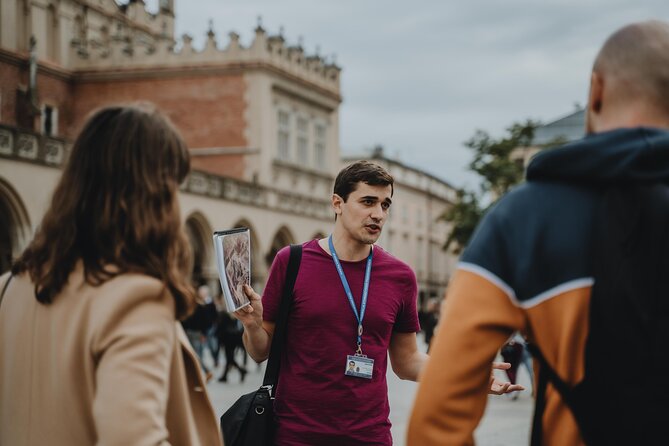
- It is private for your group only: The booking covers up to 15 people, so you can ask questions without competing with a large public group.
- The tour is almost entirely an outdoor walking experience: The listed stops have no admission charge, with time set aside for courtyards and church interiors rather than extended museum visits.
- Wawel Hill is the historical center of gravity: The cathedral and castle courtyard give the guide a natural place to explain Poland’s national story.
- The English-language guiding is a major part of the value: Past guests singled out Tomasz, Tomek, and Marcin for clear explanations and lively conversation.
- The finish is useful for the rest of your day: Wolnica Square sits in Kazimierz, close to restaurants, cafes, and tram lines.
From the Barbican to Floriańska Street
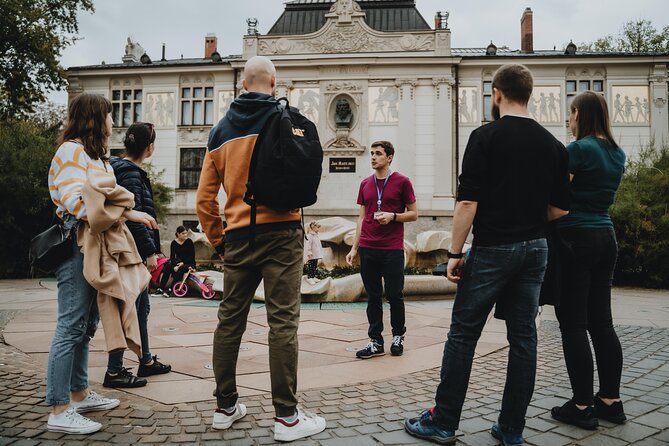
The meeting point is beside the Grunwald Monument at plac Jana Matejki. From there, the walk begins at the Barbican, the round defensive structure connected with Krakow’s old fortifications.
You spend about 15 minutes here. That may sound brief, but it is enough for a guide to explain why Krakow developed a new urban area in the 13th century and how its defenses shaped the city. The Barbican is a useful first stop because it gives you a physical sense of Krakow as a protected medieval settlement, not simply a collection of pretty buildings.
The listed stop is free of admission. That does not mean you receive a full museum visit. Instead, expect an explanation from outside and time to admire the walls and the unusual form of the Barbican. If you want an extended look at exhibits, ask your guide what can be added or visited separately.
Next comes Floriańska Street, part of the old Royal Route toward the Main Square. The walk here lasts about 15 minutes, giving you time to look at the townhouses, landmarks, and changing architectural details along one of Krakow’s best-known streets.
This is a good place to let the guide set the city’s timeline. You move from military defenses into the ceremonial route used by kings and important processions. The short distance also helps you settle into the walking rhythm before the longer stop at the Main Square.
More Walking Tours in Kraków
- Old Town Krakow & Wawel Castle Walking Tour
★ 5.0 · 1,508 reviews - Creepy Krakow: 2-Hour City Walking Tour
★ 4.7 · 1,131 reviews - Krakow: The Old Town Walking Tour
★ 4.8 · 794 reviews
Krakow’s Main Square in a 40-minute pause
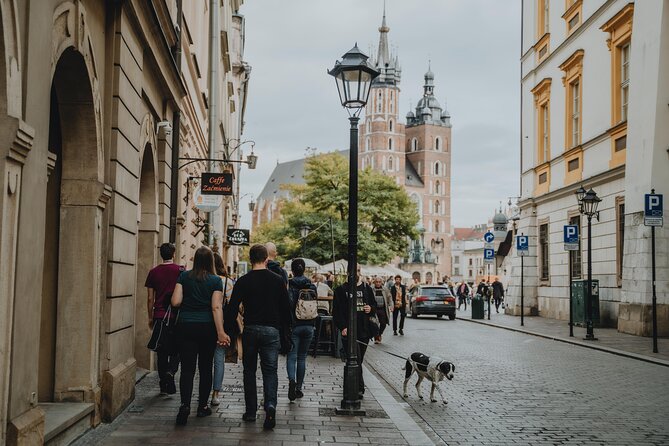
The Main Square, or Rynek Główny, receives the longest stop on the Old Town portion, about 40 minutes. That is sensible. The square is large enough to require time, and its monuments are close together but not easily absorbed in a quick glance.
Your guide points out St. Mary’s Basilica, the Cloth Hall, and the Town Hall Tower. The square’s scale helps explain Krakow’s importance in medieval Europe, while the buildings show how commerce, religion, and civic power operated side by side.
I would pay close attention to how your guide connects the monuments rather than treating them as separate photo stops. The Cloth Hall was tied to trade, St. Mary’s Basilica to religious life, and the Town Hall Tower to municipal authority. The value of a private walk is that you can pause over whichever subject interests you most.
The 40-minute allotment is enough for orientation and exterior views. It is not designed as a full interior tour of St. Mary’s Basilica or the Cloth Hall. If you want to shop, attend a service, climb a tower, or visit a museum, you will need separate time before or after the walk.
Collegium Maius, Krakow’s oldest university setting
The route then turns to Collegium Maius, the oldest Polish university building, for about 15 minutes. The visit focuses on the inner courtyard.
This is one of the more rewarding details in the itinerary because it is easy to pass by without knowing what you are looking at. The courtyard offers a quieter change from the Main Square and gives the guide a chance to explain the role of the Jagiellonian University in Polish intellectual and civic life.
Do not expect a long university museum visit during this tour. The scheduled time is short, and the stated focus is the courtyard. Still, this stop adds something different from the usual list of churches and squares. It also gives you a chance to ask questions about education, famous scholars, and the place of learning in Krakow’s story.
One useful feature of private guiding is the ability to ask for context in plain language. The guides praised in the available feedback, especially Tomasz and Tomek, were valued for welcoming questions rather than delivering a fixed speech. That matters at a site where a few well-placed explanations can make the courtyard much more meaningful.
St. Francis Basilica and the John Paul II connection
The next stop is the Basilica of St. Francis of Assisi, where the tour allows about 20 minutes. You enter one of Krakow’s notable churches and learn about Pope John Paul II.
This stop shifts the focus from buildings and city planning to modern Polish religious life. John Paul II had a close connection with Krakow, and the basilica provides a setting for discussing his place in the city and in Poland.
The church visit also gives the walk a change of pace. After several outdoor stops, you move inside to look at the architecture and atmosphere. Because the tour includes several major sites, the visit is likely best understood as an introduction rather than a detailed art-history session.
I would keep the group’s interests in mind here. A visitor drawn to architecture may want more time for the church itself. Someone interested in Polish politics or 20th-century Catholic life may prefer to use the stop for questions about John Paul II. A private guide can usually make that conversation more useful than a standard narration, though the total tour time still limits how long you can linger.
More Old Town walks in Krakow:
- Krakow: Bike Tour of Old Town, Jewish Quarter and the Ghetto
★ 4.9 · 1,155 reviews - Krakow: Old Town Guided Segway Tour
★ 4.7 · 756 reviews - Kraków: Old Town & Wawel Castle Walking Tour in English
★ 4.8 · 532 reviews - Krakow Old Town Guided Walking Tour
★ 4.5 · 438 reviews
Wawel Hill and Poland’s royal story
Wawel Hill gets about 30 minutes. The stop includes the royal cathedral and the courtyard of Wawel Castle, with the guide explaining why this place matters so much to the Polish nation.
This is the point where the first half of the walk gathers force. The Barbican introduced the city’s defenses, the Main Square showed its commercial and civic life, and Wawel brings in royal power, national memory, and religion.
You should expect to walk around the cathedral and castle courtyard rather than take a full castle tour. The itinerary lists admission as free, so this experience does not include paid entry to the castle’s separate exhibitions. If you want to see the royal apartments, treasury, or other ticketed areas, plan another visit.
Thirty minutes is enough for a strong first look, especially if your guide explains the setting well. It is not enough to explore every corner of Wawel. That is not necessarily a weakness. For a first day in Krakow, an overview can help you decide where to return for a longer visit.
The walking distance from Wawel Hill to the tour’s final section is also practical. The route continues toward Kazimierz, so you are not sent back to the starting point or left at an inconvenient suburban location.
Szeroka Street and the difficult history of Kazimierz
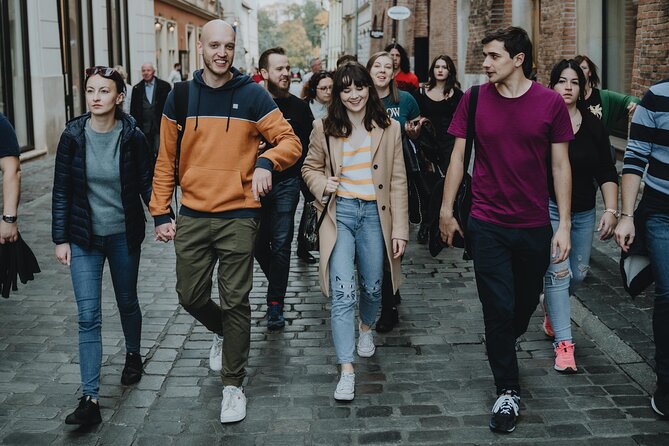
The tour’s tone changes sharply when you reach Szeroka Street in Kazimierz. About 30 minutes are devoted to the synagogues, monuments, and Jewish culture of the district.
Here, the guide also discusses the tragic history of Krakow’s Jews during World War II and points out a filming location associated with Schindler’s List. This is not a light sightseeing stop. You should expect the conversation to move from architecture and city legends toward persecution, loss, and the destruction of Jewish life under Nazi occupation.
The strength of this part depends heavily on the guide’s judgment and delivery. The available feedback praises guides for combining historical facts with conversation, and that approach is especially important here. A private setting lets you ask careful questions and gives the guide room to explain rather than rush through a difficult subject.
Szeroka Street is also valuable because it shows Kazimierz as more than a movie backdrop. The synagogues and monuments point to a long Jewish presence in Krakow, while the wartime story explains the enormous rupture that followed. You see how one neighborhood can carry both cultural memory and painful absence.
The half-hour schedule provides a serious introduction, but it cannot cover every aspect of Jewish Krakow. If this subject is central to your visit, you may want separate time for museums, synagogues, or sites connected with the wartime period.
Wolnica Square, where the walk ends
The final stop is Wolnica Square, reached after about 15 minutes. It served as the center of the Christian part of the former city of Kazimierz, giving the tour a useful counterpoint to Szeroka Street.
Ending here works well. You have moved from the old city’s defenses and royal route into Kazimierz’s divided religious and civic past. Wolnica Square is not simply a final photo stop. It helps explain that Kazimierz had its own urban identity before it became part of modern Krakow.
The tour ends at plac Wolnica 4, in the heart of Kazimierz. You are about 15 minutes on foot from Wawel Castle Hill, and the area has restaurants, cafes, and many tram lines. The guide can help you find your way onward, which is useful if you are still learning Krakow’s layout.
This ending also makes the tour easy to pair with an evening meal or another Kazimierz visit. You do not need to cross the city to find a place to sit down afterward.
What the $200.83 group price really buys
The price is $200.83 per group of up to 15 people. For a full group, that works out to roughly $13.39 per person. For five people, it is about $40.17 each, while two people would pay about $100.42 per person.
That makes the tour most attractive to families, friend groups, or small private parties. A couple may still value the privacy and personal attention, but the price is much harder to justify on a per-person basis.
The admission charges listed for the stops are free, so you are mainly paying for the guide’s time, planning, interpretation, and private format. You are not buying a package of museum tickets or transport. That is important when comparing this walk with a larger group tour.
The strongest value comes from the range covered in three hours. You receive an organized introduction to medieval Krakow, the university, Catholic landmarks, Wawel, and Kazimierz without having to research the route yourself. You also have a guide available to answer questions and explain connections that may not be obvious from plaques or guidebooks.
The tradeoff is depth. The tour gives you a well-shaped overview, but you will not fully explore each monument. I would see it as a first orientation walk, not a complete substitute for visiting Wawel Castle, St. Mary’s Basilica, or Jewish museums on your own.
The private format and the guide’s role
This is a private activity, and only your group participates. The maximum group size is 15, so the experience can work for a family, a set of friends, or a larger private party.
The guide’s personality seems to be a central part of the experience. Tomasz and Tomek are praised for explaining Polish life, history, and culture in an engaging way, while Marcin is described as especially personable and good at mixing architectural development with old Krakow tales.
The descriptions also point to a broad conversation. Expect possible discussion of history, art, politics, folklore, entertainment, and local culture, depending on your questions and the guide leading your walk. That range is useful because Krakow cannot be understood through churches and royal buildings alone.
You should tell the guide what matters most to you at the start. If you want more time on Jewish history, ask for that. If architecture is your priority, say so. If you are using this as your first introduction to the city, ask for help planning what to see next.
The walk is offered in English. Confirmation arrives when you book, service animals are allowed, and the meeting point is near public transportation. Most people can participate, but the route is a three-hour city walk, so comfortable shoes and a willingness to remain on foot are sensible choices.
Free cancellation is available if you cancel at least 24 hours before the start time. Cancellations or changes made less than 24 hours before the experience are not accepted for a refund.
Who should book this Krakow walk?
I would recommend it to anyone with a short stay who wants a clear first look at Krakow. It is especially suitable if you want Old Town, Wawel, and Kazimierz handled in one connected route rather than split across several separate outings.
It also suits you if you like asking questions. The private format and the guides’ conversational style make it a better fit for curious people than for those who prefer silent sightseeing.
Families and larger groups receive the best price value. A couple can enjoy the flexibility, but should compare the group price with smaller shared walks or private tours that include admissions.
You may want something else if you prefer long interior visits, a museum-heavy day, or a tour focused only on Jewish history. The route covers those subjects, but it gives each one limited time.
Should you book it?
Book this tour if you want a well-organized city introduction, a private English-speaking guide, and a route that connects Krakow’s major landmarks with the more serious history of Kazimierz. The strongest reasons are the range of subjects, the ability to ask questions, and the convenient finish near food and public transport.
Think carefully about the price if your group has only one or two people. For a larger party, the cost is reasonable for three hours of private guiding. For a small party, the value depends on how much you care about personal attention.
I would use this walk early in a Krakow visit, then return to the places that deserve more time. It gives you the map, the basic story, and enough context to make your next hours in the city far more rewarding.
FAQ
How long does the private Krakow tour last?
The tour lasts approximately three hours. One available experience lasted about three and a half hours, so the exact timing may vary slightly.
Where does the tour begin?
The meeting point is at the Grunwald Monument on plac Jana Matejki in Krakow, Poland.
Where does the tour end?
The walk ends at Wolnica Square, plac Wolnica 4, in the Kazimierz district.
Is this a private tour?
Yes. Only your group participates, and the booking can include up to 15 people.
What language is the tour offered in?
The tour is offered in English.
Can I cancel for a full refund?
Yes, if you cancel at least 24 hours before the experience start time. Cancellations made less than 24 hours in advance are not refunded, and changes within that period are not accepted.
More Jewish Heritage Tours in Krakow
- Krakow: Schindler’s Factory & Ghetto Guided Tour
★ 4.7 · 1,694 reviews - Krakow: Jewish Quarter and Former Ghetto Tour
★ 4.9 · 1,441 reviews - Krakow: Kazimierz Jewish Quarter Walking Tour
★ 4.8 · 571 reviews - Krakow: Kazimierz, Schindler’s Factory & Ghetto Guided Tour
★ 4.8 · 460 reviews
Just added in Krakow
- Auschwitz-Birkenau – Skip the Line Tickets★ 3.5 · 29 reviews
- Auschwitz-Birkenau: Fast-Track Ticket & Guided Tour No Transfers★ 3.5 · 17 reviews
- Zakopane & Sleigh Ride with Bonfire – Group Tour from Kraków★ 5.0 · 2 reviews
- Sleigh Ride & Bonfire in Zakopane with Funicular – Private Trip★ 5.0 · 48 reviews
- Thermal Baths & Zakopane – Private Trip from Krakow★ 5.0 · 1 review
- Zakopane & Gubalowka Funicular – Private Winter Tour from Krakow★ 5.0 · 10 reviews
- Divine Mercy Sanctuary – Private Tour from Krakow★ 5.0 · 4 reviews
- stag dog chase Krakow prank★ 5.0 · 4 reviews