
REVIEW · NOWA HUTA TOURS
Nowa Huta Tour from Krakow: Communist City, Vodka & Zapiekanka
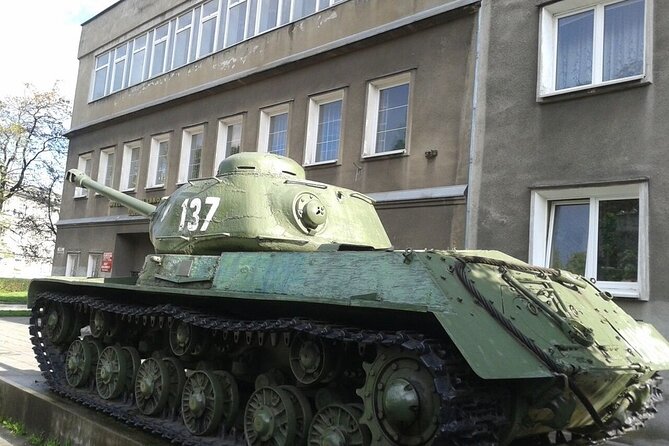
History tastes better with zapiekanka. This four-hour tour takes you from Krakow into Nowa Huta, a planned socialist city shaped by postwar ideology, factory life, religious resistance, and the everyday habits of communist Poland. I like the underground Cold War museum, which gives the walk useful context, and I like the simple food stop, where a toasted zapiekanka and Polish vodka connect history with ordinary life. The main consideration is price: at $114.14 per person, you should want personal stories and a small-group guided experience, not just a quick architecture walk.
I also like that the tour uses the tram to reach Nowa Huta and return to central Krakow, rather than treating the district as a detached day trip. Guides such as Anna and Marta have earned especially warm praise for their stories and pacing. Still, if your main goal is a detailed study of socialist realism or the workers’ protests, make sure your expectations are clear. The tour’s strength is its human side, though the historical and architectural explanation may feel lighter than some history-minded visitors hope.
In This Review
- Key points before you book
- Why Nowa Huta matters to Krakow
- Beneath the city in the 45-minute museum visit
- Reading socialist planning on foot
- The Nowa Huta Cultural Centre and public life
- Zapiekanka, vodka and the social side of history
- Arka Pana, the church that challenged the state
- What the guide adds to the experience
- Price, transport and what the four hours include
- Who will enjoy this Nowa Huta walk?
- Practical tips for getting more from the tour
- Should you book the Nowa Huta tour?
- FAQ
- How long does the Nowa Huta tour from Krakow last?
- Where does the tour begin and end?
- Is transport included?
- What food and drink are included?
- Is the tour suitable for vegetarians?
- Is hotel pickup available?
Key points before you book
- A former Cold War shelter sets the scene: The Nowa Huta museum uses original interiors, propaganda material, household objects, and personal stories to show daily life under communism.
- Nowa Huta is a planned socialist city: Wide avenues, housing blocks, monumental squares, and ordered public spaces reveal how politics shaped urban design.
- Food is part of the history: You get one zapiekanka and a vodka tasting at a local communist-style restaurant.
- The church tells a story of resistance: Arka Pana, or the Church of Our Lady Queen of Poland, grew from a long struggle between local Catholics and communist authorities.
- The tour is capped at 12 people: That makes it easier to hear the guide and ask questions than on a large coach outing.
- Expect real walking: The ground is level, but comfortable shoes matter. The tour lasts about four hours and returns by tram to the Main Market Square area.
Why Nowa Huta matters to Krakow
Krakow’s old center draws most of the attention, with its medieval square, churches, and royal connections. Nowa Huta tells a different story. Built after the Second World War, it was planned as a socialist industrial city beside a major steelworks. The district was meant to represent a new Poland: modern, organized, productive, and shaped by communist ideals.
That plan still shows in the streets. You walk along broad avenues and through carefully arranged public spaces rather than the irregular lanes of old Krakow. Housing blocks were placed in ordered patterns, and monumental buildings gave the city a sense of scale and purpose.
The interesting part is the gap between the plan and real life. Nowa Huta was designed around work, production, and socialist community values, yet its residents developed their own traditions, religious identity, and political opposition. The tour helps you read the district as more than a collection of concrete buildings.
I find that useful because communist-era places can be hard to understand from photographs alone. A guide can point out how a square was meant to function, explain why certain buildings were placed where they were, and connect public design with private life.
More Communism Tours in Kraków
- Legendary Private Nowa Huta Communism Tour with Crazy Guides
★ 5.0 · 262 reviews - Krakow: Private Nowa Huta Adventure Tour in Communist Cars
★ 4.9 · 114 reviews - Krakow: 3.5-Hour Communism Deluxe Tour by Trabant
★ 4.9 · 84 reviews
Beneath the city in the 45-minute museum visit
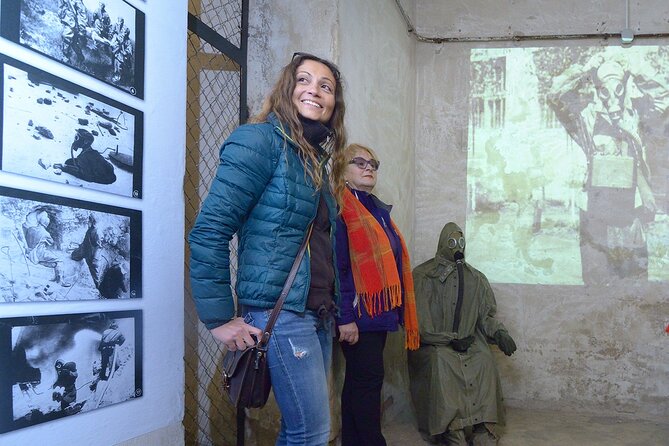
The tour begins at Podziemna Nowa Huta, the Museum of Krakow’s underground Nowa Huta site. The museum occupies a former Cold War shelter, which immediately gives the visit a physical sense of the period. You are not simply looking at labels in a modern gallery. You are moving through a place built for fear, protection, and uncertainty.
The displays focus on daily life under communism. You may see original interiors, household objects, propaganda displays, and personal accounts from the socialist era. That mix matters. Political history can feel distant when it is reduced to leaders and dates, but a kitchen object or household arrangement shows how large systems reached into ordinary routines.
This is also where the guide’s personal experience can make the tour more memorable. Anna, praised for having lived through communist Poland and for taking part in protests as a student, has been especially valued for connecting the museum material with life at the time. Her stories can help you understand how young people, workers, and families experienced the period rather than viewing it only through official slogans.
The museum visit lasts about 45 minutes, so it provides a strong introduction without taking up the whole afternoon. If you want a full museum treatment of Polish communism, it may feel brief. Its real job is to prepare you for the streets outside.
Reading socialist planning on foot
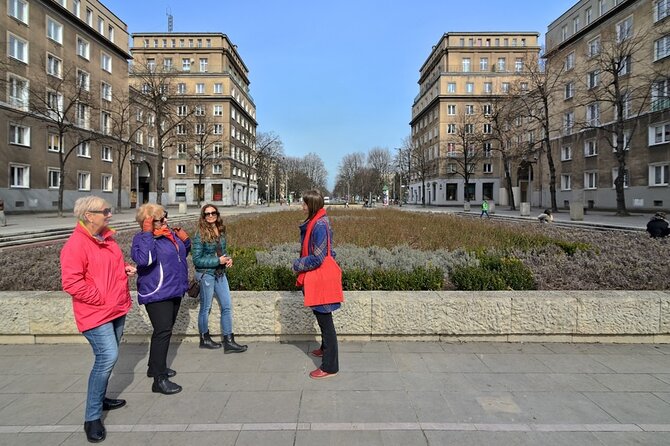
After the shelter, you walk through the center of Nowa Huta. This portion takes about 30 minutes according to the planned schedule, though the full route includes additional walking between stops. The pace is described as comfortable, and the ground is level, but you should still wear practical shoes.
Your guide explains the principles behind the district’s design. Wide avenues were not just a traffic solution. Symmetry, scale, and carefully placed public areas helped express the order that socialist planners wanted to project. Housing blocks were part of a wider plan for work, services, community life, and political identity.
I would pay close attention to the contrast between the large public spaces and the more personal stories from the museum. The city was planned from above, but it was lived in by real people with their own routines and opinions. That tension is one of the most useful ideas the tour brings forward.
The route also looks at how Nowa Huta has changed since the fall of communism. The district is not frozen in 1989. It remains a functioning part of Krakow, with local institutions and community life continuing within the old planned framework.
One honest caution: the walking section may not satisfy you if you want a long, technical lecture on socialist realism architecture. One past participant hoped for more detail about the buildings and the workers’ protests. That criticism is worth taking seriously. The guide may focus more on lived experience, memory, and broad history than on architectural terminology.
The Nowa Huta Cultural Centre and public life
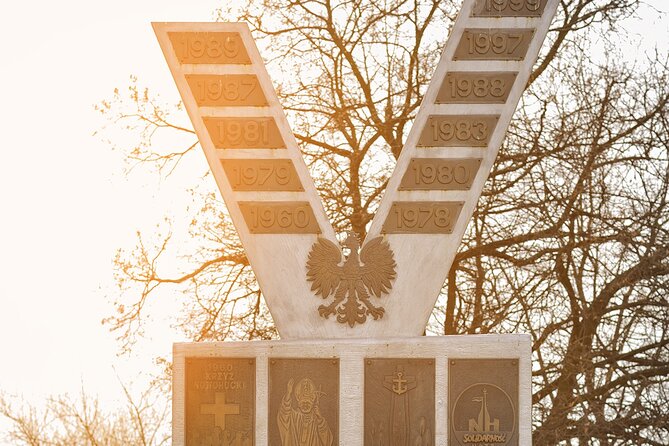
Along the route, you pass the Nowa Huta Cultural Centre. During the communist period, it helped promote official socialist values through art, theater, and music. That makes it a useful stop for understanding how culture was used as part of public life.
The center also has a modern role as a cultural institution for the district. This change is important. It shows how buildings created under one political system can continue serving local people after that system disappears.
Your guide explains both sides of the story: the building’s original ideological purpose and its present use. That gives you a more balanced picture than treating every communist-era structure as either a relic or a villain.
The stop itself is not described as a separate admission visit, so expect an exterior explanation as part of the walk rather than a long indoor program. Its value comes from the context provided by the guide.
More Vodka Tastings in Kraków
- Krakow–Zakopane: Cable Car, Chocholow Baths, Cheese & Vodka
★ 5.0 · 10,720 reviews - Krakow: Zakopane Cable Car, Vodka, Cheese & Hot Springs Tour
★ 4.9 · 1,832 reviews - The Kraków Vodka Tour
★ 5.0 · 862 reviews - Krakow: Food Tour of 10 Tastings with Pierogi, Vodka & More
★ 5.0 · 169 reviews
Zapiekanka, vodka and the social side of history
The food stop lasts about 45 minutes and adds a welcome change of pace. You receive one local zapiekanka, an open-faced toasted baguette that is one of Poland’s best-known quick meals, followed by a vodka tasting in a communist-style restaurant.
Zapiekanka is simple food, but that is exactly why it fits this tour. It belongs to the world of inexpensive, everyday eating rather than formal Polish dining. A snack from a local market or neighborhood spot can tell you something about daily habits in a way a polished restaurant meal cannot.
The vodka stop works in much the same way. It is not presented as a grand tasting lesson. It is a small social ritual tied to the atmosphere of the period. You get a taste of how food and drink fit into ordinary public life.
Additional food and drinks are not included, so do not expect a full meal. If you have a large appetite, you may want to plan another meal before or after the tour. Vegetarians are welcome, and the provider says food allergies can usually be handled unless you have several combined allergies or follow a vegan diet.
I like this part because it prevents the tour from becoming a sequence of dates and buildings. You talk, eat, and pause. The district becomes a lived place rather than a classroom.
Arka Pana, the church that challenged the state
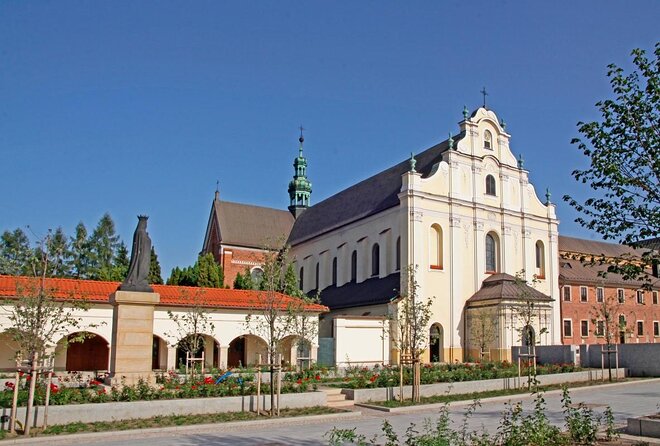
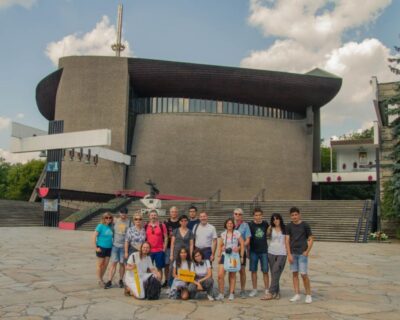
The final major stop is the Church of Our Lady Queen of Poland, commonly called Arka Pana, or the Ark of the Lord. Its shape and story make it one of the most striking places in Nowa Huta.
Communist planners wanted the new industrial city to reflect a secular socialist identity. Local Catholics pushed for a church, and the eventual building became a symbol of faith, community organization, and opposition to state control. The church’s history links religion with the wider struggles of communist Poland, including the atmosphere that later surrounded the Solidarity movement.
This is where the tour’s themes come together. The museum showed how the system reached into daily life. The streets showed how ideology shaped the city. The food stop connected history with social habits. Arka Pana shows how residents created a powerful community identity that the authorities could not simply design away.
The stop lasts about 45 minutes. Your guide explains why the church matters, rather than treating it as only an unusual piece of modern architecture. If you are interested in the relationship between Catholicism, protest, and Polish identity, this may be the most meaningful part of the route.
What the guide adds to the experience
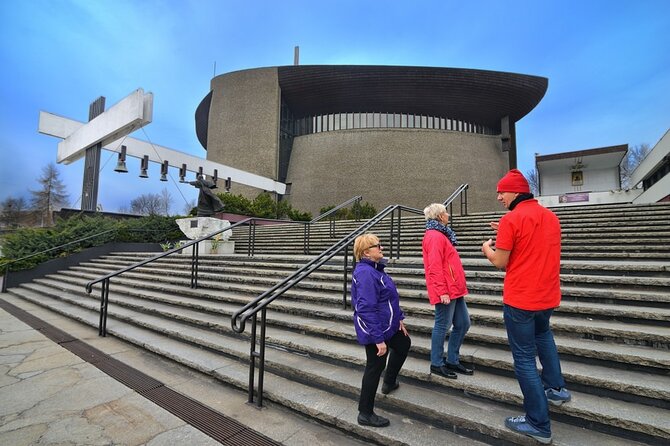
This tour depends heavily on the guide. The group size can reach 12 people, which is still small enough for questions and a personal feel, but the quality of the experience will reflect who leads it.
Anna has received particular praise for her first-hand stories of growing up, studying, and protesting during communist times. One person described her as someone they would happily spend an evening talking with, which tells you something about her warmth and storytelling ability. Marta has also been praised for her pacing, historical skill, and ability to explain how the community functions today.
Those details matter because Nowa Huta is not a place you understand by taking a few photographs. The best guide will help you connect a street plan with an ideology, an object with a household routine, and a church with a political struggle.
At the same time, personal storytelling can create the tour’s main weakness. If you want a tightly structured academic lecture, ask questions early. You might ask about socialist realism, the steelworks, workers’ protests, or the Solidarity movement. A good conversation can bring out more of the material you care about.
Price, transport and what the four hours include
At $114.14 per person, this is not a cheap way to see Nowa Huta. You are paying for a four-hour guided experience, museum admission, tram transport in both directions, a zapiekanka, vodka tasting, and a small-group format capped at 12 people.
The value depends on what you want. If you would otherwise visit Nowa Huta independently, read about its history, find the museum, work out the tram route, and locate a local food stop, the tour bundles those pieces into one plan. You also gain a guide who can connect the separate sites.
If you mainly want to see the architecture from outside, the price may feel high. The most critical response to the experience focused on that issue, with the guide praised personally but the overall content seen as too light on architecture and protest history.
Transport is practical. The meeting point is at Długa 1 in Krakow, and the tour ends near the Main Market Square. The tram ride helps you reach the district without arranging a separate transfer, and the return journey is described as easy and comfortable.
The private option includes pickup from central Krakow hotels, but the small-group option does not include hotel pickup. Confirmation is provided at booking, and the experience is near public transportation.
The tour is often booked well ahead, with an average booking lead time of about 37 days. That suggests you should reserve early if your Krakow dates are fixed, especially since the group is limited to 12 people.
Who will enjoy this Nowa Huta walk?
I would recommend it most strongly if you have an interest in the Eastern Bloc, Polish communism, Cold War life, political memory, or the role of religion in modern Poland. The museum, personal accounts, planned streets, food, and church create a varied four-hour introduction.
It also suits you if you prefer local experiences over a standard old-town sightseeing route. You leave central Krakow and see a district built for a completely different political age. The tram ride and neighborhood food stop make the outing feel connected to present-day Krakow.
Families and older visitors can participate if they are comfortable walking for several hours. The route is level, and guides can adjust the pace, but this is not a sit-down excursion. You will move between sites and spend time outdoors.
I would think twice if you are vegan, have several serious food allergies, or dislike alcohol-focused stops. The provider says vegetarians are welcome and most allergy needs can be managed, but vegan arrangements are not guaranteed. You can also tell the guide if you prefer not to drink, though the included tasting remains part of the program.
If you are an architecture specialist or a serious student of the Solidarity movement, treat this as an introduction rather than a definitive study. You may need another source or a separate visit to fill in the details.
Practical tips for getting more from the tour
Wear comfortable walking shoes. The ground is level, but the route includes several hours of movement, and the museum, streets, food stop, and church are spread across the district.
Ask the guide to explain the parts that interest you most. In particular, ask about socialist realism, the workers’ protests, the steelworks, the Solidarity movement, and the church-building struggle. This helps balance the personal stories with the subjects some people find underdeveloped.
Do not treat the zapiekanka as a full lunch. It is a local snack, and extra food and drinks cost more. The stop is better understood as a cultural pause than a meal.
If you are booking the private version, contact the provider about pickup from a central Krakow hotel. The standard small-group version begins at Długa 1 and returns near the Main Market Square.
Free cancellation is available up to 24 hours before the start time. Changes or cancellations made later are not refunded, so keep that deadline in mind when your plans are uncertain.
Should you book the Nowa Huta tour?
Book it if you want a friendly, personal introduction to communist Krakow, especially one that combines a Cold War shelter, planned urban design, local food, and the powerful story of Arka Pana. The guides can make the experience feel like a conversation with someone who remembers the era, not just a walk past old buildings.
Skip it if you expect a highly technical architecture tour or a detailed account of every workers’ protest. At $114.14, the price demands more than a basic sightseeing walk, and the tour’s value rests on the guide’s storytelling and the way the stops fit together.
For many people, that human approach will be the point. For others, it will feel like not enough history for the cost. Ask questions, wear good shoes, and book early if the subject appeals to you.
FAQ
How long does the Nowa Huta tour from Krakow last?
The experience lasts approximately four hours, including the museum visit, walking route, food and vodka stop, church visit, and tram transport.
Where does the tour begin and end?
It begins at Długa 1, 31-147 Kraków, Poland. It ends near Krakow’s Main Market Square, Rynek Główny.
Is transport included?
Yes. Tram transport to Nowa Huta and back to central Krakow is included.
What food and drink are included?
The tour includes one local zapiekanka and a vodka tasting in a communist-style restaurant. Additional food and drinks are not included.
Is the tour suitable for vegetarians?
Yes. Vegetarians are welcome. The provider says most food allergies can be handled, but vegan arrangements are not guaranteed.
Is hotel pickup available?
Hotel pickup from central Krakow hotels is available for the private tour option. It is not included with the small-group option.
More Nowa Huta Tours
- Krakow: Nowa Huta Guided Tour in Vintage Car
★ 4.9 · 277 reviews - Nowa Huta: Steelworks Administration Buildings/Shelters Tour
★ 4.9 · 160 reviews - Trip Around Nowa Huta – Krakow
★ 5.0 · 50 reviews - Communist Krakow – Nowa Huta Walking Tour in English
★ 4.9 · 34 reviews
Just added in Krakow
- Auschwitz-Birkenau – Skip the Line Tickets★ 3.5 · 29 reviews
- Auschwitz-Birkenau: Fast-Track Ticket & Guided Tour No Transfers★ 3.5 · 17 reviews
- Zakopane & Sleigh Ride with Bonfire – Group Tour from Kraków★ 5.0 · 2 reviews
- Sleigh Ride & Bonfire in Zakopane with Funicular – Private Trip★ 5.0 · 48 reviews
- Thermal Baths & Zakopane – Private Trip from Krakow★ 5.0 · 1 review
- Zakopane & Gubalowka Funicular – Private Winter Tour from Krakow★ 5.0 · 10 reviews
- Divine Mercy Sanctuary – Private Tour from Krakow★ 5.0 · 4 reviews
- stag dog chase Krakow prank★ 5.0 · 4 reviews
Nowa Huta Tours, compared.
Legendary Private Nowa Huta Communism Tour with Crazy Guides
Read our review →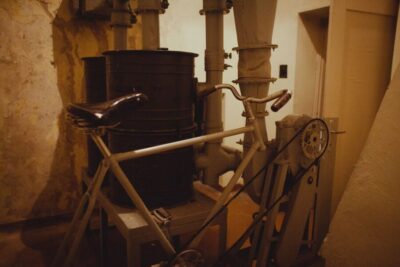
Nowa Huta: Steelworks Administration Buildings/Shelters Tour
Read our review →
Private Nowa Huta Adventure Tour in Communist Cars
Read our review →
Communist Krakow – Nowa Huta Walking Tour in English
Read our review →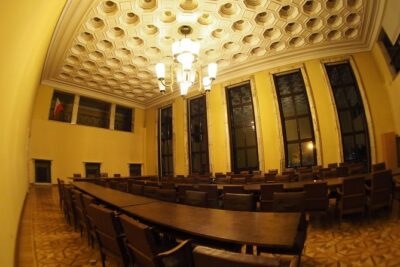
Nowa Huta Steel Mill Administration Buildings and Shelters with local NGO
Read our review →
1.5h Crazy Guides’ Communism Tour of Nowa Huta in Classic Car
Read our review →Browse the lists this tour appears in