
REVIEW · SCHINDLER'S FACTORY TOURS
Krakow: Schindler’s List Filming Locations Guided Tour
The movie meets the real city. This two-hour walking tour connects Schindler’s List filming locations with the actual streets, courtyards, and districts of Kraków, giving the film a more immediate human setting. I like the route’s focus on both cinema and history, rather than treating the movie locations as simple photo stops. I also like the use of archival film-set photos, which lets you compare what you see today with how each place appeared on screen. The main consideration is the pace: two hours of walking through Kazimierz and Podgórze calls for comfortable shoes and a willingness to think carefully about difficult wartime events.
The tour begins at Kraków’s Market Square and moves toward Kazimierz, the historic Jewish Quarter, before continuing into Podgórze, the former Ghetto area. It costs $26 per person, a fair price if you want the film explained by a guide rather than simply finding locations on your own. It is less suitable if you want a relaxed sightseeing walk with little discussion of the Holocaust or wartime suffering.
In This Review
- Key points at a glance
- Why Schindler’s List feels different in Kraków
- Starting in Market Square by the Cloth Hall
- Kazimierz, Kraków’s historic Jewish Quarter
- Across the river to Podgórze and the former Ghetto area
- Seeing the film locations with archival images
- The guide makes the difference
- Is $26 a fair price for two hours?
- Who will enjoy this walk most?
- Practical advice before you go
- Should you book the Schindler’s List filming locations tour?
- FAQ
- Where does the tour meet?
- How long does the tour last?
- What areas of Kraków does the tour visit?
- Is transportation included?
- Are food and drinks included?
- Which languages are available?
- Is the tour wheelchair accessible?
- What should I wear?
- Can I cancel the booking?
- Do I have to pay when I book?
Key points at a glance
- Archival photos make the movie locations easier to recognize: You can compare scenes from the film with the streets and courtyards in front of you.
- The route covers two important Kraków districts: Kazimierz and Podgórze show different parts of the city’s Jewish and wartime story.
- Film facts come with historical context: The guide explains how locations were used for filming and what happened there during World War II.
- The meeting point is easy to find: Begin at the northeast corner of the Cloth Hall in Market Square, facing St. Mary’s Basilica.
- The tour stays focused at two hours: That gives you a useful introduction without taking up an entire day, though the subject matter is serious.
- Language and flexibility are strong points: Tours are offered in English, German, and Spanish, with free cancellation up to 24 hours before departure.
Why Schindler’s List feels different in Kraków
Many movie-location tours are mostly about spotting a doorway, taking a picture, and moving on. This one has more weight because Schindler’s List was built around real people and real events. The streets are not just scenery. They point toward the destruction of Kraków’s Jewish community during World War II.
I like that the tour brings film and history together without treating either one as an afterthought. You learn where scenes were shot, how a space was changed for the production, and what the place meant in the wartime story. That combination helps you understand why Spielberg chose these areas and why Kraków remains so important to the film.
The guide also shares behind-the-scenes details about the director, actors, and practical challenges of making the movie. These details give the walk a second layer. You are not only looking at a historic street, but also at how filmmakers recreated and shaped a painful chapter of history.
Still, you should know what kind of outing this is. The subject is upsetting at times. The tour is not designed as light entertainment, and the strongest moments may come from the contrast between ordinary city spaces and the events connected to them.
More Schindler Factory tours:
- Krakow: Oskar Schindler’s Factory Entry Ticket & Guided Tour
★ 4.2 · 3,793 reviews - Krakow: Schindler’s Factory Tour with Entrance Ticket
★ 4.5 · 3,182 reviews - Krakow: Schindler’s Factory Skip-the-Line Ticket
★ 4.4 · 3,105 reviews
Starting in Market Square by the Cloth Hall
The meeting point is at the northeast corner of Kraków’s Cloth Hall, or Sukiennice, in the center of Market Square. Face St. Mary’s Basilica and look toward the northeast corner of the long historic market building. This is a practical place to begin because it is a major landmark and easy to identify.
Market Square is not itself the main focus of the walk. Think of it as the launch point before the tour heads into the Jewish Quarter and former Ghetto area. If you arrive early, use the time to get your bearings, find the guide, and make sure your shoes are comfortable.
The starting point also helps place the tour within Kraków’s wider city center. From here, you move away from the grand central square toward districts where the film’s streets and courtyards carry a more intimate feel. The change in setting matters. The tour gradually moves from Kraków’s most famous public space into neighborhoods tied more directly to Jewish life and wartime persecution.
Transportation to the meeting point is not included, so you need to make your own way there. Food and drinks are also not included. For a two-hour walk, that is easy enough to manage, but plan ahead if you want coffee or a snack before setting off.
Kazimierz, Kraków’s historic Jewish Quarter
Kazimierz is one of the central parts of this tour. It was the historic Jewish Quarter of Kraków, and its streets provide much of the visual connection to the film. Here, the guide points out recognizable locations and explains how they were used during production.
I would pay close attention to the courtyards. They may look ordinary at first, yet the guided explanation shows how the filmmakers used these enclosed spaces to create scenes with a strong sense of tension and place. Archival photos are especially useful here. They allow you to see the difference between the location as it appears now and the version prepared for the film.
You also learn about the Jewish community that lived in Kraków before and during World War II. That context is essential. Without it, the walk could become a hunt for movie backdrops. With it, each location gains a connection to the people and community represented by the story.
The tour does not promise access to a museum collection or a separate interior attraction. Its strength is the street-level setting. You walk through the districts themselves, with the guide explaining what you are seeing as you go. That makes the experience direct, but it also means the quality of the visit depends heavily on the guide’s storytelling.
A particularly praised feature is the guide’s preparation. Archival images from the film set are brought along so you can compare past and present at each stop. This is a small detail with a big effect. A location that might otherwise be hard to identify becomes much clearer when you see the actors, set dressing, or camera view from the production.
Across the river to Podgórze and the former Ghetto area
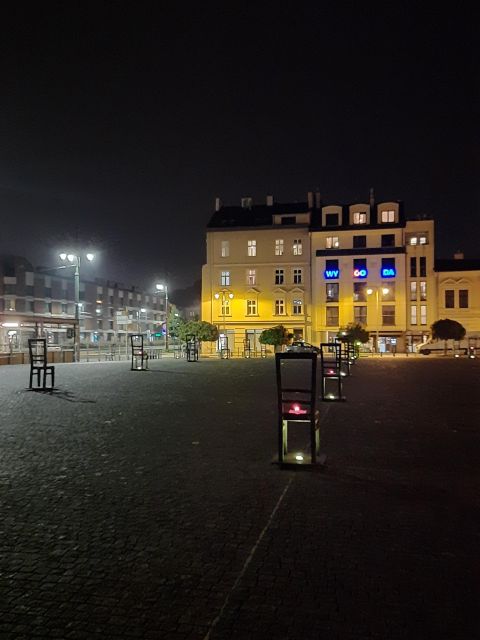
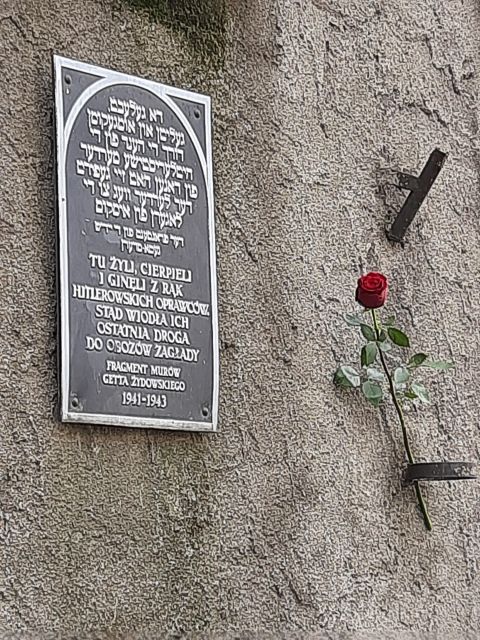
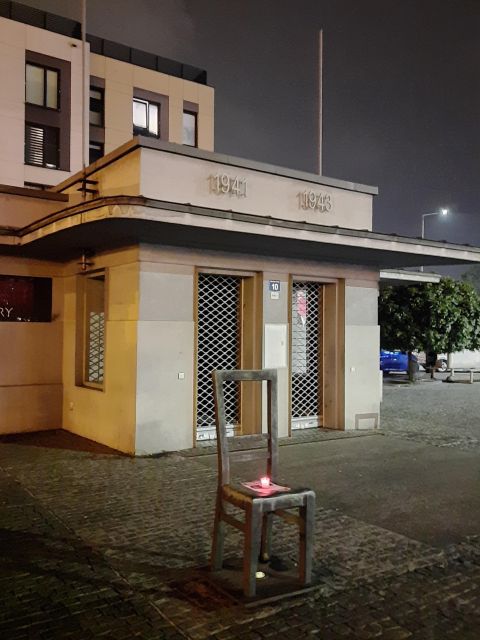
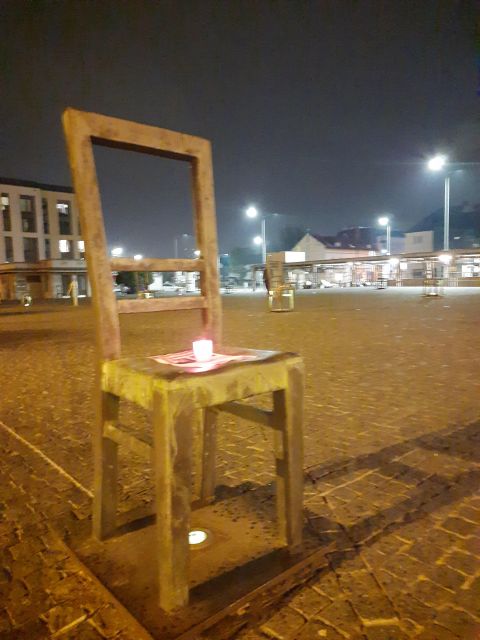
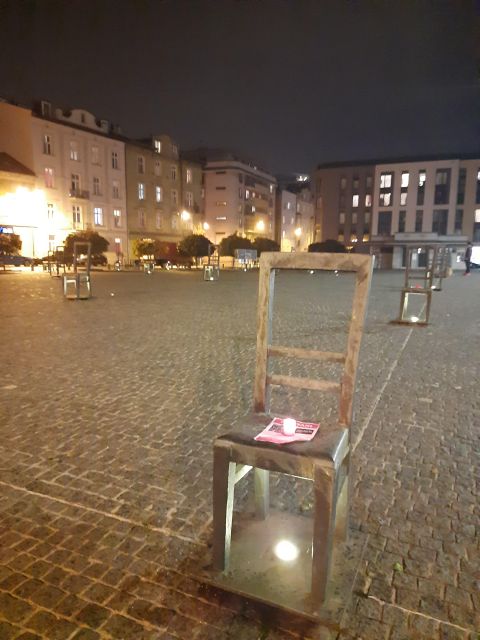
The route continues into Podgórze, the area associated with Kraków’s former Ghetto. This section gives the tour a more serious historical focus. You are no longer looking only at where a scene was filmed. You are learning about the place where the Jewish population was confined during the war and how that history shaped the film.
The guide explains what happened in the area and how the movie presented it. That comparison is valuable because films must compress events and arrange locations for storytelling. The tour helps separate what was created for the camera from what belongs to the actual history of Kraków.
Podgórze also adds variety to the walking route. Kazimierz and Podgórze are not presented as one interchangeable movie set. Each district has its own role in the tour, and the movement between them helps you understand the geography behind the story.
You should expect a reflective walk rather than a fast checklist. The guide may pause at streets, courtyards, and landmarks while explaining both the filming and the history. Because the tour lasts two hours, the commentary has to remain selective. You will gain a strong introduction, but it cannot cover every detail of Kraków’s Jewish wartime experience.
That limitation is worth keeping in mind if you want an in-depth historical study. This tour works best as a focused introduction connected to a specific film. It gives you useful context and helps you see the city differently, but it is not a full-day historical program.
A few more in Krakow
- From Krakow: Auschwitz-Birkenau Guided Tour & Hotel Pickup
★ 4.5 · 33,358 reviews - From Krakow: Auschwitz-Birkenau Guided Tour & Hotel Pickup
★ 4.5 · 29,340 reviews - Krakow: Auschwitz Guided Tour with Optional Hotel Pickup
★ 4.5 · 15,280 reviews - Krakow–Zakopane: Cable Car, Chocholow Baths, Cheese & Vodka
★ 5.0 · 10,720 reviews
Seeing the film locations with archival images
The most useful feature of the tour is the comparison between the movie and the real places. At each stop, you may see a location as it looks today and then view an archival image from the film set. This gives you a clear sense of how the production worked with streets, courtyards, and landmarks.
The guide explains how the spaces were transformed for filming. That may include the way a location was dressed, framed, or adapted to represent a different moment in the story. These behind-the-scenes details help you notice the practical side of filmmaking without losing sight of the historical subject.
I like this approach because it avoids a common problem with film tours: locations can be difficult to recognize once the sets, costumes, and camera angles are gone. A still image bridges that gap. It also makes the tour more rewarding for people who have watched the movie recently and for those who know it well.
If you have not seen Schindler’s List, you can still follow the tour, since the guide explains the locations and history. But you will get more from the film references if the story is familiar. If you plan to watch it before your visit, be prepared for a serious film with painful scenes. This is not a light introduction to Kraków.
The guide makes the difference
A walking route can be excellent on paper and still feel flat without a strong guide. Here, the guide is described as exceptionally well-prepared and passionate, with careful explanations at every stop. That matters because the tour asks you to connect three things at once: the present-day setting, the movie version, and the historical events.
The guide does not simply point and name locations. You hear stories about the actors, Spielberg, and the difficulties of bringing the story to the screen. At the same time, the guide explains what happened to Kraków’s Jewish community during the war. The best parts of the walk come from this balance.
I would also value the guide’s use of photos as a teaching tool. A spoken description of a film location can be vague. A photo gives you something concrete to study, especially when a street has changed or a scene used only one small part of a larger courtyard.
Tours are available in English, German, and Spanish. If your language choice matters, check the available starting time before booking. The activity is wheelchair accessible, though it still involves walking through historic urban areas. If you use a wheelchair or have limited mobility, it is sensible to consider the nature of the streets and courtyards while planning.
Is $26 a fair price for two hours?
At $26 per person, the tour is priced as an affordable guided introduction rather than a major full-day attraction. I think the value is good if you want the locations explained in person and appreciate the link between the film and Kraków’s wartime past.
You are paying for a live guide, a planned route through two districts, historical interpretation, and behind-the-scenes film information. The archival photos add value because they help you understand places that might otherwise be easy to miss.
The price is less compelling if you only want to take pictures outside familiar locations. You could walk through parts of Kazimierz and Podgórze independently, but you would lose the organized connection between what happened there and how the film used the spaces.
The two-hour length also keeps the cost reasonable for a half-day plan. You can fit the tour around other Kraków activities without giving up an entire day. Just remember that transportation, food, and drinks are separate, and the meeting point is at Market Square.
Who will enjoy this walk most?
I would recommend the tour most strongly to people who have seen Schindler’s List and want to understand its locations in Kraków. Fans of the film will recognize the value of standing in the streets and courtyards that helped shape its visual world.
It also suits visitors interested in Jewish Kraków and World War II history. The movie provides the entry point, but the guide’s historical explanation gives the walk its real purpose. You do not need to be a film expert. Curiosity and a willingness to listen matter more.
Families with older children or teenagers may find the tour useful if they are ready for serious subject matter. The tour is not presented as a children’s activity, and the history can be difficult. Use your judgment based on what your group can handle.
You may want to skip it if you prefer light sightseeing, indoor attractions, or a route with very little walking. You may also find it too brief if you want a full historical study of Kraków’s Jewish community. In that case, use this as a focused starting point rather than your only historical activity in the city.
Practical advice before you go
Wear comfortable shoes. That is the clearest practical advice for this outing, since the tour moves through historic districts on foot. You will get more from the guide if you are not distracted by sore feet.
Arrive with enough time to locate the northeast corner of the Cloth Hall and confirm that you are facing St. Mary’s Basilica. The meeting point is central, but the Cloth Hall has several sides and can be busy.
Think about the emotional tone before booking. The tour deals with the destruction of Kraków’s Jewish community during World War II, not just movie trivia. I find that the experience is strongest when you allow time afterward to reflect instead of rushing straight into another packed activity.
The booking terms offer useful flexibility. You can cancel up to 24 hours in advance for a full refund, and you can reserve now while paying later. Starting times vary, so check availability when choosing your date.
Should you book the Schindler’s List filming locations tour?
Book it if you want a thoughtful two-hour walk that joins film locations with the real history of Kazimierz and Podgórze. The archival photos, careful explanations, and behind-the-scenes stories make the route more useful than a simple self-guided search for recognizable streets.
I would especially choose it if you have watched Schindler’s List or plan to watch it before visiting Kraków. At $26, the guided context is a sensible value, provided you are comfortable with the serious subject matter and the walking involved.
Skip it if you want a cheerful city tour, a museum visit, or a detailed full-day historical program. For the right audience, though, this is a focused and moving way to see how a major film connects with the real places and people behind its story.
FAQ
Where does the tour meet?
The meeting point is at the northeast corner of Kraków’s Cloth Hall, called Sukiennice, in Market Square. Face St. Mary’s Basilica to find the correct corner.
How long does the tour last?
The guided walking tour lasts two hours.
What areas of Kraków does the tour visit?
The route visits Kazimierz, Kraków’s historic Jewish Quarter, and Podgórze, the area associated with the former Ghetto.
Is transportation included?
No. Transportation to the meeting point is not included.
Are food and drinks included?
No. Food and drinks are not included in the tour.
Which languages are available?
The tour is available in English, German, and Spanish.
Is the tour wheelchair accessible?
Yes, the activity is listed as wheelchair accessible.
What should I wear?
Wear comfortable shoes because the tour involves walking through historic areas.
Can I cancel the booking?
Yes. You can cancel up to 24 hours in advance for a full refund.
Do I have to pay when I book?
No. The reserve now and pay later option lets you book your place without paying immediately.
Just added in Krakow
- Auschwitz-Birkenau – Skip the Line Tickets★ 3.5 · 29 reviews
- Auschwitz-Birkenau: Fast-Track Ticket & Guided Tour No Transfers★ 3.5 · 17 reviews
- Zakopane & Sleigh Ride with Bonfire – Group Tour from Kraków★ 5.0 · 2 reviews
- Sleigh Ride & Bonfire in Zakopane with Funicular – Private Trip★ 5.0 · 48 reviews
- Thermal Baths & Zakopane – Private Trip from Krakow★ 5.0 · 1 review
- Zakopane & Gubalowka Funicular – Private Winter Tour from Krakow★ 5.0 · 10 reviews
- stag dog chase Krakow prank★ 5.0 · 4 reviews
- Divine Mercy Sanctuary – Private Tour from Krakow★ 5.0 · 4 reviews