
REVIEW · SCHINDLER'S FACTORY TOURS
Krakow: Schindler’s Factory Tour & Skip-the-Line Entry
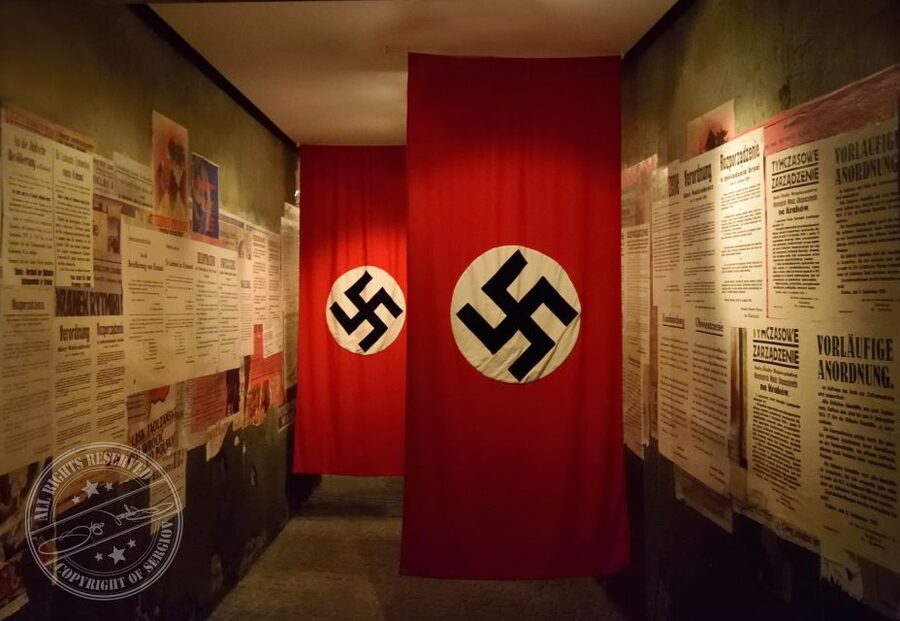
History hits harder here. This 90-minute visit to Oscar Schindler’s former enamel factory uses film, photographs, objects, and recreated spaces to explain Krakow under Nazi rule from 1939 to 1945. I like the strong focus on everyday life, not just famous names, and I like having a live guide to make sense of a large, emotionally heavy exhibition. The main drawback is that the tour is less about Schindler himself than the title may suggest, and a guide may leave you little quiet time to read every display.
The visit costs about $49 per person, including admission and a professional guide. That is a fair price if you want context and a guided route through the museum, but less attractive if you prefer to move slowly and study each panel alone. The museum is moving rather than light entertainment, so plan it for a day when you have the attention and energy for wartime history.
In This Review
- Key points to know before you go
- What this tour is really about
- Meeting your guide at Lipowa 4
- Schindler’s office and the factory connection
- Krakow under occupation, told through daily life
- A theatrical walk through wartime Krakow
- The Jewish apartment and Plaszow camp artifacts
- The Hall of Choices and the moral questions of war
- How much Schindler will you actually learn about?
- Guide quality, group size, and pace
- Is $49 a fair price?
- Practical details that affect your visit
- Who should book this experience?
- Should you book Schindler’s Factory tour?
- FAQ
- Where does the Schindler’s Factory tour meet?
- How long does the guided tour last?
- What is included in the price?
- Is food included?
- Which languages are available?
- Do I need identification?
- Is the exact start time guaranteed?
- Can I skip the ticket line?
- Can I bring luggage or a large bag?
- Can I cancel the booking?
Key points to know before you go
- Schindler’s office is preserved inside the former factory’s administrative building, giving the visit one direct link to the man made famous by Schindler’s List.
- The exhibition covers Krakow from 1939 to 1945, including Polish, Jewish, and Nazi experiences rather than focusing only on Schindler.
- A recreated tram, Jewish apartment, and Hall of Choices turn historical information into physical scenes you can walk through.
- The Survivor’s Ark uses thousands of enamel pots, echoing the factory’s production and the people whose lives were tied to it.
- Guides are available in English, German, French, Italian, and Spanish, with several bookings praising the clear and engaging guiding.
- The tour lasts 90 minutes, and the guide’s pace may limit how long you spend reading individual texts.
What this tour is really about
The name naturally makes you expect a museum centered on Oscar Schindler. You will see his office and learn about the factory, but the main subject is broader: Krakow during the Nazi Occupation.
That distinction matters. The exhibition follows the city’s upheaval, the destruction of long-established Polish-Jewish relations, the rules imposed by the Nazi occupiers, and the difficult choices faced by ordinary people. Schindler is part of this story, not its only character.
I find that approach useful because it gives you more than a film connection. You do not simply walk through a famous building and look for scenes from Spielberg’s movie. Instead, you get a picture of how war altered work, housing, identity, family life, and public space in Krakow.
The exhibition presents the experiences of Poles and Jews alongside those of the Nazi occupiers. That wider frame can be difficult, but it prevents the story from becoming too simple. The museum asks you to consider how people behaved when normal moral rules were replaced by fear, orders, punishment, and survival.
More Schindler Factory tours:
- Krakow: Oskar Schindler’s Factory Entry Ticket & Guided Tour
★ 4.2 · 3,793 reviews - Krakow: Schindler’s Factory Tour with Entrance Ticket
★ 4.5 · 3,182 reviews - Krakow: Schindler’s Factory Skip-the-Line Ticket
★ 4.4 · 3,105 reviews
Meeting your guide at Lipowa 4
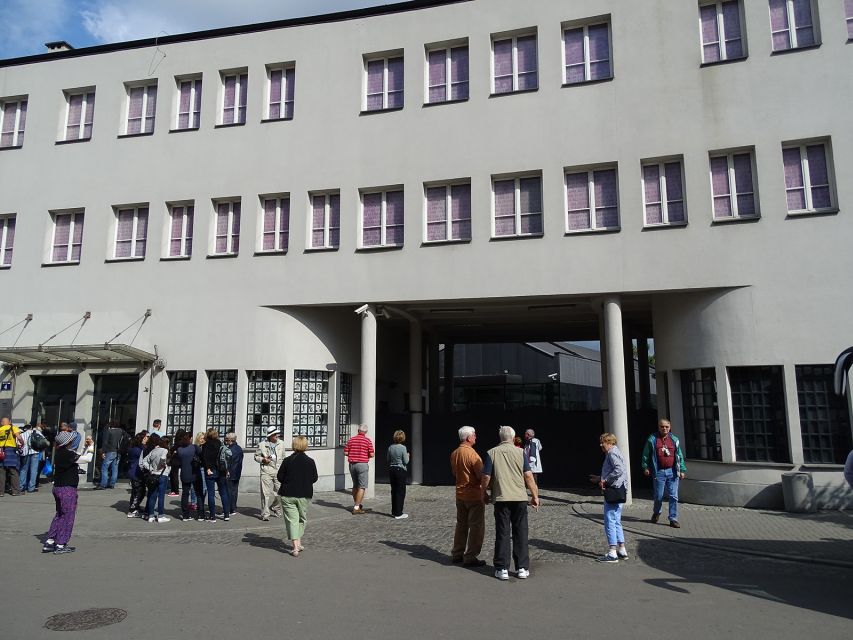
The meeting point is Lipowa 4, Krakow, at the front of the museum’s main entrance. Look for a guide holding an excursion.city sign.
You should arrive ready to find the guide outside the entrance rather than assuming you can walk straight into the museum and sort things out inside. Bring a passport or ID card. From January 1, 2026, the museum requires the full names of all participants for its personalized tickets, and entry can be refused without the required identification.
The advertised duration is 90 minutes, or 1.5 hours. Times can be approximate because the museum may adjust entry times according to its schedule. You can choose a preferred time when booking, but from 2026 that exact time is not guaranteed, so keep an eye on messages before the visit.
The skip-the-line entry is useful here. It does not make the museum private or remove the need to follow its schedule, but it can save you from waiting at the ticket line and gives you a cleaner start. The guide handles the entrance arrangements, allowing you to focus on the visit.
Schindler’s office and the factory connection
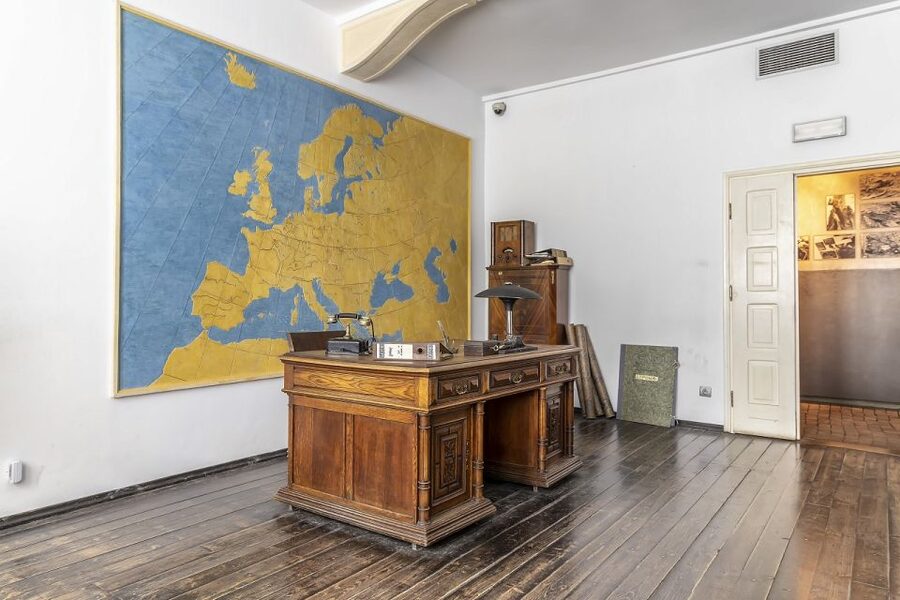
One of the first things that gives the tour its sense of place is Schindler’s preserved office. It is located in the administrative part of the former factory, and it provides a direct physical link to the industrial site that became famous through Schindler’s List.
You can also see the Survivor’s Ark, a sculptural work made from thousands of enamel pots. The object recalls the type of goods produced in the factory while pointing toward the lives affected by the wartime economy. It is an arresting idea: ordinary factory objects become a reminder of people who had to make impossible choices.
Do not expect every room to function like a traditional factory tour. The emphasis is on the museum’s exhibition and the wartime story, not on a full industrial walk-through of machinery and production methods. If your main goal is to see how enamelware was made, this will not be the right choice.
If your goal is to understand why the factory matters, the preserved office and industrial setting give the story useful weight. The building is not just a neutral gallery. Its former purpose remains part of what you are seeing.
Krakow under occupation, told through daily life
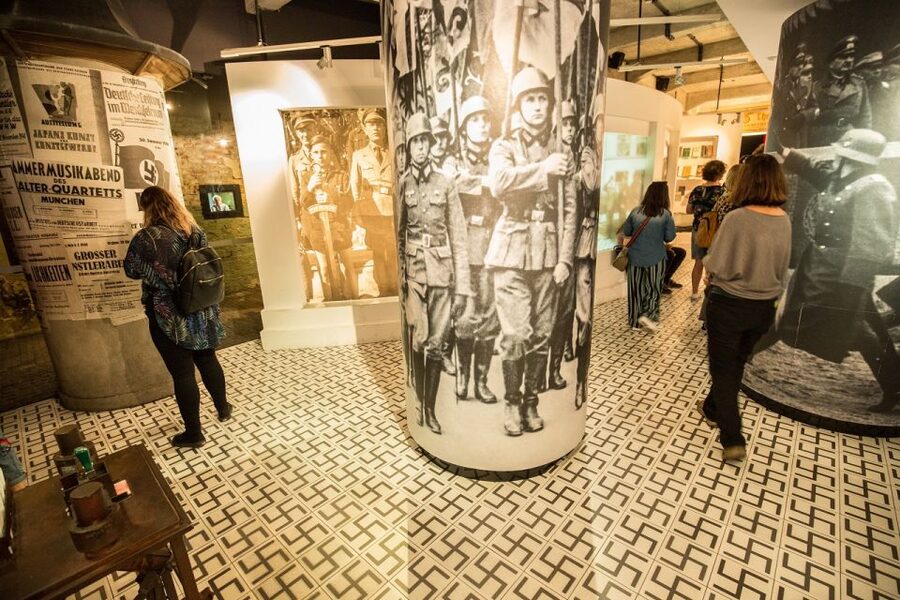
The permanent collection uses documentary photographs, eyewitness accounts, film documentaries, and multimedia displays. These materials help move the story away from dates alone and toward the decisions people made in ordinary surroundings.
The focus on daily life is one of the tour’s strongest features. You learn about Krakow as a city whose Polish-Jewish connections had developed over centuries, then were violently disrupted. The exhibition shows how occupation changed the city’s public spaces and private lives.
This is also where the guide can add real value. A clear explanation helps you connect separate rooms and understand why a photograph, document, or object matters. Several bookings praised guides for being friendly, precise, and able to answer questions. One English-speaking guide was praised for speaking clearly, while another tour was described as especially interactive.
The guiding style can vary. One practical criticism is that a guide may continue speaking while you want to read a panel. You can step aside and return to a display, but that may feel awkward during a group tour. If you read every word, 90 minutes will feel short.
The best approach is to treat the tour as an introduction rather than your only possible time in the museum. Listen for the main explanation, note the displays you want to revisit, and ask the guide about the parts that interest you most.
A few more in Krakow
- From Krakow: Auschwitz-Birkenau Guided Tour & Hotel Pickup
★ 4.5 · 33,358 reviews - From Krakow: Auschwitz-Birkenau Guided Tour & Hotel Pickup
★ 4.5 · 29,340 reviews - Krakow: Auschwitz Guided Tour with Optional Hotel Pickup
★ 4.5 · 15,280 reviews - Krakow–Zakopane: Cable Car, Chocholow Baths, Cheese & Vodka
★ 5.0 · 10,720 reviews
A theatrical walk through wartime Krakow
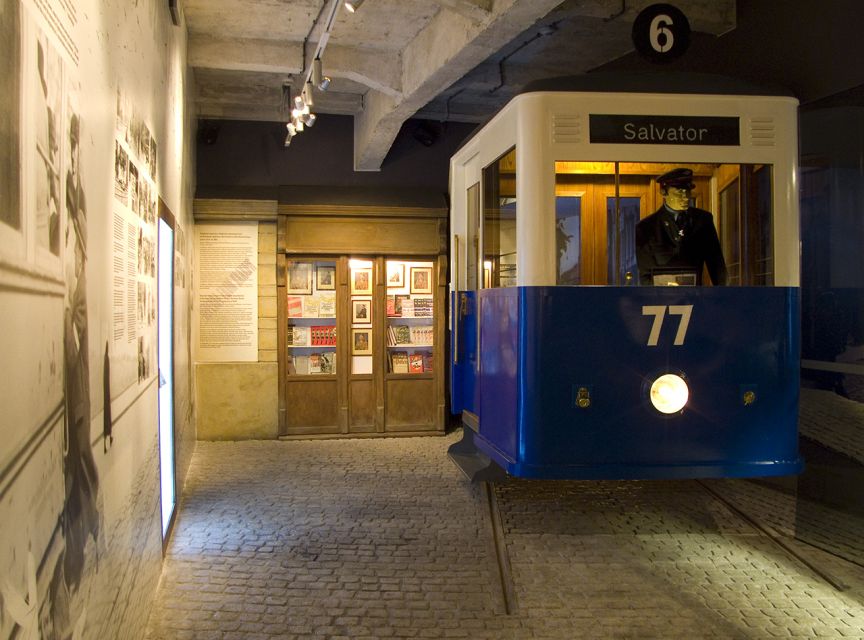
The museum uses a theatrical recreation of Krakow’s historical city space. This is where the experience feels less like a standard collection of cases and more like a carefully arranged journey through a city under pressure.
You may walk through reconstructed streets and rooms that suggest how the city looked and felt during the occupation. The staging was developed with stage designer Michał Urban and theatre director Łukasz Czuj, and that background helps explain the exhibition’s dramatic presentation.
You will also board a tram and watch a documentary about everyday city life. The tram is a memorable change of pace from reading labels. It gives you a moving view of the city’s story and reinforces the idea that the museum is presenting Krakow as a living place, not just a series of wartime documents.
The theatrical design has a strength and a weakness. It makes the subject easier to follow and gives the museum a clear rhythm. At the same time, visitors who prefer a quiet, object-by-object museum may find the presentation more directed than they like.
I appreciate the balance when the guide explains how the scenes relate to the evidence. The displays work best when you see the theatrical setting as a doorway into the history, not as a substitute for it.
The Jewish apartment and Plaszow camp artifacts
The visit includes a typical Jewish apartment. This stop shifts attention from public events to domestic life. A home setting can make the scale of the occupation more understandable because it gives you a sense of how policy reached into rooms, families, and routines.
You also see artifacts from the Plaszow camp. These objects bring the story into a darker phase of the occupation and remind you that the museum is not limited to the factory or the movie’s central storyline.
The material is serious, and the tour does not try to make it comfortable. I would avoid scheduling this immediately before another demanding activity unless you are used to museums about war and persecution. You have enough time to follow the main route, but not necessarily enough time to pause at length in every room.
The apartment and camp artifacts work together. One shows the threatened private world of daily life. The other points toward the machinery of imprisonment and violence. The contrast is part of the exhibition’s force.
The Hall of Choices and the moral questions of war
The Hall of Choices is a sculptural installation about the ethical dilemmas people faced during the war. It is not simply another room of information. It asks you to consider how decisions look when choices are narrowed by danger, coercion, and fear.
This section gives the tour its moral center. The exhibition does not present wartime behavior as a neat division between heroes and villains. It shows a society under occupation, where helping someone could bring danger and where silence could also carry consequences.
That makes the guided explanation especially important. The installation may be visually striking on its own, but the surrounding context helps you understand why it is included and how it fits the wider story.
If you are visiting because of Schindler’s List, this may be one of the most valuable parts. It broadens the experience beyond the film’s plot and encourages you to think about the many people who lived through the same period without becoming famous.
How much Schindler will you actually learn about?
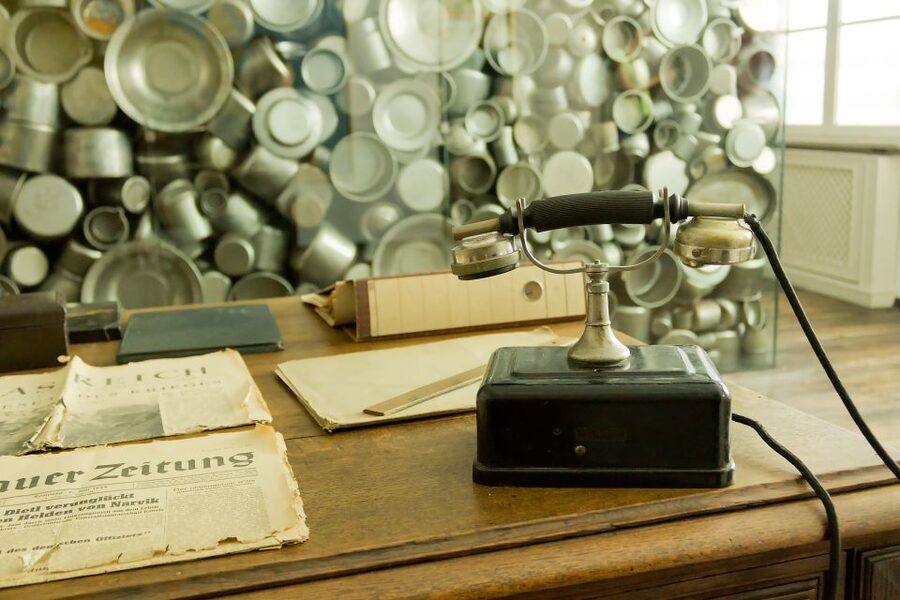
You will learn about Schindler as part of the factory and the occupation, and you will enter his preserved office. However, the museum is not a biography devoted to his entire life.
That is the most consistent point to understand before booking. Some people expect a detailed account of Schindler’s personal story and feel the visit gives more attention to Krakow’s wartime history. I think that is fair criticism if the title is your only guide to what awaits you.
The tour is better suited to someone who wants the Schindler connection plus a broader account of Krakow between 1939 and 1945. If you want only Schindler’s personal story, you may find the emphasis too wide.
The film link still adds value. You can recognize the setting’s importance, then move beyond Hollywood and look at the city, its communities, and its people. That is a more useful way to approach the museum.
Guide quality, group size, and pace
The strongest part of the experience is usually the guide. Praise has focused on clear English, friendly delivery, strong subject knowledge, and willingness to answer questions. One small group had only three people in total, which allowed the guide to respond carefully and keep a comfortable pace.
That small group size is possible, but it is not guaranteed. A larger group may make it harder to stop, ask questions, or return to a display. If you have limited walking speed, tell the guide early. One booking specifically praised the guide’s patience with a slower pace.
The guide’s presence can also create the tour’s main annoyance. If you want to read every panel, the narration may move faster than your eyes. You can listen first and revisit selected displays later, but that requires giving up some of the group’s pace.
Guides operate in English, German, French, Italian, and Spanish. Choose the language that lets you absorb difficult material without working too hard to translate in your head.
Is $49 a fair price?
At $49 per person, the tour is not the cheapest way to enter a museum. The price includes admission and a professional guide, plus skip-the-line access. Its value depends on how much structure you want.
I think the price makes sense if you have limited time in Krakow, want a clear introduction, or find wartime museums hard to navigate alone. A guide can connect the factory, the city, the Jewish apartment, Plaszow artifacts, and the Hall of Choices into one story.
The price is less convincing if you are a patient reader who wants to set your own pace. You may prefer to enter independently, spend longer with the photographs and written material, and return to the sections that matter most to you.
The 4.2 rating from 113 bookings suggests a generally strong experience with some limits. The positive side is clear: the museum is moving, the guides are often excellent, and entry arrangements are handled for you. The less positive side is also clear: the experience may feel more like a guided history of Krakow than a focused Schindler tour.
Practical details that affect your visit
Food and drinks are not allowed inside, and luggage or large bags are also prohibited. Leave large items elsewhere before you arrive, since the rules are simple and firm.
You receive free cancellation up to 24 hours before the visit, and you can reserve now while paying later. That flexibility is useful if your Krakow schedule is still shifting, especially since museum times can change.
Monday has reduced opening hours and may close around midday, according to practical tour guidance. Check the available start times carefully rather than assuming the same hours apply every day.
The museum experience is indoors, but the meeting point is at the front entrance. Allow enough time to locate the guide holding the excursion.city sign, show your identification if requested, and begin without a rush.
Who should book this experience?
I would recommend it to you if:
- You want a guided introduction to Krakow during the Nazi Occupation.
- You are interested in both Polish and Jewish wartime experiences.
- You have a strong connection to Schindler’s List but want more historical context.
- You value a fixed route and skip-the-line entry.
- You prefer learning through recreated spaces, film, objects, and photographs.
- You want help understanding difficult material in English, German, French, Italian, or Spanish.
I would hesitate to recommend it if you mainly want a detailed biography of Schindler or a full factory-production tour. I would also think twice if you need long, quiet periods to read every caption during a guided visit.
Should you book Schindler’s Factory tour?
Book this tour if you want the broader Krakow wartime story, presented through a former factory with a strong theatrical design and a live guide. The preserved office, Survivor’s Ark, tram, Jewish apartment, Plaszow objects, and Hall of Choices give the 90 minutes a clear arc.
Go independently instead if you already know the history well or want complete control over your pace. For most first-time visitors who want context without spending hours planning their own route, the $49 fee is reasonable. Just set your expectations correctly: this is a moving museum tour about Krakow under occupation, with Schindler as an important thread, not a single-subject biography.
FAQ
Where does the Schindler’s Factory tour meet?
Meet at Lipowa 4, Krakow, at the front of the museum’s main entrance. The guide will hold an excursion.city sign.
How long does the guided tour last?
The guided tour lasts 90 minutes, or 1.5 hours.
What is included in the price?
The price includes entrance fees and a professional guide.
Is food included?
No. Food and drinks are not included, and food and drinks are not allowed inside the museum.
Which languages are available?
The live tour guide may speak English, German, French, Italian, or Spanish.
Do I need identification?
Yes. Bring a passport or ID card. From January 1, 2026, you must also provide the full names of all participants when booking because the museum uses personalized tickets.
Is the exact start time guaranteed?
From January 1, 2026, the selected time is only a preferred time. The exact time may change because of the museum’s scheduling.
Can I skip the ticket line?
Yes. Skip-the-line entry is included.
Can I bring luggage or a large bag?
No. Luggage and large bags are not allowed.
Can I cancel the booking?
You can cancel up to 24 hours in advance for a full refund. You can also reserve now and pay later.
Just added in Krakow
- Auschwitz-Birkenau – Skip the Line Tickets★ 3.5 · 29 reviews
- Auschwitz-Birkenau: Fast-Track Ticket & Guided Tour No Transfers★ 3.5 · 17 reviews
- Zakopane & Sleigh Ride with Bonfire – Group Tour from Kraków★ 5.0 · 2 reviews
- Sleigh Ride & Bonfire in Zakopane with Funicular – Private Trip★ 5.0 · 48 reviews
- Thermal Baths & Zakopane – Private Trip from Krakow★ 5.0 · 1 review
- Zakopane & Gubalowka Funicular – Private Winter Tour from Krakow★ 5.0 · 10 reviews
- stag dog chase Krakow prank★ 5.0 · 4 reviews
- Divine Mercy Sanctuary – Private Tour from Krakow★ 5.0 · 4 reviews