
REVIEW · SCHINDLER'S FACTORY TOURS
Krakow: Schindler’s Factory Guided Tour with Ticket
History hits harder here. Krakow’s Schindler’s Factory tour offers a clear, guided look at Nazi occupation, Jewish persecution, and daily life in wartime Krakow. I especially like the expert storytelling and the chance to see Oskar Schindler’s original office. The main drawback is that the museum is less about Schindler himself than you might expect.
You spend most of the 90 minutes learning about Krakow under German rule, with Schindler’s story placed inside that wider setting. That makes the visit more useful, but it can surprise anyone arriving mainly because of the film Schindler’s List. The subject is painful, so a good guide matters. Guides such as Victoria, Lucy, Max, Ana, Jacob, and Matthew have been praised for clear explanations, careful pacing, and compassion.
In This Review
- Key points before you book
- What this tour is really about
- Meeting the guide and entering the museum
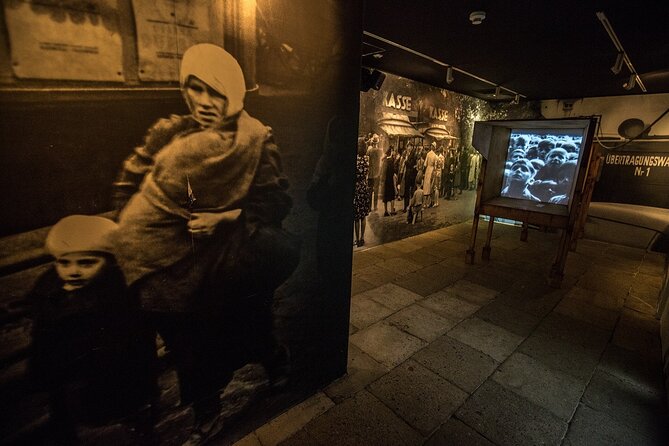
- Reconstructing Krakow in 1939
- Daily life under Nazi occupation
- Oskar Schindler’s office and the people he saved
- The other figures who shaped wartime Krakow
- Why a guide is worth the extra cost
- Price, time, and practical value
- Who will get the most from this experience?
- Should you book the Schindler’s Factory tour?
- FAQ
- Where does the tour meet?
- How long does the tour last?
- What does the price include?
- Is hotel pickup included?
- What languages are available?
- Is the tour wheelchair accessible?
- Can I skip the ticket line?
- Can I cancel the booking?
Key points before you book
- Schindler is only one part of the story: Most of the museum follows Krakow before, during, and after the Nazi invasion.
- The original office is a highlight: You see the room connected directly with Schindler and hear about the Jewish people he helped save.
- The guide adds essential context: Reconstructions, posters, objects, and rooms make more sense when someone explains how they fit together.
- The tour lasts 90 minutes: That is enough for the main story, but not for reading every display in detail.
- The meeting point is easy to identify: Look for a yellow umbrella or a Walkative! sign.
- The price includes admission: At $46 per person, you are paying for the museum ticket and live guide, but not transport.
What this tour is really about
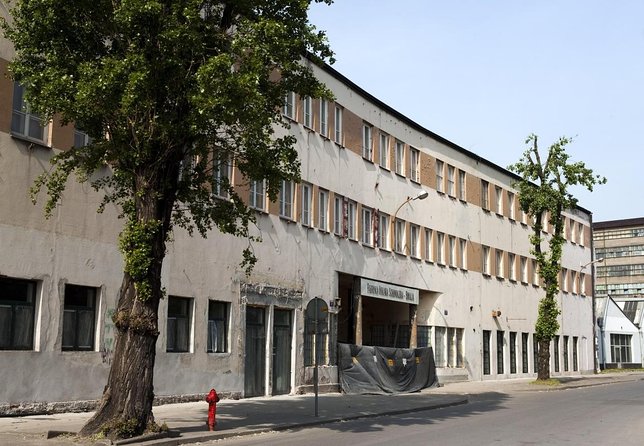
The name can set up the wrong expectation. This is not a factory floor tour focused from start to finish on Oskar Schindler. It is a museum visit about Krakow during the Second World War, with Schindler’s life and work forming one important section.
That wider approach is one of the tour’s strengths. You learn about the German invasion, the occupation of Krakow, the treatment of Jewish residents, and the pressure placed on Polish people. Schindler’s actions become easier to understand when you first see the political and social world around him.
The museum also places Schindler among other major figures. You encounter material related to Hans Frank, Amon Goeth, Pope John Paul II, underground fighters, collaborators, and people honored as Righteous Among the Nations. This gives you a less tidy version of the period. Schindler is not presented as a simple hero in isolation. His character, motives, business interests, and later fate all need to be considered together.
I find that approach more honest than a visit built only around the movie. If you want a full biography of Schindler, this tour may feel too broad. If you want to understand what happened in Krakow and why Schindler’s actions mattered, the wider story works well.
More Schindler Factory tours:
- Krakow: Oskar Schindler’s Factory Entry Ticket & Guided Tour
★ 4.2 · 3,793 reviews - Krakow: Schindler’s Factory Tour with Entrance Ticket
★ 4.5 · 3,182 reviews - Krakow: Schindler’s Factory Skip-the-Line Ticket
★ 4.4 · 3,105 reviews
Meeting the guide and entering the museum
Your guide meets you near Schindler’s Factory holding a yellow umbrella or a Walkative! sign. That detail matters in a busy city, especially if you are arriving close to the start time and do not know the area well.
The ticket is included, and the tour is advertised as allowing you to skip the ticket line. There is one practical caution: pre-booked tickets are bought directly from the museum on the spot. Any delay or ticket issue caused by the museum is outside the tour company’s control, so allow a little patience at the entrance.
The tour is available in English and Spanish. The strongest praise has gone to guides who speak clearly, check that everyone can hear, and keep the group moving without rushing. Ana used phones so the group could hear her well, and several guides were praised for good English and thoughtful answers.
Group size can vary. Some bookings have had only two, three, or four people, while others have been larger. A small group gives you more room to ask questions and discuss difficult subjects. It is not guaranteed, but the format can feel personal when numbers are low.
Reconstructing Krakow in 1939
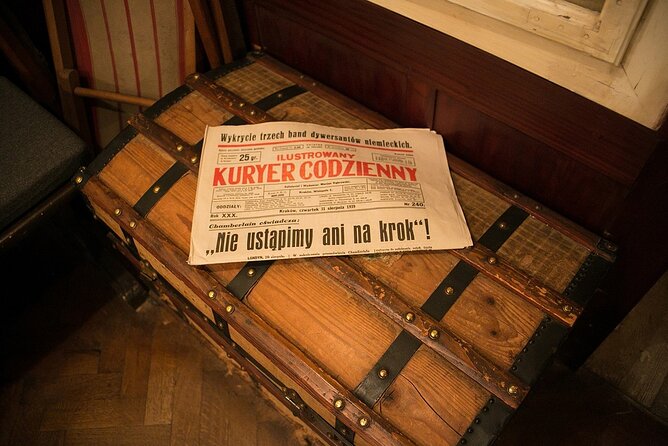
The opening sections set the scene before Schindler becomes the focus. Reconstructions of the 1939 battlefield and Krakow’s streets show how quickly ordinary life was changed by invasion and occupation.
These displays are useful because they move the story away from dates alone. You are asked to picture the city as a place where people worked, traveled, shopped, raised families, and followed public events before the war altered everything. The museum then shows how those familiar spaces were controlled and reshaped by German authority.
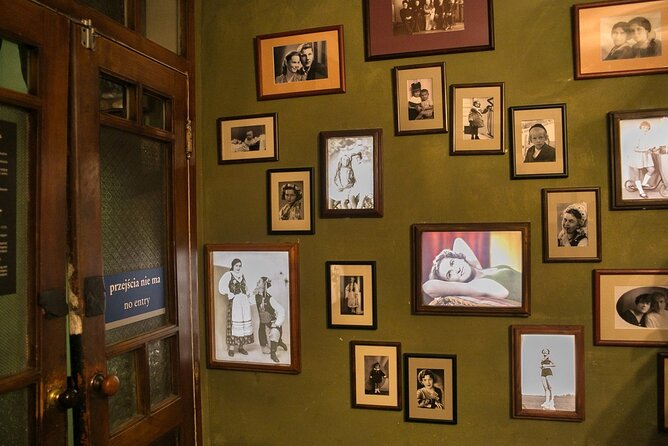
A guide helps you separate the different layers of the exhibition. There are written panels, photographs, objects, posters, and reconstructed rooms. You could read your way through the museum alone, but it would be easy to miss the meaning of a sign or propaganda image. A guide can translate the message, point out the Nazi use of propaganda, and explain what the display meant to people living under occupation.
The pace is important here. Dan, one of the guides praised for the tour, was said to keep the group moving at a suitable speed while still covering the key events. That is a real advantage in a museum with a lot of information. You get the main story without spending so long in one room that later sections become a blur.
Daily life under Nazi occupation
The central part of the tour looks at everyday life under German rule. This is where the museum becomes more than a story about one factory owner.
You learn about restrictions, fear, discrimination, forced separation, and the destruction of normal community life. The experience also covers what happened to Jewish and Polish people, rather than treating the occupation as a single experience shared equally by everyone.
The reconstructions help make that difference clear. You may see references to the railway station, public execution sites, and the wall around the Jewish ghetto. These places were not just background scenery. They shaped where people could go, who they could meet, and how families were separated.
The ghetto wall is especially important because it turns an abstract policy into something physical. A wall divides a city, but it also divides work, school, family, shopping, and daily movement. A guide can connect the display to the wider story, so you are not left treating it as an isolated object.
This part of the tour is emotionally heavy. Several guides have been praised for handling the subject with empathy and professionalism. Sue described Mat as compassionate, while other comments praised guides who made the story thought-provoking without treating the suffering as entertainment.
You should not expect a light museum visit. The subject includes persecution, executions, war, and loss. Give yourself time afterward rather than scheduling another demanding activity immediately.
A few more in Krakow
- From Krakow: Auschwitz-Birkenau Guided Tour & Hotel Pickup
★ 4.5 · 33,358 reviews - From Krakow: Auschwitz-Birkenau Guided Tour & Hotel Pickup
★ 4.5 · 29,340 reviews - Krakow: Auschwitz Guided Tour with Optional Hotel Pickup
★ 4.5 · 15,280 reviews - Krakow–Zakopane: Cable Car, Chocholow Baths, Cheese & Vodka
★ 5.0 · 10,720 reviews
Oskar Schindler’s office and the people he saved
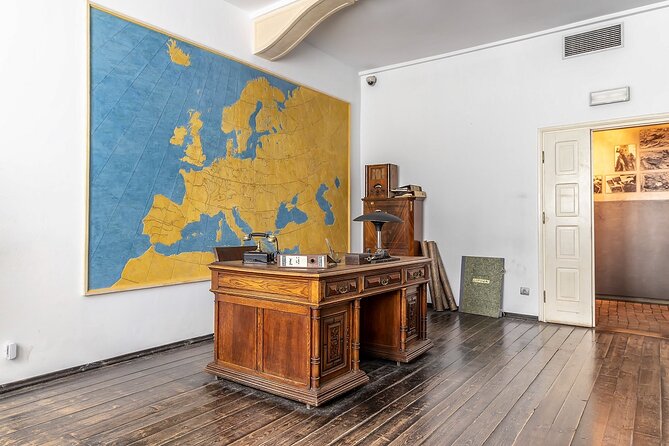
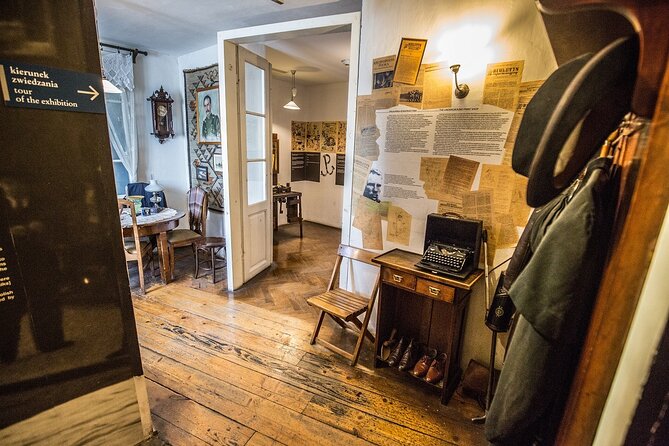
Schindler’s original office is one of the most direct links to the man named in the tour. Here you hear about his pre-war activities, his role during the occupation, and what happened to him after the war.
The exhibition also includes accounts of Jewish survivors he helped save. Those stories give the Schindler section its moral weight. His actions mattered because real people survived, but the museum also encourages you to consider his complicated character rather than reducing him to a movie image.
That balance is valuable. Schindler was not presented as a flawless figure, and his post-war fate is part of the story. You get a sense of his changing position and the uncertainty surrounding his life after 1945.
Still, manage your expectations. The Schindler material takes up only part of the visit, mainly toward the later stages of the tour. Several people arrived expecting a detailed factory biography and found that the museum concentrates more heavily on the occupation of Krakow.
I would not call this a flaw in the museum. It is a reason to know what you are booking. If your main goal is to see Schindler’s office and understand his role, the tour does that. If you want every detail of his business life, you may want extra reading or another visit.
The other figures who shaped wartime Krakow
The museum widens the story by placing Schindler beside people with very different roles.
Hans Frank represents the German administration in occupied Poland. Amon Goeth is connected with the machinery of Nazi terror. Underground fighters show the risks taken by people who resisted. Collaborators demonstrate that choices during occupation were not always easy to classify from a distance.
You also hear about the Righteous Among the Nations, a title associated with non-Jews who helped save Jewish people during the Holocaust. This gives the tour space to discuss individual courage without suggesting that one person’s actions cancel out the crimes of the larger system.
Pope John Paul II appears in the historical setting of Krakow and Poland. His inclusion helps connect the wartime story with the city’s wider twentieth-century identity, although the tour remains focused on the occupation rather than on his life.
A good guide makes these names easier to remember. Matthew was praised for adding side stories about Krakow during the war, while Jacob connected historical facts with family stories about his grandparents. Those personal links can make the material feel closer, but the quality of your experience will depend on who leads your departure.
Why a guide is worth the extra cost
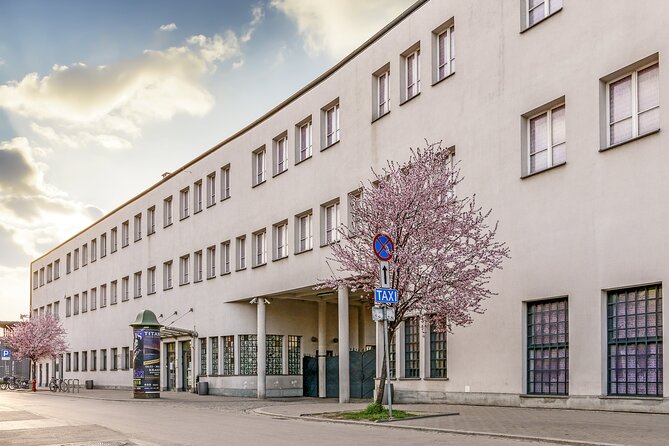
The museum contains enough text to visit alone. One person who toured it independently felt that the displays told the story well without a guide. That is fair. If you enjoy reading every panel at your own speed, independent entry gives you more control.
I still think the guide is worthwhile for a first visit. The museum covers a large amount of material in a limited space, and a guide helps you decide what deserves your attention. You also get explanations of posters and visual details that may be hard to understand in English.
The best guides do three jobs:
- They place each room in the correct historical order.
- They explain what you are seeing instead of repeating every panel.
- They leave enough time for you to look, think, and ask questions.
A guide also keeps the emotional pace manageable. You are not left alone to move abruptly from one harrowing subject to the next. At the same time, the tour cannot pause for every detail, so you may want to return later if the museum allows and you want a slower look.
Several people who later visited the museum alone still felt the guided tour gave them a stronger first understanding. One useful plan is to take the 90-minute tour first, then return independently if you want to read more. The guided visit gives you a framework, while a second visit lets you follow your own interests.
Price, time, and practical value
The cost is $46 per person. That is not the cheapest museum entry in Krakow, but it includes the museum ticket and a live guide. You are also paying for help with a dense and emotionally difficult subject, not just a doorway into the building.
For a 90-minute tour, the value is strongest if you want structure. You get the key sections, historical background, Schindler’s story, and explanations of the occupation without having to plan your own route through the museum.
The value is weaker if you prefer long, quiet reading sessions or already know the history well. In that case, a self-guided visit may suit you better, assuming you can obtain entry for your preferred time.
There is no hotel pickup or drop-off, so you must make your own way to the meeting point. The tour is wheelchair accessible. You can cancel up to 24 hours before the start for a full refund, and reserve now while paying later, which helps if your Krakow plans are still changing.
Who will get the most from this experience?
I would recommend this tour to you if you:
- Want an organized introduction to Krakow during the Nazi occupation.
- Plan to visit Auschwitz and Birkenau and want more background first.
- Have seen Schindler’s List and want to separate the film from the wider historical record.
- Prefer spoken explanation to reading a large number of museum panels.
- Appreciate a serious tour led with care and a clear sense of proportion.
- Want to see Schindler’s office and hear about the people he helped save.
I would hesitate if your only interest is the factory’s industrial history or a complete biography of Schindler. The museum is primarily about Krakow, its Jewish population, Polish society, German rule, resistance, and persecution.
The tour can also be difficult for younger children because of the subject matter. The supplied information does not give an age recommendation, so use your judgment based on your child’s ability to handle wartime violence and Holocaust history.
Should you book the Schindler’s Factory tour?
Book it if you want the museum to make sense on a first visit. The guide is the main reason to choose this option, with clear explanations, good pacing, and the chance to ask questions. The most praised guides, including Victoria, Max, Lucy, Ana, Jacob, and Matthew, have been described as warm, careful, and compelling.
Do not book it expecting 90 minutes devoted only to Oskar Schindler. You will spend more time learning about the Nazi occupation and Krakow’s Jewish and Polish communities. That broader focus is the honest reason to go.
At $46, I see this as a useful paid introduction rather than a bargain admission ticket. If you have limited time in Krakow, a guide helps you take in the main message without getting lost among the displays. If you have extra time, consider returning to read the museum at your own pace.
FAQ
Where does the tour meet?
Your guide will hold a yellow umbrella or a Walkative! sign at the meeting point.
How long does the tour last?
The guided visit lasts 90 minutes.
What does the price include?
The $46 price includes a professional guide and a ticket to Schindler’s Factory museum.
Is hotel pickup included?
No. Hotel pickup and drop-off are not included, so you must reach the meeting point yourself.
What languages are available?
The tour is offered in English and Spanish.
Is the tour wheelchair accessible?
Yes, the activity is wheelchair accessible.
Can I skip the ticket line?
Yes, the tour includes skip-the-ticket-line access. Pre-booked tickets are bought directly from the museum on the spot, and the company is not responsible for delays or other issues caused by the museum.
Can I cancel the booking?
Yes. You can cancel up to 24 hours in advance for a full refund. You can also reserve now and pay later.
Just added in Krakow
- Auschwitz-Birkenau – Skip the Line Tickets★ 3.5 · 29 reviews
- Auschwitz-Birkenau: Fast-Track Ticket & Guided Tour No Transfers★ 3.5 · 17 reviews
- Zakopane & Sleigh Ride with Bonfire – Group Tour from Kraków★ 5.0 · 2 reviews
- Sleigh Ride & Bonfire in Zakopane with Funicular – Private Trip★ 5.0 · 48 reviews
- Thermal Baths & Zakopane – Private Trip from Krakow★ 5.0 · 1 review
- Zakopane & Gubalowka Funicular – Private Winter Tour from Krakow★ 5.0 · 10 reviews
- stag dog chase Krakow prank★ 5.0 · 4 reviews
- Divine Mercy Sanctuary – Private Tour from Krakow★ 5.0 · 4 reviews