
REVIEW · SCHINDLER'S FACTORY TOURS
Krakow: Oskar Schindler’s Factory Entry and Guided Tour
History feels close here. This 1.5-hour guided visit to Oskar Schindler’s Factory turns Krakow’s World War II story into something you can see, hear, and follow room by room. I like the preserved office and the powerful Survivor’s Ark made from enamel pots, and I like having a guide explain the photographs, films, and personal accounts instead of trying to piece everything together alone.
The main drawback is the possibility of a large group in narrow exhibition spaces. One French-speaking tour had so many people that some guests stood too far away to hear the guide clearly. You may want to ask for a smaller group or arrive ready to stay close.
In This Review
- Key details to know before you go
- Why Schindler’s Factory matters in Krakow
- Meeting your guide at Lipowa 4
- The first rooms: Krakow before and during occupation
- Schindler’s office and the Survivor’s Ark
- A theatrical Krakow, a tram, and a Jewish apartment
- Plaszow artifacts and the Hall of Choices
- What the 1.5-hour guided format does well
- The group-size problem in narrow galleries
- Is $45 a fair price?
- Who should book this Krakow museum tour?
- Should you book Schindler’s Factory with a guide?
- FAQ
- Where does the tour begin?
- How long does the guided visit last?
- Is museum admission included?
- Which languages are available?
- Does the tour skip the ticket line?
- Can I cancel the booking?
Key details to know before you go
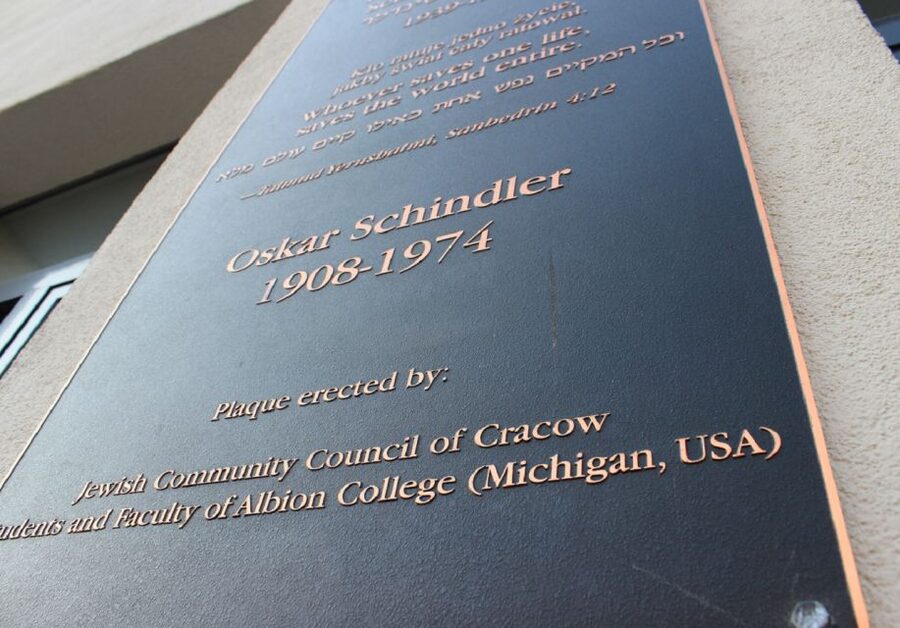
- The factory is at Lipowa 4: Wait at the main museum entrance for a guide holding an excursions.city sign.
- The tour lasts 1.5 hours: That is enough for a structured introduction, but not always enough to examine every display afterward.
- You enter through the ticket line: The included admission saves time and leaves more of your visit for the museum itself.
- Schindler’s preserved office is part of the visit: You see the room connected to the factory’s wartime story.
- The exhibition covers 1939 to 1945: It looks at Polish, Jewish, and German experiences during the Nazi occupation.
- Six guide languages are available: Tours may be offered in English, French, German, Italian, Spanish, or Polish.
Why Schindler’s Factory matters in Krakow
The museum occupies the former enamel factory associated with Oskar Schindler, a name made famous around the world by Steven Spielberg’s film Schindler’s List. That connection draws many people here, but the museum is not simply a display about one industrialist or a film location.
Its subject is Krakow under Nazi occupation from 1939 to 1945. You learn about the city’s Polish and Jewish communities, the German occupation, and the violent destruction of long-standing relationships between them. The story is personal as well as political, with attention to work, housing, religion, fear, bureaucracy, and the decisions people had to make under pressure.
I value that wider focus. If you come expecting only a biography of Schindler, you may find the museum broader and more demanding than expected. That is a strength, but it also means the visit works best when you are ready to concentrate on the city and its people, not just on the famous factory owner.
More Schindler Factory tours:
- Krakow: Oskar Schindler’s Factory Entry Ticket & Guided Tour
★ 4.2 · 3,793 reviews - Krakow: Schindler’s Factory Tour with Entrance Ticket
★ 4.5 · 3,182 reviews - Krakow: Schindler’s Factory Skip-the-Line Ticket
★ 4.4 · 3,105 reviews
Meeting your guide at Lipowa 4
The practical starting point is simple. Go to Lipowa 4 and wait at the main entrance of the museum. Your guide should be holding an excursions.city sign, so keep an eye out for that rather than wandering around the building looking for a tour desk.
The tour ends at the same place. No transport is included or needed during the activity, since the experience takes place inside the factory museum. Check the available starting times when booking, as the tour runs at set times rather than being an open-ended visit.
Your admission is included, and the activity provides a professional live guide. Available languages are English, French, German, Italian, Spanish, and Polish. If language matters to you, confirm the selected option carefully before paying.
The first rooms: Krakow before and during occupation
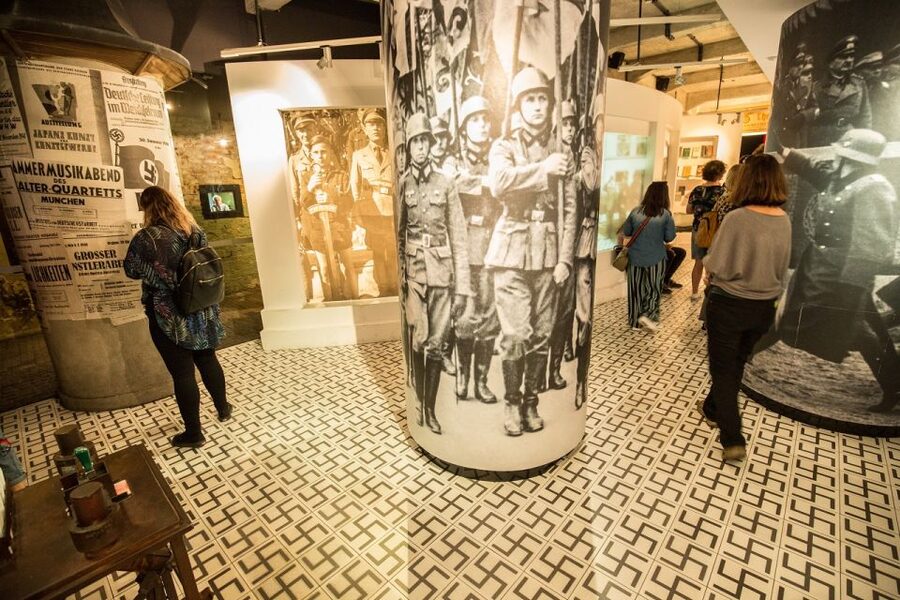
The museum uses photographs, eyewitness accounts, films, and multimedia displays to explain how daily life changed. Rather than offering a simple row of objects behind glass, it builds a sequence of rooms that presents Krakow as a lived-in city before war interrupted it.
You may see how the exhibition frames the city’s Polish-Jewish relations and then shows the force of the Nazi occupation breaking them apart. This matters because the museum is not only about military events. It asks you to think about what happened to ordinary routines, neighborhoods, workplaces, and families.
The guide helps connect the material. That is one of the strongest reasons to choose this format instead of entering alone. A photograph can be moving, but a good explanation gives it a setting, a date, and a human meaning. The guide can also help you keep track of the many groups involved, including Polish residents, Jewish residents, German occupiers, factory workers, and people caught between them.
The exhibition’s mood is serious from the beginning. This is not a quick sightseeing stop to squeeze in between cafés. Give yourself the attention you would give to any museum dealing with genocide, persecution, and wartime choices.
Schindler’s office and the Survivor’s Ark
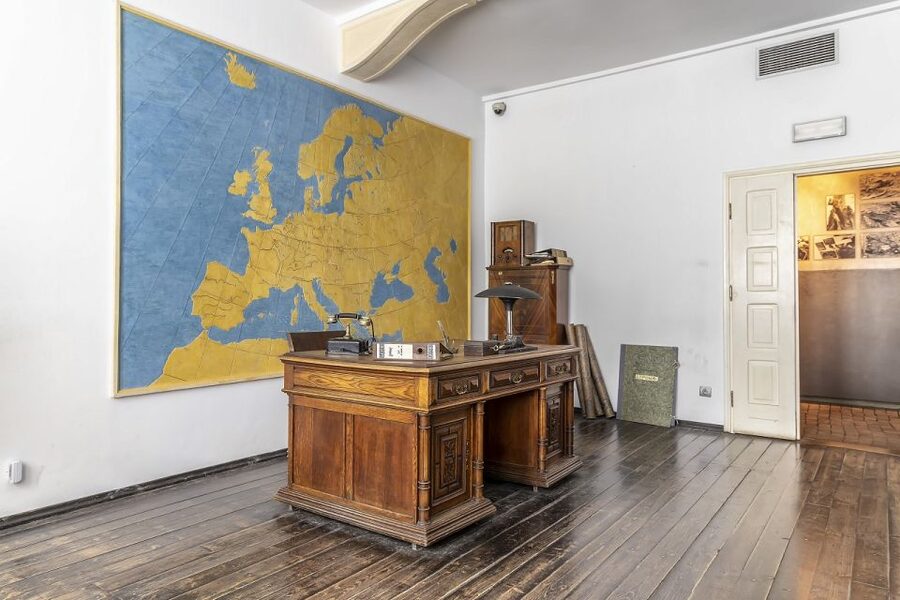
One of the most distinctive parts of the visit is Schindler’s preserved office in the factory’s administrative building. The room gives the story a physical point of reference, especially if you know the film or have read about Schindler’s wartime activity.
The office is not presented as a grand room. Its value comes from its connection to the factory and the people whose lives passed through it. Your guide can place the room within the wider story rather than allowing it to become a simple celebrity stop.
Then comes the Survivor’s Ark, a sculptural work made from thousands of enamel pots. The factory produced enamelware, so the pots connect the building’s industrial purpose with the human story told inside it. The image is direct and hard to forget. It also reminds you that a factory is not just a setting in a film. It was a workplace tied to real decisions and real survival.
This is the point where the famous Schindler connection and the museum’s broader subject come together. You get the recognizable name, but you also see how objects and spaces can represent much more than one person.
A few more in Krakow
- From Krakow: Auschwitz-Birkenau Guided Tour & Hotel Pickup
★ 4.5 · 33,358 reviews - From Krakow: Auschwitz-Birkenau Guided Tour & Hotel Pickup
★ 4.5 · 29,340 reviews - Krakow: Auschwitz Guided Tour with Optional Hotel Pickup
★ 4.5 · 15,280 reviews - Krakow–Zakopane: Cable Car, Chocholow Baths, Cheese & Vodka
★ 5.0 · 10,720 reviews
A theatrical Krakow, a tram, and a Jewish apartment
The museum recreates parts of Krakow’s historical city space in a theatrical way. You may move through rooms designed to suggest streets, public places, and domestic settings rather than following a plain museum corridor.
That design helps you understand occupation as something that filled the entire city. War did not happen only on a battlefield or inside a government office. It changed what people saw on the street, how they moved through the city, and what they could expect at home.
A tram ride forms part of the visit. While aboard, you watch a documentary about everyday life in Krakow. It is an effective change of pace because the moving viewpoint links separate exhibition sections and gives the city a sense of place. The documentary also helps translate large historical events into routine experiences, which is often what makes a museum visit stay with you.
You also visit a typical Jewish apartment. This domestic setting gives the story a human scale. Instead of thinking only about official orders and dates, you can consider the rooms, belongings, and private life affected by those orders.
The theatrical presentation will not suit everyone. If you prefer traditional museums with quiet cases and long written labels, some sections may feel highly staged. I think the approach works for many people because it makes the history easier to follow, but it can also make the rooms feel crowded when several groups arrive together.
Plaszow artifacts and the Hall of Choices
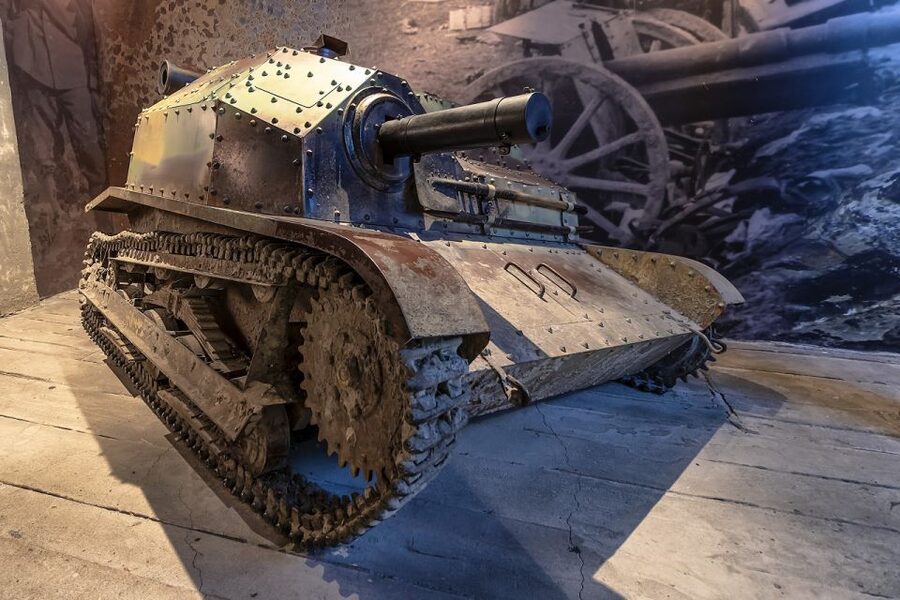
The visit includes artifacts from the Plaszow camp, adding another difficult stage to the story. These objects carry weight because they are physical evidence of a system that is otherwise easy to reduce to names and dates.
Your guide’s role is especially useful here. The material can be emotionally heavy, and a clear explanation helps you understand where it fits in the development of the occupation and persecution. You do not need to arrive with detailed background knowledge, but you should be ready for serious subject matter.
The Hall of Choices is another memorable installation. It uses sculpture to represent the moral decisions people faced during the war. This shifts the museum from a record of events to a question about conduct.
That question has no easy answer. People made choices under fear, coercion, self-interest, courage, and confusion. The installation asks you to think about those pressures without pretending that the visitor can judge every situation from the safety of the present.
I find this one of the most useful ideas in the museum because it prevents the experience from becoming a simple story of heroes and villains. The Nazi occupation was violent and criminal, but individuals still had choices within frightening limits. The museum encourages you to consider those limits carefully.
What the 1.5-hour guided format does well
A 90-minute tour gives you a clear route through a large amount of material. You do not have to decide which room matters most, and you are less likely to miss the major installations.
The guide can point out details you might otherwise walk past. That is particularly helpful with the documentary photographs, eyewitness accounts, and multimedia presentations. The museum’s design offers plenty to see, but the amount of information can be difficult to absorb without direction.
The strongest praise for the guided format centers on the quality of the guide. A friendly and effective guide can make the material approachable while keeping the focus on the people and events. That personal explanation is the main reason I would choose this tour over a quick self-guided visit if you have limited time in Krakow.
The tradeoff is speed. You will follow the group’s pace, and the guide must keep everyone moving. One hour and 30 minutes can pass quickly, particularly if you want to read every panel or study each artifact.
If you are the sort of museum visitor who likes to linger, plan to return to the displays after the guided portion if time and museum rules allow. One visitor specifically wished for more time to inspect the cases after the guide had finished. That is useful advice: the tour gives you structure, but it may not satisfy your wish to examine everything closely.
The group-size problem in narrow galleries
The main practical concern is crowding. Some passages are narrow, and a large group can make it hard to stand near the guide. This is more than a minor annoyance in a museum that depends on photographs, written material, and spoken explanation.
If you are in the back, you may miss part of the commentary or struggle to see the display being discussed. In a French-language group, the guide was described as very pleasant, but the group size and tight walkways reduced the quality of the experience.
You can improve your chances by waiting near the guide from the start and moving forward promptly when the group enters a new room. Avoid hanging back to take photographs until the explanation is finished. If you need a quieter visit, ask about the smallest available group or choose a less crowded starting time if one is offered.
The tour still earns a strong overall rating of 4.7 out of 5 from 30 ratings, which suggests that the guide and museum content outweigh the crowding issue for most people. I would simply treat group size as an important part of your booking decision, not as a minor footnote.
Is $45 a fair price?
At $45 per person, this is not the cheapest museum entry in Krakow. You are paying for admission plus a live professional guide in a museum with a complex subject and a carefully arranged permanent exhibition.
The value is strongest if you have only one visit available and want a clear introduction without spending time figuring out the museum alone. The guided route brings together Schindler’s office, the enamel pots, the tram documentary, the Jewish apartment, the Plaszow artifacts, and the Hall of Choices in one organized visit.
The value is weaker if you already know the museum well or prefer to read at your own pace. In that case, the fixed 1.5-hour structure may feel restrictive, especially if the group is large.
I would also think about what else you want from the visit. If your main interest is film history, you may enjoy the preserved office and factory setting, but the museum goes far beyond the story shown in Schindler’s List. If your interest is Krakow during the occupation, the price makes more sense because the tour covers the city’s wider social history.
Free cancellation up to 24 hours before the activity and the option to reserve now and pay later add flexibility. Those policies do not change the museum itself, but they can make it easier to fit the visit into a changing Krakow schedule.
Who should book this Krakow museum tour?
I would recommend this experience to first-time visitors who want a guided introduction to Krakow during World War II. It also suits film fans, history students, and anyone who prefers a museum visit with a clear narrative rather than a loose collection of objects.
It may be a good choice for families with older children, provided they are ready for the serious subject matter. The tram, apartment, and theatrical city scenes offer visual variety, but the topics include Nazi persecution, Jewish suffering, camp artifacts, and moral choices.
You should think twice if you dislike crowded museums, need a very quiet pace, or want to read every label. The tour is also not a light sightseeing activity. Plan another time for Krakow’s cafés, churches, and cheerful market squares. This visit asks you to slow down and pay attention.
Should you book Schindler’s Factory with a guide?
Book it if you want context, a planned route, and a live explanation of the museum’s most important rooms. The preserved office, Survivor’s Ark, tram documentary, Jewish apartment, and Hall of Choices make this far more than a film-themed stop.
I would choose it for a first visit, especially at $45 when the ticket and guide are included. I would be cautious only if your priority is a quiet, unhurried examination of every display. In that case, ask about group size and allow extra time after the tour, if possible.
The best reason to go is simple: Schindler’s Factory shows how occupation changed an entire city, not just one factory. That wider view gives the visit its lasting value.
FAQ
Where does the tour begin?
The tour begins at Lipowa 4, at the main entrance of the museum. Wait for a guide holding an excursions.city sign.
How long does the guided visit last?
The guided tour lasts 1.5 hours. Check available starting times when booking.
Is museum admission included?
Yes. Entrance fees and a professional guide are included.
Which languages are available?
The live tour may be offered in English, French, German, Italian, Spanish, or Polish.
Does the tour skip the ticket line?
Yes. The activity includes skip-the-line entry, so you can avoid waiting in the ticket line.
Can I cancel the booking?
You can cancel up to 24 hours in advance for a full refund. You can also reserve now and pay later.
Just added in Krakow
- Auschwitz-Birkenau – Skip the Line Tickets★ 3.5 · 29 reviews
- Auschwitz-Birkenau: Fast-Track Ticket & Guided Tour No Transfers★ 3.5 · 17 reviews
- Zakopane & Sleigh Ride with Bonfire – Group Tour from Kraków★ 5.0 · 2 reviews
- Sleigh Ride & Bonfire in Zakopane with Funicular – Private Trip★ 5.0 · 48 reviews
- Thermal Baths & Zakopane – Private Trip from Krakow★ 5.0 · 1 review
- Zakopane & Gubalowka Funicular – Private Winter Tour from Krakow★ 5.0 · 10 reviews
- stag dog chase Krakow prank★ 5.0 · 4 reviews
- Divine Mercy Sanctuary – Private Tour from Krakow★ 5.0 · 4 reviews