
REVIEW · JEWISH QUARTER TOURS
Krakow: Old Town and Kazimierz Guided Bike Tour
Krakow reveals itself quickly by bike. I like the way this three-hour ride links Old Town and Kazimierz in one outing, and I like the small group, capped at 10 people, which should make it easier to hear the guide and ask questions. The main drawback is simple: cycling through crowded historic streets requires comfort on a bike and steady attention.
At $47 per person, this is a good-value orientation tour if you want history, landmarks, and practical advice in one morning or afternoon. Guide Zee has earned praise for being articulate, personable, and exceptionally well informed, while the tour also offers new bikes and bag storage at no extra cost.
In This Review
- Key points to know before you book
- Why this Krakow bike tour works as an introduction
- Starting at ZeeTour and reaching Florian Gate
- Main Market Square, the university, and the Wawel Dragon
- Wolnica Square and the changing face of Kazimierz
- Four synagogues and the story of Krakow’s Jewish community
- Schindler’s List Passage and Ghetto Heroes Square
- What the guide adds to the ride
- Is $47 a fair price?
- Practical advice for a smooth ride
- Who should book the Krakow bike tour?
- FAQ
- How long is the Krakow Old Town and Kazimierz bike tour?
- What languages does the guide speak?
- How many people are in the group?
- What is included in the price?
- Are entrance tickets or food included?
- Where does the tour meet?
Key points to know before you book
- Two historic districts in three hours: You cover Krakow’s medieval center and Kazimierz, rather than spending the whole tour in one area.
- A strong Jewish heritage focus: The route includes four synagogues, Szeroka Street, Ghetto Heroes Square, and the former Schindler factory.
- Small group size matters: With no more than 10 participants, the guide can usually keep the ride orderly and the commentary easy to follow.
- A useful first-day activity: The guide supplies recommendations and advice that can help you plan the rest of your stay.
- Mostly an exterior tour: Entrance tickets are not included, so the stops at synagogues and Schindler’s Factory are part of the guided route rather than indoor visits.
- Best for confident cyclists: The tour is not suitable for people with mobility impairments, and busy old-city streets call for care.
Why this Krakow bike tour works as an introduction
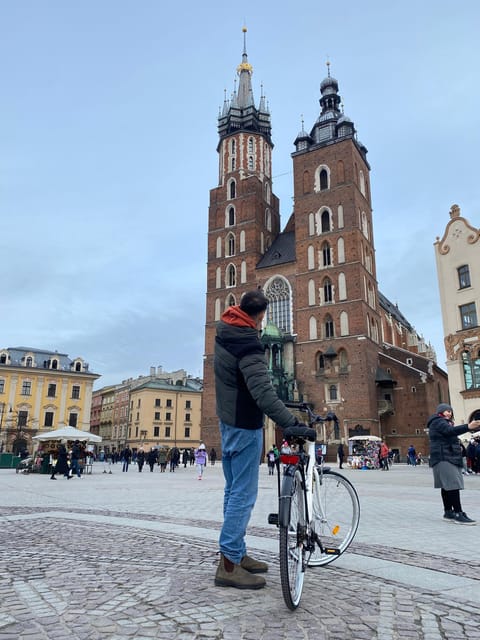
Krakow can feel like several cities in one. The Main Market Square and royal quarter present the polished medieval and royal side of town. Kazimierz brings a different mood, with Jewish religious sites, World War II history, and streets tied to the city’s changing identity.
A bike helps you connect these areas without spending the whole day walking between them. You are still moving slowly enough to see street details, but you can cover more ground than on foot. The route lasts three hours, long enough to establish a useful map of Krakow without taking over your day.
I would use this as an early activity during a stay. You get the major sights, hear the story behind them, and receive local suggestions for food, museums, and places worth returning to. The guide speaks English or Dutch, and the small group format should suit anyone who prefers a personal tour over a large procession.
There is a tradeoff. This is not a relaxed countryside ride. Much of the route passes through an old city where pedestrians, bicycles, and other traffic share limited space. One Dutch participant described cycling through such a busy old city as exciting but demanding, while still finding the experience fun and informative. That is a fair expectation: the sightseeing is the point, but you need to stay alert.
More Bike Tours in Kraków
- Complete Cracow Bike Tour (small group of maximum 15 people!)
★ 5.0 · 1,322 reviews - Krakow: Bike Tour of Old Town, Jewish Quarter and the Ghetto
★ 4.9 · 1,155 reviews - Highlights of Krakow Bike Tour – Small group
★ 5.0 · 662 reviews
Starting at ZeeTour and reaching Florian Gate
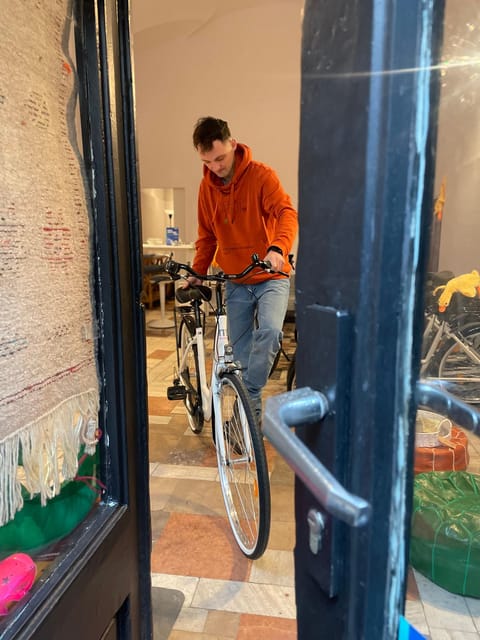
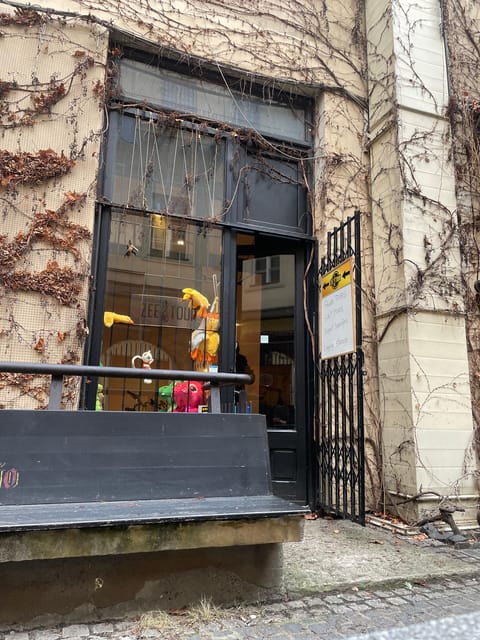
The meeting point is the ZeeTour office in the courtyard of the same building as Restaurant No. 7. That detail matters because courtyard meeting points can be easy to miss if you only look for a street-facing storefront.
After collecting your bike, you begin near Krakow’s Main Square and make your way toward Florian Gate. This old gateway marks the traditional entrance to the historic center and gives the tour an immediate sense of Krakow’s former defensive edge.
The nearby Barbican follows naturally. Its thick circular walls and fortified design show how seriously the city once treated protection from attack. Your guide provides the context, turning what could be a quick photo stop into part of the larger story of Krakow as an important Polish city.
You should expect guided commentary rather than an extended interior visit. Entrance tickets are not included, so the value here comes from seeing the buildings in place and learning how they fit into the city.
Main Market Square, the university, and the Wawel Dragon
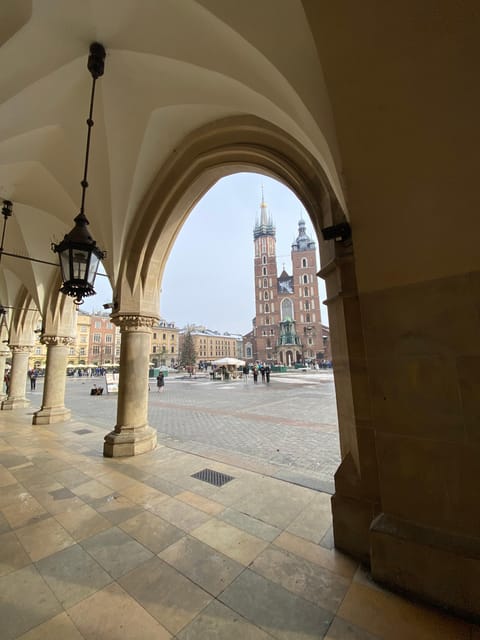
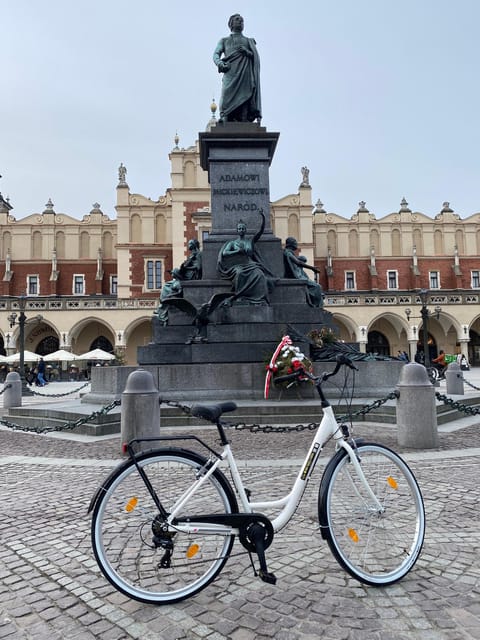
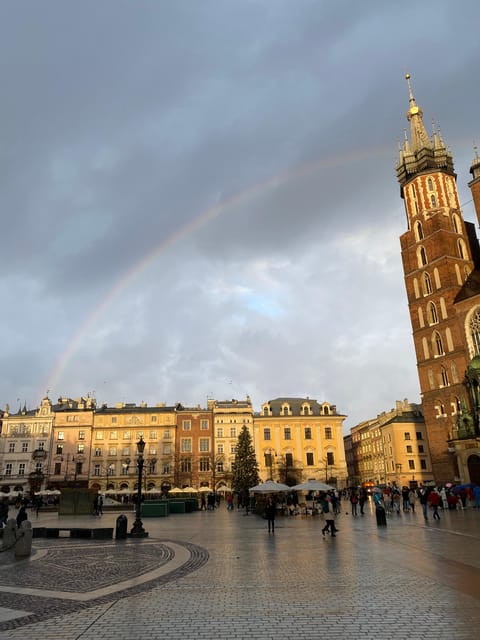
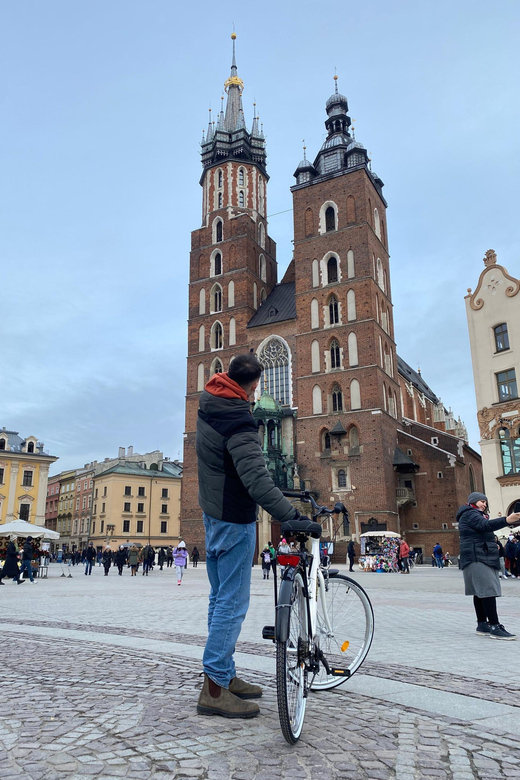
The Main Market Square is the visual center of Krakow’s Old Town. It is a broad, memorable space surrounded by major buildings, and it gives you a useful anchor for navigating the city later.
The guide introduces the square as part of Krakow’s role in Polish history. That is one reason this tour is more than a simple ride past handsome buildings. You get a basic framework for understanding why the city has mattered politically, culturally, and academically.
The route then reaches Jagiellonian University, one of the key institutions connected with Krakow’s intellectual life. The stop is guided, so you can hear why the university belongs in a first look at the city rather than treating it as just another old facade.
Next comes the Wawel Dragon Statue. It is an easygoing stop after the more formal university and square. The dragon is tied to local legend and is one of Krakow’s most recognizable symbols. You may find this part especially useful if you are traveling with children, though the whole tour remains focused on history and city orientation.
The bike passes along the Vistula River without a formal stop. This brief section gives you a change of scenery and links the Old Town to the southern part of the route. Do not expect a long riverside pause, but it helps show how the city’s districts fit together.
Wolnica Square and the changing face of Kazimierz
Crossing into Kazimierz is where the tour’s subject shifts. This district is not simply another attractive quarter. It is closely tied to Krakow’s Jewish community and to the painful events that reshaped the area during World War II.
Wolnica Square provides an entry point into Kazimierz. Your guide explains the district’s cultural background and its place in the life of Krakow. I value this transition because it helps you see Kazimierz as a real neighborhood with layers of memory, not just a stop for cafes and photographs.
The route continues to plac Nowy. This square is one of Kazimierz’s better-known public spaces, and the guide’s recommendations can be especially useful here. You will want to note suggestions for food and later visits, since the tour itself does not include meals or drinks.
The cycling format works well in Kazimierz because the stops are spread through the district. You can see how the streets connect, then return on foot if a synagogue, restaurant, or square catches your attention. Still, the short schedule means you will not have time to linger at every location.
More Old Town walks in Krakow:
- Old Town Krakow & Wawel Castle Walking Tour
★ 5.0 · 1,508 reviews - Krakow: The Old Town Walking Tour
★ 4.8 · 794 reviews - Krakow: Old Town Guided Segway Tour
★ 4.7 · 756 reviews - Kraków: Old Town & Wawel Castle Walking Tour in English
★ 4.8 · 532 reviews
Four synagogues and the story of Krakow’s Jewish community
The strongest part of the route is its concentration of Jewish heritage sites. You see Tempel Synagogue, Izaak Synagogue, the Old Synagogue, and Szeroka Street, each with a guided explanation from the tour leader.
The synagogues are viewed as part of the outdoor route. Since entrance tickets are not included, you should not book this expecting an indoor museum-style visit. The advantage is that you get a clear introduction to several sites in a short period, then can decide which one deserves a separate visit.
The Old Synagogue is particularly important within the route because it connects directly to the long history of Jewish life in Kazimierz. Szeroka Street adds a sense of place, helping you picture the district as a center of community life rather than a collection of isolated monuments.
Tempel Synagogue and Izaak Synagogue broaden that picture. The guide explains the role of the Jewish population in Krakow and then addresses the tragic fate of the community during World War II. This is serious material, and the tour’s value depends on giving it proper weight rather than reducing it to a quick photo opportunity.
I would pay close attention here. The Old Town section gives you Krakow’s public story, while Kazimierz adds the voices and experiences of a community that shaped the city for centuries. That balance is one of the best reasons to choose this tour.
Schindler’s List Passage and Ghetto Heroes Square
The stop at Schindler’s List Passage connects the tour with the film and the historical events that made Oskar Schindler known around the world. The passage helps place that story in the streets of Krakow rather than leaving it as something you encounter only on a screen.
Ghetto Heroes Square brings the World War II section into sharper focus. Your guide discusses the fate of Krakow’s Jewish population and the people who were saved. The route does not treat the subject as a side note. It gives the Jewish community and the wartime destruction of its life a central place in the tour.
This portion may feel emotionally heavy, especially after the lighter stops in the Old Town. That is appropriate, but it is worth knowing before you book. If you want only architecture, legends, and easy sightseeing, another tour may suit you better. If you want a fuller understanding of Krakow, this is essential context.
The route also passes by Oskar Schindler’s Factory. The factory is a major historical site, but entrance is not part of the $47 price. You can use the guide’s introduction to decide if you want to return for a separate visit, subject to the museum’s own admission arrangements.
What the guide adds to the ride
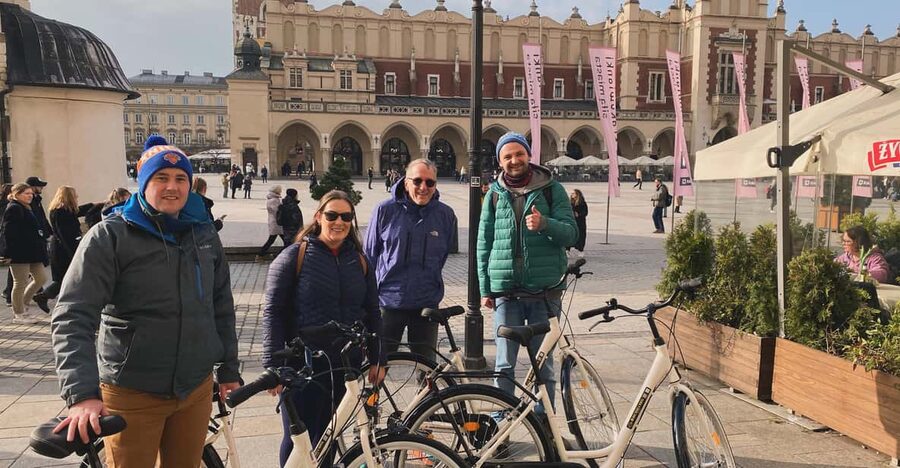
A bike tour succeeds or fails with its guide. The strongest feedback here centers on Zee, also referred to as Z, who is described as articulate, personable, and well informed. One experienced cyclist called it the best bike tour they had taken in several years and specifically praised the new bikes.
That praise points to two things you should care about. First, clear speaking matters when you are outdoors and moving between stops. Second, a guide who can explain both the broad history and the local details gives you more than a list of building names.
The group limit of 10 is another useful feature. It is small enough to feel more controlled than a large bike convoy, though the streets themselves can still be crowded. The guide also offers recommendations for the rest of your visit, which adds value beyond the three-hour route.
Dutch and English are available. Make sure you choose a language you can follow comfortably, since much of the tour’s appeal rests on the spoken explanation.
Is $47 a fair price?
At $47 per person, the price is reasonable for a three-hour guided city ride that includes a bike, a local guide, and bag storage for the duration. You are paying for the route design and the interpretation, not for museum admissions or food.
The tour covers a lot: Florian Gate, the Barbican, the Main Market Square, Jagiellonian University, Wawel’s dragon, the Vistula, Kazimierz, four synagogue sites, Ghetto Heroes Square, and Schindler’s Factory. Seeing all of these independently would take more planning and a good deal of walking.
The price is less attractive if you want long stops or indoor access. You will need to pay separately for any attractions you choose to enter, and the tour does not include refreshments. Still, for a first look at two major parts of Krakow, the cost compares well with the time saved and the historical context provided.
The reserve-now, pay-later option also helps if your plans are still changing. You can cancel for a full refund up to 24 hours ahead, which is useful when weather or a shifting city schedule becomes a concern.
Practical advice for a smooth ride
Wear comfortable shoes and clothes. Weather-appropriate clothing is important because this is an outdoor activity for three hours, with no guarantee that the day will stay mild.
You can leave bags in storage for the duration of the tour. That is handy, since cycling with a large daypack can make a city ride less comfortable.
Do not bring alcohol or drugs, and audio recording is not allowed. Party groups are not suitable for this experience. The tour is aimed at people who want a guided look at Krakow, not a loud social ride.
People with mobility impairments should choose another way to see these sights. The tour requires cycling and does not advertise an adapted option.
Finally, leave room in your schedule after the tour. You may want to return to Schindler’s Factory, enter one of the synagogues, or follow the guide’s recommendations in Kazimierz. The ride is best used as a well-planned introduction, not as your only visit to the district.
Who should book the Krakow bike tour?
I would recommend this tour to first-time visitors who want to understand Krakow quickly and who are comfortable cycling in busy historic streets. It suits couples, solo visitors, and small groups who value a live guide and prefer a compact tour over a full-day commitment.
It is also a strong choice if Jewish heritage and World War II history are important parts of your visit. The route gives those subjects real space, while still covering the city’s medieval center and royal landmarks.
You may want to skip it if cycling is difficult for you, if you dislike urban traffic, or if you want extended indoor visits. In those cases, a walking tour or private vehicle tour would likely be more comfortable.
For most capable cyclists, the mix is hard to beat: major Old Town sights, a serious look at Kazimierz, useful local advice, and a small group led by a guide praised for clarity and warmth. Book it early in your Krakow stay, bring sensible clothing, and treat the tour as your city map on wheels.
FAQ
How long is the Krakow Old Town and Kazimierz bike tour?
The tour lasts three hours.
What languages does the guide speak?
The live tour is available in English and Dutch.
How many people are in the group?
The group is limited to 10 participants.
What is included in the price?
The price includes the guide, a bike, and bag storage for the duration of the tour.
Are entrance tickets or food included?
No. Entrance tickets, food, and beverages are not included.
Where does the tour meet?
Meet at the ZeeTour office in the courtyard. It is in the same building as Restaurant No. 7.
More Jewish Heritage Tours in Krakow
- Krakow: Schindler’s Factory & Ghetto Guided Tour
★ 4.7 · 1,694 reviews - Krakow: Jewish Quarter and Former Ghetto Tour
★ 4.9 · 1,441 reviews - Krakow: Kazimierz Jewish Quarter Walking Tour
★ 4.8 · 571 reviews - Krakow: Kazimierz, Schindler’s Factory & Ghetto Guided Tour
★ 4.8 · 460 reviews
Just added in Krakow
- Auschwitz-Birkenau – Skip the Line Tickets★ 3.5 · 29 reviews
- Auschwitz-Birkenau: Fast-Track Ticket & Guided Tour No Transfers★ 3.5 · 17 reviews
- Zakopane & Sleigh Ride with Bonfire – Group Tour from Kraków★ 5.0 · 2 reviews
- Zakopane & Gubalowka Funicular – Private Winter Tour from Krakow★ 5.0 · 10 reviews
- Sleigh Ride & Bonfire in Zakopane with Funicular – Private Trip★ 5.0 · 48 reviews
- Thermal Baths & Zakopane – Private Trip from Krakow★ 5.0 · 1 review
- Divine Mercy Sanctuary – Private Tour from Krakow★ 5.0 · 4 reviews
- stag dog chase Krakow prank★ 5.0 · 4 reviews