
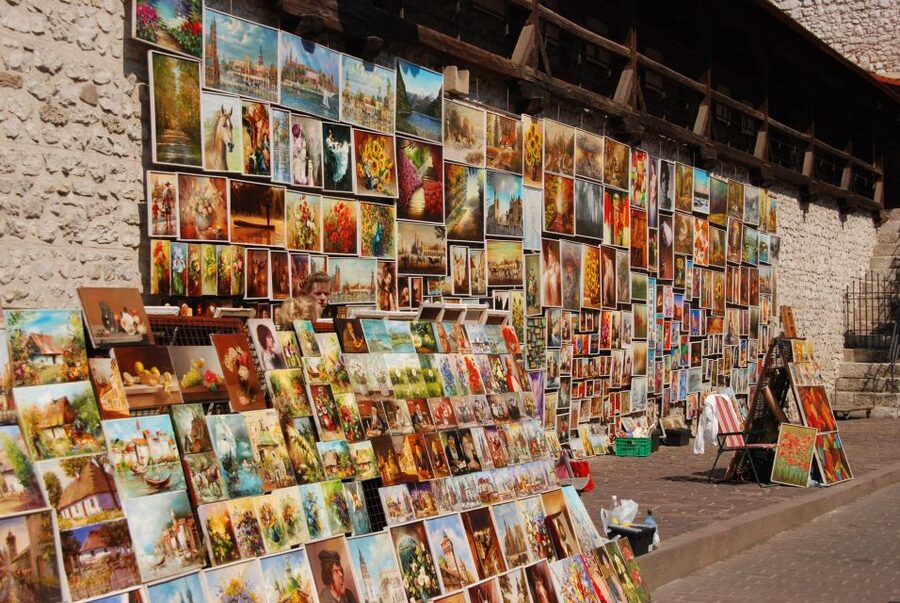
REVIEW · JEWISH QUARTER TOURS
Kraków old town and jewish quarter®
Two Krakóws meet on one well-packed walk. This three-hour tour links the grand medieval center with Kazimierz, making it easier to understand how Poland’s royal, Catholic, academic, and Jewish stories fit together. I especially like the Spanish-speaking history guide and the route’s wide range, from St. Florian’s Gate to Wawel and then the old Jewish quarter. The main drawback is pace: with so many major sights, you will get a strong introduction rather than a slow, detailed visit inside every building.
I also like the human touch reported by guests who toured with Luis, whose explanations used photos and drawings and stayed lively even in December snow. The tour costs $16 per person, a fair price for three hours with a graduate guide in Geography and History. Still, you should wear comfortable shoes and keep expectations clear: this is a walking overview, not a series of long interior visits.
In This Review
- Key points at a glance
- Why this Kraków route works
- From Juliusz Słowacki Theater to St. Florian’s Gate
- Market Square and Kraków’s monumental center
- Collegium Maius and Kraków’s university story
- Archbishop’s Palace and the Franciscan Basilica
- Wawel Hill and the Cathedral complex
- Kazimierz, Kraków’s Jewish quarter
- Occupation, remembrance, and Polish suffering
- The guide, language, and pace
- Is $16 a good value?
- Who should book this Kraków walk?
- Should you book it?
- FAQ
- Where does this tour take place?
- How long does the tour last?
- What language is the tour conducted in?
- How much does the tour cost?
- Who leads the tour?
- What should I look for at the meeting point?
- Is the tour wheelchair accessible?
- Are food and drinks included?
- Can I cancel the booking?
Key points at a glance
- Two major districts in three hours: See Kraków’s Old Town and Kazimierz in one connected route.
- A guide trained in Geography and History: The focus is on links between places, events, Poland, and Kraków.
- Major landmarks come quickly: Expect St. Mary’s Basilica, the Cloth Hall, Collegium Maius, the Archbishop’s Palace, and Wawel.
- Kazimierz gets serious attention: Learn about Jewish settlement, Catholic coexistence, wartime persecution, and memorials.
- Spanish is the tour language: This is a useful choice for Spanish-speaking visitors who want more than a surface-level walk.
- Simple meeting point clue: Look for the guide carrying a gray umbrella.
Why this Kraków route works
Kraków can feel like several cities placed side by side. The Old Town brings royal power, medieval trade, university life, and Catholic tradition into one compact center. Kazimierz then changes the subject, bringing Jewish life, religious coexistence, wartime destruction, and modern remembrance into view.
That contrast is the best reason to book this experience. You are not simply ticking off monuments. You are moving between communities and institutions that shaped one another, sometimes peacefully and sometimes with painful consequences.
The route also gives you a useful first look at Kraków’s layout. You begin downtown, continue through the central historic sights and university area, reach Wawel Hill, and then visit Kazimierz. In three hours, you can see the city’s main framework before deciding where to return for museums, churches, synagogues, or longer visits.
The tour is led in Spanish by a graduate guide in Geography and History. That background matters here because Kraków’s story depends on connections. A church, a university building, a market square, and a royal complex each tell only part of the story. The guide’s job is to bring those pieces together.
More Old Town walks in Krakow:
- Old Town Krakow & Wawel Castle Walking Tour
★ 5.0 · 1,508 reviews - Krakow: Bike Tour of Old Town, Jewish Quarter and the Ghetto
★ 4.9 · 1,155 reviews - Krakow: The Old Town Walking Tour
★ 4.8 · 794 reviews
From Juliusz Słowacki Theater to St. Florian’s Gate
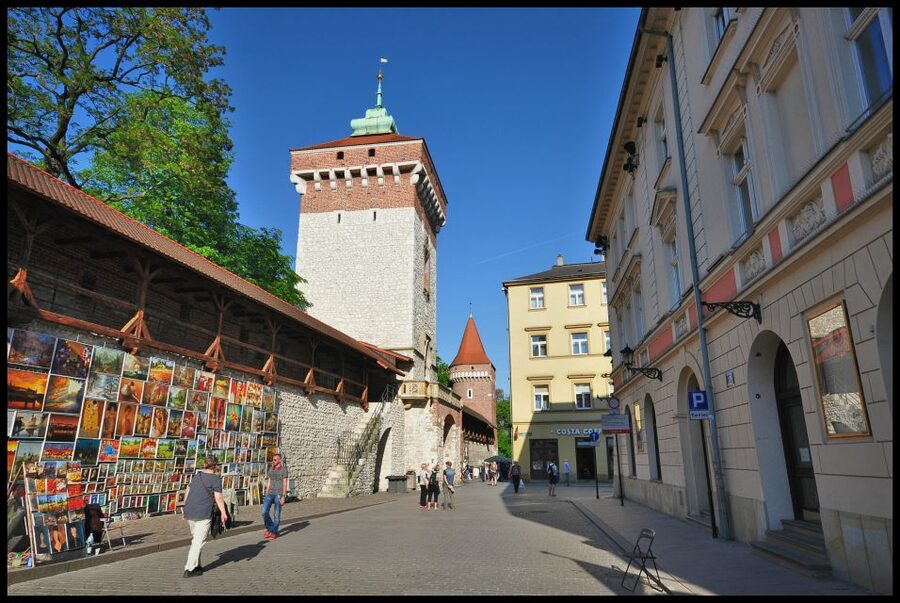
The opening section introduces the northern edge of the historic center. The Juliusz Słowacki Theater gives the route a grand cultural starting point, while the medieval walls, Barbican, and St. Florian’s Gate show how Kraków once protected and controlled access to the city.
These sights are useful because they help you read Kraków as a fortified medieval town rather than just a pretty collection of old buildings. The walls and gate mark the point where visitors once entered a city with clear defenses, social boundaries, and commercial importance.
I like this beginning because it gives structure to what follows. Instead of dropping you straight into the market square, the tour shows how the center was approached. You can then understand the Old Town as an enclosed historic district with the Royal Route running through it.
Do not expect a lengthy architectural lecture at every stop. The guide has a lot of ground to cover, and the value lies in the connections between the places. If military architecture is your main interest, you may want extra time later to examine the Barbican and remaining sections of the walls on your own.
Market Square and Kraków’s monumental center
The route then reaches the Marketplace, the large central square that anchors the Old Town. Here you see St. Mary’s Basilica, Sukiennice, the old town hall tower, the Church of St. Adalbert, the Adam Mickiewicz Monument, and Eros Bendatto.
This is the section with the greatest concentration of famous sights. St. Mary’s Basilica brings religious importance, Sukiennice recalls the city’s trading life, and the old town hall tower points to Kraków’s civic government. The monuments and buildings around the square also show how different periods left their mark without erasing the medieval plan.
The guide’s historical approach is particularly useful here. The square is easy to photograph but harder to understand. You may notice the landmark buildings without seeing how commerce, religion, politics, and public life came together in one space. A good explanation turns a scenic stop into a lesson in how the city functioned.
The square can also be the busiest part of the route. Since the tour is only three hours, you should expect brief stops and spoken explanation rather than long quiet periods. If you want to enter St. Mary’s Basilica or spend time inside Sukiennice, plan a separate visit.
Collegium Maius and Kraków’s university story
From the market area, the route enters the university neighborhood and visits Collegium Maius. This part adds an academic layer to Kraków’s identity, with attention to figures such as John Paul II and Copernicus, who received academic training in the city.
Collegium Maius is more than an attractive old university building. It helps explain why Kraków became a center of learning and why the city’s influence reached beyond royal ceremony and church life. The mention of Copernicus also gives you a link between Kraków and the wider history of European science.
The university district changes the feel of the tour. After fortifications, trade, and public monuments, you are looking at education and ideas. That variety is one reason the route works well for a first visit.
The academic section may appeal most to you if you enjoy cultural history. If you care mainly about royal rooms or Jewish heritage, it is still worthwhile, but it takes time from those subjects. The tour’s strength is range, not exhaustive treatment of one theme.
More Jewish heritage tours in Krakow:
- Krakow: Schindler’s Factory & Ghetto Guided Tour
★ 4.7 · 1,694 reviews - Krakow: Jewish Quarter and Former Ghetto Tour
★ 4.9 · 1,441 reviews - Krakow: Kazimierz Jewish Quarter Walking Tour
★ 4.8 · 571 reviews - Krakow: Kazimierz, Schindler’s Factory & Ghetto Guided Tour
★ 4.8 · 460 reviews
Archbishop’s Palace and the Franciscan Basilica
The Archbishop’s Palace and Franciscan Basilica continue the religious and political story of central Kraków. These stops are especially useful for understanding the city’s Catholic identity and the role of church institutions in public life.
The Archbishop’s Palace also connects with John Paul II, whose Kraków years are part of the city’s modern religious memory. The Franciscan Basilica adds another important church to the route, giving you a chance to compare Kraków’s religious buildings rather than seeing only one famous basilica.
I appreciate that the tour includes these sites between the university district and Wawel. The placement makes sense. Kraków’s story is not divided into neat chapters, and royal authority, church leadership, education, and city life often overlapped.
As with the other stops, the tour appears designed mainly for exterior orientation and guided explanation. If you want to study artwork, chapels, or church interiors in detail, you will need a return visit. Three hours leaves little room for a full interior tour at every landmark.
Wawel Hill and the Cathedral complex
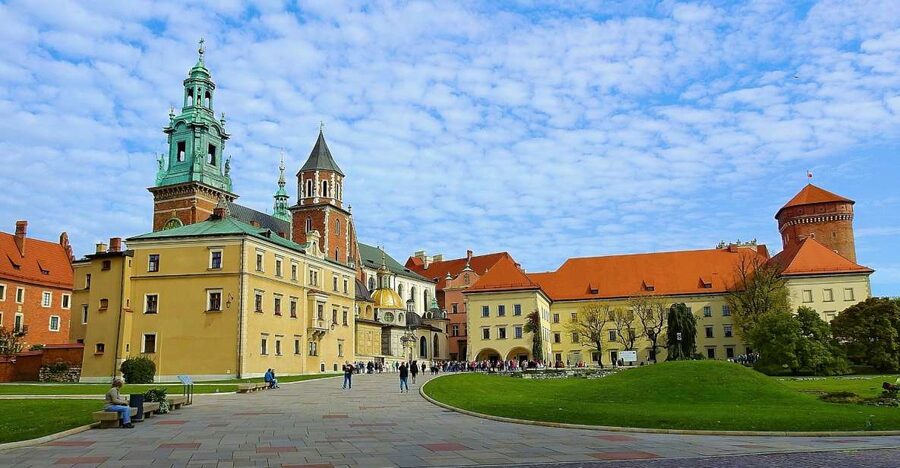
The route reaches the Wawel complex by ascending the hill and examining the cathedral and the buildings around it. This is the royal heart of the tour, and it gives you a clear sense of why Kraków remains central to Poland’s national story.
Wawel is not presented as a single monument. The route treats it as a group of connected buildings, which is the right approach. The cathedral, hilltop setting, and surrounding complex together show the overlap of monarchy, religion, ceremony, and national memory.
The guide also points out the dragon sculpture, a lighter touch after the formal weight of the cathedral. That small detail matters because it connects the monumental hill with Kraków’s legends and popular identity. A city needs its stories as well as its dates.
You should expect an outdoor visit and explanation rather than admission to every Wawel building. The supplied details do not include entry tickets, and food and drinks are not included either. At $16, the price remains attractive because you are paying for orientation and interpretation, not a bundle of admissions.
Wawel is also where the route’s broad scope becomes clear. By this point, you have moved from the city gate to its market, university, churches, and royal center. The guide can then use Kazimierz to show another side of Kraków rather than repeating the same architectural theme.
Kazimierz, Kraków’s Jewish quarter
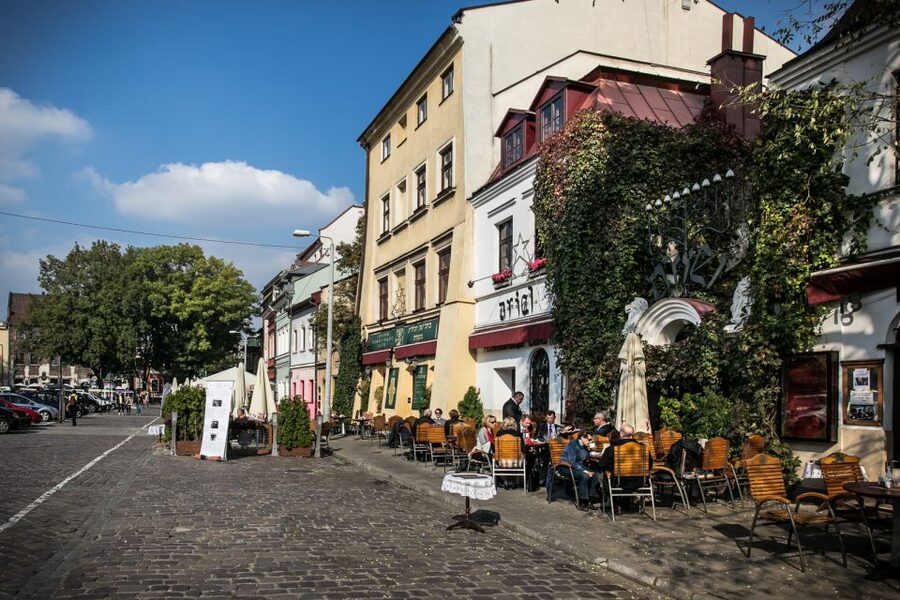
Kazimierz is the emotional and historical shift in this walk. The tour explains why the first Jewish communities settled here and how Jewish and Catholic communities lived alongside one another.
That context is important. Kazimierz should not be treated only as a pleasant district with old synagogues and cafés. Its identity comes from the people who built religious, family, commercial, and community life here. The route gives you a framework for understanding those settlements and the changing relationship between Jewish and Catholic residents.
You visit Tempel Synagogue, the Old Synagogue, the medieval square of the Jewish quarter, the former walls, New Square, and the old Jewish cemetery. These places allow the guide to move from religious life to urban planning, burial customs, community memory, and the physical shape of the district.
The Old Synagogue is especially significant within this route because it represents the long Jewish presence in Kazimierz. Tempel Synagogue adds another point of comparison, helping you see that Jewish life was not one single tradition or architectural style.
New Square gives the neighborhood a different angle. Along with the medieval square and remaining walls, it helps you picture Kazimierz as a lived-in district rather than a museum corridor. The route’s value here comes from seeing how ordinary urban spaces hold layers of history.
The old Jewish cemetery is likely to be one of the quieter and more reflective parts of the walk. The tour also visits monuments to Holocaust victims and to the Righteous Among the Nations. These stops bring the discussion into the twentieth century and make clear that Kazimierz’s history includes both community life and catastrophe.
Occupation, remembrance, and Polish suffering
The route also includes a monument to Polish victims during the occupation. This is an important inclusion because the history of Kraków and Kazimierz cannot be reduced to one community’s experience.
The Jewish quarter section addresses persecution and the destruction of Jewish life, while the monument to Polish victims recognizes the wider suffering caused by occupation. The result is a more balanced account of the period, though the subject matter is naturally serious.
You should be ready for a tour that handles difficult history directly. The guide’s role is not only to point out attractive façades. It is to explain how the area’s communities changed, what was lost, and why the memorials matter today.
The available feedback gives this guide style a strong mark for clear, engaging explanations. Luis was praised for using photos and drawings, and for keeping the history accessible even in cold and snow. That detail is practical: if the weather turns bad, the quality of the spoken presentation will matter even more than the scenery.
The guide, language, and pace
The tour is conducted in Spanish, with a live guide. If you understand Spanish well, this can make a major difference when the subject includes political shifts, religious relationships, and wartime memory.
The strongest praise concerns the guide’s way of explaining history. Luis is specifically named in the feedback, and his use of photos and drawings helped make complicated subjects easier to follow. The comments also point to a good rhythm between explanations and changes of location, so you are not standing in one spot for the entire three hours.
Still, the itinerary is ambitious. It includes the main Old Town, Wawel, and Kazimierz, with a long list of named sights. I would choose this tour if you want a broad introduction and can accept short stops. I would not choose it if your priority is a slow photographic walk or detailed entry into several interiors.
The meeting clue is simple: look for a gray umbrella carried by the guide. You receive a map to help reach the meeting point, which is useful in a city where historic streets can make a first rendezvous confusing.
The activity is listed as wheelchair accessible, but the route includes an ascent to Wawel Hill and many historic areas. Since no further accessibility details are provided, you should confirm whether the exact route and surfaces suit your needs before booking.
Is $16 a good value?
At $16 per person, this is good value for a three-hour guided introduction, especially if you want the Old Town and Kazimierz covered in one outing. A guide trained in Geography and History can save you time and help you understand what you are seeing before you return for independent visits.
The price does not include food, drinks, or stated admission tickets. That keeps the comparison simple: you are paying for the live Spanish-language explanation and the route itself.
I would rate the value highest for a first or short visit to Kraków. You get the city’s key visual markers, a royal complex, university history, Catholic landmarks, Jewish heritage sites, and memorials in one session. The cost is modest enough that you can still budget for a separate museum visit or a return to the sights that caught your attention.
Who should book this Kraków walk?
I would recommend it to Spanish-speaking visitors who want history explained in a clear, personal way. It also suits anyone who prefers a guide to connect places rather than simply announce names and dates.
It is a good fit for:
- First-time visitors who want a city orientation
- People interested in Polish, Jewish, Catholic, and academic history
- Visitors with only a short time in Kraków
- Anyone who prefers a live Spanish-speaking guide
- Travelers who want to compare the Old Town with Kazimierz
You may want a different format if you dislike walking, need long indoor breaks, or want detailed visits to each church, synagogue, and museum. The route covers a lot, so comfortable footwear and weather-ready clothing are sensible choices.
The cancellation policy adds flexibility: you can cancel up to 24 hours before the activity for a full refund, and you can reserve now while paying later. Those terms are useful if your Kraków schedule is still shifting.
Should you book it?
Book this tour if you want Kraków’s main districts explained as one connected story. The combination of Old Town, Wawel, and Kazimierz is the real strength, and the Spanish-language guidance makes the experience especially appealing to Spanish speakers.
I would book it early in a short Kraków stay, then use the route to decide where to spend more time. At $16, it is a practical way to get your bearings, learn the city’s major historical links, and avoid treating Kazimierz as just another pretty neighborhood.
FAQ
Where does this tour take place?
The tour takes place in Kraków, in Poland’s Lesser Poland region. It visits the historic center, Wawel, and the Jewish quarter of Kazimierz.
How long does the tour last?
The tour lasts three hours. Starting times depend on availability.
What language is the tour conducted in?
The live tour guide conducts the experience in Spanish.
How much does the tour cost?
The price is $16 per person.
Who leads the tour?
The experience includes a graduate guide in Geography and History. Luis is the guide named in the available tour feedback.
What should I look for at the meeting point?
The guide will carry a gray umbrella. A map is also provided to help you reach the meeting point.
Is the tour wheelchair accessible?
Yes, the activity is listed as wheelchair accessible. Because the route includes historic areas and an ascent to Wawel Hill, confirm the exact conditions if you need specific accessibility support.
Are food and drinks included?
No. Food and drinks are not included in the tour price.
Can I cancel the booking?
Yes. You can cancel up to 24 hours in advance for a full refund. You can also reserve now and pay later.
Just added in Krakow
- Auschwitz-Birkenau – Skip the Line Tickets★ 3.5 · 29 reviews
- Auschwitz-Birkenau: Fast-Track Ticket & Guided Tour No Transfers★ 3.5 · 17 reviews
- Zakopane & Sleigh Ride with Bonfire – Group Tour from Kraków★ 5.0 · 2 reviews
- Thermal Baths & Zakopane – Private Trip from Krakow★ 5.0 · 1 review
- Zakopane & Gubalowka Funicular – Private Winter Tour from Krakow★ 5.0 · 10 reviews
- Sleigh Ride & Bonfire in Zakopane with Funicular – Private Trip★ 5.0 · 48 reviews
- Divine Mercy Sanctuary – Private Tour from Krakow★ 5.0 · 4 reviews
- stag dog chase Krakow prank★ 5.0 · 4 reviews