
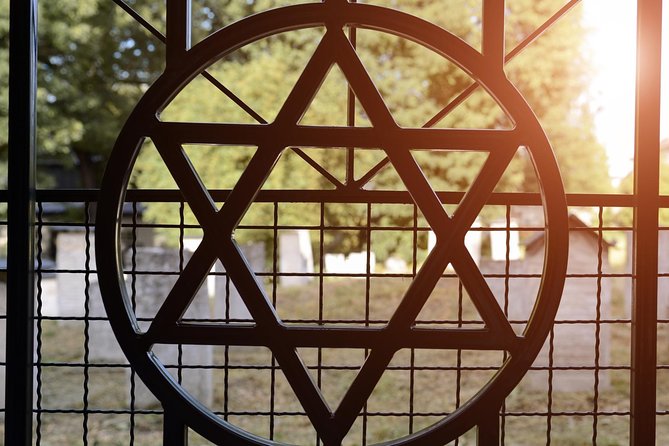
REVIEW · JEWISH QUARTER TOURS
Krakow Kazimierz and Jewish Ghetto Tour with Synagogues
Krakow’s Jewish quarter asks you to slow down. This private walking tour links Kazimierz, the former Jewish Ghetto, memorials, and several synagogues, turning scattered sights into one clear story. I like the personal format, and I like that the longer options include meaningful interiors rather than only street views. The main consideration is price: at $97.21 per person, value depends heavily on choosing the three or four-hour option and filling your group.
The subject is painful, but the tour does not treat it as a checklist of grim facts. A guide such as Helena can add stories of strength and survival to the historical record. You should also know that synagogue access changes with opening hours, prayer times, Saturdays, and Jewish holidays, so the exact religious sites may vary.
In This Review
- Key points to know before booking
- Why this private Krakow Jewish history tour works
- Kazimierz, Krakow’s former Jewish district
- Schindler’s Factory and the film connection
- Crossing to Plac Bohaterów Getta
- The bridge between Kazimierz and Podgórze
- The Old Synagogue and Jewish museum
- Remuh Synagogue and the Old Jewish Cemetery
- Tempel, Izaak, and High Synagogues
- Galicia Jewish Museum and New Jewish Cemetery
- Jan Karski, New Square, and the human scale
- Timing, access, and practical planning
- Who should choose the four-hour tour?
- Should you book this Krakow Jewish Ghetto and synagogue tour?
- FAQ
- Where does the tour begin?
- Where does the tour end?
- How long does the tour last?
- Is this a private tour?
- Which synagogue is included on the three-hour tour?
- What does the four-hour tour include?
- Are synagogue tickets included in the two-hour option?
- Are the Schindler Factory museum and Galicia Jewish Museum included?
- Can I cancel for a full refund?
Key points to know before booking
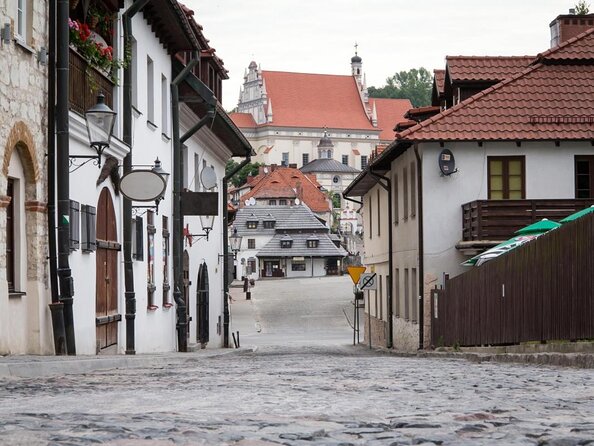
- Kazimierz and the Ghetto are different chapters: You see the former Jewish district, then cross toward Podgórze and the wartime Ghetto.
- The four-hour option offers the fullest visit: It includes Remuh Synagogue, the Old Jewish Cemetery, and two additional synagogue visits.
- Your private guide shapes the experience: Only your party takes part, making it easier to ask questions or adjust the pace.
- Synagogue access is schedule-dependent: The three-hour tour includes either Tempel Synagogue or the Old Synagogue, depending on opening hours and your interests.
- Schindler’s Factory is an exterior stop unless arranged: Entry to the museum is not included and is possible only by request.
- The tour mixes solemn sites with everyday Krakow: New Square, the bridge over the Vistula, and local streets keep the visit grounded in present-day life.
Why this private Krakow Jewish history tour works
Krakow’s Jewish story is spread across neighborhoods, cemeteries, museums, memorials, and surviving houses of worship. Seeing these places independently can leave you with a pile of addresses and dates. This tour gives them a route and a human voice.
The private format is the biggest advantage. You are not moving with a large group, and only your own party participates. That matters at sites where a quiet pause is more fitting than a hurried photograph. It also gives you room to ask about Polish Jewish culture, wartime Krakow, the film Schindler’s List, or the differences between the synagogues.
The tour is offered in two to four-hour versions, although the attractions included depend on the option you select. The short version is more of an orientation walk. The four-hour version is the serious choice for anyone who wants interiors and cemetery time.
At $97.21 per person, this is not a bargain walk for one person. It becomes more reasonable for a small private group, particularly because a five-star licensed guide, selected admission tickets, and a focused route are included. Check exactly what your chosen duration covers before paying. The two-hour option does not include synagogue tickets, while the three and four-hour versions include more admissions.
More Jewish heritage tours in Krakow:
- Krakow: Schindler’s Factory & Ghetto Guided Tour
★ 4.7 · 1,694 reviews - Krakow: Jewish Quarter and Former Ghetto Tour
★ 4.9 · 1,441 reviews - Krakow: Bike Tour of Old Town, Jewish Quarter and the Ghetto
★ 4.9 · 1,155 reviews
Kazimierz, Krakow’s former Jewish district
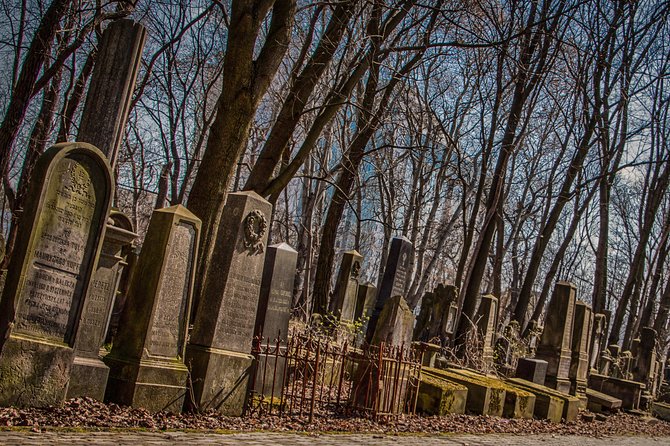
The walk begins in Kazimierz, where a sizable Jewish population moved at the end of the fifteenth century. For centuries, this district was the main cultural center of Polish Jewry in Krakow.
The tour gives you a quick introduction to the neighborhood before moving into more specific sites. The listed visit here is short, about ten minutes, so do not expect a full neighborhood walk in the shortest format. You are getting the historical frame first: Kazimierz was not simply an attractive quarter with old buildings. It was a center of religious, family, commercial, and cultural life.
I like starting here because it helps you understand the difference between a Jewish district and the later Ghetto. Kazimierz was a place where Jewish life took root over generations. The Ghetto, by contrast, was created under Nazi occupation as part of the persecution and confinement of Krakow’s Jewish population.
You will walk through an area that is now popular for food, nightlife, and casual wandering. That modern atmosphere can feel at odds with the past, and the guide’s explanation is useful in keeping both truths in view. Kazimierz is a living neighborhood, not an open-air memorial.
Schindler’s Factory and the film connection
The former administrative building of Oskar Schindler’s enamel factory now houses the exhibition Krakow under Nazi Occupation 1939 to 1945. The tour includes the location as a stop, but museum admission is not included and entry is possible by request.
That distinction matters. If you want the full museum exhibition, treat it as an additional arrangement rather than an automatic part of the walk. The stop is still valuable because Schindler’s Factory is tied to one of Krakow’s best-known wartime stories and to Steven Spielberg’s Schindler’s List.
The tour also visits locations connected with the film, including one of its most disturbing scenes. Film locations can easily turn history into a backdrop, but here the movie connection works best as a starting point for a larger conversation about occupation, deportation, and moral choices.
I would not book this tour solely for movie sites. The strongest material is the connection between the physical places and the people who lived through the period. The film is a useful reference point, not the main subject.
Crossing to Plac Bohaterów Getta
The route continues to Plac Bohaterów Getta, a square marked by empty chairs. The chairs are a powerful memorial to the people forced from their homes and sent away during the liquidation of the Krakow Ghetto.
This is one of the stops where a guide adds real value. Without context, the chairs may look like a striking piece of public art. With context, their arrangement suggests absence, removal, and the sudden emptying of homes. The memorial to the heroes of the Krakow Ghetto adds another layer, connecting the square with resistance and courage.
The visit is listed at about ten minutes, but you may need a quiet moment before moving on. The schedule is fairly compact, so this is one place where the private format helps. You can ask to pause rather than being pushed along by a large crowd.
Nearby, the old Ghetto walls offer another direct reminder of forced separation. The remaining sections are not grand monuments. Their value is precisely in their plainness. They show the physical boundaries imposed on Jewish life and make the scale of confinement easier to grasp.
A few more in Krakow
- From Krakow: Auschwitz-Birkenau Guided Tour & Hotel Pickup
★ 4.5 · 33,358 reviews - From Krakow: Auschwitz-Birkenau Guided Tour & Hotel Pickup
★ 4.5 · 29,340 reviews - Krakow: Auschwitz Guided Tour with Optional Hotel Pickup
★ 4.5 · 15,280 reviews - Krakow–Zakopane: Cable Car, Chocholow Baths, Cheese & Vodka
★ 5.0 · 10,720 reviews
The bridge between Kazimierz and Podgórze
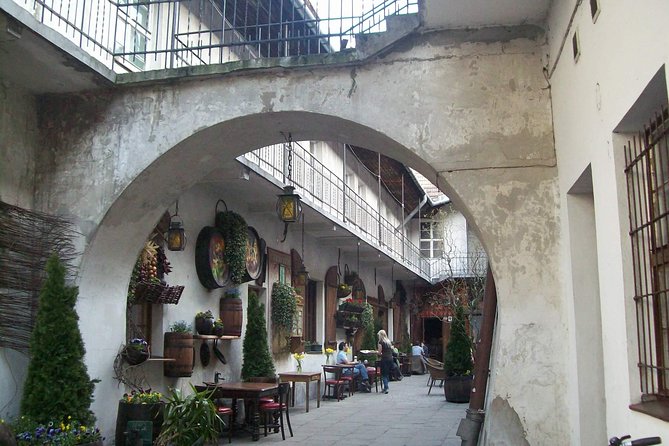
The route includes a bridge over the Vistula between Kazimierz and Podgórze. Padlocks cover parts of it, placed there by people from many places.
This is a brief, lighter section of the route, but it has a practical purpose. You are moving between two districts, and the bridge marks that change in geography. The contrast between the locks and the nearby wartime sites is striking without needing much explanation.
Do not expect a long scenic stop here. It is one part of a walking route rather than a separate attraction. Still, the river crossing gives your feet a break from memorials and synagogues, and it helps you see how the neighborhoods connect.
The Old Synagogue and Jewish museum
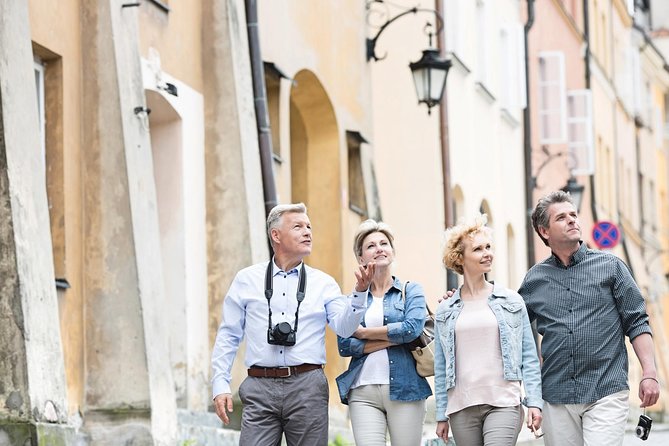
The Old Synagogue is described as one of only two surviving Gothic synagogues in the world, with the other in Prague. Restored after World War II, it now houses a Jewish museum.
This is an important stop for understanding religious space. The building is not only an old structure to admire. Its displays help explain Jewish customs and community life in Poland. That makes it a useful balance to the wartime memorials.
Admission is included in the three and four-hour options, but not in the two-hour tour. The three-hour tour includes one synagogue, either the Old Synagogue or Tempel Synagogue, based on your interests and the opening schedule. If you have a strong preference, tell the guide when booking or at the start, but understand that opening hours may decide the final choice.
The Old Synagogue is open Mondays from 10 a.m. to 2 p.m., and from 10 a.m. to 5 p.m. Tuesday through Sunday. These hours make timing especially important for a morning or late-afternoon tour.
Remuh Synagogue and the Old Jewish Cemetery
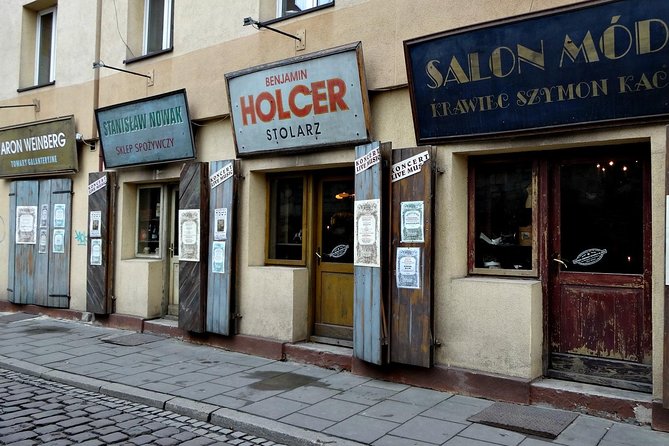
The four-hour tour adds Remuh Synagogue and the Old Jewish Cemetery, with about an hour allocated to this section. Remuh is a small Renaissance synagogue dating from around 1557. It is named for Moses Isserles, also known as Rabbi Remuh, a writer and philosopher.
Unlike a purely historic shell, Remuh still holds regular services for Krakow’s small Jewish community. That continuing religious role changes the tone of the visit. You are seeing a place connected to present practice, not only to the past.
The adjacent Old Jewish Cemetery gives the stop its emotional weight. Its stones and long span of use connect individual lives with the wider story of Jewish Krakow. The setting is quiet, and the guide can explain why the cemetery matters without reducing it to a list of dates.
This is the clearest reason to choose four hours. The extra time is not simply more walking. It buys entry into a working synagogue and time at a cemetery that you would otherwise miss. Remuh and the cemetery are not included in the two or three-hour options.
Tempel, Izaak, and High Synagogues
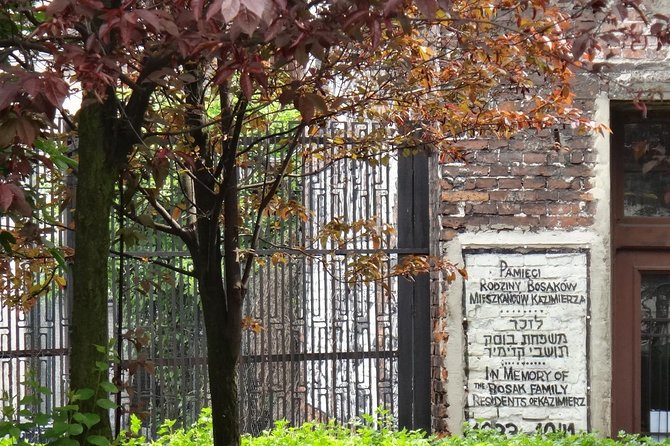
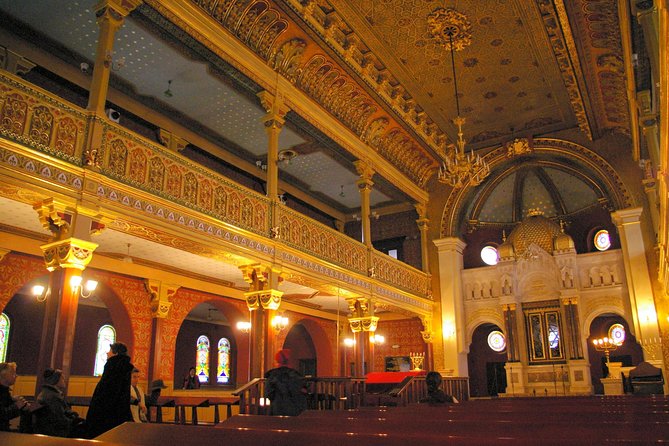
Tempel Synagogue is described as small but ornate, with stained glass, gold decoration, and a striking interior. A visit is included in the four-hour option, along with the Old Synagogue and Remuh. The three-hour option includes either Tempel or the Old Synagogue.
Tempel is open Monday through Thursday and Sunday from 10 a.m. to 6 p.m., and Fridays from 10 a.m. to 4 p.m. In winter, the hours shorten to 10 a.m. to 4 p.m. Monday through Thursday and Sunday, and 10 a.m. to 2 p.m. Friday. These details are not minor. They may determine which synagogue you see.
Izaak Synagogue is another significant Kazimierz building, built in the mid-seventeenth century in a Judaic-Baroque style. It is regarded as one of the most magnificent synagogues in the district, but entry is possible only by request and is not included as a standard admission.
High Synagogue suffered severe damage during World War II, when its furnishings and decorations were destroyed or stolen. The building was renovated in the 1970s and now serves as a workshop for conserving historic monuments. It is worth seeing from the outside, but do not assume that the standard tour includes an interior visit.
Galicia Jewish Museum and New Jewish Cemetery
The Galicia Jewish Museum commemorates Holocaust victims while also presenting the Jewish culture of Polish Galicia. Its approach is useful because it places Jewish life and culture beside the history of persecution. You are not left with only a story of disappearance.
Museum entry is possible by request but is not included in the standard tour. If this museum matters to you, ask about it before booking rather than assuming the walking route includes a full visit. Ten minutes is not enough for a proper museum experience, so a separate visit may make more sense.
The New Jewish Cemetery is listed as a longer stop of about an hour. Cemeteries can be difficult places to visit quickly, and this time allows the guide to discuss the lives represented there and the way Jewish history flows across generations.
The Old and New Jewish Cemeteries serve different purposes in the route. The Old Cemetery is tied to Remuh Synagogue and the older community. The New Cemetery extends the story and offers another setting for reflection. Together, they make the four-hour option feel much more complete.
Jan Karski, New Square, and the human scale
The route also includes a statue of Jan Karski, seated on a bench made from the same metal as the figure. You can sit beside him, which gives the memorial an unusually direct quality.
Karski is associated with the wartime history of Poland and the effort to report what was happening under Nazi rule. The stop is brief, but it gives the tour a personal focus after the larger memorials and museum subjects.
New Square brings you back to everyday Kazimierz. It is known for food, local life, and an easygoing atmosphere. The square is not a Holocaust memorial, and that is exactly why it belongs in the route. Jewish Krakow was, and is, more than a story of wartime destruction.
I appreciate this change of pace. A good heritage walk should leave room for ordinary streets and present-day life. You may want to return to New Square later for food, but the tour itself is focused on history rather than a restaurant crawl.
Timing, access, and practical planning
The meeting point is Hotel Kazimierz at Miodowa 16, in Krakow. The tour ends back at the same meeting point. It is near public transportation, and most people can participate. Service animals are allowed.
You receive confirmation at booking, and you should check your email the day before for important information. That message may matter because the number of attractions depends on the option selected and because opening hours can change the synagogue choice.
Jewish heritage sites and synagogues close on Saturdays, Jewish holidays, and during prayer times. Plan carefully around those restrictions. If seeing interiors is your priority, do not choose a date without checking the schedule.
The route is a walking tour with many short stops. Comfortable shoes are sensible, though the supplied information does not specify accessibility details beyond saying that most people can participate. If someone in your party has mobility concerns, ask the operator before booking.
The free cancellation policy allows a full refund if you cancel at least 24 hours before the local start time. Changes or cancellations within 24 hours are not refunded.
Who should choose the four-hour tour?
I would choose four hours if you have a serious interest in Jewish Krakow, religious architecture, or the Holocaust. It includes Remuh Synagogue, the Old Jewish Cemetery, and two other synagogue visits, giving you both religious and memorial context.
The three-hour tour is a sensible middle option. You get a private walk and one included synagogue, either Tempel or the Old Synagogue. It works well if you want more than a quick introduction but do not want to spend half a day on the subject.
The two-hour tour suits a tight schedule. You will see the main district, Ghetto memorials, and key exterior sites, but admissions to the synagogue are not included. At nearly $100 per person, I would select the short version only if your time is limited or your group strongly values having a private guide.
This is not a light sightseeing stroll. The subject includes persecution, forced removal, and death. The guide’s tone matters, and Helena’s reported approach is a useful example: clear historical information balanced with stories of resilience and strength. That combination keeps the experience serious without making it emotionally flat.
Should you book this Krakow Jewish Ghetto and synagogue tour?
Book it if you want a private, guided route that connects Kazimierz, the Ghetto, synagogues, cemeteries, memorials, and Schindler’s List locations. I especially recommend the four-hour option for the Remuh Synagogue and cemetery access.
Skip it if you want a fast, low-cost orientation or a museum-only experience. The price is high for a solo participant, and some attractions require a request or have limited hours.
For most people interested in Krakow’s Jewish heritage, the three-hour option offers a good balance. If the date works with synagogue schedules and you can share the cost with your own group, the private format and strong guide-led storytelling make this a worthwhile, serious introduction.
FAQ
Where does the tour begin?
The tour begins at Hotel Kazimierz, Miodowa 16, 31-055 Krakow, Poland.
Where does the tour end?
The activity ends back at the meeting point.
How long does the tour last?
The available tour durations are approximately two, three, or four hours, depending on the option selected.
Is this a private tour?
Yes. Only your group participates in the activity.
Which synagogue is included on the three-hour tour?
The three-hour tour includes either Tempel Synagogue or the Old Synagogue. The choice depends on your sightseeing preferences and the synagogue’s opening hours.
What does the four-hour tour include?
The four-hour option includes the Old Jewish Cemetery, Remuh Synagogue, and either Tempel Synagogue or the Old Synagogue.
Are synagogue tickets included in the two-hour option?
No. Tickets to Tempel Synagogue or the Old Synagogue are not included in the two-hour option.
Are the Schindler Factory museum and Galicia Jewish Museum included?
Admission to both museums is not included. Entry is possible by request.
Can I cancel for a full refund?
Yes. You can cancel at least 24 hours before the experience start time for a full refund. Cancellations within 24 hours are not refunded.
Just added in Krakow
- Auschwitz-Birkenau – Skip the Line Tickets★ 3.5 · 29 reviews
- Auschwitz-Birkenau: Fast-Track Ticket & Guided Tour No Transfers★ 3.5 · 17 reviews
- Zakopane & Sleigh Ride with Bonfire – Group Tour from Kraków★ 5.0 · 2 reviews
- Sleigh Ride & Bonfire in Zakopane with Funicular – Private Trip★ 5.0 · 48 reviews
- Thermal Baths & Zakopane – Private Trip from Krakow★ 5.0 · 1 review
- Zakopane & Gubalowka Funicular – Private Winter Tour from Krakow★ 5.0 · 10 reviews
- Divine Mercy Sanctuary – Private Tour from Krakow★ 5.0 · 4 reviews
- stag dog chase Krakow prank★ 5.0 · 4 reviews